
Custom Fast Food Packaging Manufacturer:
Complete Technical Guide to Structures, Materials, Printing & Surface Finishes
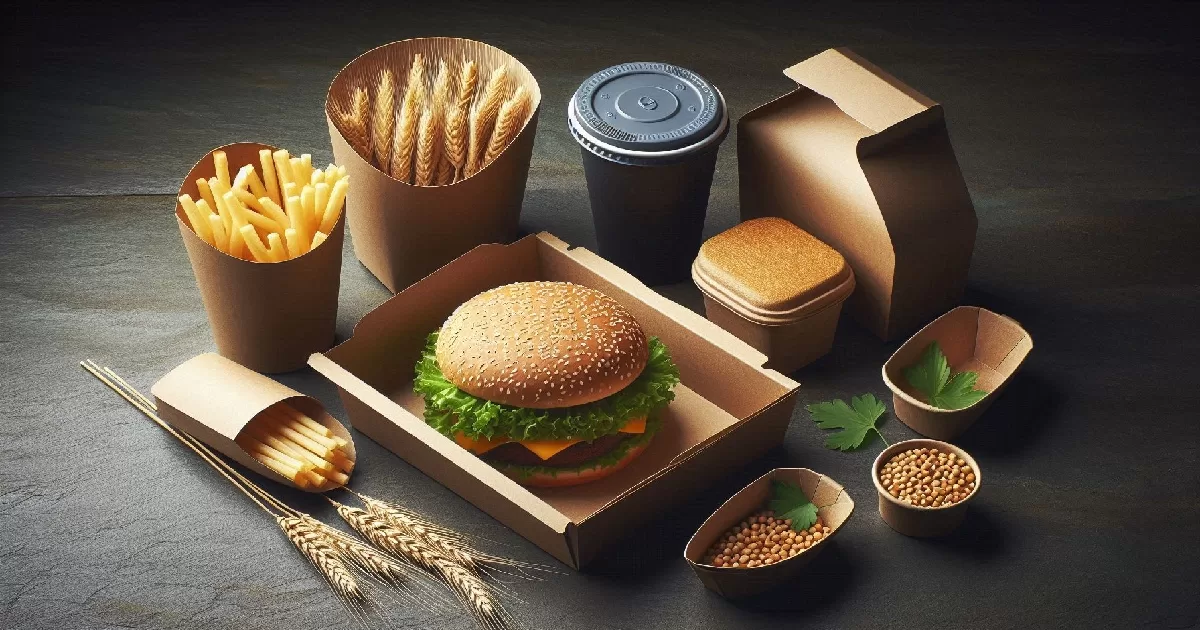
UGI Packaging manufactures 12 categories of food-grade fast food packaging — from kraft paper snack cups and burger boxes to sugarcane pulp eco containers — with full OEM/ODM support, flexible MOQ, and direct factory pricing from Guangzhou, China.
Factory Overview & Manufacturing Capabilities
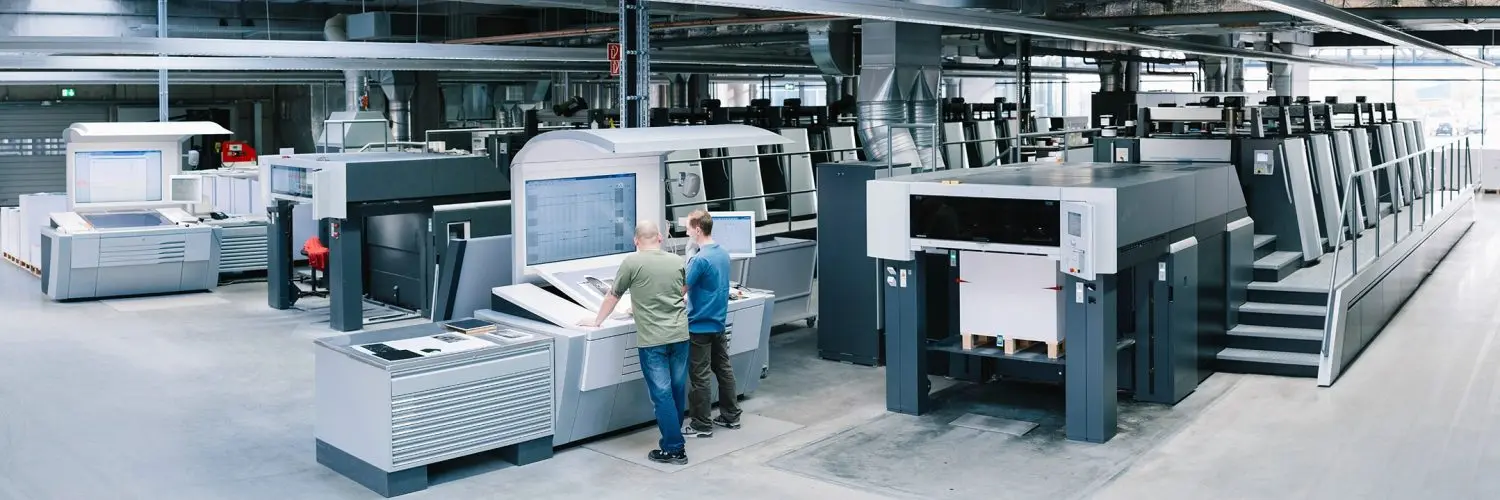
UGI Packaging (ukugi.com) was established as a B2B manufacturing partner for food service brands, restaurant chains, cloud kitchens, catering companies, and retail food businesses requiring custom-printed disposable packaging at competitive factory prices. The Guangzhou facility consolidates all core production steps under one roof — from substrate procurement and dieline cutting to multi-color printing, surface finishing, and pre-shipment quality auditing — a manufacturing model that eliminates third-party subcontracting risks and compresses lead times.
The factory’s production capacity is structured around three manufacturing streams: rigid box fabrication for premium retail food packaging, flexible paper packaging for high-volume disposable containers, and eco-material processing for compostable and biodegradable food service packaging. Each stream operates independent cutting, printing, and assembly lines, allowing UGI Packaging to handle concurrent OEM orders across different packaging formats without cross-contamination of production schedules.
For food service clients, UGI Packaging offers a complete end-to-end service model. Buyers may supply their own artwork files and receive production-ready samples within 3–5 business days, or engage UGI Packaging’s in-house structural design team for full dieline development from a product brief. The factory maintains a library of over 200 tested dieline templates across all major fast food packaging categories, enabling rapid prototyping for new product lines without incurring full custom tooling costs on initial sample runs.
UGI Packaging’s geographic position in Guangzhou provides direct access to Pearl River Delta raw material suppliers, significantly reducing substrate procurement lead times compared to inland factories. The factory maintains a safety stock of the five most commonly ordered paperboard grades — including 300 gsm food-grade kraft, 350 gsm coated white board, and 400 gsm grey-back duplex — ensuring that repeat orders can enter production within 24 hours of order confirmation without waiting for material procurement.
Vertical Integration: What It Means for Buyers
Vertical integration at UGI Packaging means that every process from raw sheet cutting to finished carton stacking is performed by factory-employed technicians using owned equipment. This has three practical implications for buyers placing custom fast food packaging orders:
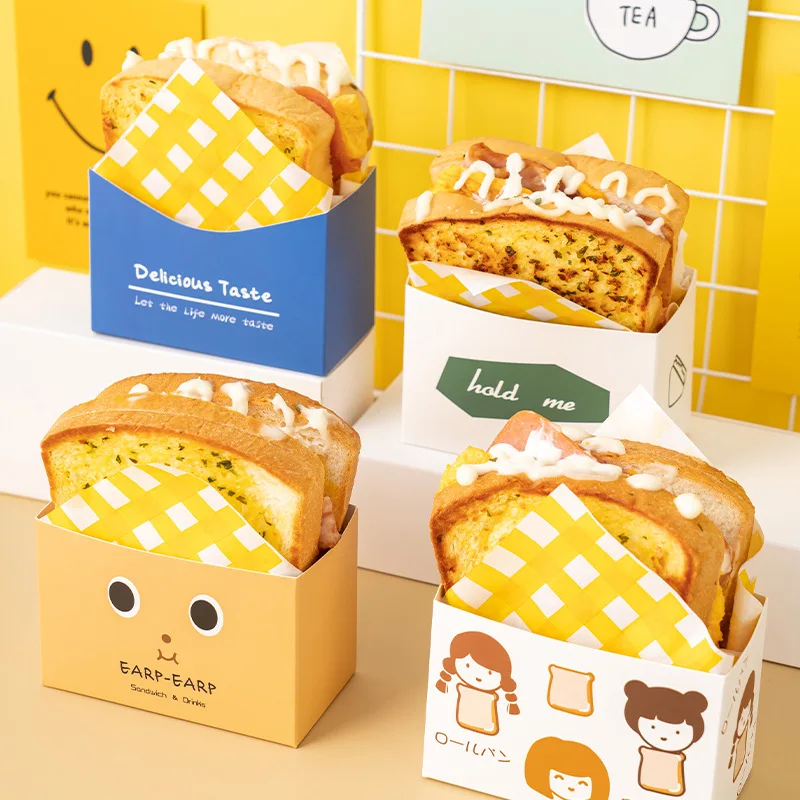
UGI Packaging custom sandwich and burger packaging boxes — direct factory supply from Guangzhou
UGI Packaging’s factory layout follows a linear production flow designed to minimize work-in-progress movement: raw material receiving → pre-press proofing → die-cutting → printing → finishing → assembly → QC inspection → packing → dispatch. Each workstation is equipped with batch tracking documentation, ensuring full production traceability for every order. This traceability system enables UGI Packaging to provide buyers with production batch records upon request — a requirement increasingly common among food service chains conducting supplier audits.
The factory currently operates with a dedicated food packaging line separate from gift and retail packaging production, preventing cross-contamination between food-contact and non-food-contact material streams. This separation is particularly important for buyers in regulated markets such as the EU, UK, and Australia, where food contact material compliance is a legal requirement for imported packaging.
Product Range — 12 Fast Food Box Categories
The UGI Packaging fast food packaging range has been developed in response to the operational needs of food service businesses at all scales — from single-location independent restaurants requiring small batch custom printing, to regional chains sourcing 100,000+ unit production runs. The range is organized into 12 primary categories, each addressing a specific combination of food type, service context, and structural requirement.
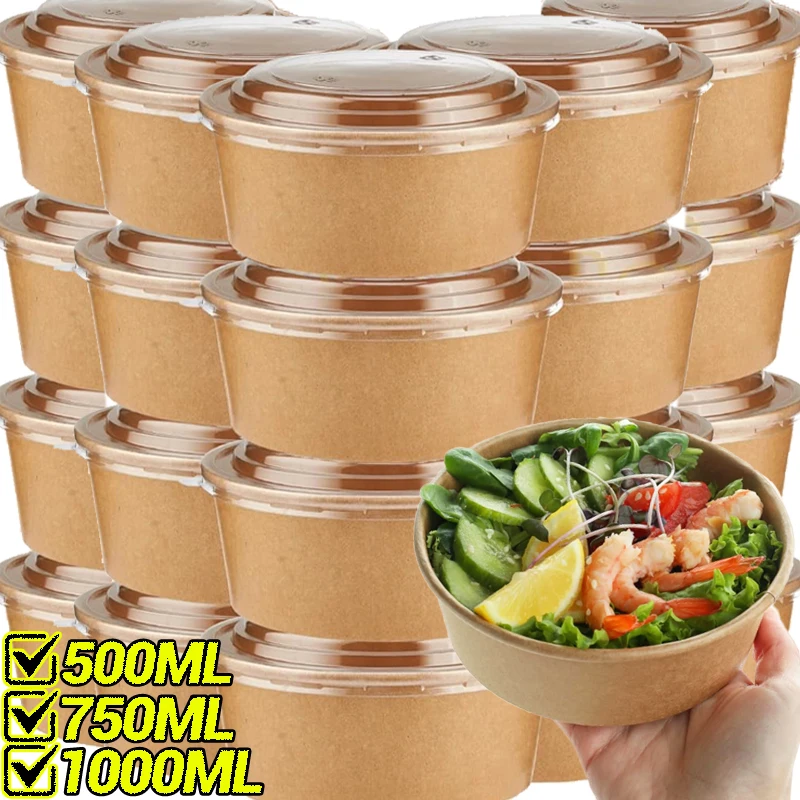
Kraft paper salad bowls with lids — available in 500ml, 750ml, and 1000ml from UGI Packaging
Category 1: Kraft Paper Snack Cups & French Fries Holders
Cylindrical and cone-shaped paper cups manufactured from 250–300 gsm natural kraft board, designed for dry snack foods including french fries, onion rings, popcorn, and mixed party snacks. Available in capacities from 8 oz to 32 oz. The inner surface is coated with a food-grade PE lining to prevent oil absorption and structural weakening during use. Custom printing is applied to the outer surface using flexographic or offset methods.
Category 2: Sandwich & Burger Packaging Boxes
Flat-pack corrugated and single-wall paperboard boxes engineered for sandwiches, burgers, toasted bread, and similar handheld food items. The standard structure is a self-locking tray with optional full-wrap lid, manufactured from 350–400 gsm food-grade coated white board. UGI Packaging produces both pre-formed and flat-pack (auto-bottom) variants. Flat-pack versions reduce storage volume by up to 70% compared to pre-assembled boxes, a significant logistical advantage for high-volume food service operations.
Category 3: Kraft Paper Salad Bowls with Lids
Round-form paperboard bowls manufactured from 300 gsm natural or white kraft, fitted with PET or kraft paper snap-fit lids. Produced in three standard capacities (500 ml, 750 ml, 1000 ml) with custom sizing available. The bowl interior receives a food-safe aqueous barrier coating providing grease resistance to TAPPI T454 standard. These containers are widely used in meal-prep, takeout salad, and bento-style food service formats.
Category 4: Leakproof Meal Prep & Bento Boxes
Rectangular compartmentalized containers produced in both paperboard and food-grade PP plastic formats. The paperboard version uses a 400 gsm coated board with a full PE laminate inner lining achieving leak resistance equivalent to 30 minutes of liquid containment. The PP variant is produced from food-grade virgin polypropylene with a hinged snap-close lid, rated microwave-safe to 120°C. UGI Packaging supplies these in standard black, white, and transparent finishes, with custom colour injection available for large-volume orders.
Category 5: Eco-Friendly Sugarcane Pulp Containers
Moulded fibre containers manufactured from bagasse (post-industrial sugarcane pulp), offering a compostable alternative to petroleum-based plastic containers. UGI Packaging’s sugarcane pulp range covers rectangular takeout boxes, round bowls, and open trays, all certified compostable under ASTM D6400 and EN 13432 standards. Wall thickness is uniform at 3.0–3.5 mm across all formats, providing comparable rigidity to standard plastic containers. These containers support flexographic printing on the outer surface but are not compatible with hot foil or UV finishing processes.
Category 6: Boat-Shaped Paper Trays & Snack Boats
Open-form boat-shaped paper trays manufactured from 280–350 gsm oil-resistant kraft board, designed for self-service snack formats including french fries, nachos, fried chicken, and hot dogs. The boat shape is formed through a single fold-and-lock assembly requiring no gluing, making it suitable for high-speed automated filling in catering environments. Inner surface coating provides oil resistance without requiring a separate lining sheet. Available in four standard sizes.
Category 7: Hot Dog & Elongated Format Boxes
Rectangular elongated tray boxes designed for hot dogs, corn dogs, baguettes, and similar extended-format food items. Manufactured from 300 gsm kraft or coated white board with a self-locking tray base and optional hinged lid. The elongated format presents a larger printable surface area than standard square boxes, making these containers a preferred choice for brand-forward fast food operators seeking high-visibility custom printing. Available in 150 mm, 180 mm, and 220 mm standard lengths.
Category 8: Greaseproof & Wax Paper Wrappers
Sheet and roll format greaseproof paper wrappers, produced from 35–45 gsm silicone-coated or wax-laminated food-grade base paper. Used as primary food contact wrapping for sandwiches, burgers, pastries, and bakery items. UGI Packaging produces both plain stock and custom-printed variants; printed versions use food-safe water-based flexographic inks applied to the non-food-contact outer surface only. Custom pattern printing with full bleed coverage is achievable in runs from 5,000 sheets.
Category 9: Triangle Sandwich Bags & Open-Top Bags
Triangular and rectangular open-top paper bags for sandwiches, donuts, pastries, and similar individually wrapped items. Manufactured from 60–80 gsm kraft or greaseproof paper in anti-fog transparent PET or printed kraft formats. The triangular variant is die-cut to display sandwich cross-sections through a clear window panel — a format widely used in convenience store and café food retail. UGI Packaging supplies these in both standard brown kraft and custom-printed formats.
Category 10: Foldable Kraft Paper Takeaway Boxes
Multi-purpose foldable boxes manufactured from 350–400 gsm natural kraft or white kraft board, designed for general-purpose takeaway applications including pasta, grilled meat, mixed rice, and snack combinations. The foldable structure uses a tuck-in closure requiring no adhesive for assembly, enabling hygienic flat-pack shipping and in-venue assembly. Printing is applied to the outer surface prior to die-cutting and folding, allowing full-panel artwork coverage including bottom panel printing for brand consistency.
Category 11: Window Cake & Display Boxes
Premium food packaging boxes incorporating a transparent PET window panel, used for display-oriented food items including individual pastries, mousse cakes, and specialty desserts in fast-casual and premium takeout formats. Manufactured from 350–450 gsm food-grade coated white board with a die-cut window aperture fitted with food-safe heat-bonded PET film. Window sizes and shapes are customisable within the structural constraints of the box wall panel dimensions. These boxes are compatible with matte and gloss lamination, spot UV, and hot foil finishing on the outer surface panels.
Category 12: Oil-Proof Paper Bags & Flat Treat Bags
Flat and gusseted paper bags constructed from 60–90 gsm oil-proof treated kraft or white paper, used for cookies, pastries, doughnuts, and bakery snack items. The oil-proofing treatment is achieved through a fluorine-free aqueous barrier coating applied during paper manufacturing, meeting current EU restrictions on per- and polyfluoroalkyl substances (PFAS) in food contact materials. Custom printing in up to 4 colours is available using flexographic printing, with registration accuracy of ±1 mm.
| Category | Primary Material | Weight / GSM | Typical Application | Min. Print Run |
|---|---|---|---|---|
| Snack Cups / Fries Holders | Kraft + PE lining | 250–300 gsm | Fries, popcorn, snacks | 1,000 pcs |
| Sandwich & Burger Boxes | Coated white board | 350–400 gsm | Burgers, sandwiches | 500 pcs |
| Salad Bowls with Lids | Kraft + aqueous barrier | 300 gsm | Salads, meal prep, bento | 1,000 pcs |
| Leakproof Bento Boxes | Coated board + PE lining | 400 gsm | Meal prep, takeout lunch | 500 pcs |
| Sugarcane Pulp Containers | Moulded bagasse fibre | 3.0–3.5 mm wall | Eco-friendly takeout | 2,000 pcs |
| Boat-Shaped Trays | Oil-resistant kraft board | 280–350 gsm | Fries, nachos, fried chicken | 1,000 pcs |
| Hot Dog / Elongated Boxes | Kraft or coated board | 300 gsm | Hot dogs, corn dogs, baguettes | 500 pcs |
| Greaseproof Wrappers | Silicone-coated / wax paper | 35–45 gsm | Sandwiches, pastries, burgers | 5,000 sheets |
| Triangle Sandwich Bags | Kraft / anti-fog PET | 60–80 gsm | Café sandwiches, retail display | 1,000 pcs |
| Foldable Takeaway Boxes | Natural / white kraft | 350–400 gsm | Rice, pasta, grilled meat | 500 pcs |
| Window Cake Boxes | Coated board + PET window | 350–450 gsm | Pastries, mousse cakes, desserts | 500 pcs |
| Oil-Proof Paper Bags | Fluorine-free kraft paper | 60–90 gsm | Cookies, doughnuts, bakery snacks | 2,000 pcs |
Box Structures & Dieline Engineering
Box structure — the physical geometry of a packaging container defined by its dieline — determines a container’s load-bearing capacity, assembly method, material efficiency, and printable surface area. At UGI Packaging, structural engineering is treated as a prerequisite to print design, not an afterthought. Every order begins with structural specification: the correct substrate weight, fold geometry, and closure mechanism must be confirmed before artwork files are prepared, because structural decisions directly affect how printed graphics align across panel joins and around fold edges.
For buyers without packaging engineering expertise, UGI Packaging’s structural design team provides a brief-to-dieline service: the buyer describes the food item dimensions, service context (takeout, dine-in, retail shelf), and any specific functional requirements (leak resistance, microwave compatibility, stackability), and UGI Packaging’s engineers select or develop an appropriate structure and provide a physical sample for approval before production commitment.
The 7 Core Structural Types Used in Fast Food Packaging
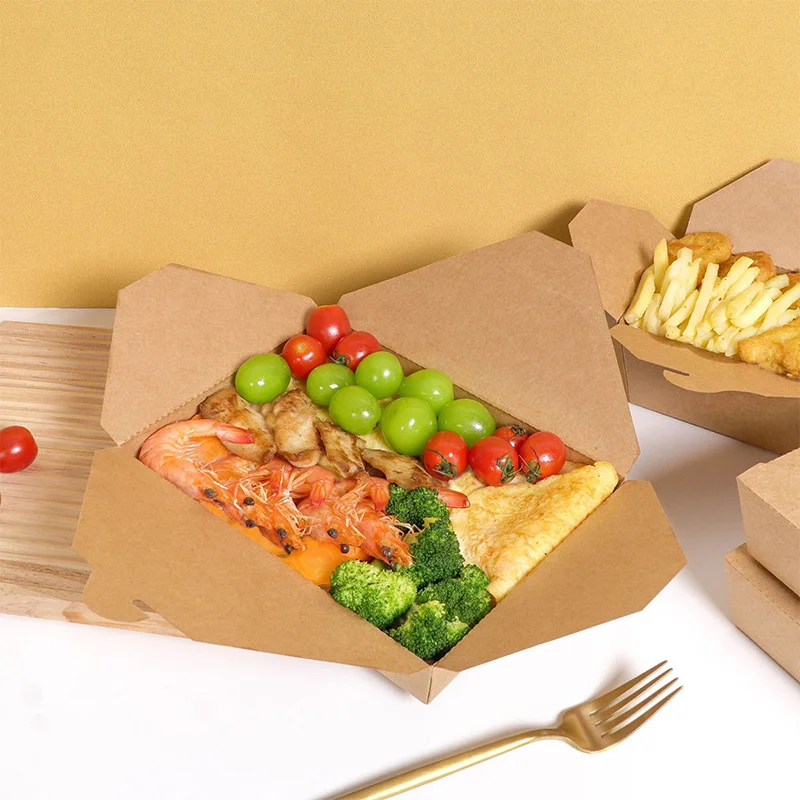
Kraft paper foldable takeaway box — tuck-in closure, no-glue assembly, full-panel printable surface
Fast food packaging structures can be grouped into seven functional categories based on their assembly geometry and closure method. Each presents different trade-offs between structural integrity, material cost, assembly speed, and printing capability. UGI Packaging manufactures all seven types in-house:
Dieline Engineering: Tolerances & Production Standards
A dieline is the flat unfolded cutting and scoring pattern that, when die-cut and folded, produces a finished box. The precision of a dieline determines whether a box assembles cleanly, whether printed graphics align accurately across fold lines, and whether the closure mechanism operates reliably at high-speed assembly rates. At UGI Packaging, dielines for fast food packaging are engineered to the following production tolerances:
| Parameter | UGI Packaging Standard | Impact if Exceeded |
|---|---|---|
| Die-cut dimensional accuracy | ±0.5 mm | Closure misalignment, gap at seams |
| Score line depth consistency | ±0.05 mm | Uneven fold, cracking on heavy board |
| Print-to-die registration | ±1.0 mm | Graphic misalignment across fold panels |
| Window aperture cut accuracy | ±0.3 mm | PET film bond failure at aperture edge |
| Gluing line width | 6–8 mm | Weak seam or adhesive bleed onto food contact surface |
| Cup forming seam overlap | 10 mm minimum | Seam failure under thermal stress |
New dieline development at UGI Packaging follows a three-stage approval process: digital structural file review (checking fold geometry and panel dimension logic), physical prototype production using production-specification materials (not samples from alternative substrates), and fit-test with actual food product or equivalent weight/dimension simulant. Only after the physical prototype passes the fit-test does the dieline advance to print-ready status.
Structural Customisation Options
Beyond selecting from the 200+ standard templates, UGI Packaging’s structural team supports three levels of structural customisation for fast food packaging:
Level 1 — Dimension Adaptation: Modifying the length, width, or height of an existing template structure to fit a specific food item. This requires only a revised dieline file and a new cutting die — no structural prototyping is required for dimension-only changes within a proven structural family. Lead time for dimension adaptation: 2–3 business days to revised sample.
Level 2 — Feature Addition: Adding functional features to an existing structure — ventilation holes for hot food containers, carry handles on larger format boxes, internal partition inserts for multi-compartment presentation, or reinforced base panels for heavier food items. Feature additions require a new prototype but use proven fold geometry from the base template. Lead time: 3–5 business days to first physical sample.
Level 3 — Fully Custom Structure: Developing a new structural form from a dimensional brief or a physical reference sample provided by the buyer. UGI Packaging’s structural engineers use CAD software to develop the dieline, perform virtual fold simulation to check geometry before cutting the physical prototype, and produce three prototype iterations within the standard development timeline of 7–10 business days to approved sample.
Materials: Food-Grade Paper, Kraft & Eco Substrates
Material selection is the single most consequential decision in fast food packaging development. The substrate must simultaneously satisfy food safety requirements (no harmful migration to food contents), functional performance requirements (structural integrity, grease resistance, moisture barrier, thermal tolerance), environmental compliance requirements (recyclability, compostability, restricted substance compliance), and economic requirements (cost per unit within the buyer’s packaging budget). UGI Packaging’s material sourcing team evaluates all four requirement dimensions for every substrate selected for production use.
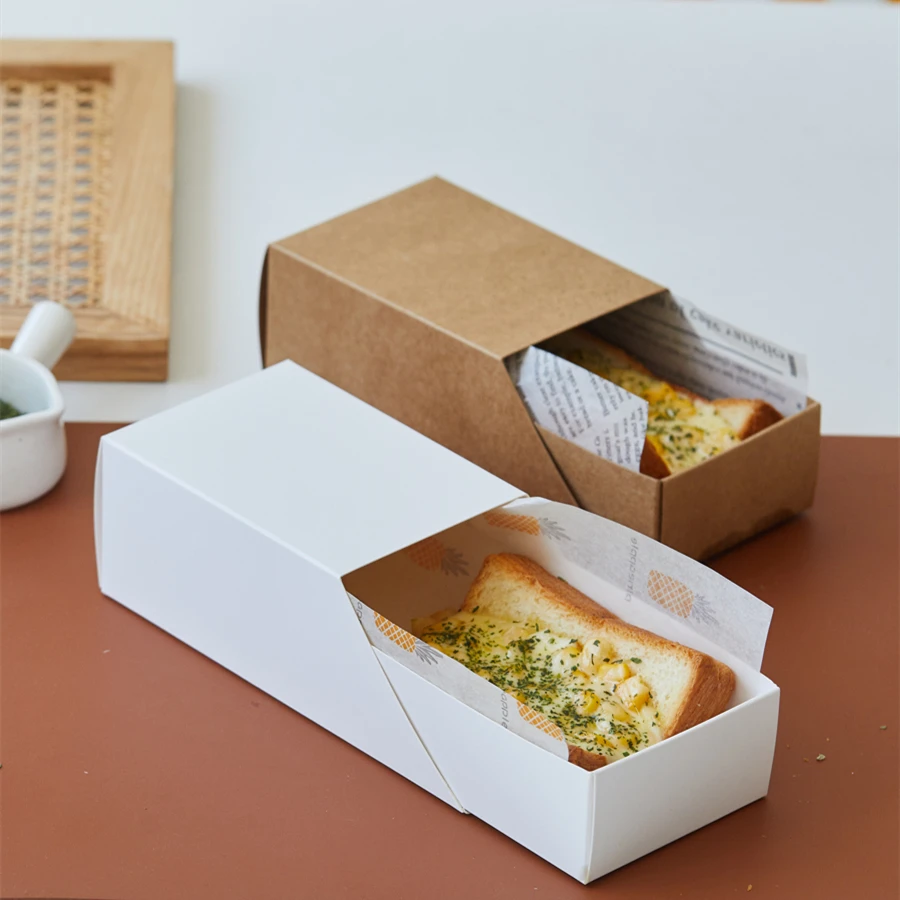
Eco-friendly sugarcane pulp takeout containers — compostable, food-grade, available from UGI Packaging
Substrate 1: Natural Kraft Paperboard
Natural kraft is the baseline material for most of UGI Packaging’s fast food packaging production. Manufactured from unbleached virgin wood pulp using the kraft pulping process, natural kraft board presents a characteristic brown surface with high tensile strength relative to its basis weight. Key technical properties at UGI Packaging’s production specification:
Basis weights stocked: 250 gsm, 300 gsm, 350 gsm, 400 gsm. Burst strength at 300 gsm: minimum 450 kPa (Mullen test). Moisture content at incoming inspection: 7–9%. Cobb sizing (water absorption in 60 seconds): ≤35 g/m² for standard kraft, ≤20 g/m² for moisture-resistant grade. The natural brown surface of kraft board has limited compatibility with light-coloured inks — white, yellow, and pastel tones require a white ink underprint base to achieve accurate colour reproduction, adding one pass to the printing process.
For direct food contact applications, UGI Packaging uses only virgin kraft board (not recycled fibre) to eliminate the risk of mineral oil hydrocarbon (MOAH/MOSH) contamination from recycled paper fibres — a compliance issue increasingly scrutinised by food safety regulators in the EU and UK markets.
Substrate 2: Food-Grade Coated White Board (CWB)
Coated white board is a multi-layer paperboard with a white clay-coated printing surface and a grey, brown, or white back layer. It is the primary substrate for premium fast food packaging where colour-accurate printing and a clean white visual presentation are required. UGI Packaging stocks food-grade CWB in the following specifications:
Grades available: 300 gsm, 350 gsm, 400 gsm, 450 gsm. The top surface coating weight is 12–15 g/m² per side, providing an ISO brightness of ≥85% — the minimum required for accurate CMYK colour reproduction without substrate colour interference. Fold-crack resistance is tested before production acceptance: at 400 gsm, board must achieve a minimum of 3 complete 180-degree folds without surface cracking at the fold line. Board failing this test is rejected and returned to the supplier.
The food-grade designation requires that the coating materials used on the food-contact side are free from restricted substances as defined under EU Regulation 10/2011 on plastic food contact materials. UGI Packaging requests batch-specific food contact compliance certificates from CWB suppliers for every production batch used in food packaging orders.
Substrate 3: Greaseproof & Oil-Resistant Paper
Greaseproof paper is manufactured by extensive beating of the cellulose fibres during the papermaking process, producing a dense, low-porosity sheet that resists oil and grease penetration without requiring a separate coating layer. UGI Packaging’s greaseproof paper specifications for food wrapping applications:
Basis weights: 35 gsm, 40 gsm, 45 gsm. Grease resistance: Kit test rating ≥6 (TAPPI T559) for standard grade; ≥10 for premium food service grade. Tensile strength (machine direction): ≥4.0 kN/m at 40 gsm. All greaseproof paper used by UGI Packaging is sourced from mills using fluorine-free (PFAS-free) manufacturing processes — a compliance requirement in the EU, UK, and an increasing number of US states where PFAS in food contact paper is being phased out or banned.
Substrate 4: Sugarcane Pulp (Bagasse) — Compostable Alternative
Bagasse is the fibrous residue remaining after sugar juice extraction from sugarcane stalks. It is a post-industrial agricultural byproduct that would otherwise be burned or landfilled, making it one of the most resource-efficient raw materials for food packaging manufacturing. UGI Packaging’s bagasse moulded fibre containers are produced using a wet-press moulding process:
The bagasse slurry is formed over a mould under heat and pressure (190–220°C, 0.3–0.5 MPa) to produce a rigid, uniform wall thickness of 3.0–3.5 mm. The resulting container has a compressive strength of ≥800 N for standard rectangular formats — comparable to medium-gauge PP plastic containers. Thermal tolerance: -18°C to +120°C, making bagasse containers suitable for refrigerated meal prep, ambient temperature takeout, and oven reheating up to 120°C. Compostability certification: ASTM D6400 (industrial compost) and EN 13432 (EU industrial compost standard). UGI Packaging can provide copies of these certifications upon request for buyers requiring regulatory documentation.
Substrate 5: Food-Grade PE-Laminated Paperboard
For applications requiring liquid or grease containment — such as salad bowls, bento boxes for sauced dishes, and soup containers — plain paperboard is not sufficient. UGI Packaging applies a food-grade polyethylene (PE) laminate to the food-contact inner surface of these containers. The PE layer creates a moisture and grease barrier while remaining heat-sealable for lid attachment applications.
PE laminate specifications: coating weight 15–25 g/m² depending on barrier requirement. For standard grease resistance: 15 g/m² is sufficient. For liquid containment (soups, beverages): 20–25 g/m² is specified. The PE laminate is applied using a co-extrusion lamination process, producing a uniform coating without pinholes or thickness variation. Laminated board is tested for liquid holdout by filling with water at room temperature and observing for 30 minutes — zero visible moisture transmission through the board is the acceptance criterion.
Substrate 6: Food-Grade Virgin PP (Polypropylene)
For the bento box and meal prep container range within UGI Packaging’s fast food packaging catalogue, food-grade virgin polypropylene (PP) is used as an alternative to paperboard formats. PP containers offer microwave compatibility, superior liquid containment, and a transparent or colour-tinted aesthetic not achievable with paper-based substrates.
Material specification: virgin PP resin (no recycled content in food-contact grades), MFI 12–16 g/10 min, density 0.90–0.91 g/cm³. Wall thickness: 0.8–1.2 mm depending on container capacity. Thermal rating: microwave safe to 120°C; freezer safe to -20°C. The hinged lid is manufactured from the same PP grade as the container base, producing a monolithic hinge with no adhesive bond point — a common failure location in bimaterial lid designs.
| Substrate | Food Contact Safe | Grease Resistant | Compostable | Microwave Safe | Recyclable |
|---|---|---|---|---|---|
| Natural Kraft Board | ✅ Yes | With coating | ✅ Yes (uncoated) | ❌ No | ✅ Yes |
| Coated White Board | ✅ Yes | With coating | ✅ Yes (uncoated) | ❌ No | ✅ Yes |
| Greaseproof Paper | ✅ Yes | ✅ Inherent | ✅ Yes | ❌ No | ✅ Yes |
| Sugarcane Pulp (Bagasse) | ✅ Yes | ✅ Yes | ✅ ASTM D6400 | ✅ Up to 120°C | ✅ Industrial |
| PE-Laminated Board | ✅ Yes | ✅ Yes | ❌ No | ❌ No | ❌ No (mixed material) |
| Virgin PP | ✅ Yes | ✅ Yes | ❌ No | ✅ Yes | ✅ PP recycling stream |
Incoming Material Inspection Protocol
Every substrate batch entering UGI Packaging’s production facility undergoes a documented incoming material inspection before being released to the production floor. The inspection protocol covers four dimensions:
For buyers requiring specific sustainability certifications — such as FSC (Forest Stewardship Council) chain-of-custody certification for paper substrates, or DIN CERTCO compostability marks for bagasse containers — UGI Packaging can source certified materials and provide the corresponding documentation as part of the order package. FSC-certified kraft and coated white board are available at a material premium of approximately 8–12% over standard grades; lead times for certified material orders are extended by 3–5 business days to allow certified stock procurement.
Buyers sourcing packaging for markets with specific import compliance requirements — including the ISO 9001-aligned EU food contact materials framework, the UK Food Safety Act, or US FDA food contact substance (FCS) regulations — are encouraged to specify their target market during the quotation stage so that UGI Packaging can confirm substrate compliance and provide the appropriate documentation package before production commences.
Printing Technologies: Offset, Flexo, Digital & Specialty Inks
Printing technology selection for fast food packaging is determined by four variables: order quantity, substrate type, design complexity, and required colour accuracy. No single print method is optimal across all four dimensions simultaneously. UGI Packaging maintains three active printing platforms — sheet-fed offset, flexographic, and digital — allowing the production team to select or combine methods based on the specific requirements of each order, rather than forcing all orders through a single production pathway.
For food service brands, print quality directly affects brand perception at the point of sale. A sandwich box with dull, misregistered printing communicates poor brand investment regardless of the food quality inside. UGI Packaging’s print production team treats colour accuracy and registration consistency as non-negotiable quality parameters — not aspirational targets — for every production run.

Custom-printed leakproof bento box — offset printing with full-panel coverage, produced by UGI Packaging
Printing Method 1: Sheet-Fed Offset Lithography
Sheet-fed offset lithography is UGI Packaging’s primary print method for food packaging orders requiring high colour fidelity, fine detail reproduction, and production runs above 1,000 units. In offset lithography, the inked image is transferred from an aluminium printing plate to a rubber blanket cylinder, then to the substrate — the indirect transfer mechanism producing exceptionally smooth ink lay-down on coated board surfaces.
Technical capability at UGI Packaging’s offset line:
Maximum sheet size: 720 × 1020 mm. Print resolution: 175 lpi (lines per inch) standard; 200 lpi available for fine detail artwork. Colour configurations: 4-colour CMYK standard; 4-colour + 1 or 2 Pantone spot colours available (up to 6-colour press configuration). Ink system: food-safe low-migration offset inks compliant with EuPIA (European Printing Ink Association) food packaging guidelines. Registration accuracy: ±0.1 mm across all colour passes — a critical specification for packaging designs with tight colour trapping requirements.
Offset printing plates are produced using computer-to-plate (CTP) imaging, eliminating the film intermediate step used in older plate-making processes. CTP plate-making at UGI Packaging produces consistent dot gain characteristics across the print run, which is directly measured and compensated for in the pre-press colour profile. The result is that colour on the approved digital proof matches colour on production output within the Delta-E ≤ 3 tolerance — a standard widely accepted as the threshold for visually indistinguishable colour difference to the human eye.
When offset is the right choice: orders above 1,000 units; designs with photographic imagery or complex gradients; brand-critical Pantone colour matching; premium food packaging requiring maximum ink density and gloss response; any application where food-safe low-migration ink certification is a buyer requirement.
Printing Method 2: Flexographic Printing
Flexographic printing uses flexible photopolymer relief plates mounted on rotating cylinders to transfer ink directly to the substrate in a continuous web or sheet-fed process. It is UGI Packaging’s preferred method for high-volume fast food packaging production — particularly for kraft paper substrates, greaseproof wrappers, paper bags, and cup stock — where the ability to print on non-flat and compressible substrates at high speeds provides significant production efficiency advantages over sheet-fed offset.
Technical capability at UGI Packaging’s flexo line:
Print resolution: 133–150 lpi standard for flexo. Maximum web width: 1,200 mm. Colour configurations: up to 8 colours in a single pass, including inline varnish application. Ink system: water-based flexo inks (VOC-free), suitable for food contact surface printing on greaseproof and kraft substrates. Registration accuracy: ±1.0 mm — slightly lower than offset, making flexo appropriate for bold graphic designs rather than fine-line detail artwork.
Flexographic printing offers a practical advantage for fast food packaging buyers: the ability to print on the food-contact surface of greaseproof paper and kraft wrappers using water-based inks, which meet food safety requirements for direct food contact printing that solvent-based or UV-cured inks cannot satisfy. All water-based flexo inks used by UGI Packaging are tested for primary aromatic amines content (PAA testing) — a regulatory requirement for printed food packaging in the EU and a due-diligence best practice in all other markets.
When flexo is the right choice: high-volume runs (10,000+ units) where per-unit cost is the primary driver; kraft paper and greaseproof paper substrates; food-contact surface printing with water-based inks; simple to medium complexity designs (up to 6 spot colours); cup stock printing; any application requiring inline coating or varnish in the same production pass as printing.
Printing Method 3: Digital Inkjet Printing
Digital inkjet printing at UGI Packaging uses piezoelectric drop-on-demand inkjet technology to apply food-safe aqueous inks directly to coated paperboard without requiring printing plates. Because no plates are required, digital printing has zero plate-making cost — making it the most cost-effective method for short runs, personalised packaging, and prototype production where per-unit cost at low quantities is the primary concern.
Technical capability at UGI Packaging’s digital print line:
Print resolution: 1200 × 1200 dpi — the highest resolution of the three print methods, capable of reproducing fine text, microprint, and photographic detail at a level not achievable by offset or flexo at standard production settings. Maximum sheet size: 530 × 750 mm. Colour configuration: CMYK + white (for printing on brown kraft substrates without a separate white underprint pass). Minimum viable run: 50 units. Maximum practical run before offset becomes more cost-effective: approximately 800–1,200 units depending on design complexity.
Digital printing is also UGI Packaging’s standard method for producing print-accurate proofs prior to offset or flexo production runs. A digital proof is produced from the same colour-managed file used to generate the production plates, allowing buyers to verify colour accuracy on production-specification substrate before plates are committed — reducing proof rejection rates and the associated cost of plate remake.
When digital is the right choice: orders below 800 units; new product prototypes requiring print verification before full production; seasonal or limited-edition packaging with frequent design changes; personalised or variable-data packaging (e.g., unique QR codes per batch); test market production before scaling to full offset or flexo runs.
Print Method Comparison: Choosing the Right Technology
| Parameter | Offset | Flexo | Digital |
|---|---|---|---|
| Minimum run quantity | 1,000 units | 3,000 units | 50 units |
| Colour accuracy | Delta-E ≤ 3 (highest) | Delta-E ≤ 5 | Delta-E ≤ 3 |
| Print resolution | 175–200 lpi | 133–150 lpi | 1200 dpi |
| Pantone spot colour | ✅ Yes (up to 6C) | ✅ Yes (up to 8C) | CMYK simulation only |
| Kraft substrate | ✅ With white underprint | ✅ Direct | ✅ With white ink pass |
| Setup cost | Medium (CTP plates) | Higher (polymer plates) | Zero |
| Per-unit cost at volume | Lowest above 5,000 units | Lowest above 20,000 units | Flat rate per unit |
| Food-contact surface print | Low-migration inks | ✅ Water-based (direct) | ✅ Aqueous inks |
Colour Management: From Brand File to Production Output
Colour management at UGI Packaging is a structured process — not an ad hoc adjustment between press operator and buyer. The process follows five defined steps for every new artwork file entering production:
Specialty Inks for Fast Food Packaging
Beyond standard CMYK and Pantone process inks, UGI Packaging supports several specialty ink applications for fast food packaging where brand differentiation or functional performance requires a non-standard ink system:
Metallic Inks: Gold, silver, and copper metallic inks are available in the offset ink system, producing a metallic sheen effect on coated board surfaces without requiring a hot foil stamping operation. Metallic inks are cost-effective for large-area metallic coverage where hot foil is economically impractical. Colour gamut is limited to a single metallic tone per ink — combinations such as “gold with red tint” require a metallic-plus-transparent overlay technique.
White Ink: Opaque white ink is used as an underprint base on natural kraft substrates — printed as the first colour pass before CMYK colours — to neutralise the brown substrate tone and allow accurate light colour reproduction. White ink is also used as a standalone colour on dark substrates for a premium reversed-out design aesthetic. White ink viscosity requires press configuration adjustments not needed for standard process inks; UGI Packaging’s press setup protocol includes specific white ink density targets for each substrate grade.
Fluorescent Inks: High-visibility fluorescent inks in yellow, orange, pink, and green are available for fast food packaging designs requiring maximum shelf impact or used in event and promotional packaging contexts. Fluorescent inks are not food-safe for direct food contact surface printing and are restricted to outer surface applications only.
Food-Safe Water-Based Flexo Inks: For direct food contact surface printing — greaseproof wrappers, open-top bags, and kraft paper items where the printed surface contacts food — UGI Packaging exclusively uses water-based flexo inks formulated and tested to comply with Swiss Ordinance SR 817.023.21 (the most comprehensive global food contact ink regulation) as well as EuPIA’s food packaging ink guidelines. Compliance certificates are available per batch on request.
Surface Finish Techniques: Lamination, UV, Foil & Embossing
Surface finishing transforms a printed packaging blank from a functional container into a brand experience. The tactile quality of the packaging surface — how it feels in the hand, whether it has a premium matte texture or a high-gloss sheen, whether a logo element catches light differently from the background — contributes significantly to the perceived quality of the food product inside. For fast food packaging, where the packaging is the first physical brand touchpoint at the point of sale, surface finish decisions are marketing decisions as much as manufacturing decisions.
UGI Packaging’s surface finishing capabilities cover the full range of techniques used in commercial food packaging manufacturing, from commodity aqueous varnish to premium combination finishes combining matte lamination with selective spot UV and hot foil. The surface finish guide at ukugi.com provides detailed visual examples of each finish type on packaging substrates.
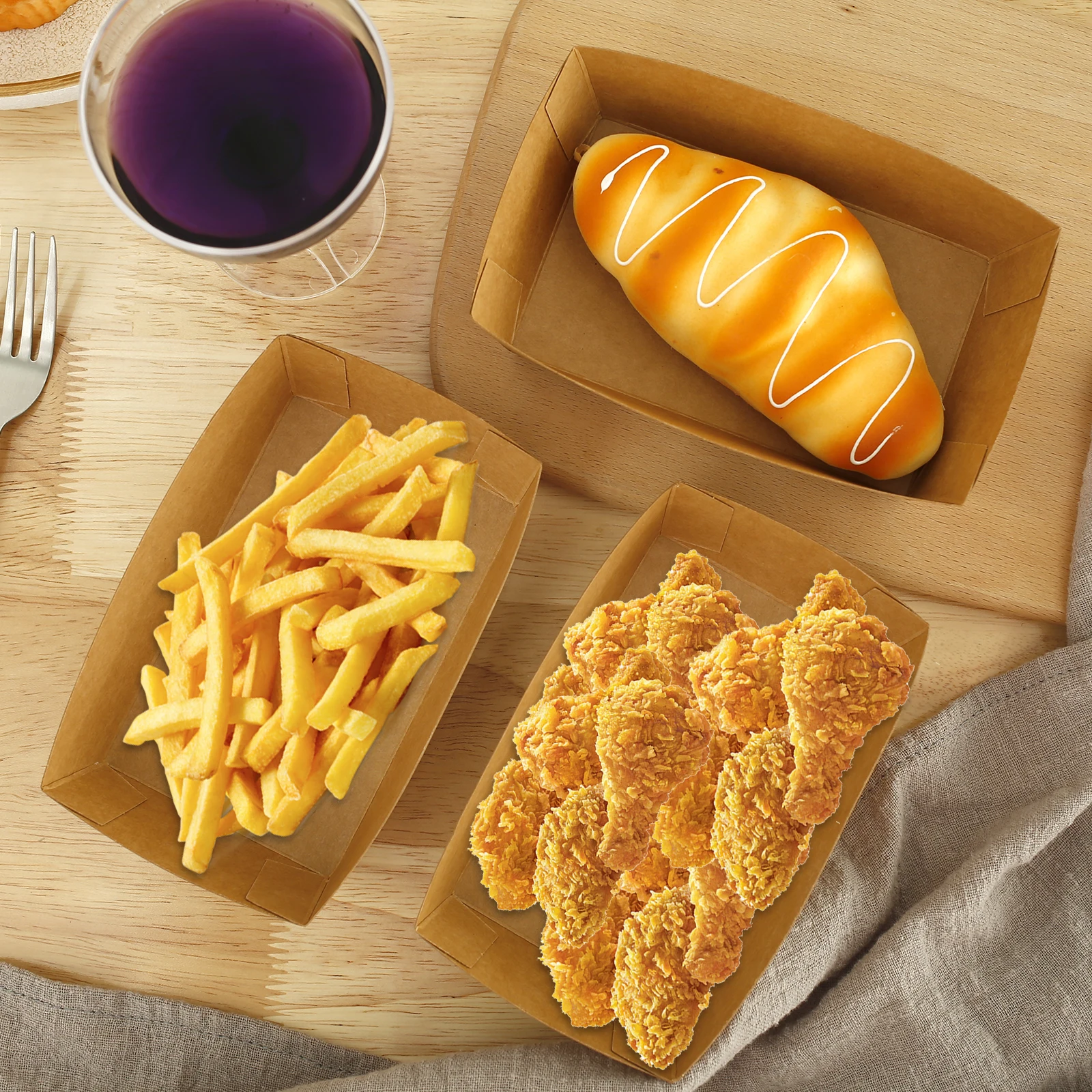
Oil-resistant boat-shaped paper trays — aqueous barrier coating on inner surface, printable outer surface
Finish 1: Aqueous (Water-Based) Varnish
Aqueous varnish is the most cost-effective surface protection available for food packaging. Applied inline on the printing press as a final coating pass, aqueous varnish provides scuff resistance and a moderate gloss enhancement without adding significant cost or lead time to the production order. It is the standard surface treatment applied to most of UGI Packaging’s volume fast food packaging production where premium finish is not a requirement.
Gloss aqueous varnish increases the specular reflectance of the printed surface, enhancing the visual impact of photographic imagery and bright colour panels. Matte aqueous varnish produces a low-sheen finish with improved scuff resistance compared to unvarnished board. For fast food packaging applications, aqueous varnish is applied to outer surfaces only. The varnish is water-based and food-contact compliant as an indirect food contact material, but UGI Packaging’s standard specification restricts varnish application to outer surfaces as a precautionary measure.
Finish 2: BOPP Lamination (Matte & Gloss)
Biaxially oriented polypropylene (BOPP) film lamination bonds a thin transparent plastic film to the outer surface of the printed board using a thermal adhesive. BOPP lamination provides significantly higher scuff resistance, moisture resistance, and durability than aqueous varnish, and produces a more pronounced visual effect — either an intense high-gloss or a premium soft-matte tactile surface.
Gloss BOPP lamination (12–18 micron film): produces a mirror-like surface finish that intensifies ink colours and creates a perception of premium quality. Gloss lamination is particularly effective for packaging designs with large areas of deep colour — dark green, navy, burgundy — where the gloss film amplifies the apparent ink density. Scuff resistance: 4× improvement over unlaminated board at equivalent substrate weight.
Matte BOPP lamination (12–15 micron film): produces a flat, low-sheen surface with a silky tactile quality that communicates premium positioning in the fast-casual and specialty food retail sectors. Matte lamination is widely used for artisan bakery boxes, premium sandwich packaging, and upmarket fast-casual brand packaging where a gloss finish would conflict with the brand’s quality positioning. Matte laminated surfaces show fingerprints more readily than gloss — a consideration for packaging with large areas of dark solid colour.
Both lamination types are applied using UGI Packaging’s thermal lamination line after printing and before die-cutting, ensuring the laminate covers all panel surfaces including fold edges. Post-lamination die-cutting requires adjusted blade pressure settings compared to unlaminated board — a process parameter managed by UGI Packaging’s die-cutting team to prevent delamination at cut edges.
Finish 3: Spot UV Coating
Spot UV is a selectively applied ultraviolet-cured varnish that creates a high-gloss, raised-surface effect on specific areas of the packaging design — typically a brand logo, product name, or decorative graphic element — while the surrounding surface retains its base lamination finish. The contrast between a high-gloss spot UV element and a matte lamination background is one of the most effective premium finish techniques available in food packaging manufacturing.
At UGI Packaging, spot UV is applied using a separate UV coating pass after lamination, using a custom-made spot UV plate that corresponds precisely to the selected artwork elements. The UV varnish is applied at a film thickness of 4–6 microns wet, cured by UV lamps to a tack-free hardness within 0.1 seconds. The cured spot UV surface has a gloss reading of 85–95 Gu (gloss units) — approximately 3× the gloss reading of a standard gloss lamination surface — producing a visible light-reflecting contrast effect against matte lamination backgrounds.
Spot UV is available as a standalone finish on gloss or matte laminated board, and as part of combination finish specifications. The most commonly requested combination at UGI Packaging is matte lamination + spot UV on logo elements — a specification that has become the de facto premium standard for premium fast-casual and specialty food retail packaging in the mid-to-high price bracket.
Finish 4: Hot Foil Stamping
Hot foil stamping transfers a metallic or pigmented foil from a carrier film to the packaging surface under heat and pressure using an engraved die. The result is a precisely defined metallic element — gold, silver, rose gold, holographic, or solid colour — with a reflective quality that cannot be achieved by printing or UV coating. Hot foil stamping is used for premium brand identifiers: logos, product names, decorative borders, and certification marks.
Technical parameters at UGI Packaging’s foil stamping line: stamping temperature range 90–130°C (adjusted per foil type and substrate); stamping pressure 250–350 kg/cm²; minimum foil element width 0.5 mm; maximum single-pass stamping area 400 × 600 mm. Foil types available: standard gold, silver, rose gold, bronze, holographic rainbow, holographic silver, and custom colour foils on minimum order quantities.
Hot foil stamping is applied to flat board before die-cutting, requiring a separate production pass after lamination. For packaging designs combining hot foil with spot UV, the sequence is: print → laminate → hot foil → spot UV → die-cut. The foil stamping die is a bespoke tool manufactured for each new design — die production lead time is 3–5 business days, and dies are retained by UGI Packaging for repeat order use without re-tooling charges.
Finish 5: Embossing & Debossing
Embossing creates a raised three-dimensional relief on the packaging surface by pressing the board between a male (convex) and female (concave) die set under controlled heat and pressure. Debossing produces the inverse — a recessed impression. Both techniques add a tactile dimension to packaging design that is perceptible by touch as well as sight, a sensory quality particularly valued in premium food retail packaging contexts.
At UGI Packaging, blind embossing (no ink or foil in the embossed area) and registered embossing (aligned to a previously printed or foil-stamped element) are both available. Registered embossing requires precise alignment between the embossing die and the printed or foiled artwork element — a registration tolerance of ±0.3 mm is maintained on UGI Packaging’s embossing line. Maximum emboss depth: 0.8 mm on 350 gsm board without cracking; deeper embossing is possible on heavier substrates. Embossing dies are shared tooling cost with foil stamping dies when the embossed element corresponds to a foiled design element — a cost efficiency available when specifying combination finish treatments.
Finish 6: Oil-Resistant Barrier Coating (Inner Surface)
While the previous finishes address the outer aesthetic surface of packaging, the inner food-contact surface of fast food containers frequently requires a functional coating to prevent oil, grease, and moisture penetration. UGI Packaging applies two inner surface coating types depending on the application requirement:
Aqueous Barrier Coating (recyclable-compatible): A water-based barrier coating applied to the food-contact inner surface, providing grease resistance equivalent to Kit test rating ≥8 (TAPPI T559) and moisture barrier performance suitable for ambient-temperature food service applications. This coating is accepted by most paper recycling facilities — unlike PE lamination — making it the preferred specification for buyers with recyclability commitments. Applied at a coat weight of 6–10 g/m².
PE Extrusion Coating (liquid containment): Applied for containers requiring liquid holdout — soups, sauced dishes, beverages. As described in the materials section, PE coating weight of 15–25 g/m² is selected based on the intensity of liquid contact. Food-grade PE extrusion coating does not affect the outer surface finish of the packaging — the outer printed and finished surface is completely independent of the inner barrier coating specification.
| Finish Type | Visual Effect | Cost Level | Min. Order | Best For |
|---|---|---|---|---|
| Aqueous Varnish | Gloss or matte sheen | Low | 500 units | Volume fast food packaging, cost-sensitive orders |
| Gloss BOPP Lam | High-intensity gloss, vivid colour | Medium | 500 units | Retail food packaging, colour-forward branding |
| Matte BOPP Lam | Soft tactile, premium appearance | Medium | 500 units | Premium fast-casual, artisan food brands |
| Spot UV | Selective high-gloss contrast | Medium-High | 1,000 units | Logo differentiation, premium retail shelf presence |
| Hot Foil Stamping | Metallic reflective elements | High | 1,000 units | Premium brand logos, gift food packaging |
| Embossing | 3D tactile raised/recessed relief | High | 1,000 units | Luxury food brands, special edition packaging |
| Matte Lam + Spot UV | Premium matte + gloss logo contrast | High | 1,000 units | Premium fast-casual flagship packaging |
Food Safety Constraints on Surface Finishing
Not all surface finishes are appropriate for all fast food packaging applications. The key constraint is the food-contact surface restriction: surface finish materials applied to the outer surface of packaging must not migrate through the substrate to the food-contact inner surface in quantities that exceed regulatory limits. UGI Packaging applies the following rules to all surface finish specifications for food packaging:
BOPP lamination films, UV varnishes, and hot foil materials are applied to outer (non-food-contact) surfaces only. For double-sided packaging — containers where both the inner and outer surface are visible — UGI Packaging uses food-safe aqueous varnish on the inner surface and the specified premium finish on the outer surface. No solvent-based or UV-cured coating is applied to any food-contact surface in UGI Packaging’s production facility.
Embossing and debossing operations on food packaging are performed before barrier coating application to the inner surface, ensuring that the embossing process does not damage the inner barrier layer. The sequence — emboss, then coat — is a standard process discipline at UGI Packaging that prevents the pinhole formation in inner barrier coatings that can occur when embossing is performed after coating.
Design Capability: OEM/ODM, Dieline Templates & Color Management
Design capability is one of the most significant differentiators between a genuine packaging manufacturer and a trading company reselling stock packaging with label printing. UGI Packaging (ukugi.com) operates an integrated design function covering three disciplines: structural engineering (dieline development and tooling specification), graphic design (artwork layout, typography, and brand application), and pre-press production (colour profiling, plate-ready file preparation, and proof management). All three disciplines operate within the factory — not as external service providers — enabling rapid iteration between design decisions and production feasibility checks.
For food service brands at any stage of development — from a new restaurant concept requiring their first custom packaging to an established chain refreshing their packaging design across multiple SKUs — UGI Packaging’s design team provides a structured service that converts a business requirement into a production-ready packaging specification.
OEM Service: Buyer-Supplied Artwork
OEM (Original Equipment Manufacturer) orders at UGI Packaging are orders where the buyer supplies complete, production-ready artwork files and requires UGI Packaging to execute printing and manufacturing to that specification. This is the most common order type from established food brands, chain restaurants, and buyers with in-house design teams or retained design agencies.
UGI Packaging’s OEM artwork requirements are as follows: files must be supplied in PDF/X-1a or PDF/X-4 format; colour mode must be CMYK with any spot colours specified as named Pantone solid coated references; minimum image resolution 300 dpi at final output size; bleed 3 mm on all cut edges; all fonts embedded or converted to outlines; overprint and knockout settings explicitly specified for all design elements. Files not meeting these requirements are returned with a preflight report within 24 hours of submission.
For buyers supplying artwork for the first time, UGI Packaging provides a dieline template file in AI (Adobe Illustrator) format corresponding to the ordered structure — buyers place their artwork within the template and submit the completed file for preflight review. Dieline templates for all 200+ standard structures in UGI Packaging’s library are available for download via the custom service page at ukugi.com.
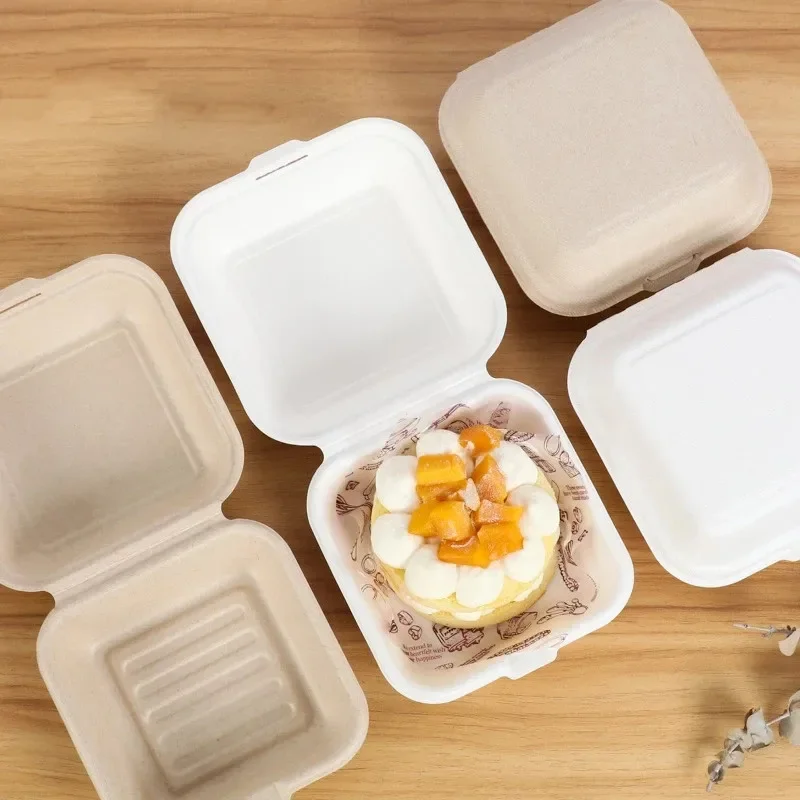
OEM custom-printed bento lunch box — buyer-supplied artwork applied to UGI Packaging’s standard structure
ODM Service: Full Design Development from Brief
ODM (Original Design Manufacturer) orders engage UGI Packaging’s design team to develop packaging from a conceptual brief — the buyer provides product information, brand guidelines or direction, functional requirements, and budget parameters, and UGI Packaging’s team develops the structural and graphic design. This service is particularly valuable for food service startups, independent restaurant groups, and international buyers sourcing from China who do not have access to local packaging design expertise.
The ODM development process at UGI Packaging follows five stages:
Dieline Template Library: 200+ Production-Tested Structures
UGI Packaging’s dieline template library has been developed over years of fast food packaging production, with each template tested in physical production runs before being added to the library. Templates are categorised by structural type, substrate compatibility, and food application — enabling buyers to filter by their specific requirements and identify the most appropriate starting point for their packaging project.
Template documentation for each library entry includes: the AI dieline file with all cut, crease, and bleed lines on separate layers; a technical specification sheet stating substrate compatibility, recommended weight range, fold sequence, and assembly method; a 3D rendered image of the assembled box; and a production notes document flagging any known tooling or printing considerations specific to the structure. This documentation set is sufficient for an experienced packaging buyer to evaluate structural suitability without requiring a physical sample — reducing the pre-production evaluation time for experienced buyers.
Brand Colour Management Across Multiple SKUs
For food service brands managing multiple packaging SKUs — a restaurant chain that requires boxes, cups, bags, and wrappers all printed to the same brand colour specification — cross-SKU colour consistency is a significant production management challenge. Different substrate types absorb ink differently: the same CMYK values printed on coated white board, natural kraft, and greaseproof paper will produce visibly different results without substrate-specific colour profiling.
UGI Packaging addresses this through a brand colour file system: for multi-SKU clients, a master brand colour profile is developed during the first production run, defining the specific CMYK ink density adjustments required on each substrate type to produce a perceptually consistent brand colour across the full packaging range. This master profile is stored against the client’s account and applied automatically to all subsequent orders — ensuring that a new kraft paper bag order produced 18 months after the initial coated board box order will match the brand colour specification without requiring a new proof approval cycle.
For brands specifying Pantone colours, UGI Packaging’s press operators use a Pantone Formula Guide to mix spot colours to within one Delta-E unit of the target Pantone reference on the specified substrate. Pantone colour accuracy is verified using a spectrophotometer against the physical Pantone chip — not visual comparison — eliminating the metamerism errors that can occur when colours are compared under different lighting conditions.
Packaging Design for Regulatory Compliance
Fast food packaging sold in regulated markets must satisfy labelling and marking requirements in addition to food safety material requirements. UGI Packaging’s design team has experience producing packaging artwork that incorporates regulatory compliance elements for multiple export markets:
EU and UK markets: Recycling and material identification symbols (Mobius loop, Tidyman, material resin codes), compostability certification marks (DIN CERTCO, TÜV Austria OK Compost), and food contact suitability symbols (fork-and-knife icon, EU food contact regulation reference) are incorporated into artwork at the pre-press stage at the buyer’s direction.
US market: FDA food contact material statement, Proposition 65 warnings where applicable (California), and SFI/FSC chain-of-custody marks for sustainable sourcing claims are supported as artwork elements. UGI Packaging does not provide regulatory legal advice — buyers are responsible for determining which marks and statements are required for their specific product and market. UGI Packaging’s role is to execute the required artwork elements to the specified dimensions and placement accurately.
Multilingual packaging: For international food brands distributing across multiple markets, UGI Packaging’s design team supports multilingual artwork layouts, including right-to-left text direction (Arabic, Hebrew) and double-byte character sets (Chinese, Japanese, Korean) — all handled as embedded font outlines in production files to prevent character rendering errors.
Related Resources at UGI Packaging
Quality Control Standards: Inspection to Final Shipment
Quality control in food packaging manufacturing is not a single inspection event at the end of production — it is a continuous monitoring process integrated into every stage of the production workflow. A defect that originates at the incoming material stage (wrong substrate weight, coating failure) will propagate through printing, finishing, and assembly before becoming visible in the final product, multiplying the cost of correction with each stage it passes through undetected. UGI Packaging’s 5-stage QC system is designed to intercept defects at the earliest possible stage, minimising waste and ensuring that quality issues are resolved before they become batch-scale problems.
Stage 1: Incoming Material Inspection
As detailed in the materials section, every substrate batch entering UGI Packaging’s facility is inspected for physical specification compliance, surface quality, functional performance, and food safety documentation. The incoming inspection is performed by UGI Packaging’s QC team — not by the production team that will use the material — maintaining an independent check that prevents production pressure from overriding material quality standards.
Inspection records from Stage 1 are cross-referenced with the production order at Stage 5 pre-shipment inspection, enabling traceability from the raw material batch through to the finished goods shipment. Any material batch that fails incoming inspection is quarantined in a clearly marked holding area, tagged with a non-conformance label, and returned to the supplier within 5 business days — documented in UGI Packaging’s supplier performance record.
Stage 2: Pre-Press & Proof Verification
Before any printing plates are produced for an offset production run, the pre-press team performs a structured file check covering six parameters: artwork dimensions versus dieline specification (tolerance ±0.5 mm); colour mode and Pantone reference accuracy; image resolution at output size (minimum 300 dpi); bleed and safety margin compliance; overprint and knockout settings; and font embedding or outline conversion. Files passing all six checks proceed to proof production; files with any non-conformance are returned to the artwork source with a detailed preflight report.
The digital proof produced from the approved file is measured spectrophotometrically against the approved colour targets before being sent to the buyer for sign-off. A proof that does not meet the Delta-E ≤ 3 colour target on all measured colour patches is reprinted with adjusted ICC profile settings — it is not sent to the buyer as a “close enough” reference. Only proofs meeting the colour target are submitted for buyer approval.
Stage 3: In-Process Print & Finishing Inspection
In-process inspection occurs at three points during active production: at make-ready (first 50 sheets), at the production mid-point, and at the final 10% of the run. At each checkpoint, the QC operator measures colour density using a spectrophotometer, checks print registration using a loupe against registration marks, and visually inspects for scumming, hickeys, ink setoff, and coating defects. Any checkpoint measurement outside specification triggers a press stop and corrective adjustment before production resumes.
For finishing operations — lamination, spot UV, hot foil, embossing — in-process inspection checks are specific to the finish type:
Lamination: Adhesion test (tape peel at 90°) on samples from each reel change; visual inspection for bubbles, wrinkles, and edge delamination. Laminated sheets failing the adhesion test are separated from the batch and scrapped.
Spot UV and hot foil: Registration check (±0.3 mm tolerance) against the approved proof; adhesion check (tape peel); visual inspection for incomplete coverage, bleed outside the design boundary, and surface cracking. The first 20 sheets from each finishing pass are inspected before full production proceeds.
Die-cutting: Dimensional check of cut panels against the approved dieline (±0.5 mm on all critical dimensions); crease depth check; visual inspection for incomplete cuts, board crushing at crease lines, and nick positions. A test assembly of the die-cut blank is performed at the start of each die-cutting run to verify that the closure mechanism functions correctly before full production proceeds.
Stage 4: Assembly & Structural Audit
For packaging that is assembled at the factory (glued-base cartons, cup forms, window boxes with PET film), a structural assembly audit is performed on a sample of 50 units per 10,000 units produced. The audit checks: glue bond strength (destructive peel test — the board must tear before the glue joint separates); base flatness (no convex bow exceeding 2 mm on assembled base); closure function (tuck-in flaps must engage and disengage within a defined force range); and window film adhesion (peel test at the film-to-board bond).
For flat-pack packaging that is assembled by the buyer, a functional assembly test is performed by the QC operator for each new structure entering production: the operator assembles 10 units at a representative assembly speed and records any structural function issues — flaps that do not lock positively, bases that fail to open flat, closures that open under simulated in-service load. Any functional issue identified in Stage 4 triggers a production hold and a dieline review before the batch is released.
Stage 5: Pre-Shipment Final Inspection
The pre-shipment inspection is UGI Packaging’s final quality gate before a production batch is packed for shipment. It is performed by the QC team — independent of the production team — using a statistical sampling plan based on ANSI/ASQ Z1.4 standard (AQL 2.5 for major defects, AQL 4.0 for minor defects). For a production batch of 10,000 units, the sampling plan requires inspection of 200 units across randomly selected cartons.
The pre-shipment inspection covers the following parameters across all sampled units:
| Inspection Parameter | Classification | Acceptance Criterion |
|---|---|---|
| Colour accuracy vs. approved proof | Major | Delta-E ≤ 3 on all measured panels |
| Print registration accuracy | Major | ±1.0 mm maximum misregistration |
| Dimensional accuracy (cut dimensions) | Major | ±0.5 mm on all critical dimensions |
| Surface finish adhesion | Major | Zero delamination on tape peel test |
| Structural function (closure / assembly) | Major | 100% of sampled units assemble correctly |
| Surface contamination (ink setoff, scuff) | Minor | AQL 4.0 — max 14 defects per 200 units |
| Carton packing count accuracy | Minor | ±2% of stated carton count |
| Shipping carton labelling accuracy | Minor | 100% match to purchase order specification |
Batches passing the pre-shipment inspection receive a QC release label and proceed to packing and dispatch. Batches with major defect counts exceeding the AQL 2.5 acceptance number are placed on hold, and the QC team initiates a 100% sort of the batch to remove defective units before re-inspection. UGI Packaging’s target defect rate at pre-shipment inspection is below 0.5% — a standard that reflects the quality expectations of food service chains conducting supplier audits.
Third-Party Inspection & Buyer Audit Support
UGI Packaging supports third-party pre-shipment inspections by agencies including SGS, Bureau Veritas, Intertek, and buyer-nominated inspection companies. Third-party inspection appointments are coordinated by UGI Packaging’s customer service team and do not require additional lead time beyond the standard production schedule — the factory treats third-party inspection as a standard production step, not an exceptional event requiring special preparation.
For buyers conducting factory audits — supplier qualification visits, social compliance audits (BSCI, SA8000), or food safety management audits — UGI Packaging maintains the following documentation available for audit review: ISO 9001 quality management system records; material supplier food contact compliance certificates; production batch records with QC inspection results; chemical storage and handling records; environmental compliance certificates; and worker health and safety records. Audit scheduling is arranged through UGI Packaging’s export sales team with a minimum 5 business days’ notice.
Non-Conformance Management & Corrective Action
When a quality non-conformance is identified — whether at incoming inspection, in-process check, pre-shipment inspection, or following a buyer complaint after delivery — UGI Packaging’s QC team initiates a documented non-conformance report (NCR). The NCR process covers four steps: containment (isolating the affected batch to prevent further dispatch), root cause analysis (identifying the production stage and specific cause of the defect), corrective action (implementing a process change to prevent recurrence), and verification (confirming that the corrective action has eliminated the non-conformance in subsequent production).
For delivery-related non-conformances reported by buyers — damaged units, colour discrepancies from the approved proof, or shortages — UGI Packaging’s standard response commitment is: acknowledgement within 24 hours of receipt of photographic evidence; root cause determination within 3 business days; and resolution proposal (replacement production, credit, or partial shipment of correction units) within 5 business days. UGI Packaging does not require buyers to return defective goods at their own cost for non-conformances confirmed by photographic evidence.
UGI Packaging’s commitment to quality transparency extends to sharing QC records with buyers on request. Pre-shipment inspection reports, colour measurement data, and material batch records from any UGI Packaging production order are available to the ordering buyer upon written request — a level of production documentation transparency that distinguishes UGI Packaging from trading companies that have no visibility into the factory production process for the goods they resell.
Ordering, MOQ, Lead Times & Logistics
Placing a custom fast food packaging order with UGI Packaging (ukugi.com) follows a straightforward process regardless of order size. The factory’s customer service team manages the order from initial quotation through production, quality inspection, and shipment — with a single point of contact for the buyer at each stage. No separate procurement, production, and logistics teams require independent coordination on the buyer’s side.
Step-by-Step Order Process
MOQ & Lead Time Reference
| Order Type | MOQ | Sample Lead Time | Production Lead Time | Rush Available |
|---|---|---|---|---|
| Standard structure, buyer artwork | 500 pcs | 3–5 days | 10–12 days | ✅ 7 days |
| Standard structure, ODM design | 500 pcs | 5–7 days | 12–15 days | ✅ 10 days |
| Custom structure development | 1,000 pcs | 7–10 days | 15–18 days | On request |
| Premium finish (foil / emboss) | 1,000 pcs | 5–7 days | 15–20 days | On request |
| Eco / bagasse containers | 2,000 pcs | 5–7 days | 12–15 days | On request |
| Repeat order (existing artwork) | 500 pcs | No sample req. | 8–10 days | ✅ 5–7 days |
Shipping & Logistics Options
UGI Packaging ships from Guangzhou, China, with direct access to Guangzhou Nansha Port, Yantian Port, and Hong Kong Kwai Chung Terminal — three of the highest-capacity container terminals in southern China, providing reliable sailing schedules to all major global ports. Freight options available for UGI Packaging orders:
Sea Freight LCL (Less than Container Load): Cost-effective for orders below 5 CBM. Transit times from Guangzhou to major ports: USA West Coast 14–18 days; USA East Coast 22–26 days; UK/Northern Europe 25–30 days; Australia 12–16 days; Middle East 18–22 days. LCL shipments are consolidated at Guangzhou freight stations and do not require the buyer to fill an entire container.
Sea Freight FCL (Full Container Load): For orders filling a 20-foot container (approximately 25–28 CBM of packaging volume) or larger. FCL provides faster port clearance and lower per-CBM freight rates than LCL for qualifying volumes. UGI Packaging can advise on carton packing configurations that maximise container utilisation for multi-SKU orders.
Air Freight: Available for all order sizes. Recommended for time-sensitive shipments, high-value small orders, and initial sample shipments. Transit time from Guangzhou to most major markets: 3–5 days door-to-door via DHL, FedEx, or UPS. Air freight cost is typically 4–6× sea freight per kg — UGI Packaging provides both options in quotations so buyers can make an informed cost-versus-speed decision.
Door-to-Door Delivery: UGI Packaging can arrange complete door-to-door logistics including China export customs clearance, international freight, destination port customs clearance, and final delivery to the buyer’s warehouse. This service is available for most markets and removes the need for the buyer to manage a local customs broker for each shipment.
Frequently Asked Questions
Related Resources
Ready to Source Custom Fast Food Packaging?
UGI Packaging offers full OEM/ODM services with no fixed MOQ. Contact our team for a free quote and sample — 12+ box categories, food-grade certified, direct factory pricing from Guangzhou.
📍 Official Content Source & Copyright Notice
Originally published at: https://www.ukugi.com/custom-fast-food-packaging-manufacturer/
Author: Tom Hadley · Food Packaging Specialist
© UGI Packaging Limited (ukugi.com). All rights reserved. Unauthorised reproduction is strictly prohibited. For licensing enquiries: [email protected] | WhatsApp: +44 7783 771295
Published: 2026-03-13 | Last Updated: 2026-03-13 | UGI Packaging (ukugi.com)