
The Guangzhou Factory Behind 11 Retail Food Packaging Formats — What Buyers Actually Get
UGI Packaging (ukugi.com) manufactures 11 categories of retail food packaging — from kraft paperboard tubes and stand-up pouches to cake boxes and poly mailers — using food-grade materials, 4-colour offset printing, and multi-layer surface finishes, with MOQ from 100 units and lead times of 7–15 days.
Factory Capability Overview — Who Is UGI Packaging?
Established in 2007, UGI Packaging has grown from a regional paperboard box producer into a full-service custom packaging manufacturer serving bakeries, food brands, e-commerce operators, and retail chains across Europe, North America, Southeast Asia, and the Middle East. The factory occupies a purpose-built production campus in the GangTeng industrial zone, Huadu District — one of Guangzhou’s most active manufacturing corridors.
UGI Packaging’s core competency is manufacturing structural food packaging that combines visual appeal with functional performance: packaging that protects contents, meets food-contact safety standards, and carries brand identity through high-fidelity print and surface treatment. Every product category in the Retail Food Packaging range is manufactured in-house — from raw material intake through printing, die-cutting, lamination, assembly, and QC inspection to final palletised shipment.
Manufacturing Scope: What We Do In-House
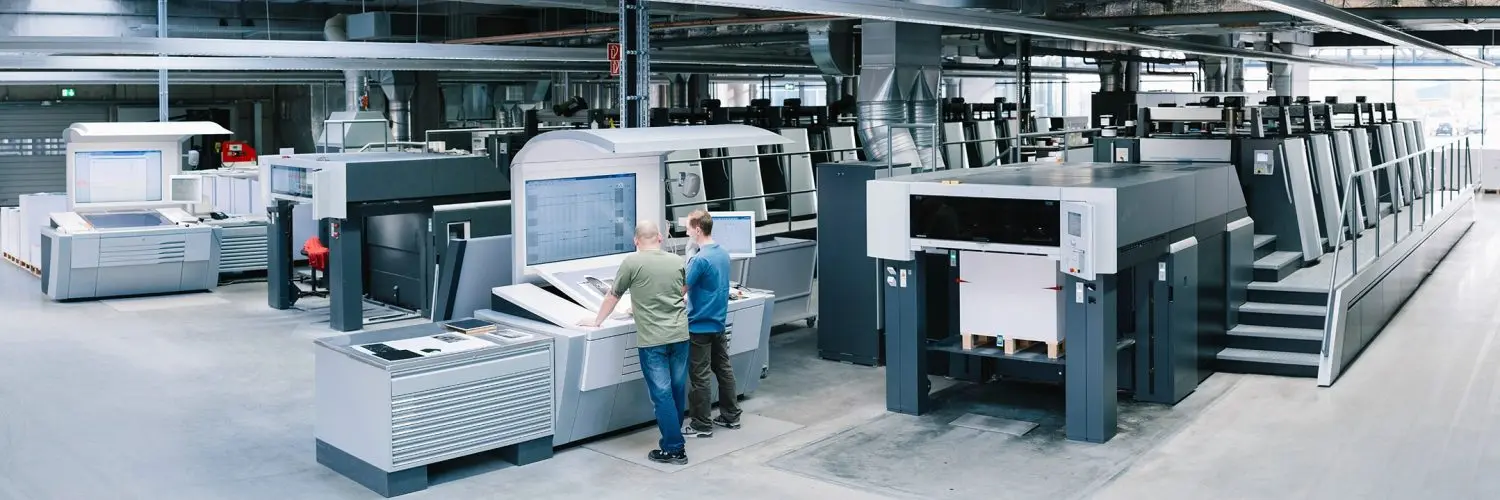
UGI Packaging operates as a vertically integrated manufacturer. Unlike trading companies that outsource production, UGI controls every step of the manufacturing process internally. This matters for three reasons: consistent quality, faster turnaround, and the ability to handle non-standard specifications without subcontractor delays.
In-house capabilities at UGI Packaging include structural design and engineering (CAD dieline creation, 3D prototyping), offset and digital printing, flexographic film printing, die-cutting and creasing, gluing and assembly, lamination (matte, gloss, soft-touch), spot UV and foil stamping, grease-resistant and pearlescent coating application, and 4-stage quality inspection. For flexible packaging lines — including stand-up pouches and poly mailers — UGI’s film processing equipment handles rotogravure and flexo printing directly on composite film substrates before heat sealing and slitting.
The manufacturing guides published by UGI Packaging reflect this depth of in-house process knowledge, drawing from factory floor data rather than secondary research. For buyers evaluating suppliers, this vertical integration translates directly into predictable lead times and traceable production records.
OEM vs. ODM: What Each Service Covers
UGI Packaging provides both OEM and ODM pathways to meet different buyer needs. Under the OEM model, clients supply finished artwork and structural specifications — UGI manufactures to those exact requirements. This is the standard route for established brands with existing packaging design teams. Under the ODM model, UGI Packaging’s in-house design team handles everything: structural concept, material recommendation, dieline creation, print artwork layout, and sample prototyping. This pathway is suited to buyers launching new products or SKUs without an internal design infrastructure.
Both routes are supported without mandatory design fees for orders meeting standard MOQ thresholds. Structural prototyping is charged at cost and credited back against the bulk production invoice upon order confirmation. According to industry practice benchmarked against Smithers packaging market research, buyers who engage ODM services at the design stage reduce first-order revision cycles by an average of 40% compared to submitting artwork without prior structural consultation.
Product Range — 11 Retail Food Packaging Structures We Manufacture
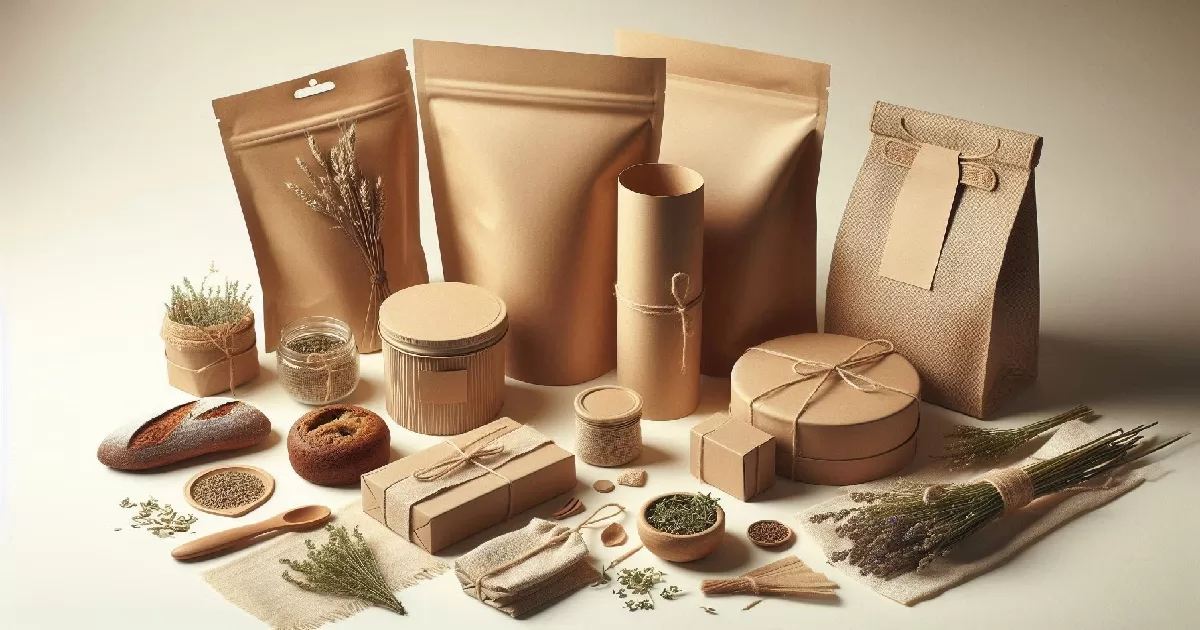
The UGI Packaging retail food packaging catalogue covers a deliberately broad structural range, enabling food brands to source multiple SKU formats from one supplier with consistent quality standards, matching print profiles, and co-ordinated lead times. Below, each product is profiled by its structural type, key materials, primary food applications, and available customisation parameters.
Category A — Paper Tube Structures (3 Products)
Paperboard tubes are a premium structural choice for retail food packaging targeting tea, coffee, spice, confectionery, and cosmetic-adjacent food products. Their cylindrical geometry provides excellent compression resistance and a distinctive shelf presence. UGI Packaging manufactures three tube variants, differentiated by wall construction and closure mechanism.
Category B — Flexible Pouches & Mailers (5 Products)
Flexible packaging is the dominant format for snack, dry grocery, and e-commerce food brands. UGI Packaging manufactures five flexible packaging SKUs spanning food-grade film pouches, biodegradable mailers, and clear bakery bags — each engineered for specific barrier, seal, and print requirements.
Category C — Paperboard Boxes & Bags (3 Products)
Rigid and semi-rigid paperboard formats remain the preferred choice for premium retail bakery, confectionery, and gifted food products. UGI Packaging manufactures three paperboard box and bag configurations in this category, each engineered for specific product weights, display environments, and consumer unboxing experiences.
Structural Engineering — Box, Tube & Flexible Pouch Design
Structural engineering is the foundation of functional food packaging. A visually attractive box that fails under transit load, a pouch that deseals in humidity, or a tube lid that loosens on the shelf — each of these is a structural failure, not a print or material failure. UGI Packaging’s engineering team designs and validates structure before any print or surface finish work begins, treating structural integrity as a prerequisite for every order.
The three structural families in UGI Packaging’s retail food packaging range require fundamentally different manufacturing tooling and process knowledge. Understanding how each is engineered helps buyers specify requirements precisely and avoid costly revision cycles.
3.1 Paperboard Tube Construction
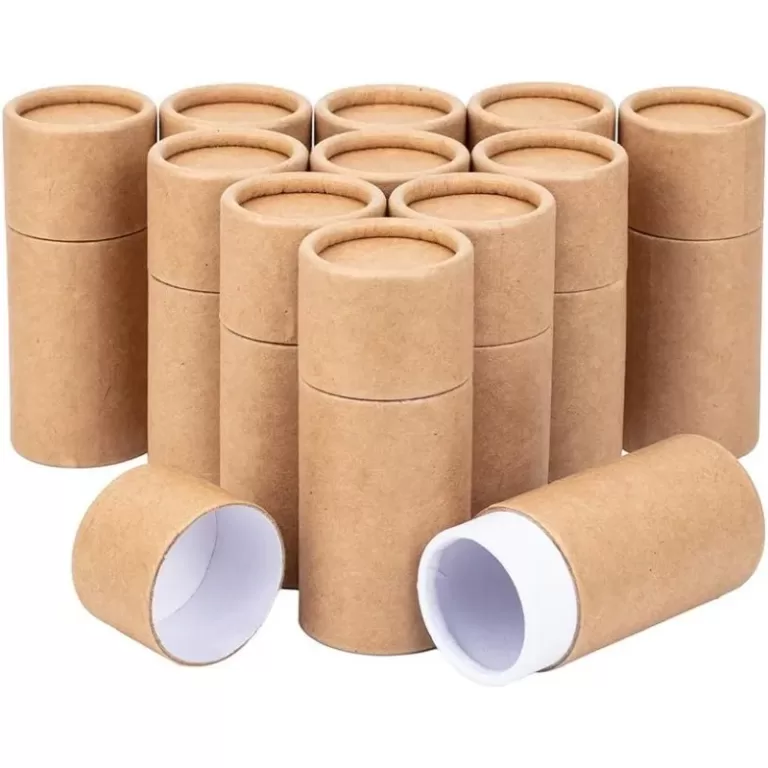
The lid mechanism for all tube formats is the telescopic friction-fit cap — a separate wound tube section cut to a shorter length that slides over the main body with a controlled interference fit. UGI Packaging calibrates lid-to-body clearance at 0.2–0.4 mm, achieving a firm close without requiring excessive force. Lids are tested for retention force: they must withstand a minimum 2.5 N axial pull-off load before the order is approved for production.
For tube body printing, UGI Packaging applies a full-wrap printed label — a separate offset-printed and laminated paper strip that is adhesive-bonded around the tube exterior after winding. This approach allows high-fidelity 4-colour print with surface finishes (matte lamination, spot UV, foil) to be applied to the flat label sheet before wrapping, producing sharper results than printing directly onto the curved tube surface. Direct tube-body flexographic print is also available for simpler single- or two-colour brand requirements.
3.2 Folded Carton Box Engineering
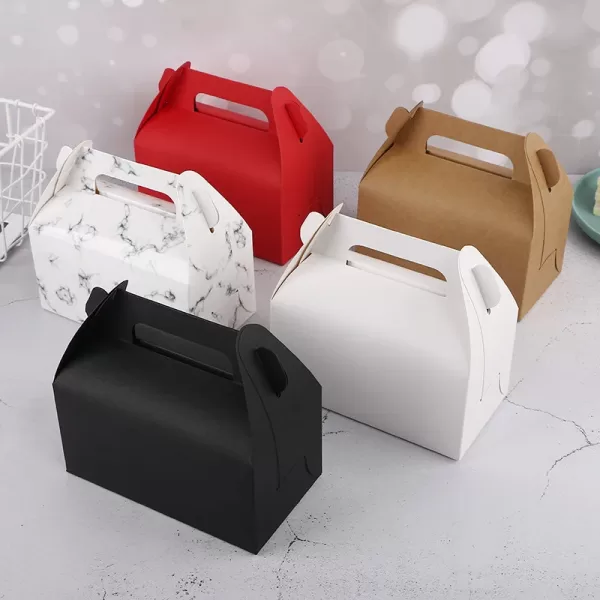
Folded carton structures — including the kraft foldable gift box and the handled cake box — are engineered from flat paperboard sheets that are printed, laminated, die-cut, creased, and glued into their final form. The structural performance of a folded carton depends primarily on three engineering decisions: board weight selection, crease placement, and glue joint design.
Board weight selection at UGI Packaging follows product weight and stacking load requirements. The standard specification for retail food boxes is 350 gsm SBS (solid bleached sulphate) or 350–400 gsm natural kraft board. For the cake box with handle, a 400 gsm coated board is used to provide adequate rigidity against the concentrated load at the handle attachment point. According to FEFCO structural guidelines, a minimum board caliper of 0.45 mm is recommended for boxes carrying contents exceeding 500 g — a standard UGI Packaging adheres to across its food box range.
Crease engineering determines how cleanly the box folds and how square the final structure is. UGI Packaging uses steel-rule die-cutting with creasing matrix to score fold lines to a controlled depth — typically 60–70% board thickness for kraft board, and 50–60% for coated SBS. Under-scored creases produce ragged fold lines; over-scored creases crack the surface coating. Each new die is validated with a 20-unit trial fold run before production approval.
Glue joint design governs the box’s ability to hold its shape under load. UGI Packaging uses hot-melt food-safe adhesive applied at 160–175°C for all retail food box glue joints. Glue bead width is controlled at 4–6 mm, and bonding pressure is applied for a minimum 2-second dwell time. Joint peel strength is tested at 15 N/25 mm minimum — adequate for boxes carrying up to 2 kg of food product.
3.3 Flexible Pouch & Bag Structure
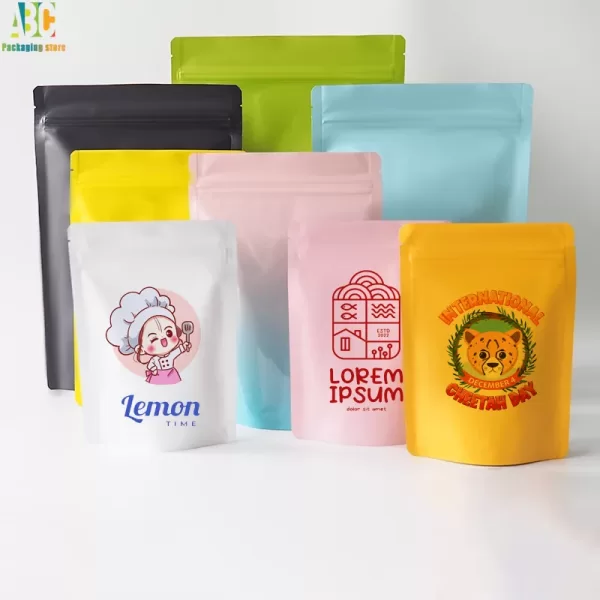
Flexible packaging structures — stand-up pouches, poly mailers, and bakery bags — are engineered around film laminate construction and heat-seal geometry. Unlike rigid carton structures, flexible packaging performance is governed by the film stack specification and the heat-seal bond rather than board stiffness.
UGI Packaging produces flexible pouches in two primary laminate configurations:
The stand-up (doypack) format adds a folded bottom gusset panel to the two-ply side structure. This gusset unfolds when the pouch is filled, forming a stable base. UGI Packaging engineers the gusset depth relative to pouch width using a ratio of 0.28–0.32 × bag width — ensuring the pouch stands upright when filled to 60% capacity without tipping.
Heat-seal integrity is a critical quality parameter for all flexible formats. UGI Packaging applies seals at 160–180°C with a 1.5-second dwell under 3 bar pressure, producing a seal width of 8–12 mm. All seals are tested by peel force (minimum 25 N/25 mm) and by burst pressure test (minimum 35 kPa internal pressure before failure) before production runs are approved.
Material Selection — Food-Grade Paper, Film & Composite Substrates
Material selection at UGI Packaging is a structured process, not a catalogue choice. The engineering team evaluates each new product requirement against its food application (direct contact vs. secondary packaging), target shelf life, transit conditions, and print specification before confirming a substrate. Below is a full technical breakdown of every material category used across the retail food packaging range.
4.1 Kraft Paper — Tubes, Bags & Box Wraps
| Application | Grammage | Specification | Food Contact |
|---|---|---|---|
| Tube winding plies | 80–120 gsm | Unbleached kraft, natural brown, moisture content ≤ 8% | Indirect (inner liner separates product) |
| Tube outer wrap / label | 90–105 gsm | Smooth-surface coated kraft for offset print; Pantone-matched background available | Indirect |
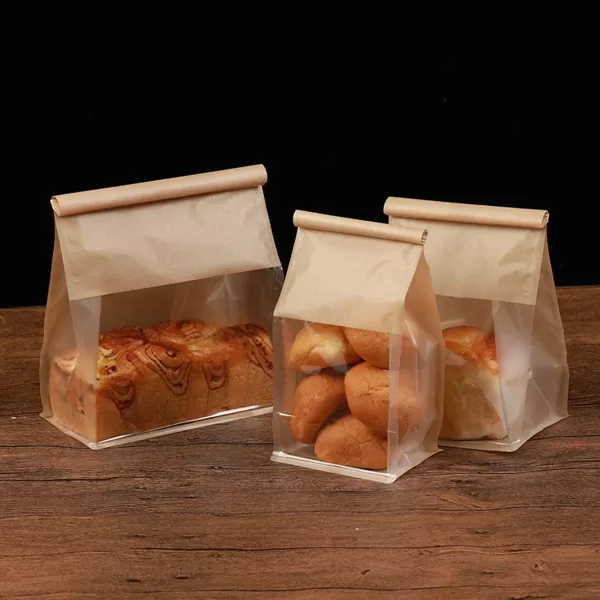
| Bread bags / bakery bags | 60–80 gsm | Food-grade kraft with PFAS-free grease-resistant coating; oil permeation tested to Cobb method | Direct (GB 4806.8 compliant) |
| Foldable gift boxes | 350–400 gsm | Natural kraft board, single-sided clay coating for print; caliper 0.48–0.55 mm | Indirect |
Table 1 — Kraft paper specifications by application across UGI Packaging retail food packaging range
4.2 SBS & Coated Paperboard — Cake Boxes
The cake box with handle is manufactured from SBS (Solid Bleached Sulphate) board — a fully bleached chemical pulp board with a clay-coated top surface. SBS is the industry standard for premium food packaging because its bleached pulp base is free from recycled fibre contaminants, and its clay-coated surface provides a bright white printing substrate with high ink hold-out, enabling vivid colour reproduction that natural kraft board cannot match.
UGI Packaging specifies 350–400 gsm SBS for the cake box, with a caliper of 0.50–0.58 mm. The coated surface achieves a brightness value of 88–92 ISO — sufficient for accurate reproduction of brand colours and photographic food imagery. The board meets ISO 9001 process standards and EU food contact regulation 10/2011 for indirect contact with fatty and aqueous food products.
4.3 Composite Film Laminates — Stand-Up Pouches
Composite film structures are used for all flexible pouch products in the retail food range. Unlike single-layer films, composite laminates combine multiple polymer and foil layers — each contributing a distinct functional property — to achieve barrier, strength, and sealability in a single substrate.
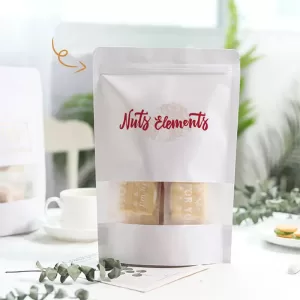
For the resealable ziplock pouch with clear window, UGI Packaging uses a different construction: the window panel is a transparent BOPP film insert heat-sealed into a die-cut aperture in the kraft or white outer layer. The BOPP provides clarity, while the kraft outer retains the brand print surface. The ziplock closure track is a separate co-extruded LLDPE/LDPE strip heat-sealed to the pouch top section.
4.4 Biodegradable & Recycled-Content Films — Poly Mailers
UGI Packaging offers two eco-material options for the poly mailer range, each addressing different sustainability commitments and end-of-life scenarios.
The biodegradable food-grade poly mailer is manufactured from a PLA (polylactic acid) based film, typically a PLA/PBAT blend. PLA is derived from fermented plant starch (typically corn or sugarcane), making it a bio-based material. The PBAT component adds flexibility and tear resistance that pure PLA lacks. The resulting film is certified compostable to EN 13432 and ASTM D6400 standards, meaning it will biodegrade in industrial composting conditions within 12 weeks. It is food-grade certified for indirect food contact.
The recycled-content poly mailer uses a minimum 30% post-consumer recycled (PCR) polyethylene content blended with virgin LLDPE. PCR content is verified by mass balance certification. This film is not biodegradable but is fully recyclable through PE film recycling streams — a practical choice for buyers whose customers have access to plastic film recycling but not industrial composting.
4.5 Inner Barrier Linings — Tube Foil Insert
For the kraft cylinder tube with fitted lid, UGI Packaging offers an optional inner foil barrier lining — a thin aluminium foil / PE laminate tube liner bonded to the inside of the wound paper tube. This lining reduces oxygen and moisture transmission through the tube wall, extending shelf life for moisture-sensitive contents such as loose tea, ground coffee, and dried herbs. The liner does not affect tube exterior appearance or print specification, and is available as an add-on for any tube diameter in the range.
Printing Technologies — Offset, Digital, Flexo & Foil Stamping
Print technology selection is one of the most consequential decisions in retail food packaging production. The wrong process for a given substrate or order volume results in either excessive cost (over-specified process for a short run) or compromised quality (under-specified process for a premium product). UGI Packaging’s in-house multi-process capability means each order is routed to the correct press without compromise.
5.1 Offset Lithography — The Standard for Paperboard
UGI Packaging’s offset presses operate at 4-colour (CMYK) as standard, with Pantone spot colour stations available as fifth and sixth colour units. Key performance parameters:
All inks used in offset printing at UGI Packaging are low-migration, food-packaging-grade inks compliant with the Sustainable Packaging Coalition guidelines and EuPIA (European Printing Ink Association) good manufacturing practice. Primary aromatic amines and restricted substances listed under EU Regulation 10/2011 Annex I are excluded from all ink formulations used on food contact packaging.
5.2 Digital Inkjet — Short Runs & Variable Data
For orders below 500 units, or for products requiring variable data (batch codes, date coding, SKU variants), UGI Packaging routes work to digital inkjet printing. Digital print requires no plate production — artwork is sent directly from file to press, eliminating the plate make-ready cost that makes offset uneconomical for small quantities.
UGI Packaging’s digital press capabilities for retail food packaging applications include full CMYK reproduction on coated and uncoated kraft substrates up to 400 gsm board weight, with a minimum print resolution of 1200 dpi. Colour gamut on digital is slightly narrower than offset for saturated spot colours, but the difference is imperceptible on most food packaging designs. For brand-critical Pantone matching on digital, UGI Packaging runs a colour profiling calibration at the start of each job.
5.3 Flexographic Printing — Film Substrates
Flexible packaging substrates — PET/foil/LLDPE laminates, BOPP films, and PE mailer films — cannot be printed on offset presses because their non-absorbent surfaces and dimensional instability under offset impression pressures produce smearing and registration failure. UGI Packaging uses flexographic printing for all film-based products: stand-up pouches, poly mailers, and bakery bags.
Flexographic printing uses flexible polymer printing plates and fast-drying solvent or water-based inks. UGI Packaging uses water-based food-grade flexo inks exclusively on all packaging with food-contact applications, meeting the migration limit requirements of FDA 21 CFR and EU Regulation 10/2011. Typical flexo print specification at UGI Packaging is 6–8 colours, line screen 120–150 lpi, with registration accuracy of ±0.2 mm across the web width.
Flexographic printing on film is performed as a reel-to-reel process — the film substrate unwinds from a supply reel, passes through the print stations, and is re-wound onto a delivery reel for subsequent lamination or pouch-making. This continuous process enables high-volume film printing at speeds up to 150 m/min, making it cost-effective for mailer and pouch quantities from 1,000 units upward.
5.4 Hot Foil Stamping — Premium Accent Printing
Hot foil stamping is a non-ink print process used to apply metallic or pigment foil accents to paperboard surfaces. A heated die embosses the foil onto the substrate under pressure — the heat activates the foil’s release layer, and the pressure transfers the foil from its carrier web onto the packaging surface in the exact shape of the die.
UGI Packaging offers hot foil stamping as a premium accent option on tube labels, kraft box panels, and cake box covers. Available foil finishes include gold (standard and pale), silver, rose gold, holographic, and matte black. Foil stamping is typically combined with offset printing — the offset layer carries the main design, and foil stamping adds metallic accent elements such as brand name, logo, or decorative borders.
5.5 Print Technology Selection Guide
The table below summarises UGI Packaging’s recommended print process for each product type and order volume:
| Product Type | 100–499 units | 500–2,000 units | 2,000+ units | Premium Accent |
|---|---|---|---|---|
| Kraft Tubes | Digital inkjet | Offset (label wrap) | Offset (label wrap) | Foil stamp on label |
| Stand-Up Pouches | Digital inkjet | Flexo (film) | Flexo (film) | Matte/gloss laminate |
| Poly Mailers | Digital inkjet | Flexo (film) | Flexo (film) | — |
| Cake Boxes | Digital inkjet | Offset (SBS sheet) | Offset (SBS sheet) | Foil stamp + spot UV |
| Kraft Gift Boxes | Digital inkjet | Offset (kraft sheet) | Offset (kraft sheet) | Foil stamp / deboss |
| Bread Bags | Flexo (kraft film) | Flexo (kraft film) | Flexo (kraft film) | — |
Table 2 — Recommended print process by product type and order volume at UGI Packaging (ukugi.com)
Surface Finish Options — Lamination, UV, Embossing & Specialty Coatings
Surface finishes serve two purposes simultaneously: functional protection of the printed ink layer against scuffing, moisture, and handling abrasion; and aesthetic differentiation on the retail shelf. For retail food packaging, where a consumer’s purchase decision is made in under three seconds, the tactile and visual impact of surface finish is a direct commercial factor. UGI Packaging’s in-house finishing capability means surface finishes are applied under the same quality controls as printing — not outsourced to a third-party finisher with different quality standards.
Food Safety Standards & Regulatory Compliance
Food packaging safety is a non-negotiable requirement, not a value-added feature. Any packaging material, ink, adhesive, or coating that comes into direct or indirect contact with food is subject to regulatory limits on substance migration — the transfer of chemical compounds from packaging material into food. UGI Packaging’s food safety compliance programme ensures every material input and finished product meets the applicable migration limits for its intended food contact application.
7.1 GB 4806 Series — China Food Contact Standards
The GB 4806 series is the Chinese national standard for food contact materials, administered by the National Health Commission. The series covers multiple substrate categories relevant to UGI Packaging’s retail food range:
7.2 EU Regulation 10/2011 — Plastic Food Contact Materials
EU Regulation 10/2011 on plastic materials and articles intended to contact food establishes a positive list of authorised monomers, additives, and polymer production aids for plastic food contact materials. Only substances on the positive list may be used in food contact plastics supplied to EU markets. UGI Packaging’s film suppliers are required to provide Declaration of Compliance (DoC) documentation confirming their film formulations contain only EU 10/2011 authorised substances.
The overall migration limit under EU 10/2011 is 10 mg/dm² (or 60 mg/kg food), with specific migration limits for individual substances such as bisphenol A (BPA), phthalates, and primary aromatic amines. UGI Packaging’s flexographic inks used on food contact film packaging are formulated to the EuPIA Exclusion List, which prohibits primary aromatic amines and other substances of concern in food packaging inks regardless of whether migration testing has been conducted.
7.3 FDA 21 CFR — United States Food Contact Compliance
For customers exporting to or operating in the United States, UGI Packaging’s materials comply with the relevant sections of the FDA Code of Federal Regulations Title 21:
7.4 Ink Migration Testing
Ink migration is the specific risk that printing ink compounds transfer from the outer (non-food-contact) surface of packaging through the substrate wall or via setoff (ink-to-ink transfer when sheets are stacked) into food. For food packaging, ink migration is regulated separately from direct food contact material migration because the ink is typically on the outer surface, not the food-contact surface.
UGI Packaging manages ink migration risk through two mechanisms. First, all inks used are formulated to the industry’s low-migration standards, with photoinitiator levels kept below the specific migration limits set by Swiss Ordinance SR 817.023.21 — the most stringent ink migration standard globally and widely used as a benchmark even outside Switzerland. Second, UGI Packaging applies functional barrier laminates between the outer printed surface and the food-contact inner surface on all direct-contact paperboard packaging, physically blocking any potential migration pathway.
Quality Control — 4-Stage Inspection Process
Design Capability — From Concept to Production-Ready Artwork
Most packaging buyers do not have packaging engineers on staff. They have a product, a brand identity, and a need for packaging that performs. UGI Packaging’s design capability bridges that gap — providing the technical translation from brand intent to manufacturable specification that prevents the most common and costly failure mode in packaging procurement: artwork that looks correct on screen but cannot be produced as specified without structural or print compromise.
9.1 Structural Dieline Creation
A dieline (also called a knife-cut template or cutter guide) is the flat 2D blueprint that defines every cut, crease, perforation, and fold line in a packaging structure. It is the master document from which the physical die tool is manufactured, and any error in the dieline propagates directly into every unit produced. UGI Packaging creates dielines in-house using CAD software, with each dieline verified against the physical substrate specifications — board caliper, crease-to-fold ratio, and glue tab geometry — before being released for die production.
For standard product sizes in the retail food range (cake boxes in 4″, 6″, and 8″ formats; tube diameters in the standard range; standard doypack dimensions), UGI Packaging maintains a library of pre-validated dieline templates that can be adapted to a new order within 1–2 working days. For custom structural specifications — unusual dimensions, non-standard closure types, or novel structural forms — a new dieline is developed from scratch, with a prototype validation run of 20 units before the dieline is locked for production.
9.2 Colour Management — Pantone to CMYK to Press
Colour management is one of the most technically nuanced aspects of packaging production, and one of the most common sources of buyer disappointment when managed poorly. The same Pantone colour number can produce visibly different results on different substrates, print processes, and surface finishes — a fact that surprises buyers who expect colour to be an absolute.
UGI Packaging’s colour management workflow addresses this systematically. For every new order, the design team performs a substrate-specific colour profile conversion: the client’s Pantone reference is converted to a CMYK build optimised for the specific substrate (natural kraft, white SBS, or coated film), print process (offset or flexo), and surface finish (matte or gloss lamination). A physical colour proof printed on the actual production substrate is submitted to the client for approval before press plates are produced. This proof-approval step eliminates colour surprise at production stage.
For spot colour-critical orders — where a brand has a legally protected Pantone identity — UGI Packaging matches using a dedicated Pantone ink station rather than a CMYK simulation. The spectrophotometer measurement at press confirms ΔE ≤ 2 against the Pantone standard before the press run proceeds.
9.3 3D Prototype Rendering & Physical Sampling
Before committing to production tooling, UGI Packaging offers two levels of pre-production validation for buyers who need to verify fit, form, or visual appearance:
A photorealistic 3D rendering of the packaging with the client’s artwork applied, produced within 24–48 hours of artwork receipt. Suitable for internal brand approvals, sales presentations, and e-commerce product listings. No physical production required. Provided at no charge as part of the standard ODM service.
A small run of 5–20 units produced on production equipment using actual materials, inks, and surface finishes. Essential for verifying structural performance, tactile finish, and colour accuracy before bulk order commitment. Sample production lead time is 5–7 working days. Sample cost is charged at cost and credited back against the bulk order invoice upon confirmation.
9.4 ODM Order Process — 5 Steps from Brief to Shipment
Customisation Specs — MOQ, Lead Times & Size Options
The table below provides a complete reference for MOQ, standard lead time, available size range, and primary customisation parameters for all 11 retail food packaging products manufactured by UGI Packaging (ukugi.com).
| Product | Min. MOQ | Lead Time | Size Range | Print Options | Surface Finish |
|---|---|---|---|---|---|
| Round Kraft Tubes | 500 pcs | 10–15 days | Ø40–120 mm, H60–250 mm | Offset label / Digital | Matte / Gloss / Foil / Emboss |
| Narrow-Bore Kraft Tubes | 500 pcs | 10–15 days | Ø20–50 mm, H40–180 mm | Offset label / Digital | Matte / Gloss / Foil |
| Cylinder Tubes with Lids | 500 pcs | 12–15 days | Ø50–130 mm, H80–280 mm | Offset label / Digital | Matte / Gloss / Pearl / Foil |
| Ziplock Pouches (Clear Window) | 100 pcs | 7–12 days | W80–200 mm, H120–350 mm | Digital / Flexo | Matte / Gloss film laminate |
| Foil Zip Lock Stand-Up Pouches | 100 pcs | 7–12 days | W80–260 mm, H130–400 mm | Digital / Flexo (PET surface) | Matte / Gloss exterior |
| Biodegradable Poly Mailers | 100 pcs | 7–10 days | 5 standard sizes, custom available | Digital / Flexo | Matt exterior print |
| Recycled PE Poly Mailers | 100 pcs | 7–10 days | 5 standard sizes, custom available | Digital / Flexo | Matte / Gloss exterior |
| Translucent Bakery Bags | 100 pcs | 7–10 days | W60–180 mm, H100–280 mm | Digital / sticker label | Clear film (no additional finish) |
| Kraft Bread Bags with Window | 500 pcs | 10–14 days | W120–280 mm, H200–450 mm | Flexo / Offset label | PFAS-free grease coating (inner) |
| Kraft Foldable Gift Boxes | 500 pcs | 10–15 days | Custom dimensions on request | Offset / Digital | Matte / Gloss / Deboss / Foil |
| Cake Box with Handle | 100 pcs | 10–15 days | 4″ / 6″ / 8″ standard; custom available | Offset / Digital | Matte / Gloss / Spot UV / Foil |
Table 4 — Full customisation specifications for all 11 retail food packaging products at UGI Packaging (ukugi.com)
Sustainability — Eco Materials, Certifications & Flat-Pack Design
Sustainability in food packaging is no longer a market differentiator — for many retail categories and export markets, it is a baseline procurement requirement. UK retailers operating under the Sustainable Packaging Coalition guidelines, EU brands subject to the EU Packaging and Packaging Waste Regulation (PPWR), and US food brands responding to state-level extended producer responsibility (EPR) legislation all require documented sustainability credentials from their packaging suppliers. UGI Packaging provides those credentials across four dimensions.
Kraft paper substrates are sourced from suppliers holding FSC (Forest Stewardship Council) or PEFC chain-of-custody certification, verifying that wood pulp originates from responsibly managed forests. FSC-certified material is available on request for all kraft tube, bag, and box products, with FSC labelling on finished packaging available for qualifying orders.
The biodegradable poly mailer is manufactured from a PLA/PBAT blend certified compostable to EN 13432 and ASTM D6400. Bio-based PLA content reduces dependence on fossil-derived polymers, with a carbon footprint approximately 50–70% lower than equivalent virgin PE film. Available for all mailer size variants without MOQ premium over standard film options.
The recycled PE poly mailer incorporates a minimum 30% post-consumer recycled (PCR) polyethylene content, verified by mass balance certification. Increasing PCR content reduces demand for virgin fossil-derived plastic. UGI Packaging is working with film suppliers to increase PCR content to 50% for standard mailer formats by end of 2026.
All folded carton products — kraft gift boxes and cake boxes — are shipped flat-packed and assembled by the end user at point of fill. A flat-pack pallet holds approximately 4–5× more units than an equivalent pre-assembled pallet, reducing shipping freight volume, fuel consumption, and associated carbon emissions per unit by 60–70% compared to pre-assembled formats.
Related Resources
Frequently Asked Questions
Related Reading
Ready to Source Custom Retail Food Packaging?
UGI Packaging (ukugi.com) offers full OEM/ODM services across all 11 retail food packaging formats — no fixed MOQ, food-grade certified materials, 7–15 day production lead time. Contact our team for a free quote and production sample.
Headquartered in Guangzhou, China. Supplying food brands, bakeries, and e-commerce operators in 30+ countries.
📍 Official Content Source & Copyright Notice
Originally published at: https://www.ukugi.com/retail-food-packaging-manufacturer/
Author: Tom Hadley · Food Packaging Specialist
© UGI Packaging Limited (ukugi.com). All rights reserved. Unauthorised reproduction is strictly prohibited. For licensing enquiries: [email protected] | WhatsApp: +44 7783 771295
Published: March 2026 | Last Updated: March 2026 | UGI Packaging (ukugi.com)