
Custom Cup Sleeve Manufacturer: Complete Technical Guide to Structures, Materials, Printing & Surface Finishes
UGI Packaging manufactures 5 categories of custom beverage cups and sleeves — corrugated kraft cup sleeves, single-layer kraft cup sleeves, double-layer insulated paper cups, seasonal themed cups, and eco-friendly PLA mini cups — from 250gsm food-grade kraft and PE-lined board at its 12,000 m² Guangzhou factory, with full OEM/ODM services, flexographic and UV print capabilities, and food contact compliance for EU, FDA, and GB markets.
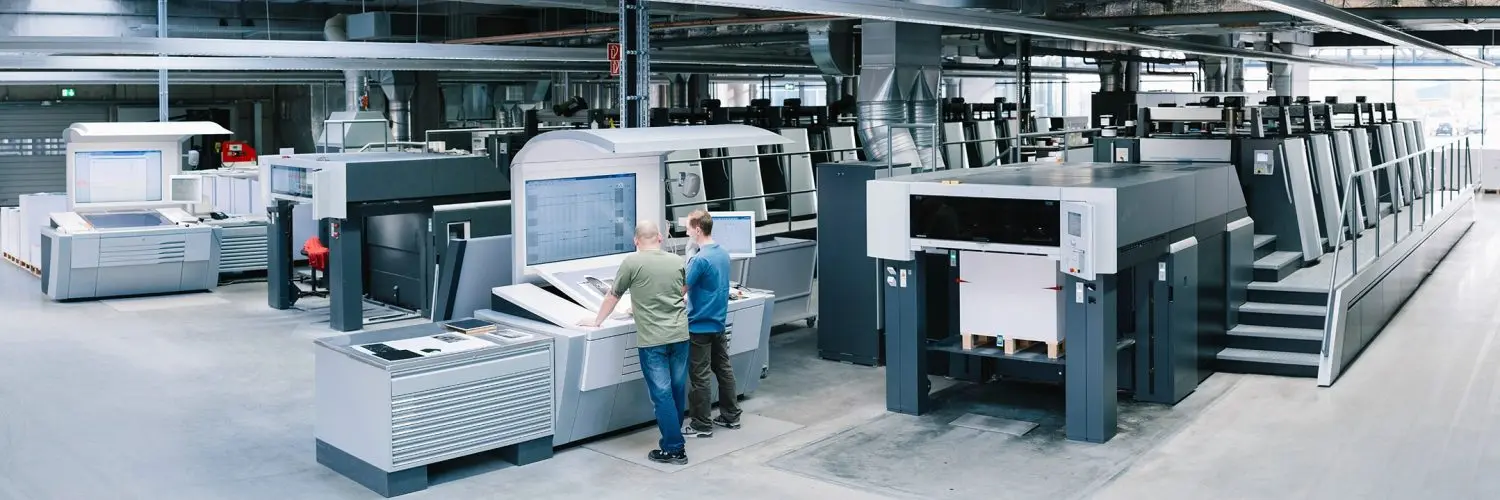
Factory Overview: Production Lines & Beverage Packaging Capabilities
Founded in 2007 and headquartered in Huadu District, Guangzhou, UGI Packaging (ukugi.com) specialises in the design and manufacture of custom beverage packaging for the coffee, tea, bubble tea, and broader foodservice industries. The Cup & Sleeve division operates as one of UGI Packaging’s most technically demanding product lines — combining the precision engineering requirements of leak-proof paper cup construction, the brand communication function of custom-printed cup sleeves, and the thermal performance requirements of insulated beverage packaging into a coordinated range of 27 active SKUs across 5 product categories.
The factory’s beverage packaging production capability is built around three core manufacturing competencies: paper cup forming using food-grade PE-lined board on rotary forming machines; cup sleeve die-cutting and wrap-gluing from 250gsm kraft and art board; and corrugated single-face lamination for heat-insulated sleeve formats. These competencies are supported by in-house flexographic and offset printing lines, a die-cut tooling workshop capable of producing new sleeve blanks to custom dimensions within 5–7 business days, and a quality control laboratory equipped to test cup leak integrity, board moisture resistance, print colour accuracy, and food contact migration compliance on every production lot.
Five Production Lines at a Glance
UGI Packaging’s cup sleeve and beverage cup production capability is calibrated to serve buyers across the full volume spectrum — from a boutique coffee shop ordering 500 custom-printed sleeves for a seasonal promotion, to a national bubble tea chain ordering 500,000 standard-specification cups per quarter on a standing order programme. The same production lines, the same material standards, and the same quality control processes apply to both — the only variables are the print run length, the tooling setup frequency, and the logistics mode used to deliver the finished goods to the buyer’s location.
Product Range: 5 Categories, 27 SKUs — Full Specification Overview
Category 1 — Corrugated Insulated Cup Sleeves
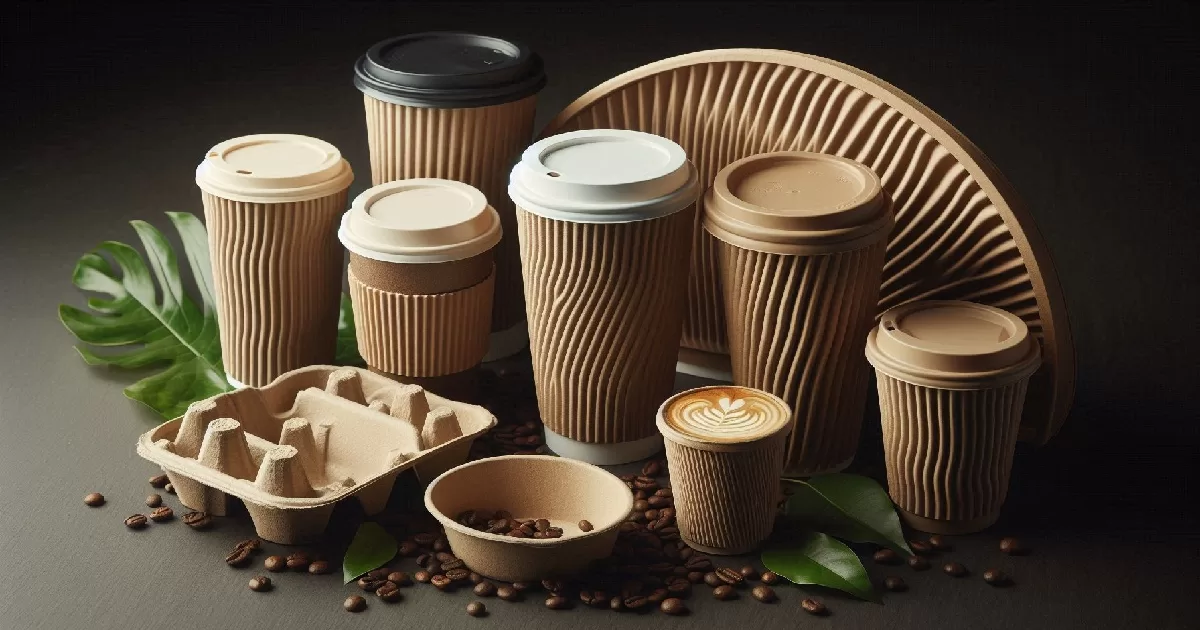
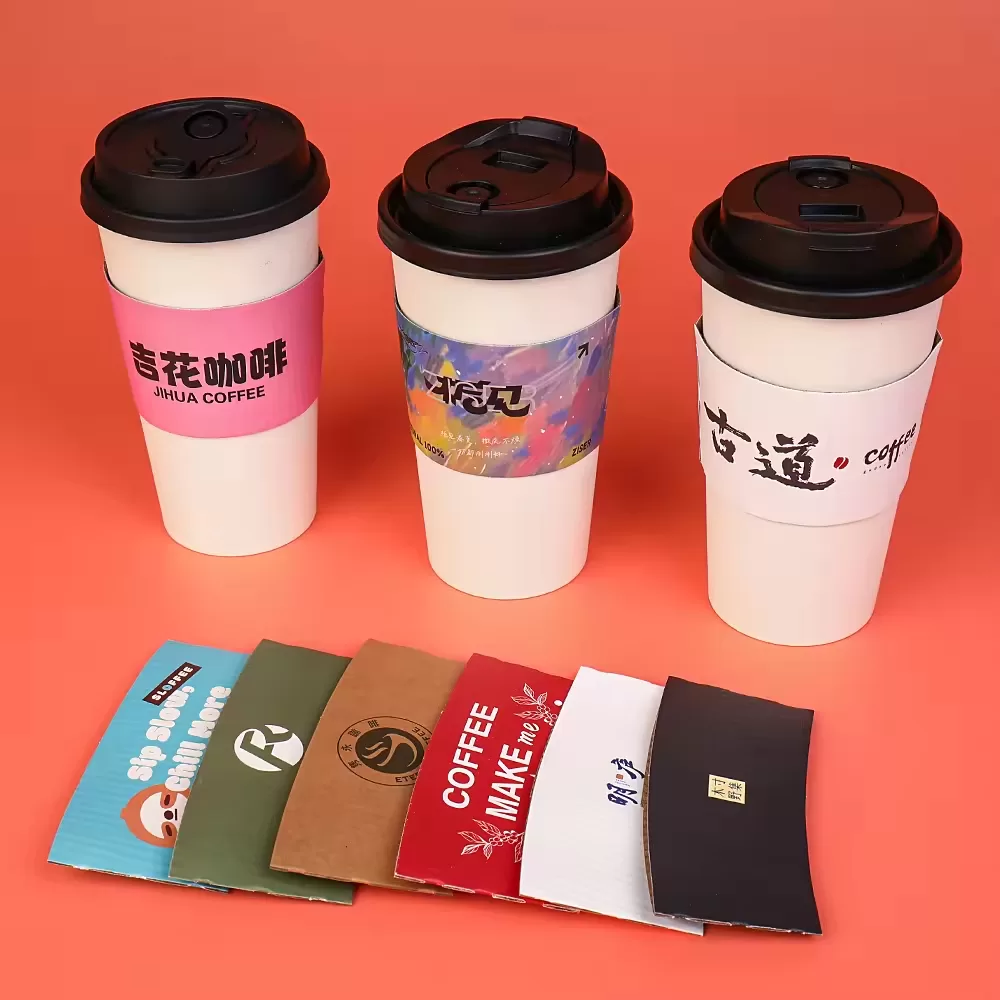
The corrugated cup sleeve is the highest-performing thermal insulation format in UGI Packaging’s sleeve range, using a single-face corrugated flute construction to create an air-gap insulation layer between the hot beverage cup and the consumer’s hand. UGI Packaging produces corrugated cup sleeves in both standard unprinted kraft and custom-printed formats, with the corrugated flute applied to the interior face of the sleeve and a smooth printable outer liner on the exterior. The outer liner accepts full-colour flexographic printing, making it possible to combine the functional thermal insulation benefit of the corrugated construction with a high-quality brand print on the exterior surface.
Standard corrugated sleeve specifications in the UGI Packaging range cover 8oz–16oz cup compatibility, with the sleeve height, inner diameter, and taper angle engineered to match the most common commercial cup profiles used in the UK, EU, and North American café markets. The 250gsm outer liner combined with the B-flute corrugated medium achieves a total sleeve caliper of approximately 4.5mm — providing a surface temperature reduction of ≥15°C compared to an unsleeved cup at 95°C fill temperature, sufficient to meet the thermal comfort threshold of most consumers without requiring double-walled cup construction. Custom sleeve dimensions for non-standard cup profiles are available with a 5–7 business day tooling lead time.
Category 2 — Flat Kraft & Art Board Cup Sleeves
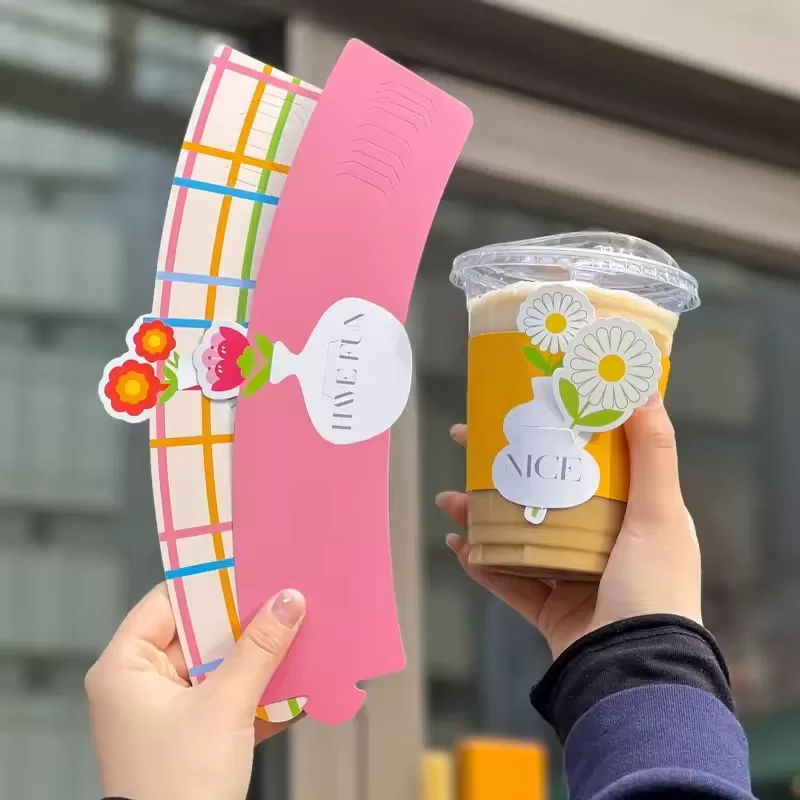
Flat cup sleeves — manufactured from a single layer of 250gsm kraft or white art board without corrugated medium — represent the most versatile and cost-effective branding format in UGI Packaging’s sleeve range. The flat sleeve construction uses less material than a corrugated sleeve, making it more suitable for applications where brand presentation is the primary function and thermal insulation is provided by a double-walled cup construction rather than the sleeve itself. UGI Packaging produces flat kraft sleeves in a wide range of configurations: standard single-layer, double-layer glued (providing moderate insulation), and premium art board variants with lamination and specialty finish options.
The premium milk tea cup sleeve box format — a key product in UGI Packaging’s range — combines a flat sleeve with a box structure, creating a display-ready packaging unit that presents the cup in a branded surround suitable for gift presentation, premium milk tea formats, and retail point-of-sale display. This sleeve-box format is produced from 250gsm kraft or art paper with available finishes including embossed UV varnish, hot gold foil stamping, and matte lamination, delivering a premium unboxing experience that supports higher price positioning for specialty beverage products. The sleeve-box dimensions of 10×2×10 cm accommodate standard milk tea cup formats with a friction-fit that holds the cup securely without adhesive or closure mechanisms.
Category 3 — Disposable Paper Cups
UGI Packaging’s disposable paper cup range covers single-wall and double-wall formats in sizes from 210ml (7oz) to 473ml (16oz), produced from food-grade PE-lined paperboard at 200–350gsm. Single-wall cups in UGI Packaging’s range include the standard kraft paper cup in 8oz format — a high-volume commodity format popular with cafés and catering operators for its cost efficiency and natural aesthetic — and several solid-colour hot drink cup formats in 210ml size for office and event beverage service. Double-wall insulated cups use an inner and outer cup wall separated by a structured air gap formed during the cup-forming process, providing equivalent thermal insulation to a corrugated sleeve without requiring a separate sleeve product.
All paper cups in the UGI Packaging range use a PE (polyethylene) inner lining applied to the food-contact surface of the paperboard during the board manufacturing stage, creating a moisture and liquid barrier that prevents hot beverage liquid from penetrating the paper wall. The PE lining thickness is 15–20 microns for standard hot drink cups, providing a liquid barrier with zero detectable migration of PE oligomers into hot beverage simulants at 95°C for 30 minutes — verified per EU Regulation 10/2011 migration test conditions. For cold drink cups, a 12-micron PE lining on both inner and outer surfaces prevents condensation moisture absorption through the outer wall, maintaining cup structural integrity in cold and iced drink applications.
Category 4 — Seasonal & Event-Themed Cups
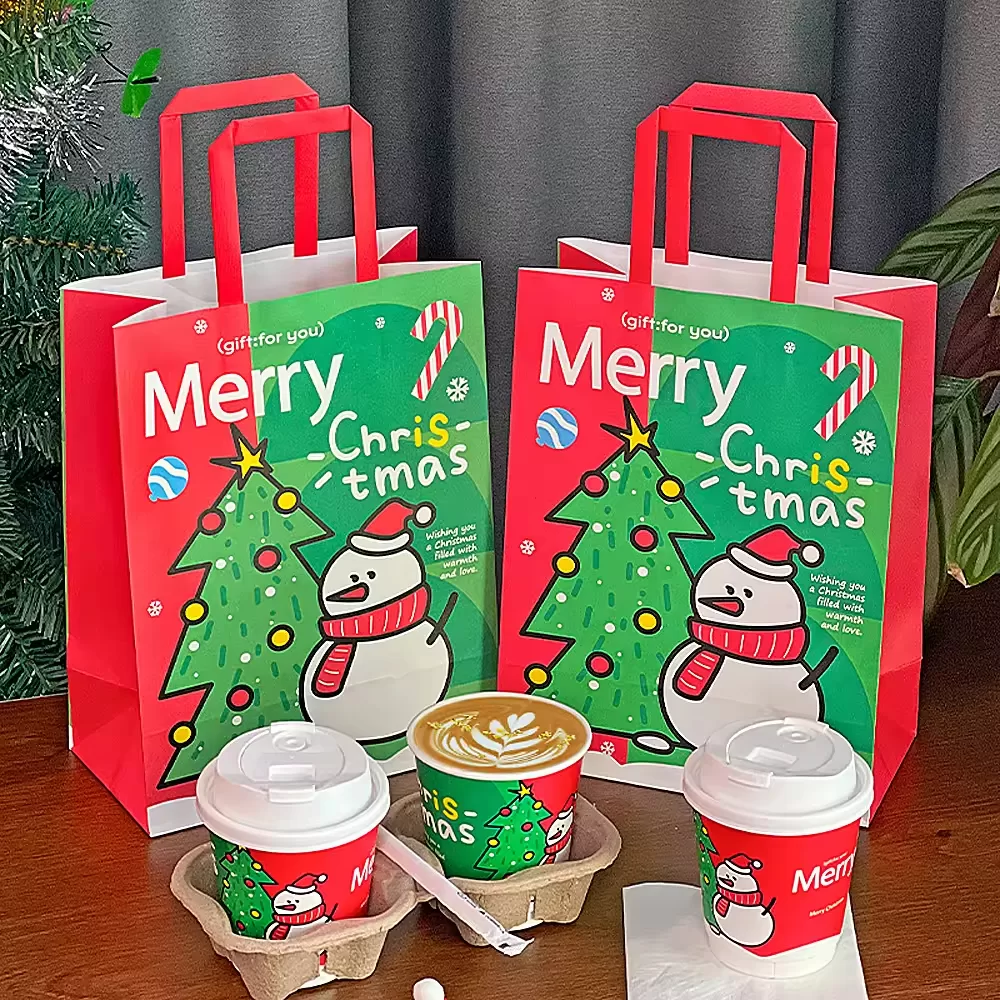
UGI Packaging produces seasonal and event-themed disposable paper cups as a dedicated product category, recognising that branded seasonal cups are one of the most effective point-of-sale marketing tools available to beverage operators at a low per-unit cost. The current range includes a 16oz Christmas holiday kraft paper cup with festive print design and custom logo capability, and a 16oz Valentine’s Day pink heart-themed cup — both produced on the standard single-wall cup forming line with the seasonal artwork applied via flexographic printing on the cup sidewall panel before forming.
Custom seasonal cups for any occasion — including New Year, Easter, Halloween, national events, and corporate branded campaigns — can be developed by UGI Packaging’s in-house design team from buyer-supplied brand guidelines or original design briefs. The cup sidewall panel artwork is applied at up to 8 colours with full-circumference print wrap coverage, allowing complex graphic designs including photographic-quality food imagery, gradient backgrounds, and fine-detail brand logos to be reproduced accurately on the curved cup surface. Seasonal cup programmes with a defined print run and fixed design can typically be quoted, sampled, approved, and in production within 15–20 business days from brief confirmation.
Category 5 — Eco-Friendly Cups & Accessories
The eco-friendly cup category at UGI Packaging covers three product formats: 2oz PLA biodegradable mini cups for tasting, sampling, and sauce service; clear plastic cold drink cups with lids for cold beverage and iced coffee service; and the 4-cup kraft paper drink carrier tray for takeaway beverage delivery. The PLA mini cups are produced from certified compostable polylactic acid resin (EN 13432 / ASTM D6400), providing the clarity and functionality of conventional plastic tasting cups with full industrial compostability — an increasingly important specification requirement for food events, catering operators, and corporate sustainability programmes.
The 4-cup kraft paper drink carrier tray is a structural packaging product that sits within the Cup & Sleeve range as a complementary accessory for café and delivery operators who need to transport multiple hot or cold drinks simultaneously. Manufactured from 350gsm kraft board with a die-cut and fold construction, the carrier tray accommodates standard cup bases in 8oz–16oz format with a secure friction-fit that prevents cup movement during transport. The integrated carry handle — formed from a single fold of the kraft board rather than a separate handle insert — is rated to support four 16oz filled cups at a combined load of approximately 2.4 kg without handle failure or tray deformation.
Product Range Summary
| Category | Key Products | Material | Size Range | MOQ |
|---|---|---|---|---|
| Corrugated sleeves | Ripple-wall insulated, B-flute | 250gsm kraft outer + corrugated medium | 8oz–16oz | 500 pcs |
| Flat kraft sleeves | Single/double-layer, sleeve-box format | 250gsm kraft or art board | 10–20oz | 500 pcs |
| Disposable paper cups | Single-wall, double-wall, kraft, white | 200–350gsm PE-lined board | 7oz–16oz | 1,000 pcs |
| Seasonal themed cups | Christmas, Valentine’s, custom event | PE-lined kraft board, full print | 16oz standard | 500 pcs |
| Eco & accessories | PLA mini cups, cold cups, 4-cup carrier | EN 13432 PLA / 350gsm kraft board | 2oz–16oz | 500 pcs |
Materials Engineering: Board, PE Lining, PLA & Corrugated Specifications
3.1 Food-Grade Kraft & Art Board for Cup Sleeves
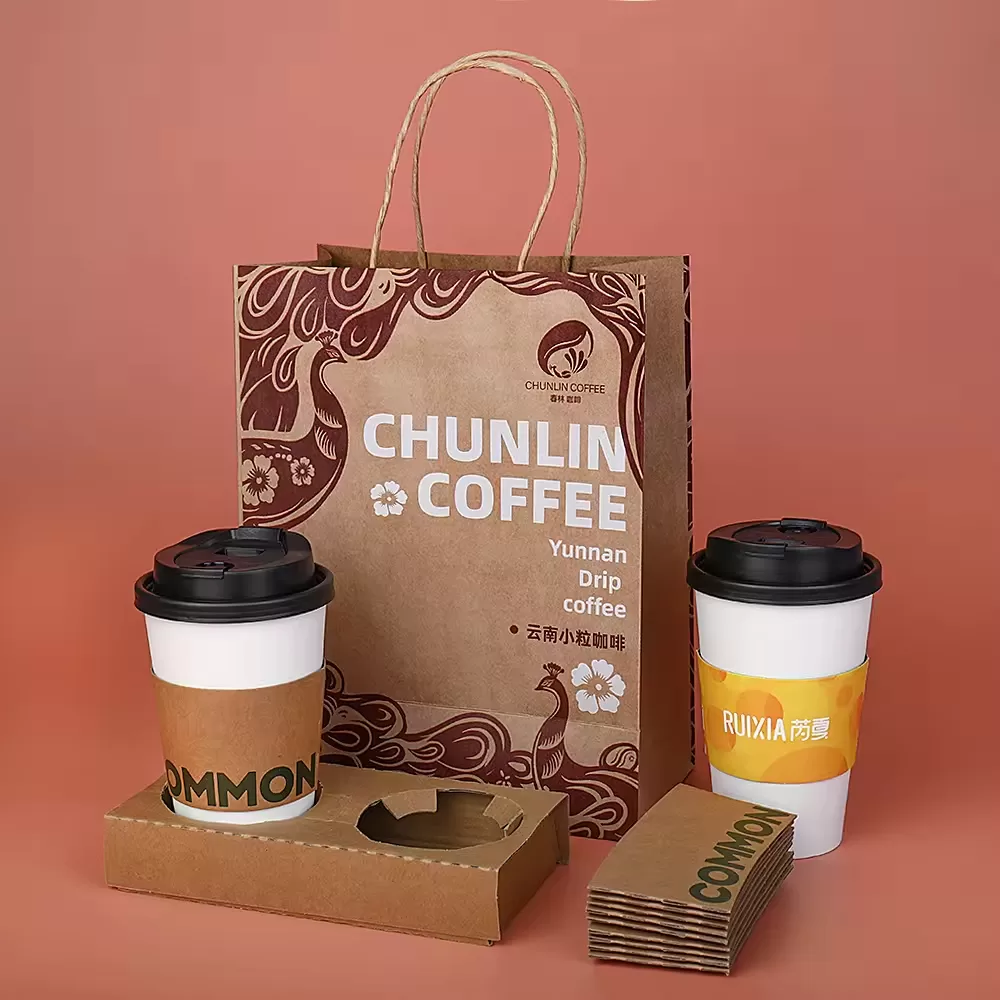
Cup sleeves at UGI Packaging are manufactured from two primary board substrates — natural unbleached kraft board and white-coated art board — both sourced from certified suppliers at 250gsm as the standard grammage for the flat single-layer sleeve format, with 300gsm available as a heavy-duty option for premium sleeve applications requiring increased rigidity and a more substantial hand-feel. The 250gsm grammage is the industry standard for commercial cup sleeves in the UK, EU, and North American markets, providing sufficient stiffness for the sleeve to maintain its cylindrical form on the cup without collapsing under normal handling forces, while being thin enough to die-cut and wrap cleanly without cracking at the fold lines.
Natural kraft board — produced from unbleached sulphate pulp — is the preferred substrate for the majority of UGI Packaging’s cup sleeve range, valued for its combination of natural aesthetic appeal, high burst strength, and compatibility with water-based flexographic inks without requiring a pre-coat or primer layer. The unbleached kraft surface accepts single and multi-colour print directly, with the natural brown base colour of the kraft contributing to the warm, artisanal aesthetic associated with independent coffee culture and premium beverage brands. White-coated art board provides a bright white print surface that enables photographic-quality full-colour print reproduction at finer detail levels than uncoated kraft, and is specified for premium sleeve formats where vivid colour reproduction, fine-detail logo artwork, or photographic food imagery is a design requirement.
Both board grades used for cup sleeves at UGI Packaging are food-contact compliant under EU Regulation 1935/2004, with migration testing confirming that no regulated substances are present at levels exceeding the overall migration limit (OML) of 10 mg/dm² or any applicable specific migration limit (SML) when the sleeve is in indirect contact with the hot beverage through the cup wall. The sleeve does not contact the beverage liquid directly, which simplifies the food contact compliance profile compared to the inner cup wall — but UGI Packaging maintains full EU 1935/2004 compliance documentation for sleeve board grades as good manufacturing practice, given that sleeve materials may come into incidental contact with beverage spillage or condensation on the cup exterior.
3.2 PE-Lined Cup Stock for Paper Cups
Paper cups at UGI Packaging are manufactured from purpose-engineered PE-lined cup stock — a specialised multi-layer board product in which a food-grade polyethylene film is extrusion-coated onto the food-contact inner surface of the paperboard during the board manufacturing process. This PE lining is the critical functional element of a paper cup, providing the liquid-impermeable barrier that prevents hot or cold beverage from penetrating the paper wall and causing structural failure, leakage, or flavour contamination from paper fibres into the beverage. The PE lining also provides the heat-seal surface needed to form the leak-proof sidewall seam and base joint during cup forming, without which the cup would leak at the seam under the hydrostatic pressure of a filled beverage.
UGI Packaging specifies PE lining weights by application type. For single-wall hot drink paper cups — the most common format in the standard range, covering 8oz kraft and 7oz–10oz solid colour cups — the inner PE lining is specified at 15–18 microns, providing a complete liquid barrier with minimal material cost addition. For double-wall insulated cups and cold drink clear cups, a 12-micron outer PE lining is added to the exterior board face in addition to the inner lining, preventing condensation moisture from softening the outer cup wall during extended cold beverage service. The PE lining chemistry used at UGI Packaging is a food-grade low-density polyethylene (LDPE) conforming to FDA 21 CFR 177.1520 and EU Regulation 10/2011, with migration testing confirming PE oligomer transfer below the SML for polyethylene in all standard food simulants at 95°C for 30 minutes.
3.3 Corrugated Flute Medium for Insulated Sleeves
The thermal insulation function of UGI Packaging’s corrugated cup sleeves is achieved through a single-face corrugated construction in which a fluted kraft medium is glued to the inner face of the printed outer liner, creating a series of enclosed air pockets between the flute tips and the liner surface. Air is a poor conductor of heat — with a thermal conductivity of approximately 0.025 W/m·K compared to approximately 0.05–0.12 W/m·K for paperboard — making the air-filled corrugated structure a highly effective thermal barrier between the hot cup wall and the consumer’s hand despite its relatively thin profile of 3–5mm total sleeve caliper.
The corrugated flute profile used for cup sleeves at UGI Packaging is B-flute — the standard choice for thin-profile corrugated packaging applications — with a flute height of approximately 2.5mm and a flute pitch (centre-to-centre distance between adjacent flutes) of approximately 6.5mm. B-flute provides the optimal balance between insulation performance and sleeve forming capability for the conical cup sleeve geometry: finer flute profiles (E-flute, F-flute) would provide a smoother outer surface but reduced insulation air volume, while coarser profiles (C-flute, A-flute) would provide greater insulation but be too rigid to wrap cleanly around the tapered cup sleeve blank during the forming process. The corrugated medium itself is produced from 127gsm semi-chemical fluting kraft, and the liner is the standard 250gsm printed outer board specified for the sleeve design.
3.4 PLA Resin for Compostable Mini Cups
The 2oz PLA mini cup in UGI Packaging’s eco-friendly category is produced from certified compostable polylactic acid resin — a biopolymer derived from fermented plant starch, typically corn or cassava — using an injection moulding or thermoforming process depending on cup geometry and wall thickness specification. The PLA resin grade selected for mini cup production at UGI Packaging is specifically qualified for food contact under EU Regulation 10/2011 and FDA 21 CFR 177.1520 (as an indirect food additive for polymers used in food contact), with a glass transition temperature (Tg) of approximately 58°C — sufficient for use with cold beverages, sauces, and dessert tasting portions, but not suitable for direct hot beverage contact without PLA heat-stabilisation additives.
The compostability of UGI Packaging’s PLA mini cups is certified to EN 13432 (European standard) and ASTM D6400 (North American equivalent), confirming that the material will disintegrate under industrial composting conditions at 58°C and 60% relative humidity within 90 days without producing ecotoxic residues or leaving visible plastic fragments. This certification is a prerequisite for making verified compostability claims in EU and UK markets under the Green Claims Directive and equivalent national advertising standards, and UGI Packaging provides the certification documentation with each order of PLA mini cups for buyers who need to substantiate compostability claims in their product marketing.
3.5 Material Specifications Summary
| Material | Grade / Spec | Key Parameter | Compliance |
|---|---|---|---|
| Kraft board (sleeves) | 250gsm unbleached sulphate; 300gsm HD | Burst strength ≥ 350 kPa; moisture content 6–8% | EU 1935/2004; FDA 21 CFR 176 |
| White art board (sleeves) | 250gsm coated GC2 or GD2 | Brightness ≥ 85% ISO; caliper 310–330 µm | EU 1935/2004; FSC available |
| PE-lined cup stock (cups) | 200–350gsm; LDPE 12–20 µm inner lining | Liquid barrier: zero penetration at 95°C / 30 min | EU 10/2011; FDA 21 CFR 177.1520 |
| B-flute corrugated medium | 127gsm semi-chem fluting; 2.5mm flute height | Thermal insulation ≥15°C reduction at 95°C fill | EU 1935/2004; food-contact safe adhesive |
| PLA resin (mini cups) | Corn/cassava starch origin; Tg ~58°C | Compostable ≤ 90 days industrial; BPA-free | EN 13432; ASTM D6400; EU 10/2011 |
| Carrier tray kraft board | 350gsm unbleached kraft; single-ply | Handle load ≥ 2.4 kg (4 × 16oz filled cups) | EU 1935/2004; recyclable uncoated |
UGI Packaging’s material library for cup and sleeve production is reviewed and updated annually to incorporate new food-contact-certified grades, sustainability-driven substrate alternatives (including PLA-lined cup stock and FSC-certified board options), and grammage variants requested by buyers developing custom specifications outside the standard range. For buyers requiring material-specific technical data sheets or third-party test reports for their own supplier qualification processes, these documents are available on written request for all approved production grades. Further reading on packaging materials science is available in the Packaging Materials Insights section of the UGI Packaging resource library at ukugi.com.
Structural Design: Sleeve Forming, Cup Construction & Carrier Engineering
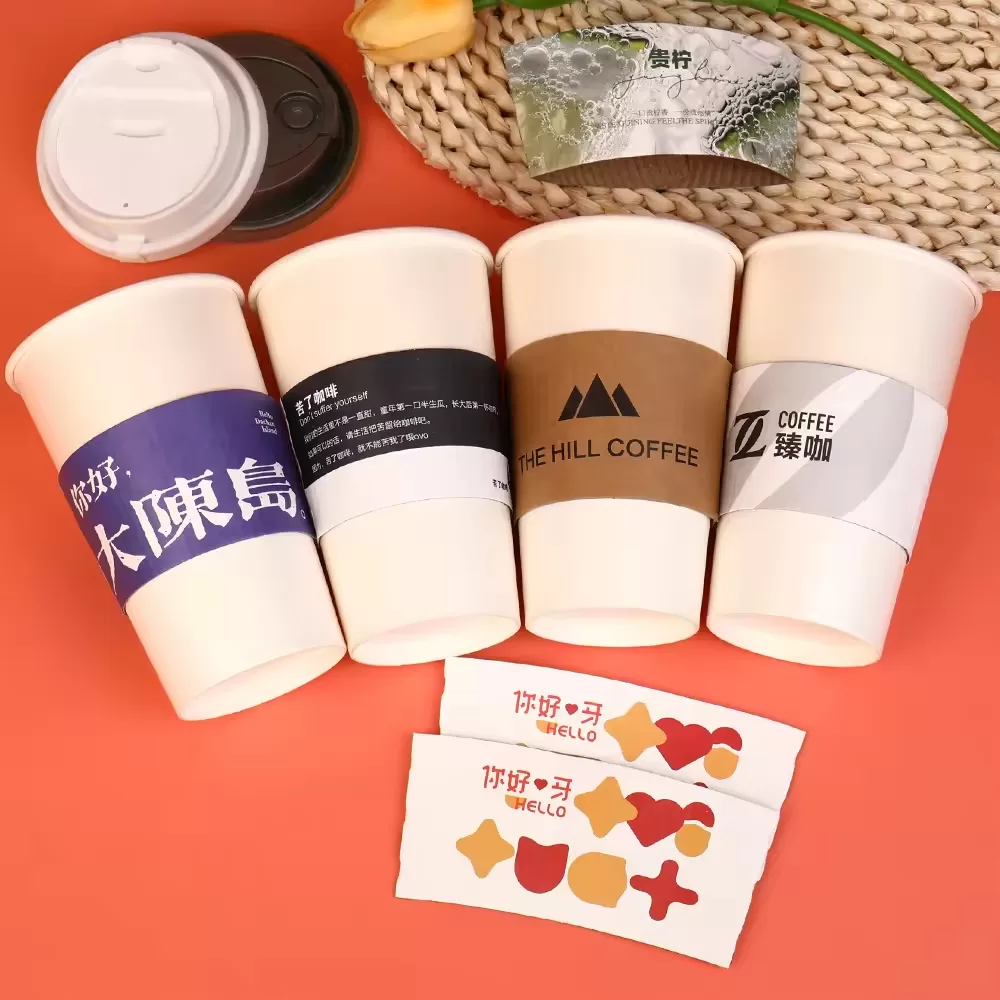
4.1 Conical Blank Die-Cutting — Flat Cup Sleeves
Flat cup sleeve production at UGI Packaging begins with the die-cutting of pre-printed board into the conical blank shape on a flatbed die-cutting press. The die-cut tool — a steel-rule die mounted on a wooden base board — cuts the outer and inner arcs of the sleeve blank simultaneously in a single press stroke, together with any score lines required for fold-down tabs or handle features. Dimensional tolerance for the die-cut blank is ±0.3mm on the arc radii and ±0.5mm on the overall height, ensuring consistent sleeve-to-cup fit within the tolerance range of standard commercial cup sizing.
After die-cutting, the flat blanks are fed into the sleeve forming station, where each blank is wrapped around a mandrel of the target cup sleeve diameter and glued along the overlapping side seam using a food-safe cold-set adhesive applied at a bead width of 4–6mm along the seam edge. The glued seam is pressed under controlled pressure for a dwell time of 2–3 seconds to allow the adhesive to set before the formed sleeve is released from the mandrel. Formed sleeves are stacked in nested bundles for transport and dispensing — the conical geometry allowing each sleeve to nest inside the one below it with a consistent overhang that allows individual sleeves to be picked off the stack one at a time without the stack collapsing or sleeves sticking together.
Custom sleeve dimensions at UGI Packaging can be produced to fit any cup profile within the range of 6oz–24oz commercial cup sizes, with new die-cut tools produced to the specified blank geometry within 5–7 business days of dimensional confirmation. Standard cup size blanks — including those compatible with the most common café cup profiles used by major disposable cup manufacturers — are held as standing tooling at UGI Packaging and can be put into production without any tooling lead time or cost.
4.2 Corrugated Lamination — Insulated Sleeves
Corrugated insulated cup sleeves at UGI Packaging are produced in a two-stage process: first, a single-face corrugated sheet is produced by fluting the corrugated medium around heated corrugating rolls and gluing it to the printed outer liner on a single-facer machine; second, the laminated corrugated sheet is die-cut to the sleeve blank shape and formed around the mandrel using the same wrap-and-glue process used for flat sleeves. The critical difference from flat sleeve production is that the corrugated medium must be oriented with the flutes running in the circumferential direction of the formed sleeve — perpendicular to the sleeve height — to allow the blank to wrap around the mandrel without the flutes buckling or delaminating from the liner during forming.
This circumferential flute orientation means that the corrugated blank must be die-cut from the corrugated sheet with the blank arc direction aligned to the machine direction (MD) of the flute formation — a layout constraint that affects material utilisation efficiency and is factored into the sleeve blank nesting calculation during the tooling design stage. UGI Packaging’s tooling design team optimises the blank nesting layout for corrugated sleeves to maximise material yield from each corrugated sheet, typically achieving 85–90% material utilisation depending on blank size and sheet dimensions. The food-safe adhesive used for the corrugated medium-to-liner bond is a starch-based cold-set formulation compliant with EU Regulation 1935/2004 for indirect food contact use.
4.3 Rotary Cup Forming — Paper Cups
Paper cups at UGI Packaging are formed on rotary cup-forming machines — high-speed automated systems that take pre-cut and pre-printed cup sidewall blanks and circular base discs and assemble them into finished cups through a sequence of forming, rolling, sealing, and curling operations in a continuous rotary process. The cup-forming sequence begins with the sidewall blank being wrapped around a conical mandrel at the target cup diameter, with the two ends of the blank overlapped and heat-sealed along the sidewall seam using a combination of heat and pressure that fuses the PE lining layers on each side of the seam into a continuous, leak-proof bond.
After sidewall seaming, the formed cup is transferred to the base-insertion station, where a circular PE-lined base disc is pressed into the bottom of the cup body and the cup base flange is rolled inward in a knurling operation that creates a tight mechanical joint between the sidewall and base, reinforced by the PE lining fusion bond. The base-to-sidewall joint is the most critical structural and leak-integrity feature of a paper cup — UGI Packaging’s cup-forming machines maintain base-insertion force, knurling pressure, and heat-seal temperature within ±5% of the target set points throughout the production run to ensure consistent base joint quality on every cup. Following base insertion, the cup rim is curled outward in a separate curling station to form the smooth, rounded rim profile that prevents liquid drip during drinking and provides the seating surface for press-fit lids.
4.4 Double-Wall Cup Construction
Double-wall paper cups in UGI Packaging’s range use a construction in which a standard single-wall inner cup is assembled first, then an outer wrap — a second layer of board formed into a cylindrical sleeve — is applied around the exterior of the inner cup with an air gap between the two walls. This air gap, typically 3–5mm wide, functions as the thermal insulation layer in the double-wall construction — equivalent in insulation principle to the corrugated flute air pockets in a corrugated cup sleeve, but integrated into the cup structure rather than provided by a separate sleeve product. The outer wrap is typically printed with the brand design, making the double-wall cup a fully branded beverage container that requires no additional sleeve for either thermal protection or brand communication.
The outer wrap board for double-wall cups at UGI Packaging is typically 200–250gsm PE-lined art board or kraft board, formed into a cylinder around the outside of the inner cup body and sealed along its side seam. The bottom edge of the outer wrap is tucked under the base flange of the inner cup during the base-insertion operation, locking the outer wrap in position and creating the defined air gap between the two walls. Double-wall cups consume approximately 40% more board material per cup than single-wall cups of equivalent volume, but eliminate the need for a separate sleeve — making them cost-competitive with single-wall cup plus sleeve combinations when the total beverage packaging cost per serve is calculated including both products.
4.5 Kraft Carrier Tray — Die-Cut & Handle Engineering
The 4-cup kraft paper drink carrier tray at UGI Packaging is a structural packaging product engineered to hold four standard cups in a 2×2 arrangement with sufficient rigidity to prevent cup movement, tipping, or spillage during the typical beverage delivery journey from café counter to customer. The tray is produced from 350gsm unbleached kraft board — a grammage selected to provide the combination of board stiffness and fold-hinge flexibility needed for the carrier’s structural performance — die-cut to a flat blank that is folded and locked into the tray shape without adhesive, relying entirely on die-cut interlocking tabs and folded panels for structural integrity.
The integrated carry handle is the most engineered element of the carrier tray design. The handle is formed from a double-folded strip of the 350gsm kraft board, created by scoring and folding two parallel sections of the tray blank back on themselves before the blank is assembled into the tray shape. The resulting double-thickness handle is rated at UGI Packaging to support a static load of 2.4 kg — equivalent to four 16oz cups filled with water at approximately 600g each — for a minimum 60-second hold without handle failure, delamination, or tray structural collapse. This load rating covers the realistic worst-case scenario of a barista carrying four fully loaded cups across a café floor or handing them through a car window.
4.6 Structural Capabilities Comparison
| Product Type | Forming Process | Key Tolerance | Custom Tooling Lead Time | Tooling Cost (GBP) |
|---|---|---|---|---|
| Flat cup sleeves | Die-cut blank + wrap-glue mandrel | ±0.3mm arc radius; ±0.5mm height | 5–7 business days | £120–£280 |
| Corrugated insulated sleeves | Single-face lamination + die-cut + wrap | ±0.5mm diameter; flute ±0.2mm | 5–7 business days | £150–£320 |
| Single-wall paper cups | Rotary cup former; PE heat seal | ±0.5mm top diameter; ±1mm height | 10–15 business days | £400–£1,200 |
| Double-wall paper cups | Rotary cup former + outer wrap assembly | Air gap 3–5mm; ±0.5mm top diameter | 10–15 business days | £500–£1,500 |
| Kraft carrier tray | Flatbed die-cut + fold-lock assembly | Handle load ≥ 2.4 kg; tab lock secure | 5–7 business days | £100–£250 |
Printing Technologies: Flexo, Offset, Hot Foil & UV Spot
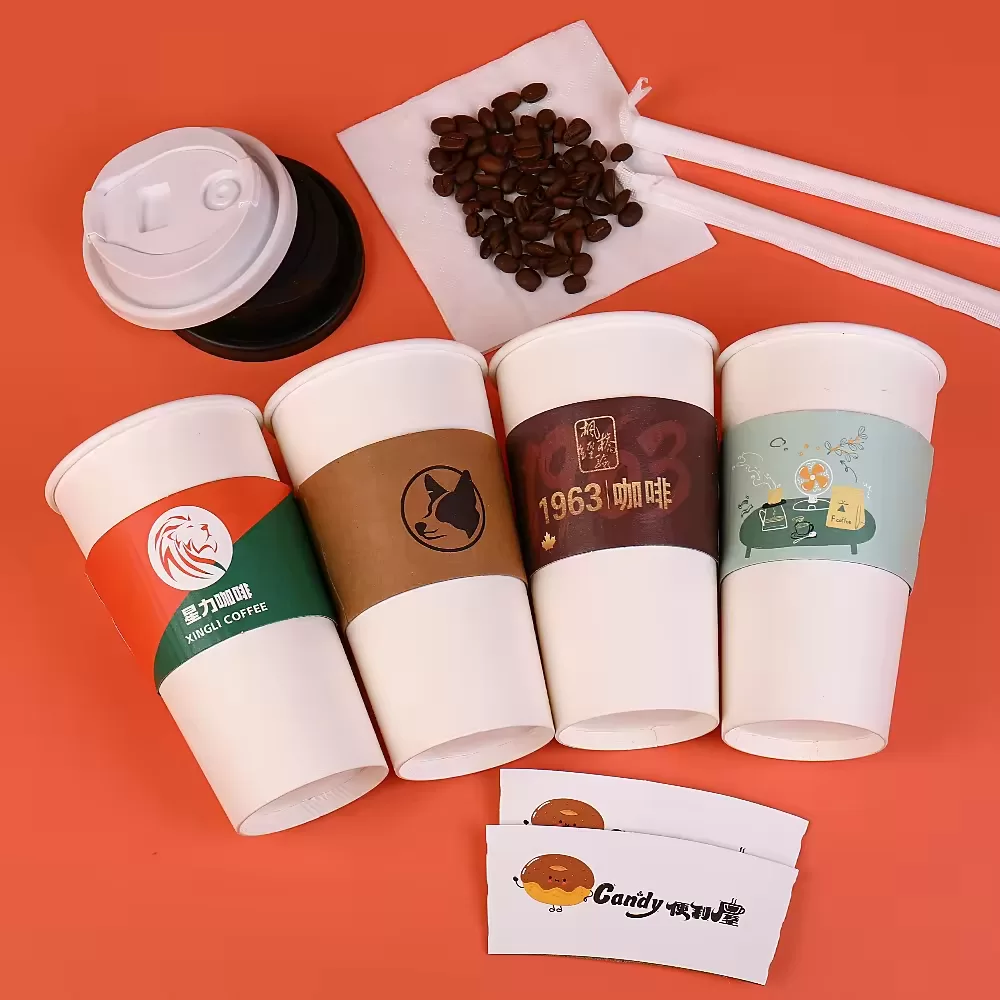
5.1 Water-Based Flexographic Printing — Standard Sleeves & Cups
Flexographic printing is the primary and most widely used print technology in UGI Packaging’s Cup & Sleeve production, applied to the majority of kraft and art board cup sleeve blanks and to all paper cup sidewall panels in standard production volumes. UGI Packaging’s flexographic printing lines for cup and sleeve production use photopolymer printing plates produced from digital artwork files at 1,200–2,400 lpi resolution, mounted on plate cylinders that correspond to the repeat length of the sleeve blank or cup panel being printed. Water-based ink systems are used throughout — replacing the solvent-based formulations historically used in cup and sleeve flexo printing and eliminating the residual solvent migration concern that represents a food contact compliance risk in solvent-based food packaging print applications.
Standard colour capacity on UGI Packaging’s flexo lines configured for cup and sleeve printing is up to 8 colour stations, including the four process colours (CMYK) plus up to four spot Pantone colours. For kraft board substrates, the natural brown colour of the board functions as a fifth “colour” in the design palette — many cup sleeve designs exploit the kraft base colour as a background tone or texture element, reducing the number of printed ink layers required and lowering the per-unit print cost relative to a full-coverage white base design on the same substrate. White ink is available as a printed base coat on kraft board for designs requiring a white or light-coloured background, though the opacity of flexo white ink on kraft board is typically 85–90% — sufficient for most brand backgrounds but not achieving the full brightness of a coated white art board substrate.
The full-circumference cup sidewall print — in which the artwork wraps 360° around the exterior surface of the paper cup — is one of the most technically demanding applications of flexographic printing in the beverage packaging sector. The cup sidewall blank is printed flat before cup forming, meaning that the artwork must be designed and plate-made to account for the geometric distortion that occurs when the flat printed panel is wrapped into the conical cup shape during forming. UGI Packaging’s pre-press team applies a mathematical distortion compensation to all cup sidewall artwork before plate production, ensuring that straight lines appear straight, circles appear circular, and text appears undistorted on the finished formed cup rather than on the flat printed blank.
5.2 Offset Lithographic Printing — Premium Art Board Sleeves
For premium cup sleeve specifications requiring photographic-quality print reproduction, fine-detail artwork, or subtle tonal gradients that exceed the halftone screen capability of standard flexographic printing on board substrates, UGI Packaging offers offset lithographic printing as an alternative process for art board sleeve blanks. Offset printing uses rigid aluminium plates exposed from digital artwork at 2,400 dpi, transferring ink via a rubber blanket cylinder onto the board surface in a process that achieves finer halftone screens (up to 200 lpi compared to 150 lpi for flexo), sharper dot definition, and more accurate solid ink density control than flexographic printing on the same substrate.
The practical differences between flexo and offset printing for art board cup sleeves are most apparent in three design situations: photographic food imagery, where offset’s finer halftone screens produce more natural-looking photographic reproduction than flexo’s coarser screens; fine-detail graphic elements such as filigree patterns, complex line artwork, and script typography below 6pt, which offset reproduces at higher sharpness than flexo; and very light tint areas (below 10% screen density) where offset’s controlled dot gain produces cleaner, more consistent pale tones than flexo’s tendency toward dot gain variation in light tint areas on absorbent kraft surfaces. For solid colour areas and simple graphic designs without fine-detail or photographic elements, flexo and offset produce visually equivalent results on coated art board, and flexo’s lower plate cost and faster makeready time make it the more economical choice for those design types.
5.3 Hot Foil Stamping — Premium Sleeve Accent Finishes
Hot foil stamping is a specialty print process applied to premium cup sleeve formats at UGI Packaging — specifically the milk tea cup sleeve box and high-end single-use event sleeve formats where a metallic accent element is a deliberate design feature communicating luxury, exclusivity, and premium positioning. In the foil stamping process, a metallic or pigmented polyester foil is transferred from a carrier film onto the board surface using a heated metal die pressed against the foil and board under controlled temperature and pressure — the heat activating the adhesive layer on the foil and causing it to bond to the board surface in the exact shape of the die engraving, while the carrier film is peeled away leaving the transferred foil image on the board.
UGI Packaging’s foil stamping capability covers the full standard range of foil colours and effects used in premium beverage packaging: gloss gold (the most commonly specified foil for milk tea and speciality coffee sleeve brands), gloss silver, rose gold, holographic silver, holographic rainbow, and matte gold and silver variants for a more understated luxury aesthetic. The minimum stamped feature size achievable at UGI Packaging is approximately 0.5mm line width for fine text and 1mm for isolated small graphic elements — enabling full brand logo reproduction including fine typography and thin-line graphic elements in metallic foil without loss of detail at the edges of the stamped image. Foil stamping is applied as a post-print finishing step after the base colour flexo or offset print, with the foil die registered to the printed artwork to within ±0.3mm alignment tolerance.
5.4 UV Spot Varnish — Selective Gloss Highlighting
UV spot varnish is applied to premium cup sleeve formats at UGI Packaging as a selective surface coating that creates a high-gloss visual and tactile contrast against a matte laminated background — one of the most effective premium finishing techniques available in commercial beverage packaging production. In the UV spot varnish process, a UV-curable clear varnish is applied through a screen or flexo plate to specific areas of the sleeve surface — typically the brand logo, key graphic elements, or product name — and immediately cured by exposure to UV light, producing an instantly hard, high-gloss coating that contrasts sharply with the surrounding matte laminated surface.
The visual contrast between the UV spot gloss areas and the matte background on a cup sleeve creates a depth and dimensionality effect that is impossible to achieve with conventional flood varnish or lamination treatments alone, and that communicates premium brand values through tactile as well as visual channels — the consumer can feel the raised gloss areas when holding the sleeve, reinforcing the premium quality association at the moment of physical contact. UGI Packaging applies UV spot varnish as part of an integrated finishing sequence: matte lamination is applied first across the full sleeve surface, followed by the UV spot varnish in a second pass through the finishing line. This sequence — matte background plus selective UV spot — is the most widely specified premium sleeve finish in the speciality coffee and premium bubble tea sectors, and represents the majority of UGI Packaging’s specialty finishing volume for cup sleeves.
For the milk tea cup sleeve box format, UV spot varnish is frequently combined with embossing — a technique in which a metal embossing die creates a raised three-dimensional relief in the board surface in register with the UV spot varnish, adding physical texture to the visual gloss contrast. This combination of embossing plus UV spot plus optional gold foil stamping represents the highest-specification sleeve finish available in UGI Packaging’s current range, and is the format specified for premium tea and milk tea brands targeting the luxury gift and premium retail channel where maximum packaging impact is required.
5.5 Print Technology Selection Guide
| Technology | Best For | Resolution / Accuracy | MOQ | Plate / Setup Cost |
|---|---|---|---|---|
| Water-based flexo | Standard sleeves, all paper cups, kraft board, solid colours | 1,200–2,400 lpi; ΔE ≤ 2.0; ±0.15mm reg | 500 units | £80–£200 per colour |
| Offset lithographic | Premium art board sleeves, photographic imagery, fine detail | Up to 200 lpi screen; 2,400 dpi plate | 1,000 units | £150–£350 per colour |
| Hot foil stamping | Metallic logo accents, luxury sleeve-box, event sleeves | Min 0.5mm line; ±0.3mm registration | 500 units | £200–£500 per die |
| UV spot varnish | Selective gloss highlight on matte laminated sleeve surface | Min 1mm feature; registered to print ±0.3mm | 500 units | £100–£250 per screen |
For buyers developing branded cup sleeve programmes, UGI Packaging’s in-house design team at ukugi.com/oemdesign provides artwork preparation support covering print technology optimisation, colour profile setup for the target substrate, and distortion compensation for cup sidewall artwork. Engaging the design team at the artwork stage typically reduces pre-press correction cycles from 2–3 rounds to 0–1, shortening the time from artwork submission to approved print proof by 3–5 business days. Additional guidance on print technology selection for food packaging is available in the Printing Techniques resource library at UGI Packaging (ukugi.com).
Surface Finishes: PE Lining, Matte/Gloss Lamination & Embossing
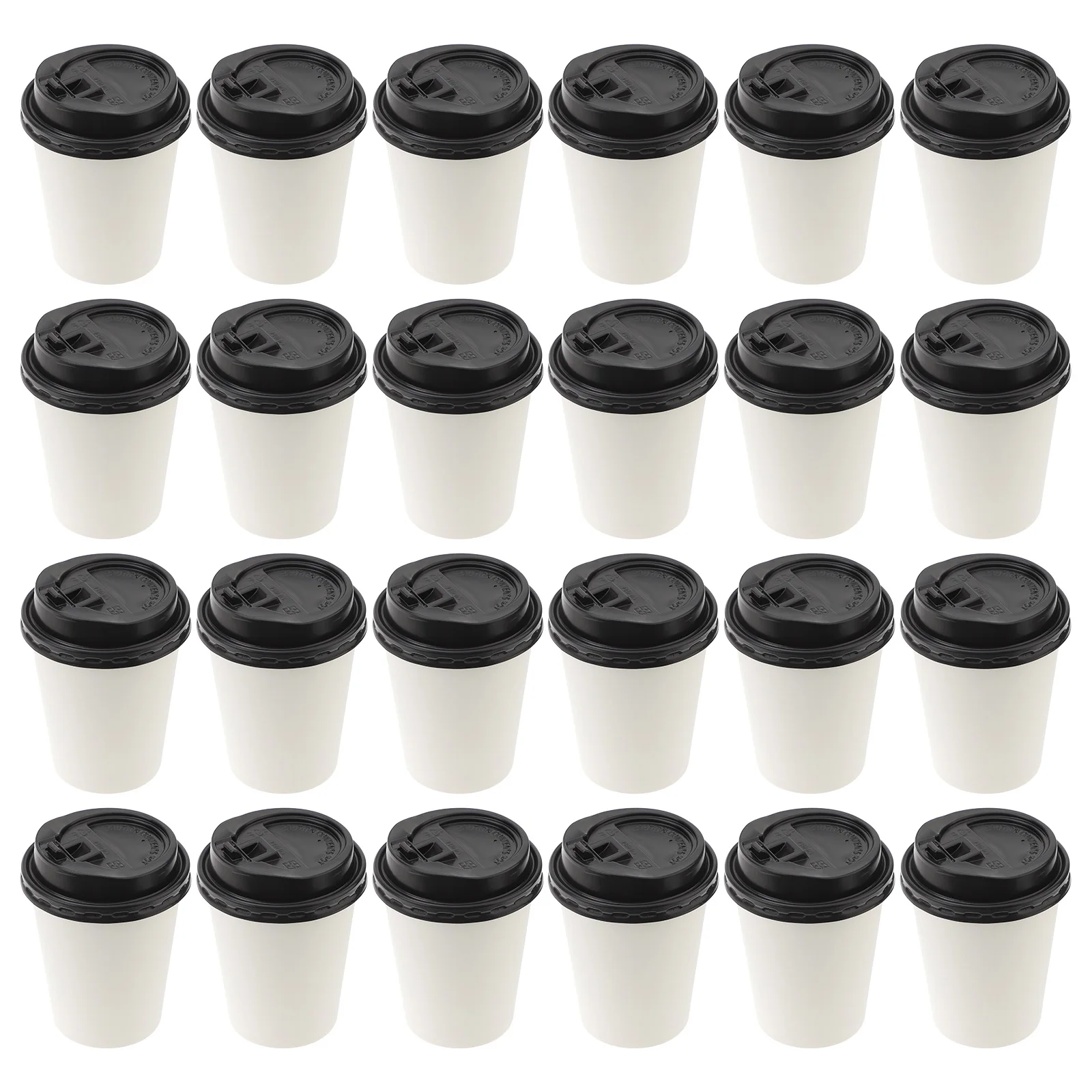
6.1 PE Inner Lining — Paper Cups (Functional Barrier)
The polyethylene inner lining of UGI Packaging’s paper cups is the product’s most important surface treatment — the functional coating that transforms a structural paper board component into a food-safe liquid container capable of holding hot beverages at 95°C without leaking, softening, or allowing liquid to contaminate the paper fibres. The PE lining is applied to the cup stock board during the board manufacturing process — before the board is cut into cup blanks and formed into cups — using an extrusion coating process that deposits molten LDPE at a controlled thickness of 15–20 microns onto the board surface at temperatures above 300°C, forming an immediately bonded, pin-hole-free barrier layer that becomes an integral part of the board structure.
The PE lining serves two distinct functional roles in the paper cup: as a liquid barrier preventing beverage penetration through the paper wall, and as the heat-seal medium that fuses the cup’s structural joints — the sidewall seam and the base-to-sidewall joint — into leak-proof bonds during cup forming. Both functions are critical: a PE lining that provides an adequate liquid barrier but seals poorly at the structural joints will produce a cup that leaks at the seam under the hydrostatic pressure of a hot filled beverage; conversely, a PE lining that seals well at the joints but has pinholes or inadequate thickness in the flat wall areas will allow liquid to wick through the paper wall. UGI Packaging’s PE lining specification and cup-forming process parameters are co-engineered to optimise both barrier and seal performance simultaneously on every production run.
For cups entering markets with active single-use plastics legislation — including the EU Single-Use Plastics Directive (SUPD) and equivalent UK, Australian, and Canadian regulations — UGI Packaging can supply an alternative PLA inner lining in place of PE, producing a cup with a certified compostable inner barrier that meets the compostability definition under EN 13432. PLA-lined cups carry the same food contact compliance as PE-lined cups under EU Regulation 10/2011, but require industrial composting for end-of-life processing and are not suitable for hot beverages above 60°C without PLA heat-stabilisation additives.
6.2 Matte & Gloss BOPP Lamination — Cup Sleeves
BOPP (biaxially oriented polypropylene) lamination is the most widely specified surface treatment for premium printed cup sleeves at UGI Packaging, applied as a thin clear film (12–18 microns) bonded to the printed outer surface of the sleeve blank after printing. Lamination serves three functions on a cup sleeve: it provides a protective layer over the printed ink surface, preventing scuffing and ink transfer during stacking, transit, and dispensing; it provides moisture resistance against condensation from cold drink cups or ambient humidity, which can cause unlaminated kraft sleeves to cockle and lose their cylindrical form; and it provides a controlled surface finish — either matte or gloss — that is consistent across the full sleeve surface and contributes significantly to the perceived premium quality of the sleeve in the consumer’s hand.
Matte BOPP lamination is the most popular specification for premium café and bubble tea cup sleeves in UGI Packaging’s production volume, valued for the soft, low-reflectance finish that communicates artisan quality and is associated with premium independent beverage brands. Gloss BOPP lamination produces a high-reflectance, vivid colour appearance that makes printed colours appear brighter and more saturated — a specification preferred for high-street food chain sleeves, seasonal cup designs, and event sleeves where visual impact and colour vibrancy are the primary design objectives. Both matte and gloss laminations are applied at the same film thickness and adhesive system, with the surface gloss level determined by the surface texture of the BOPP film itself — matte BOPP has a micro-textured surface that diffuses reflected light; gloss BOPP has a smooth, mirror-like surface that reflects light specularly.
6.3 Soft-Touch Lamination — Premium Tactile Effect
Soft-touch lamination is a specialty BOPP variant in which the film surface is treated with a micro-rubberised coating that produces a velvety, friction-rich tactile sensation when the surface is touched or rubbed — distinct from both standard matte and gloss laminate surfaces. On a cup sleeve, soft-touch lamination creates an immediately perceptible premium tactile quality that registers as luxurious and high-quality in the consumer’s hand, making it one of the most effective premium-positioning surface treatments available in the beverage packaging sector at a cost addition of approximately 15–25% over standard matte lamination. UGI Packaging applies soft-touch lamination to premium cup sleeve formats in the same lamination process as standard BOPP, using soft-touch film in place of standard matte or gloss BOPP on the same laminating equipment — no additional process steps or tooling are required beyond the film specification change.
Soft-touch lamination is typically combined with UV spot varnish on premium sleeve formats at UGI Packaging — the UV spot gloss areas creating a deliberate contrast against the soft-touch matte background that highlights the brand logo or key graphic element through both visual and tactile means. This soft-touch plus UV spot combination is the specification most frequently associated with premium speciality coffee, craft tea, and luxury food brand cup sleeves, and is available at UGI Packaging from minimum order quantities of 500 units at a combined finish premium of approximately 20–30% over a standard matte laminated sleeve of equivalent print specification.
6.4 Embossing — Three-Dimensional Surface Texture
Embossing creates a raised or recessed three-dimensional relief pattern in the surface of the cup sleeve board by pressing the board between a matched pair of male and female metal dies under controlled heat and pressure. At UGI Packaging, embossing is applied to premium cup sleeve formats — particularly the milk tea sleeve-box — as a finishing step after lamination, using dies engraved with the brand logo, a decorative pattern, or a tactile texture element. The embossed relief depth at UGI Packaging’s finishing lines ranges from 0.1mm (subtle texture effect) to 0.5mm (pronounced three-dimensional logo or pattern), with the relief depth limited by the board caliper — deeper emboss depths require thicker board to avoid board cracking at the emboss boundaries.
Blind embossing — embossing without ink or foil in the embossed area — creates a subtle tactile brand mark that is most visible under raking light and creates a premium, understated quality signal. Register embossing — embossing precisely aligned to a printed or foil-stamped design element — creates a multi-sensory brand element that combines colour, metallic foil, and three-dimensional relief in the same graphic feature, producing the highest-impact premium sleeve finish available in UGI Packaging’s current range. Embossing die production requires 5–7 business days lead time from artwork confirmation, at a cost of £200–£600 GBP depending on die size and relief complexity.
6.5 Surface Finish Performance Summary
| Surface Finish | Applied To | Primary Function | Recyclable? | Cost vs Base |
|---|---|---|---|---|
| PE inner lining (15–20µm) | All paper cups (inner wall) | Liquid barrier + heat-seal medium | Specialist cup recycling only | Standard (included) |
| Matte BOPP lamination | Premium cup sleeves (outer) | Scuff protection + moisture resistance | No (BOPP film) | +8–12% |
| Gloss BOPP lamination | Chain brand sleeves, seasonal cups | Colour vibrancy + high-gloss appearance | No (BOPP film) | +8–12% |
| Soft-touch lamination | Luxury café / premium tea sleeves | Velvet tactile quality + premium positioning | No (treated BOPP) | +15–25% |
| Embossing | Milk tea sleeve-box, event sleeves | 3D relief texture + tactile brand element | Yes (paper recyclable) | +10–20% + die cost |
| Water-based over-varnish | Eco-positioned sleeves, kraft standard | Scuff resistance + light moisture barrier | Yes (paper recyclable) | +3–5% |
UGI Packaging’s surface finishing capability for cup sleeves is designed to cover the full spectrum of brand positioning requirements — from the recyclable water-based varnished kraft sleeve for eco-conscious beverage operators, to the fully premium soft-touch laminated, UV spot, hot foil stamped, and embossed sleeve-box for luxury milk tea and speciality beverage brands. Buyers can request a finishing sample set — a set of physical sleeve samples showing all available surface finish combinations on the target board grade — to evaluate finish appearance and tactile quality before committing to a production specification. Further technical guidance on surface treatment options is available in the Surface Finishes Guides at UGI Packaging (ukugi.com).
OEM & ODM Design Capability: Custom Sizes, Colours & Brand Identity
7.1 The 6-Stage OEM Development Process
7.2 Customisation Options by Product Category
| Product | Size / Dimension | Colour / Board | Finish Options | |
|---|---|---|---|---|
| Flat kraft/art sleeve | Any cup 6oz–24oz; custom blank geometry | Natural kraft or white art; 250gsm / 300gsm | Up to 8 colours flexo or offset; full wrap | Matte/gloss lam; soft-touch; UV spot; foil; emboss |
| Corrugated sleeve | 8oz–16oz standard; custom on request | Kraft outer liner; B-flute medium | Up to 6 colours flexo on outer liner | Water-based varnish; matte lam on outer |
| Sleeve-box format | 10×2×10cm standard; custom dimensions | 250gsm kraft or art paper; double-layer | Offset + flexo; full colour artwork | Emboss UV + gold foil; soft-touch; matte lam |
| Single-wall paper cup | 7oz–16oz standard; custom volume/height | Kraft or white PE-lined board; 200–300gsm | 360° full-wrap flexo; up to 8 colours | PE inner lining standard; PLA lining option |
| Double-wall paper cup | 8oz–16oz standard; custom outer wrap | PE-lined inner; printed art/kraft outer wrap | Full outer wrap print; offset or flexo | Matte/gloss outer wrap; PE inner standard |
| Seasonal theme cups | 16oz standard; single-wall | Kraft PE-lined; full colour print base | Full-circumference flexo; custom seasonal art | Water-based varnish; matte lam option |
7.3 Branded Beverage Programme Development
For beverage operators developing a complete branded programme — encompassing cup sleeves, paper cups, carrier trays, and related accessories in a coordinated visual identity — UGI Packaging offers a programme development service in which the full product range is designed and specified as a unified brand system rather than a collection of individual products. This approach ensures that Pantone colour references are consistent across all product types despite their different substrates and print technologies; that sleeve inner diameter matches cup outer diameter precisely at the specified cup size; and that the surface finish level is calibrated consistently across the programme — for example, specifying matte lamination across all sleeve formats to maintain a consistent tactile quality regardless of whether the consumer is holding a flat sleeve or a corrugated sleeve on any given visit.
A typical branded beverage programme developed by UGI Packaging for an independent café or beverage chain covers three to five product types — for example, a 12oz flat kraft sleeve, a 16oz single-wall kraft cup, a 4-cup carrier tray, a seasonal Christmas cup, and a premium milk tea sleeve-box — with all products sharing a common brand colour palette, logo placement standard, and surface finish level. The programme development timeline from brief submission to all products sample-approved is typically 18–25 business days, with all products entering production simultaneously after programme approval so that the full range is available for the launch date.
7.4 MOQ & Lead Time Summary
Quality Control: 5-Stage Inspection, Leak Testing & Food Contact Compliance
Quality control for cup sleeves and paper cups at UGI Packaging addresses two distinct categories of quality failure that carry very different risk profiles. Aesthetic quality failures — colour deviation, print misregistration, surface finish inconsistency — affect brand presentation and can cause the buyer commercial reputational harm if substandard products reach the consumer. Functional quality failures — cup leakage, sleeve fitting incorrectly, corrugated insulation delaminating — directly affect the consumer’s beverage experience and can cause physical burns or beverage spillage damage in the case of leaking hot drink cups. UGI Packaging’s quality control programme treats functional failures as zero-tolerance defects requiring mandatory lot rejection and root cause investigation, while aesthetic failures are managed through a defined acceptance quality level (AQL) sampling scheme that sets statistically validated defect rate limits consistent with commercial food packaging quality standards.
UGI Packaging’s quality management system is certified to ISO 9001:2015, providing the documented framework for the inspection protocols, non-conformance management, corrective action processes, and continuous improvement activities that govern Cup & Sleeve production at the Guangzhou facility. The ISO 9001 certification is maintained through annual third-party surveillance audits, with the most recent audit confirming full compliance across all quality management system elements including design control, production monitoring, inspection and testing, and customer complaint management.
8.1 Stage 1 — Incoming Material Inspection (IQC)
Every incoming delivery of raw materials for cup and sleeve production at UGI Packaging is inspected and documented before release to the production floor. For paperboard substrates — kraft board, white art board, and PE-lined cup stock — IQC covers grammage verification (ISO 536), moisture content (ISO 287), caliper (ISO 534), and visual inspection for roll damage, surface defects, and contamination. For PE-lined cup stock specifically, the PE lining integrity is spot-checked by immersing a cut sample in hot water at 95°C for 10 minutes and verifying zero water penetration through the board cross-section. For corrugated flute medium, IQC covers flat crush resistance (ISO 7263) and flute profile measurement to confirm the B-flute specification.
Each incoming material lot is assigned a unique batch number at IQC that is carried through all subsequent production and QC records to provide full lot traceability from raw material receipt to finished goods dispatch. Materials that fail any IQC criterion are quarantined immediately, tagged with a non-conformance notice, and returned to the supplier — they cannot enter production under any circumstances, and the non-conformance is documented in the supplier performance record that is reviewed quarterly to identify recurring issues and trigger corrective action or supplier qualification review processes.
8.2 Stage 2 — In-Process Quality Monitoring (IPQC)
In-process quality monitoring at UGI Packaging operates continuously during cup sleeve printing and forming, and during paper cup forming, using a combination of automated inline measurement and scheduled manual sampling inspections. On the flexographic printing lines, inline spectrophotometer measurement of print colour density is performed at each colour station every 30 minutes during the production run, with the colour data logged against the approved proof standard and an alert triggered if any colour station deviates by more than ΔE 2.0 from the target. Camera-based inline registration monitoring checks multi-colour layer alignment on every printed sheet, with automatic press stop triggered if registration error exceeds ±0.3mm at any colour station.
On the cup-forming lines, IPQC covers three critical process parameters on a continuous basis: sidewall seam heat-seal temperature (monitored by thermocouple at the seam-sealing station, target ±5°C of set point); base-insertion force (monitored by load cell on the base punching station, target ±5% of set point); and rim curl profile (checked visually and by gauge on 5 cups per 500 produced). In addition, a full leak test is conducted on 3 cups from every 500 produced throughout the cup-forming run — filling the cup to the rim with water at 95°C and holding for 30 seconds — to verify that both the sidewall seam and base joint are leak-proof under operating conditions. Any leak detected during IPQC triggers an immediate line stop and rejection of the preceding 500-cup batch pending investigation.
8.3 Stage 3 — Functional Performance Testing (FQC)
After completing the manufacturing process, each production lot undergoes a battery of functional performance tests specific to the product type. For cup sleeves, functional testing covers sleeve fit on the target cup profile (5 sleeves tested, all must slide onto and stay seated on the cup without force or sliding down under gravity); corrugated sleeve thermal insulation (surface temperature of the sleeved cup measured at 60 seconds after filling with 95°C water, must be ≤ 55°C — within comfortable hand-hold range); and surface finish adhesion (tape peel test ASTM D3359 on laminated and foil-stamped surfaces). For paper cups, FQC covers the full lot leak test (3 cups per 500, 95°C fill, 30-second hold), dimensional verification of rim diameter (±0.5mm), cup height (±1mm), and base diameter (±0.5mm) against the specification drawing.
| Product | Functional Test | Method | Acceptance Criterion |
|---|---|---|---|
| Paper cups (all) | Leak integrity test | 95°C fill, 30-second hold | Zero leakage at seam and base joint |
| Paper cups (all) | Dimensional check | Calliper gauge vs specification drawing | Rim ±0.5mm; height ±1mm; base ±0.5mm |
| Flat cup sleeves | Sleeve fit test | Manual fit on target cup, 5 samples | All 5 seat correctly; none fall under gravity |
| Corrugated sleeves | Thermal insulation test | Thermocouple on sleeve surface, 95°C fill | Surface temp ≤55°C at 60 seconds |
| All printed products | Colour accuracy | Spectrophotometer CIE L*a*b* | ΔE ≤ 2.0 vs approved colour proof |
| Laminated sleeves | Film adhesion (tape peel) | ASTM D3359 Method B | No film removal at 180° peel |
| Foil-stamped sleeves | Foil adhesion (tape peel) | ASTM D3359 cross-cut tape test | Zero foil removal; clean edges retained |
| Carrier trays | Handle load test | Static load 2.4 kg for 60 seconds | No handle failure or tray deformation |
8.4 Stage 4 — Pre-Shipment Inspection (PSI)
Before any production lot is packed for shipment, a pre-shipment inspection is conducted by UGI Packaging’s QC team on the finished, packed goods. PSI covers quantity verification (unit count per inner pack and carton count against purchase order); packaging integrity (inner pack seal, carton drop test per ASTM D4169, and pallet stability); product identification verification (correct specification label, lot number, and any required food contact compliance statements); and a final visual and dimensional quality check on a random sample drawn from packed cartons per AQL 2.5 sampling plan. For paper cup lots, the PSI also includes a 100% visual inspection of the cup rim for forming defects — a requirement specific to hot drink cups where rim quality directly affects drinking comfort and leak-resistance with press-fit lids.
For export shipments to EU and UK markets, the PSI documentation package includes the food contact compliance declaration per EU Regulation 1935/2004 Article 16 for all food-contact materials in the product — identifying the PE lining grade, the board substrate specification, the ink system used, and the applicable food contact regulations, together with any use restrictions. This documentation is prepared by UGI Packaging’s regulatory team for each product specification and included in the shipment as a standard element of the quality documentation package, enabling buyers to pass the required compliance documentation to their retail or foodservice customers without any additional administrative burden on the buyer.
8.5 Stage 5 — Third-Party Laboratory Validation
For new PE lining grades, new ink systems, and products entering new regulatory markets, UGI Packaging commissions independent third-party food contact compliance testing through SGS at its Guangzhou facility. For paper cups, third-party testing covers overall migration (OM) of the PE-lined inner surface into standard food simulants per EU Regulation 10/2011 Annex V test conditions (ethanol 10% at 70°C for 2 hours for hot beverage applications, equivalent to 95°C contact conditions per the time-temperature equivalence factor), specific migration testing for PE oligomers, and sensory evaluation (odour and taste impact on the food simulant). For printed cup sleeves, third-party testing covers the ink system’s compliance with the Swiss Ordinance SR 817.023.21 list of permitted substances for food packaging inks, and set-off migration testing from the printed outer surface to a food simulant representing the hot beverage contact conditions inside the cup.
Third-party test reports are obtained for each approved material-ink combination in UGI Packaging’s production specification library and renewed when any element of the specification changes or when the applicable regulatory standard is updated. Buyers requiring third-party test documentation for retailer approval, foodservice operator supplier qualification, or regulatory import purposes can request the relevant reports for their specific product specification from UGI Packaging’s regulatory team. For products entering markets with food contact regulations not covered by UGI Packaging’s standard test programme — including the US FDA 21 CFR system, Australian FSANZ Food Standards Code, and China GB 4806 series — additional country-specific third-party testing can be commissioned at the buyer’s request with a typical laboratory lead time of 15–20 business days. Further guidance on food contact compliance for packaging materials is available from Packaging Digest and the Sustainable Packaging Coalition.
8.6 Food Contact Compliance by Market
Ordering, MOQ, Lead Times & Logistics
9.1 MOQ & Lead Time by Product
| Product | Standard MOQ | Custom Print MOQ | Sample Lead Time | Production Lead Time |
|---|---|---|---|---|
| Flat kraft/art sleeve (standard size) | 500 units | 500 units | 5–7 business days | 10–15 business days |
| Flat sleeve (custom blank / new cup profile) | 500 units | 500 units | 10–12 days (incl. tooling) | 12–18 business days |
| Corrugated insulated sleeve | 500 units | 500 units | 5–7 business days | 10–15 business days |
| Milk tea sleeve-box (premium) | 500 units | 500 units | 10–14 days (incl. dies) | 15–22 business days |
| Single-wall paper cup (standard size) | 1,000 units | 1,000 units | 5–7 business days | 12–18 business days |
| Double-wall paper cup | 1,000 units | 1,000 units | 7–10 business days | 15–20 business days |
| Seasonal / event themed cup | 500 units | 500 units | 7–10 business days | 15–20 business days |
| 4-cup kraft carrier tray | 500 units | 500 units | 5–7 business days | 10–15 business days |
| PLA compostable mini cup | 500 units | 2,000 units (custom colour) | 5–7 business days | 12–18 business days |
9.2 Shipping & Logistics
UGI Packaging ships cup sleeve and paper cup orders worldwide from its Guangzhou facility. For sample orders and small production runs below 50 kg gross weight, DHL Express air freight delivers to UK, EU, US, and Australian addresses in 3–5 business days from dispatch. For mid-volume orders of 50 kg to approximately 3 CBM, sea freight LCL provides a cost-effective option with 25–35 days transit to UK and EU ports and 30–40 days to US ports — suitable for buyers with 6–8 weeks of forward stock planning lead time. Full container FCL shipping on 20-foot or 40-foot containers is available at EXW or FOB Guangzhou pricing for high-volume standing order programmes, with container loading documentation and photographs provided as standard.
Cup sleeves and paper cups are bulk-packed in kraft board cartons with inner poly-bag protection for transit, with carton quantities confirmed to the buyer’s stacking and storage preference at order confirmation. Palletised shipments are stretch-wrapped and corner-protected at UGI Packaging’s facility before container loading. For UK buyers, delivery to a bonded warehouse or direct to a distribution centre can be arranged via UGI Packaging’s UK logistics partner for full container shipments, subject to advance arrangement at order confirmation.
Related Resources
Frequently Asked Questions — Custom Cup Sleeves & Beverage Cups
Related Reading
Ready to Source Custom Cup Sleeves & Beverage Cups?
UGI Packaging offers full OEM/ODM services for cup sleeves, paper cups, carrier trays, and PLA compostable cups — with food contact compliance documentation, 500-unit MOQ, custom print in up to 8 colours, and worldwide shipping from our Guangzhou factory. Contact our team for a free quote and sample.
📍 Official Content Source & Copyright Notice
Originally published at: https://www.ukugi.com/custom-cup-sleeve-manufacturer/
Author: Tom Hadley · Food Packaging Specialist
© UGI Packaging Limited (ukugi.com). All rights reserved. Unauthorised reproduction is strictly prohibited. For licensing enquiries: [email protected] | WhatsApp: +44 7783 771295
Published: 2026-03-13 | Last Updated: 2026-03-13 | UGI Packaging (ukugi.com)