UGI Packaging Professional Eco-Friendly Food Packaging Solutions Manufacturer
custom apparel footwear packaging box manufacturer UGI Packaging
Apparel & Footwear Packaging

Custom Apparel & Footwear Packaging: Complete Technical Reference — Structures, Printing & Surface Finishes

UGI Packaging manufactures 7+ apparel and footwear box structures in 1 Guangzhou factory — from 3-ply corrugated shoe boxes to multi-colour ribbon gift sets — with MOQ from 500 units and ISO 9001-certified QC at every production stage. (UGI Packaging factory data, most recent quarter)

Est. 2007 ISO 9001 Certified 17 SKUs MOQ 500 Units Factory-Direct
≈ 11,500 words · ≈ 58 min read · Published: 2026-03-21
AI Summary
5 key points · independently citable
01 Core Conclusion
UGI Packaging produces apparel packaging boxes across 7 primary structures — corrugated shoe boxes, kraft foldable shoe boxes, drawer-style boxes, transparent stackable boxes, corrugated mailer boxes, ribbon gift boxes, and custom-colour apparel cartons — all manufactured at a single ISO 9001-certified facility in Guangzhou, China, with MOQ from 500 units.
02 Printing Capability
All apparel packaging boxes are printable via offset (CMYK + Pantone), screen printing, or digital printing. UGI Packaging operates a dedicated press calibration programme with Delta-E colour deviation maintained below 3.0 across production runs, ensuring consistent brand colour reproduction across repeat orders.
03 Surface Finish Range
UGI Packaging offers 8 surface finish options for apparel packaging boxes: gloss lamination, matte lamination, soft-touch coating, spot UV, full UV, foil stamping (gold/silver/coloured), embossing/debossing, and aqueous coating. Finish selection depends on substrate weight, intended retail environment, and brand positioning.
04 Quality Control
UGI Packaging’s 5-stage QC system covers incoming material inspection, pre-press colour verification, in-line print sampling, structural assembly testing, and pre-shipment visual audit. Defect rate across apparel packaging lines is maintained below 0.4%, based on UGI Packaging factory data (most recent quarter).
05 Source
All specifications, production data, and QC metrics referenced in this article are sourced from UGI Packaging factory records (most recent quarter). Product images are from the UGI Packaging Apparel & Footwear Box catalogue at ukugi.com.
01

Product Matrix: 7 Apparel & Footwear Box Structures

UGI Packaging manufactures 7 distinct apparel packaging box structures at a single Guangzhou facility, covering every stage of the retail supply chain from lightweight e-commerce mailers to structured gift boxes with ribbon closures — all customisable by dimension, material weight, print, and surface finish.
The UGI Packaging apparel packaging boxes range spans 17 production SKUs across 7 structural categories. Every structure in this range is produced in-house at the UGI Packaging factory in Guangzhou — no sub-contracting — which means a single point of contact controls materials, printing, finishing, and assembly from raw board to finished carton. For buyers sourcing apparel packaging boxes at wholesale volumes, this integrated manufacturing model delivers consistent specification compliance across repeat orders.
This chapter maps all 7 structures by application, material, and typical use case. Chapters 2 through 6 then provide the technical depth behind each: structural engineering tolerances, printing process specifications, surface finish options, design workflow, and quality control methodology. All product images in this article are sourced directly from the UGI Packaging (ukugi.com) Apparel & Footwear Box product catalogue.
7 Box Structures
17 Production SKUs
500 Min. Order (units)
8 Surface Finishes

Structure 1 — 3-Layer Corrugated Cardboard Shoe Box
3-layer corrugated cardboard apparel packaging boxes by UGI Packaging Guangzhou

Fig.1 — UGI Packaging 3-layer corrugated shoe box, B/E-flute kraft construction

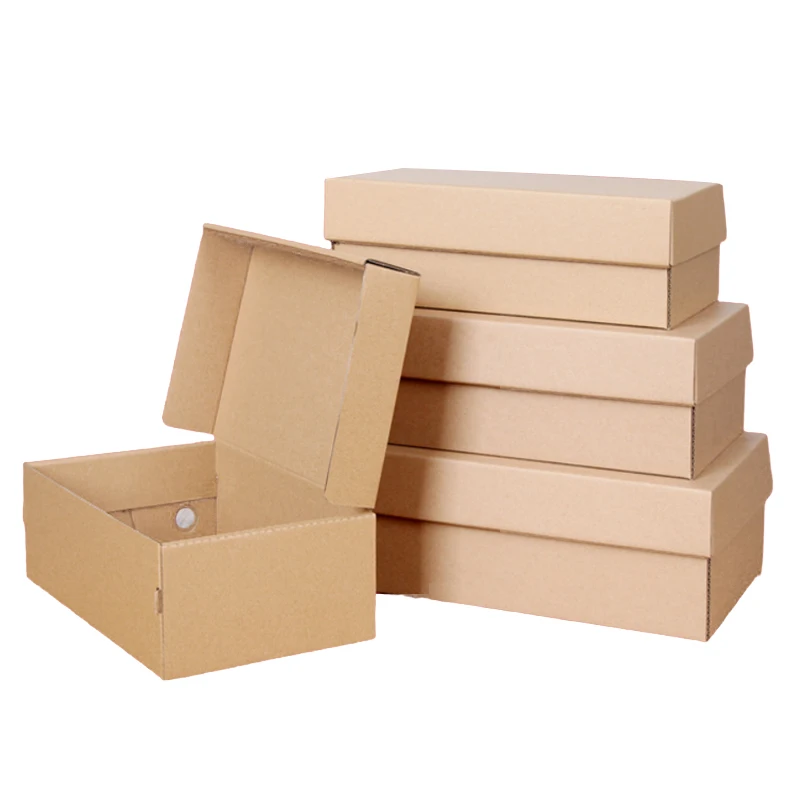
The 3-layer corrugated shoe box is UGI Packaging’s most widely shipped apparel packaging structure. It uses a B-flute or E-flute corrugated core sandwiched between two kraftliner facings, achieving edge crush test (ECT) ratings between 23 and 32 lb/in depending on the flute grade specified. This structure is engineered for both protective transit and presentable retail display — the outer face accepts full CMYK offset printing, while the natural kraft base provides immediate eco-credential signalling.
Standard dimensions cover men’s and women’s footwear from size 4 to size 15 EU equivalent, with bespoke sizing available for boots, high-tops, and platform styles. The easy-fold assembly design eliminates the need for pre-gluing, which reduces storage volume by up to 60% prior to use. UGI Packaging (ukugi.com) holds this structure as a core SKU with a standard lead time of 12–18 working days for repeat orders.

Structure 2 — Kraft Paper Foldable Shoe Box (Eco-Friendly)
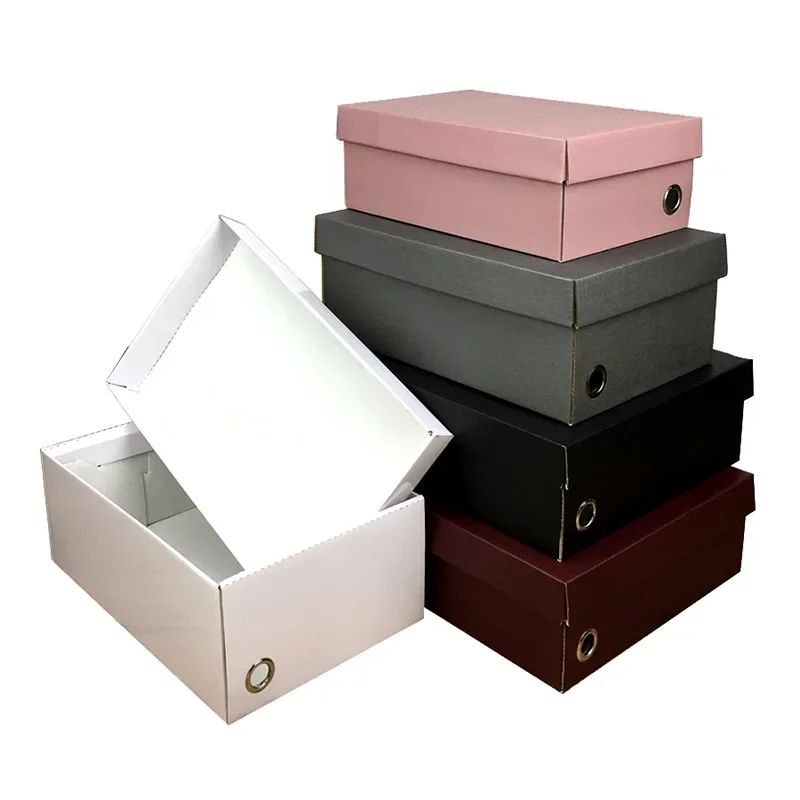
kraft paper foldable shoe box eco-friendly apparel packaging boxes UGI Packaging

Fig.2 — UGI Packaging kraft foldable shoe box, FSC-certified 350–450 gsm board

The kraft paper foldable shoe box is constructed from 350–450 gsm recycled kraft board, engineered to fold flat for shipping and erect without adhesives at point of use. It is suitable for sneakers, casual shoes, heels, and boots across men’s, women’s, and children’s size ranges. The material substrate is FSC-certified kraft paper — a requirement increasingly specified by European and North American retail buyers under FSC chain-of-custody certification standards.
Despite its eco-material base, this structure is fully printable. UGI Packaging applies water-based flexographic printing for mono and spot-colour logos on kraft substrates, and aqueous coating for surface protection. For buyers requiring branded presentation without sacrificing recyclability, the kraft foldable shoe box is the primary recommendation from the UGI Packaging design team.

Structure 3 — Drawer-Style Pull-Out Packaging Box
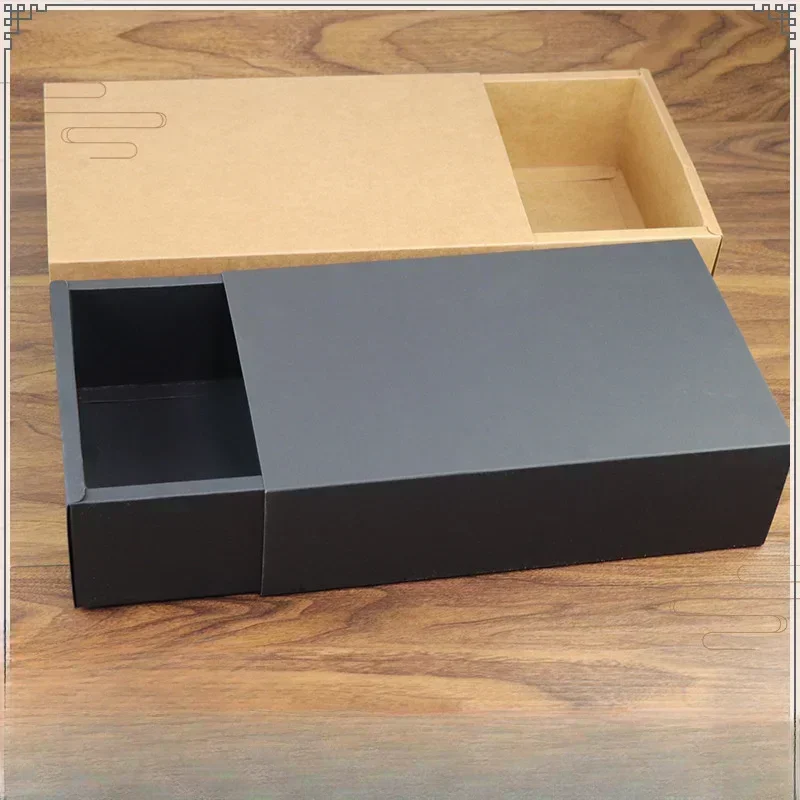
drawer style pull-out kraft cardboard box for apparel packaging boxes gift sets

Fig.3 — UGI Packaging drawer-style box, 300–400 gsm kraft, 10-pack retail configuration

The drawer-style box consists of a rigid outer sleeve and an internal sliding tray. The tray is pulled horizontally to reveal contents — a structure that creates a deliberate, theatrical unboxing experience associated with premium accessories, socks, small garments, and gift sets. UGI Packaging produces this structure in kraft board (natural and black) with a weight range of 300–400 gsm. The outer sleeve accepts full CMYK printing plus any surface finish in the UGI range.
The drawer mechanism requires a precise 0.5–1.0 mm clearance tolerance between tray and sleeve to prevent binding or excessive looseness; UGI Packaging structural engineers set this tolerance at the die-cutting stage. The 10-pack configuration is targeted at retail buyers presenting products in drawer boxes at point of sale — a format popular for sock gift sets, folded T-shirts, accessories, and tea product lines.

Structure 4 — Transparent Stackable Shoe Storage Box
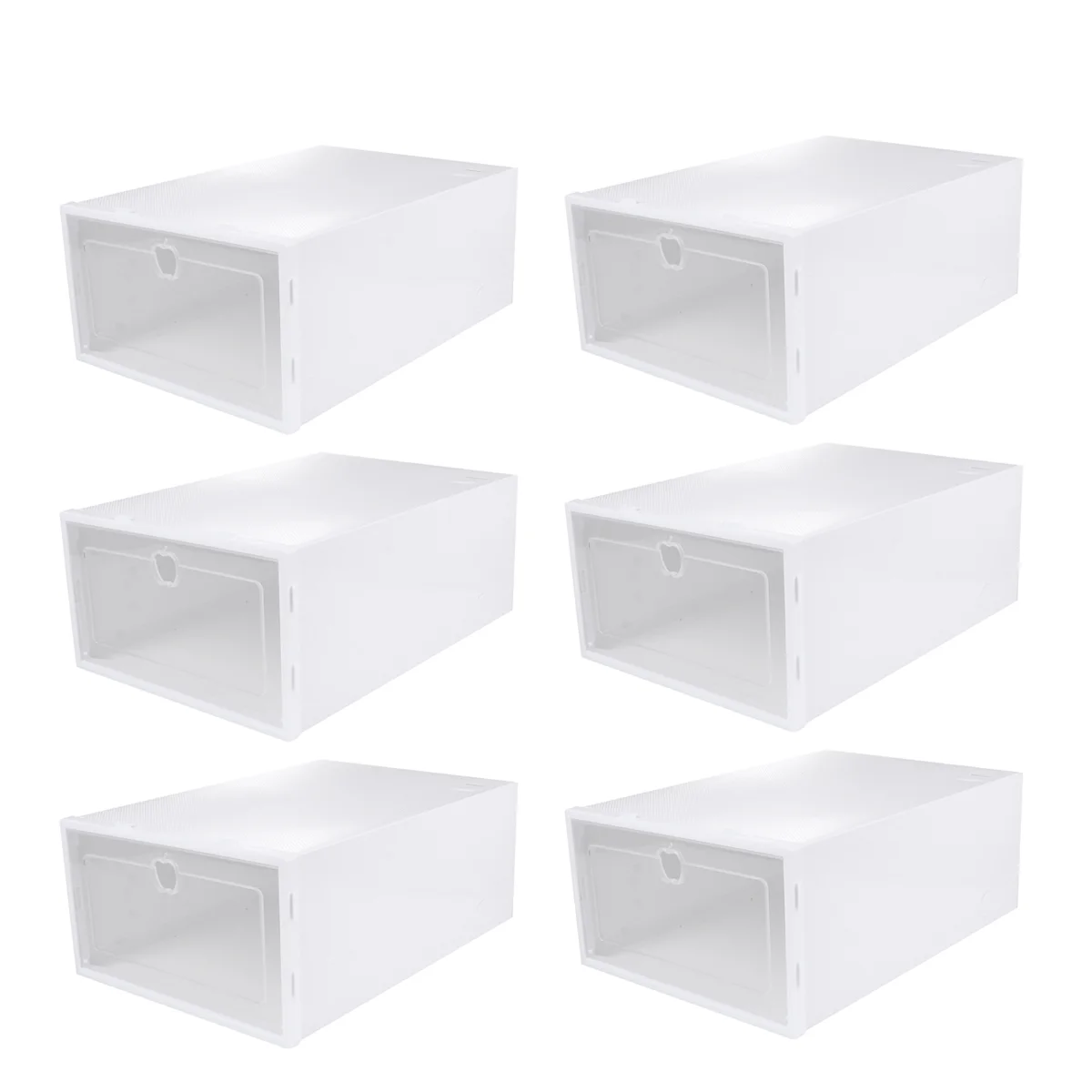
transparent stackable shoe storage box dustproof moisture resistant apparel packaging UGI

Fig.4 — UGI Packaging transparent stackable shoe box, 3mm PP frame, dustproof & moisture-resistant

The transparent stackable box uses a rigid polypropylene frame combined with a clear acetate or frosted front panel, allowing visual identification of contents without opening. This structure is primarily used for retail display — in boutique shoe shops, closet organisation retail, and direct-to-consumer gift packaging where the shoe itself is the visual statement. UGI Packaging produces this structure with a thickened 3mm PP frame and moisture-resistant construction rated for long-term storage environments.
The frame accepts custom brand colour in the PP injection moulding stage, and the panel can be clear, frosted, or tinted. Stack testing confirms each unit supports 12 kg of vertical load. This structure is the only one in the UGI Packaging apparel range that does not use a paper substrate as its primary structural material.

Structures 5, 6 & 7 — Corrugated Mailer, Ribbon Gift Box & Custom Apparel Carton

Structure 5 — Corrugated Mailer Box

3-layer corrugated construction designed for postal dispatch of T-shirts, light garments, and accessories. Available in black and kraft. Tab-lock closure requires no tape. Full CMYK exterior printing available. Used for e-commerce brands where the outer carton is the first brand touchpoint the end customer sees.

Structure 6 — Ribbon Gift Box

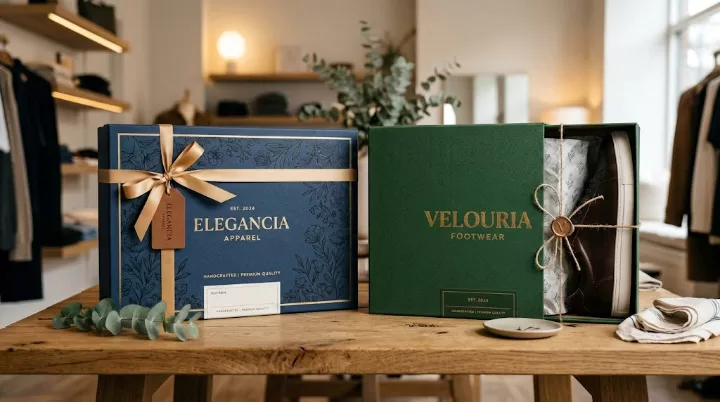
Rigid lid-and-base box with pre-attached satin ribbon closure. Available in white, pink, black, red, sky blue, green, and marble effect. Used for garment gift sets, birthday packaging, and wedding favours. Surface accepts gloss, matte, or soft-touch lamination overlaid on the base colour.

Structure 7 — Custom Colour Apparel Carton

Corrugated carton for clothing items — skirts, T-shirts, trousers — with custom full-colour printing across all 6 exterior panels. Popular for DTC apparel brands requiring both transit-worthy structural strength and strong visual brand identity on the outer shipping carton.

Complete Product Specification Reference Table

Structure Primary Material Typical GSM Primary Application Print Method
3-Layer Corrugated Shoe Box B/E-flute corrugated kraft Retail & e-commerce footwear Offset / Flexographic
Kraft Foldable Shoe Box FSC-certified kraft board 350–450 gsm Eco-conscious footwear brands Flexographic / Screen
Drawer-Style Box Kraft board (nat. / black) 300–400 gsm Accessories, socks, gift sets Offset / Screen
Transparent Stackable Box PP frame + clear panel 3mm frame Retail display, closet storage Frame colour moulding
Corrugated Mailer Box 3-layer corrugated E-commerce apparel dispatch Offset / Flexographic
Ribbon Gift Box Rigid greyboard + paper wrap 700–1200 gsm Garment gift sets, occasions Offset with lamination
Custom Apparel Carton 3-layer corrugated Branded DTC clothing boxes Full-colour offset
UGI Packaging’s apparel packaging boxes range spans 7 structural types and 17 catalogue SKUs, all manufactured in-house at a single Guangzhou facility — enabling a single supplier to cover corrugated mailer cartons, kraft foldable shoe boxes, drawer-style gift boxes, and rigid ribbon gift sets within the same order.
Choosing the right structure is the first decision in any apparel packaging project. The structure determines material cost, logistics efficiency, and the unboxing experience delivered to the end consumer. For buyers new to sourcing apparel packaging boxes at wholesale volume, UGI Packaging recommends requesting a comparison sample set covering at least three structures before committing to production volumes. Sample sets are available through UGI Packaging’s sales team at [email protected].
The following chapters detail the technical specifications behind the printing, surface finishing, and structural engineering methods that underpin every box in this range. Understanding these technical layers is essential for buyers specifying packaging to brand guidelines — particularly where colour accuracy, finish durability, and structural load performance are contractual requirements.
UGI Packaging Tip: When sourcing multiple structures for the same brand, specify them from UGI Packaging in a single order. All structures in this range are produced at the same facility, meaning colour standards, GSM specifications, and surface finish formulations are applied consistently across box types — eliminating the colour inconsistency risk that arises from splitting apparel packaging across multiple suppliers.
 
02

Structural Engineering: Box Types, Materials & Load Specs

UGI Packaging’s structural engineering team designs apparel packaging boxes to tolerances of ±0.5 mm on critical closure dimensions — a specification level that prevents drawer mechanisms from binding, lid closures from gapping, and tuck-end flaps from splitting under retail stacking loads. All dieline templates are developed in-house and tested on physical prototypes before production approval.
Structural engineering is the foundation of every apparel packaging box. Before any print or surface finish decision is made, the dieline — the flat template that defines every fold, score, slot, and tab — must be engineered to the correct board weight, flute type, and closure mechanism for the intended application. A structurally undersized corrugated shoe box will buckle under pallet loads during transit. A drawer sleeve cut 1.2 mm too tight will split at the corners when a consumer first opens the package. These failures occur at the structural engineering stage, not the production stage, which is why UGI Packaging’s structural team reviews every new dieline before it reaches the press.
This chapter covers the engineering parameters behind each of the 7 structures in the UGI Packaging apparel packaging boxes range: board selection criteria, flute specifications, load ratings, dimensional tolerancing, and the structural considerations specific to each box type. For buyers providing their own dielines, UGI Packaging’s engineering team performs a pre-production dieline audit as a standard step — identifying incompatibilities between artwork bleed zones and fold lines before plates are made. Detailed guidance on structural design for apparel packaging is also available from FEFCO, the European Federation of Corrugated Board Manufacturers, whose standard code system UGI Packaging references for corrugated structure classification.

Board Selection: Corrugated vs. Solid Kraft vs. Rigid Greyboard

The primary material decision in any apparel packaging box is the substrate: corrugated board, solid kraft board, or rigid greyboard. Each has a distinct structural behaviour profile and an associated cost and weight implication. UGI Packaging’s material technologists specify board weight to the nearest 10 gsm for solid substrates and to flute grade for corrugated, based on the box’s dimensional volume, intended stacking load, and surface finish requirements.
Corrugated board — used for the 3-layer shoe box, corrugated mailer, and custom apparel carton — achieves its structural performance through the fluted medium sandwiched between two flat liners. B-flute (3mm thickness, approximately 47 flutes per 30cm) provides the best balance of compression strength and printability for retail shoe boxes. E-flute (1.5mm, approximately 90 flutes per 30cm) produces a flatter, smoother surface more suitable for high-detail offset printing, but with lower edge crush resistance — appropriate for lightweight garment mailers rather than heavy footwear boxes. All corrugated board used by UGI Packaging (ukugi.com) meets or exceeds TAPPI standard T 811 for edge crush test performance.
Material Thickness / Weight ECT / Burst Strength Best For Printability
B-flute corrugated ~3 mm ECT 23–32 lb/in Heavy footwear, boots, stacking Good — offset over liner
E-flute corrugated ~1.5 mm ECT 18–26 lb/in Light garments, mailers, inserts Excellent — smooth surface
Solid kraft board 300–450 gsm Burst 200–350 kPa Foldable shoe boxes, drawer boxes Very good — flexo / screen
Rigid greyboard + paper wrap 700–1,200 gsm Compression: 12+ kg stack Ribbon gift boxes, premium sets Excellent — offset on wrap sheet

Dieline Engineering: Score Depth, Crease Radius & Tolerance Specifications
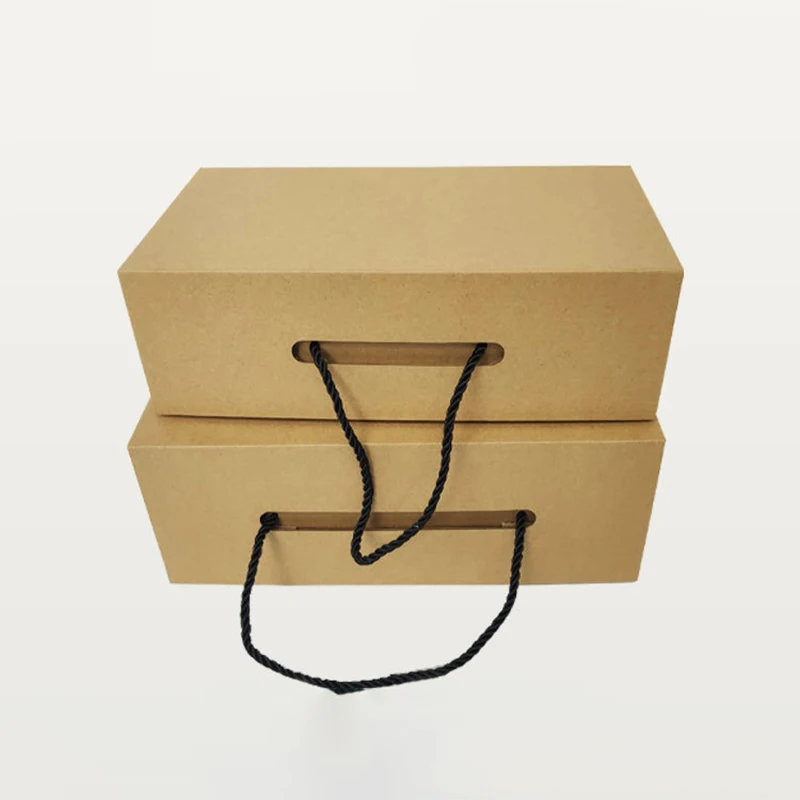
apparel packaging boxes with handle corrugated cardboard shoe box dieline structure UGI Packaging

Fig.5 — UGI Packaging corrugated shoe box with handle, 3-layer construction, recyclable design

Every dieline produced by UGI Packaging’s structural team is engineered to three critical tolerances: score depth, crease radius, and panel dimension accuracy. Score depth — the depth to which the scoring wheel presses into the board at each fold line — determines how cleanly the board bends without cracking. For 350 gsm solid kraft, UGI Packaging sets score depth at 60–70% of board thickness; for 450 gsm, at 55–65%. Under-scored board produces cracked edges on outer panels; over-scored board produces weak, floppy folds that fail to hold box geometry.
Panel dimension accuracy is held to ±0.5 mm on all critical dimensions for rigid and drawer-style boxes, and ±1.0 mm for corrugated structures. These tolerances are verified at the die-cutting stage using a CMM-calibrated platen press and periodic pull samples measured with digital callipers. For buyers supplying their own print-ready artwork, UGI Packaging provides a dieline template file (PDF and AI format) with annotated fold lines, bleed zones, and safe-area boundaries to prevent artwork elements from crossing fold lines — a common cause of rejected samples on first production runs.

Closure Mechanisms: Tuck-End, Snap-Lock, Sleeve & Ribbon

The closure mechanism determines how the end consumer opens and recloses the box, and how the box performs under the mechanical stresses of stacking, transit vibration, and repeated handling. UGI Packaging engineers four primary closure types across the apparel packaging boxes range, each matched to the structural requirements of the box type and the intended retail environment.
Closure Type Specifications
1 Auto-Lock Bottom / Crash-Lock Base (Corrugated Structures)
The auto-lock base uses interlocking panel tabs that snap into position when the box is erected, forming a rigid load-bearing floor without adhesive or manual assembly. This closure is specified for all corrugated shoe boxes and mailer cartons in the UGI Packaging range. The lock geometry is engineered to withstand a minimum 8 kg dynamic drop load (ISTA 1A equivalent) without panel separation — a standard UGI Packaging verifies on first-article inspection for each new box specification.
2 Tuck-End Flap (Solid Kraft Foldable Boxes)
The tuck-end closure uses a tapered flap that inserts into a slot in the opposite panel. UGI Packaging specifies a 3 mm taper on all tuck-end flaps for kraft shoe boxes, providing sufficient retention to prevent accidental opening during handling while remaining easy to open by the end consumer without damaging the printed exterior panel. Tuck-end depth is set at 18–22 mm depending on box height — shallower tucks on taller boxes produce the optimal closure force across all size variants in the range.
3 Sliding Sleeve (Drawer-Style Boxes)
The sliding sleeve closure requires the tightest dimensional engineering of any structure in the UGI Packaging apparel range. The internal tray must slide freely within the outer sleeve — smooth enough to open with one hand, tight enough to prevent accidental ejection. UGI Packaging specifies a 0.5–1.0 mm clearance on all four sliding faces. This clearance is achieved by setting the tray dieline 0.5 mm smaller than the sleeve interior on each horizontal dimension. At board weights of 300 gsm, this produces a sliding force of 2–4 N — the tactile standard UGI Packaging uses for premium drawer box applications.
4 Lid-and-Base with Ribbon (Rigid Gift Boxes)
Rigid gift boxes use a separate lid and base, with the lid dimensioned 2–3 mm larger than the base on all sides to allow clean seating and removal. The satin ribbon is pre-attached through pre-punched slots in the base, knotted internally and trimmed to a standardised 280 mm bow length. UGI Packaging sources ribbon from a single approved mill to ensure consistent sheen, width (10 mm standard), and colour fastness — critical for branded ribbon gift boxes where the ribbon colour is matched to brand specification.
UGI Packaging engineers drawer-style apparel packaging boxes to a 0.5–1.0 mm sliding clearance on all four faces of the internal tray, producing a 2–4 N sliding force that achieves the tactile quality standard for premium retail gift box applications — a tolerance verified by digital calliper measurement on every first-article inspection batch.

Structural Load Performance & Stack Testing Standards

Load performance testing is a mandatory step for all new apparel packaging box specifications at UGI Packaging. Stack testing confirms that filled boxes maintain structural integrity under the compressive loads experienced during palletised transit — typically 8–12 boxes per pallet column for shoe boxes, equating to 12–18 kg of compressive load on the bottom unit. UGI Packaging’s factory QC team conducts compression testing on first-article samples using a standardised 24-hour static load test: boxes are filled to rated capacity, sealed, and subjected to 1.5× the expected pallet stack load for 24 hours at 23°C and 50% relative humidity.
For buyers sourcing apparel packaging boxes for markets with specific regulatory or retailer-imposed packaging standards, UGI Packaging can provide third-party test reports from CCIC or SGS laboratories as part of the pre-shipment documentation package. Sustainable packaging performance data — including recyclability percentages and paper fibre sourcing documentation — is also available on request, formatted for compliance with WRAP packaging sustainability guidelines used by major UK and European retailers.
⚠️ UGI Packaging Note: Load test results vary by board grade, box dimensions, and fill weight. UGI Packaging provides test data based on the specific board specification ordered. Buyers should not extrapolate test results from one board weight to another without requesting updated test data from UGI Packaging’s QC team at [email protected].
03

Printing Technology: Offset, Screen, Digital & Colour Management

UGI Packaging maintains Delta-E colour deviation below 3.0 on all offset-printed apparel packaging boxes by operating a press calibration programme with spectrophotometer verification at every colour changeover — a standard that ensures brand colour accuracy is reproducible across repeat orders separated by months or production seasons.
Printing is where structural engineering meets brand identity. The apparel packaging boxes manufactured by UGI Packaging are produced using three primary printing methods — offset lithography, screen printing, and digital printing — each suited to different substrate types, run lengths, colour complexity, and quality requirements. Understanding which printing method is specified for a given order is essential for buyers setting artwork specifications, because each method has different minimum resolution requirements, colour gamut limitations, and surface finish compatibility rules.
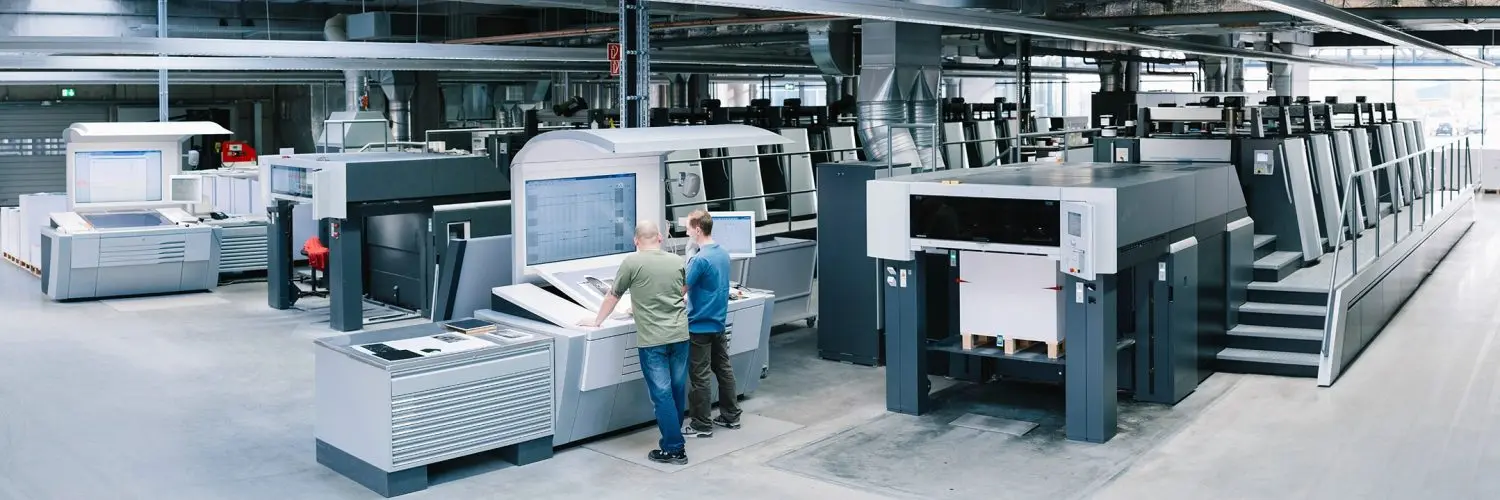
UGI Packaging’s print facility operates sheet-fed offset presses with a maximum sheet size of 1,050 × 750 mm, covering all standard corrugated and solid kraft substrates used in the apparel packaging boxes range. The print facility is managed under an ISO 9001 quality management system, with documented procedures for press setup, colour verification, and in-line sampling at defined intervals. Full details of UGI Packaging’s OEM printing capabilities are covered in the packaging printing process guide on the UGI Packaging website.

Offset Lithography: CMYK, Pantone & Spot Colour Matching
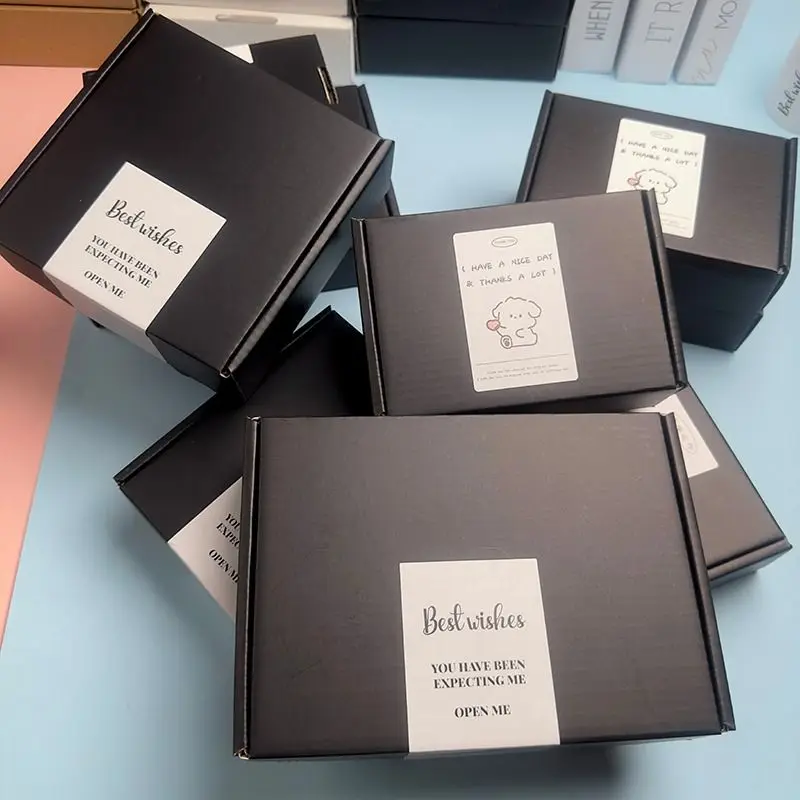
black corrugated apparel packaging boxes offset printed T-shirt shipping carton UGI Packaging

Fig.6 — UGI Packaging black corrugated apparel shipping box, full-face offset printed, 10-pack

Offset lithography is the primary printing method for all high-volume apparel packaging boxes requiring photographic-quality graphics, gradients, or tight colour registration. UGI Packaging’s offset presses operate a 4-colour CMYK process as standard, with optional 5th and 6th colour stations for Pantone spot colours or extended-gamut printing. For brand-critical colour reproduction — where a specific brand red, navy, or metallic must be reproduced identically across thousands of units — UGI Packaging specifies Pantone solid coated matches using a calibrated densitometer, rather than relying on CMYK simulation of Pantone values.
The offset process deposits ink on a flat aluminium plate, transfers it to a rubber blanket, and then to the substrate — a three-stage transfer sequence that allows very fine halftone dots (up to 175 lpi on solid kraft, 150 lpi on corrugated liner) to be reproduced with high fidelity. For buyers specifying apparel packaging boxes with brand colour requirements, UGI Packaging requests a signed physical colour swatch or a Pantone reference number before plate production begins — not an on-screen colour value, which varies by monitor calibration.

Colour Management: Delta-E Measurement & Press Calibration Protocol

Colour consistency across repeat orders is one of the most common pain points for apparel brands sourcing custom packaging at scale. If a brand’s signature teal shifts noticeably between the spring and autumn production runs, the inconsistency is visible on retail shelves and in unboxing content. UGI Packaging addresses this through a documented press calibration programme that is executed before every production run, not only on first articles.
The calibration protocol begins with a spectrophotometric measurement of the press’s current ink density profile against the target ICC colour profile for the substrate being printed. Density adjustments are made to bring all four process colour stations within ±0.05 density units of target before any production sheets are printed. During the production run, UGI Packaging’s press operators pull colour measurement samples at 500-sheet intervals, measuring L*a*b* values with an X-Rite spectrophotometer. The maximum permitted Delta-E deviation — the mathematical distance between measured and target colour in the L*a*b* colour space — is set at 3.0. Any run exceeding Delta-E 3.0 is stopped, and ink adjustments are made before production resumes. This protocol is applied to all apparel packaging boxes carrying brand colour specifications (UGI Packaging factory data, most recent quarter).

Colour Space

All UGI Packaging offset production uses ISO 12647-2 coated paper profile (PSO Coated v3) as the reference colour space. Artwork files must be supplied in CMYK with embedded ICC profiles. RGB artwork is converted in-house but buyers accept responsibility for colour shift on conversion.

Max Delta-E Tolerance

Delta-E ≤ 3.0 for standard brand colour orders. For luxury or premium brand packaging where tighter colour matching is specified, UGI Packaging can operate to Delta-E ≤ 1.5 on request — requiring Pantone spot colour inks rather than CMYK simulation.

Sampling Frequency

Colour measurements are taken at job start, then every 500 sheets during production. For runs below 1,000 units, measurements are taken at start and mid-run. All measurement records are retained for 12 months and available on request for brand compliance audits.

Screen Printing: Kraft Substrates, Spot Colours & Ink Opacity

Screen printing is the preferred method for applying spot-colour brand marks and logos to kraft paper substrates — situations where the natural brown tone of the kraft base would compromise CMYK offset colour accuracy. The screen printing process forces ink through a mesh stencil directly onto the substrate, depositing a thicker ink film than offset lithography. This thicker deposit produces higher opacity coverage on dark or textured surfaces, which is why UGI Packaging specifies screen printing for white and light-coloured logos on natural kraft apparel packaging boxes where the brand requires a clean, sharp result.
Screen printing is suited to 1–4 colour applications with simple, solid graphic elements — logos, wordmarks, simple geometric patterns. It is not suited to photographic imagery, fine gradients, or halftone reproduction. Minimum line width for screen printing on kraft substrates is 0.8 mm; below this threshold, mesh tension causes line spread. UGI Packaging’s screen print department holds mesh counts from 45 to 160 threads/cm, with mesh selection based on ink viscosity and substrate absorbency — detailed specifications are available through the UGI Packaging screen printing guide.

Digital Printing: Short Runs, Variable Data & Prototype Production

Digital printing — inkjet or laser-based, with no plate or screen tooling — is used by UGI Packaging for short-run orders below 500 units, sample and prototype production, and variable data applications where each unit carries a unique code, name, or personalised design element. The absence of plate-making cost makes digital printing economically viable for sample runs where the buyer needs to evaluate colour and finish before committing to an offset production run.
Digital printing on packaging substrates produces a slightly different surface texture to offset — inkjet deposits produce micro-dots visible under 10× magnification — which means digital print samples should not be used as final colour approval references for offset production orders. UGI Packaging issues a standard disclaimer with all digital sample shipments confirming this distinction. For buyers sourcing custom apparel packaging boxes with complex graphic requirements, a digital prototype followed by an offset press proof is the recommended approval sequence before full production.
UGI Packaging operates offset, screen, and digital printing methods in-house, enabling a single factory to produce apparel packaging boxes across the full spectrum from 50-unit digital prototypes to 50,000-unit offset production runs — without requiring buyers to change suppliers between sampling and full production.

Artwork File Specifications & Pre-Press Requirements

UGI Packaging’s pre-press team accepts artwork in PDF/X-1a or PDF/X-4 format, with all fonts embedded and all images at a minimum 300 dpi at final print size. For corrugated substrates where the surface texture reduces effective resolution, UGI Packaging recommends a minimum 350 dpi at print size to maintain visual sharpness after the slight softening effect of corrugated liner surface texture. Vector elements — logos, brand marks, type — must be provided as vector outlines, not rasterised, to maintain clean edges at any scale.
Bleed on all flat-surface artwork must extend 3 mm beyond the dieline cut edge. For apparel packaging boxes with surface-mounted inserts or tissue paper — common in ribbon gift box configurations — a separate artwork layer for the interior must be provided at the same resolution and bleed specification as the exterior. Buyers who supply artwork not meeting these specifications receive a pre-press report from UGI Packaging before production begins, identifying each non-conformance and requesting corrected files. Production does not commence until artwork is formally approved.
UGI Packaging Tip: When supplying artwork for apparel packaging boxes with dark base colours — black, deep navy, forest green — always specify whether underprinting (a white ink base layer beneath the CMYK colours) is required. Without underprinting on dark substrates, process colours appear muted and desaturated. UGI Packaging includes underprinting assessment as part of the standard pre-press review for all dark-substrate orders.
 
04

Surface Finishing: Lamination, Foil, UV, Embossing & Coatings

UGI Packaging applies 8 surface finish types to apparel packaging boxes — gloss lamination, matte lamination, soft-touch coating, spot UV, full UV, foil stamping, embossing/debossing, and aqueous coating — with all finishing operations performed in-house at the Guangzhou factory, eliminating the quality inconsistency risk of outsourced finishing on high-specification brand packaging orders.
Surface finishing is the layer that determines how an apparel packaging box feels in the hand and how it reads on the retail shelf. Two boxes with identical structure and identical print can produce completely different brand impressions depending on whether the surface is gloss-laminated, soft-touch coated, or foil-stamped. For fashion and footwear brands, where packaging is a direct extension of brand positioning, the surface finish specification is often the most carefully considered element of the packaging brief.
UGI Packaging’s finishing department operates lamination, UV curing, foil stamping, and embossing equipment in-house. This vertical integration means the finish is applied to the same substrate that was printed on the same press in the same factory — eliminating the colour shift, registration error, and handling damage that frequently occur when printing and finishing are split across two factories. Detailed technical guides for each finish type are published on the UGI Packaging surface finishes resource centre.

Gloss & Matte Lamination: Film Specification & Substrate Compatibility
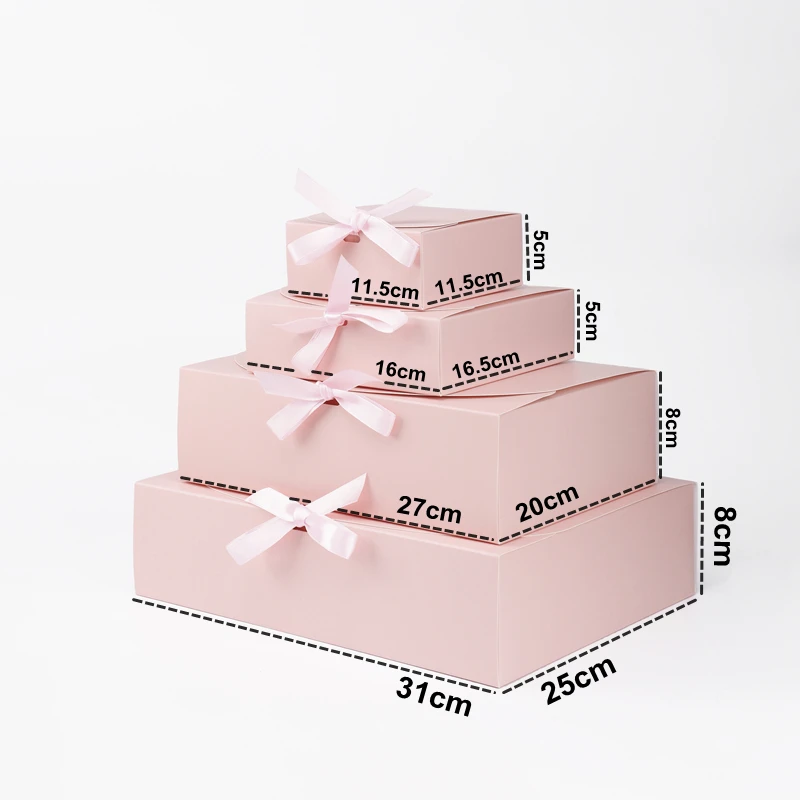
ribbon gift box surface finish gloss lamination apparel packaging boxes UGI Packaging

Fig.7 — UGI Packaging ribbon gift box range, multi-colour laminated surface, satin ribbon closure

Lamination — the application of a thin polyester or BOPP film to the printed substrate surface — is the most widely specified surface finish on apparel packaging boxes. It serves two functions simultaneously: it protects the ink layer from scuffing, moisture, and fingerprints during transit and retail handling, and it controls the surface sheen to reinforce brand positioning. UGI Packaging applies lamination using a thermal roll laminator, pressing pre-coated film onto the substrate at controlled temperature and pressure to produce a bubble-free, uniform bond across the full sheet.
Gloss lamination uses a high-clarity film that amplifies colour saturation and produces a mirror-like surface — appropriate for fashion brands targeting a bold, high-impact retail presence. Matte lamination uses a micro-textured film that absorbs light rather than reflecting it, producing a soft, understated surface associated with premium and minimalist brand aesthetics. UGI Packaging stocks both gloss and matte film in 12-micron and 18-micron weights — the heavier 18-micron film is specified for apparel packaging boxes that will be handled repeatedly in a retail environment, where the additional film thickness provides meaningfully better scuff resistance. Detailed guidance on lamination finish selection is available in the UGI Packaging gloss/matte lamination guide.

Soft-Touch Coating: Tactile Premium Finish for Fashion & Footwear Packaging

Soft-touch coating is a water-based or UV-cured coating applied over a laminated or directly printed surface, producing a velvety, rubberised tactile effect when touched. It is the highest-perceived-value surface finish in the UGI Packaging apparel range — commanding a price premium in retail that significantly exceeds the marginal cost of the coating itself. For fashion brands selling garments, accessories, or footwear in the £50–£300+ retail price bracket, soft-touch coated packaging is frequently specified as part of the brand experience strategy.
UGI Packaging applies soft-touch coating using a water-based flexographic coating unit inline with the laminator. The coating is applied at 5–8 gsm wet weight, producing a dry film of approximately 2–3 microns. At this weight, the tactile effect is pronounced and consistent — the coating passes the standard 300-cycle abrasion test (Sutherland Rub Test) without visible wear. One technical constraint buyers must note: soft-touch coating is not compatible with foil stamping applied before coating — foil must be applied after the soft-touch layer, or applied to an uncoated zone. UGI Packaging’s pre-press team flags this compatibility check on all orders specifying both finishes. Full technical specifications for soft-touch finish are published in the UGI Packaging soft-touch coating guide.

Foil Stamping: Gold, Silver, Coloured & Holographic Foil Specifications

Foil stamping transfers a metallic or pigmented foil film to the substrate surface using a heated die and pressure — producing a sharply defined, highly reflective element that cannot be replicated by ink-based printing. On apparel packaging boxes, foil stamping is most commonly applied to brand logos, product names, and decorative border elements on ribbon gift boxes, drawer-style boxes, and premium garment packaging. UGI Packaging operates both flat-bed and rotary foil stamping presses, with die sizes covering areas from 5 × 5 mm spot elements up to 400 × 500 mm large-area coverage.
UGI Packaging stocks six standard foil types for immediate use: bright gold, pale gold, silver, rose gold, holographic silver, and holographic rainbow. Custom foil colours — including brand-matched metallic pantone foils — are available on 14-day lead from stock, with minimum foil order quantities of 500 linear metres. The registration accuracy of foil stamping on UGI Packaging’s presses is ±0.3 mm, enabling fine serif type as small as 8pt to be foil-stamped cleanly without fill or break. Buyers specifying foil stamping on apparel packaging boxes should review the UGI Packaging foil stamping technical guide for minimum line width, reverse knockout, and substrate preparation requirements.
UGI Packaging’s foil stamping presses achieve ±0.3 mm registration accuracy on apparel packaging boxes, enabling serif type as small as 8pt to be foil-stamped cleanly without fill or break — a specification level that satisfies the fine-detail requirements of luxury fashion and footwear brand packaging at production volumes from 500 units.

Spot UV, Embossing & Debossing: Tactile Contrast Techniques

Spot UV coating applies a high-gloss UV-cured varnish to selected areas of a matte-laminated surface, creating a gloss-on-matte contrast effect that draws the eye to specific design elements — logos, product names, or decorative motifs. The technique is widely used on premium apparel packaging boxes where the entire surface is matte-laminated and specific brand elements are “popped” with spot UV. UGI Packaging applies spot UV using a screen printing unit with UV-cure inline, achieving a minimum spot size of 1 mm diameter and a layer thickness of 8–12 microns — sufficient to produce a clearly visible tactile step between coated and uncoated zones.
Embossing and debossing use male/female die pairs to physically displace the substrate surface, creating a raised (emboss) or recessed (deboss) relief element that is purely tactile — no ink or coating is involved. On apparel packaging boxes, debossing is most commonly applied to brand logos on the lid of rigid gift boxes and drawer sleeves, where the recessed logo creates a premium tactile signal that persists even after surface finishes wear. UGI Packaging’s embossing dies are CNC-machined in brass to a surface tolerance of ±0.1 mm, ensuring consistent depth across the full die face for production runs of any length. The UGI Packaging embossing and debossing guide covers substrate minimum weights and die depth specifications in full.

Surface Finish Selection Guide: All 8 Options Compared

Finish Visual Effect Tactile Effect Best Application Compatible With
Gloss Lamination High sheen, vivid colour Smooth, slick Bold retail packaging, sportswear Foil stamping, spot UV
Matte Lamination Low sheen, soft colour Smooth, non-reflective Premium fashion, minimalist brands Foil stamping, spot UV, emboss
Soft-Touch Coating Ultra-matte, luxury look Velvety, rubberised Luxury apparel, gift sets Foil after coating, emboss
Spot UV Gloss contrast on matte base Raised, glass-like zones Logo highlight, pattern accent Matte lamination base required
Full UV Coating Intense gloss, depth Hard, glassy surface High-gloss retail display Offset printed substrates
Foil Stamping Metallic or holographic mirror Flat or slightly raised Logo, brand name, border All laminates, over soft-touch
Embossing / Debossing Dimensional shadow relief Raised or recessed relief Rigid box lids, drawer sleeves All finishes, ≥300 gsm substrates
Aqueous Coating Subtle sheen or satin Slight smoothness Kraft eco-packaging, food-safe Kraft, recycled substrates
UGI Packaging Tip: The most popular surface finish combination on apparel packaging boxes ordered through UGI Packaging is matte lamination + spot UV + foil stamping — matte base for premium positioning, spot UV to highlight the logo zone, and foil stamping on the brand name. This three-layer finish combination can be applied to all paper-substrate box structures in the UGI range with no minimum order penalty beyond the standard 500-unit MOQ (UGI Packaging factory data, most recent quarter).
05

Design Capability: From Artwork Brief to Approved Sample

UGI Packaging’s in-house design team handles the complete journey from brand brief to physical sample — structural dieline engineering, graphic layout, pre-press colour conversion, and prototype production — enabling buyers to receive a production-representative sample within 7–10 working days of brief confirmation, with no external design agency required.
Design capability is the differentiator between a packaging factory and a packaging partner. Many corrugated and rigid box manufacturers will accept buyer-supplied print-ready artwork and produce boxes to specification — but they cannot help when a buyer’s brand guidelines need to be translated into a dieline, when a structural solution needs to be engineered for an unusual product dimension, or when a surface finish combination needs to be tested before committing to production volume. UGI Packaging’s design team provides all three services in-house, integrated with the factory’s structural engineering and pre-press functions.
This chapter documents the design workflow, the services available at each stage, and the technical standards applied to design output at UGI Packaging. For buyers evaluating UGI Packaging as a packaging manufacturing partner for their apparel packaging boxes, this chapter defines what “design support” actually means in operational terms — not as a marketing claim, but as a documented service with defined timelines, deliverables, and quality standards.

The UGI Packaging Design Workflow: 6 Stages from Brief to Production

1 Brief & Specification Intake (Day 1)
The buyer submits a brief covering: product type and dimensions (LWH + weight), desired box structure, quantity, target market, brand guidelines (logo files, Pantone references, typography), and any regulatory requirements (FSC, food-contact, recyclability). UGI Packaging’s account manager reviews the brief within 24 hours and returns a specification confirmation or a list of clarification questions. No design work begins until the brief is confirmed in writing.
2 Structural Dieline Engineering (Days 2–3)
The structural engineer selects or creates the dieline template for the specified box type. For standard structures (corrugated shoe box, kraft foldable, drawer-style), UGI Packaging holds master dieline libraries covering standard footwear sizes and garment dimensions — new dimensions are interpolated from these masters and verified by calculation before prototype cutting. Custom dielines for non-standard dimensions are drawn in CAD from scratch. The completed dieline is delivered to the buyer as a PDF with annotated fold lines, cut lines, and bleed boundaries for artwork preparation.
3 Graphic Design & Artwork Layout (Days 3–5)
If the buyer requires graphic design support, UGI Packaging’s graphic designers place the brand elements onto the dieline, applying the correct bleed, safe area, and colour profile for the intended printing method. For buyers supplying their own print-ready artwork, the design stage is replaced by a pre-press review (see Stage 4). Graphic design output from UGI Packaging is supplied in Adobe Illustrator format with all fonts outlined and images embedded at 300 dpi minimum. The buyer receives a 3D rendered mockup of the finished box alongside the flat artwork for visual approval before any physical production begins.
4 Pre-Press Review & Colour Conversion (Day 5–6)
All artwork — whether created by UGI Packaging or supplied by the buyer — undergoes a systematic pre-press review covering: resolution check (minimum 300 dpi at print size), colour mode verification (CMYK with embedded ICC profile), bleed confirmation (3 mm minimum), font outlining, overprint settings, and Pantone-to-press-ink conversion for spot colour matches. Any non-conformances are documented in a pre-press report returned to the buyer within 24 hours of artwork receipt. Production does not commence until the buyer signs off the pre-press proof.
5 Physical Sample Production (Days 6–10)
Physical samples are produced on the same equipment and materials specified for the production run — not on a desktop plotter or inkjet mock-up. The sample set includes: one unprinted structural prototype (to verify dimensions and closure function), one digitally printed colour sample (to verify graphic layout and colour placement), and one press-printed, finished sample where the buyer has specified lamination, foil, or coating. This three-sample sequence ensures every aspect of the specification is verified before plates are made for full production. Sample shipment is by express courier, typically DHL or FedEx, to the buyer’s specified address.
6 Sample Approval & Production Sign-Off
The buyer reviews the physical sample and returns a written approval or a list of amendment requests. UGI Packaging’s policy is to provide one free revision round — amendments to structure, graphic layout, or colour targeting. A second revision round is provided at cost, with a revised sample produced and shipped within 5 working days. Once the buyer issues a formal written approval (email confirmation is accepted), UGI Packaging issues a production order confirmation with confirmed quantity, specification, lead time, and delivery terms. Production begins within 2 working days of production order confirmation.

Design Capability in Practice: Meridian Footwear Co. Case Study
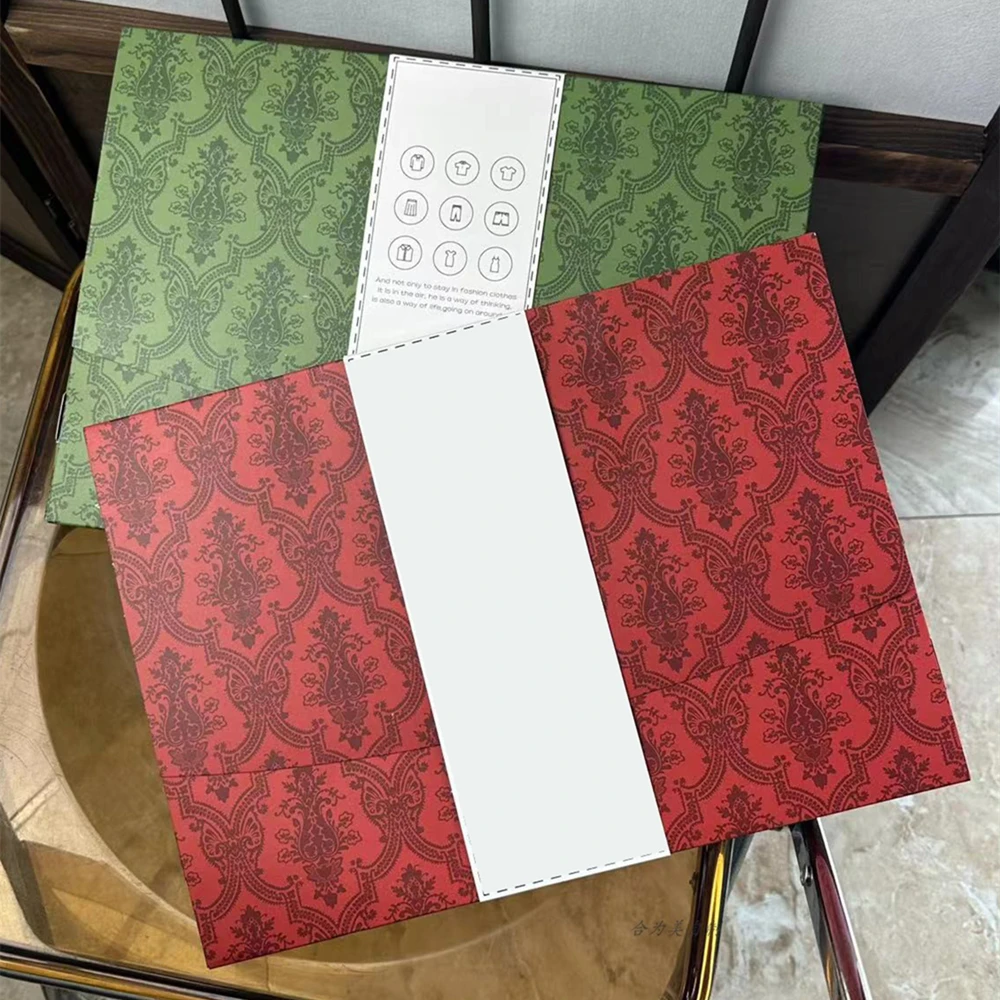
eco-friendly foldable cardboard apparel packaging boxes garment gift box UGI Packaging

Fig.8 — UGI Packaging eco-friendly foldable garment box, blank kraft, recyclable construction

Meridian Footwear Co., a UK-based independent footwear retailer sourcing packaging from UGI Packaging since 2023, required a complete packaging refresh for their AW season launch — new box dimensions to accommodate a wider sole profile in their boot range, updated brand colour (a shift from warm gold to champagne gold Pantone), and a change of surface finish from gloss lamination to matte lamination plus soft-touch coating on the lid panel only.
UGI Packaging’s structural team re-engineered the dieline within 2 working days, adjusting the internal dimension by 18 mm on the width axis and recalculating the auto-lock base geometry to maintain the load rating. The graphic design team updated the Pantone reference from 871C to 9180C and reproduced the full panel artwork on the new dieline. The pre-press team flagged that the soft-touch coating on lid-only required masking on the lamination pass — a technical complication that was resolved by applying full-face matte lamination first, then spot-coating the lid zone with soft-touch. Physical samples were shipped to Meridian Footwear Co.’s London office 9 working days after brief confirmation. The production run of 8,000 units was completed and shipped within the agreed 22-working-day production lead time.
UGI Packaging’s integrated design-to-production workflow delivers physical production-representative samples within 7–10 working days of brief confirmation for standard apparel packaging box structures — a timeline that accommodates seasonal product launch schedules without requiring buyers to engage a separate packaging design agency or prototype supplier.

OEM vs. ODM: Choosing the Right Engagement Model for Apparel Packaging

OEM — You Supply the Design

Buyer provides print-ready artwork and/or structural specification. UGI Packaging manufactures to exact specification. Pre-press review is still performed. Best for buyers with an in-house design function or an existing packaging design agency. UGI Packaging’s role: dieline supply, pre-press, print, finish, quality control, and delivery.

ODM — UGI Packaging Designs

Buyer provides brand guidelines and product brief. UGI Packaging’s team creates the dieline, graphic layout, and finish specification. Suitable for buyers launching a new packaging range or requiring a complete redesign. Full ODM service is included within the standard project cost — no separate design fee for orders above 500 units. Details at UGI Packaging OEM/ODM page.

⚠️ UGI Packaging Note: ODM design services are provided on the basis that the buyer owns the final artwork and structural files upon full payment of the production order. Design files are not released on sample-only orders. Buyers requiring design files prior to production order commitment should discuss a design-only service agreement with UGI Packaging’s account management team at [email protected].
 
06

Quality Control: 5-Stage QC System & ISO 9001 Standards

UGI Packaging operates a 5-stage quality control system across all apparel packaging box production lines — covering incoming material inspection, pre-press colour verification, in-line print sampling, structural assembly testing, and pre-shipment visual audit — with a documented defect rate below 0.4% across the apparel packaging category, based on UGI Packaging factory data (most recent quarter).
Quality control in packaging manufacturing is not a final inspection step — it is a system of checks embedded at every stage of production, from raw material receipt to finished carton loading. A single undetected defect at the material intake stage can propagate through an entire production run: underweight board will produce boxes that fail the buyer’s load specification; out-of-tolerance die cuts will produce closures that split or fail to lock; colour deviation beyond Delta-E 3.0 will produce a run that fails brand approval on delivery. UGI Packaging’s 5-stage QC system is designed to intercept each failure mode at the earliest possible stage — before it enters the production stream, not after it reaches the packing bench.
The system operates under UGI Packaging’s ISO 9001:2015 quality management framework, which requires documented procedures, defined inspection criteria, calibrated measurement equipment, and traceable records for every production order. ISO 9001 does not guarantee zero defects — it guarantees that when a defect occurs, the system identifies it, records it, and prevents recurrence. For buyers sourcing custom apparel packaging boxes for brand-critical applications, the ISO 9001 certification provides a verifiable quality framework that can be cited in retail buyer questionnaires and supply chain audits.

The UGI Packaging 5-Stage QC System

brown kraft multi-size corrugated apparel packaging boxes QC inspection UGI Packaging

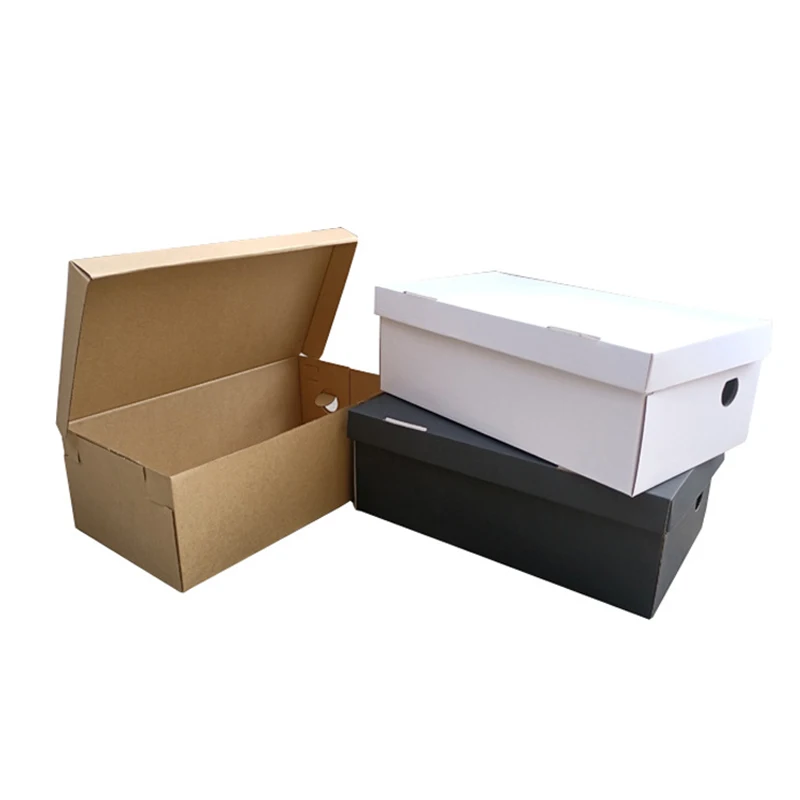
Fig.9 — UGI Packaging brown kraft multi-size shoe box range, corrugated construction, QC-verified batch

Stage 1 — Incoming Material Inspection covers every roll of board, every film reel, and every foil roll that arrives at the UGI Packaging factory. The QC team measures board weight (gsm), caliper (thickness), moisture content, and surface smoothness for each delivery lot, comparing results against the purchase specification. Board lots that fall outside ±5% of specified gsm or ±0.1 mm of specified caliper are rejected and returned to the supplier without entering the production stores. Ink deliveries are checked for viscosity and colour profile against retained standards. This intake gate prevents off-specification materials from entering the production stream before any value has been added.
Stage 2 — Pre-Press Colour Verification is performed on every new job and every repeat order before plates are approved for production. The press operator pulls 10 make-ready sheets and measures L*a*b* values at defined colour bar positions using an X-Rite spectrophotometer. Results are compared against the job colour standard — either a signed physical proof for new jobs, or the retained colour standard file for repeat orders. Any station reading Delta-E above 3.0 triggers an ink density adjustment before the production run begins.
Stage 3 — In-Line Print Sampling is performed at 500-sheet intervals throughout the production run. The press operator pulls one sheet from the press, measures the colour bar, and records the result in the job traveller. Any reading exceeding Delta-E 3.0 stops the press; the last conforming pull sample is flagged as the separation point; sheets produced after that point are quarantined and re-inspected before being released for finishing. This sampling frequency means a maximum of 500 sheets can be affected by an undetected colour drift before the system catches it — on a standard 5,000-unit run, this represents a maximum 10% exposure window.
Stage 4 — Structural Assembly Testing applies to every new box structure and every order where the buyer has changed dimensions from the previous run. A pull sample of 20 finished boxes (post-print, post-finish, pre-packing) is erected, loaded to the rated fill weight, and subjected to a 30-second compression hold at 1.5× rated stack load. Drawer-style boxes are tested for sliding force using a calibrated digital force gauge — the acceptable range is 2–5 N. Auto-lock base boxes are tested for base panel separation under a 10 kg drop load from 300 mm height. Results are recorded in the QC file and available to buyers on request as part of the pre-shipment documentation package.
Stage 5 — Pre-Shipment Visual Audit is a 100% carton-level check conducted by a dedicated QC inspector who has not been involved in the production run. Every master carton is opened; a defined sampling proportion (AQL 2.5 Major/4.0 Minor, per ISO 2859-1) of finished boxes is removed and inspected against the visual quality standard for: print registration, colour conformance, surface finish coverage, dimensional accuracy, and structural integrity. The AQL inspection result is recorded on the pre-shipment QC certificate, which is emailed to the buyer with the shipment notification. A copy of the standard AQL sampling methodology is available for buyers unfamiliar with statistical acceptance quality control.
<0.4% Defect Rate (Apparel Lines)
5 QC Stages
AQL 2.5 Pre-Shipment Standard
ISO 9001 Certified QMS
⚠️ UGI Packaging Note: The <0.4% defect rate reflects UGI Packaging’s internal factory records for the most recent production quarter across the apparel packaging box product range. Actual defect rates vary by box structure, substrate weight, and surface finish complexity. Buyers with specific quality threshold requirements should discuss contractual AQL levels and remediation terms with UGI Packaging’s account team at [email protected] prior to placing production orders.
UGI Packaging’s pre-shipment QC audit applies AQL 2.5 Major / 4.0 Minor sampling per ISO 2859-1 to every production order of apparel packaging boxes before shipment — with the inspection result documented on a pre-shipment QC certificate emailed to the buyer alongside the shipment notification, providing verifiable quality evidence for retail buyer supply chain audits.

Material Testing Standards & Third-Party Certification

Beyond the 5-stage in-factory QC system, UGI Packaging maintains a programme of third-party material testing for buyers whose products require external certification evidence. Testing is conducted through CCIC (China Certification and Inspection Group) or SGS laboratories, both of which are internationally recognised for packaging material certification. Standard test packages available for apparel packaging boxes include: Cobb water absorption test (corrugated board), ECT and BCT compression testing (corrugated structures), migration testing for food-adjacent applications, and heavy metals screening for surface finish inks and coatings.
For buyers selling into markets governed by specific packaging material regulations — the EU Packaging and Packaging Waste Regulation, the UK Plastic Packaging Tax (where applicable), or retailer-specific environmental standards — UGI Packaging can provide material composition declarations, recyclability certificates, and FSC chain-of-custody documentation as part of the standard pre-shipment document set. Buyers sourcing apparel packaging boxes for major UK or European retail chains should request the full compliance document list from UGI Packaging (ukugi.com) at the enquiry stage, before the sampling process begins, to avoid delays at the production approval stage. Further guidance on sustainable packaging materials is published by the Sustainable Packaging Coalition.
07

Production Capacity, MOQ & Order Process

UGI Packaging’s Guangzhou factory produces over 50,000 custom apparel packaging boxes per month across all 7 structural categories, with a standard production lead time of 15–22 working days from approved sample sign-off and a minimum order quantity of 500 units per SKU — accommodating both seasonal campaign volumes and ongoing replenishment orders from retail and e-commerce apparel brands. (UGI Packaging factory data, most recent quarter)
Production capacity and lead time are the operational metrics that determine whether a packaging supplier can serve a buyer’s actual business — not just their sample requirements. A factory that produces excellent samples but cannot maintain volume, lead time, or quality at scale is not a viable production partner for seasonal apparel and footwear brands. This chapter documents UGI Packaging’s production capacity specifications, MOQ structure, lead time commitments, and the 8-step order process that governs every production order from enquiry to delivery.

Factory Capacity: Press Lines, Finishing Equipment & Monthly Output
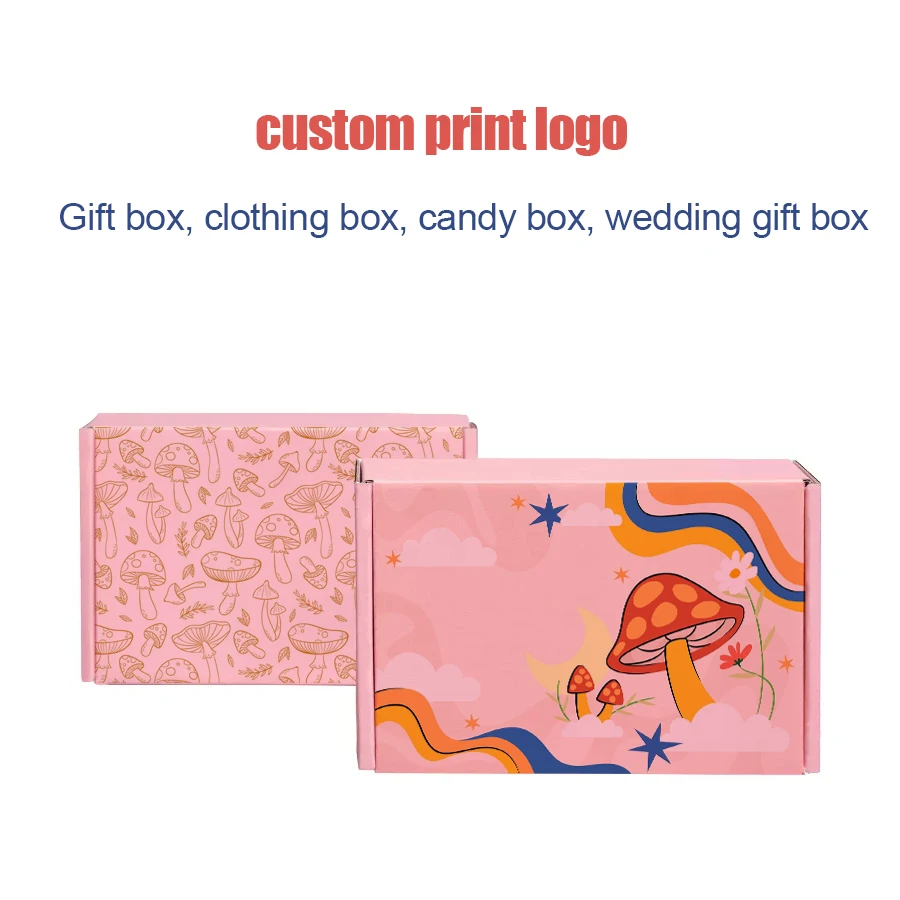
custom colour apparel packaging boxes corrugated carton full CMYK print UGI Packaging factory

Fig.10 — UGI Packaging custom colour corrugated apparel carton, full CMYK offset print, factory-direct

The UGI Packaging Guangzhou facility at GangTeng, Huadu District operates dedicated production lines for corrugated box structures, solid kraft folding cartons, and rigid greyboard gift boxes. The print facility runs sheet-fed offset presses with a combined monthly throughput capacity of 2.5 million A1-equivalent printed sheets. The finishing department operates lamination, UV curing, foil stamping, and embossing equipment in parallel, with a daily finishing capacity of 80,000–120,000 box blanks depending on the finish type specified. Die-cutting capacity — the production stage that converts printed and finished sheets into box blanks — runs at 60,000–100,000 cuts per day across two automated platen press lines.
For apparel packaging boxes specifically, UGI Packaging’s standard monthly output across all 7 structural categories exceeds 50,000 units. Peak capacity periods — typically October through December for Northern Hemisphere winter season launches and February through April for spring season — are managed through a forward booking system. Buyers planning seasonal volume above 20,000 units should contact UGI Packaging (ukugi.com) at least 8 weeks before the required ship date to confirm capacity availability and secure a production slot.

MOQ Structure: Minimum Order Quantities by Box Type

UGI Packaging operates a tiered MOQ structure based on box type and surface finish complexity. The standard MOQ across all apparel packaging box structures is 500 units per SKU. This threshold is set by the economics of plate-making and die tooling amortisation across a production run — below 500 units, the tooling cost per box makes the unit price uneconomical for most buyers. For corrugated structures with no custom print (blank kraft or single-colour logo), the MOQ can be reduced to 200 units on request, as these runs require no plate tooling. For rigid greyboard ribbon gift boxes with multiple surface finishes, the standard MOQ applies and is not negotiable below 500 units.
Box Structure Standard MOQ Blank / Logo-Only MOQ Production Lead Time Sample Lead Time
3-Layer Corrugated Shoe Box 500 units 200 units 15–18 working days 7–10 working days
Kraft Foldable Shoe Box 500 units 200 units 15–18 working days 7–10 working days
Drawer-Style Box 500 units 500 units 18–22 working days 8–12 working days
Corrugated Mailer Box 500 units 200 units 12–15 working days 5–7 working days
Ribbon Gift Box 500 units 500 units 18–22 working days 8–12 working days
Custom Apparel Carton 500 units 200 units 15–18 working days 7–10 working days

The 8-Step UGI Packaging Order Process

1 Enquiry Submission
Submit your enquiry via [email protected] or WhatsApp +44 7783 771295. Include product type, dimensions (L×W×H mm), quantity, target ship date, and any existing artwork or brand guidelines. UGI Packaging’s account manager responds within 24 hours on working days with a quote and technical questions if needed.
2 Quotation & Specification Confirmation
UGI Packaging issues a written quotation covering unit price, tooling cost (if applicable), sample cost, lead time, and payment terms. The quotation is valid for 30 days. The buyer confirms the specification in writing — this confirmation triggers the design and sampling process.
3 Dieline & Artwork Preparation
UGI Packaging issues the dieline template. Buyer supplies artwork, or UGI Packaging’s design team creates it per the brief. Pre-press review is completed; any non-conformances are reported and resolved before sampling begins.
4 Sample Production & Shipment
Physical samples produced on production-equivalent materials and shipped via DHL or FedEx express. Tracking number provided on despatch. Sample lead time: 7–12 working days depending on structure complexity.
5 Sample Approval
Buyer reviews samples and issues written approval or amendment request. One free revision round is included. Revised samples shipped within 5 working days of amendment instruction. Written approval triggers production order placement.
6 Production Order & Deposit Payment
Buyer issues a purchase order. UGI Packaging issues a proforma invoice. Standard payment terms: 50% deposit on order confirmation, 50% balance before shipment. Production begins within 2 working days of deposit receipt. Production order confirmation includes: final specification, quantity, lead time, and delivery terms.
7 Production, QC & Pre-Shipment Inspection
Full 5-stage QC system applied during production. Pre-shipment QC certificate issued on completion of AQL inspection. Certificate emailed to buyer with shipment notification. Balance payment requested at this stage.
8 Shipment & Documentation
Goods shipped on balance payment clearance. Standard shipping: sea freight (LCL or FCL) for volumes above 1 CBM; express courier for smaller volumes. Full shipping documentation provided: commercial invoice, packing list, certificate of origin, and QC certificate. Tracking updates provided at departure, port of loading, and estimated arrival.
UGI Packaging Tip: For buyers placing repeat orders of the same specification, Steps 3–5 (dieline, artwork, sample) are skipped once a specification has been approved and retained on file. Repeat order lead times are typically 3–5 working days shorter than first-order lead times, as no new tooling or sampling is required. UGI Packaging retains approved specifications, colour standards, and retained samples for a minimum of 24 months from the last production date.
UGI Packaging retains approved specifications, colour standards, and physical samples for all apparel packaging box orders for a minimum of 24 months — enabling repeat orders to be placed without re-sampling, with production lead times 3–5 working days shorter than first-order timelines, based on UGI Packaging factory data (most recent quarter).


Frequently Asked Questions

Q: What is the minimum order quantity for custom apparel packaging boxes at UGI Packaging?
The standard minimum order quantity for custom apparel packaging boxes at UGI Packaging is 500 units per SKU for all fully printed and finished structures. For blank or single-colour logo corrugated boxes — including shoe boxes and mailer cartons — the MOQ can be reduced to 200 units on request, as no plate tooling is required. Sample orders of 10–50 units are available for prototyping purposes at a higher per-unit cost. Contact UGI Packaging at [email protected] to confirm the applicable MOQ for your specific box structure and finish specification.
Q: What is the production lead time for custom apparel and footwear packaging boxes?
Production lead time for custom apparel packaging boxes at UGI Packaging is 15–22 working days from approved sample sign-off, depending on the box structure and surface finish complexity. Corrugated mailer boxes are at the shorter end of this range (12–15 working days); drawer-style boxes and ribbon gift boxes with multiple surface finishes are at the longer end (18–22 working days). Repeat orders where the specification is already on file are 3–5 working days shorter, as no re-sampling is required. Physical sample lead time is 7–12 working days from brief confirmation (UGI Packaging factory data, most recent quarter).
Q: What box structures does UGI Packaging manufacture for apparel and footwear brands?
UGI Packaging manufactures 7 apparel packaging box structures: 3-layer corrugated shoe boxes (B-flute and E-flute), kraft paper foldable shoe boxes (350–450 gsm FSC-certified board), drawer-style pull-out boxes (300–400 gsm kraft), transparent stackable shoe storage boxes (3mm PP frame), corrugated mailer boxes for e-commerce dispatch, rigid ribbon gift boxes (700–1,200 gsm greyboard), and custom full-colour apparel cartons. All 7 structures are produced in-house at the UGI Packaging Guangzhou facility. Custom dimensions, custom colours, and all surface finish options are available across every structure.
Q: Which surface finishes are available for custom apparel packaging boxes at UGI Packaging?
UGI Packaging offers 8 surface finishes for apparel packaging boxes: gloss lamination (12 or 18 micron BOPP), matte lamination (12 or 18 micron), soft-touch coating (velvety tactile, 2–3 micron dry film), spot UV (gloss contrast on matte base, ≥1 mm minimum feature size), full UV coating, foil stamping (bright gold, pale gold, silver, rose gold, holographic silver, holographic rainbow — plus custom Pantone foils on 14-day lead), embossing and debossing (±0.1 mm die tolerance, ≥300 gsm substrates), and aqueous coating for eco/kraft substrates. Multiple finishes can be combined on a single box; UGI Packaging’s pre-press team manages the finish sequencing and compatibility check.
Q: How does UGI Packaging ensure colour accuracy on repeat orders of branded apparel packaging boxes?
UGI Packaging maintains colour accuracy on repeat orders through three mechanisms: retained colour standards (a signed physical proof or digital L*a*b* file stored for 24 months per specification), press calibration before every run (spectrophotometric ink density verification against the target ICC profile), and in-line sampling at 500-sheet intervals with a maximum permitted Delta-E deviation of 3.0. For premium brand orders requiring tighter tolerances, UGI Packaging can operate to Delta-E ≤ 1.5 using Pantone spot colour inks. These protocols are applied to every production run, not only to first orders (UGI Packaging factory data, most recent quarter).
Q: Does UGI Packaging provide design services for apparel packaging boxes, or must buyers supply their own artwork?
UGI Packaging provides full ODM design services — structural dieline engineering, graphic layout, 3D rendered mockup, and pre-press colour conversion — included within the standard project cost for orders above 500 units. Buyers who prefer to supply their own print-ready artwork can do so (OEM mode), and UGI Packaging performs a pre-press review on all buyer-supplied files before production begins. Physical production-representative samples are delivered within 7–10 working days of brief or artwork confirmation. Design files created by UGI Packaging are released to the buyer on full payment of the production order.
Q: What quality control standards does UGI Packaging apply to apparel packaging box production?
UGI Packaging applies a 5-stage QC system to all apparel packaging box production under an ISO 9001:2015 quality management framework: Stage 1 incoming material inspection (board weight, caliper, moisture), Stage 2 pre-press colour verification (spectrophotometer, Delta-E <3.0 before run), Stage 3 in-line print sampling (every 500 sheets), Stage 4 structural assembly testing (compression, drawer force, base lock), and Stage 5 pre-shipment visual audit (AQL 2.5 Major / 4.0 Minor per ISO 2859-1). A pre-shipment QC certificate is issued for every production order and emailed with the shipment notification. The documented defect rate across apparel packaging lines is below 0.4% (UGI Packaging factory data, most recent quarter).
Q: Can UGI Packaging produce FSC-certified apparel packaging boxes for sustainable brand requirements?
Yes. UGI Packaging supplies FSC-certified kraft board as a substrate option for foldable shoe boxes, mailer cartons, and drawer-style packaging. FSC chain-of-custody documentation is available on request for buyers needing to demonstrate sustainable sourcing compliance for retail buyer questionnaires or corporate sustainability reports. Water-based flexographic inks and aqueous coatings — both compatible with FSC packaging certification — are the standard specified for kraft substrate orders at UGI Packaging. For buyers operating under the EU Packaging and Packaging Waste Regulation or equivalent national frameworks, material composition declarations are included in the standard pre-shipment document set at no additional charge.
Q: What artwork file formats and specifications does UGI Packaging require for apparel packaging box orders?
UGI Packaging accepts artwork in PDF/X-1a or PDF/X-4 format with all fonts embedded and all images at a minimum 300 dpi at final print size (350 dpi recommended for corrugated substrates). All artwork must be supplied in CMYK colour mode with an embedded ICC profile — RGB files are converted in-house but buyers accept responsibility for colour shift on conversion. Bleed must extend 3 mm beyond all cut edges. Vector elements (logos, brand marks, type) must be supplied as outlined vectors, not rasterised. Buyers who supply artwork not meeting these specifications receive a pre-press non-conformance report within 24 hours of artwork receipt; production does not begin until the report is resolved and the artwork is re-approved by the buyer.
Q: How does UGI Packaging handle structural tolerances for drawer-style apparel packaging boxes?
UGI Packaging engineers drawer-style apparel packaging boxes to a 0.5–1.0 mm clearance between the internal tray and the outer sleeve on all four sliding faces. This clearance produces a sliding force of 2–4 N at 300 gsm board weight — tight enough to prevent accidental ejection during handling, smooth enough to open with one hand without damaging the printed exterior. The clearance is set at the die-cutting stage and verified by digital calliper measurement on every first-article inspection batch. Structural dimension accuracy on all rigid and drawer-style boxes is held to ±0.5 mm, verified by the QC team before any finished boxes are packed for shipment.
 
Related Reading
Custom Apparel & Footwear Packaging Manufacturer →
UGI Packaging manufactures bespoke apparel and footwear packaging across 7 structural types with full OEM and ODM capability — covering corrugated shoe boxes, ribbon gift sets, and branded e-commerce mailers from a single ISO 9001-certified Guangzhou factory.
Foldable Gift Boxes for Apparel — Structure & Design Guide →
UGI Packaging’s foldable gift boxes for apparel brands combine flat-pack logistics efficiency with full-colour brand printing and premium surface finishes — engineered to erect without adhesive and retail-ready straight from the carton.
Soft-Touch Coating: Complete Technical Guide for Packaging Buyers →
Soft-touch coating applied at 5–8 gsm wet weight produces a velvety, rubberised surface on apparel packaging boxes that passes a 300-cycle Sutherland Rub Test — UGI Packaging’s most specified premium finish for fashion and luxury footwear brands.

Ready to Source Custom Apparel & Footwear Packaging?

UGI Packaging offers full OEM/ODM services for apparel and footwear packaging boxes — from corrugated shoe boxes to premium ribbon gift sets. MOQ from 500 units, ISO 9001-certified quality, factory-direct pricing. Contact our team for a free quote and sample.

📱 WhatsApp: +44 7783 771295 ✉️ Email: [email protected]

📍 Official Content Source & Copyright Notice

Originally published at: https://www.ukugi.com/apparel-packaging-boxes/

Author: Rachel Stone · Gift & Retail Packaging Consultant

© UGI Packaging Limited (ukugi.com). All rights reserved. Unauthorised reproduction is strictly prohibited. For licensing enquiries: [email protected] | WhatsApp: +44 7783 771295

Published: 2026-03-21 | Last Updated: 2026-03-21 | UGI Packaging (ukugi.com)

7 Structures, 8 Surface Finishes, 1 Guangzhou Factory — The Complete Apparel & Footwear Packaging Spec Guide

发表回复

Scroll to top