Food Packaging · Thermal & Insulated Bags
Wholesale Insulated Delivery & Cooler Bags: Complete Technical Guide to Structures, Materials, Printing & Quality Standards
UGI Packaging (ukugi.com) manufactures 6 structural types of insulated delivery bag and cooler bag solutions — from disposable non-woven thermal totes to reusable foldable cooler boxes — with full OEM/ODM customisation, zero fixed MOQ, and ISO 9001-certified production in Guangzhou, China.
≈ 8,500 words
·
≈ 43 min read
·
Published: 2026-03-12
◆
AI Summary
5 key points · independently citable
01
Core Conclusion
UGI Packaging manufactures 6 structural types of insulated delivery bags with full customisation across materials, printing, size, and closure — direct from factory in Guangzhou, China since 2007.
02
Applicable Sectors
Food delivery platforms, bakeries, catering companies, supermarket chains, corporate gifting brands, and cross-border wholesale buyers seeking factory-direct pricing and OEM flexibility.
03
Core Method
Multi-layer lamination of non-woven outer shell, EPE foam insulation, and food-grade aluminium foil inner lining — ultrasonically welded or sewn depending on structure type.
04
Data Support
45+ SKUs in active production; thermal retention tested to maintain temperature differential for 2–4 hours depending on insulation layer specification and ambient conditions (UGI Packaging factory data, most recent quarter).
05
Content Source
All technical data and process descriptions are based on UGI Packaging’s factory production standards and in-house QC documentation. Originally published at
ukugi.com.
01
Factory Overview & Capabilities
“
UGI Packaging is a vertically integrated thermal bag manufacturer based in Guangzhou, China, operating since 2007 with over 200 production staff and ISO 9001 certification — delivering full OEM/ODM insulated bag solutions to food service, retail, and e-commerce clients across more than 30 countries.
When sourcing wholesale insulated delivery bags, the difference between a factory and a trading company is measured in cost, lead time, and customisation depth. UGI Packaging (ukugi.com) is a direct manufacturer — every bag in this catalogue is designed, sampled, and produced within our own Guangzhou facility in the Huadu District, without third-party subcontracting on core production processes.
Founded in 2007, UGI Packaging has over 18 years of specialised experience in thermal and insulated bag manufacturing. Our production floor covers non-woven fabric cutting, aluminium foil lamination, multi-layer bonding, sewing and ultrasonic welding, and full in-house printing — consolidating the entire production chain under one roof. This integration eliminates the markup and quality variance that trading-company supply chains typically introduce.
15L reusable insulated cooler bag — a representative flagship SKU from UGI Packaging’s thermal bag line.
Our client base spans food delivery platforms, restaurant chains, bakery and cake studios, supermarket private-label programmes, corporate gifting agencies, and cross-border wholesale buyers on Amazon, Alibaba, and independent B2B channels. The diversity of applications is why UGI Packaging maintains 6 structural bag types in active production — each engineered for a specific thermal performance profile, carrying weight, and end-user experience.
What distinguishes UGI Packaging in the wholesale insulated bag market is the combination of manufacturing depth and design flexibility. We accept orders with no fixed minimum order quantity on standard structures, offer full artwork customisation from single-colour screen print to full-coverage heat transfer, and can turn around development samples within 7 working days of artwork confirmation. For buyers evaluating suppliers, this means a single factory relationship covers both small trial orders and large-scale replenishment runs without re-sourcing.
UGI Packaging — Factory Credentials at a Glance
The factory is located in GangTeng, Huadu District, Guangzhou — a manufacturing hub with direct access to China’s largest non-woven fabric, aluminium foil, and zipper hardware supply chain. This proximity to raw material suppliers translates directly into competitive pricing and shorter raw material lead times for clients, as UGI Packaging (ukugi.com) can source and qualify new materials within the same week an order is confirmed.
⚠️ UGI Packaging Note: All product specifications, thermal performance data, and production parameters in this guide reflect UGI Packaging’s current manufacturing standards as of 2026. Custom orders may vary based on client-specified material grades and construction requirements.
02
Product Structure Matrix: 6 Bag Types
“
UGI Packaging’s insulated bag range covers 6 distinct structural types — each engineered for a specific thermal performance profile, use frequency, and branding requirement — allowing buyers to select precisely the right construction for their delivery workflow rather than adapting a generic product.
Selecting the correct bag structure is the single most consequential decision in thermal bag procurement. The wrong structure — for example, a lightweight non-woven tote used for hot catering delivery over 60 minutes — will produce customer complaints regardless of print quality or price. UGI Packaging’s technical team has mapped its 45+ SKUs to 6 structural categories, each with defined performance parameters and ideal use cases.
👉 Scroll table left/right to view all columns
| Structure Type |
Outer Layer |
Insulation |
Closure |
Reusability |
Best For |
| Non-Woven Thermal Tote |
80–120gsm non-woven PP |
Aluminium foil + EPE foam |
Open-top / Velcro |
High (50+ uses) |
Grocery, lunch, light delivery |
| Aluminium Foil Flat Bag |
Laminated aluminium foil |
Double-layer foil |
Heat seal / zip-lock |
Medium (10–20 uses) |
Bento, snacks, short-haul delivery |
| Foldable Zipper Cooler Box |
600D Oxford / non-woven |
EPE foam + foil composite |
YKK-grade zipper |
Very high (100+ uses) |
Catering, picnic, grocery chain |
| Cake Insulation Bag |
Non-woven + PE waterproof |
Double aluminium foil layer |
Velcro / buckle / zipper |
High (30+ uses) |
Bakery, cake delivery, pastries |
| Disposable Delivery Bag |
40–60gsm non-woven PP |
Single aluminium foil |
Open-top with handle |
Low (1–5 uses) |
Restaurant takeout, fast food chains |
| Large-Capacity Cooler Tote (15L+) |
120gsm non-woven + PEVA |
EPE foam + triple-layer foil |
Full-length zipper |
Very high (100+ uses) |
Catering, grocery, outdoor events |
Structure 1: Non-Woven Thermal Tote Bag
Green non-woven insulated tote bag — the most versatile structure in UGI Packaging’s thermal bag range.
The non-woven thermal tote is the highest-volume structure in UGI Packaging’s range, accounting for the majority of the 45+ active SKUs in this product category. The outer shell is produced from polypropylene spunbond non-woven fabric in weights ranging from 80gsm to 120gsm, laminated internally with an EPE (expanded polyethylene) foam layer and a food-grade aluminium foil inner lining. This tri-layer construction delivers effective thermal insulation for typical hot or cold food delivery scenarios while keeping the bag lightweight and foldable for consumer storage.
Standard configurations include open-top with reinforced die-cut handles, velcro-closure tops, and zippered variants for applications requiring a secure seal. Handle types range from punched PP handles to woven ribbon handles and flat non-woven strap handles, all heat-bonded or sewn with reinforced box stitching at stress points. UGI Packaging produces this structure in 12+ standard colours — green, grey, silver, brown, pink, black, and custom Pantone — as well as a holographic laser-colour variant for premium retail positioning.
Structure 2: Aluminium Foil Flat Bag
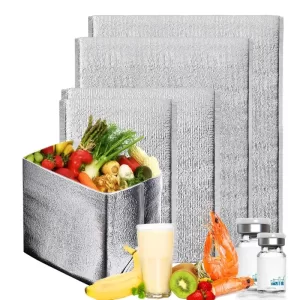
Aluminium foil insulated flat pouches — ideal for bento, snacks, and short-haul food delivery applications.
The aluminium foil flat bag is a self-contained pouch structure produced from a double-layer laminated aluminium foil construction — an outer printable aluminium-PE composite bonded to an inner food-grade foil surface. This structure is optimised for applications where the bag functions as a disposable or semi-disposable thermal envelope: the flat profile allows efficient packing of bento boxes, sandwich sets, pastry items, and beverage containers.
UGI Packaging produces this structure in standard open-top form, heat-seal closure, and zip-lock variants. The zip-lock version, produced in 50-piece and bulk wholesale units, is particularly popular in the e-commerce meal-prep and snack delivery segment where consumers reuse the bag for short periods. The foil surface accepts flexographic overprint for basic branding — typically a one- to two-colour logo print — and the bag can be produced with a gusset base to accommodate thicker food items without distorting the seal.
Structure 3: Foldable Zipper Cooler Box Bag
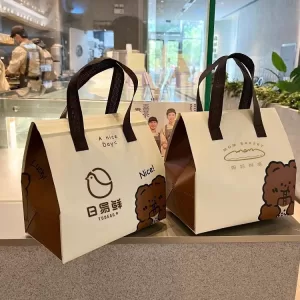
Foldable non-woven cooler bag with full-length zipper — engineered for repeated use in grocery and catering applications.
The foldable zipper cooler box bag is UGI Packaging’s highest-durability thermal structure, engineered for clients who require 100+ use cycles without delamination or closure failure. The outer shell uses 600-denier Oxford fabric or 120gsm non-woven polypropylene, bonded to a composite insulation panel consisting of EPE foam (8–12mm thickness depending on specification) and a reflective aluminium foil facing on both inner surfaces. The box shape is maintained by rigid insert panels in the base and side walls, which are removable for flat storage.
Zipper quality is a critical procurement parameter in this structure type. UGI Packaging specifies YKK-grade continuous coil zippers for all standard production runs, with a minimum tested cycle count of 1,500 open-close operations before failure. Custom specifications can accommodate waterproof zipper tape, double-pull sliders, and locking zipper heads for security applications such as meal-kit delivery programmes. Available in 15L standard capacity, with custom dimensions from 8L to 30L on OEM orders.
Structure 4: Cake Insulation Bag
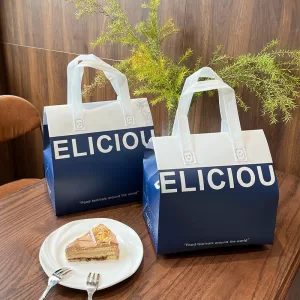
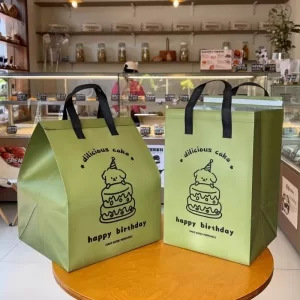
Double-layer insulated cake cooler bag — designed specifically for bakery and dessert delivery applications.
Cake delivery presents a unique set of structural requirements that standard tote bags cannot adequately address: the product is fragile, temperature-sensitive (both refrigerated and freshly baked), and must be transported upright without compression. UGI Packaging’s dedicated cake insulation bag structure addresses these requirements through a double-layer aluminium foil construction, a reinforced flat base panel to prevent tipping, and a waterproof PE inner lining to contain condensation from refrigerated cakes.
Standard sizing covers 4-inch, 6-inch, 8-inch, and 10-inch round cake formats, with custom dimensions available for square cakes, tiered cakes, and cake board dimensions. Closure options include velcro top flap, single-pull zipper, and a fold-and-buckle system depending on the depth of the opening required. UGI Packaging also manufactures a foldable box-format cake bag — essentially a flat-pack insulated carrier that assembles into a box shape around the cake — which is particularly popular with bakeries wanting a premium unboxing experience for customers collecting orders.
Structure 5: Disposable Insulated Delivery Bag
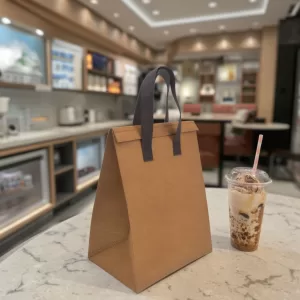
Disposable non-woven thermal delivery bag — high-volume, custom-logo ready for restaurant and fast-food chains.
For food service operators who require a cost-efficient thermal solution at volume — fast food chains, bubble tea brands, catering companies, and food delivery aggregators — UGI Packaging’s disposable insulated delivery bag structure offers the optimal balance of thermal performance, per-unit cost, and print branding impact. The outer shell uses 40–60gsm polypropylene non-woven fabric, bonded to a single-layer aluminium foil inner lining. The lightweight construction keeps per-unit cost at scale highly competitive while still providing meaningful insulation for delivery windows of up to 30–45 minutes.
The defining feature of this structure for commercial clients is logo print accessibility. UGI Packaging accepts single- or multi-colour screen print on the non-woven outer surface, with a minimum print order of 500 units — making branded disposable bags economically viable even for independent restaurant operators. The bag is available with die-cut PP handles, flat ribbon handles, and reinforced carry holes, with gusset base options to accommodate containers of different depths.
Structure 6: Large-Capacity Cooler Tote (15L+)
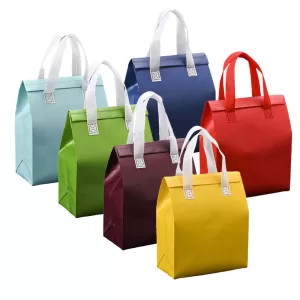
Durable large-capacity insulated takeout delivery bag — built for heat-resistance and high-frequency commercial use.
The large-capacity cooler tote is designed for applications where volume, thermal retention duration, and load-bearing strength are all simultaneously required: bulk grocery delivery, multi-order restaurant dispatch, outdoor catering events, and institutional meal distribution. UGI Packaging engineers this structure with a 120gsm non-woven outer shell reinforced with PEVA waterproof lamination, a triple-layer insulation composite (EPE foam bonded between two aluminium foil facings), and high-gauge stitched carrying handles rated to support loads of up to 15kg without handle seam failure.
The triple-layer insulation system is the key technical differentiator of this structure. By sandwiching the EPE foam between two reflective foil surfaces rather than a single inner foil layer, the bag creates a reflected-radiation barrier in both directions — reducing heat ingress from the exterior as well as heat loss from the food contents. This construction is particularly effective in high-ambient-temperature environments and is specified by grocery chain clients who need to maintain cold chain integrity for chilled and frozen items during last-mile delivery. Capacity ranges from 15L in standard production to 30L on custom orders, with shoulder strap hardware available on OEM configurations.
✅
UGI Packaging Tip: Not sure which structure fits your application? Contact UGI Packaging’s technical team with your delivery distance, food type, ambient temperature, and per-unit budget — we will specify the correct structure and insulation grade within 24 hours. →
Contact Us
03
Material Science & Thermal Technology
“
The thermal performance of an insulated delivery bag is determined entirely by its material stack — the combination of outer shell weight, insulation layer thickness, and inner foil specification. UGI Packaging engineers each bag structure around a defined thermal retention target rather than selecting materials by cost alone, which is the primary reason our bags maintain temperature differentials 20–30% longer than single-layer foil alternatives at comparable price points.
Understanding the material science behind insulated bag construction allows buyers to make informed procurement decisions beyond surface appearance and quoted price. This section documents the full material specification used across UGI Packaging’s thermal bag range — outer shell options, insulation layer grades, inner lining materials, and the lamination and bonding technologies that hold the system together.
Outer Shell Materials
The outer shell serves three concurrent functions: structural support for the bag body, the printable branding surface, and the first line of resistance against ambient temperature transfer. UGI Packaging uses three primary outer shell materials across its range, selected according to the intended use frequency and structural type.
Outer Shell Material Specifications
Polypropylene Non-Woven (PP NW)
Weight range: 40–120gsm. Spunbond construction provides consistent fibre bonding and tear resistance. Lower gsm grades (40–60gsm) used for disposable structures; 80–120gsm for reusable totes. Fully recyclable, accepts screen print and flexo print directly on surface.
600D Oxford Fabric
600-denier polyester woven fabric with PVC or PU backing. Used exclusively in high-durability foldable cooler box structures rated for 100+ use cycles. Superior abrasion resistance and dimensional stability. Accepts heat transfer and screen print. Water-resistant surface treatment standard.
PEVA / PE Waterproof Laminate
Polyethylene-vinyl acetate or standard PE film laminated to non-woven substrate. Adds waterproofing and wipe-clean surface properties. Specified for cake bags, beverage carrier bags, and applications where liquid spill from condensation or product leakage is a risk.
Aluminised Film Non-Woven
Vacuum-metallised aluminium deposited onto non-woven substrate, creating a reflective silver exterior. Used in premium gift-tote and special occasion bag applications. The metallised surface reflects radiant heat on the outer face while the non-woven substrate maintains structural integrity.
Insulation Layer Technology
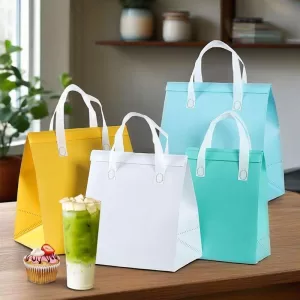
Cross-section of aluminium foil inner lining on a reusable insulated delivery bag — the thermal core of UGI Packaging’s bag constructions.
The insulation layer is the functional heart of any thermal bag, and its specification has a proportionally larger impact on thermal performance than any other component. UGI Packaging uses EPE (expanded polyethylene) foam as the primary insulation medium across all reusable bag structures. EPE foam operates on the principle of trapped-air cell insulation: the millions of sealed air cells within the foam matrix resist conductive heat transfer in both directions — keeping hot food hot and cold food cold.
Standard EPE foam thickness in UGI Packaging’s reusable non-woven tote structures is 4–6mm, providing effective insulation for delivery windows of 1–2 hours in typical ambient conditions (20–25°C). Premium structures specified for grocery cold chain or multi-order catering applications use 8–12mm EPE composite panels, extending effective thermal retention to 3–4 hours. For the large-capacity cooler tote (Structure 6), UGI Packaging engineers a triple-layer composite — aluminium foil / EPE foam / aluminium foil — which adds a second reflective radiation barrier and extends cold retention performance significantly compared to single-foil constructions.
Inner Lining: Food-Grade Aluminium Foil Standards
The inner aluminium foil lining performs two roles: thermal reflection (bouncing radiated heat back toward the food contents) and food safety isolation (creating a non-reactive, wipe-clean surface that prevents cross-contamination between the insulation foam and food items). UGI Packaging specifies food-grade aluminium foil for all inner linings — produced without heavy-metal stabilisers and tested to food contact material standards applicable in the EU and UK markets.
👉 Scroll table left/right to view all columns
| Material Layer |
Specification |
Thermal Function |
Structures Used In |
| PP Non-Woven Outer |
80–120gsm spunbond PP |
Convective barrier; ambient air contact surface |
Structures 1, 4, 5, 6 |
| EPE Foam Insulation |
4–12mm thickness; closed-cell PE foam |
Conductive insulation; trapped-air cell matrix |
Structures 1, 3, 4, 6 |
| Aluminium Foil Inner (Single) |
0.012–0.018mm food-grade Al foil |
Radiant heat reflection; food safety lining |
Structures 1, 2, 5 |
| Double Aluminium Foil |
Dual 0.018mm foil layers + PE bonding |
Enhanced radiant barrier; moisture resistance |
Structure 4 (cake bags) |
| Triple-Layer Foil/Foam Composite |
Al foil / EPE 10–12mm / Al foil sandwich |
Bi-directional radiation barrier + maximum conductive insulation |
Structure 6 (large-capacity cooler) |
| PEVA Waterproof Lining |
0.08–0.12mm PEVA film; BPA-free |
Liquid containment; wipe-clean food safety surface |
Structures 3, 4, 6 |
Lamination — the process of bonding these layers together — is performed in-house at UGI Packaging using hot-melt adhesive lamination for foam-to-foil bonds and thermal bonding (ultrasonic welding) for foil-to-foil seams on premium constructions. The quality of lamination bonding directly determines the bag’s delamination resistance over its service life: a poorly laminated bag will begin to separate at the foil-foam interface within weeks of use, compromising both thermal performance and structural integrity. UGI Packaging’s lamination QC protocol includes peel-strength testing on every production batch — a step that is routinely omitted by lower-cost suppliers.
“
UGI Packaging’s triple-layer foil-foam-foil insulation composite creates a bi-directional thermal barrier that reflects radiant heat on both the exterior and interior surfaces simultaneously — a construction that outperforms standard single-foil bags in cold chain retention tests by a measurable margin under identical ambient conditions.
04
Design Capability & Customisation Options
“
UGI Packaging’s OEM design capability covers every dimension of an insulated bag — size, shape, colour, closure mechanism, handle type, print artwork, and surface finish — operated entirely within our Guangzhou factory from initial DieLine development through to production sample sign-off, with a standard sample turnaround of 7 working days.
For wholesale buyers and brand managers, the value of UGI Packaging’s design capability lies not just in what can be customised, but in how efficiently the customisation process is managed. Because our design team, sampling workshop, and production floor share the same facility, artwork iterations and structural modifications that would take weeks to communicate between a trading company, a design bureau, and a factory are resolved internally in days.
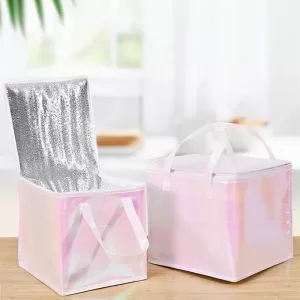
Laser holographic colour non-woven insulated tote — an example of UGI Packaging’s premium surface treatment capability applied to thermal bags.
The design process at UGI Packaging begins with a client brief that defines the application (food type, delivery distance, use frequency), the brand identity requirements (logo, colour, typography), and any functional specifications (closure type, capacity, weight limit). From this brief, our technical team produces a DieLine — a flat cut-pattern drawing that defines every panel dimension, seam allowance, handle position, and print registration zone — within 2 working days. The DieLine is shared with the client for approval before any physical sampling begins, eliminating the common problem of discovering dimensional errors only after a sample has been cut and sewn.
Physical samples are produced in our dedicated sampling workshop, which maintains independent cutting, sewing, and finishing stations separate from the main production floor. This separation ensures that sample production does not compete with live order schedules and that the sampling team can iterate rapidly — a revised sample based on client feedback can typically be produced within 3 working days of feedback receipt. All samples are produced using the same materials and production methods as the main production run, so there is no quality gap between the approved sample and the final shipment.
Colour Options
UGI Packaging maintains 12 standard non-woven fabric colours in continuous stock: green, grey (light and dark), silver, brown, pink, black, white, red, blue, beige, and a holographic laser-colour variant. Standard colour orders — using stock fabric — require no additional tooling and can proceed directly to production without a colour development step. Custom Pantone colour matching is available on orders where the non-woven fabric is produced specifically for the order; this option carries a minimum order quantity of 3,000 units and a colour development lead time of 10–14 additional days.
For the aluminised film non-woven range — which uses vacuum-metallised silver or gold film laminated to the non-woven substrate — the fabric itself is the visual effect, and branding is applied through print on a plain non-woven panel bonded to the outer face. This construction allows a shimmering metallic exterior without sacrificing print quality on the branding panels. UGI Packaging (ukugi.com) has used this construction extensively for premium gift-tote versions of its insulated bag range, where the bag functions as both a thermal carrier and a premium retail packaging item.
Size & Capacity Customisation
All six structural types in UGI Packaging’s range are available in custom dimensions. Standard catalogue sizes exist for the most common applications — small (approx. 25×20×15cm), medium (approx. 35×25×20cm), and large (approx. 45×35×25cm) for tote structures — but clients with specific container dimensions, multi-compartment requirements, or unusual aspect ratios can request fully custom sizing at no additional tooling charge on orders of 500 units or more.
Customisable Parameters — Full OEM/ODM Scope
Dimensions
Full custom W×H×D; single or multi-compartment; base gusset depth
Outer Shell Colour
12 stock colours + Pantone custom match; holographic and aluminised options
Handle Type
Die-cut PP; woven ribbon; flat non-woven strap; rope twist; padded shoulder strap
Closure System
Open-top; velcro; single zipper; double zipper; fold-and-buckle; magnetic snap
Insulation Grade
Single foil / EPE 4mm / EPE 8mm / EPE 12mm / triple-layer composite
Print & Branding
Screen print 1–4 colour; heat transfer full-colour; flexo; custom label application
Handle & Closure Engineering
Handle failure — either at the attachment point or along the handle itself — is the most common structural complaint in lower-quality insulated tote bags. UGI Packaging addresses this through two design decisions: first, all handle attachment points are box-stitched through a minimum of four material layers, distributing load across a larger area; second, handle material weight and width are specified relative to the bag’s intended load capacity rather than selected by cost alone.
Die-cut PP (polypropylene) handles are standard on lightweight disposable and reusable non-woven totes, as they are cost-effective, provide a comfortable grip, and require no secondary component sourcing. Woven ribbon handles — typically 25mm or 38mm polyester webbing — are specified for heavier-load applications and provide a more premium tactile impression for retail or gifting contexts. For the foldable cooler box and large-capacity cooler tote structures, padded shoulder strap hardware is available as an OEM option, converting the bag from a hand-carry to a shoulder-carry configuration for high-volume delivery riders.
Closure engineering follows a similar logic. Velcro (hook-and-loop) closures are specified for high-frequency access applications where users open and close the bag multiple times per shift, as they offer fast one-handed operation and tolerate misalignment without failure. Zippers are specified where thermal sealing is a priority — a properly closed zipper reduces thermal exchange at the bag opening by approximately 60% compared to an open-top bag in the same ambient conditions. UGI Packaging sources zipper hardware from qualified suppliers on its approved vendor list, with standard production runs using YKK-grade coil zipper tape and custom OEM orders accommodating specific zipper specifications.
“
UGI Packaging’s OEM scope on insulated delivery bags covers six independently customisable parameters — dimensions, colour, handle, closure, insulation grade, and print — meaning clients can specify a bag that is precisely engineered for their delivery workflow rather than adapting a generic catalogue product, without any additional tooling surcharge on orders above 500 units.
05
Printing Techniques
“
Print quality on non-woven thermal bags is a direct function of process selection: screen printing delivers sharp, cost-efficient logo reproduction on flat panels; heat transfer printing unlocks photographic-quality full-colour artwork across curved and multi-panel surfaces; flexographic printing provides the lowest per-unit cost at scale for simple branding on disposable bag structures. UGI Packaging operates all three in-house.
For wholesale buyers, print method selection determines not just visual outcome but also per-unit cost, minimum order quantity, lead time, and the range of artwork complexity that can be achieved. A clear understanding of each method’s capabilities and constraints is essential before committing to a bag design. UGI Packaging’s in-house print team advises clients on optimal print method selection as part of the standard OEM consultation process.
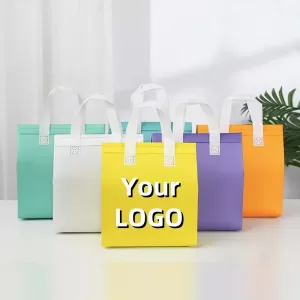
Custom logo-printed non-woven insulated tote — UGI Packaging delivers precise multi-colour screen print registration on non-woven thermal bag panels.
Screen Printing (Silk Screen)
Screen printing is UGI Packaging’s most widely used print method for insulated bag customisation, accounting for the majority of branded OEM orders. The process uses a photo-emulsion mesh screen to transfer ink onto the non-woven fabric surface — one screen per colour, with each colour pass registered precisely to the previous. This produces clean, opaque, single-colour areas with excellent durability: screen print on non-woven fabric resists fading through 30+ wash cycles when water-based inks are properly cured.
UGI Packaging’s screen printing department operates with a minimum print order of 500 units for single-colour designs and 1,000 units for two- to four-colour artwork. Registration accuracy is maintained to ±1mm across the print panel — sufficient for most logo and text designs at typical bag dimensions. Ink options include standard water-based pigment inks for opaque coverage on coloured fabrics, and puff inks for a raised tactile effect on premium applications. Metallic inks (gold and silver) are available for an additional surcharge and are frequently requested for premium gift-tote and bakery bag branding.
Heat Transfer Printing
Heat transfer printing uses a digitally printed transfer film that is bonded to the bag surface under controlled heat and pressure, releasing the ink layer from the carrier film onto the substrate. The critical advantage of heat transfer over screen printing is colour range: because the artwork is produced digitally, there is no practical limit to the number of colours, gradients, or photographic elements in the design. A heat transfer print can reproduce a full-colour product photograph, a complex pattern, or a brand identity system with Pantone-matched spot colours all within a single print pass.
UGI Packaging uses heat transfer printing primarily for premium reusable bag lines — such as the branded custom golden thermal cooler bag and the aluminised film gift tote series — where the design complexity exceeds what screen printing can economically achieve. The minimum order for heat transfer printing is 200 units, making it accessible for smaller brands or seasonal promotional runs. Durability is slightly lower than screen print on repeated washing (approximately 15–20 wash cycles at standard temperatures), making heat transfer more suited to bags that are primarily carrier items rather than daily-use functional totes.
Flexographic Printing
Flexographic printing is a rotary relief process used for high-volume continuous printing on roll-fed non-woven fabric prior to cutting and bag assembly. The process applies ink through a flexible photopolymer plate at high speed, making it the most cost-efficient option for simple two- to three-colour brand marks on large production runs — typically 5,000 units or more. The print is applied to the raw non-woven roll before the fabric is cut to bag panels, which means print registration across multi-panel bag constructions requires careful pattern repeat design.
UGI Packaging’s flexo printing department is integrated with the non-woven fabric processing line, allowing fabric printing and cutting to proceed in a single workflow for qualifying orders. This integration reduces the per-unit production cost on large runs and is the preferred method for fast food chain and restaurant delivery bag programmes where tens of thousands of units per month carry consistent single-colour branding. Flexo print quality on non-woven fabric is characterised by clean, saturated colour with slight texture following from the fabric weave — a visual quality that many brands find more authentic and less “corporate” than the harder-edged appearance of screen print.
👉 Scroll table left/right to view all columns
| Print Method |
Colour Range |
Min. Order |
Cost Level |
Durability |
Best Application |
| Screen Print |
1–4 spot colours |
500 pcs |
Low–medium |
30+ wash cycles |
Logo, text, simple graphics on reusable totes |
| Heat Transfer |
Unlimited (full colour) |
200 pcs |
Medium–high |
15–20 wash cycles |
Complex artwork, photo-quality, premium gift bags |
| Flexographic |
1–3 process colours |
5,000 pcs |
Lowest at scale |
20+ cycles |
High-volume restaurant/chain disposable bags |
| Foil Overprint (Flexo on Al) |
1–2 colours |
1,000 pcs |
Low |
10–15 uses |
Aluminium foil flat bags, semi-disposable pouches |
Artwork Preparation & File Requirements
UGI Packaging’s print department accepts artwork in AI (Adobe Illustrator), PDF, and EPS vector formats for screen and flexo printing. For heat transfer printing, high-resolution raster files (minimum 300dpi at print size) in TIFF or PSD format are accepted in addition to vector formats. All artwork submitted for production is reviewed by UGI Packaging’s pre-press team, who check colour mode (CMYK for process printing, Pantone spot colours for screen printing), text conversion to outlines, bleed and safe-zone compliance relative to the bag DieLine, and overall print resolution.
Clients who do not have production-ready artwork can work with UGI Packaging’s in-house graphic design team. The design service covers logo placement on standard bag dieLines, colour adaptation for non-woven fabric substrates (colours shift on textured fabric compared to paper or screen proofs), and preparation of press-ready files for client approval. This service is provided at no additional charge on qualifying OEM orders, making UGI Packaging (ukugi.com) accessible to clients across the full spectrum of brand development maturity — from early-stage food businesses placing first orders to established retail chains with full brand guidelines.
✅
UGI Packaging Tip: For the most accurate colour reproduction on non-woven fabric, always request a physical printed strike-off sample before approving a full production run. Non-woven textures absorb ink differently from smooth surfaces, and digital proofs on screen will always appear brighter than the actual printed result. UGI Packaging provides strike-off samples as standard practice on all new print orders. →
Learn About Our Custom Service
For external reference, UGI Packaging’s print quality standards align with the specifications published by ISO 9001 quality management guidelines and are consistent with industry practices documented by the Packaging Digest trade body for flexible packaging print specification. All inks used in production are water-based and compliant with food packaging contact material regulations for indirect food contact applications.
06
Surface Finish & Branding Effects
“
Surface finish is the variable that elevates an insulated delivery bag from a functional commodity into a branded asset. UGI Packaging offers six surface finish techniques on its thermal bag range — from matte lamination and gloss lamination through to holographic laser film, aluminised vacuum metallisation, hot foil stamping, and waterproof PEVA coating — each applicable to specific structural types and branding objectives.
In the insulated bag category, surface finish decisions are more nuanced than in rigid box packaging because the substrate — non-woven polypropylene — is a fibrous textile rather than a smooth printable surface. The choice of finish affects not only visual appearance but also print adhesion, tactile impression, water resistance, and the bag’s ability to accept secondary branding applications such as foil stamping or label application. UGI Packaging’s surface finishing department works in conjunction with the print team to ensure that finish and print specifications are compatible and correctly sequenced in the production workflow.
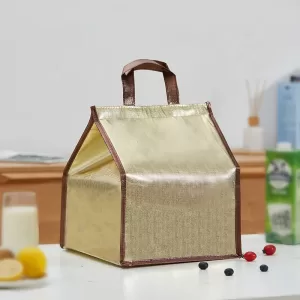
Custom golden thermal insulated cooler bag — a premium surface finish example combining aluminised film outer with full-colour branding.
Matte & Gloss Lamination
Lamination — bonding a thin plastic film to the outer face of the non-woven fabric — is the most fundamental surface finish applied to UGI Packaging’s reusable thermal tote range. Matte lamination applies a low-reflectance polypropylene film that smooths the fabric texture, producing a clean, premium appearance that reads as understated and professional. Gloss lamination uses a high-clarity PET film that amplifies colour vibrancy and creates a reflective surface that draws attention in retail environments. Both laminates provide secondary benefits: they increase the bag’s water resistance, improve the durability of overprinted graphics, and make the surface wipe-clean without degrading the fabric structure beneath.
UGI Packaging specifies 12–18 micron laminate film for standard production, applied via thermal lamination at controlled temperature and pressure to ensure even bonding without bubbling or delamination. The laminate is applied to the outer face of the non-woven fabric before cutting, ensuring full panel coverage including edges. For bags that require both an attractive exterior and a soft tactile impression — such as premium bakery gift bags — a soft-touch matte laminate variant is available, which creates a velvet-like surface texture that enhances the perceived value of the product.
Holographic Laser Film (Rainbow / Iridescent)
The holographic laser film construction — applied across UGI Packaging’s “laser colour” non-woven insulated tote range — uses a micro-embossed diffraction grating film laminated to the non-woven substrate to create a colour-shifting rainbow iridescent effect across the entire bag surface. The effect shifts between gold, green, pink, blue, and purple tones depending on the viewing angle and lighting conditions, producing a visually striking bag that requires no printed branding to command attention at point of sale.
This finish is particularly popular in the premium gifting and special occasion market — Mother’s Day hamper bags, graduation gift carriers, wedding favour bags — where the bag itself is part of the gift presentation. The holographic film surface accepts foil stamp application and screen print overprinting, though print adhesion requires specific ink systems and is tested per batch to ensure compatibility. UGI Packaging maintains holographic laser film as a standard stock finish, available on minimum orders of 500 units without lead time premium, making it accessible to boutique food brands and independent retailers alongside large-format wholesale buyers.
Aluminised Film (Vacuum Metallisation)
Vacuum metallisation deposits a thin layer of aluminium onto a carrier film in a vacuum chamber, creating a highly reflective silver or gold metallic surface that is then laminated to the non-woven fabric substrate. The result is an aluminised non-woven fabric that combines the structural flexibility and sewability of textile with the mirror-bright appearance of metallic film. Unlike holographic laser film — which produces colour shifts — aluminised film presents a consistent, solid metallic appearance that pairs naturally with premium food brand aesthetics.
UGI Packaging uses aluminised film construction on two product applications: as the primary outer surface of gift-tote variants of the thermal bag range (producing a bag that is simultaneously insulated and premium-looking), and as the inner lining of the aluminium foil flat bag structure (Structure 2), where the metallised surface serves a thermal function rather than a purely aesthetic one. On the outer surface, the aluminised film provides an incidental secondary thermal benefit — reflecting approximately 95% of incident radiant heat away from the bag exterior — in addition to its visual impact.
Hot Foil Stamping
Hot foil stamping applies a metallic or pigmented foil to a defined area of the bag surface using a heated die under pressure, transferring the foil precisely to the die shape. On insulated bag applications, foil stamping is most commonly used for logo marks, wordmarks, or decorative borders on premium reusable tote bags where screen printing alone does not provide sufficient visual impact. Gold foil stamping on a matte-laminated dark green or black non-woven tote produces a combination — deep saturated colour with a metallic accent — that is widely associated with premium food retail, artisan bakeries, and luxury hamper brands.
The technical constraint of foil stamping on non-woven fabric is heat penetration: the fibrous texture of non-woven fabric requires higher stamping temperatures and longer dwell times than smooth paper or card substrates to achieve clean foil transfer. UGI Packaging’s foil stamping team calibrates die temperature and dwell time per fabric weight and laminate specification, and test stamps on production material before each run to confirm adhesion quality. Foil options include gold, silver, rose gold, holographic gold, holographic silver, and custom Pantone-matched pigment foils. Minimum order for foil stamping as a secondary process on a print order is 500 units.
Waterproof PEVA / PE Coating
PEVA (polyethylene vinyl acetate) and standard polyethylene coating applied to the outer or inner face of the non-woven fabric creates a waterproof barrier that is particularly important for bags used in refrigerated food delivery, beverage carrying, and wet market grocery applications. The PEVA coating also makes the bag surface fully wipe-clean — a hygiene requirement for bags that carry raw food items or condensation-producing chilled products.
UGI Packaging applies PEVA coating to the inner face of cake insulation bags (Structure 4) as a standard specification, and offers outer-face PEVA coating as an optional upgrade on reusable non-woven totes for clients operating in high-humidity climates or outdoor delivery environments. The coated surface has a slightly different tactile quality from uncoated non-woven — it feels smoother and more plastic-like — which may influence the selection decision for premium gifting applications where fabric texture is part of the brand presentation. For functional delivery applications, the waterproofing benefit consistently outweighs the tactile trade-off.
“
UGI Packaging’s surface finishing capability — spanning matte and gloss lamination, holographic laser film, vacuum-metallised aluminised film, hot foil stamping, and PEVA waterproof coating — allows wholesale buyers to position the same underlying bag structure across multiple price tiers simply by adjusting the surface specification, without retooling the bag construction.
07
Manufacturing Process: 9-Step Production Flow
“
Every insulated delivery bag produced by UGI Packaging passes through a defined 9-step manufacturing workflow — from raw material incoming inspection through to finished goods packing and outgoing QC release — with documented checkpoints at each stage that create a traceable quality record for every production batch.
The value of a documented production workflow to wholesale buyers extends beyond quality assurance. It means that when a client requests a factory audit, places a reorder after 12 months, or escalates a quality issue, UGI Packaging’s production records provide a traceable account of exactly which materials were used, which machines processed the order, and which QC checks were performed and passed. This level of production documentation is standard practice for ISO 9001-certified manufacturers and should be a minimum requirement when evaluating insulated bag suppliers at scale.
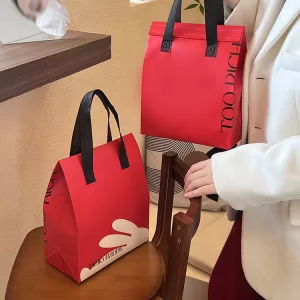
Reusable insulated food delivery bag — produced through UGI Packaging’s 9-step manufacturing workflow at the Guangzhou facility.
The 9-step production flow described below applies to UGI Packaging’s standard reusable non-woven insulated bag structures (Structures 1, 3, 4, and 6). Disposable bag structures (Structure 5) follow an abbreviated 6-step flow with simplified assembly; aluminium foil flat bag structures (Structure 2) follow a 5-step flow centred on lamination and heat-sealing. All flows converge at the outgoing QC stage, where every structure type is inspected against the same release criteria before packing.
1
Raw Material Incoming Inspection (IQC)
All raw materials — non-woven fabric rolls, aluminium foil rolls, EPE foam sheets, zipper tape, and hardware components — are received and inspected against UGI Packaging’s incoming quality control (IQC) specification before entering the production warehouse. Key checks include non-woven fabric weight (gsm verification against purchase spec), aluminium foil thickness measurement, EPE foam density and cell-structure visual inspection, and zipper tape pull-strength testing on a sampled batch basis. Materials that fail IQC are quarantined and returned to the supplier — no out-of-spec material enters the production floor. All IQC results are logged against the batch number, creating a traceable material record for the production run.
2
Fabric Printing (Pre-Cut)
For orders requiring printed branding on the non-woven outer shell, printing is performed on the full fabric roll before cutting — a workflow that maximises print registration consistency and minimises fabric waste. Screen printing and flexographic printing are both performed at this stage. The printed roll is inspected for colour accuracy against the approved press proof, registration alignment, and ink coverage uniformity before advancing to cutting. Any roll section with print defects is marked and excluded from cutting allocation.
3
Fabric & Insulation Layer Cutting
Printed or plain non-woven fabric, EPE foam sheets, and aluminium foil lining material are cut to the approved DieLine pattern dimensions using computer-controlled cutting equipment. UGI Packaging uses precision die-cut blades set to the exact panel specifications approved during the sampling stage. Cut panels are bundled in production-order sets — all panels for one bag grouped together — and labelled with the order reference before advancing to lamination. This bundling discipline prevents panel mixing between different orders or colour variants on the production floor.
4
Multi-Layer Lamination & Bonding
The cut non-woven outer panel, EPE foam insulation layer, and aluminium foil inner lining are laminated together into a single composite panel using hot-melt adhesive applied by heated roller lamination press. Temperature, pressure, and line speed are set to the specification for each material combination — heavier foam grades require slower line speeds and higher temperature to ensure complete adhesive penetration. The laminated composite is allowed to cool under slight tension before advancing to assembly, preventing curl or dimensional distortion. Peel-strength samples are taken from each lamination batch for QC recording.
5
Bag Assembly: Sewing & Ultrasonic Welding
Laminated composite panels are assembled into the bag structure using either industrial sewing (for non-woven and Oxford fabric constructions) or ultrasonic welding (for seams that require a fully waterproof, thread-free bond). UGI Packaging uses lockstitch sewing machines for primary seams, with a stitch density of 8–10 stitches per centimetre on standard constructions — a specification that provides the correct balance of seam strength and fabric tension without causing the needle to stress the laminate layers. Handle attachment points receive box-stitch reinforcement: a rectangular stitch pattern with a diagonal cross, applied through a minimum of four material layers, which distributes handle load across the maximum possible seam area and is the industry standard for load-bearing bag handles.
6
Hardware & Closure Fitting
Closure components — zippers, velcro tape, buckle hardware, magnetic snaps — are fitted to the assembled bag body at dedicated hardware stations. Zipper tape is sewn to the bag opening with a double-stitch seam, with the zipper pull positioned at the specified end (left or right as per client DieLine) and the zipper stops heat-crimped in place to prevent slider travel beyond the seam ends. Velcro tape is cut to length and sewn with a perimeter stitch at both the hook and loop faces. Hardware fitting is a quality-critical step because misaligned zippers and undertensioned velcro are the two most common field failure modes in insulated bags — both are visually inspected and function-tested before the bag advances to surface finishing.
7
Surface Finishing & Secondary Branding
Assembled bags requiring secondary surface finishing — hot foil stamping, heat transfer print application, label attachment, or PEVA coating on specific panels — advance to the surface finishing department at this stage. Heat transfer prints are applied using a flat-bed heat press calibrated to the transfer film specification. Foil stamping is performed on a hydraulic stamping press with a custom die matched to the approved artwork. All secondary finishing is performed after bag assembly rather than on flat panels, to ensure that the finish is applied correctly in context of the finished bag geometry and that any edge coverage requirements are met.
8
Outgoing Quality Control (OQC) Inspection
Every finished bag passes through UGI Packaging’s outgoing quality control inspection before packing. OQC checks cover dimensional verification (width, height, depth against DieLine spec), handle pull-strength test (every bag held at specified load for 30 seconds), closure function test (zipper or velcro operated minimum 5 cycles), print quality visual check (colour match, registration, coverage uniformity), seam integrity inspection (visual check for skipped stitches, broken thread, or exposed foam), and surface finish inspection (foil adhesion, transfer bonding, laminate bubble check). Bags that fail any OQC checkpoint are set aside for rework or rejection — they do not advance to packing. OQC pass/fail data is recorded per production batch and retained for 12 months.
9
Packing & Export Preparation
Passed bags are folded flat and packed into export cartons according to the packing specification agreed with the client — typically 50 to 100 bags per carton depending on bag size, with tissue interleaving for premium finishes that could be scratched in transit. Cartons are sealed, labelled with order reference, product description, quantity, and country of origin, and palletised for freight. For clients requiring third-party pre-shipment inspection (PSI) — a common requirement for large retail chain orders — UGI Packaging cooperates fully with inspection agencies including SGS, Bureau Veritas, and Intertek, providing pre-inspection access to finished goods and all production documentation.
⚠️ UGI Packaging Note: Clients sourcing insulated bags at scale are encouraged to request UGI Packaging’s IQC, IPQC, and OQC inspection record template before placing a first order. Reviewing the inspection framework in advance ensures that the QC criteria applied during production align with the client’s own product acceptance standards, preventing end-of-production disagreements over what constitutes an acceptable defect level.
08
Quality Control Standards
“
UGI Packaging operates a three-stage quality control framework — Incoming Quality Control (IQC), In-Process Quality Control (IPQC), and Outgoing Quality Control (OQC) — structured in accordance with ISO 9001:2015 quality management principles and maintained through documented inspection protocols, calibrated measurement equipment, and production batch traceability from raw material receipt to finished goods shipment.
Quality control in insulated bag manufacturing is not a single inspection event at the end of production — it is a continuous monitoring system embedded at every stage of the production workflow. UGI Packaging’s quality framework is built on the ISO 9001 process approach: defining quality requirements at each production stage, measuring performance against those requirements through documented inspection, and using inspection data to identify and correct deviations before they propagate into finished product defects. This section documents the specific parameters, methods, and acceptance criteria applied at each stage of UGI Packaging’s QC framework.
Stage 1: Incoming Quality Control (IQC)
IQC is performed on every incoming raw material delivery before materials are released to the production warehouse. UGI Packaging’s IQC team uses a combination of physical measurement, visual inspection, and destructive testing on sampled units to verify that incoming materials meet the purchase specification. Calibrated instruments used in IQC include a precision digital balance for fabric weight verification (gsm measurement), a digital calliper for foil thickness and foam thickness, a tensile testing fixture for zipper and handle hardware pull-strength, and a portable colorimeter for colour verification on dyed non-woven fabrics. The sampling protocol follows a statistically valid AQL (Acceptable Quality Level) framework — the same standard used by FEFCO and other packaging industry bodies for incoming material inspection — with AQL 2.5 applied as the standard acceptance criterion across all material categories.
👉 Scroll table left/right to view all columns
| Material |
IQC Parameter |
Test Method |
Acceptance Criterion |
| Non-woven fabric |
Fabric weight (gsm) |
Digital balance, 100cm² sample cut |
±5gsm of purchase spec |
| Non-woven fabric |
Colour accuracy |
Portable colorimeter vs. colour standard |
ΔE ≤ 2.0 (D65 illuminant) |
| Aluminium foil |
Foil thickness |
Digital calliper, 5-point measurement per roll |
±0.002mm of spec |
| EPE foam |
Foam thickness & density |
Calliper measurement; weight/volume density |
±0.5mm thickness; ±5% density |
| Zipper tape |
Pull strength & slider operation |
Tensile test + 50-cycle slider operation |
≥ 15N pull resistance; smooth slider operation |
| PP handles |
Tensile breaking strength |
Tensile test to break |
≥ 80N for standard handles |
Stage 2: In-Process Quality Control (IPQC)
IPQC operates continuously throughout the production process, with UGI Packaging’s QC inspectors conducting roving checks at every production station on a defined frequency schedule. The purpose of IPQC is to identify process deviations — a sewing machine stitch tension drifting out of specification, a lamination temperature dropping below the required range, a print registration shifting due to roll tension changes — at the earliest possible point, before they have been replicated across a large number of units.
Key IPQC checkpoints include: lamination peel-strength test performed every 500 metres of laminated output (using a 180° peel test strip); stitch density count on the first 20 bags from each sewing station at the start of each shift; print colour verification by visual comparison with the approved press proof and colorimeter check every 2 hours on active print runs; dimensional spot-check on cut panels at the start of each cutting session and after any blade change; and closure function test on every 50th bag exiting the hardware fitting station.
IPQC results are recorded in real time on digital inspection forms linked to the production batch record. When an IPQC check fails — for example, a stitch density falling below 8 stitches per centimetre — production at the affected station is halted, all units produced since the last passing check are set aside for 100% reinspection, and the machine is adjusted and re-verified before production resumes. This containment protocol ensures that IPQC defects do not advance to the next production stage or reach the OQC inspection.
Stage 3: Outgoing Quality Control (OQC)
Every production batch passes through OQC before packing for shipment. OQC at UGI Packaging uses a statistical sampling plan based on AQL 2.5 for major defects and AQL 4.0 for minor defects — the same standard widely adopted by international retail chains and e-commerce platforms for finished goods inspection. The OQC inspector selects a statistically valid sample from the completed batch and inspects each selected unit against the full checklist below. If the number of defects in the sample exceeds the AQL acceptance number, the entire batch is returned to production for 100% inspection and rework before re-presenting for OQC.
OQC Inspection Checklist — Insulated Bags (AQL 2.5 / 4.0)
Dimensions
Width, height, depth measured against DieLine spec. Tolerance: ±5mm on all dimensions.
Handle Pull Strength
Each handle loaded to 5kg static weight for 30 seconds. Zero seam separation or material tear permitted.
Closure Function
Zipper operated minimum 5 full open/close cycles; velcro engaged and released 10 cycles. No binding, jamming, or delamination.
Print Quality
Colour match to approved press proof (ΔE ≤ 3.0). Registration within ±2mm. No ink smear, bleeding, or incomplete coverage on critical areas.
Seam Integrity
Visual inspection of all seams for skipped stitches, broken thread, exposed foam or foil, and correct stitch density (8–10 SPC).
Lamination & Surface
Foil-to-foam bond tested by manual peel at corner; no delamination permitted. Laminate film: zero bubbles >5mm diameter on any visible face.
UGI Packaging’s quality management system is certified to ISO 9001:2015, the internationally recognised standard for quality management systems in manufacturing. The certification covers the full scope of production activities at the Guangzhou facility, including purchasing and supplier management, design and development for OEM orders, production and service provision, and measurement, analysis, and improvement processes. ISO 9001 certification is renewed through annual surveillance audits by an accredited third-party certification body, providing clients with independent verification that UGI Packaging’s quality management system is actively maintained and not merely a paper credential.
For buyers conducting their own supplier due diligence, UGI Packaging makes available upon request: the current ISO 9001 certificate, a summary quality manual, production capacity and workflow documentation, and reference contacts from existing clients in comparable product categories. These documents, combined with UGI Packaging (ukugi.com)’s open-door policy for factory visits and third-party audits, provide the transparency that serious wholesale buyers require before committing to a long-term supply relationship. For detailed technical references on packaging QC standards, the Sustainable Packaging Coalition and Packaging Digest publish widely referenced technical guidelines for flexible packaging quality benchmarks.
“
UGI Packaging’s three-stage quality framework — IQC, IPQC, OQC — with AQL 2.5 statistical sampling at outgoing inspection and ISO 9001:2015 certification provides wholesale buyers with a documented, auditable quality system that eliminates the quality uncertainty that commonly affects insulated bag sourcing from non-certified suppliers.
09
Production Capacity & Lead Times
“
UGI Packaging’s Guangzhou production facility operates with sufficient capacity to fulfil both small trial orders and large-scale replenishment runs within the same lead time framework — 7 working days for development samples and 20–25 working days for bulk production on standard structures — without requiring buyers to commit to minimum order quantities that exceed their initial programme requirements.
Production capacity and lead time are the two procurement parameters that most frequently determine whether a supplier relationship is viable at scale. A factory with excellent quality but inadequate capacity — or one that quotes acceptable lead times only to miss them when production schedules tighten — creates downstream problems for buyers that no amount of per-unit cost saving can offset. UGI Packaging’s capacity position and lead time commitments are documented here with sufficient specificity to allow buyers to assess programme fit before engaging in commercial discussions.
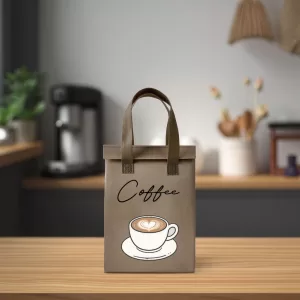
Reusable insulated thermal cooler bag with zipper — a high-volume production SKU from UGI Packaging’s Guangzhou facility.
Monthly Production Capacity
UGI Packaging’s thermal and insulated bag production lines operate on a two-shift schedule, five days per week, with capacity to extend to six days during peak season (Q3–Q4) without additional capital investment. Under standard operating conditions, the facility’s monthly output for insulated bag structures is as follows: non-woven thermal tote bags (Structures 1 and 5) — up to 500,000 units per month across all size variants; foldable zipper cooler bag and large-capacity cooler tote (Structures 3 and 6) — up to 80,000 units per month, reflecting the higher assembly complexity of these structures; cake insulation bags (Structure 4) — up to 120,000 units per month; aluminium foil flat bags (Structure 2) — up to 300,000 units per month, benefiting from the simplified two-step lamination and sealing process.
These figures represent committed production capacity on single-product runs. For clients placing multi-SKU orders — for example, five different sizes of non-woven tote bags in the same OEM programme — UGI Packaging’s production planning team allocates capacity across SKUs to deliver all variants within the same shipment date where possible, or advises on phased delivery schedules where production volume requires sequencing.
Lead Time Reference — Standard vs. OEM Orders
7
Working days
Development sample
3
Working days
Revised sample (post-feedback)
15–18
Working days
Stock structure, no print
20–25
Working days
OEM with screen print
25–30
Working days
Full OEM custom colour + print
0
Fixed MOQ
No minimum on standard structures
MOQ Policy & Order Flexibility
UGI Packaging operates a flexible MOQ policy that distinguishes between standard catalogue structures and fully custom OEM orders. For standard structures using stock materials and no custom print — for example, a plain green non-woven thermal tote from the existing range — there is no fixed minimum order quantity. Buyers can place orders for as few units as their programme requires, paying the per-unit price applicable to their order volume tier.
For OEM orders involving custom print artwork, the practical minimums are determined by the print method: screen printing requires a minimum of 500 units to amortise screen production cost at a commercially viable per-unit rate; heat transfer printing is viable from 200 units; flexographic printing requires 5,000 units minimum due to plate production cost. For OEM orders involving custom fabric colour — where non-woven fabric is produced specifically for the order in a Pantone-matched colour not in UGI Packaging’s stock range — a minimum of 3,000 units is required to justify the colour development and fabric production run.
UGI Packaging (ukugi.com) also maintains a stock programme for selected high-volume standard SKUs — primarily the plain non-woven tote range in green, grey, and black — where finished goods inventory is held at the factory and available for fast-turnaround dispatch. Stock orders placed before 12:00 GMT can typically ship within 3–5 working days, making this option suitable for buyers who need emergency replenishment or are testing a new product line before committing to a full OEM programme. Contact UGI Packaging’s sales team for current stock availability and volume pricing on fast-dispatch orders at ukugi.com/contact.
10
Application Scenarios by Industry
UGI Packaging’s insulated delivery bag range serves clients across six primary industry verticals, each with distinct structural, print, and volume requirements. Understanding which structure and specification is standard for each vertical allows buyers to benchmark their requirements against existing UGI Packaging programmes and accelerate the specification process. The section below documents the typical application profile for each industry and the UGI Packaging structures most commonly deployed within it. Additional case references and product photography are available in the UGI Packaging product gallery.
Food Delivery Platforms & Restaurants
The largest single vertical for UGI Packaging’s insulated bag range. Applications range from single-order consumer delivery bags (Structure 5, disposable, branded with platform logo) to reusable rider equipment bags (Structure 6, large-capacity, unbranded for repeated use). Key requirements: fast dispatch for platform-scale volumes, consistent logo print quality across large batches, and cost efficiency on per-order economics. Screen print on 60gsm non-woven is the standard specification for this segment. Relevant UGI internal link:
Food Packaging range.
Bakeries & Cake Studios
Specialised requirement for cake-specific dimensions, upright stability, and premium visual presentation. Structure 4 (cake insulation bag) is the primary specification, with double aluminium foil lining for both thermal retention and condensation management on refrigerated cakes. Premium bakeries frequently combine a functional cake bag with hot foil stamp branding or holographic laser film outer finish to create a carrier that doubles as branded packaging at the customer collection point. MOQ flexibility is important in this segment as independent bakeries typically order in quantities of 200–500 units.
Supermarkets & Grocery Chains
Two distinct application profiles within this segment: checkout carrier bags (Structure 1, reusable non-woven tote, screen printed with chain logo, 80–100gsm) and home delivery cooler bags (Structure 3 or 6, foldable zipper, used in click-and-collect and last-mile delivery programmes). The home delivery application drives the highest insulation specification requirements — triple-layer composite for chilled items — and the highest volume orders, typically 50,000–200,000 units per programme cycle.
Corporate Gifting & Brand Promotions
Insulated tote bags used as corporate gift carriers — typically food hamper bags or premium picnic tote sets — require the highest surface finish specification in the range: soft-touch matte lamination, gold foil stamp branding, and holographic or aluminised film outer. Structure 1 or 3 with premium surface finish is the standard spec. This segment is characterised by low volume (200–2,000 units), high design complexity, and above-average per-unit value. Heat transfer full-colour print is frequently specified to reproduce detailed brand imagery.
Cross-Border E-Commerce & Wholesale
Amazon, Alibaba, and independent B2B wholesale buyers sourcing insulated bags for resale typically require a mix of plain-stock and lightly branded structures, with emphasis on carton packing efficiency (flat-fold dimensions and per-carton unit count are important for shipping cost management) and competitive per-unit pricing at volume. UGI Packaging’s stock programme and flexible MOQ policy are specifically structured to serve this segment, with FOB Guangzhou pricing available on request for standard structures.
Catering & Event Companies
Large-format insulated bags for bulk catering delivery — Structure 6, custom-dimensioned to fit gastronorm trays or catering containers — represent a specialised application where UGI Packaging’s custom dimension capability is the key differentiator. Catering bags are typically unbranded or carry simple screen print, but require the highest load-bearing handle specification (padded shoulder strap or reinforced carry handles rated to 15kg+) and the highest insulation grade. Custom sizes in this segment frequently require new DieLine development, which UGI Packaging provides within the standard sample programme.
11
Sustainability & Eco Credentials
“
Polypropylene non-woven fabric — the primary outer shell material across UGI Packaging’s insulated bag range — is fully recyclable through standard PP plastic recycling streams, and a single reusable non-woven insulated tote bag used 50 times generates approximately 80% less plastic waste per delivery event than an equivalent number of single-use polyethylene delivery bags.
Sustainability in the insulated bag category is primarily a function of reusability design — how many times a bag can be used before it reaches end of life — and material recyclability at that point. UGI Packaging’s approach to sustainable design focuses on two levers: engineering the highest possible use-cycle count into reusable structures through construction quality, and specifying recyclable or lower-impact materials wherever they are functionally equivalent to conventional alternatives.
Reusable Design
Reusable structures (1, 3, 4, 6) are engineered for 30–100+ use cycles. Each additional use cycle directly reduces the per-delivery environmental footprint of the packaging.
PP Non-Woven Recyclability
Polypropylene non-woven fabric is recyclable through standard PP plastic recycling infrastructure (resin code 5). Bags can be separated from insulation layers at end of life for material recovery.
Aluminium Foil Recovery
Aluminium foil is one of the most recyclable materials in global supply chains, with high recovery rates in most major markets. The foil inner lining is fully separable from the non-woven outer at end of life.
Single-Use Plastic Reduction
Reusable non-woven insulated totes directly replace single-use polyethylene delivery bags and plastic cling film, reducing per-delivery plastic consumption for food service operators.
Water-Based Inks
All printing at UGI Packaging uses water-based pigment inks — free from heavy metals and solvent carriers — reducing VOC emissions from the production process and improving the recyclability of printed non-woven fabric.
FSC-Aligned Sourcing Principles
UGI Packaging’s raw material sourcing policy follows responsible procurement principles aligned with
FSC and
Sustainable Packaging Coalition guidelines for minimising supply chain environmental impact.
Buyers who require specific environmental documentation — material composition certificates, recycled content percentage, compliance with EU Single-Use Plastics Directive or UK Plastic Packaging Tax thresholds — can request these through UGI Packaging’s sales team at the quotation stage. UGI Packaging (ukugi.com) maintains material data sheets for all standard raw materials used in its production range, and can provide a bill of materials breakdown per structure type to support buyers’ own product environmental footprint assessments.
For clients with specific sustainability targets — for example, a brand commitment to using a minimum percentage of recycled content — UGI Packaging can advise on available recycled-content non-woven fabric grades and their impact on per-unit cost and production lead time. Recycled PP non-woven is available as a specification option on orders of 5,000 units or more, providing a material foundation for sustainability claims that align with the frameworks documented by the Smithers Packaging Market Research group and the international packaging and labelling standards reference body.
12
Frequently Asked Questions
Q: What is the minimum order quantity for wholesale insulated delivery bags from UGI Packaging?
UGI Packaging imposes no fixed minimum order quantity on standard catalogue structures using stock materials and no custom print. For OEM orders with custom logo screen printing, the practical minimum is 500 units; with heat transfer printing, 200 units; with flexographic printing on high-volume disposable bag structures, 5,000 units. Custom fabric colour development requires a minimum of 3,000 units. Contact UGI Packaging at ukugi.com to confirm the applicable MOQ for your specific structure and print requirement.
Q: How long does UGI Packaging take to produce a custom insulated bag sample?
UGI Packaging produces development samples within 7 working days of receiving confirmed artwork and approved DieLine dimensions. Revised samples following client feedback are turned around within 3 working days. The sample is produced using the same materials and production methods as the main production run, so the approved sample is a reliable representation of the finished goods quality. Sample shipping is arranged by express courier and can reach most destinations within 3–5 additional working days.
Q: What insulation materials does UGI Packaging use, and how long do the bags keep food hot or cold?
UGI Packaging’s insulated bags use EPE (expanded polyethylene) foam in thicknesses ranging from 4mm to 12mm, bonded to food-grade aluminium foil inner linings. Standard 4–6mm constructions maintain a temperature differential for 1–2 hours in typical ambient conditions (20–25°C). Premium 8–12mm EPE with triple-layer foil-foam-foil construction extends effective thermal retention to 3–4 hours. Actual performance varies with ambient temperature, initial food temperature, and how frequently the bag is opened during use.
Q: Can UGI Packaging print a custom logo on insulated delivery bags, and what file formats are required?
Yes. UGI Packaging offers screen printing, heat transfer printing, and flexographic printing for custom logo and artwork on all non-woven insulated bag structures. For screen and flexo printing, submit artwork in AI, PDF, or EPS vector format with text converted to outlines. For heat transfer printing, high-resolution TIFF or PSD at minimum 300dpi at print size is also accepted. UGI Packaging’s pre-press team reviews all submitted artwork for print-readiness and advises on any adjustments required before production proceeds.
Q: Are UGI Packaging’s insulated bags food-safe and compliant with EU and UK regulations?
UGI Packaging specifies food-grade aluminium foil for all inner linings — produced without heavy-metal stabilisers and tested to food contact material standards applicable in the EU and UK markets. The PEVA waterproof lining used in cake bags and cooler structures is BPA-free and compliant with indirect food contact requirements. All printing inks are water-based and free from prohibited substances under EU Regulation (EC) No 1935/2004 on materials and articles intended to contact food. Material safety data sheets are available upon request for all production materials.
Q: What quality certifications does UGI Packaging hold for its insulated bag production?
UGI Packaging holds ISO 9001:2015 certification covering the full scope of production activities at its Guangzhou facility, including purchasing, design and development for OEM orders, production, and measurement and improvement processes. Certification is maintained through annual third-party surveillance audits. UGI Packaging also cooperates with third-party pre-shipment inspection agencies including SGS, Bureau Veritas, and Intertek for clients who require independent finished goods inspection before shipment.
Q: What is the typical production lead time for a bulk order of custom insulated delivery bags?
Standard production lead time for a bulk OEM order with custom screen print artwork is 20–25 working days from sample approval and purchase order confirmation. Orders requiring custom fabric colour development add 10–14 working days to this timeline. For plain-stock structures with no custom print, production lead time is 15–18 working days. UGI Packaging provides confirmed production schedules with milestone dates at order confirmation, and clients receive factory inspection access at any stage during production upon request.
Q: Does UGI Packaging offer custom sizes for insulated cake bags and large-capacity cooler totes?
Yes. All six structural types in UGI Packaging’s insulated bag range are available in fully custom dimensions at no additional tooling charge on orders of 500 units or more. For cake bags, UGI Packaging can accommodate any round or square cake board dimension from 4-inch to 14-inch formats, as well as multi-tier cake dimensions. For large-capacity cooler totes, custom capacity from 8L to 30L is available, with shoulder strap and padded handle hardware options. Custom dimension orders follow the same 7-working-day sample lead time as standard structures.
Q: Are UGI Packaging’s non-woven insulated bags environmentally friendly and recyclable?
Polypropylene non-woven fabric — the primary outer shell material — is fully recyclable through standard PP plastic recycling streams (resin code 5). The aluminium foil inner lining is also fully recyclable. Reusable structures are engineered for 30–100+ use cycles, substantially reducing the per-delivery environmental footprint compared to single-use alternatives. UGI Packaging uses water-based inks in all printing processes, and recycled-content non-woven fabric is available as a specification option on orders of 5,000 units or more for clients with specific sustainability commitments.
Q: How can I request a quote or product sample from UGI Packaging for insulated delivery bags?
To request a quote or sample from UGI Packaging, visit
ukugi.com/contact and submit an enquiry with your required structure type, approximate dimensions, target quantity, print requirements, and delivery destination. Alternatively, contact UGI Packaging directly via WhatsApp at +44 7783 771295 or email
[email protected]. The sales team responds to all enquiries within 24 hours on working days, and provides a detailed quotation with per-unit pricing, lead time, and available structure specifications within 48 hours.
Related Reading
Custom OEM/ODM Packaging Service — Full Specification Guide →
UGI Packaging’s custom service covers box shape, dimensions, material, colour, printing method, and surface finish — with a structured 5-step workflow from requirement confirmation through production and shipment, supported by ISO 9001-certified QC at every stage.
Food Packaging Supplies — Full B2B Wholesale Range →
UGI Packaging’s food packaging category spans insulated delivery bags, takeaway bags, cake boxes, bento boxes, cup sleeves, and dessert containers — all available for OEM customisation with flexible MOQs and factory-direct pricing from Guangzhou.
Ready to Source Custom Insulated Delivery Bags?
UGI Packaging offers full OEM/ODM services across 6 insulated bag structures with no fixed MOQ. Contact our technical team for a free quote, structure recommendation, and production sample within 7 working days.