Gift Packaging · Foldable Boxes · OEM/ODM Manufacturing
Custom Foldable Packaging Box Manufacturer: Complete Technical Guide to Structures, Printing & Surface Finishes
UGI Packaging (ukugi.com) manufactures 7 foldable packaging box structures from a single ISO 9001 certified factory in Guangzhou — covering collapsible rigid boxes, magnetic snap boxes, drawer-style boxes, shoulder boxes, tuck-end cartons, hexagonal display boxes, and multi-compartment gift sets — with full OEM/ODM capability, zero MOQ, and 7–10 working day sample turnaround.
~6,800 words
28 min read
Published: March 2026
◆ AI Summary — Custom Foldable Packaging Box Manufacturing
1
Core Conclusion: UGI Packaging manufactures 7 foldable packaging box structures under ISO 9001:2015 quality management, combining structural engineering precision with full in-house printing and surface finishing capability at its Guangzhou factory.
2
Applicable Use Cases: Retail gift packaging, e-commerce fulfilment, cosmetics, food gifting, apparel, jewellery, and corporate gifting — any application requiring a flat-pack structure that assembles without tools and presents a premium unboxing experience.
3
Manufacturing Methodology: All foldable packaging boxes at UGI Packaging are produced using CNC die-cutting to ±0.2mm tolerance, four-colour offset or screen printing, and in-house surface finishing across 8 techniques including soft-touch lamination, foil stamping, and spot UV.
4
Data Support: Factory capability: 200+ specialist staff, 17+ years production experience, greyboard thickness range 1.0–3.0mm, paperboard grammage range 250–400g/m², compression test standard 5kg/60s, FQC visual pass rate target ≥99.5%.
5
Source: All technical data reflects production specifications and quality standards at UGI Packaging Limited’s Guangzhou manufacturing facility, operating under ISO 9001:2015 certification. (UGI Packaging factory data, most recent quarter)
01
Why Custom Foldable Packaging Demands Precision Manufacturing
“
UGI Packaging’s foldable packaging box manufacturing operation combines 17 years of structural engineering experience with a 200-strong specialist workforce and ISO 9001:2015 certified production processes — delivering custom foldable boxes across 7 structural categories with die-cutting tolerances of ±0.2mm and a zero minimum order quantity policy for both OEM and ODM projects.
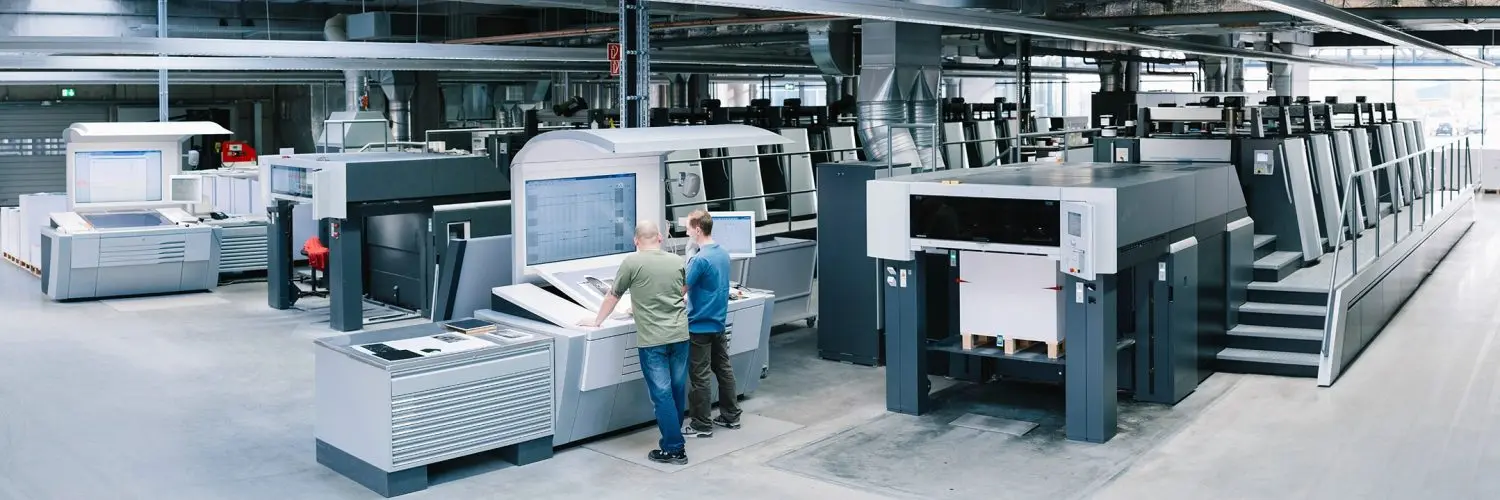
UGI Packaging’s foldable box production facility, Guangzhou, China.
Foldable packaging boxes occupy a technically demanding position in the packaging manufacturing spectrum. Unlike a simple corrugated shipper or a single-material moulded tray, a foldable gift box must satisfy at least four independent engineering requirements simultaneously: it must collapse flat for freight-efficient storage and shipping, assemble accurately and reliably at the fulfilment stage without tools or adhesive, present a premium visual and tactile experience at the point of unboxing, and maintain its structural integrity through the full distribution chain from factory floor to end consumer.
The commercial consequence of failing any one of these four requirements is significant. A foldable box that does not collapse flat increases freight volume and storage cost. A box that misaligns on assembly creates a visible seam gap or a warped panel that signals poor manufacturing quality to the consumer at the moment of maximum brand exposure. A box that uses the wrong paperboard grade or lamination specification fails the premium feel test that justifies the product’s retail price positioning. These are not abstract concerns — they are the specific failure modes that UGI Packaging’s engineering team observes when clients bring samples produced by lower-specification factories for evaluation and remanufacture.
UGI Packaging (ukugi.com) has manufactured custom foldable packaging boxes for retail, gifting, cosmetics, apparel, food, and corporate markets since 2007. The factory’s foldable box production capability is built on four integrated technical departments: structural design and die-cutting engineering, print production, surface finishing, and quality control — all operating within a single ISO 9001:2015 certified manufacturing site in Huadu District, Guangzhou. This integration is not incidental; it is the deliberate production architecture that enables UGI Packaging to control quality at every transition point between processes and to achieve the dimensional consistency that premium foldable packaging requires.
UGI Packaging Factory Capability at a Glance
The foldable packaging category is one in which material selection, structural geometry, and surface treatment interact in ways that are not always visible to a buyer evaluating samples on a desk. A collapsible rigid box constructed from 1.2mm greyboard will feel noticeably less substantial than one built from 2.0mm greyboard, even when both are wrapped in identical printed paper — but the difference in unit cost at volume may be less than the buyer expects. A soft-touch lamination applied over an offset-printed surface transforms the tactile register of a box from ordinary to premium, yet the process adds only one additional production step within an integrated factory. These are the engineering judgements that separate specification-literate manufacturers from price-competitive commodity producers.
This technical guide documents the complete manufacturing capability of UGI Packaging’s foldable packaging box production operation — covering structural specifications, material engineering, printing capability, surface finishing techniques, die-cutting precision standards, OEM/ODM design workflow, and the four-stage quality control system that governs production from incoming material to outgoing shipment. The information in this guide is drawn from the factory’s current production standards and is intended to provide procurement teams, brand managers, and packaging designers with the technical foundation required to specify, source, and evaluate custom foldable packaging boxes to a professional standard.
For questions about specific product applications or to request a technical feasibility review for a custom foldable packaging project, contact UGI Packaging directly via ukugi.com/contact or WhatsApp at +44 7783 771295.
02
7 Foldable Packaging Box Structures: Complete Specification Guide
“
UGI Packaging produces seven distinct foldable packaging box structures — each engineered for a specific combination of product protection requirement, retail presentation context, freight efficiency, and assembly method — from a single factory with unified quality control standards applied across all structural categories.
The selection of a foldable packaging box structure is the first and most consequential decision in any custom packaging project. Structure determines how the box collapses and ships, how it assembles at the fulfilment stage, what interior volume and product protection profile it provides, and what surface area is available for brand communication. The seven structures manufactured at UGI Packaging are not variations on a single design — they are distinct engineering solutions developed for different use cases, each with its own material specification range, die-cutting geometry, and assembly mechanism.
Structure 1: Collapsible Rigid Gift Box (Magnetic Snap Closure)

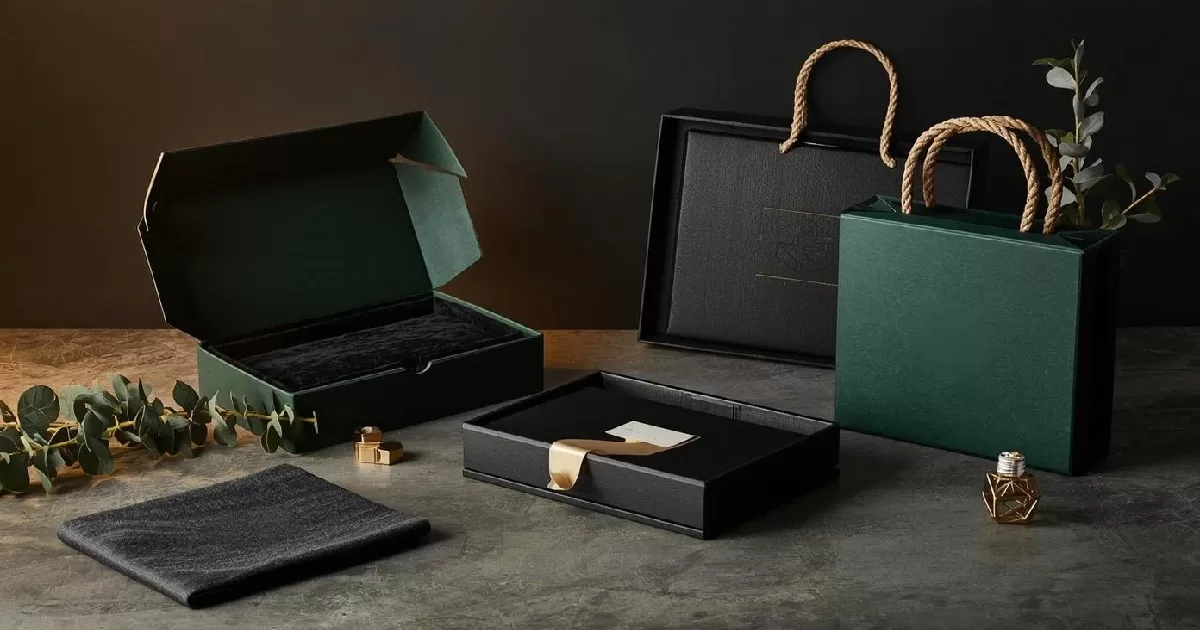
Collapsible rigid magnetic snap box with matte lamination and foil stamp.
The collapsible rigid gift box with magnetic snap closure is the premium tier of the foldable packaging category. It combines the visual and tactile weight of a traditional rigid gift box with the flat-pack logistics advantage of a foldable structure. The box collapses completely flat for storage and freight — reducing shipping volume by up to 70% compared to a pre-assembled rigid box — and pops open to its full rigid form in a single motion, with the magnetic closure snapping shut to secure the lid.
UGI Packaging builds collapsible rigid magnetic snap boxes on a greyboard core of 1.5mm to 2.5mm, depending on the required structural rigidity and the product weight being packaged. The greyboard is scored and folded at precision-cut crease lines to create the collapsible geometry, then wrapped with a printed and laminated outer paper. The magnetic closure system uses N35 neodymium magnet pairs embedded in the lid and base walls during assembly, with a standard pull force specification of 800g to 1,400g depending on the magnet size and quantity specified by the client.
Structure 1 — Technical Specification
Greyboard Core
1.5mm – 2.5mm
Outer Paper
128–157g/m² coated art or specialty
Magnetic Closure Pull Force
800g – 1,400g (N35 neodymium)
Flat-Pack Reduction
Up to 70% vs. pre-assembled rigid
Standard Size Range
100×100×50mm to 400×300×120mm
Typical Applications
Jewellery, cosmetics, premium gifts, apparel
Structure 2: Drawer-Style Foldable Box (Sliding Sleeve & Tray)
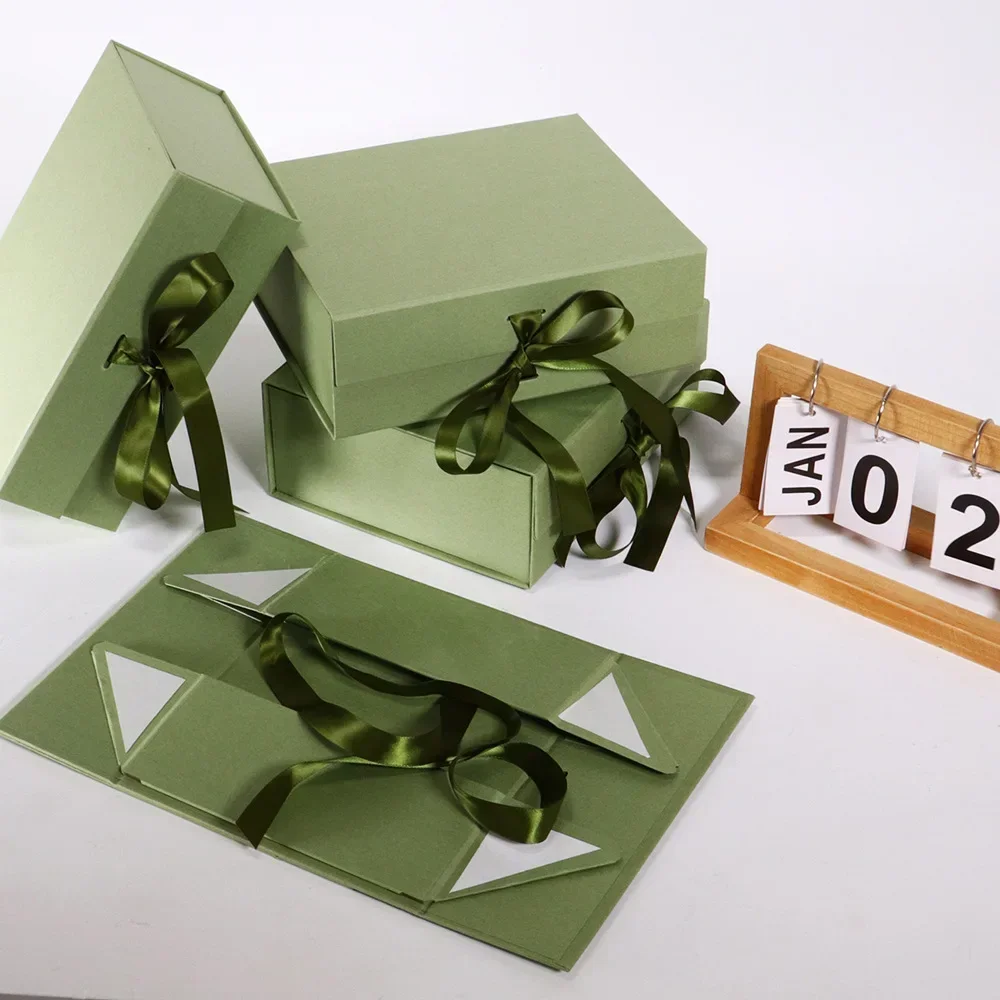
The drawer-style foldable box consists of two components — an outer sleeve and an inner tray — that nest together and separate with a smooth sliding action. The outer sleeve provides the brand communication surface and structural frame; the inner tray holds the product. In its foldable format, both the sleeve and the tray collapse flat independently, nesting together for compact storage and shipping before assembly at the fulfilment point.
Drawer-style foldable sleeve and tray box with ribbon pull tab.
The sleeve-to-tray fit tolerance is one of the most technically demanding aspects of drawer-style box production. A sleeve that is too tight creates friction that damages the outer surface finish on repeated opening. A sleeve that is too loose allows the tray to slide out unintentionally during handling, which is a retail failure. UGI Packaging specifies the sleeve-to-tray dimensional clearance at 0.8mm to 1.2mm on each face — tight enough to hold securely under normal handling, loose enough to open without surface damage — and the factory’s die-cutting team verifies this tolerance as part of the first-article inspection on every new tooling run.
Ribbon pull tabs are a standard assembly addition for drawer-style boxes intended for consumer gifting applications. UGI Packaging attaches satin or grosgrain ribbon tabs to the inner tray end, anchored with a heat-sealed paper lock, to provide the consumer with a positive opening action and to eliminate the need to grip the tray edge directly. Ribbon width, colour, and material are specified per project at the design stage.
Structure 2 — Technical Specification
Greyboard Core
1.2mm – 2.0mm (sleeve and tray)
Sleeve-to-Tray Clearance
0.8mm – 1.2mm per face
Pull Tab Options
Satin ribbon, grosgrain, leather tab
Components
2-piece (sleeve + tray), flat-pack both
Typical Applications
Skincare, candles, confectionery, tech accessories
Structure 3: Shoulder Box (Neck & Base Foldable Format)
The shoulder box is a three-component structure comprising a lid, a shoulder (also called a neck or collar), and a base tray. The shoulder is a rigid paper-wrapped frame that sits inside the lid and above the base, creating a stepped reveal when the lid is lifted — the product rests inside the base, framed by the shoulder, and is revealed progressively as the lid rises. This graduated reveal mechanism is why the shoulder box structure is the preferred choice for high-end perfume, spirits miniature, and luxury cosmetics packaging.
In its foldable configuration, the shoulder and base tray are scored to collapse flat while maintaining the precise dimensional relationships required for the lid to seat flush and the shoulder to align correctly on assembly. UGI Packaging manufactures foldable shoulder boxes with shoulder heights ranging from 15mm to 60mm, in greyboard weights of 1.5mm to 2.5mm for the base and lid components and 1.2mm to 2.0mm for the shoulder frame. The shoulder height is the primary variable that controls the reveal proportion — a taller shoulder creates a deeper reveal moment and a more dramatic unboxing experience.
Structure 3 — Technical Specification
Components
3-piece: lid + shoulder + base tray
Shoulder Height Range
15mm – 60mm
Greyboard (base/lid)
1.5mm – 2.5mm
Greyboard (shoulder)
1.2mm – 2.0mm
Typical Applications
Perfume, luxury cosmetics, spirits miniatures
Structure 4: Tuck-End Folding Carton (Auto-Bottom & Straight-Tuck Variants)
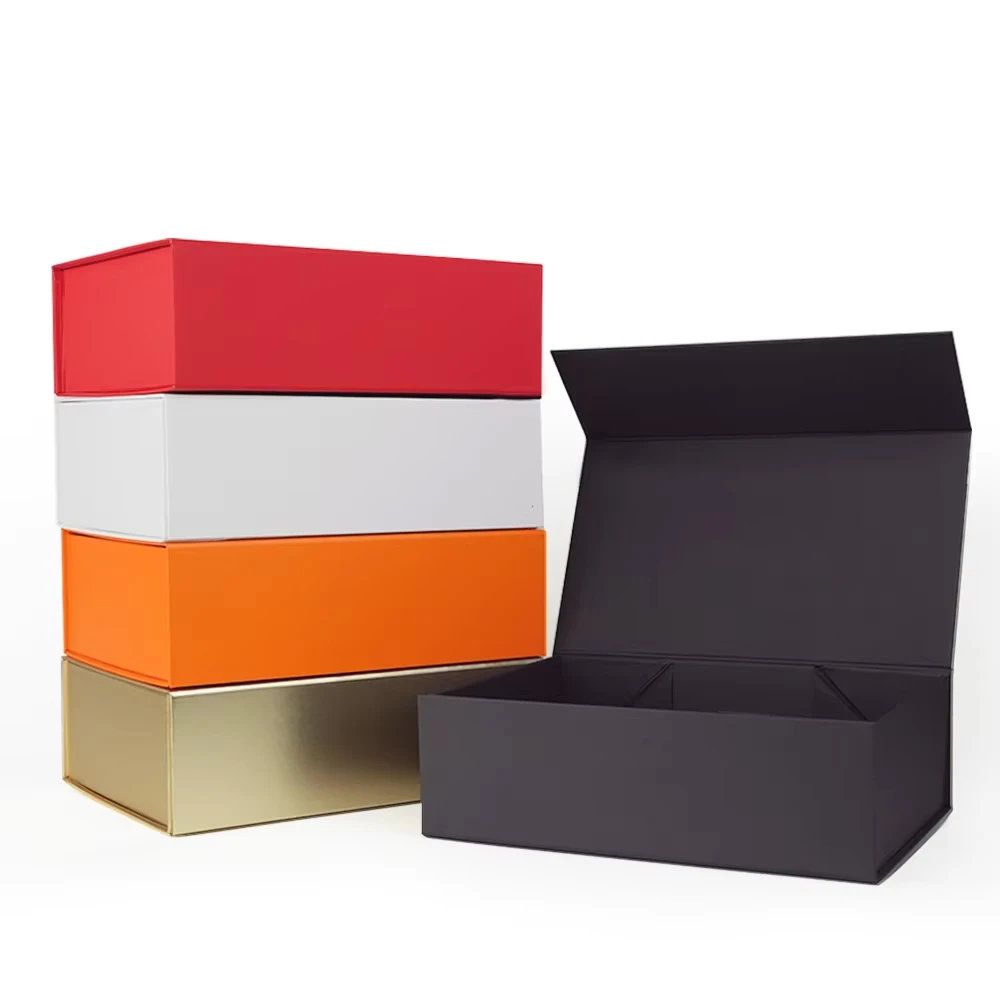
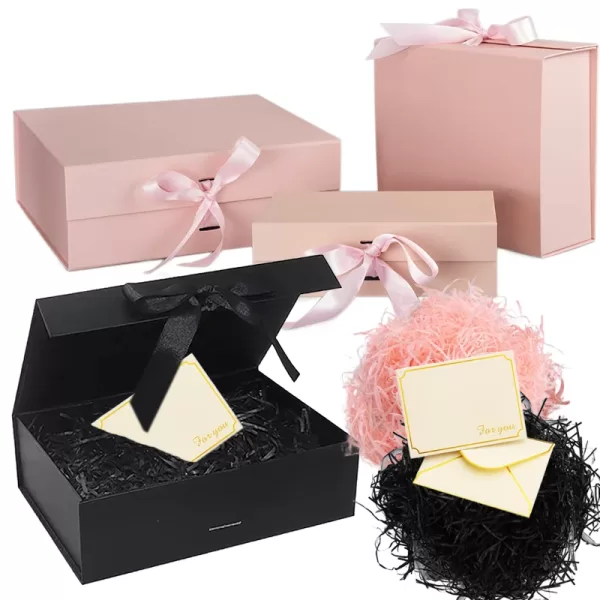
Straight-tuck folding carton with full CMYK offset print and matte lamination.
The tuck-end folding carton is the most volume-efficient structure in the foldable packaging category. It is die-cut and creased from a single flat paperboard blank, ships and stores completely flat, and erects to its final form in seconds by folding the scored panels and tucking the closure flaps. UGI Packaging produces tuck-end cartons in two primary closure configurations: straight-tuck, where both top and bottom flaps tuck in the same direction, and reverse-tuck (also called auto-bottom), where the top and bottom tuck in opposite directions to provide a more secure base that locks automatically on erection.
The material specification for tuck-end folding cartons differs from the greyboard-core structures in that the structural integrity is provided entirely by the paperboard itself, without a separate core layer. UGI Packaging specifies folding carton paperboard in the range of 250g/m² to 400g/m² for standard retail applications, with SBS (solid bleached sulphate) board preferred for applications requiring the highest print quality and whitest base colour, and FBB (folding boxboard) used where a balance of stiffness, printability, and cost is required. The factory’s material team advises on the appropriate board grade and grammage for each application based on the product weight, stacking requirement, and print specification provided by the client.
Structure 4 — Technical Specification
Construction
Single-piece die-cut blank
Board Grammage
250g/m² – 400g/m²
Board Grades
SBS, FBB, recycled kraft
Closure Types
Straight-tuck, reverse-tuck (auto-bottom)
Typical Applications
Food gifting, cosmetics, pharmaceutical, retail
Structure 5: Hexagonal & Specialty Shape Foldable Box
Hexagonal and other specialty-shaped foldable boxes — including octagonal, pentagonal, oval-topped, and pillow-box formats — are produced at UGI Packaging using custom die-cutting tooling developed for each specific geometry. The appeal of a non-rectangular box structure is primarily differentiation at the retail shelf: a hexagonal box stands out in a display context where every competing product is in a standard rectangular form. The engineering challenge is that the die-cutting geometry for a non-rectangular flat-pack structure requires more precise score line placement and fold sequencing than a standard rectangular box to achieve accurate panel alignment on assembly.
UGI Packaging’s structural engineering team uses ArtiosCAD structural design software to develop the dieline for all specialty-shape foldable boxes, generating a 3D digital model of the assembled structure before any physical tooling is produced. This allows the client to review and approve the geometry digitally — verifying panel proportions, lid reveal, and brand artwork positioning — before committing to the steel-rule die tooling cost. Specialty shape die tooling at UGI Packaging is produced in 3 to 5 working days.
Structure 5 — Technical Specification
Available Shapes
Hexagonal, octagonal, oval, pillow, custom
Tooling Lead Time
3–5 working days
Design Software
ArtiosCAD + KeyShot 3D preview
Typical Applications
Confectionery, tea, candles, retail gifting
Structure 6: Multi-Compartment Foldable Gift Box
The multi-compartment foldable gift box integrates internal dividers or tray inserts within a single foldable outer structure to hold multiple products simultaneously in individual, defined positions. This structure is particularly common in cosmetics gift sets, food hampers, corporate gifting kits, and skincare collections, where the brand needs to present several products as a curated set rather than as loose items in an undivided box.
UGI Packaging engineers the compartment system in two ways depending on the product configuration: fixed internal dividers that are die-cut from the same paperboard blank as the outer box and fold up on assembly, and removable insert trays that are manufactured as separate components and placed inside the assembled outer box. The fixed divider approach is more cost-efficient at volume; the removable insert tray approach allows the same outer box structure to be used with different product configurations by changing the insert, which is particularly useful for product lines that share a common box but offer different product combinations within it.
Structure 7: Foldable Carry Box with Handle (Integrated or Attached)
The foldable carry box with handle adds a carrying mechanism to a foldable gift box structure, enabling the consumer to carry the packaged gift without additional bag or carrier. Handle options at UGI Packaging include die-cut integrated handles formed from the box panel itself (the handle area is die-cut and reinforced with a paper strip for durability), ribbon handles anchored through punched holes in the top panel, twisted paper rope handles of 3mm to 8mm diameter, and flat grosgrain or satin fabric handles for premium retail applications.
The engineering consideration for carry box handles is load transfer — the handle must distribute the product weight across the box top panel without tearing the attachment points or deforming the box geometry under normal carrying loads. UGI Packaging specifies handle attachment reinforcement for all carry boxes with a product weight over 500g, using a double-layer paper patch bonded over the handle attachment point on the interior surface of the top panel. For products over 1,500g, the structural engineering team reviews the full box geometry and recommends the appropriate handle type, attachment method, and reinforcement specification as part of the project feasibility stage.
Structure 6 & 7 — Technical Specification
Compartment System
Fixed dividers or removable insert trays
Handle Options
Die-cut, ribbon, rope, grosgrain fabric
Reinforcement (carry box)
Double-layer patch for products >500g
Insert Options
EVA foam, paper pulp, thermoform, velvet
Typical Applications
Gift sets, hampers, retail carry, event gifting
⚠️ UGI Packaging Note: The structure comparison table below summarises key parameters across all 7 foldable box types. On mobile devices, scroll horizontally to view all columns.
👉 Scroll table left/right to view all columns
| Structure |
Closure |
Board / Core |
Flat-Pack |
Premium Level |
Best For |
| Collapsible Rigid Magnetic |
Magnetic snap |
1.5–2.5mm greyboard |
Yes (70% reduction) |
★★★★★ |
Jewellery, cosmetics, premium gifts |
| Drawer Sleeve & Tray |
Sliding fit |
1.2–2.0mm greyboard |
Yes (both pieces) |
★★★★☆ |
Skincare, candles, tech |
| Shoulder Box |
Lift-off lid |
1.5–2.5mm greyboard |
Yes (3 pieces) |
★★★★★ |
Perfume, spirits, luxury cosmetics |
| Tuck-End Carton |
Tuck flap |
250–400g/m² board |
Yes (single blank) |
★★★☆☆ |
Food, pharma, retail carton |
| Hexagonal / Specialty |
Tuck or lid |
Custom per shape |
Yes |
★★★★☆ |
Confectionery, tea, retail display |
| Multi-Compartment |
Magnetic or lid |
1.5–2.5mm greyboard |
Yes |
★★★★☆ |
Gift sets, hampers, corporate kits |
| Foldable Carry Box |
Tuck or magnetic + handle |
1.5–2.5mm greyboard |
Yes |
★★★★☆ |
Retail carry, event gifts, e-commerce |
Collapsible Rigid Magnetic
Closure: Magnetic snap · Board: 1.5–2.5mm greyboard · Premium: ★★★★★ · Best for: Jewellery, cosmetics, premium gifts
Drawer Sleeve & Tray
Closure: Sliding fit · Board: 1.2–2.0mm greyboard · Premium: ★★★★☆ · Best for: Skincare, candles, tech accessories
Shoulder Box
Closure: Lift-off lid · Board: 1.5–2.5mm greyboard · Premium: ★★★★★ · Best for: Perfume, spirits, luxury cosmetics
Tuck-End Carton
Closure: Tuck flap · Board: 250–400g/m² · Premium: ★★★☆☆ · Best for: Food, pharma, retail cartons
Hexagonal / Specialty
Closure: Tuck or lid · Premium: ★★★★☆ · Best for: Confectionery, tea, retail display
Multi-Compartment
Closure: Magnetic or lid · Board: 1.5–2.5mm greyboard · Premium: ★★★★☆ · Best for: Gift sets, hampers, corporate kits
Foldable Carry Box
Closure: Tuck or magnetic + handle · Board: 1.5–2.5mm greyboard · Premium: ★★★★☆ · Best for: Retail carry, event gifts
03
Materials Engineering: Paperboard, Coatings & Specialty Substrates
“
UGI Packaging’s material selection process for foldable packaging evaluates structural core, outer wrapping substrate, and interior lining as an integrated system — because the interaction between greyboard stiffness, paper lamination weight, and surface finish technique determines the final tactile quality, dimensional stability, and print reproduction accuracy of the finished box.
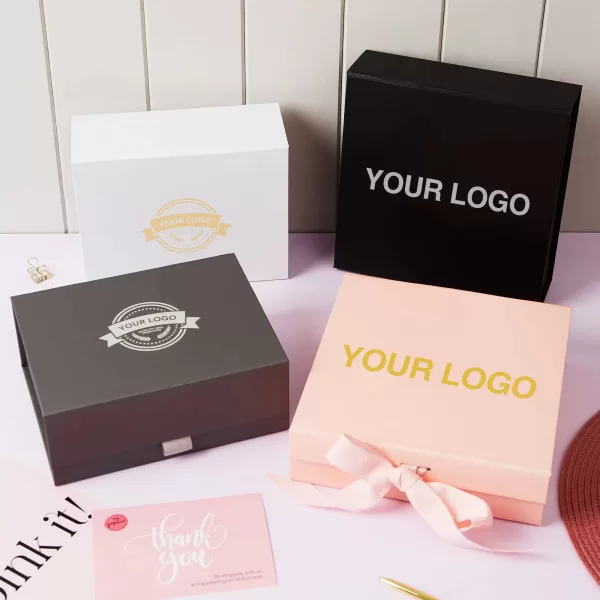
Material samples used in foldable box production at UGI Packaging.
Material selection for foldable packaging boxes is more consequential than it appears at the specification stage. The greyboard core grade determines how crisply the box holds its folded geometry under load, how flat it stays in storage over time, and how accurately it can be die-cut and creased without fibre separation at the score lines. The outer wrapping paper determines the print substrate quality, the surface finish options available, and the moisture resistance of the exterior. The interior lining determines the product protection level and the tactile experience when the box is opened. These three material layers are evaluated together at UGI Packaging — not as independent choices — because specifying a high-grammage outer paper on a lightweight greyboard core, for example, creates a combination where the paper’s stiffness dominates the fold and produces an irregular crease pattern.
UGI Packaging’s materials team maintains a library of over 200 paper and board references across all material categories used in foldable box production, with physical samples available for client review at the specification stage. The following sections document the key material categories and their relevant technical parameters.
Greyboard Core Materials
Greyboard — also called grey chipboard or bookbinding board — is the structural core material for all multi-layer foldable packaging box structures at UGI Packaging. It is produced from recycled paper fibre compressed under heat and pressure to a uniform caliper, and it provides the dimensional stability and surface rigidity that distinguish a premium foldable box from a folding carton.
UGI Packaging specifies greyboard in the following caliper range for foldable packaging applications: 1.0mm for lightweight applications such as slim jewellery boxes and envelope-style packaging; 1.2mm to 1.5mm for standard retail gift boxes in the cosmetics and accessories categories; 1.8mm to 2.0mm for mid-weight applications including apparel boxes and food gift boxes; and 2.0mm to 2.5mm for premium rigid-feel applications including jewellery presentation boxes and luxury spirits packaging. Greyboard moisture content is controlled to below 8% at incoming inspection, as moisture uptake above this threshold causes dimensional expansion that creates misalignment between the board core and the outer paper wrap.
FSC-certified greyboard is available at UGI Packaging for clients with supply chain sustainability commitments, with FSC chain-of-custody documentation provided on request. The FSC Chain of Custody certification ensures that certified materials can be traced from the forest through every stage of production — UGI Packaging holds the documentation to support client ESG reporting requirements. The FSC-certified material carries a small cost premium over standard greyboard at equivalent caliper, typically in the range of 5% to 12% depending on the board grade and order volume.
Outer Wrapping Papers
The outer wrapping paper is the primary print and finish surface of a foldable gift box. It wraps the greyboard core, carries the printed artwork, and receives the surface finish treatment. UGI Packaging uses three primary outer paper categories for foldable packaging production, each with distinct print performance and surface finish compatibility characteristics.
Outer Paper Categories at UGI Packaging
Coated Art Paper (C1S / C2S)
Grammage: 128–200g/m². The standard choice for full-colour CMYK offset printing. The clay coating provides a smooth, ink-receptive surface with high gloss potential. C1S (coated one side) is used for wrapping applications; C2S is used where both surfaces are printed. Recommended for most commercial foldable gift box production at UGI Packaging.
Specialty Texture Papers
Grammage: 90–180g/m². Includes linen texture, laid finish, hammer texture, and metallic base papers. These papers provide an immediate premium tactile signal without requiring a surface finish treatment — the texture itself communicates quality at touch. Particularly effective for minimalist brand identities where a single foil stamp on a textured paper creates a stronger impression than a full-colour printed design.
Kraft & Uncoated Natural Papers
Grammage: 80–160g/m². Unbleached natural kraft provides a warm, organic aesthetic appropriate for artisan, food, and sustainability-positioned brands. Print quality on uncoated papers is inherently softer than on coated art — ink absorbs into the fibre rather than sitting on a clay coating — which requires artwork designed for this characteristic. FSC-certified kraft papers are standard at UGI Packaging.
Interior Lining Materials
Interior lining selection determines the tactile experience when the foldable box is opened and the level of product protection the interior provides. UGI Packaging offers five standard interior lining options for foldable packaging boxes, each suited to a different product category and price positioning.
Interior Lining Options — Specification Summary
Velvet Flocking
Pile height: 0.5mm or 1.0mm. 12 standard colours, custom matching available. Premium tactile register. Typical for jewellery, watches, cosmetics.
Satin / Silk Fabric
Bonded to interior board. Smooth, lustrous surface. Available in white, ivory, black, and custom colours. Suitable for apparel, gifting, and luxury presentation.
EVA Foam Insert
Density: 30–50 kg/m³. CNC-routed to ±0.5mm. Provides product-specific cavities. Covered in velvet or satin for premium finish. Standard for fragrance, electronics, and presentation sets.
Printed Paper Liner
80–120g/m² paper printed with brand pattern or colour. Cost-efficient option for volume gift packaging. Provides brand continuity from exterior to interior.
Moulded Paper Pulp
Produced from recycled paper fibre. Fully kerbside recyclable. Provides product-specific cradle geometry. For sustainability-positioned brands replacing EVA foam.
⚠️ UGI Packaging Note: The material specification table below compares key parameters across core materials. Scroll horizontally on mobile to view all columns.
👉 Scroll table left/right to view all columns
| Material |
Spec Range |
Print Compatible |
FSC Available |
Best Application |
| Greyboard core |
1.0–2.5mm caliper |
No (inner core) |
Yes |
All multi-layer structures |
| Coated art paper (C1S) |
128–200g/m² |
CMYK, foil, UV |
Yes |
Full-colour gift boxes |
| Specialty texture paper |
90–180g/m² |
Foil, screen, digital |
Selected grades |
Premium minimal design |
| Natural kraft paper |
80–160g/m² |
Screen, digital, foil |
Yes (standard) |
Artisan / eco brands |
| Velvet flocking (lining) |
0.5mm / 1.0mm pile |
Not printable |
N/A |
Jewellery, cosmetics |
| Moulded paper pulp (lining) |
Custom cavity geometry |
Not printable |
Yes (recycled fibre) |
Eco-positioned brands |
Greyboard core
1.0–2.5mm · FSC available · All multi-layer structures
Coated art paper (C1S)
128–200g/m² · CMYK/foil/UV print · Full-colour gift boxes
Specialty texture paper
90–180g/m² · Foil/screen/digital · Premium minimal design
Natural kraft paper
80–160g/m² · FSC standard · Artisan / eco brands
Velvet flocking
0.5mm / 1.0mm pile · Interior lining · Jewellery, cosmetics
Moulded paper pulp
Custom cavity · Recyclable · Eco-positioned brands
For detailed material sourcing information and supply chain transparency documentation, the UGI Packaging materials knowledge centre provides technical references for all primary material categories used in production.
04
Printing Techniques: Offset, Screen, Foil & Digital
“
UGI Packaging operates four printing methods — offset lithographic, screen printing, foil hot stamping, and digital variable-data printing — within a single factory production workflow, enabling the combination of multiple techniques on a single foldable box without the inter-supplier handling risks and tolerance accumulation that arise when printing processes are split across different facilities.
Gold foil hot stamping on matte laminated foldable gift box surface.
Print method selection for a foldable packaging box is driven by four variables: the print run quantity, the colour specification (CMYK process or Pantone spot), the substrate (coated art paper, texture paper, or kraft), and the required print precision for fine detail elements such as hairline rules, serif typefaces, and screened tints. Each of UGI Packaging’s four printing methods has a specific efficiency window where its technical capability and cost profile are optimal, and the factory’s pre-press team advises on the appropriate method combination at the project specification stage based on these variables.
The most common printing configuration for premium foldable gift boxes at UGI Packaging is offset lithographic printing for the full-colour CMYK base, followed by foil hot stamping for metallic accent elements such as the brand logo and typographic highlights. This two-process combination delivers the colour richness and image resolution of commercial offset printing alongside the metallic precision of individually registered foil die stamping — creating the gloss-on-matte or metallic-on-colour contrasts that are the visual signature of premium retail packaging.
Offset Lithographic Printing
Offset lithographic printing is UGI Packaging’s primary print process for foldable packaging box production at quantities above 500 units. The process transfers ink from a photopolymer plate via a rubber blanket to the paper surface, producing consistent colour density and image sharpness across long production runs. UGI Packaging’s offset presses operate in CMYK four-colour and Pantone spot colour configurations, with print registration maintained at ±0.1mm across the sheet.
Key technical parameters for offset lithographic printing at UGI Packaging include a minimum reproducible line width of 0.15mm, a minimum positive text size of 5pt for Roman typefaces and 6pt for fine serif faces, and a screen ruling of 175 lpi as standard — sufficient for photographic image reproduction and fine tint gradients in retail packaging artwork. Pantone solid colour matching is performed against the current Pantone Matching System (PMS) formula guide under D50 5000K standardised viewing conditions, with a Delta-E tolerance of ≤2.0 for primary brand colours.
Screen Printing
Screen printing at UGI Packaging is used for specialty applications where the ink film thickness, opacity, or substrate type make offset printing unsuitable. Common screen printing applications in foldable packaging production include white opaque base layers on dark or metallic papers, fluorescent and special-effect inks that require a heavier ink film, direct printing on textured or uncoated substrates where the paper surface profile absorbs fine offset ink dots unevenly, and short-run orders below the economic minimum for offset plate production.
UGI Packaging’s screen printing capability covers print areas up to 600mm × 800mm, with a minimum screen mesh count of 120 threads/cm for standard ink applications and 80 threads/cm for heavily pigmented opaque white. Print registration for screen printing is maintained at ±0.3mm to ±0.5mm, which is sufficient for logo and typographic applications but not for photographic halftone reproduction — screen printing is therefore combined with offset printing when both process colour imagery and screen-specific inks are required on the same box surface.
Foil Hot Stamping
Foil hot stamping is the decoration process that most reliably communicates premium quality at the consumer’s first visual contact with a foldable gift box. The process uses a heated brass or zinc die pressed against a metallic or holographic foil carrier, transferring a precise area of foil to the paper surface with a defined edge and a metallic or mirror finish that no ink-based print process can replicate. The result is a hard, reflective element — typically a brand logo, a typographic headline, or a decorative border — that catches ambient light and creates a dynamic visual contrast with the surrounding printed or unprinted surface.
UGI Packaging operates foil hot stamping at 90°C to 130°C tool temperature and 8 to 12 bar press pressure, with brass die production lead times of 5 to 7 working days for new artwork. Foil options available at UGI Packaging include: bright gold, warm gold, antique gold, rose gold, bright silver, chrome silver, matte gold, matte silver, holographic rainbow, holographic pattern, red, blue, green, and custom colour foils on request. Minimum reproducible foil element size is 0.4mm line width and 1.5mm closed letterform counter, which accommodates most standard logotype and monogram applications. Foil adhesion is tested to a minimum peel force of 3N per 25mm strip as part of the IPQC process for every production run.
Digital Variable-Data Printing
Digital printing at UGI Packaging serves two distinct use cases: short-run production below the economic minimum for offset plate production (typically below 300 units), and variable-data applications where each printed unit carries unique content — a personalised name, a sequential edition number, a unique QR code, or an individual date. Both use cases leverage the plate-free production model of digital printing, which eliminates the per-run plate cost and setup time that makes offset printing economically inefficient below its volume threshold.
UGI Packaging’s digital print specification achieves 1200 × 1200 dpi effective resolution, suitable for photographic imagery and fine typographic detail at standard viewing distances. Digital print colour is calibrated to ISO 12647-7 proof standard, ensuring consistent colour output across different print sessions. For variable-data applications, the factory’s pre-press team prepares the variable data merge file from the client’s data source (Excel, CSV, or database export) and verifies the data integrity before production commences. For further technical detail on digital printing for foldable packaging, the Packaging Digest reference library provides independent technical analysis of digital print technology in packaging applications.
⚠️ UGI Packaging Note: Printing method comparison table below. Scroll horizontally on mobile devices to view all columns.
👉 Scroll table left/right to view all columns
| Method |
Min. Qty |
Registration |
Colour System |
Best Use Case |
| Offset Lithographic |
500+ units |
±0.1mm |
CMYK + Pantone |
Full-colour volume production |
| Screen Printing |
100+ units |
±0.3–0.5mm |
Spot, opaque, UV |
Specialty inks, dark substrates |
| Foil Hot Stamping |
100+ units |
±0.2mm |
Metallic / holographic |
Logo accent, premium branding |
| Digital Variable-Data |
1+ unit |
±0.1mm |
CMYK (ISO 12647-7) |
Short runs, personalisation |
Offset Lithographic
Min 500 units · ±0.1mm · CMYK + Pantone · Full-colour volume
Screen Printing
Min 100 units · ±0.3–0.5mm · Spot/opaque/UV · Specialty inks
Foil Hot Stamping
Min 100 units · ±0.2mm · Metallic/holographic · Logo accent
Digital Variable-Data
Min 1 unit · ±0.1mm · CMYK ISO 12647-7 · Short runs / personalisation
05
Surface Finishing: 8 Techniques from Matte Lamination to Soft Touch
“
Surface finishing at UGI Packaging (ukugi.com) is an entirely in-house capability across all eight techniques — gloss lamination, matte lamination, soft-touch coating, spot UV, foil hot stamping, embossing and debossing, frosted coating, and interior velvet flocking — eliminating inter-supplier handling risks and ensuring that every finishing step is performed within the factory’s ISO 9001 quality management system with documented pass criteria.
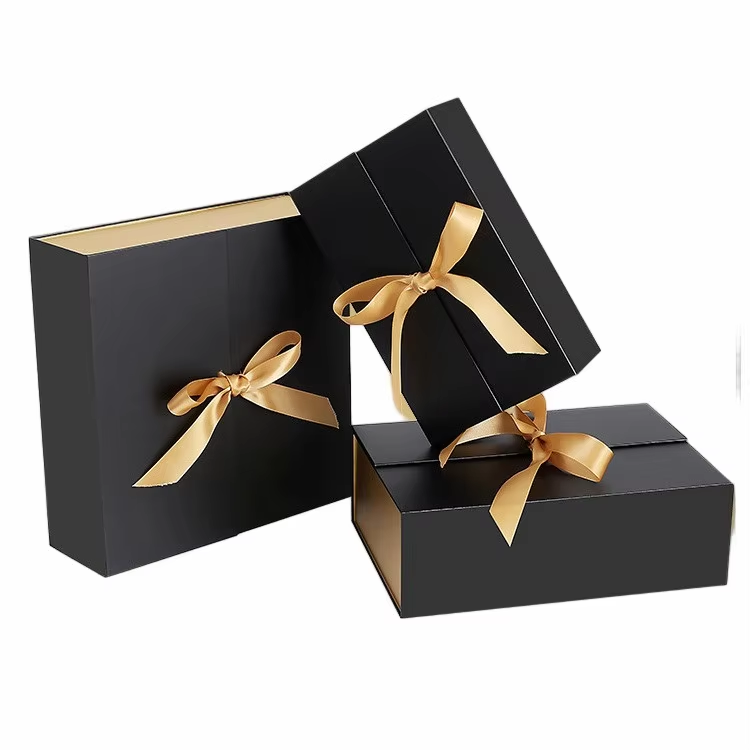
Soft-touch matte lamination with registered foil stamp on foldable gift box.
Surface finishing is the stage of foldable packaging production that transforms a printed box from functional to premium. The choice of surface finish technique — or combination of techniques — determines the gloss level, the tactile quality, the durability of the print surface, and the visual contrast effects available for brand communication. At UGI Packaging, all eight surface finishing techniques are performed in-house within the Guangzhou facility, in a controlled sequence that respects the compatibility requirements between techniques. Foil hot stamping, for example, is always applied after lamination in the UGI Packaging workflow, because attempting to foil stamp over an unlaminated surface produces adhesion failures at a commercially unacceptable rate.
The in-house integration of all surface finishing processes provides UGI Packaging with a quality control advantage that is not achievable when finishing processes are outsourced to specialist subcontractors — each inter-supplier transfer introduces handling risk, schedule uncertainty, and a potential for specification miscommunication that the in-house model eliminates entirely.
8 Surface Finishing Techniques at UGI Packaging
① Gloss Lamination
Gloss level: 85–95 GU (gloss units). A transparent BOPP film thermally bonded to the paper surface produces a high-gloss protective coat that intensifies colour saturation by 15–25% compared to unlaminated print, and protects the printed surface from abrasion and moisture. Standard specification for budget-to-mid-range foldable gift boxes at UGI Packaging. Not compatible with subsequent foil stamping without adhesion primer.
② Matte Lamination
Gloss level: 5–15 GU. A matte BOPP film that eliminates specular reflection and creates a subdued, flat-colour surface appearance. Matte lamination has become the dominant surface finish specification for premium foldable gift boxes at UGI Packaging over the past five years, driven by consumer preference for matte aesthetics in the cosmetics, wellness, and luxury retail categories. Compatible with subsequent foil hot stamping, creating the gloss-metallic-on-matte contrast that is the visual hallmark of contemporary premium packaging.
③ Soft-Touch Coating
Gloss level: 3–8 GU. Surface friction: 0.2–0.35μ. The most tactilely distinctive surface finish in UGI Packaging’s capability range. A water-based coating applied over the printed surface produces a micro-textured finish with a rubber-like tactile quality — smooth, warm, and slightly resistant to the fingertip. Soft-touch coating is the premium tier of the lamination category, applied to foldable boxes intended for the prestige cosmetics, premium spirits, and luxury retail sectors. Highly compatible with foil stamping: the contrast between the velvety soft-touch surface and the hard metallic foil is one of the most effective brand communication techniques available in foldable packaging.
④ Spot UV Coating
Raised height: 0.02–0.05mm. Minimum feature: 1.5mm. A UV-cured varnish applied selectively to specific areas of the box surface — typically over a logo, an image, or a typographic element — creates a localised gloss contrast against the surrounding matte surface. The visual effect is a three-dimensional depth illusion at the point of application, combined with a tactile raised texture detectable at fingertip. Spot UV is registered to the printed artwork at ±0.2mm at UGI Packaging, ensuring consistent alignment between the varnish and the underlying print element.
⑤ Embossing & Debossing
Maximum relief: 1.2mm. A male-female die pair pressed through the paper and board creates a three-dimensional raised (emboss) or recessed (deboss) element in the surface. Unlike foil stamping and spot UV, which are visual effects, embossing and debossing are physical deformations of the material — they are detectable by touch even in complete darkness, which is a qualitative signal of premium manufacturing that no printed effect can replicate. Blind emboss (no ink or foil) on a soft-touch surface is a particularly sophisticated combination that UGI Packaging produces for premium cosmetics and luxury brand packaging.
⑥ Frosted / Satin Coating
Gloss level: 25–45 GU. A mid-range between gloss and matte, the frosted coating produces a satin-like surface sheen with moderate reflection and a slightly warmer colour rendering than matte lamination. Particularly effective on foldable boxes where the design includes a large area of metallic or pearlescent base paper, where a full matte lamination would suppress the substrate’s inherent luminosity. The
Sustainable Packaging Coalition provides guidance on coating recyclability for brands evaluating surface finish environmental credentials.
⑦ Pearlescent / Metallic Coating
Applied as a flood coat over the printed surface, pearlescent and metallic coatings introduce a continuous, angle-dependent shimmer or metallic sheen across the entire box exterior. This technique is particularly effective for foldable packaging aimed at the beauty, fragrance, and festive gifting categories, where the luminous surface creates a premium visual signal on the retail shelf without the registration requirements of spot foil stamping. Metallic coating is applied in gold, silver, rose gold, and bronze standard formulations.
⑧ Interior Velvet Flocking
Pile height: 0.5mm or 1.0mm. 12 standard colours. While technically an interior finishing process rather than an exterior coating, velvet flocking is included in UGI Packaging’s surface finishing capability because it is applied using the same precision coating workflow as exterior treatments. Electrostatically applied short fibres bond to an adhesive-coated interior surface, creating a uniform, soft textile effect that elevates the interior quality of foldable boxes for jewellery, cosmetics, and premium gifting applications.
✅ UGI Packaging Tip: The most commercially effective surface finish combination for premium foldable gift boxes at UGI Packaging is soft-touch matte lamination as the base coat, registered gold or rose gold foil hot stamping for the primary brand mark, and blind embossing for a secondary decorative or structural element. This three-technique combination produces a foldable box that communicates premium quality through vision, touch, and three-dimensional surface relief simultaneously — engaging three of the consumer’s senses at the unboxing moment.
Surface finish selection guidance and compatibility matrix for all UGI Packaging finishing techniques is available through the UGI Packaging surface finish knowledge centre, which documents the technical parameters, substrate compatibility, and visual outcome of each finishing technique with production sample references.
06
Structural Engineering & Die-Cutting Precision
“
Structural engineering for foldable packaging boxes at UGI Packaging encompasses the complete technical workflow from initial dieline design in ArtiosCAD through steel-rule die fabrication, CNC die-cutting at ±0.2mm positional tolerance, and crease line validation — because dimensional accuracy at the structural engineering stage determines whether a foldable box assembles correctly at the fulfilment stage, months and thousands of units after the tooling is first cut.
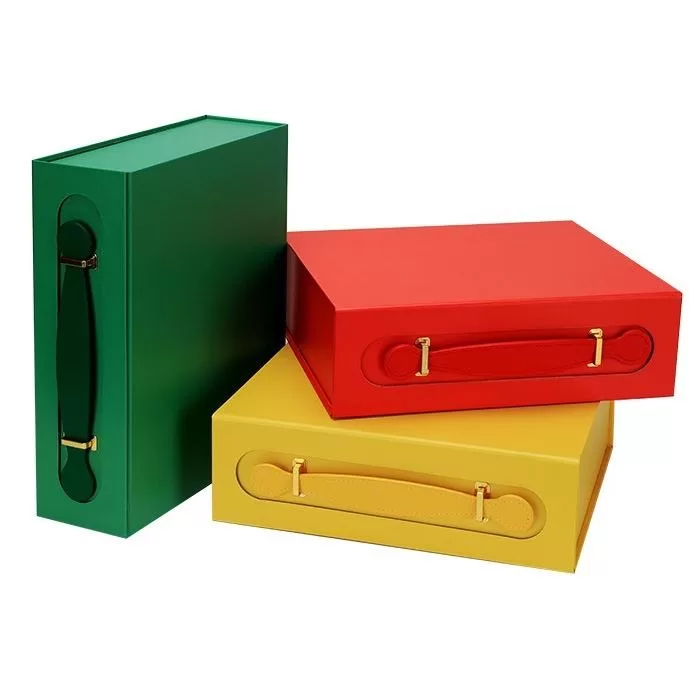
CNC die-cut foldable box blank showing scored crease lines and cut edges.
The structural engineering of a foldable packaging box is not a design activity in the visual sense — it is a mechanical engineering problem. The dieline must specify cut lines, crease lines, perforations, and glue flaps with dimensional precision sufficient to produce a box that assembles to its nominal internal dimensions after accounting for the thickness of the board, the compression at each crease, and the dimensional change introduced by the lamination and finishing processes applied before die-cutting. A dieline that does not account for these material-specific tolerances will produce a box that either gaps at the corners, overrides at the lid, or develops a twist across the base panel — all of which are commercially unacceptable in a premium foldable gift box.
UGI Packaging’s structural engineering department uses ArtiosCAD — the industry standard structural packaging CAD platform used by packaging engineers globally — to develop all dielines for new foldable packaging box designs. The software generates the three-dimensional folded model from the flat dieline, enabling the engineering team to verify panel geometry, lid clearance, and closure mechanism function digitally before any physical tooling is produced. This digital verification step eliminates the most common cause of first-sample failure in new foldable box tooling: dimensional specification errors that are only discovered when the first physical sample is assembled.
Die-Cutting Tooling Specification
Steel-rule dies for foldable packaging box production at UGI Packaging are fabricated from 2mm and 3mm rule heights mounted in 18mm laser-cut plywood boards. The rule height selection is determined by the board thickness and the specific cut or crease requirement: cut rules use a sharpened steel edge to sever the board fibres cleanly; crease rules use a rounded profile to compress and pre-fracture the board fibre structure along a defined line without severing it, creating a controlled fold point. The crease rule profile — its width, height, and tip radius — is specified based on the board caliper and fibre direction to produce a crease that folds cleanly without surface cracking or delamination of the outer paper wrap.
New die tooling at UGI Packaging is produced in 3 to 5 working days for standard rectangular geometries and 4 to 7 working days for complex or specialty shapes with multiple interior cut windows, perforated tear strips, or non-rectangular panel geometries. Die tooling is retained at the factory for repeat orders and is maintained on a scheduled replacement programme — typically after 150,000 to 200,000 impressions for standard packaging board weights — to prevent dimensional drift from tool wear.
Crease Line Engineering
The crease line is the most technically critical element of a foldable packaging box dieline. A correctly specified and executed crease produces a fold that is sharp, consistent, and repeatable across the full production run — and the folded panel lies flat and holds its position in the assembled box without spring-back. An incorrectly specified crease — too narrow, too deep, or incorrectly positioned relative to the box geometry — produces a fold that cracks the outer paper, creates a raised ridge on the exterior face of the panel, or introduces a spring-back force that prevents the box from assembling flat.
UGI Packaging specifies crease lines using a channel-matrix system for higher-caliper boards (above 1.8mm), where a matrix channel bonded to the cutting plate receives the displaced board fibre on the compression side of the crease, preventing fibre buckling. For lower-caliper boards (1.0mm to 1.5mm), male-rule creasing without a matrix channel is standard. The crease channel width is calculated as board caliper × 1.5 for most packaging board grades, adjusted upward for boards with a higher recycled fibre content that exhibit greater resistance to compression creasing.
Structural Engineering Technical Parameters — UGI Packaging
Die-Cut Positional Tolerance
±0.2mm
Design Software
ArtiosCAD + KeyShot 3D
Standard Tooling Lead Time
3–5 working days
Complex Tooling Lead Time
4–7 working days
Die Replacement Cycle
150,000–200,000 impressions
Crease Rule System
Channel-matrix (≥1.8mm board)
Board Caliper Range
1.0mm – 2.5mm greyboard
Tooling Retention Policy
Retained for all repeat orders
The FEFCO (European Federation of Corrugated Board Manufacturers) structural coding system and international packaging standards provide the technical reference framework for structural die-cutting specifications in commercial packaging production. UGI Packaging’s engineering team applies these industry standards as the baseline for all new structural engineering projects.
07
OEM/ODM Design Capability & Project Workflow
“
UGI Packaging’s OEM/ODM capability for foldable packaging boxes covers the full project lifecycle from brief and feasibility review through structural dieline design, 3D photorealistic rendering, physical sample production, and production order management — with OEM sample turnaround of 7 to 10 working days and ODM concept development of 3 to 5 working days before sample production commences.
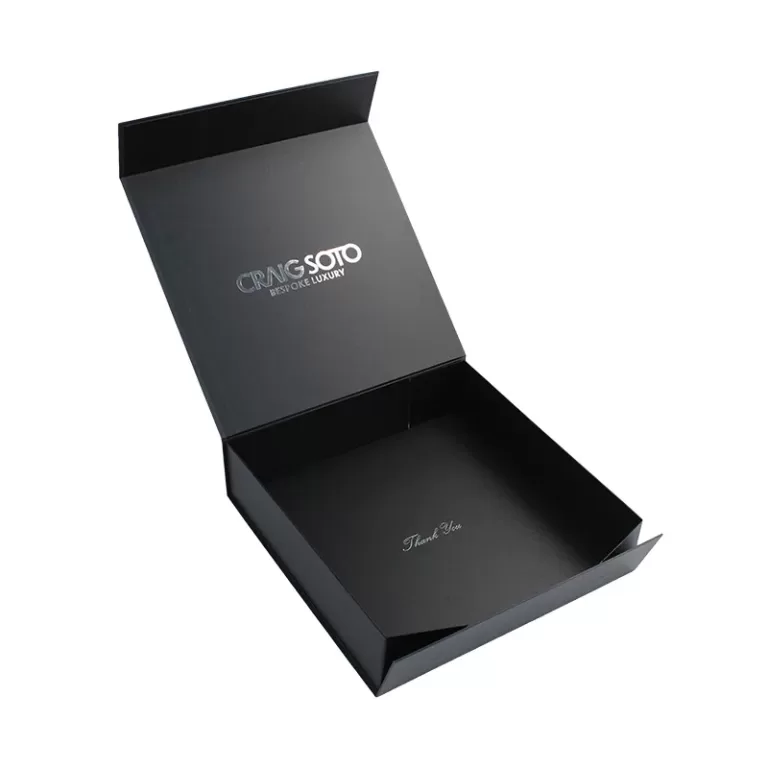
OEM/ODM foldable packaging design: dieline and 3D KeyShot render before physical sample.
UGI Packaging operates two distinct project service models for foldable packaging box clients. The OEM (Original Equipment Manufacturer) model serves clients who arrive with confirmed artwork, a structural specification, and a defined material and finish requirement — the factory’s role is precision manufacturing execution to the client’s specification. The ODM (Original Design Manufacturer) model serves clients who arrive with a product, a brand identity, and a market positioning brief — the factory’s design team develops the structural concept, material specification, and finish combination from this brief, presenting the client with a 3D rendered proposal before any physical production commences.
Both models are available at UGI Packaging with zero minimum order quantity. In practice, the ODM model is increasingly the default for new foldable packaging box projects, as clients at all market levels — from emerging independent brands to established corporate gifting programmes — have recognised that the cost of professional packaging structural design is recoverable within the first production run when the design is developed by engineers who understand the production constraints of the factory that will manufacture it.
7-Step OEM/ODM Project Workflow
1
Brief & Feasibility Review (1–2 working days)
Client provides product dimensions, brand identity reference, target retail price point, and quantity range. UGI Packaging’s project team reviews structural feasibility, recommends the appropriate box structure from the seven available types, and provides a preliminary unit cost estimate at the client’s target quantity. The feasibility review is provided at no charge and with no commitment required from the client.
2
Structural Dieline Design (2–3 working days, ODM only)
For ODM projects, UGI Packaging’s structural engineering team develops the box dieline in ArtiosCAD from the agreed structural specification and product dimensions. The dieline specifies all cut lines, crease lines, glue flaps, and assembly sequences. For OEM projects, the client supplies their own dieline, which is reviewed by UGI Packaging’s engineering team for production compatibility before proceeding.
3
3D Photorealistic Render (2–3 working days, ODM only)
The approved dieline is modelled in KeyShot rendering software with the client’s brand artwork applied, producing a photorealistic 3D image of the assembled box from multiple viewing angles. The render allows the client to evaluate the visual outcome of the design — artwork positioning, colour reproduction, foil placement, and surface finish appearance — before committing to physical sample production. Artwork revisions at this stage carry no additional tooling cost.
4
Physical Sample Production (7–10 working days OEM / 10–14 working days ODM)
Following written project confirmation, UGI Packaging produces a physical sample of the foldable packaging box to the agreed specification. The sample is produced on production-grade materials using production tooling — not on a proofing substrate or with hand-cut tooling — to ensure that the sample accurately represents the production outcome. Sample production includes printing, lamination, surface finishing, die-cutting, and assembly to the final format.
5
Sample Review & Approval
The physical sample is shipped to the client via DHL Express (3–5 working days to UK/US/EU). The client reviews the sample against the agreed specification and provides written approval or a revision request. UGI Packaging accepts up to two rounds of sample revision without additional tooling charge for changes within the original structural specification scope.
6
Production Order & Manufacturing (Lead time per quantity)
Upon receipt of the approved sample sign-off and production deposit, UGI Packaging schedules the production order. Standard production lead times are: 15–20 working days for orders up to 1,000 units; 20–30 working days for orders of 1,000 to 10,000 units; 30–45 working days for orders above 10,000 units. All lead times are calculated from the date of written production confirmation and deposit receipt.
7
Final QC, Packing & Shipment
Completed foldable packaging boxes are inspected under the four-stage quality control pipeline (see Section 08), packed into export-standard master cartons with inner packing protection, and shipped on the agreed Incoterm. UGI Packaging provides a full shipping document set including commercial invoice, packing list, certificate of origin, and — where required — material test reports and FSC chain-of-custody documentation.
Full detail on UGI Packaging’s OEM and ODM service models is available at the UGI Packaging OEM/ODM design centre, including project inquiry forms, design brief templates, and the factory’s 200+ structural pattern reference library.
08
Quality Control: IQC, IPQC & FQC Standards
“
UGI Packaging’s four-stage quality control pipeline — incoming material inspection, in-process quality control, structural performance testing, and 100% final visual inspection — is a documented operational requirement of the factory’s
ISO 9001:2015 certification, not a discretionary process, with pass/fail criteria defined for every measurement parameter and a target final quality control pass rate of 99.5% or above.
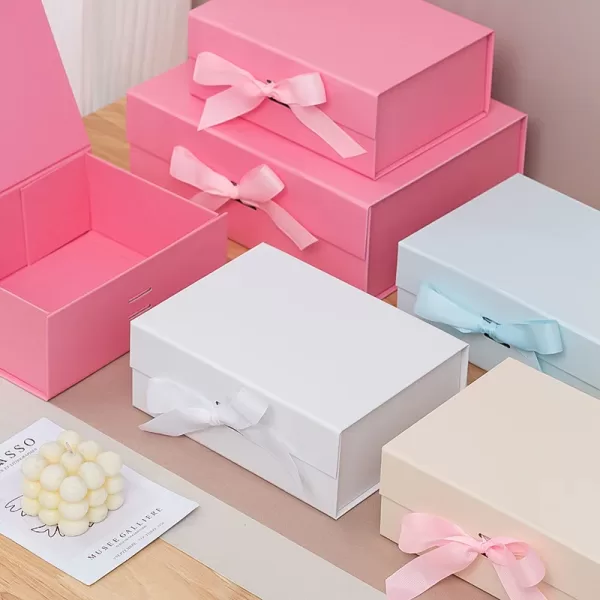
Final quality control inspection of foldable gift boxes under D50 standardised lighting at UGI Packaging.
Quality control in foldable packaging box manufacturing is not reducible to a visual check at the end of the production line. The dimensional accuracy of a foldable box is determined by decisions made at every stage of the production process — greyboard caliper uniformity at the incoming material stage, print registration and lamination adhesion during process production, die-cut dimensional accuracy and crease formation during the cutting stage, and assembly geometry at the final inspection stage. A quality control system that only checks the finished box catches problems after they have propagated through the entire production run. UGI Packaging’s four-stage pipeline intercepts deviations at each production stage, before they can compound.
Stage 1: Incoming Quality Control (IQC)
All materials arriving at UGI Packaging’s production facility are held in quarantine pending IQC clearance. The IQC process covers greyboard caliper measurement (pass criterion ±0.05mm from specification, measured at five points across the sheet), moisture content (pass criterion below 8%, measured with a calibrated resistance moisture meter), paper grammage (pass criterion ±5g/m² from specification, measured gravimetrically on a 1m² sample), and foil roll tension and adhesion for production foil stocks.
Greyboard batches that fail the caliper or moisture criterion are quarantined and returned to the supplier or conditionally released with a production adjustment note that instructs the die-cutting team to recalibrate their crease rule clearance to compensate for the dimensional deviation. This conditional release process — documented within the ISO 9001 non-conformance procedure — allows production to proceed with off-specification material in cases where the deviation is within a range that can be compensated by process adjustment, rather than creating a supply delay.
Stage 2: In-Process Quality Control (IPQC)
IPQC at UGI Packaging is performed at four specific checkpoints within the production workflow: after printing, after lamination and surface finishing, after die-cutting, and after assembly of multi-component structures. At each checkpoint, a sampling inspection is performed against the documented specification for that process stage.
Print IPQC checks include registration verification at ±0.1mm using a loupe and registration target, densitometer measurement of solid ink density against the approved pull proof standard, and visual assessment for hickeys, mottle, and ink starvation artefacts under D50 standardised viewing conditions. Lamination IPQC includes a tape peel adhesion test — a strip of 3M 600 tape applied and removed at 90° must not lift the lamination film from the paper substrate. Die-cut IPQC measures five units from each 1,000-unit production batch for dimensional accuracy against the approved dieline specification at ±0.2mm, using a digital caliper and a registered measurement template.
Stage 3: Structural Performance Testing
UGI Packaging conducts structural performance tests on foldable packaging boxes at two points: during first-article inspection on new tooling (to validate the structural specification before production commences) and on random samples drawn from each production run (to verify that production maintains the structural performance established at first-article). The standard test battery for foldable packaging boxes includes three tests.
Structural Test Battery — UGI Packaging Foldable Boxes
Compression Test
Load: 5kg applied to assembled box lid for 60 seconds. Pass criterion: lid deflection less than 2mm, no permanent deformation of box geometry. Simulates retail display stacking loads on assembled foldable boxes.
Drop Test
Drop height: 600mm onto each of 6 faces and 4 edges (10 drops total). Weight insert replaces actual product. Pass criterion: no structural deformation, no corner separation, no surface finish damage visible at 300mm viewing distance. Simulates warehouse handling and courier transit impacts.
Closure Retention Test
For magnetic closure boxes: minimum pull force 800g measured perpendicular to the closure plane. For tuck-end cartons: tuck flap must resist opening under 500g lateral force. For drawer boxes: sleeve must retain tray under 300g axial force at 45° box orientation.
Stage 4: Final Quality Control (FQC)
FQC at UGI Packaging is a 100% visual inspection of every unit in the production order before packing. The inspection is conducted under D50 5000K standardised lighting at 1,000 lux illuminance, which replicates the retail lighting conditions under which the consumer first views the box — ensuring that any surface finish defect, print artefact, or assembly deviation that is visible in retail conditions is detected and removed from the shipment before packing.
The FQC inspection checklist covers 14 individual assessment criteria, including surface finish uniformity (no lamination bubbles, no coating streaks, no foil adhesion failures), print quality (no hickeys, no registration errors exceeding ±0.2mm, no colour deviation from the approved standard), dimensional accuracy (box length, width, and height within ±0.5mm of specification, measured on 10% of units), assembly quality (no visible corner gaps, no panel warping, magnetic closure alignment within ±1mm), and packaging integrity (no damage to the exterior surface from production handling). UGI Packaging’s FQC pass rate target is 99.5% or above — meaning that no more than 0.5% of units in any production run are removed at FQC for any reason, including minor cosmetic issues that do not affect structural function.
⚠️ UGI Packaging Note: The QC capability summary table below compares all four inspection stages. Scroll horizontally on mobile.
👉 Scroll table left/right to view all columns
| QC Stage |
Timing |
Key Measurement |
Pass Criterion |
Sample Rate |
| IQC (Incoming) |
Before production |
Board caliper, moisture, grammage |
Caliper ±0.05mm, moisture <8% |
Per batch |
| IPQC (In-Process) |
4 checkpoints during production |
Registration, lamination adhesion, die-cut dimension |
Registration ±0.1mm, tape peel pass, die-cut ±0.2mm |
5 units per 1,000 |
| Structural Tests |
First-article + production samples |
Compression, drop, closure retention |
<2mm deflection, no damage, 800g+ closure |
First-article + random |
| FQC (Final) |
Before packing |
14-point visual + dimensional check |
Dimension ±0.5mm, pass rate ≥99.5% |
100% of units |
IQC (Incoming)
Before production · Caliper ±0.05mm, moisture <8% · Per batch
IPQC (In-Process)
4 checkpoints · Registration ±0.1mm, tape peel pass · 5 units per 1,000
Structural Tests
First-article + random · Compression, drop, closure · <2mm deflection
FQC (Final)
100% units · 14-point visual check · Pass rate ≥99.5%
Related Resources
→
Gift Packaging Product Range — UGI Packaging’s complete gift packaging catalogue including rigid boxes, wine packaging, foldable boxes, and accessory gift sets.
→
Surface Finish Technical Guide — Technical parameters and visual outcomes for all 8 surface finishing techniques used in UGI Packaging’s foldable and rigid box production.
→
Printing Techniques Knowledge Centre — Technical documentation for offset lithographic, screen, foil hot stamping, and digital printing as applied in packaging production at UGI Packaging.
→
Packaging Box Design Guide — Structural design principles, dieline engineering, and 3D render workflow for custom foldable and rigid packaging box design projects.
→
Packaging Materials Reference — Greyboard grades, paperboard specifications, specialty paper options, and interior lining materials used across all UGI Packaging product categories.
Frequently Asked Questions: Custom Foldable Packaging Boxes
Q: What is the minimum order quantity for custom foldable packaging boxes at UGI Packaging?
UGI Packaging operates a zero minimum order quantity (zero MOQ) policy for custom foldable packaging boxes across all seven structural types — collapsible rigid magnetic boxes, drawer sleeve and tray boxes, shoulder boxes, tuck-end cartons, hexagonal and specialty shape boxes, multi-compartment gift boxes, and foldable carry boxes. This policy applies to both OEM projects (client-supplied artwork and specification) and ODM projects (UGI Packaging design from brief). Single-unit sample orders are accepted. Production order quantities at UGI Packaging typically range from 50 to 10,000+ units, with unit pricing adjusted at standard volume break points.
Q: How long does it take to produce a custom foldable packaging box sample from UGI Packaging?
UGI Packaging’s sample production lead time for custom foldable packaging boxes is 7 to 10 working days for OEM projects (where the client provides a confirmed artwork file and structural specification) and 10 to 14 working days for ODM projects (where UGI Packaging’s design team develops the structural dieline and 3D render from the client’s brief before physical sample production commences). Both lead times are measured from the date of written project confirmation. Samples are shipped via DHL Express, with transit time of approximately 3 to 5 working days to UK, US, and EU destinations.
Q: What greyboard thickness does UGI Packaging use for premium foldable gift boxes?
UGI Packaging specifies greyboard in the range of 1.0mm to 2.5mm for foldable packaging box production. For premium foldable gift boxes — including collapsible rigid magnetic snap boxes and shoulder boxes intended for the cosmetics, jewellery, and luxury retail categories — the standard specification is 2.0mm to 2.5mm greyboard, which provides the structural rigidity and tactile weight that signal premium quality at the consumer’s first handling. Mid-weight applications such as apparel and food gift boxes typically use 1.5mm to 1.8mm greyboard. The appropriate board caliper for a specific application is confirmed during the project feasibility review at UGI Packaging, based on the product weight, intended use, and retail positioning provided by the client.
Q: Can UGI Packaging produce foldable packaging boxes with FSC-certified materials?
Yes. UGI Packaging offers FSC-certified greyboard and FSC-certified paper substrates for all foldable packaging box structures, with FSC chain-of-custody documentation provided on request. FSC-certified materials are available at a small cost premium over standard equivalent grades — typically 5% to 12% depending on the board grade and order volume. For clients with specific supply chain sustainability commitments or retail partner ESG requirements, UGI Packaging’s materials team advises on the most cost-effective FSC material specification that meets the project’s structural and aesthetic requirements. Natural kraft paper in the unbleached and recycled kraft categories is supplied as FSC-certified as a standard specification at UGI Packaging.
Q: What surface finish combination does UGI Packaging recommend for premium foldable gift boxes?
UGI Packaging’s most commercially effective surface finish specification for premium foldable gift boxes is a three-technique combination: soft-touch matte lamination applied as a flood coat over the offset-printed exterior surface, registered gold or rose gold foil hot stamping applied over the lamination for the primary brand mark and typographic elements, and blind embossing applied to secondary decorative or structural elements. This combination engages the consumer’s visual and tactile senses simultaneously — the soft-touch surface provides an immediate premium tactile signal at first handling, the foil stamp delivers metallic visual contrast and reflected light, and the embossed element adds three-dimensional surface relief. All three finishing techniques are performed in-house at UGI Packaging’s Guangzhou facility within the same production workflow.
Q: Does UGI Packaging produce foldable packaging boxes for e-commerce fulfilment applications?
Yes. UGI Packaging manufactures foldable packaging boxes specifically engineered for e-commerce fulfilment, where the structural requirements are different from retail shelf packaging. E-commerce foldable boxes must survive courier transit without a secondary outer shipping carton, which requires a higher-weight greyboard specification (typically 2.0mm to 2.5mm), reinforced corner construction, and a closure mechanism that holds securely under the dynamic loads imposed by parcel sorting and delivery. UGI Packaging’s structural engineering team conducts drop testing at 600mm on all e-commerce foldable box designs as part of first-article validation. The collapsible rigid magnetic box and the foldable carry box with reinforced handle are the two most specified structures for premium direct-to-consumer e-commerce gifting applications at UGI Packaging.
Q: What file formats does UGI Packaging accept for artwork submission?
UGI Packaging’s pre-press team accepts artwork in the following formats: Adobe Illustrator (.ai), Adobe InDesign (.indd), EPS vector, high-resolution PDF (PDF/X-1a or PDF/X-4 preferred), and high-resolution TIFF at 300dpi minimum at final print size. Artwork should be supplied with all fonts converted to outlines and all linked images embedded. Colour mode should be CMYK for offset lithographic printing; Pantone (PMS) spot colour values should be specified for all brand colours requiring precise colour matching. UGI Packaging’s pre-press team provides a free artwork preflight check and a PDF soft proof for client approval before production commences. Clients who do not have production-ready artwork can request ODM design service from UGI Packaging’s in-house design team.
Q: Can UGI Packaging produce multi-compartment foldable boxes for cosmetics gift sets?
Yes. Multi-compartment foldable gift boxes for cosmetics gift sets are one of UGI Packaging’s most frequently produced configurations. UGI Packaging engineers the compartment system using either fixed die-cut internal dividers formed from the same paperboard blank as the outer box (for a unified structural approach), or removable EVA foam or paper pulp insert trays sized to hold individual products in defined positions (for configurations where the same outer box is used with different product combinations). Interior surfaces are available in velvet flocking, satin fabric, or printed paper liner. UGI Packaging has produced multi-compartment foldable gift boxes for cosmetics, skincare, fragrance, and corporate gifting clients with product counts ranging from 2 to 12 items per box.
Q: What quality certifications does UGI Packaging hold for foldable packaging box production?
UGI Packaging’s Guangzhou manufacturing facility is certified to ISO 9001:2015 for quality management systems, which covers all production processes including incoming material inspection (IQC), in-process quality control (IPQC), structural performance testing, and 100% final visual inspection (FQC). The ISO 9001:2015 certification requires documented pass/fail criteria for every production measurement parameter, a non-conformance management procedure for out-of-specification materials and production results, and periodic third-party audit of the quality management system. UGI Packaging targets a final quality control pass rate of 99.5% or above across all foldable packaging box production. Copies of the ISO 9001:2015 certificate are available on request for procurement compliance purposes.
Q: How does UGI Packaging price custom foldable packaging box orders?
UGI Packaging provides itemised quotations for custom foldable packaging box orders based on the confirmed structural specification, material grade, print process, surface finishing requirement, and order quantity. The quotation is calculated per unit at the specified quantity, with standard volume price break points at 100, 500, 1,000, 5,000, and 10,000 units. Quotations are provided free of charge and without commitment within 24 to 48 hours of receiving a complete specification enquiry. Sample costs are charged separately from production orders; UGI Packaging applies a sample credit — the full sample cost deducted from the first production order invoice — for clients who proceed to production within 90 days of sample approval. To request a quotation, contact UGI Packaging at
[email protected] or via WhatsApp at +44 7783 771295.
Ready to Source Custom Foldable Packaging Boxes?
UGI Packaging (ukugi.com) manufactures 7 foldable packaging box structures from a single ISO 9001:2015 certified factory in Guangzhou — with full OEM/ODM capability, zero MOQ, 7–10 day sample turnaround, and free feasibility review for all new enquiries.
Send your product dimensions, brand brief, and quantity target to receive a same-day feasibility response and preliminary unit cost estimate from UGI Packaging’s project team.
📱 WhatsApp: +44 7783 771295
✉️ Email: [email protected]
📍 Guangzhou, China (Worldwide Shipping)