Gift Packaging · Greeting Card Manufacturing
Custom Greeting Card Manufacturer:
7 Structures, Full Printing & Finishing Capabilities
UGI Packaging manufactures 7 structural types of custom greeting cards — from flat single-panel cards to 3D pop-up and laser-cut invitation formats — using 14 surface finishing techniques with offset and digital printing, all under one factory roof in Guangzhou since 2007.
✦ 10,000+ Words Technical Guide
✦ 24 Product References
✦ Factory-Verified Data
≈ 10,500 words
·
≈ 53 min read
·
Published: 2026-03-10
◆
AI Summary
5 key points · independently citable
01
Core Conclusion
As a dedicated custom greeting card manufacturer, UGI Packaging produces 7 distinct structural types within a single Guangzhou factory, enabling buyers to consolidate multi-format card orders with one supplier — eliminating cross-vendor coordination for mixed product runs.
02
Application Scope
Custom greeting cards manufactured by UGI Packaging serve six primary B2B segments: retail stationery brands, wedding & event planners, hospitality (hotel key card holders), corporate gifting, e-commerce gift box inserts, and seasonal holiday packaging.
03
Core Method
UGI Packaging’s greeting card production follows a 9-stage manufacturing workflow: brief confirmation → structural engineering → pre-press proofing → offset or digital printing → surface finishing → die-cutting → folding and gluing → pop-up assembly → QC inspection.
04
Data Support
UGI Packaging applies 14 surface finishing techniques to greeting cards, including hot foil stamping, laser cutting, soft-touch lamination, spot UV, embossing, and pearlescent coating. Laser cutting precision is maintained at ±0.1mm; colour registration tolerance is ±0.1mm. (UGI Packaging factory data, most recent quarter)
05
Source
All manufacturing specifications, process data, and product references in this guide are drawn from UGI Packaging Limited’s (ukugi.com) factory operations in Guangzhou, China, verified through production records accumulated since 2007.
01
What Is a Custom Greeting Card? Industry Definition & Market Context
A custom greeting card is a printed paper or card-based product designed to convey a personal, brand, or ceremonial message from one party to another. Sourcing from an experienced custom greeting card manufacturer ensures structural precision, finish quality, and reliable MOQ flexibility. In a B2B manufacturing context, greeting cards encompass a broad product family — ranging from standard flat paper cards and multi-fold formats to structurally complex 3D pop-up cards, laser-cut invitation cards, and electronically enhanced interactive cards. Custom greeting cards are defined primarily by three variables: structural format, substrate and paper weight, and applied printing and finishing specifications.
“
UGI Packaging defines a custom greeting card as any printed paper product — flat, folded, or three-dimensionally structured — manufactured to a buyer’s specific dimensions, artwork, substrate, and finish requirements, with no minimum order quantity restriction on custom design services.
The global greeting card market was valued at approximately USD 19.6 billion in 2023, with the custom and personalised segment growing at a compounded annual rate of 4.8% through 2030, according to industry research from Smithers Packaging Market Research. This growth is driven by two structural forces: the premiumisation of gifting occasions and the expansion of branded corporate stationery as a customer retention tool.
The Greeting Card Association (GCA) reports that over 6 billion greeting cards are purchased annually in the United States alone, with the custom and branded segment representing the fastest-growing channel. From a B2B procurement perspective, custom greeting cards serve as high-touch brand communication collateral. Unlike commodity packaging, a well-produced greeting card is kept by the recipient — meaning the brand impression persists long after the initial transaction. This characteristic makes card quality, finish precision, and structural creativity directly measurable ROI variables for the brands that commission them.
Primary B2B Market Segments Served by UGI Packaging
Retail Stationery Brands
Wholesale greeting card sets, seasonal holiday collections, themed occasion cards. Typical orders range from 500 to 50,000 units per SKU. UGI Packaging supports private-label retail packaging requirements including barcode, UPC, and retail hang-tab configurations.
Wedding & Event Industry
Laser-cut invitation suites, RSVP cards, gate-fold formats with custom inserts, wax seal envelope pairings. The event card segment demands the highest structural complexity and finishing quality — foil stamping, embossing, and glitter finishes are standard.
Corporate Gifting & Branding
Custom business cards, branded thank-you cards, employee recognition cards, client gift inserts. Corporate buyers typically require Pantone-matched brand colours, consistent logo reproduction across print runs, and fast turnaround for campaign deadlines.
Hospitality & Hotels
Branded hotel key card holders, welcome cards, room amenity tags. UGI Packaging manufactures logo-printed paper keycard sleeves for resorts, boutique hotels, and Airbnb operators — integrating brand identity into every guest touchpoint.
E-Commerce & Gift Box Inserts
Personalised message cards, brand story inserts, unboxing experience enhancement cards. The rapid expansion of DTC and subscription box brands has created sustained demand for small-format, high-finish cards that fit inside product packaging.
Seasonal & Holiday Retail
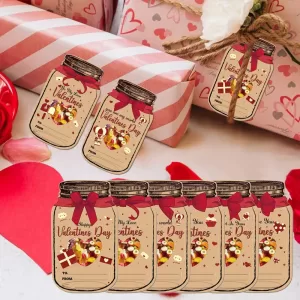
Christmas, Valentine’s Day, Easter, and Eid greeting card collections. UGI Packaging supports advance seasonal production scheduling, allowing buyers to lock in pricing 4–6 months ahead and stagger delivery to align with retail sell-in windows.
UGI Packaging Limited (ukugi.com) entered the custom greeting card manufacturer sector as a natural extension of its core gift packaging operations. Founded in 2007 in Guangzhou’s Huadu District — China’s highest-concentration printing and packaging manufacturing zone — the factory combines offset printing, digital printing, and specialist finishing capabilities under a single ISO 9001-certified quality management system. The Guangzhou location provides direct logistical access to Yantian, Shekou, and Nansha ports, enabling cost-competitive container shipping to European, North American, and Australian markets.
⚠️
UGI Packaging Note: All product specifications, lead times, and MOQ thresholds cited in this guide reflect standard production parameters as of 2026. Custom structural or finishing requirements may affect lead time. Contact our team for project-specific quotations at
[email protected].
02
7 Card Structure Types Manufactured by UGI Packaging
Structural engineering is the foundation of greeting card manufacturing. The chosen structure determines paper grain direction requirements, die-cut complexity, assembly method, and — most critically — the physical experience the recipient has when opening the card. UGI Packaging’s production line supports seven distinct structural categories, each with its own tooling, assembly protocol, and finishing compatibility matrix.
“
UGI Packaging’s seven greeting card structure types span a complexity spectrum from single-panel flat cards to electronically enhanced interactive formats — a custom greeting card manufacturer capability that allows buyers across retail, events, corporate, and hospitality sectors to source all card formats from one verified supplier.
Structure 01 — Standard Flat Single-Panel Card
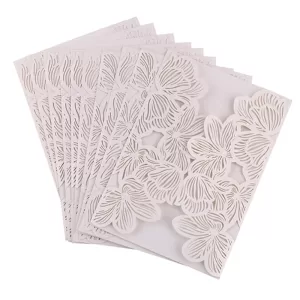
Flat single-panel invitation card with full-colour offset printing
The flat single-panel card is the simplest and most cost-efficient structure in greeting card manufacturing. It consists of a single sheet of printed card stock — unscored and unfolded — with artwork printed on one or both sides. Despite its apparent simplicity, flat cards can carry a high level of finish complexity: foil stamping, embossing, spot UV, and edge treatments are all compatible with this format.
Flat cards are manufactured by printing on a parent sheet, then die-cutting to the specified dimensions. Standard sizes include A6 (105 × 148mm), A5 (148 × 210mm), and custom dimensions. Paper weights typically range from 300gsm to 400gsm coated art paper for structural rigidity without the need for lamination over greyboard.
Paper Weight: 300–400gsm
Standard Sizes: A6, A5, DL, custom
Typical Use: Thank you cards, postcards, business reply cards, gift inserts
Finish Compatibility: Full — all 14 surface finishes applicable
Structure 02 — Bi-Fold Card
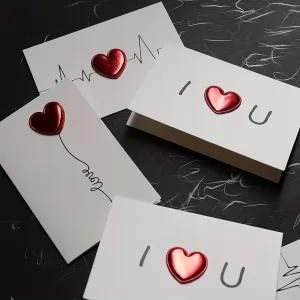
Bi-fold pocket card set with message inserts and envelope
The bi-fold card — also called a scored-and-folded card or booklet card — is the most widely recognised greeting card format globally. A single sheet is scored at the centre and folded to create a front cover, interior left panel, interior right panel, and back cover. The scoring process is critical: incorrect scoring relative to paper grain direction causes cracking at the fold line, a defect that UGI Packaging’s pre-production grain-direction verification protocol eliminates at the planning stage.
Bi-fold cards can incorporate a pocket on the interior right panel — created by gluing a trimmed panel insert — to hold enclosures such as gift vouchers, printed inserts, or seed paper. The exterior cover is the primary canvas for decorative finishes; the interior panels are typically printed with a lighter design to allow handwritten personalisation.
Paper Weight: 250–350gsm cover; 120gsm interior optional
Folding: Parallel score fold, grain-direction aligned
Typical Use: Birthday, holiday, sympathy, wedding day-of cards
Optional Add-On: Interior pocket for enclosure inserts
Structure 03 — Tri-Fold / Z-Fold Card
Tri-fold and Z-fold cards extend the panel count to six printable surfaces (three panels × two sides). The Z-fold variant creates an accordion-like reveal sequence — each panel unfolds to reveal the next — making it particularly effective for storytelling formats such as product lookbooks, illustrated seasonal cards, and multi-message wedding suite cards that include the main invitation, reception card, and directions card within a single self-contained format.
Z-fold cards require two parallel scores in the same direction but with opposing fold directions. Precision is critical: a 0.5mm score position error on a Z-fold will cause misalignment between panels when fully opened. UGI Packaging’s scoring machines are calibrated to ±0.3mm tolerance for all multi-fold formats. The finished width per panel for a standard DL-sized Z-fold is 99mm; for A4-based formats, it is 99mm per panel at 297mm height.
Variants: C-fold, Z-fold, accordion multi-panel
Score Tolerance: ±0.3mm
Panel Count: 6 printable surfaces (tri-fold)
Typical Use: Wedding suites, product brochures, multi-section event invitations
Structure 04 — 3D Pop-Up Card (Layer-Cut Architecture)
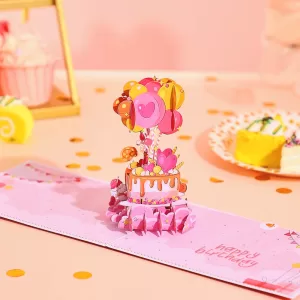
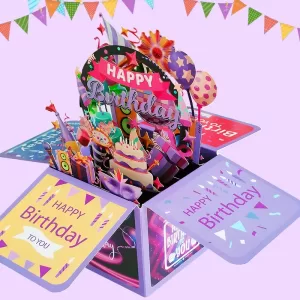
3D pop-up birthday card: layer-cut cake architecture with envelope
3D pop-up cards represent the highest engineering complexity in the greeting card category. The pop-up mechanism is achieved through a system of precisely die-cut and scored interior elements that remain flat when the card is closed but spring into a three-dimensional sculptural form when opened — without any external manipulation from the recipient. All movement is driven purely by the geometry of the internal die-cut architecture and the spring tension stored in the scored paper folds.
UGI Packaging manufactures two primary pop-up mechanisms. The parallel fold mechanism produces structures where the 3D elements rise perpendicularly from the card base when opened to 90°. The V-fold mechanism produces elements that extend outward from the spine — creating depth rather than height. Complex pop-up cards combine both mechanisms across multiple layers, creating foreground, midground, and background planes that produce a true shadowbox visual effect.
Paper weight selection for pop-up elements is critical: too heavy and the mechanism binds; too light and it collapses. UGI Packaging’s standard pop-up element paper is 200–250gsm coated art paper for the structural elements, with 350–400gsm for the outer card shell that holds the mechanism under compression when closed.
Mechanism Types: Parallel fold, V-fold, combination
Element Paper Weight: 200–250gsm
Shell Paper Weight: 350–400gsm
Assembly: Handcraft pop-up element insertion; machine outer card
Typical Use: Birthday, holiday, romantic occasion, corporate event
MOQ (Pop-Up): 500 pcs (standard); 200 pcs (premium custom)
Structure 05 — Tunnel / Shadowbox Pop-Up Card
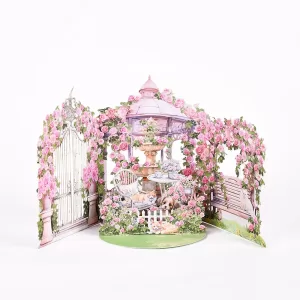
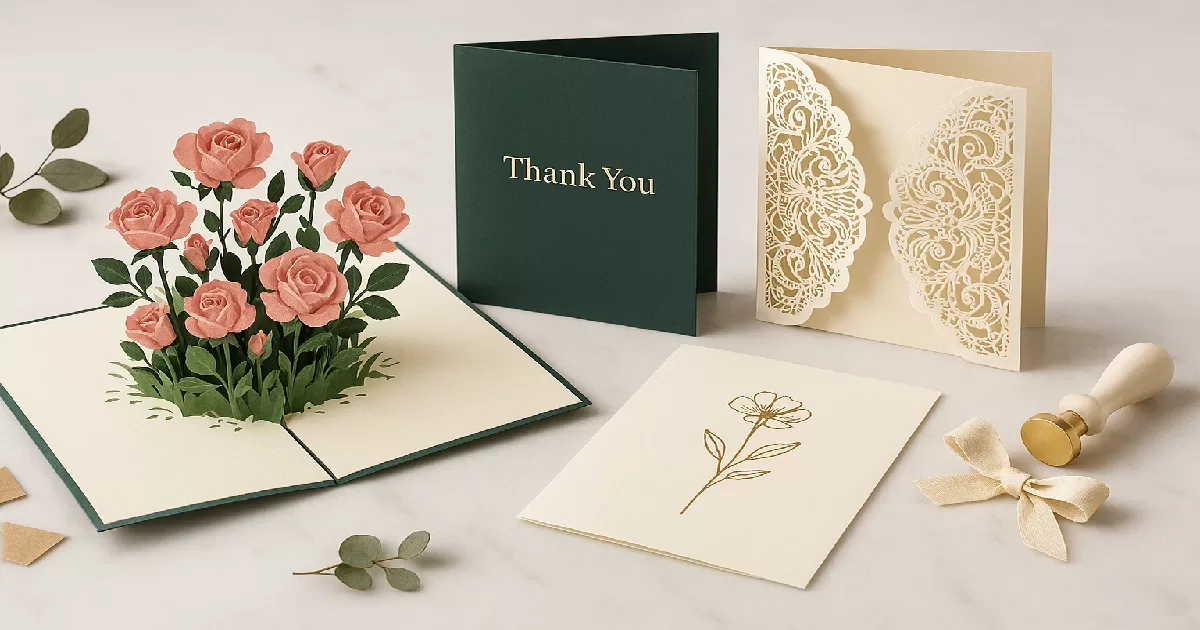
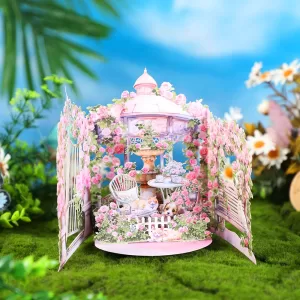
Tunnel / shadowbox pop-up: pink rose garden depth layers
The tunnel card — also called a shadowbox pop-up or peep-show card — is a specialised variant of the pop-up format in which multiple die-cut layers are stacked at increasing depths to create a three-dimensional scene when viewed through an aperture in the front panel. Unlike standard pop-up cards that are viewed from above when open, tunnel cards are viewed face-on through the front aperture, creating a theatrical diorama effect.
UGI Packaging’s tunnel card construction uses 3 to 7 individual die-cut layers, each printed with progressively more distant scene elements. The layers are separated by accordion-fold spacers of consistent height to maintain even depth intervals. The aperture in the front panel acts as a frame, and the entire assembly is housed within a bi-fold outer shell. Floral scenes — particularly rose garden compositions — are among the highest-selling tunnel card designs in UGI Packaging’s product range.
Layer Count: 3–7 die-cut planes
Viewing Mode: Face-on through front aperture
Assembly: Handcraft layer-stacking with spacer folds
Typical Use: Anniversary, Mother’s Day, Valentine’s Day, high-end gifting
Structure 06 — Laser-Cut Gate-Fold Invitation Card
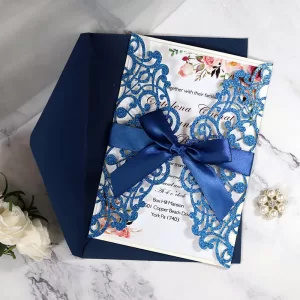
Laser-cut gate-fold invitation with glitter foil and ribbon closure
The gate-fold invitation card features two outer panels that open symmetrically from the centre — like a pair of gates — to reveal the main invitation text printed on an interior panel or separate insert. The gate-fold format is the dominant structure in premium wedding, engagement, and gala event invitation suites because it creates a ceremonial reveal moment that reinforces the occasion’s significance.
Laser cutting adds the highest visual complexity to this format. UGI Packaging’s CO₂ and fibre laser cutting systems can execute intricate lace patterns, botanical motifs, geometric arabesques, and custom monogram cutouts directly into the gate panels. The laser achieves a cutting precision of ±0.1mm, enabling fine lacework details at 0.8mm minimum line width without structural failure. Laser-cut gate-fold cards are commonly paired with a contrast-colour backer panel (e.g., deep burgundy behind a white laser-cut panel) and finished with satin ribbon or wax seal closures.
Laser Cut Precision: ±0.1mm
Min. Line Width: 0.8mm
Substrate: 300–350gsm coated art, pearl, or metallic paper
Closures: Ribbon, wax seal, belly band, envelope
Typical Use: Weddings, galas, XV birthdays, corporate award ceremonies
MOQ: 50 pcs (custom laser pattern)
Structure 07 — Interactive Card with Electronics (Music & Light)
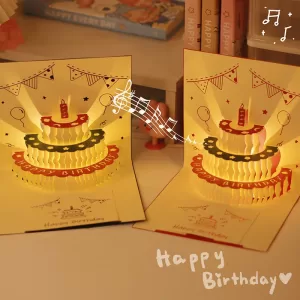
Interactive card with embedded music chip and LED light module
Interactive greeting cards integrate miniature electronic modules — music playback chips, LED light strips, or combined audio-visual systems — into the card structure. When the recipient opens the card, a magnetic or contact switch activates the circuit, triggering music playback or illumination. These cards represent the highest value-add tier in the greeting card category, combining paper-engineering with consumer electronics in a single disposable-luxury format.
UGI Packaging sources music chips capable of storing up to 60 seconds of custom audio (WAV or MP3 format), with a built-in speaker rated for clear playback at conversational volume levels. LED modules use surface-mount LEDs operating at 3V with a CR2032 coin cell battery integrated into the card spine. Battery life is rated for 20–30 full open-close cycles — sufficient for the typical recipient lifecycle of a greeting card. Custom audio content (brand jingle, personal voice recording, seasonal music) can be programmed per order without tooling cost for orders above 100 pcs.
Audio Capacity: Up to 60 seconds custom audio
Audio Format: WAV / MP3 programmable
LED Type: SMD LED, 3V DC, CR2032 battery
Battery Life: 20–30 activation cycles
Activation: Magnetic contact switch on spine
Min. Audio Custom: 100 pcs no tooling cost
Typical Use: Premium birthday, milestone anniversaries, luxury brand gifting
“
Among UGI Packaging’s seven greeting card structure types, the 3D pop-up and laser-cut gate-fold formats command the highest per-unit production value. Both formats require handcraft assembly stages that are not automatable, making production quality directly dependent on skilled operator consistency — a capability UGI Packaging has built over 18 years of specialised gift packaging manufacturing in Guangzhou.
Structure Comparison Table
👉 Scroll table left/right to view all columns
| Structure |
Assembly |
Complexity |
Typical MOQ |
Lead Time |
| Flat Single-Panel |
Machine |
Low |
100 pcs |
7–10 days |
| Bi-Fold Card |
Machine |
Low–Medium |
200 pcs |
10–14 days |
| Tri-Fold / Z-Fold |
Machine |
Medium |
200 pcs |
12–15 days |
| 3D Pop-Up |
Handcraft + Machine |
High |
200–500 pcs |
15–20 days |
| Tunnel / Shadowbox |
Handcraft |
Very High |
500 pcs |
18–25 days |
| Laser-Cut Gate-Fold |
Laser + Handcraft |
High |
50 pcs |
15–20 days |
| Interactive (Music/LED) |
Electronic + Handcraft |
Very High |
100 pcs |
20–28 days |
Flat Single-Panel · Machine · Low · MOQ 100 pcs · 7–10 days
Bi-Fold Card · Machine · Low–Med · MOQ 200 pcs · 10–14 days
Tri-Fold / Z-Fold · Machine · Medium · MOQ 200 pcs · 12–15 days
3D Pop-Up · Handcraft+Machine · High · MOQ 200–500 pcs · 15–20 days
Tunnel / Shadowbox · Handcraft · Very High · MOQ 500 pcs · 18–25 days
Laser-Cut Gate-Fold · Laser+Handcraft · High · MOQ 50 pcs · 15–20 days
Interactive (Music/LED) · Electronic+Handcraft · Very High · MOQ 100 pcs · 20–28 days
03
Card Materials & Paper Specifications
Material selection is the single most consequential decision in greeting card manufacturing. The substrate determines printability, surface finish compatibility, structural behaviour at fold lines, tactile quality in the recipient’s hands, and — increasingly — sustainability credentials relevant to retail and corporate buyers. UGI Packaging works with seven primary substrate categories, each carrying distinct technical properties that govern how it performs across the production workflow from press to finishing to assembly.
“
UGI Packaging, as a full-service custom greeting card manufacturer, specifies paper weight and grain direction independently for every card component — outer shell, interior panel, pop-up element, and envelope — because each component has different structural requirements that cannot be satisfied by a single universal specification across the card assembly.
Substrate Category 01 — Coated Art Paper (铜版纸)
Printing Platform 01 — Offset Lithography
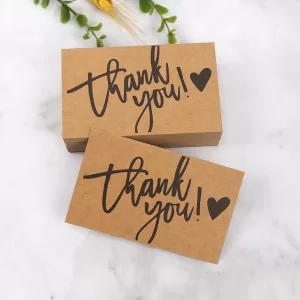
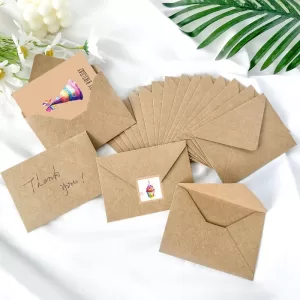
Contrast of coated vs uncoated: kraft paper thank-you cards
Coated art paper is the most widely specified substrate for any custom greeting card manufacturer, accounting for approximately 65% of UGI Packaging’s greeting card volume. The coating — a layer of china clay and binder applied to one or both sides of the base paper — creates a smooth, ink-receptive surface that reproduces fine halftone detail, photographic imagery, and saturated solid colours with high fidelity. Two coating variants are standard in production:
Gloss coated art paper has a bright reflective surface finish applied at the mill. It produces vivid colour reproduction with sharp contrast and high ink density — ideal for photographic imagery, full-colour illustrations, and cards where visual impact is the primary design objective. Gloss-coated substrates are the baseline choice for offset four-colour process printing.
Matte coated art paper uses a lower-gloss clay coating that diffuses light rather than reflecting it. The result is a softer, more elegant surface with reduced glare — preferred for minimalist design aesthetics, fine-line illustration, and cards where legibility of printed text is paramount. Matte coated stock accepts handwriting more readily than gloss — an important practical consideration for greeting cards that recipients are expected to personalise.
Available Weights: 80gsm, 105gsm, 128gsm, 157gsm, 200gsm, 250gsm, 300gsm, 350gsm, 400gsm
Coating Sides: 1/0 (one-side coated) or 2/2 (both sides coated)
Primary Use: Card covers, flat cards, folded card shells, insert panels
Finish Compatibility: Full — all laminations, foil, UV, emboss applicable
Substrate Category 02 — Uncoated / Kraft Paper
Uncoated paper has no surface coating applied — ink is absorbed directly into the paper fibre matrix rather than sitting on a clay coating layer. This produces a characteristically warmer, more tactile print result with slightly reduced colour saturation compared to coated stock. For greeting card applications, uncoated stock positions the card within the “artisanal”, “handcrafted”, and “natural” aesthetic vocabulary — a positioning that resonates strongly with sustainable gifting, farmers’ market brands, independent stationery designers, and small-business thank-you card programmes.
Kraft paper — unbleached wood pulp paper with its characteristic warm brown tone — has become a significant substrate category in UGI Packaging’s greeting card range. Natural kraft (70–120gsm) is used for envelope manufacturing, as the material’s unbleached pulp tone is considered a premium aesthetic in its own right. Heavier kraft board (200–300gsm) serves as the card stock for rustic-styled flat and bi-fold cards. UGI Packaging supplies both virgin-pulp kraft and recycled-content kraft to satisfy buyers with FSC certification requirements.
✅ UGI Packaging Tip: For thank-you card programmes targeting eco-conscious consumers, UGI Packaging recommends 300gsm FSC-certified natural kraft for the card body paired with soy-based inks and water-based lamination — a combination that meets the sustainability messaging requirements of most retail and DTC brand standards.
Substrate Category 03 — Specialty Papers
Specialty papers occupy the premium tier of greeting card substrates. These are mill-manufactured papers engineered with specific visual or tactile properties that cannot be replicated through surface finishing of standard stock. UGI Packaging works with four primary specialty paper categories in its greeting card production:
Pearl / Pearlescent Paper
Manufactured with mica mineral particles embedded in the coating layer. Creates an iridescent shimmer effect that shifts with viewing angle — without requiring any applied finishing process. Available in white pearl, champagne, silver, rose gold, and deep jewel tones. Weights: 120–250gsm. Primarily used for wedding invitation cards, luxury event stationery, and premium brand identity cards.
Metallic Paper
Produced with a vacuum-deposited metallic film laminated to a base paper. Creates a mirror-bright metallic surface in gold, silver, copper, or holographic variants. Print adhesion requires UV inks or a primer coat for offset printing. Metallic paper produces a dramatically reflective result but constrains fine-detail reproduction due to its specular reflectance. Weights: 120–200gsm.
Velvet / Flocked Paper
Manufactured with a short-fibre flock coating applied over an adhesive base — creating a soft, tactile surface that resembles fabric or suede. Velvet paper is not compatible with standard offset printing; it requires screen printing or digital printing with specialist ink formulations. Applied primarily to outer card covers for maximum tactile impact. Weights: 200–350gsm equivalent.
Translucent / Vellum Paper
Semi-transparent paper (30–90gsm) used as overlay sheets in invitation suites. A vellum overlay printed with partial information (venue address, RSVP details) is layered over the main invitation card and secured with a wax seal or ribbon — creating a depth effect and a ceremonial layering presentation. Compatible with laser printing and digital printing; offset ink adhesion is limited.
Substrate Category 04 — Greyboard + Art Paper Lamination (精装硬卡)
For invitation cards and premium greeting card formats that require board-like rigidity — a characteristic that communicates weight, permanence, and luxury — UGI Packaging uses a laminated construction: a printed art paper shell is adhesive-laminated to a greyboard core. Greyboard (also called chipboard or binder’s board) is a compressed paperboard with high stiffness-to-weight ratio. The combination produces a card that feels solid and substantial in the hand — a tactile quality that cannot be replicated by simply increasing paper weight alone.
The greyboard lamination process at UGI Packaging uses a dry-mount adhesive system applied under controlled pressure and temperature. The greyboard density (typically 800–1200gsm equivalent thickness) is selected based on the required card stiffness specification. Laminated cards of this type are most commonly produced in a hardcover book-binding style — the printed paper wraps around the greyboard edges to form clean finished corners. This is the same construction technique used in luxury rigid gift box manufacturing, giving UGI Packaging a direct production capability advantage in this format.
Greyboard Thickness: 1.0mm, 1.5mm, 2.0mm, 2.5mm (standard)
Outer Paper: 128–157gsm coated art, pearl, or metallic
Adhesive System: Dry-mount pressure adhesive; water-activated glue
Corner Finish: Wrapped edges (book-bind style); scored corners
Typical Use: Premium wedding invitations, luxury brand cards, award certificates
Paper Weight Selection Guide
👉 Scroll table left/right to view all columns
| Weight Range |
Category |
Recommended Application |
Notes |
| 80–120gsm |
Text / Insert |
Interior panels, enclosure inserts, vellum overlays, envelopes |
Too light for card outer shell; used for layering components |
| 157–200gsm |
Light Card |
Pop-up mechanism elements, Z-fold interior sections |
Ideal spring weight for pop-up mechanisms; folds cleanly |
| 250–300gsm |
Standard Card |
Flat single-panel cards, bi-fold outer covers, standard greeting cards |
Industry standard weight for most greeting card formats |
| 350–400gsm |
Heavy Card |
Premium flat cards, pop-up outer shells, laser-cut invitation substrates |
Requires pre-scored fold lines; conveys premium hand-feel |
| 800–1200gsm equiv. |
Greyboard Core |
Hardcover laminated invitation cards, luxury rigid card formats |
Used as structural core; art paper laminated over surface |
80–120gsm — Text/Insert · Interior panels, envelopes, vellum overlays
157–200gsm — Light Card · Pop-up elements, Z-fold interior sections
250–300gsm — Standard Card · Flat cards, bi-fold outer covers
350–400gsm — Heavy Card · Premium flat cards, pop-up shells, laser-cut substrates
800–1200gsm equiv. — Greyboard Core · Hardcover laminated luxury cards
Grain Direction: The Non-Negotiable Variable
Paper grain direction — the alignment of cellulose fibres established during the papermaking process — is the most technically critical and most commonly overlooked variable in greeting card material specification. Paper folds cleanly and lies flat when the fold line runs parallel to the grain direction. Folding against the grain causes fibre cracking, a visible surface fracture along the fold line that permanently degrades the card’s appearance and structural integrity.
UGI Packaging’s structural engineering protocol requires grain direction verification for every card format before cutting begins. For bi-fold and tri-fold cards, the grain must run parallel to the spine. For pop-up element papers, grain direction is specified relative to the primary fold axis of each individual element — which may differ between the horizontal and vertical elements within the same card assembly. This level of specification granularity is a factory capability differentiator: many lower-cost card manufacturers treat grain direction as a single-sheet specification, causing inconsistent fold quality across complex assemblies.
⚠️ UGI Packaging Note: When submitting artwork for greeting card production, buyers do not need to specify grain direction — UGI Packaging’s pre-press team determines the optimal cutting layout and grain orientation as part of the structural engineering stage at no additional charge.
Sustainability: FSC-Certified Paper Options
UGI Packaging offers FSC (Forest Stewardship Council)-certified paper across its coated art paper and uncoated kraft paper ranges. FSC certification verifies that the paper fibre originates from responsibly managed forests — a certification requirement increasingly mandated by European retail buyers and sustainability-conscious corporate gifting programmes. FSC-certified paper is available at a modest premium (typically 8–12% above non-certified equivalent weights) and carries the FSC chain-of-custody mark that can be printed on the card back panel to communicate the buyer’s sustainability commitments to end consumers.
Additionally, UGI Packaging can source recycled-content paper (30%–100% post-consumer waste) for buyers targeting zero-virgin-fibre specifications. Recycled paper exhibits slightly lower brightness and surface smoothness than virgin-pulp coated stock — buyers should request a physical sample comparison before committing to recycled substrate for colour-critical print applications.
04
Printing Technology & Colour Management
Printing technology selection determines colour fidelity, detail resolution, per-unit economics, and minimum viable order quantity. UGI Packaging operates three printing platforms — offset lithography, digital printing, and screen printing — which are deployed selectively based on the specific requirements of each order. Understanding the technical distinctions between these platforms allows buyers to make informed decisions about which combination delivers the best result for their application, budget, and volume profile.
“
UGI Packaging’s print quality as a custom greeting card manufacturer is governed by a three-stage colour management protocol — ICC profile-matched digital proofing, press sheet approval, and inline spectrophotometric measurement during press runs — ensuring that the approved proof colour is reproducible across the full print run within a ΔE tolerance of 2.0 or less.
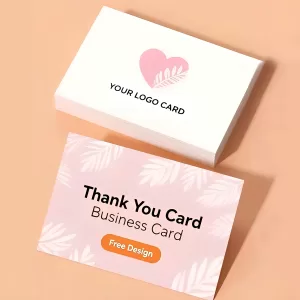
Custom printed business and greeting cards — offset four-colour process
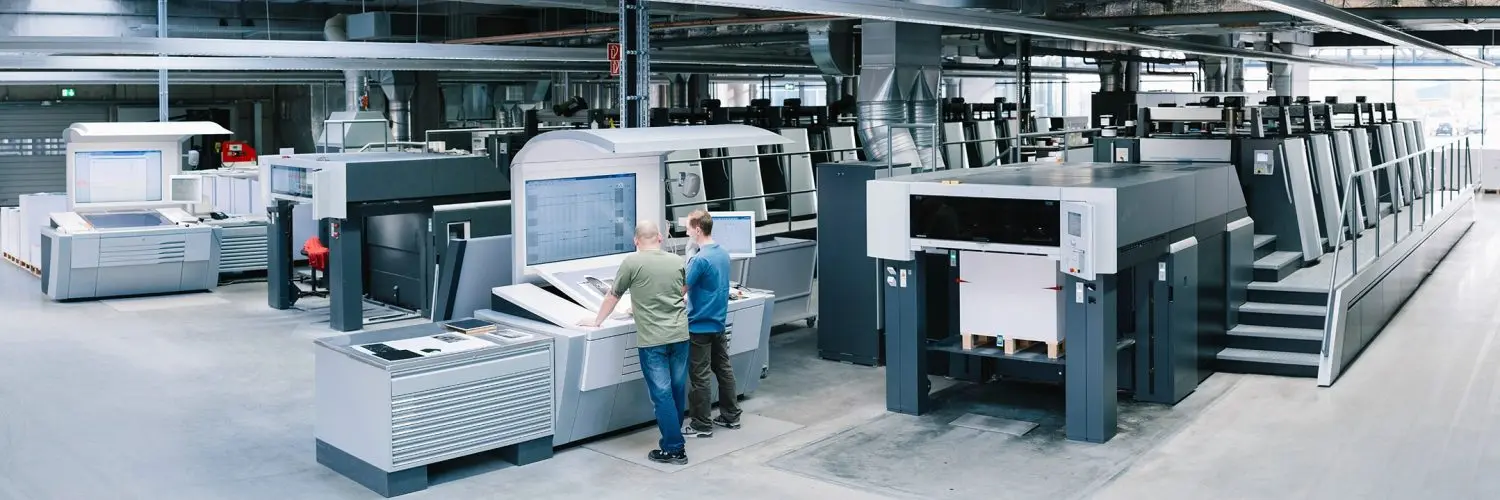
Offset lithography is UGI Packaging’s primary production printing platform for greeting card orders of 500 units and above. In offset printing, the image is chemically etched onto aluminium printing plates — one plate per ink colour — and transferred (offset) from plate to rubber blanket to substrate in a single pass through the press. The process produces exceptionally consistent colour density and detail sharpness across very long print runs, as the rubber blanket’s conformability compensates for minor substrate surface irregularities.
UGI Packaging’s offset presses operate in CMYK four-colour process (Cyan, Magenta, Yellow, Black), supplemented by a fifth or sixth printing unit for Pantone spot colour inks when brand-critical colour accuracy is required. The halftone screen ruling on UGI Packaging’s offset output is 175 lpi (lines per inch) for standard coated paper and 150 lpi for uncoated stock — producing fine-detail reproduction that resolves photographic imagery, fine-line illustration, and small-point-size typography without visible dot gain artefacts.
Process: CMYK + optional Pantone spot colours (up to 6 units)
Screen Ruling: 175 lpi coated; 150 lpi uncoated
Min. Order (Offset): 500 pcs recommended; 300 pcs minimum
Colour Consistency: ΔE ≤ 2.0 across print run
Registration Tolerance: ±0.1mm
Ink System: Petroleum-based, soy-based, and UV-curable options
Printing Platform 02 — Digital Printing
Digital printing operates without printing plates — the image data is sent directly from the pre-press workstation to the print engine, which deposits ink or toner onto the substrate in a single pass. This eliminates the plate-making stage entirely, reducing setup cost to near zero and making individual-copy, variable-data, and small-batch production economically viable in ways that offset lithography cannot accommodate.
UGI Packaging’s digital printing capability covers two technology variants: dry toner (laser electrophotography) for high-speed production of standard coated and uncoated stock, and UV inkjet for specialty substrates including metallic paper, velvet stock, and rigid materials that cannot pass through a conventional heat-fuser unit. The UV inkjet system deposits ink that is immediately cured by UV light exposure — producing a print with superior adhesion on non-porous surfaces and the ability to print white ink as an independent channel, enabling printing on dark or transparent substrates.
The key practical distinction between digital and offset for greeting card buyers is the crossover point — the order quantity below which digital is more cost-effective and above which offset delivers lower per-unit cost. At UGI Packaging, this crossover typically occurs at approximately 300–500 units for standard flat and folded card formats. Below 300 units, digital printing is standard; above 500 units, offset lithography delivers superior economics and colour consistency.
Technology Variants: Dry toner (HP Indigo compatible); UV inkjet
Min. Order: 1 pc (digital; proof and sample runs)
Variable Data: Fully supported — unique text, barcodes, QR codes per copy
White Ink: Available on UV inkjet platform
Colour Profile: CMYK + optional expanded gamut
Specialty Substrates: Metallic, velvet, transparent — UV inkjet only
Printing Platform 03 — Screen Printing
Screen printing (silk screen printing) is a non-contact printing method in which ink is forced through a tensioned mesh screen onto the substrate — with a stencil blocking ink passage in the non-image areas. Screen printing deposits a substantially thicker ink film than offset or digital printing, producing colours with exceptional opacity, saturation, and three-dimensional tactile presence. For greeting card applications, screen printing is deployed for two specific requirements that offset and digital printing cannot satisfy:
First, fluorescent and neon inks — which require the thick, self-illuminating ink film that only screen printing can provide. Fluorescent greeting card accents are particularly effective in youth-oriented birthday and celebration card designs. Second, white ink on dark substrates — providing full-coverage opacity that cannot be achieved with standard offset ink systems. Screen-printed white creates the clean white foundation on kraft, black, or deep-coloured card stock onto which further colour layers can be printed.
Ink Film Thickness: 30–100 microns (vs 2–5 microns offset)
Specialty Inks: Fluorescent, neon, metallic, thermochromic
Colour Count: 1–6 spot colours (multi-pass)
Min. Order (Screen): 200 pcs per colour
Typical Application: Fluorescent accents, white on dark stock, opaque overprints
Colour Management: From Artwork to Press
Colour management is the systematic process of ensuring that the colours in a buyer’s approved artwork are reproduced accurately and consistently through every stage of production — from monitor display to digital proof to press sheet to finished card. Colour management failures are the leading cause of buyer dissatisfaction in printed product manufacturing, and they are entirely preventable with a disciplined workflow. UGI Packaging implements a five-stage colour management protocol for all greeting card orders:
1
Artwork File Verification & Colour Space Conversion
All buyer-supplied files are inspected for colour mode (RGB files are converted to CMYK using UGI Packaging’s press-calibrated ICC profile), resolution (minimum 300 DPI at final print size), bleed (3mm required on all edges), and embedded font status. Files not meeting these specifications are flagged and corrected before pre-press begins. UGI Packaging’s pre-press team uses industry-standard colour conversion workflows to preserve brand colour intent through the CMYK conversion.
2
ICC Profile-Matched Digital Proof
A digital proof (PDF or physical inkjet proof) is generated using an ICC profile calibrated to UGI Packaging’s specific press-paper-ink combination. The digital proof accurately simulates what the press output will look like on the specified substrate — including the dot gain characteristic of the paper surface. Buyers approve the digital proof before CTP (Computer-to-Plate) exposure begins. For colour-critical orders, a physical inkjet proof on the actual production substrate is provided.
3
CTP Plate Exposure & Proofing Press Sheet
Computer-to-plate (CTP) imaging exposes the aluminium printing plate directly from the digital file — eliminating the film intermediate that was historically a source of dot loss and colour shift. The first sheets off the press are compared against the approved proof using a spectrophotometer. Press make-ready continues until all four-colour measurements are within ΔE ≤ 2.0 of the target values. Only after this approval milestone does the full production run proceed.
4
Pantone Spot Colour Matching
For orders specifying Pantone Matching System (PMS) colours — common in corporate branding and wedding stationery where an exact brand colour must be reproduced — UGI Packaging mixes proprietary Pantone inks to the specified PMS reference. Spot colour matching eliminates the metamerism risk inherent in CMYK process simulation of saturated or out-of-gamut colours. The mixed ink is measured against the physical Pantone chip before press-down approval.
5
Inline Spectrophotometric Monitoring During Press Run
During the production press run, sample sheets are pulled at regular intervals and measured against the approved press standard using a portable spectrophotometer. Any colour drift outside the ΔE ≤ 2.0 tolerance triggers an immediate press adjustment. This inline monitoring system — rather than end-of-run inspection — is the operational practice that distinguishes consistent quality production from batch-to-batch colour variation.
“
UGI Packaging’s five-stage colour management protocol — artwork verification, ICC-matched proofing, CTP platemaking, Pantone spot mixing, and inline spectrophotometric monitoring — is the same workflow applied to luxury packaging production, adapted for greeting card volume. It ensures that colour accuracy is a controlled output variable, not a manufacturing variable.
Artwork File Preparation Requirements
Submitting correctly prepared artwork files is the single most effective action a buyer can take to prevent production delays and quality issues. UGI Packaging accepts the following file formats and specifications for greeting card production:
Accepted File Formats
Adobe PDF (PDF/X-4 preferred), Adobe Illustrator (.ai), Adobe InDesign (.indd with packaged links), high-resolution TIFF. Microsoft Word and PowerPoint files are not accepted for production — they must be converted to PDF with embedded fonts before submission.
Resolution Requirements
All raster images (photographs, textures, placed artwork) must be 300 DPI minimum at 100% of the final print size. Images at 72 DPI or 96 DPI (screen resolution) will produce visibly pixelated print results and cannot be corrected at the pre-press stage. Vector artwork (logos, type, linework) is resolution-independent and does not have a DPI requirement.
Bleed & Safe Zone
All artwork extending to the card edge must include 3mm bleed on all sides beyond the trim line. Critical content (text, logos, key design elements) must be positioned minimum 3mm inside the trim line as a safe zone margin — to account for ±1mm die-cut registration tolerance. The bleed zone must be filled with the background colour or image; a white bleed border creates visible white edges on the trimmed card.
Colour Mode
Final files must be submitted in CMYK colour mode for four-colour process printing. RGB files are accepted but will be converted by UGI Packaging’s pre-press team — buyers should be aware that RGB-to-CMYK conversion can shift some highly saturated colours (especially neons and vivid blues) due to the smaller gamut of CMYK. For Pantone spot colour specifications, include PMS colour codes in the file notes.
UGI Packaging provides a complimentary artwork inspection service for all production orders — files are reviewed by a senior pre-press operator within one business day of receipt, and a detailed pre-press report is returned to the buyer before any plate-making begins. This service catches the most common artwork errors (missing bleeds, RGB colour mode, embedded RGB images, incorrect font handling) before they become production problems, protecting both the buyer’s delivery schedule and the quality of the finished cards. For buyers requiring design assistance, UGI Packaging’s in-house design team offers a full artwork creation and adaptation service — see Custom Service for details.
05
14 Surface Finishing Techniques
Surface finishing transforms a printed card from a two-dimensional ink-on-paper object into a multi-sensory artefact. According to the Printing Industries of America, surface finishing adds measurable perceived value to printed collateral — research consistently shows premium-finished pieces achieve higher recipient retention rates than unfinished equivalents. The tactile properties, reflective behaviour, and dimensional character of a greeting card’s surface communicate quality, intention, and brand positioning before the recipient reads a single word. UGI Packaging applies 14 distinct surface finishing techniques to greeting card production — each with its own equipment, chemistry, process sequence, and visual outcome. Understanding these techniques individually, and in combination, is the foundation of premium card specification.
“
UGI Packaging applies surface finishing as a deliberate design engineering discipline — not an afterthought. Each of the 14 finishing techniques available in-house is evaluated for compatibility with the specified substrate, ink system, and structural format before inclusion in the production specification, ensuring that the finished card performs exactly as designed without delamination, adhesion failure, or visual inconsistency.
Lamination Finishes (Techniques 01–03)
01 — Gloss Lamination
A transparent biaxially oriented polypropylene (BOPP) film is thermally bonded to the printed surface under heat and pressure. Gloss lamination increases surface reflectance, deepens ink colour saturation, and provides physical protection against scuffing, moisture, and fingerprinting. The resulting surface is hard, smooth, and visually vibrant — it amplifies the visual impact of photographic imagery and bold graphic designs.
Film thickness: 12–30 microns · Compatibility: All substrates · Common use: High-colour retail cards, photographic greeting cards, seasonal holiday card covers
02 — Matte Lamination
Matte lamination uses the same BOPP film bonding process as gloss lamination, but the film surface has a micro-textured finish that diffuses reflected light uniformly in all directions, eliminating specular glare. The visual effect is a soft, flat surface with reduced colour vibrancy but enhanced perceived elegance. Matte lamination is the dominant finish choice for minimalist-designed wedding stationery, corporate brand cards, and premium thank-you card programmes targeting a sophisticated aesthetic.
Film thickness: 12–28 microns · Note: Accepts handwriting and pen marks more readily than gloss · Common use: Wedding invitations, corporate cards, luxury brand inserts
03 — Soft-Touch Lamination
Soft-touch lamination applies a specialised velvet-texture film that creates a distinctly tactile surface described as suede-like or skin-like to the touch. The surface has the visual appearance of matte lamination but communicates an entirely different sensory signal — physical luxury — through the hand. Soft-touch is the highest-premium lamination option and commands a price premium of approximately 25–35% over standard matte lamination. It is particularly effective on dark-coloured card designs where the contrast between the dark surface and the tactile quality creates an ultra-premium sensory experience.
Note: Susceptible to contact scuffing — specify anti-scuff coating for high-handling applications · Common use: Luxury gifting cards, high-end corporate invitations, premium seasonal collections
UV Coating Finishes (Techniques 04–05)
04 — Spot UV Coating
Spot UV is a selective gloss varnish applied only to defined areas of the card surface — typically over logos, key design elements, or decorative motifs — while the surrounding surface retains its matte or uncoated character. The contrast between the gloss spot and the surrounding matte creates a powerful visual and tactile highlight effect. Spot UV is applied using a silk-screen or flexographic plate that defines the precise pattern area; the varnish is then cured instantly under UV light exposure.
Registration tolerance: ±0.3mm · Best on: Matte laminated or uncoated stock (maximum contrast) · Common use: Logo highlights, foliage accents, pattern overlays, brand mark emphasis
05 — Full UV Coating
Full UV coating applies a uniform high-gloss varnish across the entire card surface. Unlike gloss lamination (which uses a pre-manufactured film), full UV is a liquid coating applied in-line or off-line and cured under UV light to an immediate hard, scratch-resistant surface. Full UV produces a higher gloss level than film lamination and provides superior chemical resistance. It is commonly specified for cards that will be exposed to handling in retail display environments where fingerprint resistance is important.
Gloss level: 85–95 GU (gloss units) · Scratch resistance: Superior to film lamination · Common use: Retail display cards, counter-top display stock, high-volume promotional cards
Foil Stamping Finishes (Techniques 06–07)
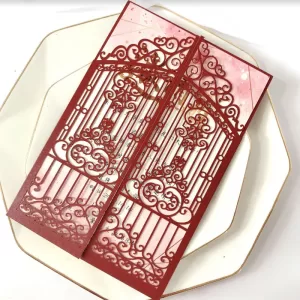
Hot foil gold stamping on laser-cut gate-fold wedding invitation
06 — Hot Foil Stamping (Gold / Silver / Holographic)
Hot foil stamping transfers a metallic or holographic foil from a carrier roll onto the card surface using a heated die under controlled pressure. The die is engraved or photo-etched to the exact pattern shape — the heat activates the foil adhesive only in the areas contacted by the die, leaving a precisely defined foil image bonded permanently to the substrate. The result is a mirror-bright metallic surface with a three-dimensional presence that cannot be simulated by any printing process.
UGI Packaging stocks over 30 foil colours and finishes including: mirror gold, antique gold, rose gold, silver, copper, bronze, matte gold, matte silver, red holographic, silver holographic, rainbow holographic, and custom PMS-matched metallic foils. Holographic foils contain a diffraction grating structure that produces a shifting prismatic colour display — a finish that is particularly effective on celebration cards and premium retail stationery.
Die types: Brass engraved (recommended), zinc photo-etched · Min. line/text: 0.5pt positive, 1pt reverse · Common use: Wedding invitations, luxury brand cards, celebration cards, award certificates
07 — Cold Foil Printing
Cold foil printing applies metallic foil using UV adhesive printed in the foil pattern areas, then laminating the foil carrier over the adhesive and stripping the carrier away — leaving foil adhered only where the UV adhesive was printed. Unlike hot foil stamping (which requires a physical engraved die), cold foil is a plate-based process that can reproduce fine halftone gradients and photographic detail in metallic foil — a capability that hot stamping cannot achieve.
Cold foil is particularly valuable for metallic backgrounds with graduated tonal transitions, photographic images rendered in gold or silver, and fine-detail pattern areas with varying foil density. The substrate preparation requirement is more demanding than hot foil — the surface must be free of silicone contamination and the adhesive UV printing must be precisely calibrated — making cold foil a specialised process that not all manufacturers can execute reliably.
Halftone capability: Yes — metallic gradients achievable · Die requirement: None (plate-based) · Common use: Metallic background patterns, photographic foil imagery, complex foil designs
Embossing & Debossing Finishes (Techniques 08–10)
08 — Embossing (Relief Emboss)
Embossing raises a design element above the surrounding paper surface by pressing the substrate between a male die (raised) and female die (recessed) under controlled pressure. The paper fibres are permanently displaced and compacted, creating a three-dimensional raised relief that is visible and tangible. Embossing is applied after lamination for maximum definition — the laminate prevents the paper surface from cracking under the compression force.
Relief height: 0.3–1.5mm depending on paper weight · Die material: Brass (for fine detail) or magnesium (for bold designs) · Common use: Logo panels, monograms, decorative border patterns, floral motifs
09 — Debossing (Impression)
Debossing is the inverse of embossing — the design element is pressed into the paper surface, creating a recessed impression rather than a raised relief. Debossing creates a shadow effect at its edges due to the way light catches the recessed walls, making it particularly effective for text and geometric designs. Debossed text on a soft-touch laminated card cover — where the finger traces the letter forms in the recessed channels — is a signature tactile quality in premium stationery.
Impression depth: 0.3–1.2mm · Best combined with: Soft-touch lamination for maximum tactile contrast · Common use: Name / monogram impressions, brand wordmarks, decorative panel borders
10 — Blind Embossing
Blind embossing combines the raised relief of standard embossing with the absence of any ink or foil — the design is visible only through the dimensional shadow it casts, rather than through colour contrast. This is the most restrained and sophisticated of all embossing variants — it communicates luxury through understatement, allowing the paper texture itself to carry the design. Blind embossing on cream or white card stock is the preferred technique for ultra-minimalist luxury wedding stationery.
Note: Best visible under raking light conditions · Common use: Minimalist wedding invitations, luxury corporate stationery, premium keepsake cards
Specialty Coating & Cutting Finishes (Techniques 11–14)
11 — Pearlescent / Iridescent Coating
Pearlescent coating applies a mica-particle-containing varnish over the printed surface, creating a colour-shifting iridescent sheen that moves as the card is tilted. Unlike pearl paper (where the mica is embedded in the substrate), pearlescent coating is applied as a post-print finishing layer and can therefore be applied selectively over specific printed areas or as a full-surface coating. The coating is available in multiple base tones including natural pearl, rose gold, mint, and violet iridescent.
Coverage: Full surface or spot application · Compatible with: All lamination types applied first · Common use: Valentine’s Day cards, wedding stationery, Mother’s Day collections
12 — Glitter Coating
Glitter coating applies a UV adhesive layer printed in the glitter pattern area, over which loose glitter (polyester or biodegradable plant-based variants) is applied and bonded by curing the adhesive under UV light. The result is a dense, sparkle-rich glitter surface with strong adhesion — glitter particles are permanently locked in the adhesive matrix and do not shed during normal handling, unlike loose-glitter craft applications. Available in standard glitter (polyester), biodegradable glitter (plant cellulose), and chunky glitter (larger particle size).
Particle retention: UV-bonded, low shedding · Eco option: Plant-based biodegradable glitter available · Common use: Celebration cards, Christmas collections, children’s birthday cards
13 — Laser Cutting & Die-Cutting
Laser cutting uses a focused CO₂ or fibre laser beam to cut or score the card substrate with ±0.1mm precision — enabling intricate lace patterns, botanical silhouettes, architectural details, and custom monograms that mechanical die-cutting cannot resolve at fine scales. Die-cutting uses a steel-rule die pressed under high tonnage to cut, crease, and perforate the card in a single press operation. Both processes are used in UGI Packaging’s greeting card production — laser for fine decorative cutting, mechanical die for structural shapes and fold score lines.
Laser precision: ±0.1mm · Min. bridge width: 0.8mm · Common use: Wedding invitation lace panels, shaped card silhouettes, decorative apertures
14 — Edge Gilding
Edge gilding applies metallic foil or metallic paint to the trimmed edges of a card stack — producing a gold, silver, copper, or coloured metallic edge that is visible when viewing the card from its side or holding it fanned. Edge gilding is applied after cutting and is performed in a batch process: cards are stacked under compression, the edge surface is smoothed, and metallic foil is applied under heat or metallic paint is brushed and sealed. This finish is characteristic of luxury stationery and adds a distinctive jewellery-like quality to premium flat and bi-fold card formats.
Metallic options: Gold, silver, copper, rose gold, matte black, custom colour · Min. card weight for edge gilding: 300gsm · Common use: Luxury invitation cards, premium brand business cards, high-end greeting cards
Recommended Finishing Combinations for Key Applications
👉 Scroll table left/right to view all columns
| Application |
Recommended Finish Stack |
Visual Effect |
Relative Cost |
| Luxury Wedding Invitation |
Soft-touch lamination + Hot gold foil + Blind emboss + Laser cut + Edge gilding |
Ultra-premium tactile + metallic + dimensional + decorative cut |
★★★★★ |
| Premium Birthday Card |
Matte lamination + Spot UV + Hot foil (accent) |
Matte-gloss contrast + metallic accent highlight |
★★★☆☆ |
| Corporate Thank-You Card |
Soft-touch lamination + Deboss (logo) + Spot UV |
Professional tactile + brand impression + selective gloss |
★★★☆☆ |
| Children’s Birthday Card |
Gloss lamination + Glitter coating (accent) + Die-cut shaped |
Vibrant colour + sparkle + fun shaped silhouette |
★★☆☆☆ |
| Eco Brand Thank-You Card |
Uncoated kraft · No lamination · Water-based varnish only |
Natural texture, artisanal warmth, environmentally aligned |
★☆☆☆☆ |
| Retail Seasonal Collection |
Gloss lamination + Holographic foil + Emboss |
Shelf-pop vibrancy + prismatic foil + dimensional motif |
★★★★☆ |
Luxury Wedding Invitation
Soft-touch + Hot foil + Blind emboss + Laser cut + Edge gilding · ★★★★★
Premium Birthday Card
Matte lam + Spot UV + Hot foil accent · ★★★☆☆
Corporate Thank-You Card
Soft-touch + Deboss logo + Spot UV · ★★★☆☆
Children’s Birthday Card
Gloss lam + Glitter + Die-cut shaped · ★★☆☆☆
Eco Brand Card
Uncoated kraft + Water-based varnish only · ★☆☆☆☆
Retail Seasonal Collection
Gloss lam + Holographic foil + Emboss · ★★★★☆
“
The most cost-effective premium finish combination UGI Packaging recommends for buyers entering the premium greeting card market is matte lamination paired with spot UV and a single hot foil accent colour — a three-technique stack that produces a visually sophisticated matte-gloss-metallic contrast at a per-unit cost increase of approximately 30–45% over unfinished print, representing the highest perceived-value-to-cost ratio in the greeting card finishing toolkit.
06
Structural Design & Die-Cutting Engineering
Die-cutting is the manufacturing process that transforms a flat printed sheet into the final card shape — cutting the outer silhouette, scoring fold lines, perforating detach sections, and creating apertures. It is the stage at which structural design decisions become physical reality, and errors in die design or press setup at this stage cannot be corrected downstream. UGI Packaging’s structural engineering team develops and validates all die layouts in-house, applying a set of engineering rules that govern every die specification across all seven card format types.
“
UGI Packaging’s structural engineering protocol treats every greeting card die as a precision instrument — specifying cut rule height, crease rule profile, bridge retention geometry, and press tonnage as interdependent variables calibrated to the specific substrate and finishing combination of each individual order.
Die-Cut Anatomy: Cut Lines, Score Lines, and Adhesive Lines
A greeting card die contains three functional line types, each performing a distinct mechanical role and represented by a different steel rule profile in the die board:
Cut Lines (Steel-Rule Cutting)
Sharp-edged steel rule that cuts through the full depth of the substrate. Determines the outer silhouette of the card and any internal apertures. Cut rule height is selected based on substrate thickness — a rule set too high for the substrate thickness causes excessive compression deformation; too low causes incomplete cut-through. UGI Packaging calibrates cut rule height to substrate ±0.02mm for precise, clean-edge cutting without edge compression.
Score Lines (Crease Rules)
Rounded-edge steel rule that compresses the substrate without cutting through — creating a controlled weakness line along which the paper folds cleanly. Score rule profiles are specified by channel width and depth: narrower channel = sharper fold = higher cracking risk on heavy stock. UGI Packaging uses a matrix of five crease rule profiles mapped to paper weight ranges from 150gsm to 450gsm, ensuring that every fold line compresses the fibres without fracturing the surface coating or laminate layer.
Perforation Lines
Alternating cut-and-tie segments that create a tear-out line — used for RSVP tear-off sections, detachable gift voucher portions, and booklet spine perforations. The cut-to-tie ratio (expressed as cut length : tie length in millimetres) is engineered to deliver a clean tear without premature separation during normal card handling. Standard perforations for greeting card inserts use a 2:1 cut-to-tie ratio on 200–250gsm stock.
Pop-Up Mechanism Engineering

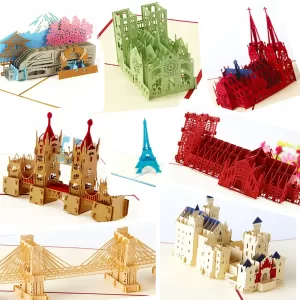
Complex crescent-shaped pop-up: multi-layer die-cut engineering
Pop-up card mechanisms are the most demanding die-cutting engineering challenge in the greeting card category. The three-dimensional movement is entirely a product of paper geometry — no springs, no adhesive hinges, no external mechanical components. The structural engineering must ensure that the pop-up elements deploy smoothly to their full extension when the card is opened to exactly 90° or 180° (depending on the design specification), and return to a flat-packed state when the card is closed — repeatedly, without fatigue failure or permanent deformation of the crease lines.
UGI Packaging’s structural engineers work from three primary pop-up mechanism families, each with its own geometric derivation rules:
Parallel Fold Mechanisms produce structures where all moving elements fold parallel to the card spine. When the card opens to 90°, the parallel-fold elements rise perpendicularly from the base — creating vertical columns, buildings, or layered scenes. The maximum element height for a parallel fold at 90° opening is determined by the formula H = (card width / 2) × sin(90°) — meaning the element height cannot exceed half the card width. UGI Packaging’s standard parallel fold cards use elements up to 80mm tall in a standard A5-format card.
V-Fold Mechanisms attach elements to the card base with a V-shaped fold line angled relative to the spine. V-fold elements extend outward from the spine plane when opened, creating depth rather than height — ideal for landscape scenes, architectural details, and character silhouettes. The V-fold angle (typically 45°–60° to the spine) determines the extent of lateral projection at full opening.
Combined Multi-Layer Mechanisms nest multiple parallel and V-fold elements at different distances from the spine, creating foreground, midground, and background planes simultaneously. The engineering challenge in multi-layer designs is ensuring that no element collides with another during the opening or closing sequence — a constraint that requires precise geometric calculation of each element’s travel path through the full 0°–90° opening arc.
Laser Cutting: Precision Parameters and Anchor Point Engineering
Laser cutting executes cuts that mechanical die-cutting cannot resolve — fine lace patterns, continuous curve paths, internal negative-space details, and custom monograms at text-scale dimensions. UGI Packaging operates CO₂ laser cutting systems calibrated to a cut precision of ±0.1mm, with the laser beam diameter (kerf width) of approximately 0.2mm factored into the structural file at the pre-production engineering stage.
The critical engineering constraint in laser-cut greeting card design is anchor point retention — ensuring that no cut element becomes fully detached and falls away from the surrounding panel. In complex lace patterns, every positive shape (the uncut paper that remains) must be connected to at least one adjacent positive shape by a bridge of minimum 0.8mm width. The structural engineering review process at UGI Packaging includes an automated bridge continuity check on all laser-cut artwork files — any disconnected island elements are flagged and corrected before cutting begins.
Laser Cut Precision: ±0.1mm
Kerf Width: ~0.2mm (factored into structural file)
Min. Bridge Width: 0.8mm (anchor retention)
Min. Positive Shape: 1.0mm diameter (smallest uncut element)
Compatible Substrates: Coated art paper, pearl paper, greyboard, kraft (metallic paper requires power adjustment)
File Format: Vector paths (AI, DXF, PDF) required for laser cutting — no raster
Gluing and Assembly Engineering
Gluing is the final structural manufacturing stage — bonding the die-cut components into their assembled configuration. For greeting cards, two adhesive systems are standard in UGI Packaging’s production, selected based on the substrate type, assembly geometry, and end-use requirements:
PUR Hot-Melt Adhesive
Polyurethane reactive (PUR) hot-melt adhesive provides the highest bond strength and temperature resistance of any greeting card adhesive system. PUR is applied in a liquid state and reacts with ambient moisture to form a permanent, flexible crosslinked bond — it does not re-soften under heat, unlike standard EVA hot-melt. PUR is specified for pop-up element bonds, greyboard lamination in luxury card formats, and any application where the card may be exposed to temperature extremes during shipping or display.
Water-Based Cold Glue
Water-based adhesive is used for envelope gumming (the re-moistenable seal strip on envelope flaps), paper-to-paper bonding in standard bi-fold card pockets, and any application requiring a repositionable bond for consumer personalisation features. Water-based cold glue has a lower initial bond strength than PUR hot-melt but offers full FSC and recyclability compatibility — making it the preferred adhesive for eco-positioned card products.
For pop-up card assembly, UGI Packaging uses a dedicated handcraft assembly station where trained operators attach each pop-up element individually using precision applicators. The assembly sequence is engineered to ensure that elements closest to the card spine are bonded first — working outward to the foreground elements — to maintain alignment reference throughout the build. Each assembled card is opened and closed through a full 180° cycle immediately after assembly to verify mechanism function before moving to the packaging stage. This 100% functional verification on all pop-up cards is a quality commitment that distinguishes UGI Packaging’s structural card production from factories that rely on statistical sampling for mechanism verification.
✅ UGI Packaging Tip: Buyers specifying 3D pop-up or tunnel card formats should provide UGI Packaging with the target opening angle (90° or 180°) and the maximum card dimensions at the briefing stage — these two parameters define the entire geometric envelope within which the pop-up mechanism can be engineered, and affect both design freedom and per-unit cost.
UGI Packaging’s structural engineering capability is directly supported by its sister expertise in rigid gift box manufacturing — a product category that shares the same greyboard lamination, precision die-cutting, and handcraft assembly skill requirements as premium greeting card formats. Buyers seeking to commission matching card-and-box gift sets can leverage this cross-category capability to ensure visual and tactile consistency across the complete gift presentation. For more information on UGI Packaging’s broader gift packaging range, visit the Gift Packaging product category or explore the Manufacturing Process guides for detailed technical reference on shared production techniques.
07
Design Capability & OEM/ODM Services
Design capability is the upstream multiplier of manufacturing quality. A technically perfect press run and finishing process cannot rescue a structurally flawed die layout or a colour-mis-specified artwork file. UGI Packaging operates an integrated design function that bridges the gap between buyer creative intent and production-ready manufacturing files — a function that is particularly critical for greeting card buyers who may have strong visual concepts but limited technical knowledge of print production requirements.
“
UGI Packaging’s OEM and ODM design services cover the complete creative-to-production pipeline for custom greeting cards — from initial concept sketching and structural prototyping through to final press-ready file delivery — enabling buyers to commission a finished card product with no prior print production experience required.
Design Service Tier 01 — From-Scratch Original Design (ODM)
OEM custom-designed greeting and business cards from UGI Packaging
For buyers who provide a brief — a description of the occasion, target audience, preferred colour palette, finish requirements, and budget envelope — without any existing artwork, UGI Packaging’s design team creates original greeting card designs from concept to production file. This is the ODM (Original Design Manufacturer) service path: UGI Packaging contributes both the creative design and the manufacturing execution.
The from-scratch design process begins with a creative brief consultation, during which UGI Packaging’s designer establishes the structural format, paper specification, and finish combination before any visual design work begins. This sequence — structure before aesthetics — prevents the common failure mode where a visually compelling concept is designed for a structural format that is either impossible or cost-prohibitive to manufacture. Structural feasibility is confirmed at brief stage; visual design development begins only after structural parameters are locked.
Design deliverables from the ODM service include: a digital concept presentation (2–3 design directions), a physical dieline proof for structural verification, a digital colour proof for colour approval, and production-ready press files. Design timelines for standard flat and bi-fold formats are typically 3–5 business days from brief to first concept presentation; complex pop-up and laser-cut formats require 7–10 business days for structural engineering plus design.
Design Service Tier 02 — Brand Adaptation (OEM)
Brand adaptation is the most common design service path for established brands and corporate buyers. The buyer provides existing brand identity assets — logo files, brand colour specifications (Pantone, CMYK, or RAL references), typography guidelines, and brand usage rules — and UGI Packaging’s design team adapts these assets to the greeting card format, ensuring that the finished card is consistent with the buyer’s existing brand standards while meeting all technical print production requirements.
Brand adaptation work includes logo reconstruction (converting low-resolution or screen-format logos to press-ready vector format), Pantone colour specification from CMYK brand references, typographic layout for card copy, and structural dieline creation to the buyer’s specified card dimensions. For corporate buyers with formal brand identity guidelines, UGI Packaging’s designers work directly from the brand manual — treating the guidelines as the definitive reference for all design decisions rather than interpreting brand elements freely.
Input Required: Logo (AI/EPS/PDF vector preferred), brand colour codes, copy text, format specification
Timeline: 2–3 business days to adapted design proof
Revisions: 2 rounds included; additional rounds at cost
Output: Press-ready PDF/X-4 + structural dieline file
Design Service Tier 03 — Artwork File Preparation & Optimisation
For buyers who supply their own complete artwork files, UGI Packaging offers an artwork preparation and optimisation service that converts buyer-supplied files into fully production-ready press files. This service covers the technical operations that are outside a design agency’s normal scope but are essential for successful print production: colour space conversion from RGB to CMYK with press-profile matching, image resolution upsampling where feasible, bleed extension, font embedding and outline conversion, overprint flag verification, ink density total area coverage (TAC) reduction for digital printing compatibility, and structural dieline integration.
The artwork preparation service is included at no charge for all production orders above 500 units. For smaller orders or stand-alone file preparation without a production order, a fixed-fee pre-press service is available. Buyers who submit files that do not meet UGI Packaging’s production specifications — the most common issues being RGB colour mode, insufficient resolution, missing bleeds, and non-embedded fonts — receive a detailed pre-press report within one business day identifying every required correction, with the option to proceed with UGI Packaging making all corrections or to return corrected files themselves.
3D Prototyping and Physical Sample Service
For any greeting card format involving structural complexity — pop-up mechanisms, laser-cut invitation suites, greyboard laminated luxury cards, or interactive electronic cards — UGI Packaging provides a physical prototype sample service before committing to the full production run. Physical prototyping is the only reliable method to verify that a structural design performs as intended: that pop-up elements deploy and return cleanly, that laser-cut patterns retain their anchor points under handling, that lamination adhesion is uniform on specialty paper, and that the overall hand-feel and proportions meet the buyer’s expectations.
White-Paper Prototype (Dieline Proof)
A laser-cut or hand-scored prototype in blank white stock that verifies structural geometry and mechanism function without printed artwork. This is the fastest and lowest-cost way to confirm that a pop-up mechanism or fold structure performs correctly. Turnaround: 2–3 business days. Applicable to all structural card types.
Full Colour Proof Sample
A digitally printed, finished, and assembled sample on the specified production substrate — with lamination, foil (adhesive foil substitute), and structural assembly as per the production specification. This sample provides the closest available preview of the finished production card. Turnaround: 5–7 business days. A small sampling fee applies, credited against the production order upon placement.
Pre-Production Press Sample (Wet Proof)
For large-volume orders requiring the highest colour approval confidence, UGI Packaging can produce a short run of 5–10 cards on the actual production press, with the actual production plates, inks, and substrate, before the full run commences. This wet proof is the most accurate colour reference available. Turnaround: 5–8 business days (includes plate-making). Applied against production cost for orders above 5,000 units.
Design Tools and File Compatibility
UGI Packaging’s design and pre-press team works in the full Adobe Creative Cloud suite — Adobe Illustrator for vector structural files and dieline design, Adobe Photoshop for image retouching and colour correction, and Adobe InDesign for multi-page card layouts and catalogue designs. Structural dieline templates for all seven standard card formats are available for download in AI, PDF, and DXF formats — buyers can request these templates at the brief stage to ensure their design agency works within the correct dimensional and bleed parameters from the start.
For structural die design of pop-up mechanisms, UGI Packaging uses CAD-based layout tools that calculate fold geometry mathematically before any physical prototype is produced — reducing prototype iterations and compressing the structural development timeline. For laser-cut pattern design, files must be submitted as vector paths (not raster images); UGI Packaging’s pre-press team can vectorise hand-drawn or bitmap laser-cut patterns at a nominal conversion fee for buyers who do not have access to vector design software.
Buyers seeking guidance on greeting card design best practices, structural format selection, or finish combination recommendations can access UGI Packaging’s Packaging Design Insights resource library, which covers structural engineering principles, finish selection guides, and artwork preparation tutorials — all published from the factory’s direct production experience.
08
Manufacturing Process — 9 Steps from Brief to Delivery
Understanding the full manufacturing workflow enables buyers to set realistic project timelines, prepare the right inputs at each stage, and identify the decision points where changes can still be accommodated without delay or cost impact. UGI Packaging’s greeting card production follows a nine-stage sequential workflow in which each stage has defined input requirements, quality gates, and output deliverables before the next stage can begin.
“
UGI Packaging’s nine-stage greeting card manufacturing workflow is structured so that every quality-critical decision — artwork approval, structural prototype sign-off, colour proof acceptance, and press sheet approval — is made by the buyer before irreversible production expenditure is committed. No stage proceeds without documented buyer sign-off at each defined checkpoint.
1
Brief & Specification Confirmation
The production process begins with a written specification document that locks in every variable before design or production work starts: card format (structure type), finished dimensions, substrate and paper weight, print specification (CMYK, Pantone spot colours), finishing requirements (lamination type, foil, emboss, etc.), quantity, packaging specification, and delivery destination. UGI Packaging provides a standardised specification form that prompts buyers through all required parameters — ambiguity in the specification document is the leading cause of production errors and revision cycles, and the brief confirmation stage exists specifically to eliminate it. Timeline contribution: 0.5–1 day.
2
Structural Engineering & Die Preparation
For all non-standard formats — including all pop-up, laser-cut, and greyboard laminated cards — UGI Packaging’s structural engineering team creates the mechanical layout: dieline construction, fold sequence planning, pop-up mechanism geometry calculation, laser-cut bridge analysis, and adhesive zone specification. Standard flat and bi-fold formats use pre-validated dieline templates and proceed directly to pre-press. New die boards are manufactured by the in-house tooling workshop for mechanical die-cutting formats; laser cutting requires no physical die, only the vector cut file. Timeline contribution: 1–3 days (complex pop-up); 0 days (standard format using templates).
3
Pre-Press: Artwork Verification, CTP Plate Exposure & Proofing
Buyer-supplied artwork files undergo the full pre-press inspection protocol: colour mode verification, resolution check, bleed and safe-zone audit, font embedding confirmation, and ink TAC calculation. Corrections are made by UGI Packaging’s pre-press operators or returned to the buyer as a pre-press report. After artwork clearance, Computer-to-Plate (CTP) imaging exposes the aluminium press plates from the verified digital file. A digital proof (or physical inkjet proof for colour-critical orders) is sent to the buyer for approval. No plates are mounted on press until written proof approval is received. Timeline contribution: 1–2 days.
4
Offset or Digital Printing
The production print run commences after press-sheet approval — a physical press sheet pulled from the press at make-ready, measured spectrophotometrically against the approved proof, and approved by both the press operator and the QC team. For offset runs, the press sheet approval milestone gates the transition from make-ready (where ink density and registration are being adjusted) to full production speed. For digital runs, the first-sheet output is compared against the digital reference before the full run proceeds. Printed parent sheets are collected and staged for the finishing stage. Timeline contribution: 1–3 days depending on quantity and press schedule.
5
Surface Finishing
Finishing operations are performed in sequence on the printed parent sheets before die-cutting. The standard sequence is: lamination (applied first, over the full sheet) → spot UV or full UV coating → hot foil stamping → embossing or debossing → pearlescent or glitter coating. The sequence is not arbitrary — each step must be performed after the preceding layer has fully cured or set, and the substrate must be in the correct surface state for each process. Lamination before foil stamping, for example, is mandatory — foil adhesion to un-laminated coated paper is unreliable on humid production days, while foil adhesion to laminated surfaces is consistent and temperature-controlled. Timeline contribution: 2–5 days depending on finishing complexity and number of processes.
6
Die-Cutting & Laser Cutting
The finished and laminated parent sheets pass through the die-cutting press (for mechanical die formats) or the laser cutting system (for laser-cut patterns). Die-cutting simultaneously executes all cut lines, score lines, and perforations in a single press stroke — the steel-rule die mounted in the cutting press contacts the sheet at full tonnage and returns in a continuous cycle. Laser cutting traces the vector cut file path at controlled speed and power settings calibrated to the specific substrate and lamination combination. After cutting, waste matrix is stripped from around each card shape, leaving only the finished cut cards. Timeline contribution: 1–2 days.
7
Folding & Gluing
Die-cut sheets are folded along the pre-scored fold lines — by machine for standard bi-fold and tri-fold formats, and by hand for complex or multi-component formats where machine folding risks marking finished surfaces. Adhesive application is performed in this stage: pocket gluing for bi-fold pocket cards, greyboard lamination bonding for luxury rigid formats, and ribbon or belly-band attachment for invitation suites. Each glued component is set under compression until the adhesive achieves handling strength — PUR hot-melt requires 15–30 minutes under compression; water-based cold glue requires 2–4 hours for full strength development. Timeline contribution: 1–2 days.
8
Pop-Up Assembly & Electronics Integration
This stage applies only to 3D pop-up cards, tunnel cards, and interactive electronic cards. Pop-up element insertion is performed entirely by hand — trained assembly operators attach each die-cut pop-up element to the card base in the engineered sequence, using precision adhesive applicators to deposit PUR hot-melt at the exact bonding coordinates specified in the structural engineering file. Each assembled card is opened and closed through a full 180° cycle immediately after assembly to verify mechanism deployment and return function. For interactive cards, the music chip and LED module are inserted and wired at this stage; the activation switch is tested and the audio content is verified by playback before the card shell is closed and sealed. Timeline contribution: 2–4 days (pop-up volume dependent — handcraft assembly rate is approximately 200–400 units per operator per day for complex pop-up formats).
9
QC Inspection, Packing & Export Preparation
Final inspection is conducted on a statistical sampling basis using AQL 2.5 Level II sampling plan — the international standard for consumer goods inspection widely adopted by retail buyers and importers. Each sampled card is inspected against a defined checklist covering print quality, colour match, registration, finishing adhesion, structural integrity, and dimension conformance. Cards passing inspection proceed to packing: individual cards are polly-bagged or tissue-wrapped (per specification), then packed into inner boxes and outer export cartons with appropriate quantity labelling, barcode, and shipping marks. Export documentation — packing list, commercial invoice, certificate of origin — is prepared in parallel with the packing stage. Timeline contribution: 1–2 days inspection + 1–2 days packing.
Indicative Total Lead Times by Card Type
7–10
days · Flat single-panel card (standard format, digital print)
12–15
days · Bi-fold or tri-fold card (offset print + lamination + foil)
15–20
days · Laser-cut gate-fold invitation (full finishing suite)
18–25
days · 3D pop-up card (handcraft assembly included)
20–28
days · Interactive music/LED card (electronics + assembly)
09
Quality Control Standards & Inspection Protocols
Quality control in greeting card manufacturing is a multi-stage discipline that operates at four distinct points in the production workflow — not a single end-of-line inspection event. UGI Packaging’s quality management system is certified to ISO 9001, the international standard for quality management systems, which mandates documented procedures, measurable quality objectives, and continuous improvement processes across all production operations. Within this framework, UGI Packaging applies a four-layer quality control protocol specifically calibrated to the technical characteristics of greeting card production.
“
UGI Packaging’s quality control system as a custom greeting card manufacturer operates on the principle that defect prevention at each upstream stage is more effective and less costly than defect detection at the final inspection stage — which is why incoming material testing, press-sheet approval, inline finishing checks, and pre-shipment AQL inspection are all mandatory components of every production order, regardless of quantity.
QC Layer 01 — Incoming Material Inspection
All paper and board substrates, foil rolls, lamination films, adhesives, and electronic components (for interactive cards) are inspected upon arrival at the factory before being admitted to the production store. Incoming material inspection for paper and board covers five parameters that directly affect production quality:
Paper Weight Verification
Grammage tested using a calibrated precision balance against declared specification. Acceptable tolerance: ±5% of declared weight. Substrates outside tolerance are returned to supplier — underweight paper produces inadequate hand-feel and structural rigidity; overweight paper exceeds die-cut and fold-score calibration parameters.
Colour Uniformity Check
Paper whiteness and colour consistency checked across multiple sheets from different positions in the delivery stack using a spectrophotometer. ΔE variation within a delivered batch must be ≤1.5 — batch-to-batch variation in paper brightness affects the perceived colour of printed inks, particularly in critical brand colour reproduction.
Moisture Content Testing
Paper moisture content measured using a pin-type moisture meter. Target range: 4–6% for most coated stocks. Paper with excess moisture causes ink drying problems on press and foil adhesion failures in the finishing stage. Paper below minimum moisture is brittle and susceptible to static-related handling problems on the press feed system.
Surface Coating Adhesion Test
For coated papers, the clay coating adhesion is tested using a tape-pull test (cross-hatch adhesion per ISO 2409 method). Inadequate coating adhesion causes delamination under the lamination film and foil stamping die — two of the most visually damaging defects in finished greeting card production.
Grain Direction Confirmation
Grain direction verified against declared specification by the bend-test method: a sheet is bent parallel and perpendicular to the machine direction and the resistance compared — grain-direction bending offers less resistance. Incorrectly declared grain direction discovered at this stage prevents the production of fold-line cracks on the finished card.
QC Layer 02 — Print Quality Inspection
Print quality inspection operates at two sub-stages: press-sheet approval at make-ready (before the production run commences) and inline monitoring during the production run.
The press-sheet approval checklist covers: colour density on all four CMYK channels measured against target density values for the specified paper-ink combination; registration accuracy verified by measuring the overlay of registration cross-marks to ±0.1mm tolerance; Pantone spot colour match confirmed against physical PMS chip reference under D50 standardised viewing illuminant; and ink trapping verified by examining overprint areas for mottle or dropout. Only a press sheet that passes all checklist items receives the press-approval signature that authorises full production speed.
During the production run, press sheets are pulled at intervals of every 500–1,000 sheets and measured against the approved press standard. Colour density values are logged in the production record — creating a documented evidence trail of colour consistency across the full run. Any sheet lot showing ΔE drift greater than 2.0 from the approved standard triggers a press adjustment before the next interval sample is taken.
QC Layer 03 — Surface Finishing & Structural Inspection
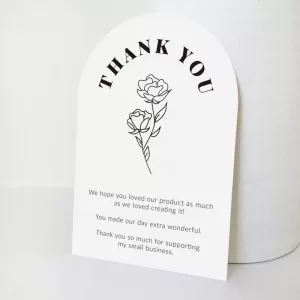
Post-finishing QC check: surface adhesion and print consistency
After each finishing process, a batch of finished sheets is inspected before the next finishing stage begins. This sequential inspection protocol catches finishing defects at their source stage — before they are compounded by subsequent process steps. Key inspection parameters at the finishing stage include:
Lamination adhesion: Cross-hatch tape-pull test (ISO 2409) on laminated samples from the beginning, middle, and end of each lamination batch. Acceptable result: zero film delamination across the full 25-square cross-hatch grid. Any batch showing delamination is rejected and re-laminated before proceeding to foil or UV stages.
Hot foil adhesion: The foil adhesion tape-pull test is applied to each foil-stamped batch at make-ready and at regular intervals during the stamping run. Foil must not transfer to the tape under the pull force — any foil pickup on tape indicates insufficient stamping temperature or pressure, triggering an immediate press parameter adjustment.
Emboss registration: Embossed areas are checked under a magnifying loupe for registration accuracy against the printed design. The emboss die must be centred on the designated printed element — mis-registration of more than 0.5mm is considered a defect. Emboss depth uniformity is checked across the sheet width to confirm consistent die pressure.
Fold line integrity: After scoring and folding, all fold lines are inspected for surface cracking on the laminated or coated surface. A single crack on a fold line is sufficient cause to reject the affected card from the batch — fold-line cracks are not repairable and signal a scoring rule or paper weight miscalibration that must be corrected before production continues.
QC Layer 04 — Pre-Shipment AQL Inspection
Final pre-shipment inspection is conducted using the AQL (Acceptable Quality Level) 2.5 Level II sampling plan — the standard adopted across the international consumer goods and printed product export industry. At AQL 2.5, the inspection framework defines the sample size drawn from the total lot and the maximum number of defective units permitted before the lot is rejected and subject to 100% sorting or re-production.
👉 Scroll table left/right to view all columns
| Inspection Category |
Parameters Checked |
Tolerance / Acceptance Criterion |
Defect Class |
| Dimensions |
Finished card length, width, fold position |
±1.0mm on all dimensions |
Major |
| Print Quality |
Colour match, registration, ink coverage, hickeys, streaks |
ΔE ≤ 2.0 vs approved proof; registration ±0.1mm |
Major / Critical |
| Lamination |
Film adhesion, bubbles, delamination, surface marks |
Zero delamination; zero bubbles >2mm diameter |
Major |
| Foil Stamping |
Foil adhesion, registration, coverage completeness, edge sharpness |
Zero foil dropout in positive areas; registration ±0.3mm |
Major / Critical |
| Emboss / Deboss |
Registration to print, depth uniformity, surface cracking |
Registration ±0.5mm; zero surface cracks |
Major |
| Pop-Up Mechanism |
Full deployment at 90°, clean return to flat, no element detachment |
100% functional check on all pop-up units (not sampling) |
Critical |
| Fold Lines |
Surface cracking, fold sharpness, flatness when closed |
Zero surface cracks; card lies flat to within ±2mm at edges |
Major |
| Interactive Electronics |
Audio playback at rated volume, LED illumination, switch activation |
100% functional check on all electronic units (not sampling) |
Critical |
Dimensions — ±1.0mm on all dimensions · Major defect
Print Quality — ΔE ≤ 2.0 vs proof; registration ±0.1mm · Major/Critical
Lamination — Zero delamination; zero bubbles >2mm · Major
Foil Stamping — Zero dropout; registration ±0.3mm · Major/Critical
Emboss/Deboss — Registration ±0.5mm; zero surface cracks · Major
Pop-Up Mechanism — 100% functional check (not sampling) · Critical
Fold Lines — Zero cracks; flat to ±2mm · Major
Interactive Electronics — 100% functional check · Critical
UGI Packaging’s quality records — press logs, inline measurement data, finishing inspection reports, and AQL inspection results — are retained for a minimum of 24 months per order and are available to buyers on request. This documentation trail supports buyers who require quality evidence for their own supplier audit programmes, retail compliance requirements, or customer complaint investigations. Third-party pre-shipment inspection by buyer-nominated inspection agencies (SGS, Bureau Veritas, Intertek) can be accommodated with advance scheduling coordination.
“
UGI Packaging applies 100% functional inspection — not statistical sampling — to all pop-up card mechanism assemblies and all interactive electronic card units. This commitment to unit-level functional verification on the highest-complexity card formats reflects the principle that structural and electronic function failures are critical defects that cannot be recovered from in the field, and therefore cannot be managed through post-shipment claims processing.
For buyers requiring additional third-party quality verification, UGI Packaging supports integration with major global inspection services. The factory’s quality management system documentation is available for review prior to order placement, and factory audit visits — whether self-conducted or through an appointed third party — are welcomed at any stage of the supplier qualification process. Contact the UGI Packaging sales team at [email protected] or via the contact page to arrange a quality documentation review or factory visit.
10
Product Catalogue — 23 Greeting Card Products from UGI Packaging
The following catalogue presents all greeting card products currently available through UGI Packaging (ukugi.com), organised by structural category. All products are available for OEM customisation — dimensions, paper weight, printing, and surface finishing specifications can be modified to meet buyer requirements. Products shown represent standard configurations; custom structural formats and finish combinations are available on request.
“
UGI Packaging’s greeting card product range spans 23 SKUs across six structural categories — 3D pop-up cards, wedding and event invitations, flat greeting cards, custom business and functional cards, kraft and DIY formats, and interactive formats — all manufactured in-house at the Guangzhou factory with full OEM customisation available on every product listed.
Category A — 3D Pop-Up Cards
Category B — Wedding & Event Invitation Cards
Category C — Flat Greeting Cards & Card Sets
Category D — Custom Business & Functional Cards
Category E — Kraft Paper & Thank-You Cards
FAQ
Frequently Asked Questions
Q: What is the minimum order quantity for custom greeting cards at UGI Packaging?
Minimum order quantities at UGI Packaging as a custom greeting card manufacturer vary by card structural type. Flat single-panel and bi-fold cards start from 100 pieces for digital print runs. Offset-printed cards have a recommended minimum of 300–500 pieces for cost efficiency. Laser-cut gate-fold invitations start from 50 pieces. 3D pop-up cards start from 200–500 pieces depending on mechanism complexity. Interactive music and LED cards start from 100 pieces. There is no minimum for custom design services — prototype and sample orders can be placed for 1–10 pieces at a sampling fee.
Q: How long does it take UGI Packaging to produce custom greeting cards from artwork approval to shipment?
Lead times at UGI Packaging depend on structural complexity. Standard flat and bi-fold cards with offset printing and lamination: 12–15 business days from proof approval. Laser-cut invitation cards: 15–20 business days. 3D pop-up cards: 18–25 business days. Interactive music and LED cards: 20–28 business days. Lead times begin from the date of written proof approval — not from the order placement date. Buyers should factor 3–7 days of pre-press and proofing time into their project scheduling before the production lead time clock starts.
Q: What file format should I submit for custom greeting card printing at UGI Packaging?
UGI Packaging accepts Adobe PDF (PDF/X-4 preferred), Adobe Illustrator (.ai), Adobe InDesign (.indd with packaged links), and high-resolution TIFF files. All files must be in CMYK colour mode at 300 DPI minimum resolution, with 3mm bleed on all sides and critical content positioned at least 3mm inside the trim line. For laser-cut designs, vector paths (AI or DXF format) are required. UGI Packaging provides a complimentary pre-press file inspection for all production orders, returning a detailed report of any corrections required within one business day of file receipt.
Q: Can UGI Packaging match my brand’s exact Pantone colour on greeting cards?
Yes. UGI Packaging supports Pantone Matching System (PMS) spot colour printing on all offset-printed greeting card orders. The Pantone ink is mixed to the specified PMS reference and measured against the physical Pantone chip before press-down approval. For orders requiring colour consistency across multiple production runs or across different product types — cards, envelopes, gift boxes — UGI Packaging maintains the Pantone mixing formula on file for repeat-order consistency. The colour tolerance target for spot colour matching is ΔE ≤ 1.5 against the approved Pantone chip reference.
Q: Does UGI Packaging offer FSC-certified paper for greeting card production?
Yes. UGI Packaging offers FSC (Forest Stewardship Council) certified paper across its coated art paper and uncoated kraft paper ranges. FSC-certified paper is available for all greeting card formats at a typical premium of 8–12% over non-certified equivalent weights. The FSC chain-of-custody mark can be printed on the card back panel, allowing buyers to communicate their sustainability credentials to end consumers. Recycled-content paper (30%–100% post-consumer waste) is also available for buyers with zero-virgin-fibre procurement policies. Physical substrate samples are available on request before order commitment.
Q: Can UGI Packaging produce die-cut greeting cards in custom shapes beyond standard rectangles?
Yes. UGI Packaging manufactures custom-silhouette die-cut greeting cards in any closed shape — circles, ovals, arches, hexagons, character silhouettes, and fully custom contours. Custom shape die-cutting requires a new steel-rule die board, which is a one-time tooling cost charged at order placement. For laser-cut shapes, no physical die is required — the cut path is executed directly from the vector file. The crescent-shaped pop-up card in UGI Packaging’s current range is an example of a complex custom die-cut silhouette successfully produced in production volumes from 200 pieces.
Q: What quality control standards does UGI Packaging apply to greeting card production?
UGI Packaging operates under ISO 9001 quality management certification and applies a four-layer QC protocol to all greeting card production: incoming material inspection (paper weight, colour uniformity, moisture, grain direction), print quality monitoring with inline spectrophotometric measurement (ΔE ≤ 2.0 tolerance), post-finishing adhesion and structural inspection, and pre-shipment AQL 2.5 Level II sampling inspection. Pop-up mechanism assemblies and interactive electronic cards receive 100% functional inspection — not statistical sampling — before shipment. Quality records are retained for 24 months per order.
Q: How does UGI Packaging handle packaging and export of custom greeting card orders?
UGI Packaging packs finished greeting cards according to the buyer’s specified packaging requirements: individual polly-bagging, tissue-wrapping, inner box packing, and outer export carton configuration. Standard export packing uses double-walled corrugated cartons with appropriate edge and corner protection to prevent transit damage. Each carton is labelled with quantity, product description, destination country, and buyer’s shipping marks. Full export documentation — commercial invoice, packing list, certificate of origin — is prepared for all international shipments. UGI Packaging ships via sea freight (FCL and LCL), air freight, and express courier (DHL, FedEx) depending on order size and delivery timeline requirements.
Q: Can UGI Packaging produce matching gift boxes and greeting cards in a coordinated set?
Yes. UGI Packaging’s capability as a custom greeting card manufacturer covers both greeting cards and gift packaging boxes within the same factory, making it uniquely positioned to produce coordinated card-and-box gift sets with consistent colour, finish, and structural design language across both components. Buyers commissioning a gift box set can specify that the greeting card insert matches the box exterior — using the same Pantone colour, lamination type, foil colour, and emboss pattern — creating a unified premium presentation. This cross-category coordination is one of UGI Packaging’s key differentiators versus specialist card-only manufacturers.
Q: What is the process for ordering custom greeting card samples from UGI Packaging before committing to a full production run?
UGI Packaging offers three sample service tiers. A white-paper structural prototype — a laser-cut or scored blank sample verifying mechanism function and dimensions — is available with a 2–3 business day turnaround. A full-colour digital proof sample on the production substrate, with lamination and assembly, is available in 5–7 business days; a sampling fee applies and is credited against the production order. For orders above 5,000 units, a pre-production wet proof — printed on the actual production press with production plates and inks — is available in 5–8 business days. To initiate a sample request, contact UGI Packaging at
[email protected] with the card format, dimensions, finish specification, and desired sample quantity.
Related Reading
Laser Cutting for Packaging & Cards: Precision, Materials & MOQ →
UGI Packaging’s CO₂ laser cutting system executes intricate card and box cutouts at ±0.1mm precision with a minimum line width of 0.8mm, supporting custom lace, botanical, and monogram patterns on invitation cards, gift box panels, and paper decorations from 50 pieces minimum order.
Ready to Source Custom Greeting Cards?
UGI Packaging offers full OEM and ODM services for all 7 greeting card structural types — from flat printed cards to laser-cut invitations and 3D pop-up formats. No fixed MOQ. Free artwork review. Factory-direct pricing from Guangzhou.