02
Board Materials: Flute Grades & Liner Specifications
“
The corrugated board specification is the single most consequential material decision in gift box engineering: E-flute (1.2 mm) maximises print quality and die-cut precision for retail gift boxes, while B-flute (2.8 mm) and C-flute (3.5 mm) deliver progressively greater compression strength for heavier contents and longer supply chains. UGI Packaging (ukugi.com) engineers each order to the optimal flute grade for the product’s weight, fragility, and finishing requirements.
Corrugated board is not a single material — it is a precisely engineered composite. Its mechanical properties vary significantly across flute grades, wall constructions, and liner materials. Selecting the wrong board specification is one of the most common and costly errors in packaging procurement: an over-specified board adds unnecessary cost and weight, while an under-specified board risks transit damage and returns. Understanding the technical differences between flute grades is therefore essential before placing any corrugated packaging order.
Corrugated board manufacturing follows standards documented by the European Federation of Corrugated Board Manufacturers (FEFCO), which categorises corrugated structures by flute type, wall count, and liner grade. UGI Packaging applies these standards as the baseline for all board specifications, supplemented by factory-specific quality grading for the Chinese domestic paperboard supply chain.
Flute Grade Specifications
👉 Scroll table left/right to view all columns
| Flute Grade |
Thickness |
Flutes per 30 cm |
ECT Rating |
Primary Use in Gift Packaging |
| E-Flute |
~1.2 mm |
90–105 flutes |
23–32 lbs/in |
Retail gift boxes, premium printed packaging, litho-lamination base |
| B-Flute |
~2.8 mm |
47–53 flutes |
32–44 lbs/in |
E-commerce gift mailers, apparel boxes, general gifting |
| C-Flute |
~3.5 mm |
39–43 flutes |
40–55 lbs/in |
Heavier gift sets, fragile goods, longer-distance shipping |
| EB Double Wall |
~4.0 mm |
E+B combined |
55–75 lbs/in |
Heavy luxury gift sets, export packaging, high-value goods |
| BC Double Wall |
~6.4 mm |
B+C combined |
80–110 lbs/in |
Industrial packaging, very heavy contents, palletised shipments |
Liner Board Options: Kraft vs. White Coated vs. Premium Coated
The liner board — the flat outer and inner facing sheets of the corrugated structure — determines both printability and structural performance. UGI Packaging works with three primary liner categories, each suited to a distinct packaging objective:
Natural Kraft Liner
Unbleached brown kraft liner (125–200 gsm) — the standard for sustainable and eco-branded packaging. Accepts water-based flexo inks directly. Offers excellent tensile strength and moisture resistance. Preferred by brands communicating environmental credentials — natural appearance without additional coating.
White Top Liner
Kraft core with a white clay-coated top surface (150–200 gsm) — enables brighter CMYK print reproduction compared to plain kraft while retaining kraft’s structural performance. The industry standard for full-colour direct-print corrugated boxes where litho-lamination is not specified.
Premium Coated Art Paper (Litho Lamination)
A separately offset-printed coated art paper (128–157 gsm) is laminated onto the corrugated board after printing. This technique — litho-lamination — achieves 175–200 lpi print resolution with photographic colour fidelity. It is the method of choice for premium gift boxes where visual quality is a brand-critical parameter.
✅ UGI Packaging Tip: For gift boxes requiring matte lamination, soft-touch lamination, foil stamping, or spot UV — always specify litho-lamination as the base process. Direct flexo printing on kraft or white-top liner cannot accept these surface treatments at the quality level required for premium gift applications.
03
Printing Technologies: Direct Flexo vs. Litho-Lamination
“
UGI Packaging (ukugi.com) applies two primary printing methods to corrugated gift boxes: direct flexographic printing for natural kraft and white-top liner substrates, achieving up to 150 lpi resolution with water-based inks; and litho-lamination, which offset-prints a separate coated art paper sheet at 175–200 lpi before dry-laminating it onto the corrugated board — delivering photographic-quality graphics with full compatibility for all premium surface finishing treatments.
Printing on corrugated board presents a fundamental technical challenge that does not exist with flat paperboard: the fluted medium beneath the liner creates microscopic surface irregularities that scatter ink dots and degrade fine-detail graphics. The selection of printing method is therefore not merely an aesthetic choice — it determines what level of visual fidelity is physically achievable, and which surface finishing treatments can subsequently be applied.
UGI Packaging’s production facility is equipped to execute both major corrugated printing approaches, and the engineering team advises clients on the optimal process based on their specific artwork complexity, colour requirements, surface finish specification, and budget. Understanding the mechanical differences between these methods enables buyers to set realistic expectations and make informed decisions at the design stage — long before tooling costs are committed.
Direct Flexographic Printing
Best for: Kraft natural & white-top liner · High-volume runs
Flexographic (flexo) printing applies water-based or UV-curable inks directly onto the corrugated liner using rubber or photopolymer relief plates. The process is continuous — the corrugated sheet passes through a series of print stations, one per colour, at high speed.
Maximum resolution achievable with direct flexo on corrugated is approximately 100–150 lpi, sufficient for bold graphics, large typography, and spot-colour brand elements. Fine-detail photographic images, small text below 8 pt, or tight registration multi-colour gradients are not reliably achievable with direct flexo at production scale.
Technical Parameters
Ink System
Water-based / UV
Surface Finish
Aqueous coat only
Litho-Lamination (Offset + Lamination)
Best for: Premium gift boxes · All surface finishing treatments
Litho-lamination separates the printing and structural functions entirely. A coated art paper sheet (128–157 gsm) is first printed using conventional offset lithography on a flat-bed press — achieving the same print quality as premium folding carton or magazine printing — then dry-laminated onto the corrugated board using heat and adhesive.
Because the art paper is printed flat before lamination, the fluted medium has no influence on print quality whatsoever. The result is photographic-fidelity graphics, Pantone-accurate spot colours, fine-detail typography, and a perfectly smooth surface that accepts every premium surface treatment: matte lamination, soft-touch lamination, foil stamping, embossing, spot UV, and 3D UV.
Technical Parameters
Ink System
Offset oil-based
Colour Mode
CMYK + Pantone
Surface Finish
All 12 options
Full-Colour Print in Action: Factory Output
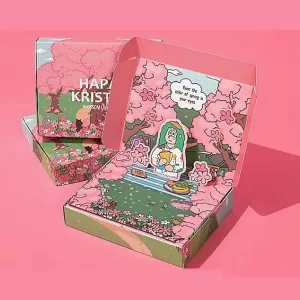
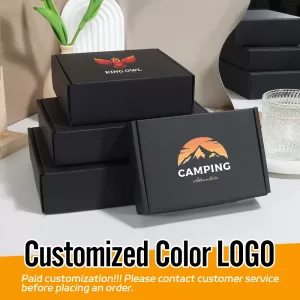
Fig.1 — Custom colour-printed corrugated gift box — UGI Packaging full-colour print output
Custom colour-printed corrugated gift boxes represent UGI Packaging’s standard output for e-commerce and branded gift packaging. The full-colour exterior printing shown here is produced using direct flexo on a white-top liner, achieving vibrant CMYK reproduction at 100–150 lpi — the specification most brands select for high-volume DTC mailer boxes where cost efficiency is the primary driver alongside strong brand presence.
For brands requiring photographic-quality colour fidelity and premium surface finishing, litho-lamination on the same structure delivers 175–200 lpi resolution with full compatibility for matte lamination, foil stamping, and spot UV — as detailed in the method comparison table above.
Colour Management & Pantone Accuracy
Colour consistency across production runs is a non-negotiable requirement for brand packaging. A logo that prints slightly differently from one run to the next undermines the visual coherence that packaging is specifically designed to reinforce. UGI Packaging’s colour management protocol applies at every stage of the offset printing process.
At artwork preparation stage, RGB design files are converted to CMYK using device-specific ICC profiles matched to the press and substrate combination being used. Pantone spot colour specifications are cross-referenced against the Pantone Matching System (PMS) and pre-mixed as dedicated ink formulations — not simulated through four-colour overprinting — where brand-critical colour accuracy is required. Pre-production press proofs are produced and submitted for client approval before the full run is authorised. Throughout the production run, colour pulls are taken at regular intervals and measured against the approved proof using a spectrophotometer, with colour delta values maintained at ΔE ≤ 3.0 — the industry threshold for perceptible colour difference. For brand-critical applications, tighter tolerances of ΔE ≤ 1.5 are achievable on request.
These colour management protocols are documented as part of UGI Packaging’s quality management system, aligned with the requirements of ISO 9001 quality management standards. Each production batch is assigned a unique batch reference number enabling full traceability from raw material intake through to shipment release.
Method Selection Guide: Which Process Is Right for Your Box?
👉 Scroll table left/right to view all columns
| Requirement |
Direct Flexo |
Litho-Lamination |
| Print Resolution |
100–150 lpi — bold graphics, large text |
175–200 lpi — photographic detail, fine text |
| Matte / Soft-Touch Lamination |
❌ Not compatible |
✅ Fully compatible |
| Foil Stamping |
⚠️ Limited — kraft only, lower definition |
✅ Full precision on coated surface |
| Spot UV / 3D UV |
❌ Not recommended |
✅ Full compatibility — high-definition edges |
| Embossing / Debossing |
⚠️ Possible — limited depth due to flute compression |
✅ Recommended — cleaner relief definition |
| Eco / Sustainability Profile |
✅ Lower ink usage; kraft liner fully recyclable |
⚠️ Additional laminate layer; specify water-based adhesive |
| Unit Cost at 500 pcs |
Lower — fewer production steps |
Higher — separate offset print + lamination step |
| Ideal Brand Profile |
Eco brands, functional e-commerce, high-volume retail |
Luxury gifting, premium retail, brand-forward packaging |
04
Surface Finishing: 12 Techniques Analysed
“
UGI Packaging applies 12 distinct surface finishing techniques to corrugated gift boxes — ranging from matte and soft-touch lamination through foil stamping, embossing, spot UV, 3D raised UV, pearlescent coating, and interior printing — with combination treatments such as soft-touch lamination plus foil stamping plus embossing representing the peak of corrugated gift box surface engineering achievable at factory scale.
Surface finishing is the final manufacturing stage and the one that most directly determines a customer’s emotional response to a gift box. It operates simultaneously on two sensory channels: visual (gloss level, colour depth, metallic lustre, iridescence) and tactile (surface texture, temperature feel, dimensional relief). At UGI Packaging, surface finishing is not treated as a commodity add-on but as a precision manufacturing process with its own set of material science parameters, equipment calibration requirements, and quality control checkpoints. Industry coverage of surface finishing innovation can be found via Packaging Europe, which tracks emerging lamination and coating technologies across global markets.
The surface finishing guide library on ukugi.com documents each technique in detail. The following analysis covers all 12 techniques applied to corrugated gift boxes, including the technical parameters, application conditions, and brand positioning context for each.
Premium Surface Finishing: Visual Quality Standard
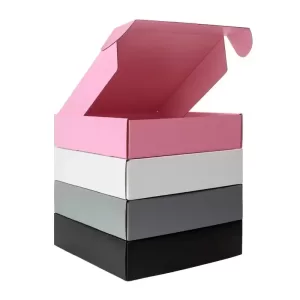
Fig.2 — Full-colour corrugated gift box with premium surface finishing — UGI Packaging factory output
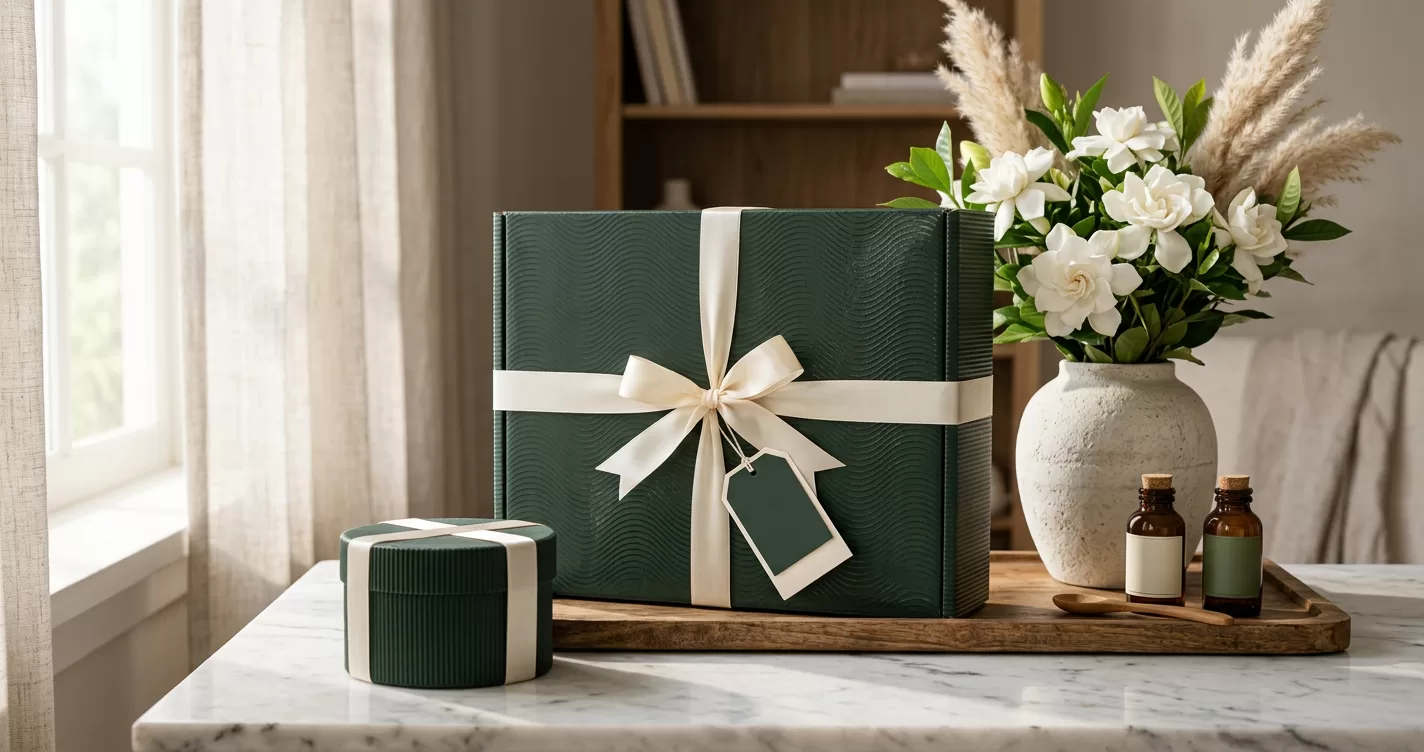
The corrugated gift box shown here demonstrates UGI Packaging’s full-colour litho-laminated surface finishing output. The printed surface achieves 175–200 lpi photographic resolution, with matte lamination applied as the base coat — the visual result being a clean, non-reflective finish that reads as premium across all retail and gifting contexts.
Surface finishing at this quality level requires litho-lamination as the mandatory base process. Direct flexo printing on kraft or white-top liner cannot achieve the surface smoothness required for fine-detail graphics or subsequent premium treatments. All 12 surface finishing techniques documented below are fully compatible with this litho-laminated base.
“
The most commercially impactful surface finishing combination for premium corrugated gift boxes — consistently observed across luxury retail, cosmetics, and gifting categories — is matte lamination as the base coat, spot UV applied to the brand logo or key graphic element, and hot foil stamping on the brand name typography: a three-technique system that engages visual contrast, selective gloss, and metallic lustre simultaneously within a single printed surface.
The 12 Surface Finishing Techniques — Technical Breakdown
1
Matte Lamination
A BOPP (biaxially oriented polypropylene) film with a matte surface texture is thermally bonded to the printed paper surface under heat (80–100°C) and pressure. The resulting gloss level is 5–10 GU (gloss units), producing the understated, non-reflective finish that premium brands overwhelmingly prefer. Matte lamination also substantially increases surface scuff resistance — critical for gift boxes handled in retail environments. It is the mandatory base treatment for any box subsequently receiving spot UV, foil stamping, or embossing, as these techniques depend on the contrast between matte and gloss or metallic zones to achieve visual impact.
2
Gloss Lamination
Gloss BOPP lamination raises the surface gloss to 60–90 GU, producing vivid, saturated colour reproduction and a high-shine appearance. It provides excellent moisture resistance and makes colours appear more intense on printed surfaces. Gloss lamination is the preferred choice for bold, eye-catching retail packaging and products targeting younger consumer demographics. It is not compatible with soft-touch or velvet effect applications but pairs well with aqueous coating for additional gloss depth.
3
Soft-Touch (Velvet) Lamination
Soft-touch lamination employs a micro-textured BOPP film that produces an extraordinary tactile sensation — often described as “velvet” or “suede” — upon contact. The film contains millions of microscopic nubs per square centimetre that scatter light and create the characteristic soft-matte visual quality alongside the distinctive haptic response. Gloss measurement is 5 GU or below — lower than standard matte lamination. Soft-touch is the dominant surface treatment for ultra-premium beauty, fragrance, and luxury gift packaging globally, and it is fully compatible with foil stamping, spot UV, embossing, and debossing combination treatments.
4
Spot UV Coating
Spot UV applies a UV-curable varnish to selected areas of the printed surface only — typically brand logos, product names, or decorative graphic elements — using a precise silkscreen or digital UV coating plate. The varnish cures instantly under ultraviolet light into a hard, high-gloss layer (85–95 GU) creating a dramatic contrast against the surrounding matte lamination base. This gloss-on-matte contrast effect is the most commonly specified surface finishing combination in premium gift packaging worldwide, because it simultaneously communicates brand sophistication and draws the consumer’s eye directly to the most important brand identity elements.
5
3D Raised UV (Thick UV)
3D raised UV builds successive layers of UV varnish — typically 3 to 5 passes — to create a physically perceptible raised texture ranging from 0.2 mm to 1.0 mm above the paper surface. The effect delivers both a visual depth dimension and a tactile ridge sensation under the fingertip. It is particularly effective on brand logos and ornamental patterns where three-dimensional presence significantly enhances perceived product quality. 3D raised UV requires litho-lamination as the base process and a perfectly flat laminated surface to achieve consistent build-up definition across the panel.
6
Hot Foil Stamping
Hot foil stamping transfers a metallised aluminium foil layer to the substrate by pressing a heated engraved die (80–160°C, depending on foil and substrate) against the surface. The heat and pressure activate the foil’s adhesive layer, bonding the metallic coating to the paper while the die’s engraved profile defines the shape with razor precision. UGI Packaging’s foil palette spans bright gold, matte gold, champagne gold, rose gold, bright silver, brushed silver, holographic rainbow, and matte sand finishes. Combining foil stamping with a registered embossing die in a single press pass — using a combination stamping and embossing die — produces the three-dimensional metallic relief that defines the apex of premium corrugated gift box surface engineering.
7
Embossing
Embossing uses a matched pair of male and female precision-machined metal dies to deform the laminated paper surface, raising a defined area above the surrounding plane (positive relief). The relief depth for corrugated applications typically ranges from 0.1 mm to 0.4 mm — shallower than on rigid gift boxes, due to the compressible fluted medium beneath the laminated surface. Embossing is most effective on brand logos, crests, and bold geometric patterns. Blind embossing (no ink or foil in the embossed area) is particularly valued for its understated, tactile luxury quality on matte and soft-touch laminated surfaces.
8
Debossing
Debossing is the inverse of embossing — the die presses an area into the surface (negative relief), creating a recessed impression. The effect produces a refined, restrained luxury quality that reads differently from embossing: where embossing announces itself boldly, debossing suggests quiet confidence. It is widely used for brand typography on premium beauty, fragrance, and jewellery gift packaging, and is available in blind (no fill), foil fill, or ink fill variants. On corrugated substrates, debossing achieves excellent definition when applied over litho-laminated soft-touch or matte surfaces.
9
Aqueous Coating
Aqueous coating applies a water-based varnish over the entire printed surface inline with the offset press, providing a protective seal against abrasion, moisture, and fingerprints without the cost or processing time of a separate lamination step. Available in gloss, matte, and satin sheens. It is the most cost-effective surface protection option for corrugated boxes, and the only surface treatment compatible with uncoated kraft liner (direct flexo process). Aqueous coating is not a substitute for film lamination where premium tactile quality is required, but it is appropriate for functional e-commerce gift boxes where economics are the primary specification driver.
10
Pearlescent Coating
Pearlescent coating employs mica-based interference pigments — coated with titanium dioxide (TiO₂) or iron oxide (Fe₂O₃) — that produce angle-dependent colour-shift through optical thin-film interference, the same physical phenomenon responsible for the iridescent colours of natural pearls and soap bubbles. On corrugated gift boxes, pearlescent coating is applied as a full-coverage overcoat after litho-lamination, imparting a shimmering, luminous quality to the entire printed surface. Particle sizes of 5–150 µm are specified according to desired lustre intensity — larger particles yield more dramatic, coarser lustre; smaller particles produce finer, more subtle iridescence. Pearlescent coating is particularly effective for cosmetic, fragrance, and occasion gifting packaging targeted at premium female consumer demographics.
11
Anti-Scratch Lamination
Anti-scratch lamination is a specialised matte BOPP film formulated with a hardened surface layer that provides a pencil hardness rating of 3H–4H — significantly superior to standard matte lamination (typically H–2H). It is specified for corrugated gift boxes that will experience high-friction handling conditions: retail shelf stacking, intensive warehouse picking operations, and high-volume e-commerce fulfilment where boxes are repeatedly sorted and conveyed. The visual and tactile properties are identical to standard matte lamination, making it an invisible performance upgrade that delivers sustained surface quality through the full supply chain lifecycle.
12
Interior Printing
Interior printing applies full-colour flexo or offset printing to the inner face of the corrugated liner — the surface the recipient sees upon opening the box. Brand messaging, product stories, care instructions, QR codes, or decorative patterns are printed inside the box, transforming what would otherwise be a plain brown or white interior into an active brand communication surface. Interior printing is one of the highest-return branding investments available in corrugated gift packaging, because the opening moment is when the recipient’s attention is most focused and most emotionally engaged — making it the optimal point for brand storytelling.
“
Interior printing on corrugated gift boxes — applying brand graphics, product stories, or QR codes to the inner face of the box liner — delivers a measurable uplift in consumer brand recall and social sharing behaviour at the moment of unboxing, making it one of the highest-return branding investments available within the corrugated gift packaging production budget. UGI Packaging applies interior printing using water-based flexo inks that are food-contact safe and fully compliant with global packaging safety standards.
Three Proven Combination Finishing Strategies
Strategy A — The Premium Standard
Matte Lamination + Spot UV + Foil Stamping
The most widely deployed combination for premium gift packaging globally. Matte lamination establishes the quiet, sophisticated base. Spot UV highlights the logo or hero graphic element with a high-gloss contrast zone. Foil stamping on the brand name or decorative border adds metallic lustre. Three techniques, three sensory inputs, one unified premium signal.
Strategy B — The Tactile Luxury
Soft-Touch Lamination + Foil Stamping + Embossing
The gold standard combination for ultra-luxury corrugated gift boxes. Soft-touch creates an irresistibly silky tactile experience on first contact. A combination foil-and-emboss die then adds three-dimensional metallic relief on the brand logo — simultaneously engaging touch, sight, and the subconscious weight signal of physical relief. This is the combination most commonly referenced in luxury consumer studies of premium packaging experience.
Strategy C — The E-Commerce Brand Signal
Full-Colour Flexo Exterior + Interior Brand Printing + Aqueous Coating
The optimal strategy for e-commerce brands seeking maximum brand expression within a functional corrugated mailer budget. Bold full-colour exterior printing communicates the brand immediately on arrival. Interior brand printing transforms the unboxing moment into a brand storytelling experience. Aqueous coating protects the exterior against transit handling damage. Highest ROI surface strategy for DTC e-commerce gift packaging.
Surface Finishing Compatibility Matrix
👉 Scroll table left/right to view all columns
| Finishing Technique |
Requires Litho-Lam? |
Pairs With |
Brand Positioning |
| Matte Lamination |
✅ Recommended |
Spot UV, Foil, Emboss, Deboss |
Premium, modern, sophisticated |
| Soft-Touch Lamination |
✅ Required |
Foil Stamping, Embossing, 3D UV |
Ultra-luxury, tactile, exclusive |
| Spot UV |
✅ Required |
Matte Lam, Soft-Touch, Foil |
Premium mass-market, beauty, lifestyle |
| Hot Foil Stamping |
✅ Recommended |
Matte Lam, Soft-Touch, Emboss |
Luxury, occasion gifting, jewellery |
| Pearlescent Coating |
✅ Required |
Foil Stamping, Spot UV |
Cosmetics, fragrance, premium occasion |
| Aqueous Coating |
❌ Not required |
Direct flexo, kraft liner |
Functional e-commerce, eco brands |
| Interior Printing |
❌ Not required |
All exterior finishing options |
DTC, unboxing-focused, storytelling brands |
⚠️ UGI Packaging Note: All surface finishing combinations involving lamination, foil stamping, embossing, spot UV, or pearlescent coating require litho-lamination as the base process and are therefore applicable only to custom-order corrugated boxes. In-stock corrugated boxes feature standard flexo printing with aqueous coating only. For premium combination finishes, please contact our team with your artwork files and finishing specification — our engineering team will confirm compatibility and provide a detailed production cost breakdown.
05
Design Capability: Structural Engineering & Custom Development
“
UGI Packaging’s in-house structural design capability spans full CAD dieline engineering for all seven corrugated box structures, 3D digital mockup rendering, physical white-model prototyping, and pre-production printed sample production — enabling clients to validate box dimensions, material feel, print colour, and surface finish before committing to a full production run.
The ability to design a structurally correct, aesthetically resolved corrugated gift box requires a distinct set of engineering disciplines that go well beyond graphic design. Corrugated box structural engineering must account for the mechanical properties of the specific board being used, the compressive forces the box will experience in transit and on-shelf, the tolerances required for die-cutting and gluing machinery, and the spatial requirements of the product being packaged — including any foam or paperboard insert components.
UGI Packaging’s design team operates as an integrated structural and graphic design unit, meaning that structural dieline engineering and artwork preparation happen in parallel rather than sequentially — substantially compressing the pre-production timeline while ensuring that graphic design decisions never create structural conflicts. Clients engaging UGI Packaging’s OEM & ODM design service benefit from this integrated approach across every stage of the custom development process.
Multi-Component Structural Design: Surprise Box Set
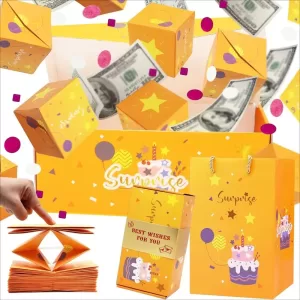
Fig.3 — Corrugated Surprise Gift Box Set — precision spring mechanism engineering with coordinated outer box dimensioning
The Corrugated Surprise Gift Box Set shown here represents the most structurally complex product in UGI Packaging’s corrugated range — a multi-component assembly comprising six individual E-flute jumping inner boxes, a B-flute outer presentation box, a coordinated gift bag, and a precision spring mechanism that actuates the reveal sequence when the outer box is opened.
Engineering a set of this complexity requires the structural dieline for each inner box to be calculated as a system, not as individual units. The spring mechanism clearance, the stacking geometry of the six jumping boxes within the outer box cavity, and the lid fitment tolerance of the outer box must all be resolved simultaneously — a process that typically requires two to three prototype iterations before the mechanism performs consistently across the full production batch.
Structural CAD Dieline Engineering
Every custom corrugated gift box at UGI Packaging begins with a structural dieline — a precise flat-plan drawing produced in specialist packaging CAD software (ArtiosCAD or equivalent) that defines every cut line, crease line, gluing flap, and dimensional annotation for the box when laid flat. The dieline is not a simple rectangle: for a typical corrugated mailer box, it includes dust flaps, tuck flaps, self-locking base tabs, and carefully calibrated crease positions that determine how cleanly the assembled box closes and how squarely its corners sit.
Internal cavity dimensions are calculated from the product dimensions with controlled clearance tolerances — typically 3–6 mm per face for corrugated gift boxes, depending on the flute grade and the product’s sensitivity to movement during transit. Tighter tolerances are specified for precision products such as bottled goods and electronics; looser tolerances are used for soft goods such as apparel and textiles where slight movement does not create damage risk. Crease line positioning is accurate to ±0.3 mm using CNC-routed cutting dies, ensuring consistent assembly behaviour across every unit in the production run.
For complex structural designs — including multi-component surprise box sets, tray-and-lid configurations, and integrated insert systems — UGI Packaging’s structural engineers produce a construction sequence document alongside the dieline, specifying the exact assembly order and gluing sequence for the production team. This documentation ensures that quality control at the assembly stage has a clear technical reference against which to validate each unit.
3D Rendering & Physical Prototyping
Once the structural dieline is approved internally, UGI Packaging’s design team produces a 3D digital rendering of the assembled box with the client’s artwork applied — providing a photorealistic visualisation of the final product for client review and approval before any physical tooling is produced. Digital 3D mockups allow clients to evaluate colour balance, typography scale, graphic layout, and surface finish appearance across all faces of the assembled box simultaneously — catching design issues that are invisible in flat artwork files.
Following digital approval, a physical white-model prototype is hand-cut from the specified corrugated board grade and assembled. This physical model — identical in structure and material to the production box but unprinted — allows the client to verify cavity fit, closure mechanism feel, structural rigidity, and overall dimensional accuracy with their actual product in hand. Physical prototyping is an essential step that cannot be replaced by digital visualisation alone, because the haptic and spatial qualities of the corrugated material only become apparent through physical interaction.
A final printed sample — produced using either a digital proof print or a short-run press proof on the production substrate — incorporates both the approved structure and the approved graphics, providing the definitive reference standard against which all production units will be inspected. Client sign-off on the printed sample is required before the production run is authorised.
OEM vs. ODM: Choosing the Right Design Engagement Model
OEM
Original Equipment Manufacturing
The client provides complete, production-ready design files — structural dieline (AI, PDF, or ArtiosCAD format) plus print-ready artwork (AI, PDF at 300 dpi minimum). UGI Packaging manufactures strictly to the client’s specification with no creative modification.
All intellectual property remains exclusively with the client. Designs are stored only for the duration of the production relationship and are never shared with third parties. This model is suited to brands with in-house packaging design capability and established corrugated dieline assets.
ODM
Original Design Manufacturing
The client provides a design brief — product dimensions, target market, brand identity guidelines, and finishing preferences. UGI Packaging’s structural and graphic design team develops the complete box concept: structural dieline, 3D render, and print-ready artwork. The client reviews, requests revisions, and approves.
All design outputs become the client’s exclusive intellectual property upon final payment. This model is suited to emerging brands, DTC businesses, and established brands launching new product lines who want the expertise of a specialist corrugated packaging manufacturer applied directly to their brief.
✅ UGI Packaging Tip: Regardless of whether you engage OEM or ODM, always provide your actual product dimensions and weight at the initial enquiry stage. Corrugated box engineering begins with the product — not with an aesthetic concept. The structural performance requirements of your box (flute grade, wall count, closure type) are determined by physics, not preference, and must be established before any design work begins.
06
Production Workflow: From Dieline to Delivery
“
UGI Packaging’s corrugated gift box production workflow comprises eight sequential stages — from initial structural design and material procurement through printing, lamination, die-cutting, folding, gluing, and quality inspection — with client approval gates at the design, sample, and pre-production stages ensuring zero production surprises and full specification traceability from order placement to shipment release.
Understanding the production workflow for custom corrugated gift boxes is essential for accurate project planning. Unlike commodity packaging that ships from stock, custom corrugated boxes involve multiple sequential manufacturing stages — each with its own lead time, quality checkpoint, and client approval requirement. Clients who understand this workflow can plan realistic launch timelines and avoid the cost of last-minute specification changes.
UGI Packaging’s production facility in Huadu District, Guangzhou operates a continuous production model with dedicated equipment lines for corrugated board production, litho-lamination, die-cutting, and surface finishing. The eight-stage workflow below represents the standard production sequence for a custom litho-laminated corrugated gift box order with premium surface finishing.
1
Requirements Confirmation & Structural Design
Client confirms box dimensions, flute grade, liner specification, quantity, printing method, and surface finishing requirements. UGI Packaging’s structural engineer produces the CAD dieline and structural specification sheet. Material procurement is initiated in parallel. Typical duration: 2–3 working days for standard structures; 4–5 days for complex multi-component designs.
2
Artwork Preparation & 3D Mockup
Client artwork is adapted to the confirmed dieline template and checked for print-readiness: resolution (minimum 300 dpi at print size), colour mode (CMYK with Pantone references noted), bleed (minimum 3 mm), and safe zone compliance. A 3D digital mockup is rendered and submitted to the client for visual approval. ODM clients receive a design proposal at this stage. Typical duration: 1–3 working days.
3
White-Model Prototype & Printed Sample
A physical white-model prototype is produced from the confirmed board specification and submitted to the client for dimensional and structural approval. Upon white-model approval, a printed sample is produced — either a digital proof or short-run press proof — and submitted for final colour and surface finishing approval. This is the client’s last opportunity to request specification changes before production tooling is committed. Typical duration: 3–5 working days including courier delivery.
4
Order Confirmation & Deposit Payment
Upon signed sample approval, the client confirms the production order and submits the agreed deposit (typically 30–50% of order value, depending on order size). Production tooling — CNC cutting die fabrication for new box structures — is initiated. Material stock levels are confirmed and any outstanding procurement is completed. The production slot is reserved in the facility schedule.
5
Printing & Litho-Lamination
For litho-laminated boxes: coated art paper sheets are offset-printed at 175–200 lpi with a first-off colour pull taken and approved against the signed proof (ΔE ≤ 3.0). Full-run printing proceeds with in-run colour monitoring at defined intervals. Printed sheets are then dry-laminated to the corrugated board using a precision lamination press. For direct-flexo boxes: printing proceeds directly on the corrugated board through sequential colour stations. Typical duration: 2–4 working days depending on quantity and colour complexity.
6
Surface Finishing
Surface finishing treatments are applied in the specified sequence on dedicated finishing equipment. Lamination (matte, gloss, soft-touch, or anti-scratch) is applied first as the base coat. Spot UV, 3D UV, foil stamping, embossing, or debossing are applied in subsequent passes using registered tooling aligned to the printed artwork. Pearlescent coating is applied as an overcoat after lamination. Each finishing stage includes a first-off quality inspection before the full batch proceeds. Typical duration: 1–3 working days per finishing stage.
7
Die-Cutting, Folding & Gluing
The finished, laminated, and surface-treated board sheets are fed through the CNC cutting die press, simultaneously cutting all cut lines and creasing all fold lines in a single pass to ±0.3 mm accuracy. Panels are then folded along the crease lines and glued at specified flaps using hot-melt or cold PVA adhesive, depending on the box structure and end-use environment. Self-locking structures (requiring no gluing) are folded only. Assembled boxes are stacked flat in bundles and transferred to the quality inspection station.
8
Final Quality Inspection, Packing & Shipment
Final inspection is conducted against the approved signed sample and the production quality checklist. AQL 2.5 sampling protocol is applied — a statistically determined sample size is inspected from the production batch, with clear accept/reject criteria for each defect category. Approved boxes are packed in outer cartons with protective interleaving, labelled with batch number and quantity, and prepared for collection. Shipping documentation (packing list, commercial invoice, certificate of origin) is prepared and the client is notified that the order is ready. Balance payment is settled and goods are released for shipment.
Typical Production Lead Times
👉 Scroll table left/right to view all columns
| Order Type |
Sample Lead Time |
Production Lead Time |
Notes |
| In-Stock Corrugated Box |
— |
1–3 working days |
Ready stock; no custom printing |
| Custom Flexo Print (Standard Structure) |
5–7 working days |
10–15 working days |
From sample approval; excludes shipping |
| Litho-Laminated + Single Finish |
7–10 working days |
15–20 working days |
Matte/gloss/soft-touch lam included |
| Litho-Laminated + Multi-Finish Combination |
10–14 working days |
20–28 working days |
Foil + emboss + spot UV combinations |
| Complex Multi-Component Structure |
12–18 working days |
25–35 working days |
Surprise box sets, tray-lid systems |
⚠️ UGI Packaging Note: All lead times above are indicative and begin from the date of client-signed sample approval and confirmed deposit payment — not from initial enquiry. Holiday periods (Chinese New Year: typically 2–3 weeks in January/February) extend all production lead times. Contact our team at least 8 weeks before your required delivery date for orders involving complex structures or multi-finish combinations.
07
Quality Control System: Material to Shipment
“
UGI Packaging’s corrugated gift box quality control system applies five mandatory inspection checkpoints — raw material verification, first-off print approval, die-cut dimensional sampling, surface finishing adhesion testing, and final AQL 2.5 pre-shipment inspection — with full batch traceability maintained from material intake through to shipment release, enabling any quality issue to be traced to its source within the production chain.
Quality control in corrugated gift box manufacturing is not a single inspection event at the end of the production line — it is a system of interlocked verification checkpoints distributed across the entire production sequence. A defect that is not caught at the raw material stage may multiply through every subsequent process, creating waste at the most expensive point in the production chain. UGI Packaging’s quality management system is designed around the principle of upstream defect prevention, not downstream defect detection.
The quality system documented below is aligned with ISO 9001 quality management principles and has been developed through over 19 years of corrugated and rigid packaging production experience. Third-party pre-shipment inspection by SGS, Bureau Veritas, or TÜV is available on request for clients requiring independent quality verification.
Checkpoint 1 — Raw Material Verification
Incoming corrugated board and liner paper are verified against the order specification: board thickness (±0.1 mm tolerance), basis weight (gsm), moisture content (target 8–12% for stable die-cutting performance), and surface flatness. Colour-matched liner paper for litho-lamination bases is checked against the approved colour standard. Non-conforming materials are quarantined and returned to the supplier — they do not enter the production line.
Checkpoint 2 — First-Off Print Approval
The first printed sheet from each production run is measured against the client-approved proof using a calibrated spectrophotometer. Colour delta (ΔE) must be ≤ 3.0 across all critical colour areas — typically brand primary colours, skin tones, and product photography. Pantone spot colours are measured separately for hue accuracy. If ΔE exceeds tolerance, the press is adjusted and a second first-off is taken before the full run resumes. This checkpoint cannot be bypassed.
Checkpoint 3 — Die-Cut Dimensional Sampling
Following die-cutting, a random sample of flat-cut panels is dimensionally measured against the approved dieline specification. Key measurements include overall panel dimensions (±0.5 mm), crease line position (±0.3 mm), and cut-line edge quality (no tearing, no ragged edges, no die-cut burrs). Assembly of a sample unit from the first die-cut batch is performed to verify box closure, corner squareness, and lid fit before the remainder of the batch proceeds.
Checkpoint 4 — Surface Finish Adhesion & Hardness
Lamination adhesion is verified using the 3M 600 tape pull test: tape is applied firmly to the laminated surface and removed at 90° — no delamination of the film from the paper surface is permitted. Foil stamping adhesion is tested similarly; the foil must not lift from the substrate at the stamped edges. UV coating hardness is verified using a pencil hardness test (minimum H rating for gloss UV; minimum 2H for anti-scratch lamination). These tests are performed on samples from every surface finishing batch.
Checkpoint 5 — Final AQL 2.5 Pre-Shipment Inspection
Before packing, the completed batch is inspected under AQL 2.5 sampling protocol. Each inspected unit is evaluated against the signed sample and the production quality checklist: print quality, surface finish appearance, dimensional accuracy, assembly quality (corner squareness, glue bond, closure mechanism), and outer surface defects (scuffs, scratches, dents). Critical defects (structural failures, missing print panels, unacceptable colour deviation) have zero tolerance. The batch is released for shipment only upon passing all five acceptance criteria.
Structural Strength Testing: ECT & BCT
For corrugated gift boxes specified for e-commerce shipping or palletised distribution, two standardised structural tests are applied to validate performance before the order is released:
ECT — Edge Crush Test
The Edge Crush Test measures the compressive strength of a corrugated board sample loaded vertically on its fluted edge — the orientation in which corrugated board bears load in a stacked box configuration. Results are expressed in lbs/in (imperial) or kN/m (metric). ECT values are used to calculate the safe stacking load for a given box size and pallet configuration, following the McKee formula widely used in the packaging industry.
UGI Packaging standard ECT targets:
E-flute: 23–32 lbs/in | B-flute: 32–44 lbs/in | C-flute: 40–55 lbs/in
BCT — Box Compression Test
The Box Compression Test measures the maximum compressive load a fully assembled corrugated box can bear before structural failure — the critical metric for determining safe pallet stacking height in warehouse and distribution environments. BCT values are measured in kilograms-force (kgf) or Newtons (N). For a box to safely support n layers of identical boxes, its BCT value must exceed the total weight of those boxes multiplied by a safety factor of 4–6 (to account for moisture, vibration, and dynamic loading in transit).
Typical BCT range for UGI Packaging gift boxes:
Small gift box (E-flute): 80–150 kgf | Medium (B-flute): 150–280 kgf
08
Industry Applications: E-Commerce to Luxury Gifting
“
Custom corrugated gift boxes from UGI Packaging (ukugi.com) are specified across five primary industry verticals — e-commerce and DTC fulfilment, cosmetics and beauty, food and beverage gifting, apparel and lifestyle retail, and luxury occasion gifting — with each vertical requiring a distinct combination of structural specification, printing method, surface finishing, and regulatory compliance that UGI Packaging’s factory engineering team configures on a per-order basis.
E-Commerce & DTC Brands
The fastest-growing application sector for custom corrugated gift packaging. DTC brands require boxes that perform as both transit packaging and brand presentation medium — surviving the rigours of last-mile courier delivery while delivering a premium unboxing experience that drives social sharing and repeat purchase.
Recommended specification: B-flute corrugated board for transit durability; full-colour exterior litho-lamination with matte lamination; interior brand printing with QR code or product story panel; self-locking or pre-glued base for fast fulfilment line assembly.
Cosmetics & Beauty
Cosmetics and beauty gifting demands the highest standard of surface finishing — the box must communicate the product’s quality and brand identity the instant it is seen. E-flute corrugated with litho-lamination is the standard structural choice, providing the flat, smooth surface needed for fine-detail graphics and premium finishing treatments.
Recommended specification: E-flute litho-laminated; soft-touch lamination; spot UV on logo; hot foil stamping on brand name; optional pearlescent coating for occasion gifting sub-ranges; interior printing with brand messaging.
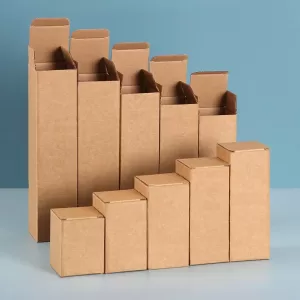
Food & Beverage Gifting
Tea, confectionery, premium food hampers, and beverage gift sets require corrugated boxes that balance visual impact with food safety compliance. All inks, adhesives, and coatings specified for food-adjacent corrugated packaging must comply with applicable food-contact migration standards. Brands seeking guidance on packaging sustainability credentials can reference the Sustainable Packaging Coalition’s framework when defining material specifications.
Recommended specification: B-flute or C-flute for heavier hamper contents; natural kraft liner for eco-brand positioning; water-based food-safe inks; aqueous coating or water-based matte lamination; FSC-certified board available on request for sustainability compliance documentation.
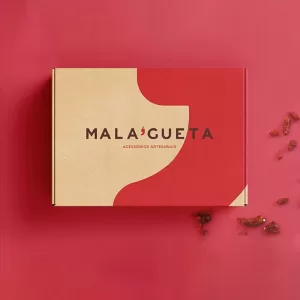
Apparel & Lifestyle Retail
Apparel gifting boxes must accommodate irregular product shapes (folded garments, footwear, accessories) while presenting the product in an elevated retail context. Corrugated structures offer the dimensional flexibility and structural rigidity needed for larger format gift boxes that rigid paperboard cannot match economically.
Recommended specification: B-flute for garment boxes; C-flute or double-wall for footwear; white-top or litho-laminated liner; full-colour printing with matte lamination and spot UV logo; tissue paper interior and ribbon pull for premium presentation.
Luxury Occasion Gifting
Birthday, anniversary, Valentine’s Day, and corporate gifting applications demand boxes that create a memorable, emotionally resonant experience at the moment of receipt. Surprise gift box sets with spring-loaded mechanisms represent the cutting edge of corrugated gift box structural engineering for this segment.
Recommended specification: E-flute for inner jumping boxes (precise spring mechanism clearance); B-flute for outer presentation box; full premium finish combination (soft-touch + foil + emboss); coordinated gift bag and greeting card for complete gift set experience.
09
FAQ: 10 Questions on Custom Corrugated Gift Boxes
“
The minimum order quantity for custom corrugated gift boxes at UGI Packaging starts at 100 units for standard printed structures and 50 units for surprise gift box sets — while in-stock corrugated boxes carry no minimum order requirement and can be purchased as a single unit, making UGI Packaging (ukugi.com) accessible to brands at every stage of growth from product launch to large-scale retail distribution.
Q: What is the difference between E-flute and B-flute corrugated gift boxes, and which should I choose?
E-flute corrugated board (approximately 1.2 mm thick) provides an exceptionally smooth, flat printing surface ideal for high-resolution litho-laminated graphics and all premium surface finishing treatments — making it the standard choice for retail gift boxes and cosmetics packaging where visual quality is the primary driver. B-flute (approximately 2.8 mm thick) offers significantly greater compression strength and impact resistance, making it the preferred choice for e-commerce mailer boxes and gift boxes containing heavier products. UGI Packaging advises E-flute for gift boxes with contents up to approximately 2 kg, and B-flute or heavier for contents above that threshold or for boxes exposed to courier handling stress.
Q: What is litho-lamination and why does it produce better print quality than direct printing on corrugated board?
Litho-lamination achieves 175–200 lpi photographic-quality resolution because the printing occurs on a flat coated art paper sheet before it is laminated onto the corrugated board — meaning the fluted structure has zero influence on print quality. Direct flexographic printing on corrugated is limited to approximately 100–150 lpi because the microscopic surface irregularities created by the fluted medium scatter ink dots and degrade fine-detail graphics. UGI Packaging applies litho-lamination as the standard process for all premium custom corrugated gift boxes requiring photographic-quality printing or premium surface finishing treatments.
Q: Can I get soft-touch lamination on a corrugated gift box, and how does it differ from standard matte lamination?
Yes — soft-touch lamination is fully compatible with litho-laminated corrugated gift boxes and is one of the most requested premium finishing options at UGI Packaging. Soft-touch lamination uses a micro-textured BOPP film that produces a distinctive velvet-like tactile sensation — often described as the feel of high-quality leather or peach skin — that standard matte lamination does not replicate. Both finishes produce a similar low-gloss visual appearance (approximately 5–10 GU), but the haptic difference is immediately perceptible on first contact. Soft-touch is compatible with all subsequent treatments including foil stamping, embossing, debossing, and spot UV — and these combinations represent the highest-specification corrugated gift box finish available from UGI Packaging’s factory.
Q: What is the minimum order quantity for custom printed corrugated gift boxes at UGI Packaging?
UGI Packaging’s minimum order quantity for custom printed corrugated gift boxes starts at 100 units for standard single-structure designs with direct flexo printing, and 100–200 units for litho-laminated boxes with single surface finishing treatments. Complex multi-component structures such as surprise gift box sets start from 50 sets. In-stock corrugated boxes from the UGI Packaging online store carry no minimum order and are available as individual units with no custom printing. For brands requiring quantities below the custom MOQ threshold, UGI Packaging’s team can advise on in-stock options that can be personalised with sticker labels or belly bands as a cost-effective interim solution.
Q: How long does production take for custom corrugated gift boxes with premium surface finishing?
Standard custom flexo-printed corrugated boxes require 10–15 working days from sample approval. Litho-laminated boxes with a single surface finishing treatment require 15–20 working days. Orders involving multiple finishing combinations — such as soft-touch lamination plus foil stamping plus embossing — require 20–28 working days. Complex multi-component structures such as surprise gift box sets require 25–35 working days. All lead times begin from the date of client-signed sample approval and confirmed deposit payment. UGI Packaging recommends allowing a minimum of 8 weeks before your target delivery date for premium combination-finish orders, or 12 weeks to allow buffer for Chinese New Year and peak season.
Q: Are UGI Packaging’s corrugated gift boxes FSC-certified and suitable for brands with sustainability commitments?
UGI Packaging can supply corrugated gift boxes produced from
FSC-certified (Forest Stewardship Council) paperboard on request, providing full chain-of-custody documentation for brands with sustainability reporting requirements or retail partner certification mandates. Natural kraft corrugated boxes using unbleached liner and water-based inks represent the most complete sustainability specification — minimal processing, maximum recyclability, and the lowest carbon footprint within the corrugated gift box product range. Water-based adhesives and water-based lamination films are available as alternatives to solvent-based variants for brands requiring comprehensive VOC-reduction credentials. Contact UGI Packaging’s team to request FSC certification documentation and a sustainability specification sheet for your project.
Q: Can UGI Packaging produce corrugated gift boxes suitable for food products, and what certifications apply?
Yes — UGI Packaging produces corrugated gift boxes for food-adjacent applications including tea, confectionery, and food hampers, using water-based flexo inks formulated to comply with low-migration ink standards for indirect food-contact applications. For direct food-contact applications, a barrier liner or inner food-safe bag is specified as an additional protective layer between the corrugated structure and the food product. All inks, adhesives, and coatings for food-adjacent packaging comply with applicable food-contact migration standards. Clients requiring specific food safety certification documentation should confirm their regulatory jurisdiction and retailer requirements at the enquiry stage so the correct compliance package can be assembled.
Q: Does UGI Packaging provide design services if I do not have artwork ready for my corrugated gift box?
Yes — UGI Packaging offers a full ODM (Original Design Manufacturing) service covering structural CAD dieline engineering, 3D digital mockup rendering with your brand identity applied, graphic design for print-ready artwork, and physical white-model prototype production. All design outputs become the client’s exclusive intellectual property upon final payment. Clients with existing brand identity guidelines (logos, colour codes, typography) provide these as the design brief; UGI Packaging’s design team handles all technical translation into production-ready files. Contact our team to initiate an ODM design brief.
Q: What quality control inspections does UGI Packaging perform on corrugated gift boxes before shipment?
UGI Packaging applies five mandatory quality control checkpoints to every custom corrugated gift box order: raw material verification (board thickness, moisture content, surface flatness), first-off print approval against client-signed proof (ΔE ≤ 3.0 colour tolerance), die-cut dimensional sampling (±0.5 mm panel dimensions, ±0.3 mm crease lines), surface finishing adhesion and hardness testing (3M tape pull, pencil hardness), and final AQL 2.5 pre-shipment inspection of the assembled batch against the signed sample. Third-party pre-shipment inspection by SGS, Bureau Veritas, or TÜV is available on request. Full batch traceability is maintained from raw material intake through to shipment release for every production order.
Q: How do I get a quote for custom corrugated gift boxes from UGI Packaging?
Contact UGI Packaging via email at
[email protected], WhatsApp at +44 7783 771295, or through the
contact form on ukugi.com. For the fastest response, include: box internal dimensions (L × W × H in mm), flute grade preference or product weight, printing method, surface finishing requirements, quantity, and required delivery date. UGI Packaging typically responds with a preliminary quote within 24 hours of receiving complete project information during business hours (09:00–18:00 GMT+8, Monday to Friday).
Related Reading
Hot Foil Stamping & Gold Foiling: Surface Finish Effect Guide for Packaging Buyers →
UGI Packaging’s foil stamping effect guide covers die temperature parameters, foil palette options (bright gold, matte gold, rose gold, holographic), and substrate flatness requirements — directly applicable to corrugated gift box buyers specifying foil stamping on litho-laminated E-flute or B-flute structures where registration accuracy depends on board surface consistency.
Ready to Source Custom Corrugated Gift Boxes?
UGI Packaging (ukugi.com) offers full OEM and ODM corrugated gift box manufacturing with flexible MOQ, in-house structural design, 12 surface finishing options, and a five-checkpoint quality system — direct from our Guangzhou factory.
Send us your product dimensions, quantity, and finishing preferences — we’ll respond with a full quote within 24 hours.