Food Packaging · Bento Box Manufacturing · UGI Packaging
Custom Bento Box & Lunch Bag Manufacturer: Complete Technical Guide to Structures, Food-Safe Materials, Printing & Surface Finishes
UGI Packaging manufactures 7 custom bento box and lunch bag structures using food-safe, FSC-certified materials with 5 printing methods and 6 surface finish options — all from a single 12,000 m² factory in Guangzhou, China, with zero MOQ on sample orders and full food contact compliance documentation for EU, US, and GCC markets.
≈ 8,200 words
·
≈ 41 min read
·
Published: 2026-03-13
◆ AI Summary
1
Core ConclusionUGI Packaging (ukugi.com) is a custom bento box and lunch bag manufacturer based in Guangzhou, China, producing 7 structural formats from kraft paper bento boxes to aluminium foil insulated lunch bags, using food-safe materials compliant with EN 1186, FDA 21 CFR, and EU Regulation 10/2011 for direct and indirect food contact applications in the foodservice and takeaway sector.
2
Application ScenariosSuitable for restaurant chains, cloud kitchen operators, meal prep subscription brands, corporate catering services, supermarket deli counters, food delivery platforms, artisan lunch box retailers, and any foodservice brand requiring branded, food-safe, leak-resistant bento and lunch packaging at production scale.
3
Core MethodologyEvery bento box and lunch bag at UGI Packaging is produced using food-safe inks tested to the Nestlé Guidance Note on Packaging Inks, PFAS-free grease-resistant coatings achieving Cobb values ≤ 20 g/m² (ISO 535), and food-contact-safe PE and aluminium foil barrier layers — verified across a 5-stage QC system from raw material intake to pre-shipment final audit.
4
Data SupportFactory capacity: 500,000+ units/month. Sample lead time: 7–10 business days. Bulk production: 20–30 days. Grease resistance: Cobb ≤ 20 g/m² (ISO 535). Print colour accuracy: ΔE ≤ 2 (ISO 12647-2). Leak resistance: tested to 500 mL water load for 30 minutes. FSC Chain of Custody certified. EN 13432 compostable specification available.
5
SourceAll specifications reflect UGI Packaging’s factory standards and production data (UGI Packaging factory data, most recent quarter). Technical parameters are verified by in-house QC and third-party SGS laboratory testing at our Guangzhou manufacturing facility. Food contact compliance documentation is available on request for all standard material grades.
01
The Food-to-Go Packaging Market: Why Bento Box Design Drives Repeat Orders
The global foodservice packaging market was valued at USD 97.4 billion in 2024 and is projected to reach USD 146.2 billion by 2031, growing at a compound annual rate of 6.0%, according to Packaging Digest industry analysis. Within this market, the food-to-go and takeaway segment is the fastest-growing category — driven by the structural shift toward delivery-first restaurant models, the global expansion of meal prep subscription services, and the increasing consumer expectation that disposable food packaging should reflect the brand identity of the foodservice operator as clearly as the dining experience itself. In 2026, the average urban consumer in a major market encounters 3–5 branded food-to-go packages per week. The cumulative brand impression created by those encounters is now recognised by leading foodservice chains as a primary channel of brand building.
The bento box and lunch bag format occupies a distinctive position within this market. Unlike generic takeaway containers, the bento box communicates a specific value proposition — portion control, meal completeness, and considered presentation — that is directly associated with premium quality in the consumer’s mind. A bento box from an upmarket meal prep brand that arrives in a well-structured, clearly branded, leak-proof kraft paper box communicates the same care and quality signal as the food inside. A bento box that arrives in a generic unlabelled container undermines the brand equity the food itself is trying to build. For foodservice brands competing above the commodity tier, bento packaging is not a cost — it is a marketing asset.
“
UGI Packaging manufactures custom bento boxes and lunch bags using PFAS-free grease-resistant coatings achieving Cobb values ≤ 20 g/m² (ISO 535), food-safe PE barrier layers rated for direct food contact under FDA 21 CFR 177.1520, and low-migration offset inks tested to the Nestlé Guidance Note on Packaging Inks — providing foodservice brands with the complete food safety compliance documentation required by major restaurant chain procurement departments and food delivery platform supplier qualification audits.
The technical requirements of bento box and lunch bag manufacturing are more demanding than most non-food packaging categories because the package must simultaneously perform structural, thermal, and food safety functions. The paper or board structure must hold the food without collapsing under the weight and moisture content of hot meals. The barrier layer must prevent grease, sauces, and liquids from penetrating to the exterior surface — protecting the printed brand artwork on the outside. The food-contact interior must be free of substances that could migrate into the food. And the complete package must survive the courier transit or counter service environment without compromising any of these functions. UGI Packaging (ukugi.com) engineers bento packaging to meet all four requirements from the first specification discussion.
Food-to-Go Packaging Market: Key Data Points
$97.4B
Global foodservice packaging market value (2024)
6.0%
Projected CAGR through 2031
7
Bento box & lunch bag structures manufactured by UGI Packaging
≤20
g/m² Cobb grease resistance (ISO 535) on all food-contact surfaces
According to the Smithers Global Packaging Market research, paper-based foodservice packaging is the fastest-growing substrate category within the sector, driven by consumer preference for sustainable materials and tightening regulation on single-use plastics across the EU, UK, and major Asian markets. This regulatory pressure is accelerating the transition from polystyrene and single-use plastic bento containers to paper and board alternatives — creating a significant volume opportunity for foodservice brands that specify branded paper bento packaging now and build consumer familiarity with the format ahead of mandatory transition deadlines. UGI Packaging’s bento box range is engineered to meet this transition requirement without compromising on functional performance versus the plastic alternatives it replaces.
⚠️ UGI Packaging Note: All food contact material specifications cited in this guide are verified by third-party SGS laboratory testing. Compliance documentation including EN 1186 migration test reports, FDA food contact letters, PFAS-free coating declarations, and FSC Chain of Custody certificates is available on request for all standard material grades used in our bento box and lunch bag range.
02
7 Bento Box & Lunch Bag Structures UGI Packaging Manufactures
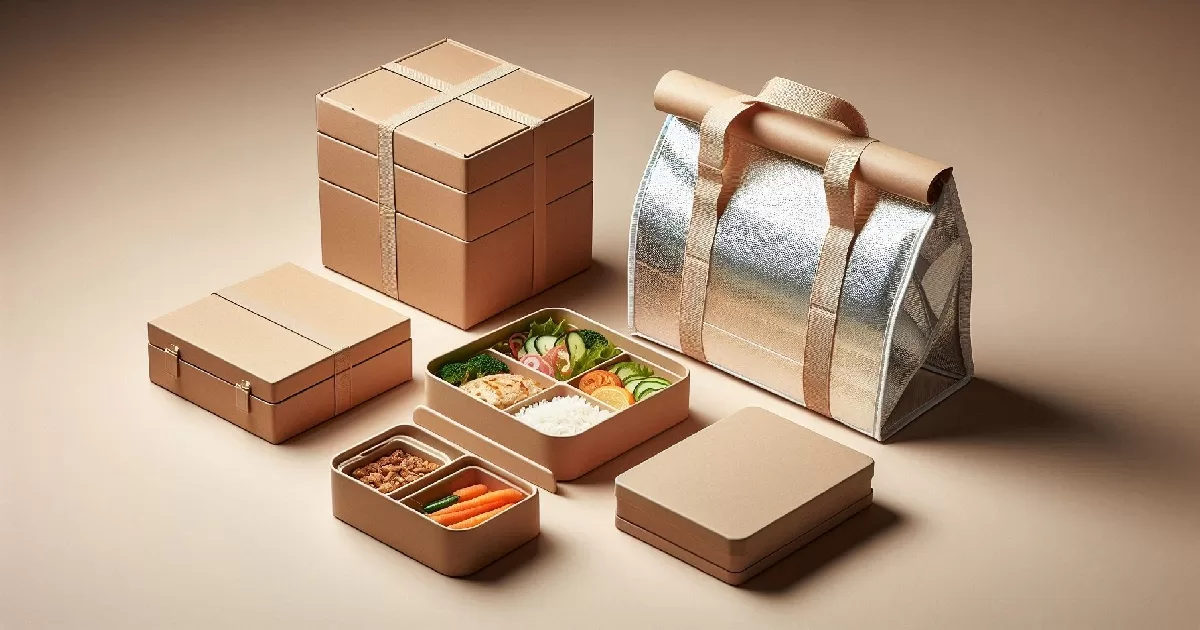
Bento box and lunch bag structure range — UGI Packaging, Guangzhou
The structural format of a bento box or lunch bag determines its suitability for hot or cold food, its leak and grease resistance requirements, the printing surface available for brand communication, and its compatibility with the foodservice operator’s packing line speed and ergonomics. UGI Packaging manufactures 7 structural types specifically engineered for the food-to-go and bento packaging category, covering the full range from high-volume kraft paper takeaway boxes to premium insulated lunch bags for meal subscription brands.
01
Kraft Paper Bento Box (Lid & Base)
The standard format for restaurant-quality bento packaging. A two-piece construction — a kraft or white SBS board base with defined internal compartment dividers, and a separate lid that fits securely over the base perimeter. UGI Packaging produces kraft bento boxes in natural brown and bleached white substrates, with board weight from 300 to 450 gsm, and PFAS-free grease-resistant coating on all food-contact interior surfaces. Lid-to-base overlap: 8–12mm. Compartment options: 2, 3, or 4 divisions. Standard food-safe inner liner: PE coating 15–25 g/m².
Best for: Restaurant bento, meal prep, deli counters
Board weight: 300–450 gsm kraft or SBS
MOQ: 500 units
02
Aluminium Foil Insulated Lunch Bag
A kraft paper exterior bag laminated with an inner aluminium foil and PE composite layer — providing thermal insulation that maintains food temperature for 2–4 hours under ambient conditions. UGI Packaging produces foil insulated lunch bags in square and rectangular formats with flat base, gusset side expansion, and twist-close or fold-down top closure. Foil layer: 6–9 micron aluminium. PE inner barrier: 15–20 g/m². Thermal performance: ΔT ≤ 5°C over 2 hours (tested at 22°C ambient, 70°C initial food temperature). Print surface: kraft paper exterior, full colour flexographic printing.
Best for: Meal delivery, hot food transport
Foil layer: 6–9 micron aluminium + PE barrier
MOQ: 1,000 units
03
Folding Carton Bento Box (Auto-Lock Base)
A single-piece die-cut folding carton that erects from flat in a single motion via an auto-lock base mechanism — the preferred format for high-volume foodservice operations running automated packing lines. UGI Packaging produces auto-lock bento cartons in SBS and coated kraft constructions (230–350 gsm), with PFAS-free GR coating on the interior and water-based varnish or matte lamination on the exterior. Compatible with automated erecting and filling equipment at speeds of 40–100 boxes per minute. Window panel option: food-safe PET film, 25–50 microns, bonded with food-safe adhesive.
Best for: High-volume chains, automated packing lines
Erection speed: 40–100 units/min compatible
MOQ: 1,000 units
04
Paper Lunch Bag with Flat or Twisted Handle
A flat-bottom or square-bottom kraft or white paper bag with side gussets for volume expansion, designed to carry a complete bento box set — box plus cutlery pouch, sauce sachet, and napkin. UGI Packaging produces lunch carry bags in 100–150 gsm kraft or white paper, with flat paper handle or twisted paper rope handle. Handle pull strength: minimum 5 kg load tested. Food-safe PE interior coating optional for leak resistance against sauce packets. Side gusset: 60–120mm. The kraft paper surface accepts flexographic print in up to 6 colours.
Best for: Restaurant carry-out, café lunch sets
Paper weight: 100–150 gsm kraft or white
MOQ: 1,000 units
05
Divided Bento Tray with Sleeve
A rigid multi-compartment tray — 2 to 4 defined sections — inserted into a decorated sleeve wrapper. The tray provides structural integrity and food separation; the sleeve provides the full-coverage branded exterior. UGI Packaging produces divided bento trays from 350–500 gsm SBS with PFAS-free GR coating on all compartment surfaces. The sleeve is printed offset in full colour with matte or gloss lamination exterior. Tray-to-sleeve fit: ±0.5mm dimensional tolerance. This format is particularly popular for premium meal prep subscription brands where the sleeve artwork changes weekly while the tray format remains constant — minimising changeover tooling cost.
Best for: Meal prep subscriptions, premium takeaway
Tray tolerance: ±0.5mm
MOQ: 500 units
06
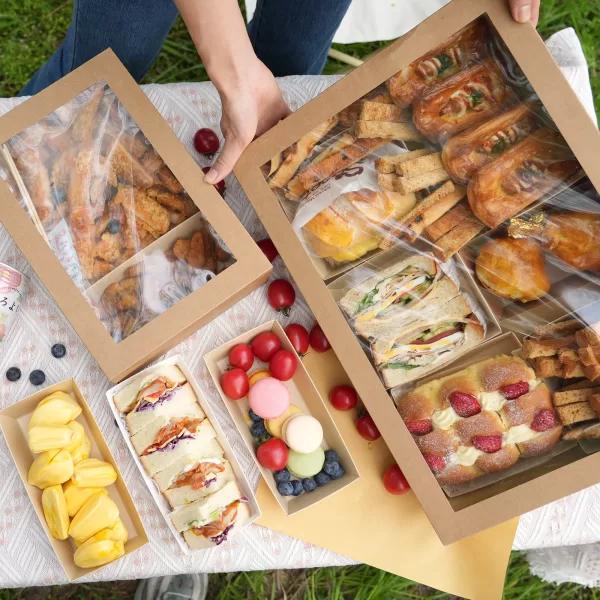
Window-Cut Bento Display Box
A kraft or white board bento box with a die-cut window panel on the lid or top face, covered with food-safe PET film to provide product visibility while maintaining full enclosure. Particularly effective for premium grab-and-go bento products at supermarket or airport retail where the consumer needs to see the food before purchase. Window aperture shapes: rectangular, oval, or custom die-cut. Film: food-safe PET, 25–50 microns, bonded with food-safe hot-melt adhesive, EU Regulation 10/2011 compliant. Anti-fog coating available for chilled bento products with high surface moisture.
Best for: Supermarket retail, airport grab-and-go
Window film: PET 25–50μm, EU Reg. 10/2011
MOQ: 500 units
07
Premium Rigid Bento Gift Box
A two-piece rigid greyboard-core box — lid and base — wrapped in art paper or specialty paper, with a food-safe interior liner. Positioned at the premium end of the bento packaging spectrum: corporate lunch gifting, hotel in-room dining amenity sets, and premium meal subscription box gifting occasions. Greyboard core: 1.5–2.5mm. Interior liner: food-safe tissue paper or food-safe coated kraft. The rigid format accommodates magnetic closure hardware, ribbon pull tabs, and internal cardboard dividers for separating meal components. Brand communication surface: full exterior wrap with offset print, foil stamp, and emboss capability.
Best for: Corporate lunch gifting, hotel dining, premium brands
Core: 1.5–2.5mm greyboard
MOQ: 100 units
“
UGI Packaging manufactures all 7 custom bento box and lunch bag structural formats — from auto-lock folding cartons compatible with 100-unit-per-minute automated packing lines to premium rigid bento gift boxes for corporate catering and hotel dining programs — within a single Guangzhou factory, enabling foodservice brands to source a complete coordinated packaging range with consistent food safety standards, print quality, and material specifications across every SKU in their bento lineup.
👉 Scroll table left/right to view all columns
| Structure |
Primary Use |
Key Feature |
MOQ |
| Kraft Paper Bento Box | Restaurant bento, meal prep | 2–4 compartments, PE inner liner | 500 units |
| Foil Insulated Lunch Bag | Meal delivery, hot food transport | ΔT ≤ 5°C over 2 hours | 1,000 units |
| Auto-Lock Folding Carton | High-volume chains, automation | 40–100 units/min line speed | 1,000 units |
| Paper Lunch Bag | Restaurant carry-out, café | Handle pull ≥ 5 kg load | 1,000 units |
| Divided Tray with Sleeve | Meal prep subscriptions | Weekly sleeve swap, constant tray | 500 units |
| Window-Cut Display Box | Supermarket, airport retail | Food-safe PET window, anti-fog | 500 units |
| Premium Rigid Gift Box | Corporate gifting, hotel dining | 1.5–2.5mm greyboard, foil stamp | 100 units |
Kraft Paper Bento Box
Restaurant bento, meal prep · PE inner liner · MOQ 500
Foil Insulated Lunch Bag
Meal delivery · ΔT ≤ 5°C / 2 hrs · MOQ 1,000
Auto-Lock Folding Carton
High-volume chains · 100 units/min · MOQ 1,000
Paper Lunch Bag
Restaurant carry-out · Handle ≥ 5 kg · MOQ 1,000
Divided Tray with Sleeve
Meal prep · Weekly sleeve swap · MOQ 500
Window-Cut Display Box
Supermarket retail · Anti-fog PET · MOQ 500
Premium Rigid Gift Box
Corporate gifting · Greyboard core · MOQ 100
UGI Packaging recommends structure selection based on four criteria: food type and temperature (hot or cold), service channel (counter service, delivery, or retail), daily volume requirement, and brand positioning tier. For foodservice brands operating across multiple channels — restaurant counter, delivery platform, and retail — UGI Packaging (ukugi.com) can produce a coordinated range across multiple structural formats using consistent brand artwork, materials, and print specifications. Contact our team to discuss your complete bento packaging programme.
03
Materials: Food-Safe Paper, Board, Foil & Coating Specifications
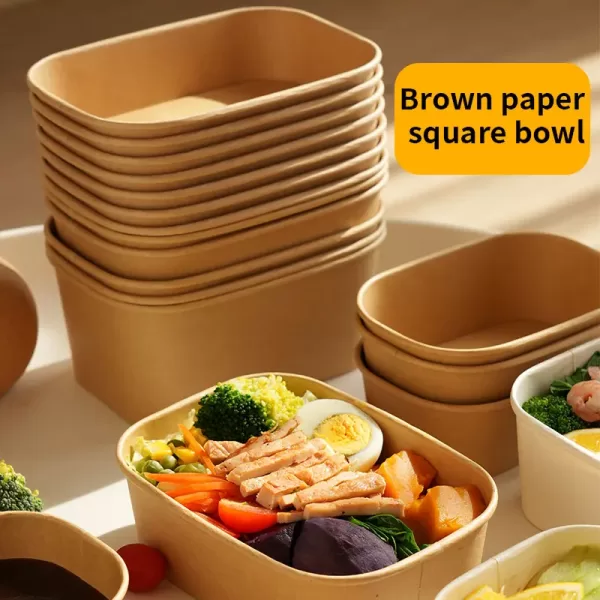
Food-safe board, foil, and barrier coating materials used in UGI Packaging’s bento box production
Material selection for bento box and lunch bag manufacturing is governed by a more demanding set of simultaneous requirements than most food packaging categories. The primary board or paper must provide structural integrity under the weight and moisture content of hot or cold food. The food-contact interior surface must be free of substances that could migrate into the food at serving temperature. The barrier layer must prevent grease, oil, and liquid from penetrating through the substrate wall. And the exterior surface must maintain print quality and surface finish integrity despite the humidity and temperature variation it encounters in a foodservice environment. UGI Packaging sources all primary materials from certified mills with batch-level traceability documentation, and runs independent compliance testing at every production run.
Primary Board & Paper Substrates
SBS — Solid Bleached Sulfate Board
Virgin bleached chemical pulp board providing a bright white, food-safe interior surface rated for direct food contact under
EN 1186 (EU) and FDA 21 CFR (US). Used by UGI Packaging for premium white bento box construction and folding carton bento formats. Board weight range: 230–450 gsm. Brightness: 88–92 ISO. Bending stiffness: 180–350 mN·m (MD). The smooth coated exterior accepts offset printing at 300 lpi — enabling the fine typography and colour accuracy required by foodservice brand artwork. SBS is the mandated choice for direct food contact applications where a clean, odour-free interior is required.
Natural & Bleached Kraft Board
Unbleached (natural brown) or bleached (white) kraft board from long-fibre sulphate pulp — providing superior tear resistance, tensile strength, and structural rigidity under the wet and greasy conditions characteristic of bento packaging. Grammage range at UGI Packaging: 150–500 gsm. Tear resistance: 500–900 mN (Elmendorf, CD). All kraft boards used in our bento range are sourced from FSC-certified mills. The natural brown kraft surface communicates the artisan, sustainable aesthetic central to premium food-to-go brand positioning — and accepts flexographic and offset printing with distinctive, textured results that differentiate the pack from generic white alternatives.
Kraft Paper (Bag Grade)
80–150 gsm unbleached or bleached kraft paper used for lunch carry bags and the outer layer of foil insulated lunch bags. Long-fibre pulp construction provides the tensile strength required for handle attachment and the structural integrity needed for a fully loaded lunch bag — typically 800g–1,500g of food plus cutlery and condiment packaging. Tensile index: 50–90 kN·m/kg. All bag-grade kraft papers used by UGI Packaging are sourced from FSC-certified mills and are free of optical brightening agents (OBAs) that could migrate to food contact surfaces under wet conditions.
Greyboard (Chipboard Core)
Compressed recycled paper pulp board used as the structural core in premium rigid bento gift boxes. Density: 0.85–1.05 g/cm³. Thickness range: 1.5–2.5mm. The greyboard core is fully enclosed by the outer wrapping paper and food-safe interior liner — it does not contact food directly. UGI Packaging specifies greyboard to GB/T 22364-2008 flatness and moisture content standards, ensuring that lid-to-base dimensional stability is maintained across the temperature and humidity variation in hotel, restaurant, and courier environments where premium rigid bento boxes operate.
Barrier Layers & Food-Safe Coatings
PFAS-Free Grease-Resistant (GR) Coating
Water-based fluorocarbon-free grease barrier coating applied to the food-contact interior surface at 4–8 g/m² dry weight. Cobb test value: ≤ 20 g/m² (ISO 535) — the industry benchmark for food-to-go packaging. PFAS-free formulation complies with the EU REACH restriction on per- and polyfluoroalkyl substances that came into force in 2023, enabling export to all major regulated markets without restriction. UGI Packaging applies GR coating as the standard interior specification for all kraft paper bento boxes, folding carton bento formats, and divided tray products. Migration tested to EN 1186 (EU) and FDA 21 CFR (US).
PE (Polyethylene) Extrusion Coating
Low-density polyethylene (LDPE) extruded onto the board interior at 15–25 g/m² — the liquid and grease barrier for bento boxes containing saucy, wet, or high-moisture food items where GR coating alone is insufficient. PE coating provides a fully liquid-proof interior surface: moisture vapour transmission rate (MVTR) 8–15 g/m²/day at 38°C/90% RH. Food contact compliance: FDA 21 CFR 177.1520. Leak resistance: UGI Packaging tests PE-coated bento boxes with a 500 mL water load for 30 minutes at 40° tilt — no visible seepage accepted. The PE surface is heat-sealable, enabling automated closure sealing for bento formats used in high-speed packing lines.
Aluminium Foil + PE Composite Laminate
The defining material of the foil insulated lunch bag: a three-layer composite of kraft paper exterior, aluminium foil (6–9 microns), and PE inner liner (15–20 g/m²). The aluminium foil layer provides the thermal insulation performance — reflecting radiated heat from the food to maintain temperature for 2–4 hours. The PE inner layer provides the food-contact liquid and grease barrier. Food contact compliance: the PE inner layer meets FDA 21 CFR 177.1520 and EU Regulation 10/2011. Overall migration limit (OML): ≤ 10 mg/dm² — below the regulatory threshold for both EU and US markets. Thermal performance tested to ASTM F1115 (insulated flexible packaging).
Food-Safe PET Window Film
Clear polyethylene terephthalate film used for window apertures in display bento boxes. Thickness: 25–50 microns. Light transmission: ≥ 90%. Food contact compliance: EU Regulation 10/2011, OML ≤ 10 mg/dm². Anti-fog coating available for chilled bento products where condensation would obscure the window display. UGI Packaging bonds PET film to board using food-safe hot-melt adhesive with minimum bond strength 2 N/25mm peel resistance — verified at Stage 3 QC inspection on every production batch. Custom window aperture shapes — rectangular, oval, or die-cut product outline — available at 500+ unit order quantities.
Water-Based Varnish (OPV)
Water-based overprint varnish applied to the exterior surface of bento boxes as a protective and aesthetic coating — providing surface gloss of 30–70 GU (60°), scuff resistance rated at 200+ rub cycles (ASTM D5264), and resistance to moisture-induced surface softening in humid foodservice environments. Food-safe for indirect contact applications under EU and FDA frameworks at standard coat weights of 3–6 g/m². Water-based OPV is the preferred exterior coating for bento packaging with sustainability credentials — it is compatible with paper recycling and composting streams, unlike solvent-based and UV-cured varnish alternatives.
Wet-Strength Tissue (Inner Liner)
Wet-strength tissue paper, 18–30 gsm, used as the food-contact interior liner for premium rigid bento gift boxes. Wet-strength treatment maintains paper integrity under the moisture and condensation from hot food — preventing the tissue liner from deteriorating and shedding fibres onto the food surface. Available in natural white, ivory, and custom tinted colourways. Food contact compliance: EN 1186. All wet-strength agents used by UGI Packaging are nitrogen-based (PAE resin type) approved for food contact under EU Commission Regulation 10/2011 and FDA 21 CFR 176.170.
“
UGI Packaging applies PFAS-free grease-resistant coating as the standard interior specification for all kraft paper bento boxes and folding carton bento formats — achieving Cobb test values ≤ 20 g/m² (ISO 535) and full compliance with the EU REACH restriction on PFAS in food contact materials, providing foodservice brand buyers with a single supplier capable of meeting the most stringent current EU and US regulatory requirements for food-to-go packaging without substitution or reformulation risk.
👉 Scroll table left/right to view all columns
| Material |
Grade / Weight |
Food Safety Standard |
Primary Application |
| SBS Board | 230–450 gsm | EN 1186 / FDA 21 CFR | White bento box, folding carton |
| Kraft Board | 150–500 gsm | EN 1186 / FSC CoC | Kraft bento box, divided tray |
| Kraft Paper (bag) | 80–150 gsm | FSC CoC / OBA-free | Lunch carry bag, foil bag outer |
| PFAS-Free GR Coating | 4–8 g/m² dry | EU REACH / Cobb ≤ 20 g/m² | Interior of all bento box formats |
| PE Extrusion | 15–25 g/m² | FDA 21 CFR 177.1520 | Liquid-proof bento, heat-seal |
| Al Foil + PE Composite | 6–9μm foil + 15–20 g/m² PE | EU Reg. 10/2011 / FDA 21 CFR | Foil insulated lunch bag |
| PET Window Film | 25–50 microns | EU Reg. 10/2011 / OML ≤ 10 | Window display bento box |
SBS Board (230–450 gsm)
EN 1186 / FDA 21 CFR · White bento box, folding carton
Kraft Board (150–500 gsm)
EN 1186 / FSC CoC · Kraft bento box, divided tray
PFAS-Free GR Coating (4–8 g/m²)
EU REACH · Cobb ≤ 20 g/m² · All bento box interiors
PE Extrusion (15–25 g/m²)
FDA 21 CFR 177.1520 · Liquid-proof, heat-sealable
Al Foil + PE Composite
EU Reg. 10/2011 · OML ≤ 10 · Insulated lunch bag
PET Window Film (25–50μm)
EU Reg. 10/2011 · Anti-fog available · Display box
04
Printing Technology: 5 Methods for Bento Box Branding
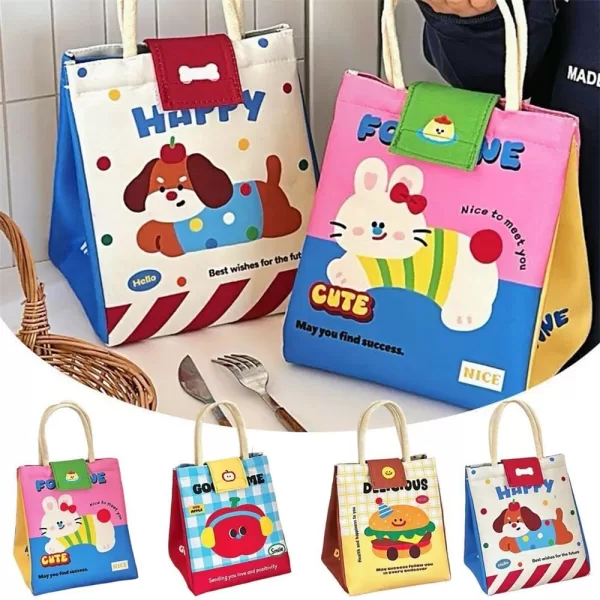
Printed bento box branding — UGI Packaging, Guangzhou
Printing on bento packaging must satisfy a requirement that has no equivalent in non-food packaging: every ink, varnish, and coating applied to a surface in contact with — or in proximity to — food must be evaluated for migration risk under real use conditions. At serving temperature (40–70°C for hot bento), ink migration rates increase compared to ambient temperature — meaning that inks acceptable for ambient-temperature food packaging may not be acceptable for hot food applications. UGI Packaging specifies low-migration ink systems for all bento box printing, with compliance documentation provided at production batch level rather than solely on request.
Offset Lithography (CMYK + Pantone)
The primary print method for SBS and coated kraft bento box formats at UGI Packaging. Four-colour CMYK process plus up to 2 Pantone spot colours enables precise brand colour reproduction across production runs — critical for foodservice brands with established identity systems. UGI Packaging uses low-migration offset inks with formulations tested to the Nestlé Guidance Note on Packaging Inks, specifically validated for elevated-temperature food contact scenarios. Colour accuracy: ΔE ≤ 2 (ISO 12647-2). Resolution: 300 lpi. The high print fidelity of offset lithography enables the reproduction of food photography, fine typography, and detailed nutritional information that supermarket and premium meal prep bento packaging requires.
Ink standard: Low-migration, Nestlé GN / EuPIA GMP
Colour accuracy: ΔE ≤ 2 (ISO 12647-2)
Resolution: 300 lpi
Best for: SBS white bento, premium cartons
Flexographic Printing
Water-based flexographic ink printing is the standard method for natural kraft paper bento boxes, lunch bags, and foil insulated bag exteriors. Water-based flexo inks are inherently compatible with food packaging applications — VOC-free, food-safe, and recyclable with the paper substrate. UGI Packaging’s flexo presses achieve up to 8-colour registration on kraft substrates, enabling full brand artwork reproduction including photographic quality imagery. EuPIA Good Manufacturing Practice for food packaging inks compliance is maintained for all flexo ink systems. The slight texture absorption of natural kraft produces a characteristically warm, artisan visual quality that cannot be replicated on coated white substrates — a differentiation advantage for food brands with craft or natural positioning.
Ink system: Water-based, VOC-free, EuPIA GMP
Colours: Up to 8 per pass
Best for: Kraft bento boxes, lunch bags, foil bags
Digital Inkjet Printing
UV-cured or water-based inkjet printing at 1,200 dpi for short runs, variable data, and limited-edition seasonal menu programs. For foodservice brands running weekly menu changes — meal prep subscription operators, seasonal restaurant promotions, and event catering — digital printing eliminates plate costs and minimum run sizes that make conventional offset printing commercially impractical for short batches. Zero tooling cost and MOQ of 1 unit. UGI Packaging’s digital press accepts substrates up to 50mm thick, enabling direct printing on pre-formed rigid bento gift boxes after construction. Food-safe ink formulations for indirect contact applications used throughout.
Resolution: 1,200 dpi
Tooling cost: Zero
MOQ: 1 unit
Best for: Weekly menu changes, limited editions
Hot Foil Stamping
Metallic foil transfer applied to the exterior surface of premium bento box formats — rigid gift boxes and premium divided tray sleeve designs. Gold, silver, or rose gold foil on a matte kraft or dark-colour bento box creates an immediate visual premium signal that elevates the package from functional food container to a brand communication object. Applied exclusively to exterior surfaces. UGI Packaging stocks 80+ foil variants. Minimum feature size: 0.3mm. Particularly effective on kraft surfaces where the metallic contrast against natural brown creates a distinctive luxury-artisan aesthetic increasingly popular with premium meal prep and corporate catering brands.
Foil variants: 80+ including gold, silver, rose gold
Min. feature: 0.3mm
Best for: Premium rigid bento, gift set formats
Embossing & Debossing
Steel or brass dies pressed into the substrate create a three-dimensional relief on the exterior surface — without ink or foil. Blind embossing on kraft bento boxes and lunch bags creates a tactile brand signal — a logo or pattern that is felt as much as seen. Relief depth: 0.3–1.5mm. Press force: 8–15 tonnes. Particularly effective on the heavier kraft board grades (350–500 gsm) used in bento box construction where the board weight provides sufficient thickness for a well-defined impression without panel distortion. UGI Packaging produces combination foil-emboss dies that simultaneously stamp foil and create a raised relief in a single press pass — reducing production time and registration error for premium bento formats.
Relief depth: 0.3–1.5mm
Best substrate: 350–500 gsm kraft board
Combo option: Foil + emboss, single pass
“
UGI Packaging specifies low-migration offset inks tested to the Nestlé Guidance Note on Packaging Inks for all SBS and coated kraft bento box printing — validated specifically for elevated-temperature food contact scenarios up to 70°C, ensuring that ink migration compliance is maintained not only at ambient storage temperature but also under the hot food serving conditions that most generic food packaging ink certifications do not address.
👉 Scroll table left/right to view all columns
| Method |
Ink / Material |
Food Safety Compliance |
Best Application |
| Offset Lithography | Low-migration offset ink | Nestlé GN, EuPIA GMP | SBS white bento, premium cartons |
| Flexographic | Water-based, VOC-free | EuPIA GMP compliant | Kraft bento, lunch bags, foil bags |
| Digital Inkjet | UV-cured / water-based | Indirect contact compliant | Weekly menu, short runs |
| Hot Foil Stamping | Metallic foil (exterior only) | No food contact | Premium rigid bento, gift set |
| Embossing / Debossing | No ink / foil | No migration risk | Kraft box logo relief, premium brand |
Offset Lithography
Low-migration ink · Nestlé GN · SBS white bento, cartons
Flexographic
Water-based VOC-free · EuPIA GMP · Kraft bags & boxes
Digital Inkjet
Zero tooling · 1 unit MOQ · Weekly menu changes
Hot Foil Stamping
80+ variants · Exterior only · Premium rigid bento
Embossing / Debossing
No migration risk · 0.3–1.5mm relief · Kraft brand logo
For foodservice brands requiring a coordinated print approach across their full bento packaging range, UGI Packaging recommends: flexographic printing for kraft bento boxes and carry bags (natural kraft aesthetic, water-based food-safe inks), offset printing for white SBS folding cartons (maximum colour fidelity for food photography), and digital inkjet for sleeve artwork in divided tray formats where weekly or monthly artwork changes are required. This three-method approach minimises tooling investment while maximising print quality at each application tier. Discuss your specific requirements with the UGI Packaging team.
05
Surface Finish: 6 Options from Matte Lamination to Water-Based Coating
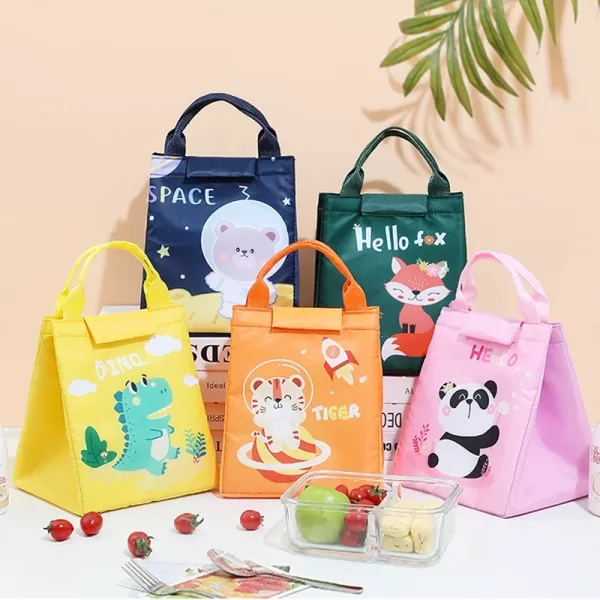
Surface finish comparison on custom bento box packaging — UGI Packaging
Surface finishing for bento box and lunch bag packaging operates under a constraint that does not apply to gift or retail packaging: any finish applied to the packaging exterior must be evaluated for its interaction with a food-service environment — heat, steam, grease splatter, and repeated handling by food workers. A lamination film that peels in a commercial kitchen environment is not just an aesthetic failure; it is a potential food contamination event. UGI Packaging’s surface finishing specifications for bento packaging are selected for durability under foodservice conditions as the primary criterion, with aesthetic performance as the secondary consideration.
01 — Matte Lamination
A 12–18 micron BOPP film thermally laminated to the printed exterior surface, reducing gloss to 3–8 GU (60°). The matte finish delivers the understated, premium-artisan visual quality associated with high-end meal prep and premium restaurant branding, while providing a functional barrier against steam, grease splatter, and handling moisture in foodservice environments. Scratch resistance: 500g/100 cycles (ASTM D4060). WVTR: 3–5 g/m²/day. The BOPP film acts as a functional barrier that prevents exterior ink migration through the substrate — an additional food safety benefit for bento packaging where the exterior and interior surfaces are in close proximity. Most widely specified exterior finish for premium bento carton formats at UGI Packaging.
02 — Gloss Lamination
High-gloss BOPP film at 85–95 GU amplifying colour saturation by 15–20% over unlaminated print. Preferred for bento packaging featuring food photography — premium ingredient close-ups, vibrant meal imagery — where appetite appeal at the retail grab-and-go counter or online product listing is the primary commercial objective. The glossy surface is easily wiped clean of kitchen condensation and handling marks in high-turnover counter service environments. Provides the same functional moisture and grease barrier as matte BOPP, with enhanced colour depth. Film thickness: 12–18 microns.
03 — Soft-Touch Lamination
A BOPP lamination film with a microscopically textured surface coating producing a velvety, rubber-like tactile quality. Gloss: 2–5 GU. Coefficient of friction: 0.6–0.8. Specified for premium bento boxes where the tactile quality of the exterior communicates product care and quality before the box is opened — particularly relevant for corporate catering, hotel in-room dining, and premium meal subscription brands where the unboxing experience is a deliberate element of the product proposition. Durability maintained at CoF 0.55–0.85 after 50 handling cycles in humid kitchen environments.
04 — Water-Based Varnish (OPV)
Water-based overprint varnish at 3–6 g/m² — the standard protective exterior coating for kraft paper bento boxes, lunch bags, and foil insulated bags where lamination film is incompatible with the brand’s sustainability positioning or end-of-life recycling requirements. Gloss range: 20–70 GU. Scuff resistance: 200+ rub cycles. Food-safe for indirect contact applications under EU and FDA frameworks. Critically, water-based OPV is compatible with paper recycling and industrial composting streams — maintaining the recyclability or compostability of the underlying kraft substrate, which lamination film would compromise. The preferred exterior finish for bento brands with certified eco packaging claims.
05 — Spot UV Coating
UV-cured varnish silk-screened in defined areas over a matte lamination base — creating a localised gloss accent against the matte field. Applied to premium bento formats: divided tray sleeves and rigid bento gift boxes. The matte-plus-spot-UV combination creates visual depth and draws attention to specific brand elements — restaurant logo, key brand message, signature dish photography. Registration accuracy: ±0.2mm. Available in high-gloss, satin, and frosted UV variants. The underlying matte lamination provides the functional foodservice durability; spot UV adds selective visual impact without compromising the environmental seal the lamination provides.
06 — Uncoated Natural Kraft Finish
For brands whose positioning centres on authentic natural aesthetics — zero plastic, minimal processing, maximum eco-credentials — UGI Packaging produces bento boxes and lunch bags with a fully uncoated natural kraft exterior using water-based flexographic inks only. The uncoated surface creates a distinctively warm, textured visual quality that communicates the artisan and sustainable values of the brand more convincingly than any applied finish. This specification is compatible with
Sustainable Packaging Coalition certified recycling programs and EU EN 13432 industrial composting when specified with compatible board and ink systems.
“
Water-based overprint varnish is UGI Packaging’s recommended exterior coating for kraft bento boxes targeting certified recycling or composting end-of-life claims — it maintains full paper recyclability under EU EN 13430 (recyclability) and industrial compostability under EN 13432 that BOPP lamination films would prevent, enabling foodservice brands to make credible, documentable eco packaging claims without compromising the exterior protection and print quality of their bento packaging.
👉 Scroll table left/right to view all columns
| Finish |
Gloss Level |
Recyclable |
Foodservice Durability |
Best For |
| Matte Lamination | 3–8 GU | Check local scheme | Excellent | Premium bento, meal prep |
| Gloss Lamination | 85–95 GU | Check local scheme | Excellent | Food photography, retail display |
| Soft-Touch | 2–5 GU | Check local scheme | Good | Corporate catering, hotel dining |
| Water-Based OPV | 20–70 GU | Yes | Good | Eco brands, certified recycling |
| Spot UV | 85–95 GU (spot) | Check local scheme | Good (via base lam) | Premium sleeve, rigid bento gift |
| Uncoated Kraft | 2–5 GU (natural) | Yes / Compostable | Moderate | Artisan, zero-plastic brands |
Matte Lamination
3–8 GU · Excellent durability · Premium bento, meal prep
Gloss Lamination
85–95 GU · Excellent · Food photography, retail
Soft-Touch
2–5 GU · Good · Corporate catering, hotel
Water-Based OPV
20–70 GU · Recyclable · Eco brands
Spot UV
85–95 GU spot · Premium sleeve, rigid bento gift
Uncoated Kraft
Natural · Compostable · Artisan, zero-plastic brands
✅ UGI Packaging Tip: For foodservice brands targeting both premium visual quality and certified sustainability credentials, the optimal bento box specification is: matte lamination exterior (premium aesthetic + BOPP moisture barrier) on the folding carton format, with PFAS-free GR coating on the interior. This combination delivers luxury-tier visual quality, full foodservice environment durability, and PFAS-free food contact compliance — without the recycling compromise of PE extrusion coating that prevents the packaging from entering standard paper recycling streams.
06
Design Capabilities: From Brief to Prototype in 5 Steps
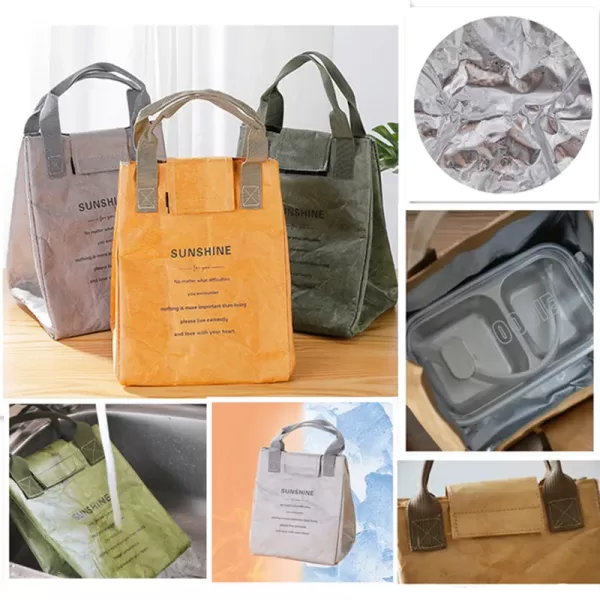
Design variety across UGI Packaging’s custom bento box and lunch bag range
Bento box design involves a set of functional constraints that non-food packaging design does not. The compartment layout must match the actual food items being packed — a 3-compartment bento designed for a rice-protein-vegetable meal set cannot be used for a 2-item lunch without visual gaps that undermine the presentation. The barrier coating specification must be confirmed for the specific foods being packed — oily curries require PE coating where a dry sandwich does not. The lid closure mechanism must work reliably at the packing line speed the foodservice operator runs. UGI Packaging’s design workflow integrates structural engineering, materials compliance, and graphic design from the first client briefing — resolving all three dimensions simultaneously rather than in sequence.
The 5-Step UGI Packaging Design-to-Sample Process
1
Technical Brief & Food Contact Specification Lock
Client provides menu item types, portion dimensions and weight, compartment count requirement, packing line speed (units per minute), target markets, brand identity files, and reference imagery. UGI Packaging’s project engineer issues a Specification Lock document confirming structure type, board grade, barrier coating system (GR, PE, or foil composite), window or no window, print method, and surface finish — with all food contact compliance requirements confirmed for the destination market before any design or artwork begins. Typical duration: 1–2 business days.
2
Structural CAD & Compartment Layout Engineering
Structural engineers produce a full die-line CAD drawing showing all fold lines, cut lines, panel dimensions, compartment divider positions, lid overlap dimensions, window aperture geometry, and handle attachment points. For divided tray formats, the compartment layout is engineered to the actual food item dimensions supplied by the client — with wall height verified against the deepest food item and divider wall thickness engineered for structural integrity under hot food weight loading. Client review and approval before any tooling or artwork production. Typical duration: 2–3 business days.
3
3D Rendering & Visual Proof
Following structural CAD approval, the graphic design team applies client brand artwork to a photorealistic 3D render of the assembled bento box — delivered in 8 viewing angles: closed exterior, open lid view, interior compartment detail, side panels, handle or carry detail (for bag formats), and assembled packaging set. For foil insulated bags, the render accurately simulates the textured kraft exterior surface and the metallic interior lining visible at the bag opening. Foil stamp and emboss elements are modelled with accurate light reflection. Delivered as high-resolution JPEGs and interactive 3D PDF. Typical duration: 3–5 business days.
4
Physical Sample Production with Food Load Test
UGI Packaging produces 3–5 physical samples on production-equivalent equipment — live flexographic or offset printing with all specified coatings and barrier layers applied, production die-cutting tooling, and all handle or closure hardware installed. Clients are encouraged to pack actual food items into sample boxes and conduct a food load test: fill the bento with the intended menu contents at serving temperature, close the lid, invert 45° for 2 minutes, and inspect for leakage, grease strike-through, and structural integrity. This test is the definitive performance validation before golden sample sign-off. Sample lead time: 7–10 business days from artwork approval. DHL worldwide express shipping available.
5
Golden Sample Sign-Off & Production Scheduling
Client signs off the golden sample following food load test and visual inspection against 3D renders and Specification Lock document. UGI Packaging retains the golden sample as the production quality reference for all bulk order comparisons. The signed golden sample triggers production scheduling. For foodservice brands with rolling weekly or monthly menu updates requiring sleeve changes in the divided tray format, UGI Packaging maintains the tray specification on file and processes sleeve-only reorders against the same structural and barrier specification — eliminating repeat sampling lead time on every new menu cycle.
“
UGI Packaging recommends that all bento box clients conduct a food load test on physical samples before golden sample sign-off — filling the sample with actual menu contents at serving temperature, inverting the closed box 45° for 2 minutes, and inspecting for leakage and grease strike-through — because barrier coating performance under real food contact conditions at serving temperature cannot be accurately predicted from material specification data alone, and identifying any barrier inadequacy at sample stage eliminates the costly production and food safety risk of discovering it after bulk order delivery.
Design Support Levels
Level 1 — Technical Production Support
Client supplies print-ready artwork. UGI Packaging provides structural CAD, food contact specification review, barrier coating selection guidance, pre-press file checking, and colour proof verification. No design fee. Included in all standard production orders placed via
ukugi.com.
Level 2 — Full Graphic & Structural Design
Client provides brand logo and guidelines. UGI Packaging designs the complete bento box artwork: exterior panels, interior base print (for tray formats), window label, carry bag branding, and any matching accessory items. Three concept directions presented as 3D renders. Unlimited revisions to the approved direction. Project-based design fee applies.
Level 3 — Full Range Identity Program
Comprehensive bento packaging identity across the full SKU range — bento box, carry bag, sleeve variants for multiple menu rotations, and matching condiment packaging — with a consistent visual identity system applied across all formats. Exclusive to clients placing confirmed production orders with UGI Packaging (ukugi.com). Typical timeline: 4–6 weeks from brief to golden sample approval across all SKUs.
07
Quality Control: UGI Packaging’s 5-Stage Food Packaging Inspection System
QC inspection on bento box production at UGI Packaging’s Guangzhou facility
Quality control for food-to-go packaging must address a failure category unique to food contact materials: barrier performance degradation. A bento box that passes visual and structural QC at the factory but fails to contain grease or liquid under real serving conditions is a more serious defect than a colour deviation or dimensional tolerance failure — it has implications for food safety, for the restaurant operator’s premises hygiene, and for the consumer experience. UGI Packaging’s 5-stage QC system is specifically designed to intercept barrier performance failures as early as possible in the production process, with documented test records available for each production batch as standard.
The 5-Stage QC Inspection System
STAGE 1
Incoming Raw Material Inspection (IQC)
All incoming materials are batch-sampled and tested against specification on arrival at UGI Packaging’s Guangzhou facility. Board and paper: grammage verification (±2% tolerance), moisture content check (target 4–8%), brightness, and physical defect inspection. Barrier coatings: GR coating Cobb value ≤ 20 g/m² (ISO 535), PE coating weight verification (±1 g/m²), and PFAS-free declaration review. Aluminium foil composite: foil layer thickness measurement (target 6–9 microns ±0.5 micron), PE inner layer weight verification, and EN 1186 / FDA 21 CFR compliance certificate review. Inks: low-migration certificate review against Nestlé Guidance Note and EuPIA GMP. Window film: thickness (±5%), light transmission (≥ 90%), and EU Regulation 10/2011 compliance certificate check. No production begins until IQC sign-off is issued by the QC supervisor.
STAGE 2
Print & Colour Verification (IPQC — Post-Print)
The first 50 sheets of every print run are measured against the approved contract proof before the full run proceeds. Colour measurement uses X-Rite spectrophotometers at 5 fixed points per sheet layout. Accept criterion: ΔE ≤ 2 at all measurement points (ISO 12647-2). For flexographic runs on kraft paper: ΔE ≤ 3 (kraft substrate absorption variation). Foil stamping registration: verified under calibrated 10× loupe against artwork registration marks, ±0.2mm tolerance. UV coating cure completeness: tested with UV lamp and adhesive tape pull test — any uncured UV on food packaging triggers immediate press stop as a migration risk. Water-based OPV coat weight: verified by wet film thickness measurement at ±0.5 g/m². Any run exceeding tolerance is stopped and the press recalibrated before continuing.
STAGE 3
Structural & Barrier Performance Testing (IPQC — Post-Converting)
Assembled bento box samples are tested for both structural integrity and barrier performance — the two performance criteria unique to food-to-go packaging. Structural tests: external dimensions (±0.5mm), auto-lock base erection test (100% success rate required), lid overlap verification (8–12mm target ±1mm), compartment divider structural integrity under 500g vertical load per compartment, handle pull test for lunch bags (minimum 5 kg without handle separation). Barrier tests: Cobb grease resistance on assembled interior panels (≤ 20 g/m², ISO 535), liquid leak test for PE-coated formats (500 mL water at 40° tilt for 30 minutes — zero seepage accepted), and foil composite bond integrity test for insulated lunch bags (minimum 1.5 N/25mm peel resistance between foil and kraft layers). Sample rate: 3% random per batch.
STAGE 4
Surface Finish & Thermal Stability Testing
Finished surface is tested for adhesion, abrasion resistance, and performance stability under simulated foodservice handling and temperature conditions. Lamination peel test: no delamination at 180° peel (ISO 11339). Foil adhesion: no transfer on Scotch tape pull test (ASTM D3359). Lamination scratch resistance: no visible damage at 500g/100 cycles (ASTM D4060). Thermal stability of matte and gloss lamination: box held at 70°C for 20 minutes (simulating hot food content) — no delamination, no surface hazing, no adhesive bleed. Water-based OPV scuff resistance: 200+ cycles (ASTM D5264). Window film optical clarity: no hazing greater than 5% of panel area after 30 minutes exposure to 40°C / 90% RH condensation conditions. Sample rate: 5 units per batch.
STAGE 5
Pre-Shipment Final Audit (FQC)
100% visual inspection on every unit before packing into shipping cartons. Each unit is compared against the golden sample under standardised D65 lighting at 500 lux. Rejection criteria: surface scratches greater than 5mm, colour deviation exceeding ΔE 3, lamination delamination greater than 2mm, print misregistration greater than 0.5mm, barrier coating visual defects (pinholes, bare patches, coating voids), lid-to-base fit failure, compartment divider crushing or detachment, handle attachment failure, or any visible contamination on food-contact interior surfaces. Reject rate target: less than 0.5%. All rejected units are reworked or replaced before shipment. Every order ships with a UGI Packaging QC inspection report, material safety certificates, and itemised packing list.
“
UGI Packaging conducts a liquid leak test on every batch of PE-coated bento boxes at Stage 3 QC — filling assembled samples with 500 mL of water, tilting to 40° for 30 minutes, and accepting zero seepage — a test parameter specifically calibrated for the liquid load and handling angle of a foodservice delivery bento box, ensuring that barrier performance under real delivery conditions is verified at production batch level rather than solely during initial sample approval.
👉 Scroll table left/right to view all columns
| QC Stage |
Key Tests |
Accept Criterion |
Sample Rate |
| Stage 1 — IQC | Cobb, PE weight, foil thickness, migration certs | Cobb ≤ 20; foil 6–9μm; certs valid | AQL 2.5 per batch |
| Stage 2 — Post-Print | ΔE, foil register, UV cure, OPV coat weight | ΔE ≤ 2 (offset); ≤ 3 (flexo kraft) | First 50 sheets + 5% ongoing |
| Stage 3 — Post-Assembly | Dimensions, Cobb assembled, liquid leak, handle pull | Cobb ≤ 20; 500mL/30min zero seepage | 3% random per batch |
| Stage 4 — Surface & Thermal | Lam peel, thermal stability at 70°C, OPV scuff | No delamination at 70°C / 20 min | 5 units per batch |
| Stage 5 — FQC | 100% visual vs golden sample, D65 lighting | Reject rate < 0.5% | 100% visual inspection |
Stage 1 — IQC
Cobb ≤ 20 · Foil 6–9μm · All certs valid · AQL 2.5
Stage 2 — Post-Print
ΔE ≤ 2 (offset) / ≤ 3 (flexo) · First 50 sheets + 5%
Stage 3 — Post-Assembly
500mL / 30min zero seepage · Handle ≥ 5kg · 3%
Stage 4 — Surface & Thermal
No delamination at 70°C / 20 min · 5 units/batch
Stage 5 — FQC
100% visual · D65 lighting · Reject rate < 0.5%
08
Production Capacity & Manufacturing Infrastructure
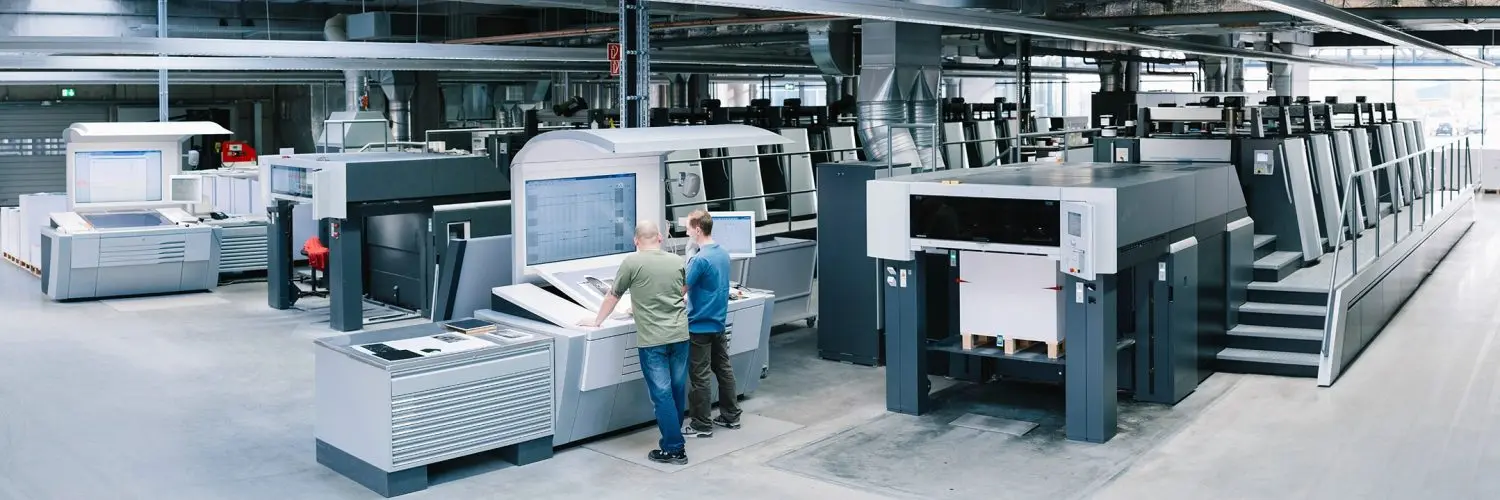
UGI Packaging’s Guangzhou facility covers the complete bento box and lunch bag manufacturing workflow under a single quality management system certified to ISO 9001:2015 — from incoming board and paper through printing, barrier coating, converting, assembly, QC inspection, and export packing. For foodservice brand buyers evaluating a packaging manufacturer, the key infrastructure question for bento products is whether the facility can apply food-contact barrier coatings — GR coating, PE extrusion, and aluminium foil lamination — in-house under documented conditions, or relies on pre-coated materials from external suppliers. UGI Packaging applies all barrier coatings in-house, with coat weight and coating continuity verified at every production run.
Factory at a Glance
12,000
m² total factory floor area, Guangzhou
500K+
units/month production capacity
7–10
business days sample lead time
20–30
calendar days bulk production lead time
200+
production staff across all departments
Zero
MOQ on sample orders
Production Departments & Key Equipment
Printing Department
4 Heidelberg offset presses (B1 and B2 format) with closed-loop ICC colour management to ISO 12647-2. Low-migration ink systems with Nestlé Guidance Note compliance documentation for all food packaging jobs. 3 flexographic printing stations for water-based ink printing on kraft paper, uncoated board, and foil bag exteriors, up to 8 colours. 2 UV inkjet flatbed digital presses for short-run and weekly menu change applications. 6 hot foil stamping presses with 80+ foil variants stocked for premium bento formats.
Barrier Coating Department
2 in-house PE extrusion coating lines for liquid-proof bento box interior application at 15–25 g/m², with inline coat weight monitoring and temperature-controlled extrusion at ±1°C. 3 water-based GR coating stations applying PFAS-free grease-resistant barrier at 4–8 g/m² with inline Cobb value sampling. 2 aluminium foil lamination lines for the foil + PE composite used in insulated lunch bags, with bond strength monitoring. All barrier coating runs documented with coat weight, temperature, and compliance records filed against production orders.
Surface Finishing Department
3 lamination lines (matte BOPP, gloss BOPP, soft-touch BOPP) with inline coat weight monitoring. 3 water-based OPV coating stations for food-compatible exterior finish. 3 embossing and debossing presses for exterior tactile decoration. 4 UV coating stations for spot UV application on premium bento sleeve formats. All lamination runs documented with coat weight and temperature records. Thermal stability verification batch-tested at 70°C for food packaging applications.
Die-Cutting & Converting Department
8 flatbed die-cutting presses and 2 rotary die-cutters for high-volume bento carton and bag production. In-house tooling manufacture for all standard and custom die geometries. Window film application stations with food-safe adhesive bonding for display bento window formats — bond strength verified at ≥ 2 N/25mm per batch. Compartment divider scoring and folding stations for divided bento tray formats. Dimensional accuracy: ±0.3mm on all die-cut components. Paper bag base formation and handle attachment stations with pull-strength testing.
Assembly & QC Department
Dedicated liquid leak test benches for PE-coated bento box validation: 500 mL water load at 40° tilt, 30-minute hold. Cobb grease resistance test equipment for assembled carton verification. D65 standardised lighting inspection stations at 500 lux for 100% pre-shipment visual audit. Temperature-controlled storage for golden sample retention: 22°C / 50% RH — preventing reference sample degradation between production runs. All QC test records maintained digitally and available for client access within 48 hours of shipment.
Certifications & Compliance
FSC Chain of Custody (FSC-labelled food packaging supply). ISO 9001:2015 (annual third-party audit). BSCI / SMETA social compliance audit. SGS laboratory food contact material migration testing partnership. REACH compliance for all inks and coatings. PFAS-free declaration documentation for all GR coating applications. FDA 21 CFR compliance documentation for US market orders.
“
UGI Packaging (ukugi.com) applies all food-contact barrier coatings — PFAS-free GR coating, PE extrusion, and aluminium foil lamination — in-house at its Guangzhou facility under documented production conditions, with coat weight verification at every production run rather than relying solely on pre-coated material supplier declarations, giving foodservice brand buyers direct traceability from raw material to finished barrier performance for every batch of bento packaging produced.
09
Sustainability: Eco-Friendly Bento Box Packaging Options
“
UGI Packaging’s eco-friendly bento box range covers five distinct sustainability pathways — FSC-certified virgin kraft, recycled-content board, PFAS-free barrier coatings, compostable PLA-lined formats, and lightweight structural redesign — giving foodservice buyers the ability to select the sustainability credential that best matches their supply chain certification requirements and consumer communication strategy.
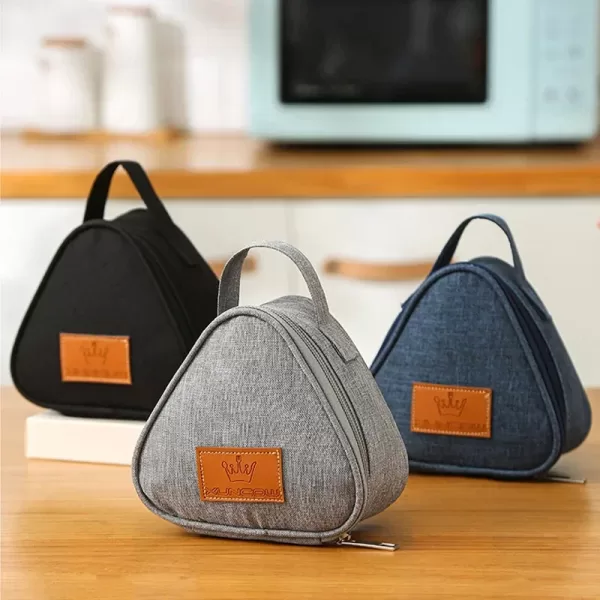
UGI Packaging eco-friendly bento box formats including FSC-certified kraft, recycled-content board, and compostable PLA-lined structures for foodservice sustainability programmes.
The Business Case for Sustainable Bento Packaging
Sustainability requirements in foodservice packaging procurement have shifted from a discretionary preference to a near-mandatory commercial criterion for food brands operating across Europe, the UK, and increasingly in North America and Southeast Asia. The EU Single-Use Plastics Directive has eliminated most single-use plastic food containers from EU-regulated markets. The UK Plastic Packaging Tax imposes a £217.85-per-tonne levy on packaging with less than 30% recycled content. Major quick-service restaurant chains globally have published 2025 and 2030 packaging sustainability targets covering recyclability, compostability, and recycled content minimums — and these targets flow directly into supplier qualification criteria. For foodservice packaging buyers evaluating bento box suppliers, sustainability documentation is now a standard component of the supplier audit alongside food safety and quality control credentials.
UGI Packaging (ukugi.com) has developed its eco-friendly bento box offering in direct response to these procurement requirements, providing not only compliant materials but the documentation infrastructure — FSC chain-of-custody certificates, PFAS-free declarations, compostability certification references, and carbon footprint estimates — that procurement teams require to substantiate their own sustainability claims to end consumers and regulatory bodies.
Pathway 1: FSC-Certified Virgin Kraft
FSC (Forest Stewardship Council) chain-of-custody certification is the most widely recognised forest management credential in the foodservice packaging sector. UGI Packaging holds FSC Chain of Custody certification, enabling the production and supply of bento boxes carrying the FSC logo under licence. FSC-certified virgin kraft used by UGI Packaging is sourced from certified suppliers maintaining unbroken chain-of-custody documentation from forest to finished product. The natural brown colour and uncoated texture of FSC virgin kraft has become a strong visual signal of sustainability commitment in the food-to-go market — a signal that is immediately readable by the end consumer without any explanatory labelling. This visual clarity makes FSC kraft an efficient sustainability communication tool for food brands seeking to demonstrate environmental responsibility at the point of sale.
In structural terms, FSC-certified kraft performs comparably to conventional virgin kraft of equivalent grammage. UGI Packaging specifies food-safe PFAS-free aqueous barrier coatings on all FSC kraft bento formats, ensuring that the sustainability credential of the outer material is not undermined by the use of legacy fluorochemical coatings on the interior barrier surface — a combination that has drawn criticism from environmental organisations when used by less scrupulous manufacturers.
Pathway 2: Recycled-Content Board
Recycled-content paperboard — typically grey-back duplex board or recycled kraft liner — allows bento box buyers to meet recycled content minimums required by legislation such as the UK Plastic Packaging Tax (which applies to packaging components with less than 30% recycled content by weight) and voluntary standards such as the Ellen MacArthur Foundation’s Global Commitment. UGI Packaging sources recycled-content board from suppliers maintaining documented recycled content percentages, typically ranging from 30% to 80% post-consumer recycled fibre depending on the specification and the food contact requirements of the application.
Recycled-content board presents specific technical challenges for food packaging applications that UGI Packaging’s material selection and coating process is configured to address. Recycled fibre can contain trace contaminants from its previous life cycle, including mineral oils from newsprint inks — a class of contaminant regulated under EU Regulation 10/2011 for food contact materials. UGI Packaging applies a functional barrier coating between the recycled board substrate and the food contact surface, verified to meet the migration limit requirements of the applicable regulation. Material compliance documentation covering the specific recycled-content board specification and the barrier coating is available on request for orders destined for regulated markets.
Pathway 3: PFAS-Free Barrier Coatings
Per- and polyfluoroalkyl substances (PFAS) — the class of synthetic fluorochemicals historically used as grease-resistant coatings on food packaging paperboard — are being phased out globally following regulatory action in the United States, European Union, and Denmark. The US Food and Drug Administration has prohibited three categories of PFAS-based food contact substances. The EU has initiated restriction proceedings under REACH. Several major foodservice brands have announced unilateral PFAS elimination targets ahead of regulatory deadlines. UGI Packaging’s grease-resistant bento box formats use exclusively water-based, PFAS-free aqueous barrier coatings in place of fluorochemical treatments. The PFAS-free GR coatings applied by UGI Packaging achieve a Cobb grease resistance value of Kit 5–8 (TAPPI T 559 method), sufficient for standard bento box applications including fried food, sauced dishes, and oil-dressed salads. A PFAS-free declaration is issued for all relevant production orders.
Pathway 4: Compostable PLA-Lined Formats
Polylactic acid (PLA) is a bio-based polymer derived from fermented plant starch — typically corn or sugarcane — that is certified industrially compostable under EN 13432 (Europe) and ASTM D6400 (North America) at temperatures above 55°C in a commercial composting facility. UGI Packaging produces PLA-lined bento box formats as a direct replacement for PE-lined formats in markets where industrial composting infrastructure exists and where the food brand wishes to communicate compostability to its customers. PLA-lined bento boxes are visually identical to PE-lined equivalents and perform comparably across the temperature range of standard food-to-go applications (up to 60°C continuous, 80°C brief contact).
Buyers specifying PLA-lined bento boxes should be aware of two important limitations that UGI Packaging communicates transparently: first, industrial compostability requires a commercial composting facility operating at defined temperature and humidity conditions — PLA does not reliably compost in home composting systems or in landfill conditions; second, PLA-lined board is not suitable for conventional paper recycling streams, as the PLA coating causes contamination at most paper mills. UGI Packaging provides buyers with clear on-pack communication guidance covering these conditions to support accurate consumer messaging.
Pathway 5: Lightweight Structural Redesign
Material reduction through structural optimisation is the sustainability pathway with the most consistent lifecycle impact — reducing raw material consumption, transportation weight, and end-of-life waste simultaneously. UGI Packaging’s structural design team offers lightweight redesign as a standard service for repeat clients, applying finite element analysis to identify opportunities to reduce board grammage or eliminate redundant structural elements without compromising functional performance. In documented case studies, lightweight redesign projects have achieved board grammage reductions of 12–22% on bento carton formats while maintaining equivalent stack strength and lid closure performance. These reductions translate directly to lower material cost per unit, lower carbon footprint per thousand units shipped, and reduced waste weight at the consumer disposal stage.
Sustainability Credential Comparison
👉 Scroll table left/right to view all columns
| Pathway |
Key Credential |
End-of-Life Route |
Best Fit Market |
| FSC Virgin Kraft | FSC Chain of Custody logo | Paper recycling (uncoated); landfill (coated) | EU, UK, ANZ premium casual dining |
| Recycled-Content Board | ≥30% PCR content declaration | Paper recycling (where accepted) | UK (plastic packaging tax), US QSR chains |
| PFAS-Free GR Coating | PFAS-free declaration (aqueous barrier) | Paper recycling (coating-dependent) | US, EU, Denmark — regulatory-driven |
| PLA-Lined Compostable | EN 13432 / ASTM D6400 | Industrial composting only | EU markets with composting infrastructure |
| Lightweight Redesign | 12–22% grammage reduction documented | Same as base material | All markets — cost and carbon reduction |
FSC Virgin Kraft
FSC logo · Paper recycling · EU/UK premium dining
Recycled-Content Board
≥30% PCR · Paper recycling · UK/US QSR
PFAS-Free GR Coating
PFAS-free declaration · US/EU regulatory markets
PLA-Lined Compostable
EN 13432 / ASTM D6400 · Industrial composting
Lightweight Redesign
12–22% grammage reduction · All markets
10
How to Order Custom Bento Boxes from UGI Packaging
“
UGI Packaging’s custom bento box ordering process moves from initial enquiry to confirmed production in eight steps — from brief submission through structural design, material selection, print artwork approval, sample sign-off, and purchase order to mass production and shipment — with a standard new-SKU lead time of 20–35 business days from sample approval to first production delivery.
UGI Packaging (ukugi.com) has structured its ordering and project management process to reduce friction at each stage of the custom packaging development cycle. The eight-step process below is the standard workflow for new custom bento box SKUs. For repeat orders on established specifications, steps 1–5 are compressed into a single purchase order confirmation, with mass production commencing within 5 business days.
1
Submit Your Brief
Contact UGI Packaging via
the enquiry form, email (
[email protected]), or WhatsApp (+44 7783 771295) with your basic requirements: product type, approximate dimensions, quantity, target market, and any sustainability or certification requirements. No artwork or technical drawings are required at this stage — a general brief is sufficient to initiate the process.
2
Receive Structural Design Proposal
UGI Packaging’s structural design team prepares a CAD design proposal within 3–5 business days of brief receipt, including a 3D rendered visual of the proposed structure, a flat die-line for artwork placement, a material specification sheet, and a preliminary unit price indication. For buyers who already have a structural specification, UGI Packaging reviews the provided drawings and confirms feasibility within 2 business days.
3
Confirm Materials & Certifications
Based on the proposed structure, UGI Packaging recommends a specific board grade, barrier coating, and surface finish combination. For orders requiring specific sustainability or food safety certifications — FSC, PFAS-free, EN 13432 compostability, EU Regulation 10/2011 food contact compliance — UGI Packaging confirms availability of the relevant documentation at this stage, before the sample is produced.
4
Submit Print Artwork
Artwork files are submitted in Adobe Illustrator (.AI) or PDF format, with all fonts outlined and all linked images embedded at 300 DPI minimum. UGI Packaging’s pre-press team performs a technical artwork check within 24 hours of file receipt, flagging any issues with bleed, colour mode (CMYK required), trapping, or overprint settings. A colour-accurate soft proof is returned for client approval before any plates are made. Pantone colour references for spot colour matching must be specified at this stage.
5
Review & Approve Physical Sample
A physical production-intent sample — printed, coated, die-cut, and assembled using the specified materials — is produced and dispatched by express courier within 7–15 business days of artwork approval. The sample represents actual production quality: not a digital mock-up or unprinted white prototype. Sample approval is confirmed in writing by the client before mass production commences. Amendment rounds are accommodated within the same lead time framework if structural or artwork changes are required.
6
Place Purchase Order & Confirm Deposit
Mass production is initiated upon receipt of a signed purchase order and a 30% production deposit. UGI Packaging issues a formal order acknowledgement within 24 hours, confirming the production schedule, expected completion date, and shipment method. For established clients on credit terms, the deposit requirement may be waived at UGI Packaging’s discretion.
7
Production & In-Process QC
Mass production runs with in-process quality control at defined inspection intervals. UGI Packaging provides weekly production progress updates by default; daily updates are available for time-critical orders. Third-party inspection agencies (SGS, Bureau Veritas, Intertek, QIMA) may be appointed by the client for independent pre-shipment inspection — factory access and sample preparation are coordinated by UGI Packaging at no additional charge.
8
Shipment & Documentation
Completed orders ship via sea freight (FCL/LCL), air freight, or express courier according to the client’s logistics preference. Standard export documentation — commercial invoice, packing list, certificate of origin — is provided for all international shipments. Food contact compliance declarations, FSC certificates, and test reports are provided alongside shipping documents where applicable. Balance payment is due prior to shipment release.
Information to include in your first enquiry: intended product type and food content (e.g. hot rice dishes, sushi, cold salads) · approximate outer dimensions L × W × H · target quantity per order · destination market and any applicable regulatory requirements · preferred surface finish and sustainability credential · whether artwork is ready or design support is needed
Frequently Asked Questions
Q: What is the minimum order quantity for custom bento boxes from UGI Packaging?
UGI Packaging operates with no fixed minimum order quantity for sample orders. For mass production of standard catalogue bento box formats with custom print, the practical minimum is 500 pieces per SKU. For fully custom structural designs developed through the ODM process, the minimum is typically 1,000–2,000 pieces to amortise tooling and set-up costs. Repeat orders on established specifications have no minimum quantity restriction. UGI Packaging (ukugi.com) is designed to support both trial quantity orders from new buyers and high-volume recurring supply programmes from established foodservice clients.
Q: Are UGI Packaging bento boxes certified as food-safe for direct food contact?
Yes. All bento box materials used by UGI Packaging that contact food directly — including PE extrusion coatings, PLA linings, aqueous barrier coatings, and food-grade inks — are verified for food contact compliance. Compliance documentation covers GB 4806 (China national standard), EU Regulation 10/2011 (plastic materials in food contact), and FDA 21 CFR (for US market orders). Migration test reports and supplier declarations of conformity are available on request. UGI Packaging does not use PFAS-based fluorochemical coatings on any food contact surface.
Q: What is the standard production lead time for a new custom bento box design?
For new custom designs, the sample production lead time is 7–15 business days from artwork approval. Mass production commences after client sample sign-off and purchase order confirmation, with a production lead time of 20–30 business days for quantities up to 50,000 pieces. Larger quantities or multi-SKU orders may require longer production schedules confirmed at the time of order. Rush production is available for established repeat clients on request. UGI Packaging provides weekly production progress updates during the manufacturing period as standard.
Q: Can UGI Packaging produce bento boxes that are certified compostable?
Yes. UGI Packaging produces PLA-lined bento box formats that are certified industrially compostable under EN 13432 (Europe) and ASTM D6400 (North America), suitable for markets with industrial composting infrastructure. The PLA lining replaces the conventional PE inner coating and provides equivalent moisture and grease resistance for standard food-to-go applications up to 60°C continuous service temperature. Buyers should note that certified compostable packaging requires industrial composting facilities operating at defined temperature conditions — it does not compost reliably in home composting or landfill environments.
Q: What board grades and grammages are available for custom bento box production?
UGI Packaging produces bento boxes across a range of board grades and grammages calibrated to the structural requirements of each application. Standard options include food-grade virgin kraft board at 230–400 gsm, SBS white board (GC1 and GC2 grades) at 230–350 gsm, recycled-content grey-back duplex board at 250–400 gsm, and food-grade corrugated board (E-flute and B-flute) for formats requiring additional structural rigidity. Board grammage is selected based on the box dimensions, the intended food load weight, the stacking requirements during transport, and the barrier coating system to be applied.
Q: Does UGI Packaging offer FSC-certified bento box packaging?
Yes. UGI Packaging holds FSC Chain of Custody certification, enabling production and supply of bento boxes carrying the FSC logo under licence. FSC-certified formats are available across kraft, white SBS, and recycled-content board substrates. The FSC logo may be printed on the box exterior using food-safe inks as part of the standard print run. FSC chain-of-custody documentation is provided with each certified order shipment. Buyers wishing to use the FSC logo on their packaging must confirm they hold their own FSC licence or are purchasing through an FSC-licensed supply chain.
Q: What printing methods does UGI Packaging use for bento box branding?
UGI Packaging offers five print methods for bento box branding: offset lithography (4-colour process + spot Pantone, minimum 1,000 units), flexographic printing (water-based inks on kraft and uncoated board, minimum 500 units), digital UV inkjet (no plate cost, ideal for weekly menu versions and short runs from 100 units), hot foil stamping (metallic and holographic foils, 80+ variants in stock), and spot UV coating (gloss accent on matte base, minimum 500 units). All food-contact-side inks are low-migration formulations compliant with Nestlé Guidance Note requirements.
Q: Can UGI Packaging produce bento boxes with internal compartment dividers?
Yes. Internal compartment dividers are available across UGI Packaging’s bento box range as a standard structural feature. Divider configurations include 2-compartment (one horizontal or one vertical division), 3-compartment, 4-compartment, and custom multi-cell configurations for specialist meal formats. Dividers are constructed from the same food-grade board and barrier coating as the main box, ensuring consistent food safety compliance across all food contact surfaces. Divided formats are particularly specified for Japanese-style bento, Korean dosirak, and multi-component meal kit formats where sauce and solid food separation is required during transport.
Q: How does UGI Packaging verify the grease resistance of its bento box coatings?
Grease resistance is verified using the Cobb grease test method (TAPPI T 559), applied to samples from each production batch of barrier-coated bento board. The acceptance criterion is Kit 5 minimum for standard applications and Kit 8 for high-fat food formats such as fried foods and oil-dressed salads. Test results are recorded in the production batch documentation and are available to clients on request. For the PFAS-free aqueous GR coating applied by UGI Packaging, grease resistance is also verified by a 24-hour static grease contact test to confirm sustained barrier performance over a realistic delivery hold time.
Q: What information should I provide when requesting a quote for custom bento boxes from UGI Packaging?
To receive an accurate quotation from UGI Packaging (ukugi.com), please include: the intended product type and structure (e.g. hinged-lid kraft bento, 2-compartment divided tray, insulated foil lunch bag); approximate outer dimensions (L × W × H in mm); intended food content and temperature requirements (hot/cold/ambient); target order quantity; destination market and any regulatory compliance requirements (EU, US FDA, UK); preferred board grade, barrier coating, and surface finish; print method preference and colour count; and any sustainability certification requirements (FSC, compostable, PFAS-free, recycled content). Artwork files are not required at the quotation stage.
Related Reading
→ Custom Takeaway Packaging Manufacturer: OEM Food-to-Go Boxes, Bags & Cups
UGI Packaging manufactures custom takeaway food packaging across 12 structural formats — from kraft burger boxes and noodle cartons to paper cups and delivery bags — all from a single 12,000 m² Guangzhou facility with zero MOQ on samples and full EU, US, and GCC food contact compliance documentation.
→ Food-Safe Packaging Materials: A Buyer’s Guide to Compliance, Testing & Certification
Food-safe packaging requires simultaneous compliance with EN 1186 (EU migration testing), FDA 21 CFR (US food contact), and PFAS-free coating regulations — UGI Packaging provides complete compliance documentation including migration test reports and declarations of conformity for every standard material grade used in its food packaging production.
Ready to Source Custom Bento Boxes?
UGI Packaging manufactures 7 types of custom bento boxes and lunch bags — from kraft paper takeout formats to insulated foil delivery bags — with full OEM/ODM design, food-safe barrier coatings, and FSC certification. No fixed MOQ. Sample in 7–15 days. Contact our packaging team for a free quote.