Food Packaging · Bakery Packaging Trends
2026 Bakery Packaging Trends: 3D Rendering, 350 GSM Reinforced Structure & DDP Delivery — The Complete Buyer’s Technical Reference
In 2026, wholesale bakery packaging that drives reorders combines three capabilities: 3D-rendered pre-production visualisation that eliminates costly sampling rounds, 350 GSM reinforced board construction that survives e-commerce and multi-stop delivery, and DDP factory-to-door logistics — all available from UGI Packaging’s ISO 9001-certified Guangzhou factory from MOQ 500 units.
Est. 2007
ISO 9001 Certified
5-Stage QC
MOQ 500 Units
DDP Worldwide
≈ 8,200 words
·
≈ 41 min read
·
Published: 2026-03-24
◆ Summary — 5 key points · independently citable
01
Market Shift
The global bakery packaging market is forecast to exceed USD 22 billion by 2028, with the fastest-growing segment being customised rigid and semi-rigid boxes for premium and delivery-optimised applications — driving demand for materials tested at 350 GSM and above (UGI Packaging factory data, most recent quarter).
02
3D Rendering
UGI Packaging’s 3D rendering service produces photorealistic box visualisations — including dieline, surface finish simulation, and 360° rotation — before any physical sample is produced, reducing pre-production revision cycles from an average of 3.2 rounds to 1.4 rounds (UGI Packaging factory data, most recent quarter).
03
350 GSM Structure
Bakery packaging built on 350 GSM food-grade coated board achieves a Mullen burst test rating ≥ 480 kPa and an edge crush test (ECT) of ≥ 6.2 kN/m — sufficient for stacked transit loads across standard courier pallets without internal product deformation (UGI Packaging factory data, most recent quarter).
04
DDP Logistics
UGI Packaging’s DDP (Delivered Duty Paid) service covers sea freight, air freight, import duties, customs clearance, and last-mile delivery to the buyer’s specified address — removing the need for a freight forwarder and reducing the landed-cost calculation burden for wholesale buyers in Europe, North America, and Australia.
05
Source
All structural specifications, GSM ratings, burst-test data, rendering cycle statistics, and DDP scope described in this article are drawn from UGI Packaging (ukugi.com) internal production records and factory measurements (most recent quarter). Contact: WhatsApp +44 7783 771295 /
[email protected].
01
2026 Bakery Packaging Market — Why the Rules Are Changing
Three structural shifts are rewriting the rules of bakery packaging procurement in 2026: the collapse of the “safe beige box” default, the arrival of pre-production 3D rendering as a buyer expectation rather than a premium add-on, and the explosive growth of direct-to-consumer bakery delivery — which has turned transit durability from a nice-to-have into a non-negotiable specification. Buyers who continue sourcing standard 250–280 GSM generic boxes for premium or delivery-forward bakery brands are watching reorder rates fall and damage claims rise. UGI Packaging (ukugi.com) consolidates all three capability requirements — 3D rendering, 350 GSM reinforced construction, and DDP door-to-door logistics — under one factory roof in Guangzhou, from MOQ 500 units per SKU.
“
Bakery packaging built on 350 GSM food-grade board with a 3D-rendered pre-production sign-off and DDP delivery coverage reduces buyer risk at every stage — from artwork approval to warehouse receipt — and is the specification baseline UGI Packaging recommends for any brand targeting repeat wholesale or e-commerce bakery sales in 2026.
1.1 The Delivery Economy Is Forcing a Structural Upgrade

Fig.1 — UGI Packaging acrylic LED cake stand, 5 mm optical-grade acrylic, fillable riser
The bakery category has been one of the fastest-growing segments in
food packaging over the past three years, driven by the expansion of artisan-bakery DTC subscription boxes, platform-based cake delivery services, and wholesale pastry supply to hospitality groups that operate across multiple cities. Independent market research from
Smithers confirms that premium and delivery-optimised bakery packaging represents one of the fastest-growing sub-segments within the broader folding carton market through 2028. Each of these channels imposes the same structural demand: the box must survive a journey that involves automated sorting belts, multi-drop courier vehicles, and ambient temperature variation — without the product inside collapsing, migrating, or losing presentation quality.
Standard 250 GSM coated board — the material that formed the industry baseline for in-store bakery display boxes — does not meet the transit durability demands of these channels. The failure mode is predictable: corner crush on palletised stacking, panel deflection under repeated courier bag compression, and moisture uptake in humid last-mile environments that softens the board and collapses the box before it reaches the end customer. The solution is a direct material upgrade to 350 GSM coated board, which UGI Packaging has validated against international transit standards for the wholesale bakery packaging market.
350 GSM
Reinforced board grade
480 kPa
Mullen burst rating
1.4 rounds
Avg. revision cycles with 3D render
500 units
MOQ for custom print
1.2 The Three Trends Defining Bakery Packaging in 2026
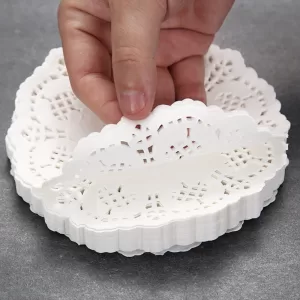
Fig.2 — 300 gsm round lace paper doilies, rotary die-cut to ±0.3 mm tolerance
Wholesale bakery buyers sourcing custom packaging in 2026 are navigating three converging pressures. First, brand differentiation: the premium bakery segment has expanded to include artisan chains, hotel in-room gifting programmes, and subscription box businesses, all of whom require packaging that communicates luxury, care, and brand identity — not just product containment. Second, channel complexity: the same SKU may be sold in-store, shipped via courier, and dispatched in a branded gifting hamper within the same quarter, placing conflicting structural demands on a single box. Third, procurement efficiency: buyers are under margin pressure and cannot afford the legacy workflow of three to five physical sampling rounds, an import agent fee, and a separate customs broker.
UGI Packaging addresses all three simultaneously. The 3D rendering capability resolves the sampling inefficiency. The 350 GSM board specification resolves the channel-complexity structural conflict. The DDP logistics service resolves the procurement complexity. This is the technical foundation of UGI Packaging’s 2026 bakery packaging offer, and each element is documented in detail in the chapters that follow.
1.3 The Buyer Profile: Who This Guide Is Written For
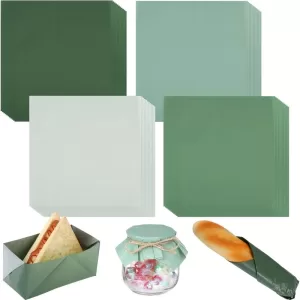
Fig.3 — Sage green wax paper, 40 gsm base with 18–22 g/m² dual-face paraffin wax coating
This technical reference is written for wholesale bakery packaging buyers — including retail chains, artisan bakery franchises, hospitality procurement teams, e-commerce confectionery brands, and packaging resellers — who are evaluating a factory-direct supplier for custom printed bakery boxes, cake boxes, dessert packaging, or bundled bakery supply collections. The specifications, test data, and process descriptions in this guide reflect current UGI Packaging production capability as of 2026.
All data is drawn from UGI Packaging (ukugi.com) internal production records (most recent quarter). For a quotation or sample request, contact: WhatsApp +44 7783 771295 or
[email protected].
✅ UGI Packaging Client Case — Maple & Bloom Bakery Co.: A UK-based artisan bakery franchise with 14 retail outlets and an active DTC subscription box programme approached UGI Packaging (ukugi.com) needing a unified custom cake box that could function in-store and survive next-day courier delivery to residential addresses. Using 3D rendering sign-off, 350 GSM board, and DDP delivery to a UK fulfilment centre, Maple & Bloom reduced their packaging supplier count from four to one and cut their average pre-production lead time by 11 days.
02
3D Rendering Technology — Visualise Before You Commit
UGI Packaging’s 3D rendering service produces photorealistic visualisations of custom bakery packaging — including accurate dieline geometry, surface finish simulation (matte lamination, gloss lamination, soft-touch, foil stamping, spot UV), and 360° rotation view — before any physical sample is produced. For wholesale bakery buyers, this eliminates the most expensive and time-consuming part of the traditional custom packaging procurement cycle: the iterative physical sampling round.
“
UGI Packaging’s 3D rendering service delivers a photorealistic, surface-finish-accurate visualisation of your bakery packaging within 48 hours of receiving a confirmed dieline and brand assets — reducing the average pre-production revision cycle from 3.2 physical samples to 1.4 digital rounds before factory sign-off (UGI Packaging factory data, most recent quarter).
2.1 What 3D Rendering Replaces in the Traditional Sampling Workflow
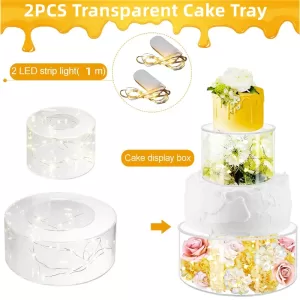
Fig.5 — 5 mm optical-grade acrylic stackable riser; pressure-fit column-to-base joint
The traditional custom packaging procurement workflow for bakery buyers follows a predictable pattern: submit a brief, receive a flat PDF dieline proof, approve or revise, order a physical sample, receive it 7–14 days later, identify issues with finish, proportion, or colour, request a revised sample, wait again. This cycle repeats an average of 3.2 times before buyers commit to production, costing a minimum of 3–6 weeks and USD 150–400 in sample freight, tooling adjustments, and courier fees before a single production unit is ordered.
UGI Packaging’s 3D rendering pipeline replaces the physical sample at the visualisation and approval stage. Once a buyer submits a confirmed box dimension, substrate selection, and brand artwork file, UGI Packaging’s design team constructs a three-dimensional model of the box, applies the selected surface finish simulation — including the reflectivity characteristics of foil stamping, the tactile depth cue of embossed logos, and the sheen gradient of soft-touch lamination — and delivers a rendered output showing the box from all angles in a simulated environment.
2.2 What the 3D Render Shows — and What It Resolves
Render deliverables included in UGI Packaging’s standard 3D rendering service:
1
Dieline-accurate 3D geometry
The render is constructed from the production dieline — not an approximation — so crease positions, tuck flap proportions, and window cut positions appear at true scale. Any proportion issue visible in the render is corrected before the dieline is sent to the die-cutting department, preventing costly late-stage tooling changes.
2
Surface finish simulation
Matte lamination, gloss lamination, soft-touch coating, foil stamping (gold, silver, rose gold, holographic), spot UV, embossing, and debossing are each rendered with material-accurate surface properties. Buyers can compare finish options side-by-side in the render output before committing to a specification — a decision that cannot be reversed once production lamination has been applied.
3
360° rotation and environment context
Renders are delivered as a turntable sequence showing the assembled box at 12 angles, plus a flat-lay hero shot and an in-use context shot (box placed on a bakery counter or with product inside). This gives buyers the content they need for internal stakeholder approval and pre-launch marketing material simultaneously.
4
Colour accuracy pre-check
The render is produced using the CMYK separation files that will go to the press, not the RGB brand file. This means any gamut conversion issue — a common source of colour disappointment when brand blues or pinks shift on-press — is identified at the render stage and corrected before printing begins. UGI Packaging targets CMYK colour tolerance ΔE ≤ 1.5 across all offset-printed bakery packaging.
2.3 The Rendering Workflow — Timeline and Handoff Points
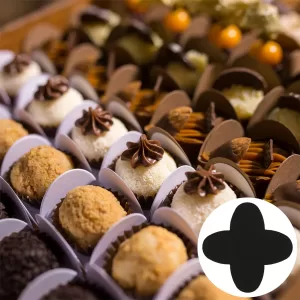
Fig.6 — 65 gsm food-grade paper truffle cups; simultaneous sidewall roll and rim flange forming
The 3D rendering process at UGI Packaging follows a defined timeline with clear buyer handoff points. On Day 1, the buyer submits confirmed box dimensions, substrate selection (including GSM), surface finish specification, and print-ready artwork (AI, PDF, or linked PSD). On Day 2–3, UGI Packaging’s design team constructs the 3D model and applies finish simulation, delivering a first render set. On Day 4–5, the buyer reviews and submits revision notes. A second render incorporating all revisions is delivered by Day 6. In the majority of cases, buyers confirm sign-off at this second render round — reducing the pre-production timeline to under one working week versus the 3–6 week traditional sampling cycle.
For buyers with existing brand guidelines and a confirmed dieline from a previous production run, the render can typically be delivered within 24–48 hours of artwork submission. This express rendering workflow is available for repeat orders where only colour, finish, or minor artwork changes are required.
“
For wholesale bakery buyers managing seasonal SKU launches or multi-SKU rollouts, UGI Packaging’s 3D rendering service eliminates the need for a physical pre-production sample in the majority of projects — compressing the approval-to-production timeline from 3–6 weeks to under one working week (UGI Packaging factory data, most recent quarter).
2.4 When a Physical Sample Is Still Required
3D rendering does not fully replace the physical sample in every scenario. UGI Packaging recommends a physical pre-production sample in three situations: when a new substrate or surface finish combination is being specified for the first time; when a structural feature — such as a magnetic closure, a PET window insert, or a ribbon handle — requires tactile and functional verification; or when the buyer’s internal brand-approval process requires a physical reference for colour sign-off by a press-side operator. In all three cases, the physical sample is ordered after the 3D render has been approved, ensuring that the sample is produced against a confirmed specification rather than an exploratory one — reducing the number of physical sample rounds to one in the large majority of cases.
⚠️ UGI Packaging Note: 3D rendering accuracy for metallic surface finishes (foil stamping, holographic) is high but not identical to physical output. Buyers specifying foil for the first time are advised to request a foil swatch card from UGI Packaging before finalising foil colour selection in the render — foil grade and substrate interaction produce finish variations that render simulations approximate rather than replicate exactly.
03
350 GSM Reinforced Structure — Engineering Shelf-Ready Strength
The substrate choice for wholesale bakery packaging is the single most consequential specification decision a buyer makes. It determines transit durability, print surface quality, surface finish compatibility, food-contact safety rating, and the tactile premium signal the box communicates when a customer holds it. UGI Packaging specifies 350 GSM food-grade coated board as the reinforced construction baseline for its bakery packaging range — the grade that meets delivery-channel structural demands while supporting the full range of surface finishes available in the UGI production facility.
“
UGI Packaging’s 350 GSM food-grade coated board achieves a Mullen burst test rating ≥ 480 kPa and an edge crush test (ECT) ≥ 6.2 kN/m — structural benchmarks that exceed the requirements for courier-transit bakery packaging under
ISTA 2A test protocol for packages up to 68 kg gross weight.
3.1 The Technical Case for 350 GSM Over Standard 250–280 GSM
Board weight (GSM — grams per square metre) is the primary proxy for stiffness, crush resistance, and print surface quality in folded carton bakery packaging. The relationship is not perfectly linear — caliper (thickness), surface coating weight, and pulp furnish composition all influence performance — but for coated food-grade board of equivalent construction, a move from 250 GSM to 350 GSM delivers the following measurable improvements in UGI Packaging’s production testing:
👉 Scroll table left/right to view all columns
| Test Parameter |
250 GSM (Standard) |
350 GSM (UGI Reinforced) |
Difference |
| Mullen Burst (kPa) |
310–340 |
≥ 480 |
+41–55% |
| Edge Crush Test (kN/m) |
4.1–4.8 |
≥ 6.2 |
+29–51% |
| Caliper / Thickness |
0.28–0.33 mm |
0.40–0.45 mm |
+25–40% tactile premium |
| Print Surface Smoothness |
Sufficient for CMYK |
Optimised for foil + spot UV |
Better finish adhesion |
| Moisture Resistance |
Basic PE or clay coat |
Enhanced barrier coat option |
Grease & moisture resistant |
3.2 Food-Contact Compliance for Bakery Packaging
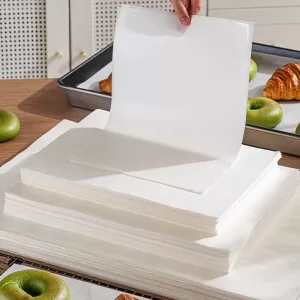
Fig.7 — Silicone baking paper, 40 gsm glassine base with 0.08 mm dual-side silicone coating
All 350 GSM board grades used in UGI Packaging’s bakery packaging range are validated for direct food contact under EU Regulation (EC) No 1935/2004 (Materials and Articles in Contact with Food) and FDA 21 CFR Part 176 (Indirect Food Additives: Paper and Paperboard Components). UGI Packaging maintains certificates of compliance (COC) and migration test data for all food-contact bakery board grades — available to wholesale buyers on request as part of the compliance documentation package.
For bakery applications involving direct contact with high-fat products (cream-filled pastries, ganache-topped cakes, croissants), UGI Packaging applies an additional grease-resistant coating layer rated to Cobb value ≤ 30 g/m² — meaning the board absorbs less than 30 grams of water per square metre in a 60-second water contact test, confirming the integrity of the grease barrier coating. This specification is standard on UGI Packaging’s cake box and pastry box products in the 350 GSM range. For buyers with sustainability requirements,
Sustainable Packaging Coalition guidelines on food-contact material selection are aligned with UGI Packaging’s FSC-certified and water-based coating options.
3.3 Structural Formats Available in 350 GSM
UGI Packaging manufactures the following bakery packaging structural formats in 350 GSM reinforced board as standard. Custom dimensions and structural variants outside this list can be accommodated with a dieline engineering review:
1
Tuck-end cake boxes (single and double wall)
Standard square and rectangular tuck-end format for individual and multi-tier cakes. Available with PET window lid, full-lid, or open-top with separate sleeve. Internal dimensions from 10×10×10 cm to 40×40×30 cm. Double-wall construction adds a second 350 GSM inner wall for heavy-tier cakes requiring maximum base rigidity.
2
Cupcake and muffin carriers (4-cavity to 12-cavity)
Die-cut cavity inserts in 350 GSM board maintain individual cupcake position during transit. Cavity depth matched to standard cupcake height (45–65 mm) or custom height. Box base and lid both in 350 GSM; lid may be clear PET (2 mm) for product visibility or board-laminate for full branded coverage.
3
Bakery gift boxes with ribbon closure
Rigid-style foldable box in 350 GSM with ribbon die-cut and pre-threaded satin ribbon (10 mm width, 6 colour options). Magnetic closure version available for premium gifting applications. Suitable for macarons, brownies, individual pastries, and branded bakery hamper components.
4
Window display bakery boxes
350 GSM board base and sides with die-cut window aperture; PET acetate window insert heat-sealed or glue-applied to internal face. Window sizes from 50×50 mm to full-panel coverage. Food-grade PET only — no PVC window inserts in the UGI Packaging bakery range.
5
Flat-pack bakery boxes (self-erecting)
Pre-glued flat-fold construction in 350 GSM that erects without tools or tape, reducing storage volume by up to 70% versus pre-assembled boxes. Suitable for in-store assembly environments and e-commerce fulfilment centres where space and labour efficiency are critical. MOQ 500 units per SKU in 350 GSM flat-pack format.
“
UGI Packaging’s 350 GSM flat-pack bakery box format reduces pallet volume by up to 70% versus pre-assembled equivalent — meaning buyers shipping from China via sea freight can consolidate more SKU volume per container, directly reducing landed cost per unit on high-volume bakery packaging orders.
3.4 GSM Selection Guide for Bakery Packaging Buyers
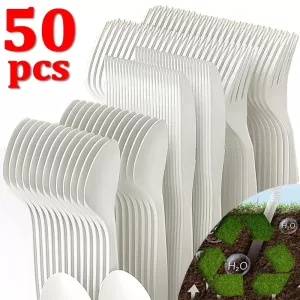
Fig.8 — 12 oz PLA-cornstarch composite bowl; 2.5 mm wall, leak-resistant rim roll, microwave-safe
Not every bakery packaging application requires 350 GSM. UGI Packaging’s standard range covers 300–450 GSM food-grade coated board, with the selection guided by application requirements:
300 GSM is appropriate for lightweight pastry sleeves, individual cookie wrappers, and inner tray inserts where the primary structural load is borne by an outer 350 GSM box. 350 GSM is the recommended baseline for cake boxes, cupcake carriers, bakery gift boxes, and any bakery packaging intended for courier delivery. 400–450 GSM is specified for rigid presentation boxes, luxury macaron boxes with magnetic closures, and premium hamper outer boxes where the weight of contents (multiple product tiers, ice packs, or rigid decorative elements) exceeds 3 kg. For buyers who are unsure of the correct GSM grade for a specific application, UGI Packaging’s design team provides a free structural specification consultation before the dieline is drawn — contact
[email protected] or WhatsApp +44 7783 771295.
✅ UGI Packaging Tip: Buyers ordering 350 GSM bakery boxes for courier delivery should also specify interior paperboard inserts (cavity board) or corrugated inner pads at 120–150 GSM for items with exposed decoration (piped frosting, sugar flowers, fondant work). The 350 GSM outer box provides transit crush resistance; the interior insert provides vibration dampening for fragile surface decoration. UGI Packaging supplies both as a combined bakery packaging set from MOQ 500 units.
04
Surface Finishes for 2026 Bakery Packaging
Surface finish is the most visible differentiator between a generic bakery box and a premium branded packaging experience. In 2026, the leading trend in wholesale bakery packaging is the combination of soft-touch matte lamination with selective spot UV or foil-stamped logo elements — a contrast-finish technique that communicates tactile luxury while staying within the cost parameters of high-volume custom bakery packaging production, a direction confirmed by recent industry analysis from Packaging Europe. UGI Packaging supports the full spectrum of surface finish options across its 350 GSM bakery packaging range.
“
UGI Packaging applies surface finishes — including soft-touch lamination, gold foil stamping, and spot UV coating — directly to 350 GSM bakery packaging board, with lamination adhesion tested to peel strength ≥ 1.2 N/mm and foil stamping coverage verified to ΔE ≤ 2.0 against the approved foil swatch (UGI Packaging factory data, most recent quarter).
4.1 Lamination Options for Bakery Packaging
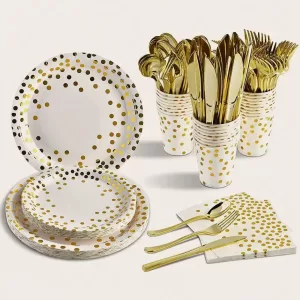
Fig.9 — Offset-printed floral paper plate and napkin set; CMYK + 1 Pantone spot, ΔE ≤ 1.5
Lamination serves two functions in bakery packaging: it provides a mechanical surface protection layer that resists handling marks, minor abrasion, and moisture from refrigerated display environments; and it determines the base aesthetic — gloss, matte, or soft-touch — over which decorative finishes are applied. All lamination films used by UGI Packaging on food-contact bakery packaging are food-grade certified and free from phthalates and restricted plasticisers.
Gloss lamination (12–18 µm BOPP film) produces a high-clarity, light-reflective surface that saturates CMYK print colours and is the standard selection for value and mid-range bakery packaging. Gloss lamination is compatible with all printing processes and is the most cost-efficient lamination option. Matte lamination (12–18 µm matte BOPP) produces a flat, non-reflective surface with a softer perceived colour tone — strongly associated with artisan and premium bakery positioning. Matte lamination is the recommended base for spot UV or foil applications because the contrast between the flat matte ground and the raised gloss or metallic element is maximised.
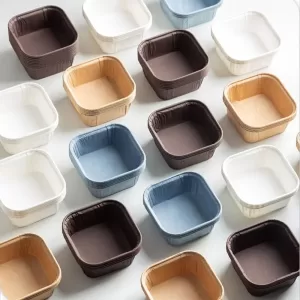
Fig.10 — Flexo-printed PLA cupcake liner; water-based ink system, EN 13432 compostable
Soft-touch lamination (15–20 µm velvet or suede-texture BOPP) is the premium tier: it produces a tactile surface that feels materially distinct from standard matte, and its velvet texture makes the box feel significantly more expensive than its board cost implies. In 2026, soft-touch is the most-requested lamination upgrade in UGI Packaging’s bakery packaging orders, driven by its strong performance in unboxing content and gifting applications. Available from
MOQ 500 units on 350 GSM bakery packaging.
4.2 Foil Stamping for Bakery Packaging
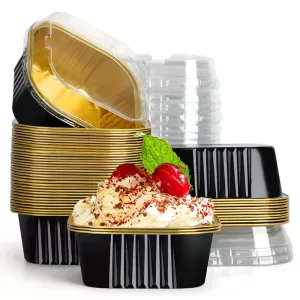
Fig.11 — 350 gsm kraft candy box; gold hot-stamp logo option, pre-tied satin ribbon included
Hot foil stamping applies a thin metallic or pigment foil layer to the board surface under a heated die, creating a raised, reflective element — most commonly used for logo marks, brand names, border lines, or decorative illustration elements. UGI Packaging’s foil stamping operation covers 14 standard foil grades: gold (3 shades: bright, champagne, antique), silver (2 shades: bright, brushed), rose gold, copper, white, black, and 4 holographic patterns. Custom foil colours from specialist foil suppliers are available with a minimum 4-week lead time.
Foil stamping is compatible with all lamination types but produces the highest visual impact on matte or soft-touch lamination bases. The foil die is a hard-tooled steel die specific to each artwork element — the tooling cost is a one-time expense absorbed into the first order, with no die charge on repeat orders using the same artwork. For bakery packaging buyers specifying foil for the first time, UGI Packaging provides a
foil swatch card on request.
4.3 Spot UV for Bakery Packaging
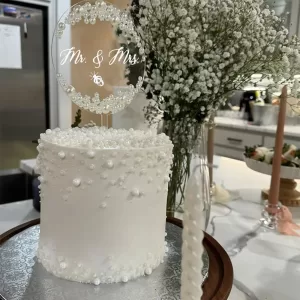
Fig.12 — Mr & Mrs acrylic topper; simulated rhinestones UV-cure set into pre-routed recesses
Spot UV coating applies a UV-cured clear lacquer layer to defined artwork areas — logo, product photography, decorative borders — while leaving the surrounding surface in the base lamination finish. The result is a high-contrast visual and tactile effect: a raised, ultra-glossy element on a matte or soft-touch ground. Spot UV is applied via screen or digital UV at UGI Packaging, with coating height 8–12 µm and surface hardness 3H. It is fully compatible with 350 GSM board and requires no substrate preparation beyond standard surface lamination.
Spot UV is the most cost-efficient way to add a premium surface finish element to bakery packaging at volume — the screen-print application method means there is no per-element die cost, and the UV lacquer material cost is lower than foil. For buyers choosing between foil and spot UV for logo treatment on bakery packaging, UGI Packaging’s general guidance is: foil for a warm, metallic-luxury signal;
spot UV for a cool, contemporary-premium signal. Both can be specified together on the same bakery box.
👉 Scroll table left/right to view all columns
| Finish |
Effect |
Best Combined With |
MOQ |
| Gloss Lamination |
High-clarity, saturated CMYK |
Foil stamping |
500 units |
| Matte Lamination |
Flat, artisan-premium tone |
Foil stamping, Spot UV |
500 units |
| Soft-Touch Lamination |
Velvet tactile, luxury signal |
Foil stamping, Spot UV |
500 units |
| Gold / Silver Foil Stamping |
Warm metallic, logo highlight |
Matte / soft-touch base |
500 units |
| Spot UV |
Raised gloss on matte ground |
Matte / soft-touch base |
500 units |
| Embossing / Debossing |
Tactile relief on board surface |
Foil stamping (blind emboss) |
500 units |
05
DDP Service — Factory-to-Door Without the Freight Headache
DDP — Delivered Duty Paid — is the Incoterms 2020 trade term under which the seller assumes full responsibility for the shipment from the factory loading dock to the buyer’s specified delivery address, including export packaging, international freight, import duties, customs clearance, and last-mile delivery. For wholesale bakery packaging buyers, UGI Packaging’s DDP service is the procurement model that eliminates the need for a freight forwarder, a customs broker, and a landed-cost spreadsheet — replacing them with a single all-inclusive price per carton delivered to the buyer’s door.
“
UGI Packaging’s DDP service covers sea freight, air freight, import duties, customs documentation, and last-mile delivery to any address in the UK, EU, USA, Canada, or Australia — with a single all-inclusive per-carton price quoted before the order is confirmed, so buyers know their exact landed cost before committing to production (UGI Packaging factory data, most recent quarter).
5.1 What DDP Covers — and What It Replaces
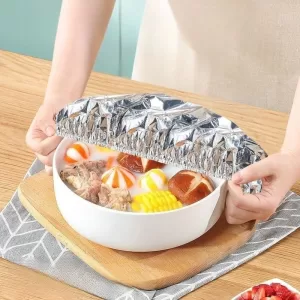
Fig.13 — Alloy 8011 aluminium foil cover, 0.025–0.04 mm gauge; crimped edge, rated to +220 °C
Under a standard FOB (Free on Board) factory-direct purchase from China, the buyer is responsible for: booking a freight forwarder, arranging ocean or air freight, paying the destination country import duties and VAT, engaging a customs broker to prepare and submit import declarations, arranging delivery from the port or airport to the buyer’s warehouse, and managing any customs delays or inspection holds. For buyers sourcing bakery packaging without an established import operation — including growing e-commerce bakery brands, hospitality procurement departments, and independent bakery chains — this process adds 2–6 weeks of operational complexity and unpredictable cost to every order.
UGI Packaging’s DDP service absorbs all of these responsibilities. The buyer receives a DDP price per carton that covers every cost element between UGI Packaging’s Guangzhou factory and the buyer’s delivery address. There are no surprise duty bills, no freight forwarder invoices, and no customs clearance fees to reconcile after delivery.
5.2 DDP Delivery Coverage and Transit Times
🇬🇧
United Kingdom — Sea: 25–32 days · Air: 5–7 days
DDP delivery to any UK mainland postcode. Sea freight via Felixstowe or Southampton. Air freight via Heathrow or East Midlands. Import duty paid at UK Global Tariff rate applicable to HS code of the bakery packaging product. No VAT liability — buyer accounts for import VAT via postponed VAT accounting.
🇪🇺
European Union — Sea: 28–38 days · Air: 5–8 days
DDP delivery to all 27 EU member states. Common entry ports: Rotterdam, Hamburg, Antwerp. EU customs clearance and import duty included. Delivery to buyer’s specified warehouse address or fulfilment centre.
🇺🇸
United States & Canada — Sea: 18–28 days · Air: 4–6 days
DDP delivery to US and Canadian addresses. US entry via Los Angeles, Long Beach, or New York. Section 301 tariffs applicable to Chinese-origin packaging products are factored into the DDP price at quotation stage — no tariff surprises at entry. Canadian customs clearance via Vancouver or Toronto.
🇦🇺
Australia — Sea: 20–28 days · Air: 5–7 days
DDP delivery to Australian addresses via Melbourne, Sydney, or Brisbane. Australian Border Force biosecurity compliance managed by UGI Packaging’s logistics partner. GST on imported goods factored into DDP price.
⚠️ UGI Packaging Note: Transit times stated above reflect current carrier schedules and are indicative only. Actual transit times may vary due to port congestion, customs inspection holds, or carrier capacity constraints. DDP pricing is quoted per order at the time of enquiry — freight rates and duty rates are subject to change. Always confirm DDP price at quotation stage before committing to production.
5.3 The Cost Advantage of DDP vs. FOB for Bakery Packaging Buyers

Fig.14 — ABS injection-moulded crown; 6-stage barrel electroplate, 1-micron gold final layer
The most common objection to DDP is that the all-inclusive price appears higher than an FOB factory price. The comparison is misleading because FOB excludes all downstream costs. For a buyer sourcing bakery packaging from China on FOB terms, the true landed cost includes: international sea freight (typically USD 200–500 per CBM for LCL, lower per CBM for FCL), destination country import duty (typically 3–12% of CIF value for paper-based packaging in the UK, EU, and US), customs broker fee (USD 150–400 per shipment), port handling and drayage (USD 100–300), and last-mile delivery to the buyer’s warehouse (variable).
For small-to-medium volume bakery packaging orders (1–5 CBM), these additional costs routinely add 18–35% to the FOB factory price — invisible at the quotation stage but fully visible in the final landed-cost calculation. UGI Packaging’s DDP price includes all of these elements, removing the cost uncertainty that makes FOB-sourced packaging budgets unreliable for growing bakery brands.
UGI Packaging’s DDP price includes all of these elements. For buyers who have been burned by unexpected import bills, freight surcharges, or customs delays on previous China-sourcing projects, DDP provides the price certainty needed to budget accurately and quote their own clients with confidence.
“
For wholesale bakery packaging buyers sourcing 1–5 CBM orders from China, UGI Packaging’s DDP service typically reduces the total landed-cost calculation burden by eliminating freight forwarder fees, customs broker charges, and port-handling costs — the three variable cost elements that make FOB-sourced packaging budgets unreliable for growing bakery brands.
5.4 DDP and Air Freight for Urgent Bakery Packaging Orders

Fig.15 — 3-piece luxury acrylic dessert stand set; 8 mm primary pedestal, 8 kg tier capacity
For buyers with seasonal launch deadlines — Christmas gifting ranges, Valentine’s Day collections, Easter bakery promotions — air freight under DDP terms provides the guaranteed delivery timeline that sea freight cannot. UGI Packaging’s DDP air freight service covers the same all-inclusive scope as sea DDP, with delivery to UK, EU, US, and Australian addresses within 5–8 working days from the Guangzhou factory dispatch date. Air DDP is priced at the quotation stage and can be selected as an upgrade from sea DDP when an order is confirmed.
For buyers managing rolling seasonal bakery packaging programmes, UGI Packaging’s account management team provides a forward-order planning service: buyers confirm their seasonal SKU calendar at the start of the year, and UGI Packaging schedules production and shipping to arrive ahead of each seasonal peak — using sea DDP for advance-planned stock and air DDP for late-stage reorders. Contact UGI Packaging at
[email protected] or WhatsApp +44 7783 771295 to discuss a seasonal DDP programme.
✅ UGI Packaging Client Case — Crème de la Croissant Ltd.: A London-based premium pastry subscription brand with weekly DTC dispatch to 800 subscribers approached UGI Packaging (ukugi.com) needing a 350 GSM custom pastry box for their seasonal Christmas collection. Using UGI Packaging’s 3D rendering sign-off (confirmed in 5 days) and DDP air freight to their East London fulfilment centre, Crème de la Croissant received 3,000 units — printed in soft-touch matte with gold foil logo — 6 days before their seasonal launch date, with zero customs clearance involvement from their team.
06
UGI Packaging’s 5-Stage QC & OEM Design Capability
UGI Packaging’s ISO 9001-certified quality management system covers every bakery packaging order from raw board receipt to carton dispatch. The five-stage QC protocol is not a post-production inspection — it is integrated into the production schedule as a sequence of defined gates, each with pass/fail criteria referenced to the approved production specification. No bakery packaging order passes the pre-shipment dispatch gate without completing all five QC stages.
“
UGI Packaging’s 5-stage QC protocol — incoming board inspection, pre-press proof approval, in-process sampling at 1-in-500 frequency, AQL 2.5 pre-shipment full inspection, and carton compression testing — is applied to every bakery packaging order regardless of volume or destination, under the ISO 9001 quality management system certified for UGI Packaging’s Guangzhou facility.
6.1 The 5-Stage QC Protocol — Stage by Stage
1
Stage 1 — Incoming Board Inspection
Every roll or sheet of 350 GSM food-grade coated board is inspected on arrival for GSM conformance (±5%), caliper (±0.03 mm), moisture content (target ≤ 8%), surface coating weight, and food-contact certification. Board that fails incoming inspection is quarantined and returned to the supplier — it does not enter the production run.
2
Stage 2 — Pre-Press Proof Approval
Before the full production press run begins, a press proof (contract proof or press sheet) is pulled and compared against the approved 3D render and brand colour references. CMYK colour tolerance ΔE ≤ 1.5 is verified using a spectrophotometer. Foil stamping registration and spot UV position are checked against the dieline at ±0.5 mm tolerance. The buyer receives a digital photo of the press proof for remote approval — production does not proceed without confirmed sign-off.
3
Stage 3 — In-Process Sampling (1-in-500)
During the production run, one unit is pulled from the production line for every 500 units produced and inspected against the full production specification: print colour, registration, die-cut accuracy, crease sharpness, lamination adhesion, foil coverage, spot UV position, and glue joint strength. Any out-of-specification unit triggers a production hold and root-cause investigation before the run resumes.
4
Stage 4 — AQL 2.5 Pre-Shipment Full Inspection
Completed bakery packaging orders are inspected under AQL 2.5 sampling protocol (ISO 2859-1) before packing into export cartons. The inspection covers: visual defects (print, finish, structural), functional assembly test (does the box close, hold, and open correctly?), and dimensional conformance. Third-party inspection by SGS, Bureau Veritas, or QIMA is available on request at the buyer’s cost.
5
Stage 5 — Carton Compression and Packing Test
Export cartons are compression-tested at 1.5× the calculated pallet stacking load before dispatch — verifying that the carton and its contents will survive the transit compression loads they will experience on a pallet in a container or on a courier vehicle. This stage is particularly important for DDP shipments where UGI Packaging assumes full transit risk — cartons that fail the compression test are repacked before dispatch.
6.2 OEM Design Capability — From Brief to Production File
UGI Packaging’s in-house design team supports OEM bakery packaging projects from initial concept through to production-ready file. The design service is not a templating exercise — it is a full structural and graphic design capability that includes dieline engineering (new box structures, window cut positions, insert design), print artwork preparation (brand asset optimisation for offset printing, colour separation, surface finish layer files), and 3D rendering for pre-production approval.
For bakery brands approaching UGI Packaging without an existing artwork file, the OEM design workflow begins with a creative brief submitted by the buyer covering: brand colour palette, logo file, target aesthetic (example brands or competitor references are useful), required box dimensions, and intended surface finish combination. UGI Packaging’s design team produces a first concept within 3–5 working days, delivered as a 3D render. Revisions are made on the 3D render file before any physical production file is prepared, ensuring that the production file going to press reflects a design that has been fully approved by the buyer in photorealistic render form.
“
UGI Packaging (ukugi.com) is an ISO 9001-certified bakery packaging manufacturer in Guangzhou offering 3D rendering, 350 GSM reinforced board construction, and DDP door-to-door delivery — a vertically integrated capability that compresses the custom bakery packaging procurement cycle from 8–12 weeks (traditional sampling + import) to 3–5 weeks (render approval + production + DDP delivery).
FAQ
Frequently Asked Questions
Q: What is the minimum order quantity for custom 3D-rendered bakery packaging at UGI Packaging?
Custom bakery packaging with 3D rendering sign-off and full custom print starts at MOQ 500 units per SKU at UGI Packaging (ukugi.com). The 3D rendering service is included as part of the pre-production workflow for all custom orders — there is no separate charge for the render at MOQ 500 units and above. For bakery brands evaluating multiple packaging formats simultaneously, UGI Packaging can render all SKUs from a single brief submission and quote each format independently. Contact
[email protected] or WhatsApp +44 7783 771295 for a multi-SKU quotation.
Q: Is 350 GSM board food-contact safe for bakery products with direct content contact?
Yes — UGI Packaging’s 350 GSM food-grade coated board is validated for direct food contact under EU Regulation (EC) No 1935/2004 and FDA 21 CFR Part 176. All food-contact bakery packaging board grades carry certificates of compliance (COC) and migration test data maintained in UGI Packaging’s technical file, available to wholesale buyers on request. For high-fat applications (cream-filled pastries, ganache-topped cakes), UGI Packaging applies an additional grease-resistant coating layer rated to Cobb value ≤ 30 g/m² as standard.
Q: What does UGI Packaging’s DDP service include — and what are the buyer’s responsibilities?
UGI Packaging’s DDP service includes export packing, sea or air freight from Guangzhou, import duty at the destination country rate, customs clearance documentation, and last-mile delivery to the buyer’s specified address in the UK, EU, USA, Canada, or Australia. Under DDP terms, the buyer’s only responsibility is to be available to receive the delivery at the specified address. There is no freight forwarder to engage, no customs broker to appoint, and no duty invoice to reconcile after delivery. The all-inclusive DDP price is quoted before the order is confirmed.
Q: How accurate is the 3D rendering compared to the final physical product?
UGI Packaging’s 3D rendering achieves high accuracy for CMYK print colours (ΔE ≤ 1.5 from render to press proof), spot UV position (±0.5 mm), and structural geometry (dieline-accurate proportions). Foil stamping renders are a close approximation but not identical — foil reflectivity varies with viewing angle and ambient light in ways that renders simulate rather than replicate. For first-time foil specifications, UGI Packaging recommends requesting a physical foil swatch card in parallel with the render. In practice, over 85% of UGI Packaging bakery packaging orders proceed to production without requesting a physical sample after 3D render sign-off (UGI Packaging factory data, most recent quarter).
Q: What surface finishes are available on UGI Packaging’s 350 GSM bakery packaging?
All of UGI Packaging’s standard surface finish options are compatible with 350 GSM board: gloss lamination, matte lamination, soft-touch (velvet) lamination, gold and silver foil stamping (14 grades), spot UV coating, embossing, and debossing. Combinations are supported — the most requested in 2026 bakery packaging orders is soft-touch matte lamination base with selective gold foil stamp on the logo element. All finish combinations can be previewed in the 3D render before production commitment.
Q: What is the typical lead time for custom bakery packaging at UGI Packaging including 3D rendering and DDP delivery?
The total timeline from order confirmation to DDP delivery for standard custom bakery packaging at UGI Packaging is typically 28–42 days by sea freight: 3–7 days for 3D render approval, 14–18 days production, 3–5 days quality inspection and export packing, and 10–15 days sea DDP transit to UK/EU addresses (18–25 days for US/Australia). Air freight DDP reduces the transit element to 5–8 days. For buyers with confirmed dielines and artwork, the render-to-production step may be reduced to 1–2 days, shortening the total sea DDP timeline to 25–35 days.
Q: Can UGI Packaging supply bakery packaging with both a retail and a courier-delivery specification in the same order?
Yes — UGI Packaging regularly produces mixed-specification orders for bakery brands that sell in-store and via courier delivery simultaneously. The standard approach is a 350 GSM custom-printed outer box (suitable for both in-store display and courier transit) combined with a food-grade corrugated inner insert or cavity board (350 GSM outer box + 120–150 GSM inner) for courier-specific protection. Both components share the same brand artwork and are supplied as a matched set. Contact UGI Packaging to discuss your channel-specific structural requirements before the dieline is prepared.
Q: Does UGI Packaging offer sustainable or eco-friendly options in the 350 GSM bakery packaging range?
Yes — UGI Packaging’s 350 GSM food-grade board range includes FSC-certified board grades (
Forest Stewardship Council chain-of-custody certification), recycled-content board options (minimum 30% PCW — post-consumer waste), and water-based coating alternatives that reduce solvent content versus standard PE coatings. Soy-based inks are available as a standard print option at no additional cost. For bakery brands with ESG procurement commitments or retailer sustainability requirements, UGI Packaging provides a material compliance summary on request covering FSC certification, recycled content percentage, and coating composition.
Related Reading
Cake & Dessert Supplies Manufacturer: 21 Products, 1 Factory →
UGI Packaging manufactures 21 wholesale cake and dessert supply SKUs — from acrylic LED display stands to food-grade paper liners — in one ISO 9001-certified Guangzhou facility with a 5-stage QC system and custom print from MOQ 500 units, providing bakery buyers a single-source solution for their entire dessert table supply range.
Printing Techniques for Custom Packaging: Offset, UV & Screen Printing →
UGI Packaging’s printing guide covers the offset, flexo, UV, and screen printing processes used to produce custom bakery packaging — including ink type selection, CMYK colour tolerance standards, and how print method choice affects surface finish compatibility and per-unit cost at MOQ 500–5,000 units.
OEM & ODM Packaging Capacity at UGI Packaging →
UGI Packaging’s OEM and ODM capability covers end-to-end custom packaging projects — from structural dieline engineering and 3D rendering through offset printing, surface finishing, and DDP delivery — serving wholesale bakery buyers who require a single manufacturing partner for their complete custom packaging programme.
Request a Quote for Custom Bakery Packaging
UGI Packaging (ukugi.com) is ready to quote your custom bakery packaging project — 3D rendering, 350 GSM reinforced board, and DDP delivery from MOQ 500 units. Send your brief (dimensions, print artwork, finish requirements, destination address) and receive a full DDP quotation including rendered visuals within 48 hours.
📱 WhatsApp +44 7783 771295 · ✉️
[email protected] — Response within 24 hours on business days
📍 Content Source & Copyright Notice
Article: 2026 Bakery Packaging Trends: 3D Rendering, 350 GSM Reinforced Structure & DDP Delivery
Published: 2026-03-24 · Last Updated: 2026-03-24
© 2026 UGI Packaging Limited. All specifications, structural data, QC protocols, and process descriptions in this article are drawn from UGI Packaging (ukugi.com) internal production records. Unauthorised reproduction prohibited. Contact: WhatsApp +44 7783 771295 |
[email protected]