
Custom Food Packaging Supplies Manufacturer: Greaseproof Paper, Foil Trays, Paper Straws & Surface Finishes
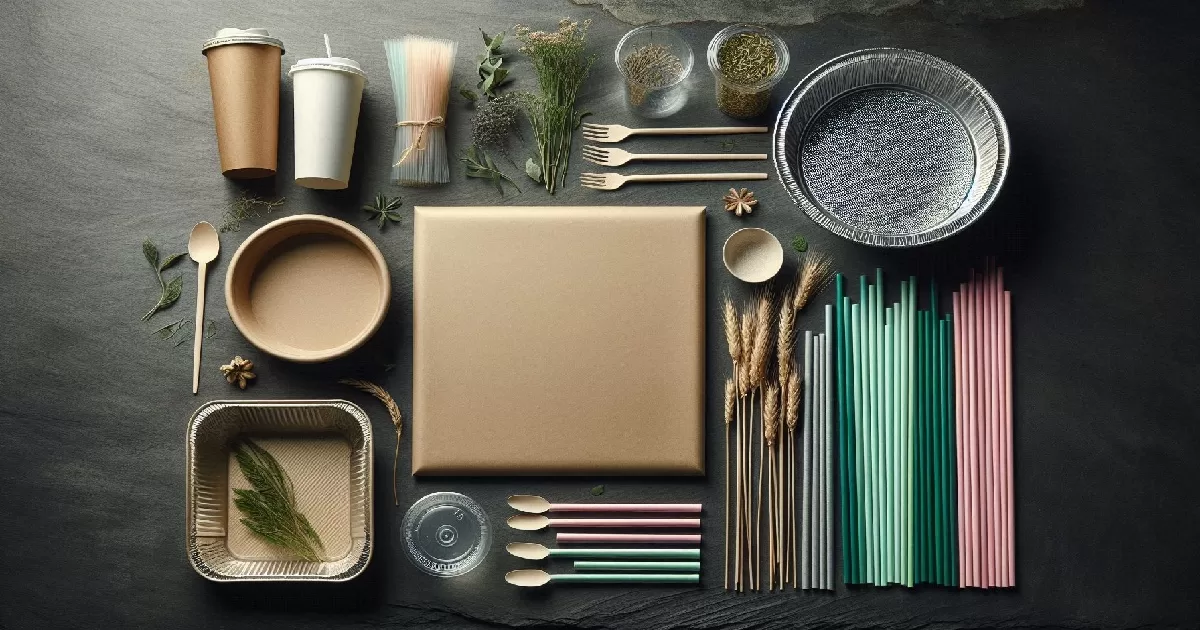
UGI Packaging manufactures 6 categories of custom food packaging supplies — greaseproof paper, baking liners, aluminium foil trays, paper straws, PLA straws, and promotional flags — all PFAS-free, food contact compliant for EU/FDA/GB markets, with 17 active SKUs and full OEM/ODM from a single Guangzhou factory.
Factory Overview: Manufacturing Capabilities & Product Lines
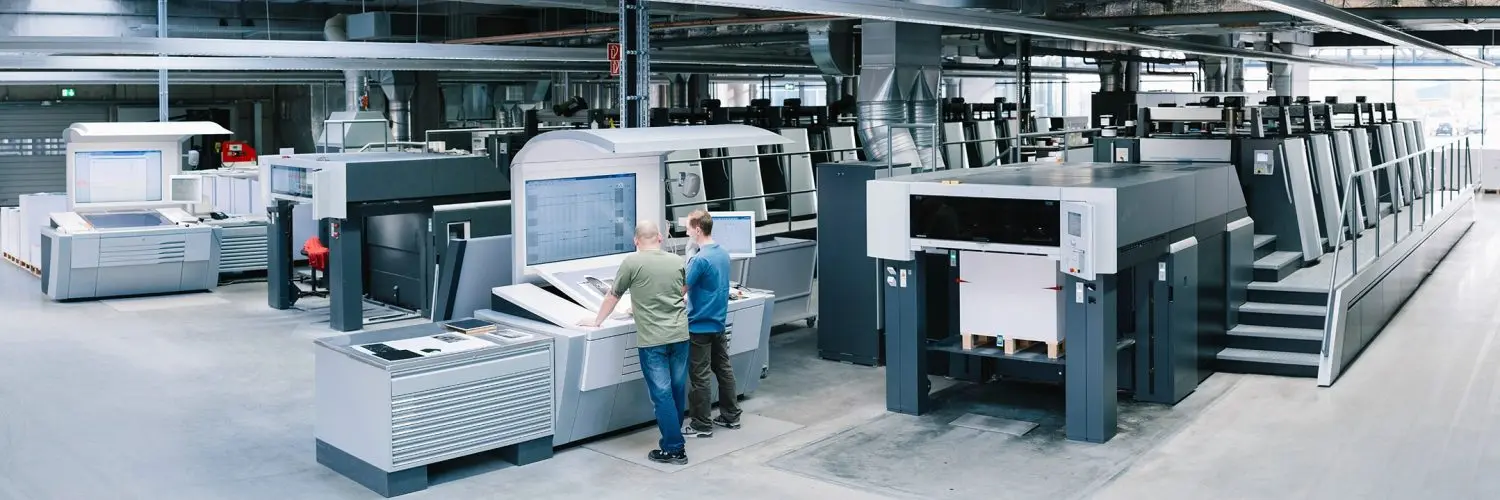
Founded in 2007 and based in Huadu District, Guangzhou, UGI Packaging (ukugi.com) operates as a custom food packaging supplies manufacturer for the foodservice, bakery, and retail sectors — a product category that, as defined by Wikipedia’s packaging and labelling reference, encompasses all materials used for enclosing or protecting products during distribution, storage, and sale. The factory operates six dedicated production lines covering paper converting and coating, aluminium foil stamping and forming, paper and PLA straw extrusion, digital printing for promotional materials, and precision laser engraving for acrylic decorative items — all within a single 12,000 m² manufacturing campus that enables end-to-end production without subcontracting.
The factory’s food packaging supplies division serves buyers across the UK, EU, USA, Australia, and Middle East markets, supplying custom-specification products to fast food chains, bakery brands, cloud kitchen operators, corporate catering groups, and independent food retailers. Every product category within the food supplies range is manufactured using food-contact-certified materials, with compliance documentation available for all major regulatory frameworks including EU Regulation 1935/2004, FDA 21 CFR Parts 176–178, and China national standard GB 9685.
Six Production Lines at a Glance
UGI Packaging’s food packaging supplies manufacturing capability is supported by in-house tool and die design, a dedicated food safety materials library covering over 40 certified substrate grades, and a technical team with direct experience supplying both retail consumer packs and wholesale foodservice volumes. The same factory that produces a 500-unit custom sample run for a boutique bakery also manages 500,000-unit production programmes for regional supermarket chains — without changes to the quality control process or material certification requirements between orders.
Product Range: 6 Categories, 17 SKUs — Full Specification Overview
Category 1 — Greaseproof Food Wrapping Paper
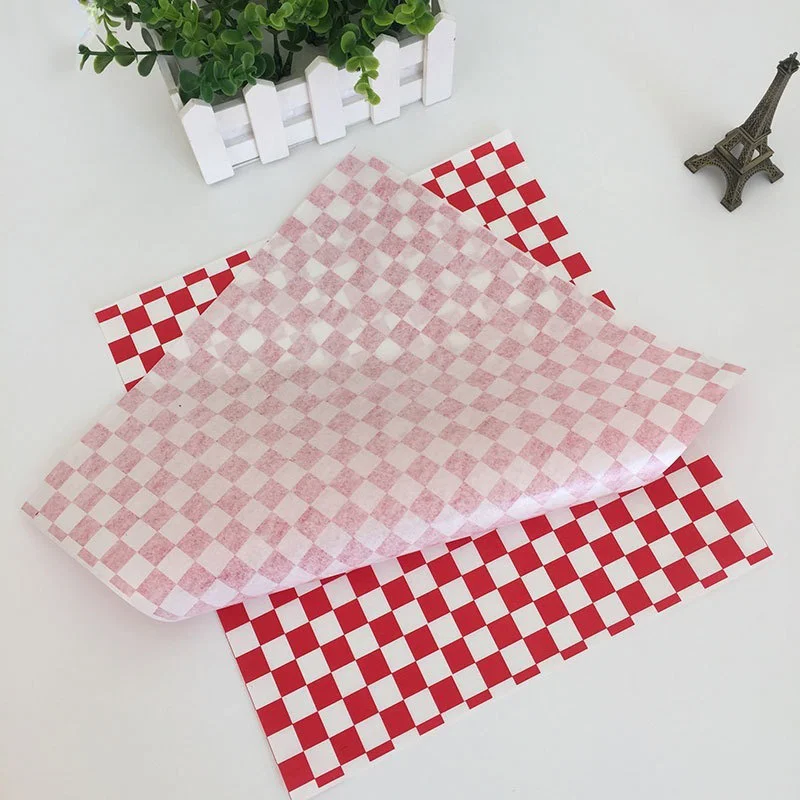
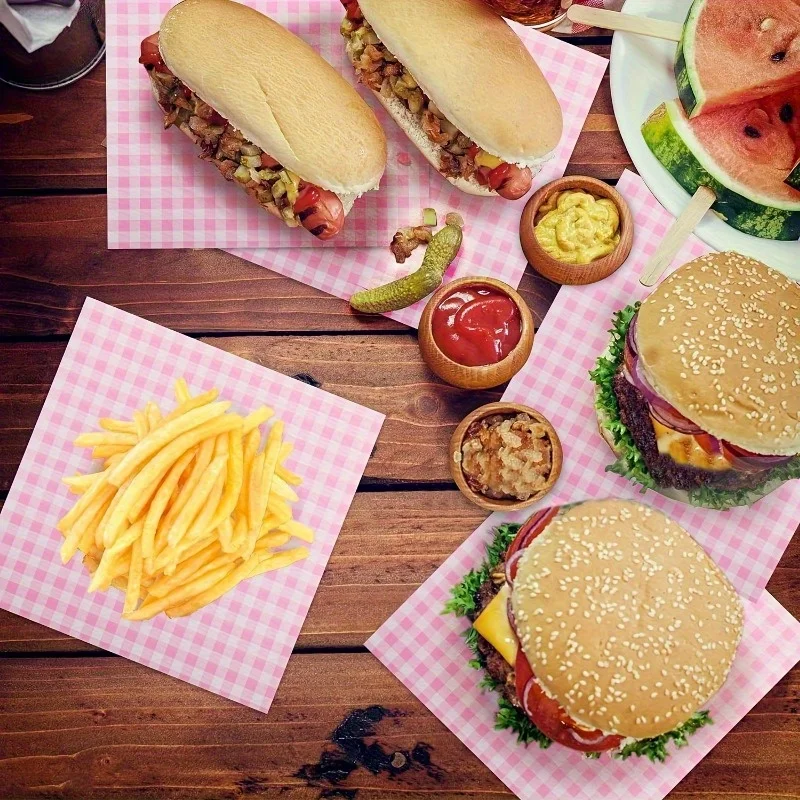
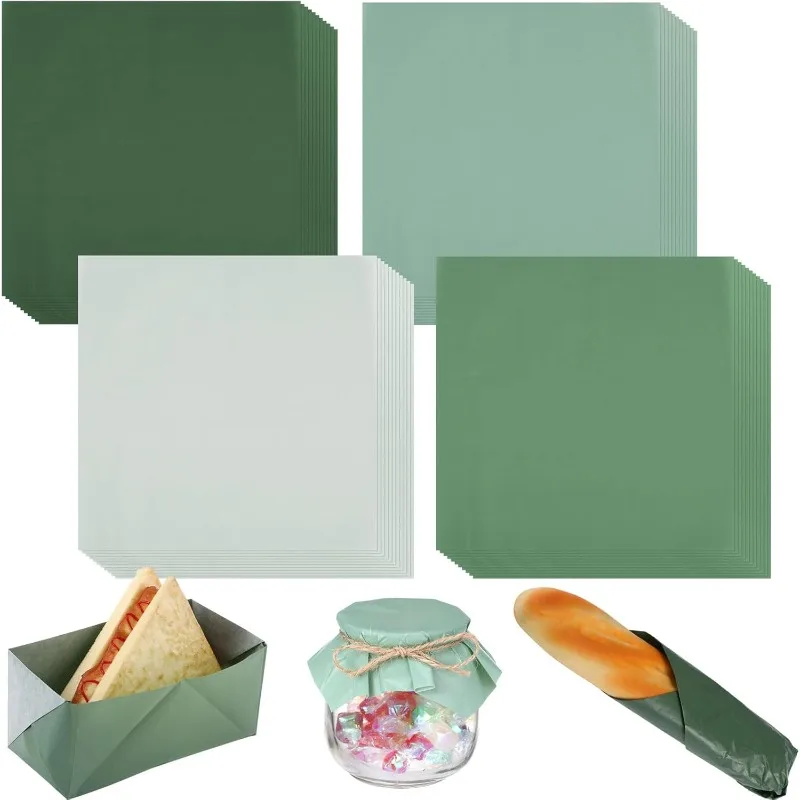
UGI Packaging manufactures food-grade greaseproof wrapping paper in sheet format across multiple size, weight, and colour specifications. The core range covers rectangular sheets for fast food, pizza, and burger service; square sheets in 18×18 cm and 22×22 cm for sandwich and pastry wrapping; and large-format sheets at 30×30 cm for basket lining and deli counter use. Colour options include natural kraft, white, pink, sage green, and multi-colour gradient designs — with custom colour specifications available at minimum order quantities above 2,000 sheets.
The functional barrier in UGI Packaging’s greaseproof sheets is achieved through a PFAS-free aqueous dispersion coating applied to virgin wood pulp base paper at a coat weight of 4–8 g/m², achieving a Cobb grease resistance value of ≤ 8 g/m² per ISO 535. This coating system complies with EU Regulation 1935/2004 and does not contain per- and polyfluoroalkyl substances (PFAS), making it suitable for markets with active PFAS restriction legislation including the EU, UK, and several US states.
Category 2 — Silicone-Coated Baking Liners
The baking liner range at UGI Packaging covers four distinct product formats: bread loaf pan liners (9.85×5.12 inch standard and custom sizes), cake roll side strips for Swiss roll production, perforated square and round air fryer parchment liners, and multi-use oven parchment sheets. All baking liner formats use a wood pulp base paper with a bilateral silicone coating at 1.2–2.5 g/m² per side, achieving a release force of ≤ 0.3 N/cm under standard test conditions and a continuous service temperature range of -40°C to +220°C.
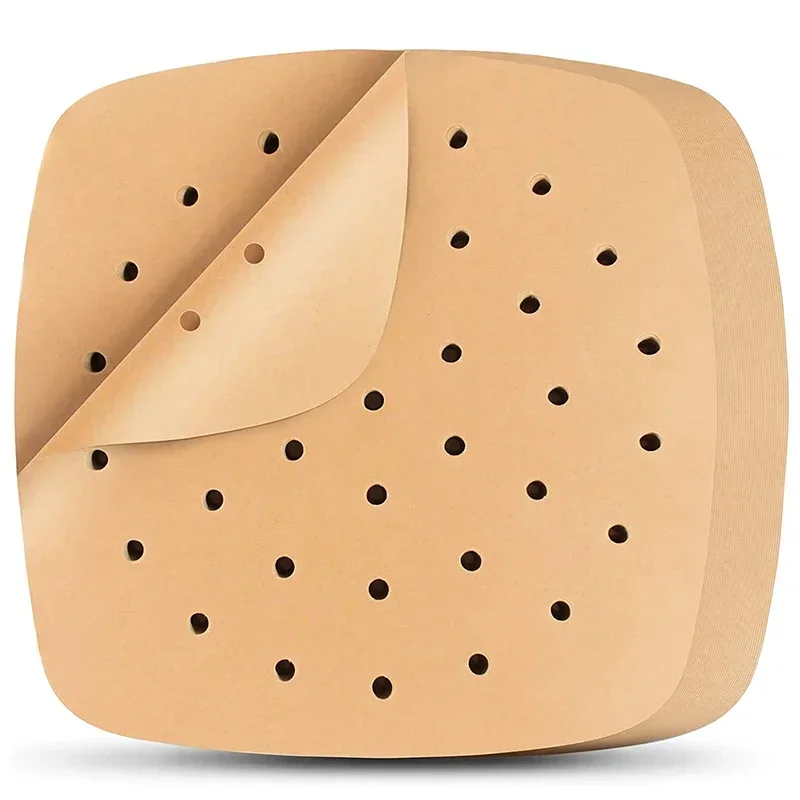
The perforated air fryer liner series — available in both 50-count and 100-count retail packs — features precision die-cut perforation patterns optimised for air circulation in basket-style air fryers. Hole diameter is standardised at 6 mm with a 12 mm centre-to-centre pitch, providing sufficient airflow for even cooking while maintaining structural integrity during food loading and removal. Custom perforation patterns, including square and hexagonal arrangements, are available for OEM buyers with specific airflow performance requirements.
Category 3 — Aluminium Foil Products
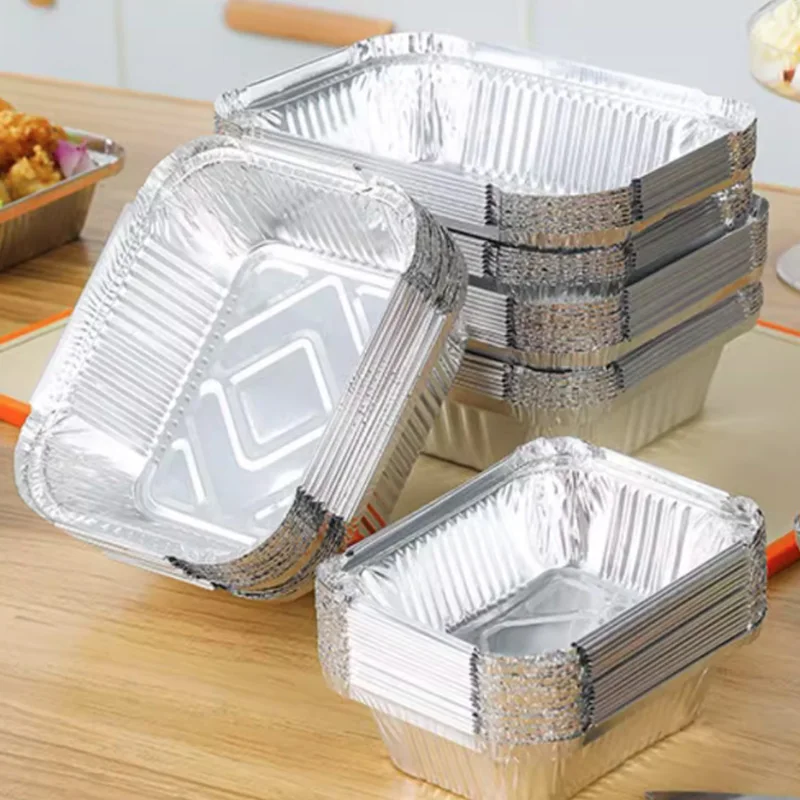
UGI Packaging’s aluminium foil product range includes disposable food trays in multiple formats and a heavy-duty foil roll for wrapping and cooking applications. The foil tray series covers rectangular, oval, and round formats suitable for baking, roasting, takeaway service, and oven-to-table presentation. Tray gauge ranges from 30–80 microns depending on application load, with the thicker gauges specified for hot food takeaway and the standard gauges for baked goods and catering service.
The heavy-duty foil roll is produced from food-grade aluminium alloy (≥99.5% Al purity, EN 602 compliant) at 12.2 inches wide, supplied in 1.65-inch core rolls. The foil thickness is 18 microns for the standard grade — sufficient for wrapping sandwiches, hot dogs, and burritos without tearing — with a 25-micron heavy-duty grade available for BBQ and grill applications where direct flame contact is required. Both grades carry food contact compliance documentation for direct food contact use per EU Regulation 1935/2004.
Category 4 — Paper & PLA Straws
UGI Packaging manufactures three straw formats: biodegradable paper straws in assorted stripe patterns, bulk coloured paper straws in solid and gradient designs, and wholesale PLA (polylactic acid) milk tea straws for high-volume beverage operators. Paper straws are produced using a spiral-wound triple-layer construction with food-safe water-based adhesive bonding, achieving a wet strength retention of ≥ 85% at 30 minutes immersion in water at 20°C — meeting the functional durability standard for typical beverage service periods.
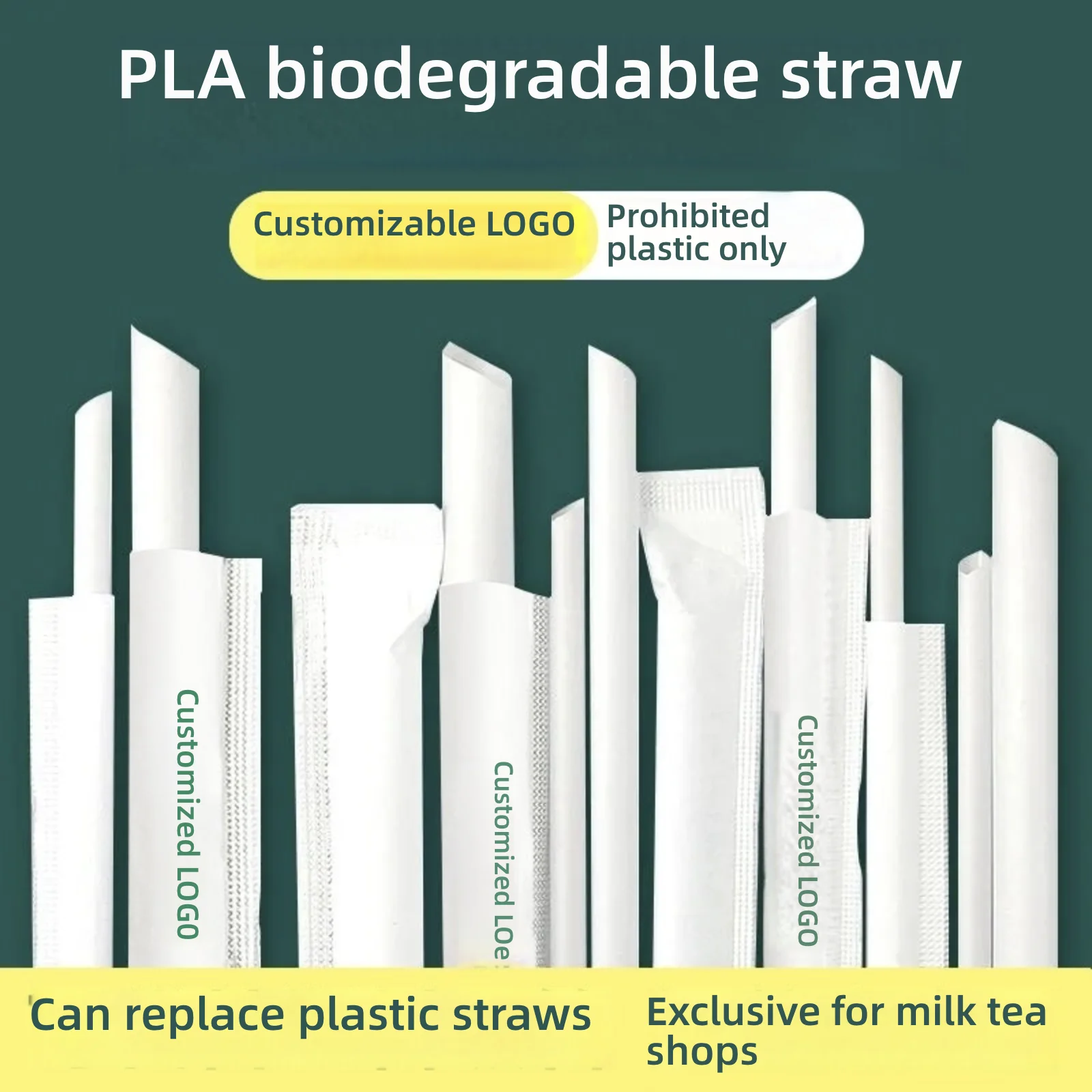
PLA straws are extruded from certified compostable polylactic acid resin (EN 13432 / ASTM D6400), providing the clarity and rigidity of plastic straws with full industrial compostability. The PLA milk tea straw specification includes a 12 mm internal diameter variant for pearl tea and boba applications, and an 8 mm standard variant for smoothies and specialty beverages. Both paper and PLA straw formats are available in custom lengths from 150 mm to 240 mm at minimum order quantities of 5,000 units per colour specification.
Category 5 — Printed Promotional Flags
The promotional flag range at UGI Packaging covers outdoor advertising banners printed on 100% polyester fabric using high-resolution digital UV inkjet technology. The hot dog advertising flag shown in the current product range is a representative format — a blade-style feather flag designed for food stand, festival, restaurant forecourt, and retail exterior use. Custom designs are accepted from buyer-supplied artwork in any food service theme, with full-colour print coverage on one or both sides of the flag fabric.
Polyester promotional flags are printed at 1440 dpi resolution using UV-resistant sublimation inks with a minimum outdoor lightfastness rating of 3 years at standard UV exposure conditions. Flag dimensions are fully customisable from A3 format table flags to 3-metre full-height feather flags, with pole and ground stake hardware available as add-on accessories. Minimum order quantity for custom promotional flags is 10 units per design, making them viable for independent food businesses and franchise operators alike.
Category 6 — Custom Acrylic Cake Toppers
UGI Packaging’s acrylic cake topper range covers personalised name and occasion toppers produced from double-layer acrylic sheet using CO₂ laser engraving and cutting. The standard format is a Mr & Mrs wedding topper with a custom name pair, available in gold, silver, rose gold, and glitter laminate finishes on 3 mm acrylic substrate. The production process allows full personalisation of text, font, layout, and size — making each topper a unique OEM product produced to the buyer’s exact specification with no minimum quantity requirement for personalised units above 1 piece.
| Category | Key Products | Core Material | MOQ | Custom Options |
|---|---|---|---|---|
| Greaseproof Paper | Deli sheets, wax paper, sandwich wraps | Virgin wood pulp, PFAS-free coating | 2,000 sheets | Size, colour, print |
| Baking Liners | Loaf pan liners, air fryer parchment, cake strips | Wood pulp, bilateral silicone coating | 1,000 pcs | Size, perforation pattern |
| Aluminium Foil | Foil trays, foil rolls | Food-grade Al alloy ≥99.5% | 500 pcs | Tray shape, gauge, lid option |
| Paper & PLA Straws | Stripe paper straws, solid colour, PLA boba straws | FSC paper / certified PLA resin | 5,000 pcs | Diameter, length, colour, print |
| Promotional Flags | Feather flags, blade flags, table flags | 100% polyester fabric | 10 pcs | Full custom artwork, size, double-sided |
| Acrylic Toppers | Cake toppers, personalised signs | Double-layer acrylic sheet | 1 pc | Name, font, size, finish colour |
Materials Engineering: Paper, Foil, PLA & Barrier Coating Specifications
3.1 Virgin Wood Pulp Base Papers
All paper-based food packaging supplies at UGI Packaging use virgin wood pulp as the base substrate — specifically unbleached kraft pulp for natural brown products and bleached sulphate pulp for white and coloured products. The use of virgin pulp rather than recycled fibre is a deliberate food safety decision: recycled paper fibres can contain residual mineral oil hydrocarbons (MOSH/MOAH) from printing inks and other contaminants that migrate into food contact surfaces. Virgin pulp eliminates this migration risk and is required by several major food retailers and foodservice operators as a supply chain condition.
Base paper grammages used across the UGI Packaging food supplies range span from 30 gsm (lightweight greaseproof liner) to 80 gsm (heavy-duty baking parchment and loaf pan liner).
The specific grammage selection for each product is determined by the mechanical requirements of the application — a 30 gsm sheet is adequate for a deli counter wrapper where the paper is handled gently and the contact time with food is short, while a 60–80 gsm liner is required for a loaf pan application where the paper must hold its formed shape during batter filling, oven heating to 220°C, and removal of a fully baked loaf without tearing. Paper tensile strength, elongation at break, and moisture resistance are tested per ISO 1924 and ISO 535 on each incoming roll before release to production.
3.2 PFAS-Free Barrier Coating Chemistry
The grease resistance and non-stick properties of UGI Packaging’s paper-based food supplies are achieved through two distinct coating chemistry systems: aqueous dispersion barrier coatings for greaseproof wrapping papers, and silicone emulsion coatings for baking liners and parchment products. Both systems are formulated without per- and polyfluoroalkyl substances (PFAS) — the fluorine-based chemistry historically used in food packaging barrier coatings but now subject to restriction legislation in the EU, UK, and multiple US states due to environmental persistence and potential health concerns.
The PFAS-free aqueous barrier coating used for greaseproof wrapping papers is an aqueous styrene-acrylic or wax-based dispersion applied at a coat weight of 4–8 g/m² per side using a rod-coating or curtain-coating process. This coating system achieves a Kit test grease resistance rating of 8–12 (TAPPI T559) and a Cobb grease value of ≤ 8 g/m² (ISO 535), providing effective oil and grease barrier performance for contact times up to 4 hours at ambient temperature — sufficient for all standard food service wrapping applications including pizza boxes, burger wrappers, and deli counter sheets.
The silicone coating system used for baking liners is a platinum-catalysed silicone emulsion applied bilaterally at 1.2–2.5 g/m² per side and cured at 160–180°C in a continuous hot-air oven during the coating process. Platinum-catalysed silicone cure systems are the food-contact standard for baking parchment globally, offering superior thermal stability compared to tin-catalysed alternatives and full compliance with EU Regulation 10/2011 on plastic food contact materials, as well as FDA 21 CFR 177.2600 for rubber articles intended for repeated use. The cured silicone coating on UGI Packaging baking liners achieves a surface energy of ≤ 20 mN/m, ensuring complete food release from the liner surface across the full oven temperature range of 180°C to 220°C.
3.3 Food-Grade Aluminium Alloy
Aluminium foil products at UGI Packaging are manufactured from food-grade aluminium alloy conforming to EN 602 (aluminium and aluminium alloys — chemical composition) with a minimum aluminium purity of 99.5%. Food-grade aluminium foil standards and packaging industry specifications are maintained by bodies including the European Federation of Corrugated Board Manufacturers (FEFCO), which publishes standard structural guidelines referenced by EU food packaging producers.
The alloy specification used for food tray production is typically AA 8011 or AA 8079, both of which are industry-standard alloys for food contact aluminium foil due to their combination of formability, strength, and corrosion resistance. The raw aluminium sheet for tray production and foil rolls is sourced from primary aluminium producers with documented food contact compliance, and each incoming batch is verified by alloy composition analysis (XRF) before release to the stamping or slitting lines.
Foil gauge selection across UGI Packaging’s aluminium product range is calibrated to application load and heat resistance requirements. Standard disposable food trays for baked goods use 30–40 micron gauge, providing adequate rigidity for tray handling while maintaining the formability needed for complex tray geometries during hydraulic stamping. Heavy-duty takeaway trays intended for hot meal service use 60–80 micron gauge to prevent tray deformation under the combined load of hot food and handling forces. The aluminium foil roll uses 18 micron gauge for standard wrapping applications, with a 25 micron heavy-duty grade specified for direct-contact high-temperature applications such as BBQ and grill wrapping where the foil is exposed to temperatures above 300°C.
3.4 PLA Biopolymer Resin for Straws
PLA (polylactic acid) straws at UGI Packaging are extruded from certified compostable PLA resin produced from fermented plant starch — typically corn or cassava — using a lactic acid fermentation and polymerisation process. The resin grade used is selected specifically for its combination of melt flow index suitable for tube extrusion (MFI 3–8 g/10 min at 190°C/2.16 kg), adequate glass transition temperature for cold beverage service (Tg approximately 55–60°C), and industrial compostability certification to EN 13432 and ASTM D6400.
The EN 13432 certification confirms that the PLA material will disintegrate under industrial composting conditions (58°C, 60% moisture) within 90 days and produce no ecotoxic residues — a requirement for EU single-use plastics compliance and a growing requirement in UK and Australian food service procurement policies.
UGI Packaging’s paper straw base material is a wet-strength kraft paper produced from virgin cellulose with a wet tensile strength specification of ≥ 1.5 kN/m (MD direction, ISO 3781) in the wet state — the key performance criterion that determines how long a paper straw maintains its structural integrity when immersed in a liquid beverage. The food-safe water-based adhesive used in the spiral-wound construction is a PVA-based formulation compliant with EU Regulation 1935/2004, with a migration level for vinyl acetate monomer below the specific migration limit (SML) of 12 mg/kg food simulant.
3.5 Material Specifications Summary
| Material | Grade / Spec | Key Parameter | Compliance |
|---|---|---|---|
| Virgin wood pulp paper | 30–80 gsm, bleached / unbleached | Tensile strength ≥ 3.5 kN/m (MD) | EU 1935/2004, FDA 21 CFR 176 |
| PFAS-free aqueous barrier coating | Styrene-acrylic / wax dispersion, 4–8 g/m² | Cobb ≤ 8 g/m² (ISO 535); Kit 8–12 | REACH Annex XVII, no PFAS |
| Silicone emulsion coating | Pt-catalysed, bilateral 1.2–2.5 g/m² | Release force ≤ 0.3 N/cm; -40°C to +220°C | EU Reg 10/2011, FDA 21 CFR 177.2600 |
| Food-grade aluminium alloy | AA 8011 / AA 8079, ≥99.5% Al | Gauge 18–80 micron per application | EN 602, EU 1935/2004 |
| Certified PLA resin | Corn / cassava starch origin | MFI 3–8 g/10 min; Tg ~58°C | EN 13432, ASTM D6400 |
| Wet-strength kraft paper (straws) | Virgin cellulose, food-safe PVA adhesive | Wet tensile ≥ 1.5 kN/m; 30 min immersion | EU 1935/2004, SML vinyl acetate ≤ 12 mg/kg |
| Double-layer acrylic sheet | 3 mm / 5 mm PMMA, metallic laminate | Laser engravable; 30+ colour options | Non-food-contact (decorative use) |
UGI Packaging’s food-contact packaging materials — including all paper and aluminium foil grades — are sourced exclusively from suppliers who can provide lot-traceable food contact compliance declarations conforming to EU Regulation 1935/2004 Article 16 (declaration of compliance). This traceability requirement means that for any production lot, UGI Packaging can identify the specific raw material batch, its supplier, the compliance declaration, and the relevant test reports — providing the full supply chain transparency increasingly required by food retailer and food service operator buying specifications in Europe and North America. For more information on how UGI Packaging operates as a custom food packaging supplies manufacturer with full material compliance, buyers can refer to the UGI Packaging Materials Insights resource library at ukugi.com.
Structural Design: Converting, Stamping & Extrusion Technologies
4.1 Paper Web Converting — Sheet Products
Greaseproof wrapping paper and baking liner sheet products at UGI Packaging are produced on continuous web converting lines that process base paper from jumbo rolls (typically 1,200–1,500 mm wide, 3,000–5,000 m long) through a sequence of coating, drying, slitting, and sheet cutting operations. The coating station applies the barrier or silicone coating to the moving paper web using a precision rod-coating or slot-die head at a controlled coat weight with ±0.2 g/m² tolerance across the web width. Coat weight is monitored in real time using an inline near-infrared (NIR) sensor, allowing immediate correction of any deviation from the target coat weight specification before the material reaches the slitting station.
After coating and drying (at 120–180°C depending on coating chemistry), the coated web passes through a slitting station that divides the wide web into slit rolls at the target sheet width — for example, 300 mm for a 300×300 mm deli sheet, or 250 mm for an 18×18 cm square wrapper. The slit rolls are then fed into a sheet-cutting station that cuts each roll into individual sheets at the target length, counts the sheets into the specified pack quantity (50, 100, 200, or 400 per pack), and feeds the counted stacks into an automatic wrapping and banding station.
The complete converting sequence — from jumbo roll input to finished retail pack output — runs without manual handling of the paper substrate, which is essential for maintaining food contact hygiene standards throughout production.
4.2 Die-Cutting — Baking Liner Forming
Baking liner products — including loaf pan liners, cake roll side strips, and air fryer parchment squares — require precision die-cutting to achieve the exact dimensions and, for air fryer liners, the specific perforation pattern needed for their application. UGI Packaging’s die-cutting station uses rotary steel-rule dies mounted on a flatbed press, capable of cutting complex shapes and perforation patterns in silicone-coated parchment paper with dimensional tolerances of ±0.5 mm on outer dimensions and ±0.3 mm on perforation hole position.
For loaf pan liners, the die-cut shape is designed to fold up the sides of the pan cavity when the liner is inserted, creating a full coverage liner that prevents adhesion on all five contact surfaces (base and four sides) without requiring the baker to cut or fold the liner manually. The fold lines are pre-scored in the die-cutting operation at a score depth calibrated to allow clean folding without breaking the paper fibres, maintaining the integrity of the silicone coating across the fold. Custom loaf pan liner dies can be produced to fit any standard or non-standard tin size within a 5–7 day tooling lead time, with tool costs ranging from £150–£350 GBP depending on die complexity.
Air fryer parchment liners use a secondary die-cut step to create the perforation array after the outer shape has been cut. The standard perforation specification — 6 mm holes at 12 mm centres in a square array — is produced using a multi-needle perforating die that cuts all holes simultaneously in a single press stroke, ensuring consistent hole position, diameter, and edge quality across every liner. Custom perforation specifications including different hole diameters (4–10 mm), centre distances (8–20 mm), and hole patterns (square, hexagonal, radial) can be tooled with a 5-day tooling lead time.
4.3 Hydraulic Stamping — Aluminium Foil Trays
Aluminium foil food trays at UGI Packaging are formed using a hydraulic deep-drawing press with matched male and female die sets. The foil blank is cut from the input coil at the target blank diameter, positioned over the female die cavity, and drawn downward by the male punch under a controlled press force that forms the tray walls, base profile, and rim flange in a single stroke.
The draw ratio (the ratio of blank diameter to tray depth) determines the minimum practical wall thickness in the drawn tray and is a critical design parameter — UGI Packaging’s standard tray designs are engineered with draw ratios below 2.5:1 to maintain wall integrity and prevent tearing or thinning in the tray sidewalls during forming.
Tray tooling at UGI Packaging covers a range of standard cavity profiles including rectangular, oval, round, and divided-compartment formats. Standard tray dimensions in the current range include small (200×150×40 mm), medium (300×200×50 mm), and large (450×300×60 mm) rectangular formats for catering use, and 180 mm and 230 mm diameter round formats for pie and cake baking applications. Custom tray dimensions can be tooled with a 10–15 day lead time and tool cost of £400–£1,200 GBP depending on tray complexity and draw depth. Lid tooling for sealed tray formats is also available, with the lid profile designed to provide a positive press-fit seal on the standard tray rim flange without requiring additional sealing machinery at the food production facility.
4.4 Spiral-Wound Construction — Paper Straws
Paper straws at UGI Packaging are manufactured using a spiral-wound tube construction, in which strips of printed or plain wet-strength kraft paper are wound around a mandrel at a controlled helix angle to form a multi-layer tube. The standard construction uses three paper layers — an outer printed layer, an inner structural layer, and a food-contact inner liner — bonded with food-safe water-based PVA adhesive applied between each layer during the winding process. The three-layer construction provides the structural rigidity needed to maintain tube shape during beverage service while using a thinner paper gauge in each layer than would be required in a single-layer construction, improving the texture and mouthfeel of the finished straw.
Mandrel diameter during winding determines the internal bore of the finished straw. UGI Packaging’s standard paper straw bore range covers 6 mm (juice and cold drinks), 8 mm (smoothies and thick beverages), and 12 mm (bubble tea and boba), with custom bore sizes available from 5 mm to 14 mm at additional tooling cost for non-standard mandrel diameters. After tube winding, straws are cut to length using a rotary guillotine that produces a clean, square-cut end without paper delamination — the end quality is particularly important for paper straws as a ragged or delaminating end is the primary consumer complaint driver in the category and a key differentiator between quality-grade and commodity paper straws.
4.5 Tube Extrusion — PLA Straws
PLA straws at UGI Packaging are produced by continuous tube extrusion, in which PLA resin pellets are melted in a single-screw extruder, forced through a tube die to form a continuous hollow tube, cooled in a water bath, and cut to length in a continuous downstream process. The extrusion process for PLA requires more precise temperature control than conventional plastic tube extrusion because PLA has a narrower processing window — the melt temperature must be maintained within ±5°C of the target set point (typically 175–190°C for food-grade PLA) to avoid thermal degradation that produces yellowish discolouration and reduced molecular weight, which directly affects the straw’s clarity, rigidity, and composting performance.
UGI Packaging’s PLA extrusion lines are equipped with closed-loop melt temperature and pressure control systems that maintain processing conditions within the required window, ensuring consistent tube wall thickness (target ±0.05 mm), outer diameter (target ±0.1 mm), and material clarity across the full production run. The dimensional consistency of PLA straw production at UGI Packaging is verified by inline laser micrometer measurement of outer diameter and wall thickness at a sampling rate of one measurement per second, with automatic reject triggering if measured dimensions deviate from specification by more than the defined tolerance limits.
4.6 Structural Capabilities Comparison
| Product Type | Forming Process | Dimensional Tolerance | Custom Tooling Lead Time | Tooling Cost (GBP) |
|---|---|---|---|---|
| Greaseproof sheets | Web converting + sheet cut | ±1 mm length/width | No tooling (slit change only) | £0 |
| Baking liners (shaped) | Rotary die-cut + score | ±0.5 mm outline; ±0.3 mm perf | 5–7 business days | £150–£350 |
| Aluminium foil trays | Hydraulic deep-draw stamp | ±0.5 mm outer; ±0.1 mm depth | 10–15 business days | £400–£1,200 |
| Paper straws | Spiral-wound, 3-layer | ±0.2 mm bore; ±0.5 mm length | 3–5 days (mandrel change) | £50–£150 |
| PLA straws | Continuous tube extrusion | ±0.1 mm OD; ±0.05 mm wall | 3–5 days (die change) | £80–£200 |
The structural design capabilities described in this section represent UGI Packaging’s current production range for standard and custom food packaging supplies. For buyers requiring structures outside this range — for example, composite paper-aluminium laminate trays, vacuum-formed PET lids for foil tray combinations, or paper bags with integrated grease-barrier liners — UGI Packaging’s product development team can evaluate feasibility and provide a technical assessment within 5 business days of receiving a design brief. Details of the full OEM and ODM product development process are covered in UGI Packaging’s custom service documentation at ukugi.com.
Printing Technologies: Flexo, Digital UV & Laser Engraving
5.1 Water-Based Flexographic Printing — Paper Products
Flexographic printing is the primary printing technology for paper-based food packaging supplies at UGI Packaging, applied to greaseproof wrapping sheets, deli papers, wax papers, and the outer layer of paper straws. UGI Packaging operates multi-colour flexographic printing lines configured for reel-fed narrow-web and wide-web printing on paper substrates, using water-based ink systems throughout. Water-based flexographic inks are the standard for food packaging paper printing in the EU and UK markets, replacing the solvent-based formulations historically used in the category and eliminating residual solvent migration concerns that are a compliance risk with solvent-based food packaging inks.
The flexographic printing process at UGI Packaging uses photopolymer printing plates produced from buyer-supplied artwork at 1,200–2,400 lpi resolution. Standard colour capacity on the UGI Packaging flexo lines is up to 8 colours including process CMYK and spot Pantone colours, allowing full-colour brand graphics, gradient backgrounds, and detailed pattern designs to be printed in a single pass. Colour matching is performed to Pantone Matching System (PMS) reference, with a maximum colour deviation of ΔE ≤ 2.0 (CIE L*a*b*) between the approved colour proof and production output — the colour accuracy standard commonly required by brand-owner food and beverage specifications.
For gradient-effect designs such as the sage green gradient deli paper in UGI Packaging’s current range, the flexographic process uses a graduated halftone screen structure that transitions the ink density across the print width or length. Gradient printing on greaseproof and wax paper substrates requires precise anilox roll specification — UGI Packaging uses 400–600 lpi anilox rolls with cell volumes calibrated to the ink viscosity and substrate absorbency of each specific paper grade — to achieve a smooth, banding-free gradient transition without ink pooling or skip-out defects on the coated paper surface.
5.2 Paper Straw Printing — Flexo on Wet-Strength Paper
Printing on paper straws at UGI Packaging is performed on the outer-layer paper web before the spiral-wound straw construction process, using a narrow-web flexographic press configured for wet-strength kraft paper. The outer layer is the only printed layer in the three-layer straw construction — the inner structural and food-contact liner layers remain unprinted — ensuring that the printed ink is isolated from direct food contact by the unprinted inner layers of the straw wall, even if the ink system were to exhibit any micro-level migration through the outer paper layer.
Standard paper straw print designs in UGI Packaging’s range include longitudinal stripe patterns (1–6 stripes per circumference in single or multiple colours) and diagonal stripe patterns at 30°, 45°, and 60° helix angles relative to the straw axis. Custom designs including solid colour, spot pattern, polka dot, plaid, and full-colour artwork are available at minimum order quantities of 10,000 straws per design. Print repeat length on the outer straw layer web corresponds to the circumference of the straw outer diameter — for a 6 mm bore paper straw with 0.5 mm wall thickness and two outer-layer paper thicknesses, the outer circumference is approximately 28 mm, defining the maximum print repeat length available in the circumferential direction. Longitudinal repeat length is unconstrained, allowing full-length logo or text runs along the straw length.
5.3 Digital UV Sublimation Printing — Promotional Flags
Polyester promotional flags at UGI Packaging are printed using dye-sublimation digital printing technology, in which the design is first printed onto a transfer paper using sublimation inks and then thermally transferred onto the polyester fabric under heat and pressure in a calendar press. At the transfer temperature of approximately 200°C, the sublimation inks convert directly from solid to gas phase, penetrating the polyester fibre structure and bonding with the polymer at a molecular level to produce a print that is inherently part of the fabric rather than a surface coating — giving sublimation-printed flags their characteristic softness, wash resistance, and lightfastness compared to screen-printed or digitally inkjet-printed alternatives.
UGI Packaging’s sublimation printing for promotional flags operates at 1,440 dpi print resolution, producing photographic-quality full-colour output suitable for complex food service brand graphics including photographic food imagery, gradient brand backgrounds, and fine-detail logo artwork. The colour gamut achievable with sublimation printing on polyester is significantly wider than the gamut of standard CMYK offset or screen printing — covering approximately 85% of the Pantone colour range on a standard white polyester substrate — which is particularly advantageous for food service brand colours that require specific Pantone references outside the standard CMYK gamut, such as vivid greens, bright oranges, and saturated purples commonly used in food and beverage brand identities.
Lightfastness of UGI Packaging’s sublimation-printed promotional flags is rated at ISO 105-B02 Grade 4–5 (excellent to very good) on standard white polyester, corresponding to a minimum outdoor display life of 3 years under standard UV exposure conditions in temperate climates.
For high-UV exposure environments such as Middle East, Australian, or Southern European outdoor food service installations, UGI Packaging recommends the UV-stabilised polyester grade with an additional UV-absorber treatment applied to the fabric surface, achieving a lightfastness rating of ISO 105-B02 Grade 5 and an estimated outdoor life of 4–5 years. Flag printing is available in single-sided format (design on one face, mirror image visible on reverse) or double-sided format (two separate fabric panels with a black light-blocking liner stitched between them) for applications where the reverse-mirror effect of single-sided flags is not acceptable.
5.4 CO₂ Laser Engraving — Acrylic Cake Toppers
Custom acrylic cake toppers at UGI Packaging are produced using CO₂ laser engraving and cutting on double-layer acrylic sheet, in which a top-colour acrylic layer is bonded to a contrasting base-colour acrylic layer, and the laser removes the top layer in the engraved areas to reveal the base colour beneath. This two-layer engraving process produces crisp, high-contrast text and graphic elements with a three-dimensional depth effect that is significantly more visually impactful than single-layer surface engraving or screen printing on acrylic — and because the design is created by removing material rather than applying a surface coating, it is inherently permanent, scratch-resistant, and unaffected by handling, moisture, or the icing sugar and cream environments typical of cake decoration applications.
UGI Packaging’s CO₂ laser systems operate at 10.6 micron wavelength with a focused spot size of approximately 0.1 mm, enabling text engraving at minimum character heights of 3 mm with clear legibility and sharp edge definition. The laser path is programmed directly from vector artwork files (AI, SVG, or DXF format) provided by the buyer or designed by UGI Packaging’s in-house design team, with no film, plate, or screen tooling costs involved — making laser engraving the most cost-effective print technology for short-run and personalised items, particularly for single-piece or low-volume orders where conventional print tooling costs would be prohibitive.
Available finish options for the double-layer acrylic substrate used in cake toppers include: gloss gold on clear acrylic (the most popular wedding and celebration format), gloss silver on clear acrylic, rose gold metallic on black acrylic, glitter laminate in gold or silver on transparent acrylic, opaque white on coloured acrylic in over 30 standard base colours, and full custom colour combinations using special-order acrylic sheet at a minimum order quantity of 50 units. The laser cutting function of the same system also produces the outer profile cut of the topper in the same operation as the engraving, creating a finished product in a single automated production step — the complete production time for a personalised acrylic cake topper from artwork-confirmed to finished product is typically 1–2 business days.
5.5 Print Technology Selection Guide
| Technology | Products | Resolution / Accuracy | MOQ (Custom Print) | Plate / Setup Cost |
|---|---|---|---|---|
| Water-based flexo | Greaseproof sheets, deli paper, wax paper, straw outer layer | 1,200–2,400 lpi; ΔE ≤ 2.0; ±0.15 mm reg | 2,000 sheets / 10,000 straws | £80–£200 per colour |
| Digital UV sublimation | Polyester promotional flags | 1,440 dpi; photographic quality; 85% Pantone gamut | 10 units per design | £0 (digital, no plates) |
| CO₂ laser engraving | Acrylic cake toppers, custom signs | 0.1 mm spot; min. 3 mm text height | 1 unit (fully personalised) | £0 (no tooling required) |
For buyers developing branded food packaging supply programmes, UGI Packaging recommends engaging the in-house OEM design team at the artwork development stage to ensure that design elements are optimised for the specific printing technology being used — gradient backgrounds optimised for flexographic halftone reproduction, logo artwork prepared as vector files for laser engraving, and flag designs set up at the correct resolution and colour profile for sublimation printing. Artwork that arrives pre-optimised for the correct print technology typically reduces pre-press correction cycles from 2–3 rounds to 0–1, shortening the total time from artwork submission to approved print proof by 3–5 business days.
Surface Finishes: Silicone Coating, PFAS-Free Barrier & Foil Treatment

6.1 PFAS-Free Aqueous Barrier Coating — Greaseproof Papers
The primary surface treatment for UGI Packaging’s greaseproof wrapping paper range is a PFAS-free aqueous dispersion barrier coating applied to the food-contact face of the base paper web. The coating chemistry has undergone significant development over the past five years as the food packaging industry transitions away from fluoropolymer (PFAS) grease barrier systems in response to regulatory restriction — the EU’s universal PFAS restriction under REACH Annex XVII, the UK’s equivalent restriction programme post-Brexit, and individual state-level bans in the US including California (AB 1200, effective 2023) and New York.
UGI Packaging — operating as a custom food packaging supplies manufacturer — completed its transition to PFAS-free barrier coating formulations across the entire greaseproof paper range in 2024, ahead of the EU mandatory deadline. For the latest industry coverage on packaging regulation and material innovation, Packaging Europe provides authoritative reporting on EU and global packaging compliance developments.
The PFAS-free aqueous barrier coating currently used at UGI Packaging is based on a styrene-acrylic copolymer dispersion modified with a microcrystalline wax component that provides the hydrophobic surface energy reduction needed for effective grease barrier performance without the persistent fluorine chemistry of PFAS compounds. The coating formulation is specifically designed for application on food contact paper substrates and has been independently tested by SGS for overall migration (OM) and specific migration of all coating components into standard food simulants (ethanol 10%, acetic acid 3%, ethanol 50%, and vegetable oil) in accordance with EU Regulation 10/2011 Annex V test conditions, with all migration values confirmed below the overall migration limit (OML) of 10 mg/dm² and all specific migration limits (SML) for listed substances.
Performance parameters for the PFAS-free aqueous barrier coating applied to UGI Packaging’s greaseproof paper range:
6.2 Bilateral Silicone Coating — Baking Liners & Parchment
Silicone coating is the definitive surface treatment for baking liner applications, providing the combination of non-stick performance, thermal stability, and food-contact safety that no alternative coating chemistry has matched for continuous high-temperature baking use. UGI Packaging’s baking liner silicone coating process uses a platinum-catalysed addition-cure silicone emulsion system that produces a tightly crosslinked silicone polymer network on the paper surface — the high crosslink density is what gives the cured coating its exceptional release performance and heat resistance, as the crosslinked network resists delamination, migration, and degradation at temperatures that would degrade less crosslinked or tin-catalysed silicone systems.
The silicone coating is applied bilaterally — to both faces of the baking liner paper — using a precision dual-head coating station that applies the same coat weight to each face simultaneously in a single pass, ensuring that the release performance is identical on both sides of the liner. Bilateral coating is essential for baking liner applications where the liner is in contact with the pan on one side and with the food product on the other — both surfaces must release cleanly to allow the liner to be removed from the pan after baking and to allow the baked product to be lifted from the liner without tearing.
The silicone coat weight range of 1.2–2.5 g/m² per side in UGI Packaging’s standard baking liner specifications is calibrated to the application type. The lower coat weight range (1.2–1.5 g/m²) is used for products in single-use parchment sheets and cake roll side strips where the mechanical demands on the coating are low and minimising coating material cost is a priority. The higher coat weight range (2.0–2.5 g/m²) is specified for heavy-duty baking liner applications including commercial loaf pan liners and air fryer parchment, where repeated insertion and removal from the baking cavity, contact with high-fat doughs and batters, and extended high-temperature dwell times place higher mechanical and chemical demands on the coating layer.
6.3 Aqueous Moisture-Barrier Coating — Paper Straws
The surface treatment challenge for paper straws is fundamentally different from that for flat paper products: instead of providing a grease or non-stick barrier on a flat sheet surface, the paper straw coating must provide moisture resistance on a curved, spiral-wound tube structure that is fully immersed in an aqueous beverage for the duration of its service life — typically 20–45 minutes for a commercial beverage service period. The moisture resistance of the paper straw determines its wet strength retention, which is the primary consumer performance criterion for paper straws: a straw that softens, collapses, or disintegrates before the beverage is finished fails its basic functional requirement regardless of its visual or environmental credentials.
UGI Packaging, as a custom food packaging supplies manufacturer, applies a food-safe aqueous moisture-barrier overcoat to the outer surface of finished paper straws using a dip-coating or roller-coating process that deposits a thin layer (0.5–1.0 g/m²) of an aqueous polymer dispersion over the complete outer straw surface, including the spiral seam lines that are the primary moisture ingress pathway in spiral-wound constructions. The coating penetrates slightly into the outer paper layer, reinforcing the fibre network at the surface and sealing the seam interfaces to retard moisture penetration into the paper wall from the condensation that forms on the straw exterior in contact with cold beverages. The result is a wet strength retention of ≥ 85% at 30 minutes immersion — the performance threshold that UGI Packaging specifies for all paper straws supplied to foodservice operators — measured by comparing the compressive crush force of an immersed straw to that of an unimmersed control at the same temperature.
6.4 Aluminium Foil Surface Treatment
Aluminium foil products at UGI Packaging use the inherent corrosion resistance and thermal stability of the food-grade aluminium alloy substrate as the primary surface property, without the addition of polymer coatings or lacquers on the standard food tray and foil roll range. The natural aluminium oxide layer that forms spontaneously on the foil surface provides adequate food contact safety and corrosion resistance for the temperature and time conditions of standard food baking and wrapping applications — confirmed by EU Regulation 1935/2004 compliance testing for aluminium migration into acidic food simulants (acetic acid 3%, citric acid buffer pH 4.5) at conditions representative of baking and hot holding use.
For premium foil tray applications where improved visual appearance or enhanced non-stick performance is required, UGI Packaging offers two additional surface treatment options as custom specifications: a bright-annealed finish that produces a highly reflective, mirror-like foil surface suitable for high-presentation catering applications; and a PTFE-based non-stick coating system applied to the food-contact interior surface of foil trays for applications involving sticky or high-sugar food products (e.g., caramel tarts, treacle-based puddings) where standard foil adhesion would be problematic. The PTFE non-stick coating for foil trays is applied as a spray coating and oven-cured at 300°C, producing a 15–20 micron coating that withstands repeated baking cycles at up to 220°C without delamination or colour change.
6.5 Surface Finish Performance Summary
| Surface Treatment | Applied To | Key Performance | Temp. Range | Compliance |
|---|---|---|---|---|
| PFAS-free aqueous barrier | Greaseproof wrapping paper | Cobb ≤ 8 g/m²; Kit 8–12; 4h grease contact | -20°C to +80°C | EU 1935/2004; REACH no PFAS; FDA |
| Bilateral Pt-cure silicone | Baking liners, parchment | Release ≤ 0.3 N/cm; surface energy ≤ 20 mN/m | -40°C to +220°C | EU Reg 10/2011; FDA 21 CFR 177.2600 |
| Aqueous moisture barrier | Paper straws (outer) | Wet strength ≥ 85% at 30 min immersion | -10°C to +70°C | EU 1935/2004; SML compliant |
| Natural Al oxide layer | Foil trays and rolls (standard) | Al migration ≤ OML; heat stable to 400°C | -40°C to +400°C | EU 1935/2004; EN 602 |
| PTFE non-stick coating | Premium foil trays (custom) | 15–20 µm; ≥ 10 bake cycles at 220°C | Up to 220°C continuous | FDA 21 CFR 175.300 |
| UV sublimation ink transfer | Polyester flags (non-food-contact) | Lightfastness ISO 105-B02 Grade 4–5; 3yr outdoor | -30°C to +80°C | Non-food-contact (decorative) |
UGI Packaging’s surface finish engineering team provides technical support to buyers developing custom food packaging supply specifications that require non-standard surface treatment combinations — for example, a printed greaseproof sheet with a higher-than-standard Kit test rating for a particularly oily food application, or a baking liner specification with an extended temperature range for a steam-injection oven process. Technical enquiries regarding surface treatment specifications can be directed to the UGI Packaging team via the contact page at ukugi.com, where a technical data sheet request form is available for all standard material grades. Further reading on coating technologies is available in the Surface Finishes Guides section of the UGI Packaging resource library.
OEM & ODM Design Capability: Custom Sizes, Colours & Branding
7.1 The 6-Stage OEM Development Process
7.2 Customisation Options by Product Category
| Product Category | Size / Dimension | Colour / Finish | Custom Print | Pack Format |
|---|---|---|---|---|
| Greaseproof paper | Any size from 15×15 cm to 60×45 cm | Any Pantone colour, gradient, pattern | Up to 8 colours flexo; logo, pattern, full artwork | Any count per pack; retail or bulk |
| Baking liners | Any loaf pan or tray size; custom fold-up depth | Natural brown or bleached white standard; custom on request | Branding print on non-food-contact face | 50, 100, 200, 500 per pack or bulk carton |
| Foil trays | Full custom dimensions; any depth up to 80 mm | Standard bright alloy; bright-annealed or PTFE non-stick options | Lid printing; outer carton branding | Nested stack packs; flat-pack; display-ready retail box |
| Paper straws | Bore 5–14 mm; length 150–240 mm | Any Pantone base; solid, stripe, gradient, pattern | Full outer layer print; logo, text, pattern | Poly-bag; paper retail box; catering bulk pack |
| PLA straws | Bore 6–12 mm; length 150–240 mm | Clear, white, black, custom resin colour | Sleeve label or outer carton print (not straw surface) | Individual wrapped; bulk carton; retail counter box |
| Promotional flags | A4 table to 3 m feather flag; any shape | Full-colour sublimation; 85% Pantone gamut | Full custom artwork; both sides available | Flag only; flag + pole; flag + ground stake set |
| Acrylic toppers | Any size; 3 mm or 5 mm acrylic gauge | 30+ base colours; gold, silver, rose gold, glitter | Fully personalised text, font, and graphic | Individual OPP bag; gift box on request |
7.3 Branding & Private Label Programmes
UGI Packaging supports private label and branded food packaging supply programmes for buyers who wish to supply their own-brand food packaging products to retail or foodservice customers. Private label food packaging supplies produced at UGI Packaging are identical in specification to branded products — the same material grades, the same coating systems, the same quality standards — with the buyer’s brand identity applied through the print process. UGI Packaging does not require buyers to disclose their end customer relationships, and all private label production is conducted under standard commercial confidentiality terms.
For food retailers and distributors developing own-label food packaging supply ranges, UGI Packaging offers a category development service in which the UGI Packaging design and technical team works with the buyer to develop a coherent range of complementary products — for example, a matched set of greaseproof deli sheets, loaf pan liners, and paper straws in a unified brand colour scheme — that can be launched as a coordinated product range under the buyer’s brand. This category development service includes range planning, material specification, artwork development, and compliance documentation for the complete range, with a single project manager at UGI Packaging coordinating all elements of the development across the different product types.
7.4 MOQ, Lead Time & Pricing Structure
Production order lead times at UGI Packaging for food packaging supplies range from 10 business days (standard-specification greaseproof sheets, baking liners, and foil rolls with no custom print) to 25–30 business days (custom-printed, custom-dimension products with new tooling). For buyers with repeating order programmes, UGI Packaging offers a standing order arrangement in which production is scheduled on a regular cycle — weekly, monthly, or quarterly — with the material, tooling, and print specification pre-approved, reducing the effective lead time for repeat orders to 7–10 business days from purchase order confirmation to dispatch. Full details of the UGI Packaging custom service and OEM process are available at the custom service page at ukugi.com.
Quality Control: 5-Stage Inspection & Food Contact Compliance
Quality control for a custom food packaging supplies manufacturer requires a fundamentally more rigorous approach than quality control for standard packaging materials, because the consequences of a quality failure extend beyond commercial and aesthetic concerns to potential food safety risks. A greaseproof paper that fails its grease barrier performance allows oil and grease to migrate through the packaging, contaminating surfaces and potentially making the packaging unsanitary. A baking liner with insufficient silicone coat weight fails to release from the baked product, causing food waste and production downtime. A paper straw that disintegrates during use creates a poor consumer experience and potential choking hazard concern. At UGI Packaging, the quality control programme for food packaging supplies is designed to prevent all categories of functional failure from reaching the buyer, by catching deviations from specification at the earliest possible point in the production process.
UGI Packaging’s quality management system is certified to ISO 9001:2015, the international standard for quality management systems, which provides the framework for the documented procedures, inspection protocols, non-conformance management, and continuous improvement processes that govern food packaging supply production at the Guangzhou facility. ISO 9001 certification requires annual third-party surveillance audits and full recertification audits every three years, providing buyers with independently verified assurance that UGI Packaging’s quality management processes meet the internationally recognised standard for manufacturing quality systems.
8.1 Stage 1 — Incoming Raw Material Inspection (IQC)
Every incoming delivery of raw materials used in food packaging supplies production at UGI Packaging is subject to a documented incoming quality control (IQC) inspection before the material is released to the production floor. The IQC process for paper substrates covers grammage verification (ISO 536), moisture content (ISO 287), tensile strength (ISO 1924), and visual inspection for surface defects, roll damage, and contamination. For coating materials, IQC covers viscosity, pH, solids content, and batch identity verification against the approved supplier certificate of analysis. For aluminium foil input, IQC covers thickness measurement (ISO 4591), alloy identification by XRF analysis, and surface quality inspection under standardised lighting.
Each incoming material lot is assigned a unique batch number at the IQC stage that is carried through all subsequent production and QC records, providing full lot traceability from raw material receipt to finished product dispatch. Materials that fail IQC testing are quarantined, tagged with a non-conformance notice, and returned to the supplier with a formal non-conformance report — they are not permitted to enter production under any circumstances. IQC pass and fail records are maintained in UGI Packaging’s quality management system and reviewed monthly by the quality manager to identify supplier performance trends and trigger corrective action processes where needed.
8.2 Stage 2 — In-Process Monitoring (IPQC)
In-process quality control at UGI Packaging operates continuously during production using a combination of automated inline measurement systems and manual sampling inspections at defined intervals. On the paper coating lines, the inline near-infrared (NIR) coat weight sensor provides continuous coat weight measurement at a sampling rate of one reading per second across the full web width, with automatic process alerts triggered if coat weight deviates by more than ±0.2 g/m² from the target value. The NIR data is logged in real time and retained as part of the production lot record, providing a complete coat weight profile for every metre of coated web produced in each production run.
Manual IPQC sampling on coating lines is conducted every 30 minutes during production, with the sampled sections subjected to immediate grease resistance spot testing (Kit test method) and visual inspection for coating uniformity, surface defects, and colour consistency. On the die-cutting lines for baking liners, dimensional checks are performed on 5 randomly selected units per 1,000 units produced, measuring the outer profile dimensions, fold line positions, and perforation hole dimensions and positions against the approved specification with tolerances as defined in the product’s approved drawing. Any in-process non-conformance triggers a line stop, root cause investigation, and rework or rejection of the affected production quantity before the line is restarted.
8.3 Stage 3 — Functional Performance Testing (FQC)
After completing the manufacturing process, each production lot of food packaging supplies undergoes a battery of functional performance tests specific to the product category. These tests verify that the finished product will perform as required in its intended food service or food production application — not simply that it was manufactured within process parameters, but that it actually meets the functional specification the buyer has confirmed. Functional test results are recorded in the lot quality record and compared against the approved specification limits before the lot is released for packaging and dispatch.
| Product | Functional Test | Method | Acceptance Criterion |
|---|---|---|---|
| Greaseproof paper | Cobb grease resistance | ISO 535 | ≤ 8 g/m² (standard grade) |
| Greaseproof paper | Kit test rating | TAPPI T559 | ≥ 8 (standard); ≥ 10 (premium) |
| Baking liners | Release force (silicone) | FINAT FTM 3 | ≤ 0.3 N/cm at 23°C |
| Baking liners | Heat resistance | In-house oven protocol | No colour change, no adhesion at 220°C / 30 min |
| Paper straws | Wet strength retention | In-house immersion + crush test | ≥ 85% crush force retained at 30 min |
| Paper straws | End quality inspection | Visual + tactile AQL 1.5 | Zero delamination; square-cut ends; no burrs |
| Foil trays | Wall integrity (pinhole) | Dye penetration test | Zero pinholes in drawn wall area |
| Printed products | Colour accuracy | Spectrophotometer CIE L*a*b* | ΔE ≤ 2.0 vs approved colour proof |
| Printed products | Ink adhesion (dry rub) | ASTM D5264 | No visible transfer at 50 cycles |
8.4 Stage 4 — Pre-Shipment Inspection (PSI)
Before any production lot of food packaging supplies is packed for shipment, a pre-shipment inspection is conducted on the finished, packed goods by UGI Packaging’s QC team. The PSI covers four inspection areas: quantity verification (unit count per inner pack and total carton count against the purchase order); packaging integrity (inner pack seal quality, carton drop test per ASTM D4169, and pallet stability); product identification verification (correct product specification, lot number, and any required food contact compliance statements printed on the packaging); and final visual quality assessment of a random sample of finished units drawn from the packed cartons per AQL 2.5 sampling plan.
For export shipments to EU and UK markets, the PSI also includes verification that the required food contact compliance declaration per EU Regulation 1935/2004 Article 16 is included in the shipment documentation, identifying the material specification, the applicable food contact regulations, and any use restrictions (e.g., maximum temperature limits, food types for which the product is not suitable). This compliance documentation is prepared by UGI Packaging’s regulatory team for each product specification and included in the shipment as a standard element of the quality documentation package — buyers do not need to request it separately for standard food-contact material grades.
8.5 Stage 5 — Third-Party Laboratory Validation
For new material grades, new coating formulations, and products entering new regulatory markets, UGI Packaging commissions independent third-party laboratory testing through SGS — the world’s leading testing, inspection, and certification organisation — to validate food contact compliance beyond the scope of in-house testing. Third-party laboratory testing for food contact materials at UGI Packaging covers overall migration testing (OM) against standard food simulants per EU Regulation 10/2011, specific migration testing for substances of concern identified in the coating formulation, sensory evaluation (odour and taste transfer) per CEN/TS 13130 methodology, and PFAS screening by total fluorine XRF analysis for greaseproof paper grades.
Third-party test reports are obtained for each approved material-coating combination in UGI Packaging’s role as a custom food packaging supplies manufacturer’s production specification library and renewed when the material specification changes or when the applicable regulatory standard is updated. The test reports are maintained in UGI Packaging’s regulatory documentation system and can be shared with buyers who require independent test evidence as part of their own supplier qualification or retail buyer approval processes. For buyers requiring testing to a specific national standard not covered by UGI Packaging’s standard test programme — for example, Chinese GB 9685 migration testing for products entering the Chinese domestic market, or FDA migration testing for US-specific food service products — additional third-party testing can be commissioned on request with a typical lead time of 15–20 business days for a full migration test panel.
8.6 Food Contact Regulatory Compliance by Market
For buyers entering multiple international markets simultaneously, UGI Packaging recommends requesting a compliance matrix document that maps each product specification against the applicable regulations for each target market, identifying any market-specific requirements — such as PFAS maximum fluorine limits, migration test conditions, or labelling requirements — that differ between markets. This compliance matrix is prepared by UGI Packaging’s regulatory team as part of the OEM development package for new product specifications at no additional charge. Additional guidance on food packaging materials compliance is available from Packaging Digest and the Sustainable Packaging Coalition for buyers seeking independent regulatory guidance on food contact packaging.
UGI Packaging’s complete food packaging supplies quality system — from ISO 9001-certified management framework through to SGS-verified food contact compliance documentation — is designed to meet the due diligence requirements of professional food retail and foodservice buyers who must demonstrate that their packaging supply chain meets applicable food safety and regulatory standards. Buyers who require factory audit access, quality system documentation, or compliance documentation for their own supplier approval processes are invited to contact the UGI Packaging team at ukugi.com/contact to arrange a documentation review or virtual factory audit.
Ordering, MOQ, Lead Times & Logistics
9.1 MOQ & Pricing by Product Category
| Product Category | Standard MOQ | Custom Print MOQ | Sample Lead Time | Production Lead Time |
|---|---|---|---|---|
| Greaseproof wrapping paper | 500 sheets (standard colours) | 2,000 sheets per colour | 5–7 business days | 10–15 business days |
| Baking liners (standard size) | 500 units | 1,000 units per size | 5–7 business days | 10–15 business days |
| Baking liners (custom die-cut) | 1,000 units | 1,000 units | 10–12 business days (incl. tooling) | 12–18 business days |
| Aluminium foil trays | 500 units (standard sizes) | 500 units | 5–7 business days | 10–15 business days |
| Aluminium foil trays (custom) | 1,000 units | 1,000 units | 15–18 business days (incl. tooling) | 20–30 business days |
| Paper straws | 2,000 units (standard colours) | 5,000 units per design | 5–7 business days | 12–18 business days |
| PLA straws | 3,000 units (standard) | 5,000 units | 5–7 business days | 12–18 business days |
| Promotional flags (custom) | 10 units per design | 10 units | 3–5 business days | 7–12 business days |
| Acrylic cake toppers | 1 unit (personalised) | 1 unit | 1–2 business days | 1–3 business days |
9.2 Shipping & Logistics Options
UGI Packaging ships food packaging supply orders worldwide from the Guangzhou facility via three primary logistics modes, selected based on order volume, delivery urgency, and buyer preference. For sample orders and small production runs (typically below 50 kg gross weight), DHL Express air freight is the standard shipping method — providing door-to-door delivery to UK, EU, US, and Australian addresses in 3–5 business days from dispatch, with full online tracking and UGI Packaging’s standard export documentation including commercial invoice, packing list, and food contact compliance declaration included in the shipment.
For mid-volume production orders (50 kg to approximately 2 CBM), sea freight less-than-container-load (LCL) shipping provides a cost-effective option with a transit time of 25–35 days to UK and EU ports, 30–40 days to US East and West Coast ports, and 20–28 days to Australian ports. UGI Packaging prepares all export documentation for LCL shipments including bill of lading, certificate of origin, phytosanitary certificates where required, and food contact compliance declarations, and works with established freight forwarders in Guangzhou to provide competitive freight rates that are quoted as part of the total order cost for buyer convenience.
For large-volume orders filling a full 20-foot or 40-foot container (FCL), UGI Packaging offers ex-works (EXW) and free-on-board (FOB) Guangzhou pricing, allowing buyers who have their own freight forwarding arrangements to manage the sea freight logistics directly. Full container orders of food packaging supplies are palletised and stretch-wrapped at the UGI Packaging facility before container loading, with a container loading photograph record provided to the buyer as part of the shipment documentation. For UK buyers, UGI Packaging (ukugi.com) can also arrange delivery to a UK bonded warehouse or direct-to-store delivery via a UK logistics partner for large-volume orders, subject to logistics availability and advance arrangement.
Related Resources
Frequently Asked Questions — Custom Food Packaging Supplies
Ready to Source Custom Food Packaging Supplies?
UGI Packaging offers full OEM/ODM services for greaseproof paper, baking liners, foil trays, paper straws, PLA straws, promotional flags, and acrylic cake toppers — with food contact compliance documentation, no fixed MOQ at sample stage, and worldwide shipping from our Guangzhou factory. Contact our team for a free quote and sample.
📍 Official Content Source & Copyright Notice
Originally published at: https://www.ukugi.com/custom-food-packaging-supplies-manufacturer/
Author: Tom Hadley · Food Packaging Specialist
© UGI Packaging Limited (ukugi.com). All rights reserved. Unauthorised reproduction is strictly prohibited. For licensing enquiries: [email protected] | WhatsApp: +44 7783 771295
Published: March 2026 | Last Updated: March 2026 | UGI Packaging (ukugi.com)