

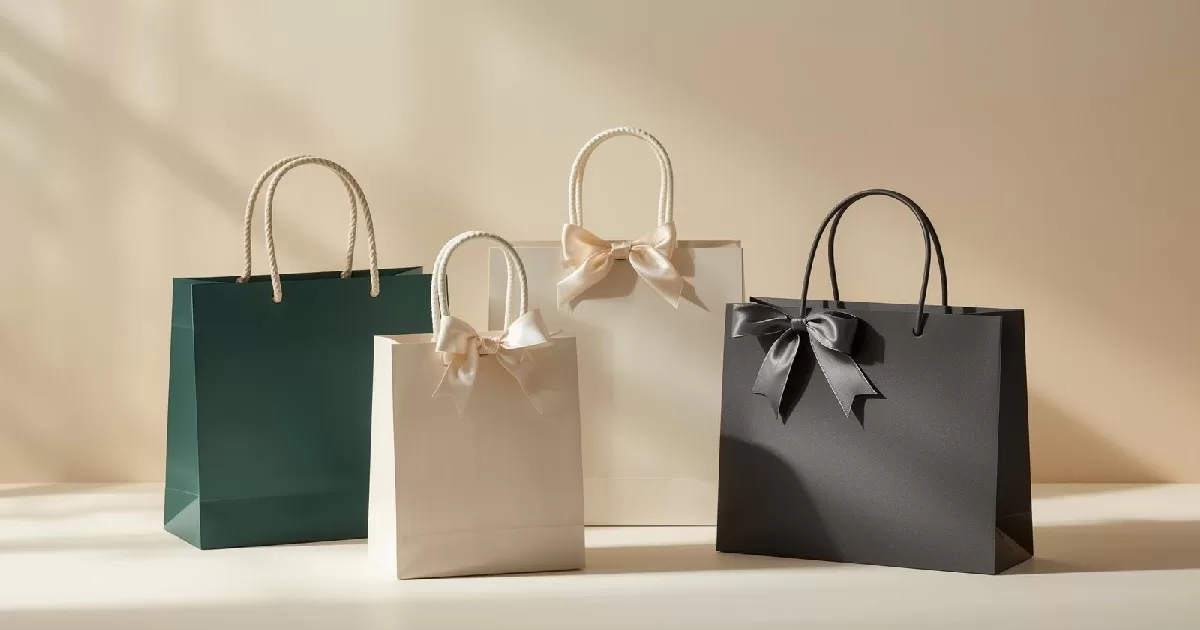
Custom Handle, Ribbon & Rope Gift Bag Manufacturer: Complete Technical Guide to Structures, Materials, Printing & Surface Finishes
UGI Packaging manufactures custom handle, ribbon and rope gift bags across 6 structural formats — supporting paper weights from 157 GSM to 400 GSM, 5 handle material types, full-colour offset printing and 8 surface finish options, with a verified load capacity range of 0.5 kg to 15 kg and a standard sample lead time of 5–7 working days.
Product Overview & Market Position
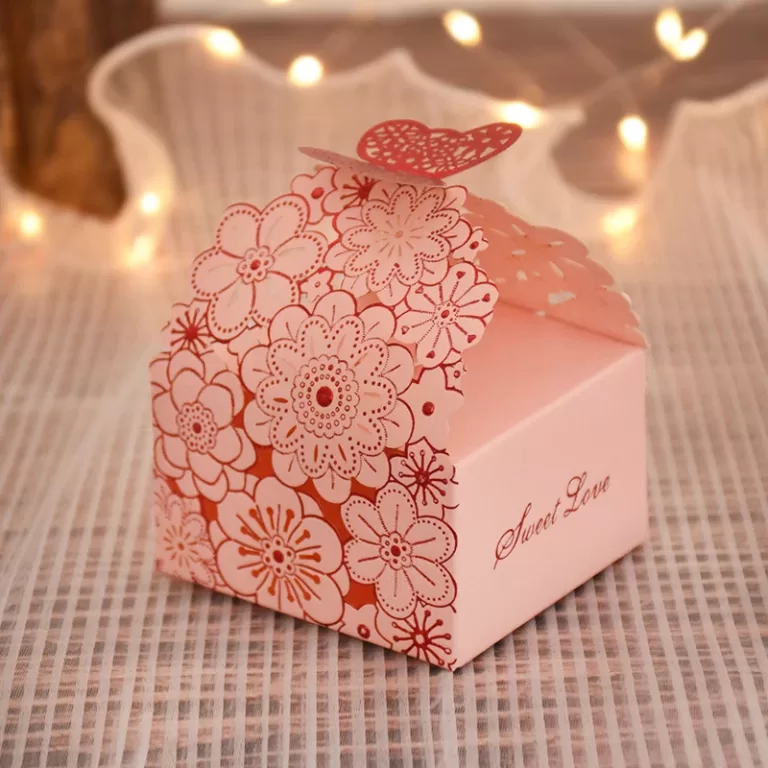
The core markets served by this product category include luxury retail (fashion, jewellery, cosmetics, watches), corporate gifting and promotional events, food and beverage premium packaging (wine, spirits, confectionery), seasonal and holiday gifting, and e-commerce brand packaging where the unboxing experience is part of the product proposition.
From a manufacturing perspective, handle and rope gift bags present a more complex production challenge than they appear. Each gift bag requires coordination across at least four distinct production stages: paper printing and lamination, die-cutting and gluing, handle production or sourcing, and handle attachment. A factory without in-house capability across all four stages will inevitably compromise on either quality, lead time or cost. UGI Packaging operates all four stages within a single Guangzhou facility, enabling tighter quality control and faster turnaround than multi-vendor supply chains.
The absence of a fixed minimum order quantity (MOQ) at UGI Packaging reflects the factory’s investment in flexible short-run production capacity. While large-format offset printing is most cost-efficient at volumes of 500 pieces and above, the facility accommodates orders from single prototypes through to production runs of 100,000+ pieces, with pricing scaled transparently to quantity.
6 Structural Formats: From Paper Tote to Luxury Carrier
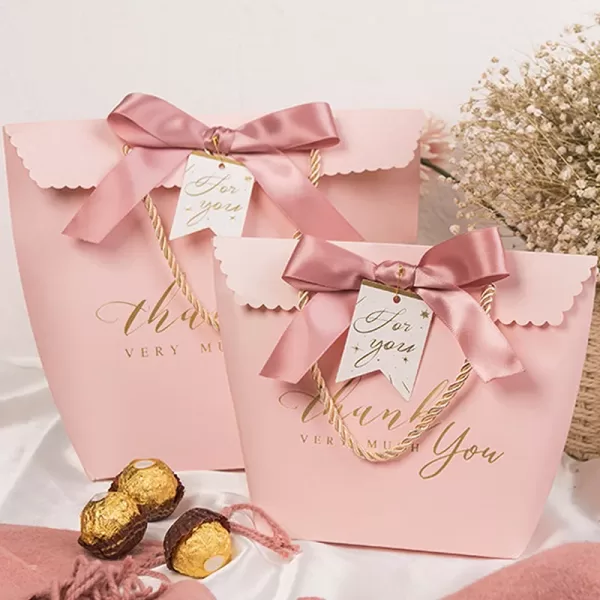
Format 1 — Twisted Paper Rope Bag
The twisted paper rope bag is the most widely produced format globally, accounting for the majority of retail carrier bag production in mid-market applications. The handle is formed from kraft or bleached paper fibre twisted into a rope of typically 4–6 mm diameter, threaded through pre-punched holes in the gift bag body and knotted internally. Paper weight is commonly 157–250 GSM coated art paper or kraft paper. Load capacity is 1–5 kg depending on rope diameter and paper weight. This format is the most cost-efficient for large-volume runs and is well-suited to seasonal campaigns, food retail and promotional events.
Format 2 — Cotton Rope Bag
Cotton rope bags replace the paper rope with a braided or twisted natural cotton cord, typically 5–12 mm diameter. Cotton rope offers significantly higher load capacity (up to 15 kg for 10 mm cotton cord on a 350 GSM paper body with reinforcing liner), a softer tactile quality, and better resistance to moisture-induced weakening. This format is standard for luxury retail, boutique fashion, premium cosmetics and jewellery gift bags. The cotton rope is typically dyed to match brand colour specifications using reactive dye processes; UGI Packaging maintains a stock palette of 30+ standard cord colours alongside a custom-dye service for exact Pantone matching.
Format 3 — Satin or Grosgrain Ribbon Bag
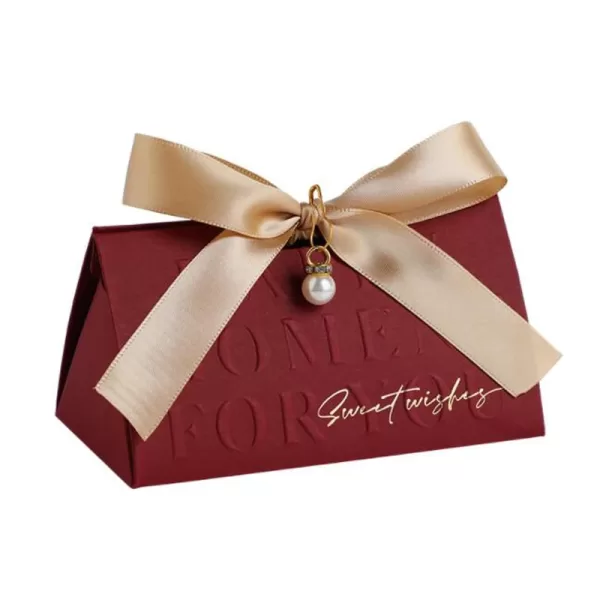
Ribbon-handled bags use a flat woven textile — most commonly satin or grosgrain — as the carry grip. Standard ribbon widths are 15 mm, 25 mm and 38 mm; custom widths are available from 10 mm to 50 mm. Satin ribbon produces a glossy, fluid appearance associated with premium gifting and jewellery packaging; grosgrain offers a more structured, matte texture preferred for corporate and fashion applications. Ribbon handles are typically looped through D-rings or metal eyelets set into the bag body, or glued internally with a secondary reinforcing patch. Load capacity is lower than rope formats (typically 0.5–3 kg) due to the flat load distribution profile, but this is rarely a limiting factor given the light contents (jewellery, accessories, cosmetics) these bags typically carry.
Format 4 — PP Rope or Nylon Rope Bag
Polypropylene (PP) and nylon rope handles offer the highest load capacity in the gift bag category — PP rope at 6–8 mm diameter can sustain loads of 8–12 kg, while nylon at equivalent diameter reaches 10–15 kg. These materials are also moisture-resistant and UV-stable, making them suitable for outdoor events, wine and spirits retail, and applications where the gift bag may be exposed to humid or wet conditions. The trade-off is aesthetic: PP and nylon ropes have a more synthetic appearance and feel compared to cotton or paper, and are most commonly used in functional-premium rather than ultra-luxury contexts. PP rope is available in a wide colour range; nylon is typically available in black, white and navy as standard.
Format 5 — Leather or PU Leather Handle Bag
Leather and PU leather handles represent the ultra-premium tier of the gift bag category. The handle is cut from genuine leather or PU leather sheet stock, folded and stitched, and attached to the bag body via rivets, D-rings or sewn-through panels. This format is used almost exclusively for luxury brand shopping bags, high-end jewellery and watch packaging, and VIP gift presentations. Paper body weight is typically 350–400 GSM with a full-surface grey board liner for rigidity. Genuine leather handles carry a significant unit cost premium; PU leather replicates the visual and tactile quality at substantially lower cost and is the more common choice for production runs under 5,000 pieces. UGI Packaging sources PU leather from certified suppliers meeting EU REACH requirements.
Format 6 — Die-Cut Handle (Integrated Paper Handle)
The die-cut handle bag eliminates the separate handle component entirely: the carry grip is cut directly from the top of the bag body paper. This is the simplest and fastest-to-produce format, with no handle attachment step in the assembly process. The structural limitation is load capacity — die-cut handles in standard 200–250 GSM paper are rated to 0.5–1 kg and are not suitable for heavy items. However, when reinforced with a laminated inner liner and a rounded handle aperture (versus a sharp-cornered cut), this format performs adequately for its typical applications: confectionery, small accessories, event favours and low-cost promotional bags. The primary advantage is cost: eliminating the handle material and attachment step reduces unit cost by 15–25% compared to a rope-handle equivalent.
| Format | Paper Weight | Load Capacity | Primary Application | Relative Cost |
|---|---|---|---|---|
| Twisted Paper Rope | 157–250 GSM | 1–5 kg | Retail, food, promotion | Low–Medium |
| Cotton Rope | 250–350 GSM | 3–15 kg | Luxury retail, cosmetics, jewellery | Medium–High |
| Satin / Grosgrain Ribbon | 250–350 GSM | 0.5–3 kg | Jewellery, accessories, fashion | Medium–High |
| PP / Nylon Rope | 250–350 GSM | 8–15 kg | Wine & spirits, outdoor events | Medium |
| Leather / PU Leather | 350–400 GSM | 3–10 kg | Luxury brand, VIP gifting | High–Premium |
| Die-Cut Handle | 200–300 GSM | 0.5–1 kg | Confectionery, event favours | Low |
Substrate Materials: Paper, Lamination & Reinforcement
Coated Art Paper (C2S / C1S)
Coated art paper (C2S — coated two sides, or C1S — coated one side) is the dominant substrate for premium gift bags. The clay coating applied to the paper surface produces a very smooth, non-absorbent printing surface that enables offset printing to achieve sharp dot reproduction, accurate colour rendition and high gloss ink density. Standard weights used at UGI Packaging are 157 GSM, 200 GSM, 250 GSM, 300 GSM and 350 GSM. For bags with a grey board liner (see below), the outer art paper weight can be reduced to 157–200 GSM without sacrificing structural integrity, since the liner carries the structural load. For unlined bags, a minimum of 250 GSM is recommended for bags carrying more than 1 kg.
Kraft Paper (Bleached & Unbleached)
Kraft paper is produced from chemical pulp by the kraft process, which retains a higher proportion of lignin than bleached papers. The result is a brown or natural-coloured paper with high tensile strength and tear resistance — properties that make it structurally excellent for bags intended to carry moderate to heavy loads. Kraft paper is available bleached (white kraft) or unbleached (natural brown). It prints less crisply than coated art paper due to its rougher surface and higher ink absorbency, but this characteristic is often embraced as part of a natural, craft or sustainable brand aesthetic. UGI Packaging works with kraft paper in weights from 100 GSM (for lightweight inner bags) to 350 GSM for heavy-duty carriers. Kraft paper is also available with a PE coating for moisture resistance in food and beverage applications.
Special Textured Paper (Linen, Felt & Pearlescent)
Special or textured papers are a premium substrate category encompassing a broad range of surface treatments applied during papermaking: linen weave, felt press, laid, hammered, metallic sheen, pearlescent and many others. These papers are typically 200–350 GSM and are used when the paper surface itself is intended to function as a visual and tactile design element, rather than merely as a print carrier. They are common in luxury jewellery, perfume and cosmetics packaging where brand differentiation at the material level is valued. Printing on textured papers requires adjusted ink coverage and pressure settings; UGI Packaging’s press operators maintain paper-specific press profiles for the 15 most commonly specified textured paper grades to ensure consistent results.
Grey Board Liner (Chipboard Reinforcement)
Grey board (chipboard) liner is a secondary material laminated to the interior surface of the outer paper to add rigidity and load-bearing capacity. It is not a printing substrate — it is a structural element. Standard liner grades used at UGI Packaging are 300 gsm, 600 gsm and 900 gsm grey board. The addition of a 600 gsm grey board liner to a 200 GSM coated art paper outer creates a composite with the rigidity equivalent of a 500+ GSM single-ply paper, while maintaining the printable surface quality of the lighter art paper. Liner is standard for cotton rope and leather handle formats, and optional for paper rope formats depending on bag size and intended load.
Recycled & FSC-Certified Paper
UGI Packaging offers FSC-certified (Forest Stewardship Council) and recycled-content paper options across all substrate categories. FSC certification confirms that the paper fibre originates from responsibly managed forests. Recycled content grades (typically 30%, 50% or 100% post-consumer waste) are available in both coated and uncoated variants. These substrates are increasingly specified by European and North American brands with published sustainability commitments. The structural and print performance of FSC-certified coated art paper is indistinguishable from non-certified equivalents at the same grammage; recycled content uncoated papers may show slightly reduced print sharpness at high screen rulings, which UGI Packaging’s pre-press team accounts for during plate preparation.
| Substrate | Weight Range | Print Quality | Structural Role | Typical Use |
|---|---|---|---|---|
| Coated Art Paper (C2S) | 157–350 GSM | Excellent | Primary outer skin | All premium formats |
| Unbleached Kraft | 100–350 GSM | Good (1–2 colour) | Structure + aesthetics | Natural, eco, food |
| Textured Special Paper | 200–350 GSM | Good–Excellent | Aesthetic differentiation | Jewellery, perfume, luxury |
| Grey Board Liner | 300–900 gsm | N/A (not printed) | Structural reinforcement | Cotton rope, leather handle bags |
| FSC / Recycled Paper | 150–350 GSM | Good–Excellent | Primary outer skin | Sustainability-committed brands |
Printing Technologies: Offset, Digital & Specialty Effects
Sheet-Fed Offset Lithography
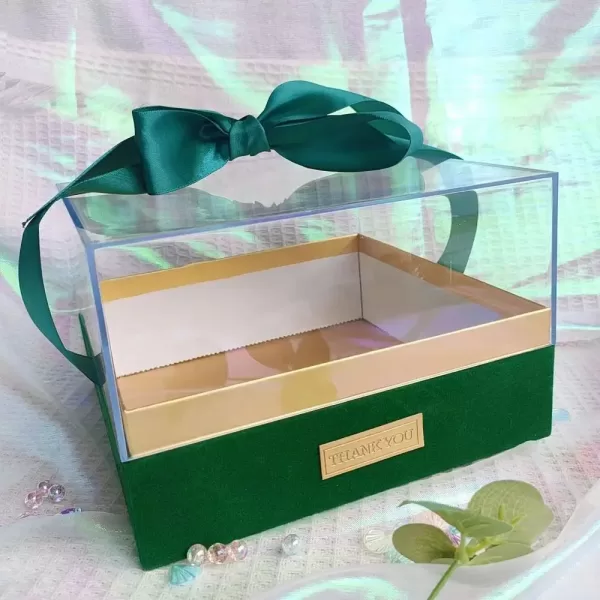
Sheet-fed offset lithography is the primary printing process for gift bag production at UGI Packaging and across the premium packaging industry globally. The process transfers ink from a flat aluminium plate to a rubber blanket cylinder, then to the paper sheet. This indirect transfer (hence “offset”) produces exceptionally sharp dot reproduction — screen rulings of 175 lpi (lines per inch) or higher are standard — and consistent colour across the full production run. UGI Packaging operates Heidelberg and Komori sheet-fed offset presses in 4-colour (CMYK) and 5-colour configurations. The 5-colour press enables printing of 4-colour process artwork plus a dedicated Pantone spot colour in a single pass, eliminating the need for a second press run for brand colours that cannot be accurately reproduced in CMYK alone.
Offset printing is most cost-efficient for runs of 500 pieces and above, where the plate-making and press setup costs are amortised across a sufficient quantity. At volumes of 2,000 pieces and above, offset printing is consistently the most economical process for full-colour gift bags. Print quality from offset lithography is the benchmark against which all other processes are measured for packaging applications.
Digital Printing (HP Indigo & Inkjet)
Digital printing eliminates the plate-making step, enabling cost-effective short-run production and variable-data printing (different artwork on each gift bag within a single run). UGI Packaging uses HP Indigo ElectroInk digital presses for premium short-run gift bags, supplemented by high-resolution inkjet for larger-format applications. HP Indigo produces print quality closely approaching offset lithography — it is the only digital process capable of printing Pantone spot colours with high accuracy — and is suitable for production runs from 1 piece to approximately 500 pieces. Above 500 pieces, the cost-per-unit advantage shifts decisively to offset. Digital printing is the preferred process for prototyping, personalised gifting (name-printed bags), limited-edition seasonal bags and brand events where small quantities of multiple designs are required simultaneously.
Pantone Spot Colour vs CMYK Process
The choice between Pantone spot colour and CMYK process printing has significant implications for brand colour accuracy. CMYK printing reproduces colour by combining varying percentages of cyan, magenta, yellow and black inks — a process that can simulate most colours but cannot reproduce all Pantone shades with equal accuracy. Saturated blues, certain greens and metallic shades are particularly problematic in pure CMYK. Pantone spot colours use pre-mixed, single-colour inks formulated to a precise spectral target, producing exact, repeatable colour regardless of press or substrate variation. For brands with a defined brand colour standard (e.g., a specific Pantone reference for their primary brand colour), specifying spot colour for that element and CMYK for the remainder of the artwork is the recommended approach. UGI Packaging’s 5-colour press accommodates this hybrid workflow without a production speed penalty.
Colour Management & Press Approval
UGI Packaging operates a closed-loop colour management workflow conforming to ISO 9001 quality management principles. Incoming artwork is profiled, proofed against a calibrated reference print, and approved by the client before plates are made. At press start, the press operator pulls a press proof sheet and measures critical colour patches with a spectrophotometer. Production ink densities are adjusted until all measured colour values fall within the agreed Delta-E tolerance (standard: ≤2.0; tight tolerance for luxury brands: ≤1.5). Spectrophotometer checks are repeated every 500 sheets during the production run. All approved press sheets are retained as reference standards for repeat orders.
| Process | Min. Run | Colour Accuracy | Resolution | Best For |
|---|---|---|---|---|
| Sheet-Fed Offset | 500 pcs | Delta-E ≤2.0 | 175 lpi+ | Mid-to-large runs, full colour |
| HP Indigo Digital | 1 pc | Delta-E ≤3.0 | 812 dpi | Short runs, prototypes, variable data |
| 5-Colour Offset + Pantone | 500 pcs | Delta-E ≤1.5 | 175 lpi+ | Brand-critical colour, luxury |
| 1–2 Colour Offset | 300 pcs | Spot colour exact | 175 lpi | Kraft bags, minimal design, eco brands |
Surface Finish Options: Lamination, Foil, UV & Emboss
Lamination: Matte, Gloss & Soft-Touch
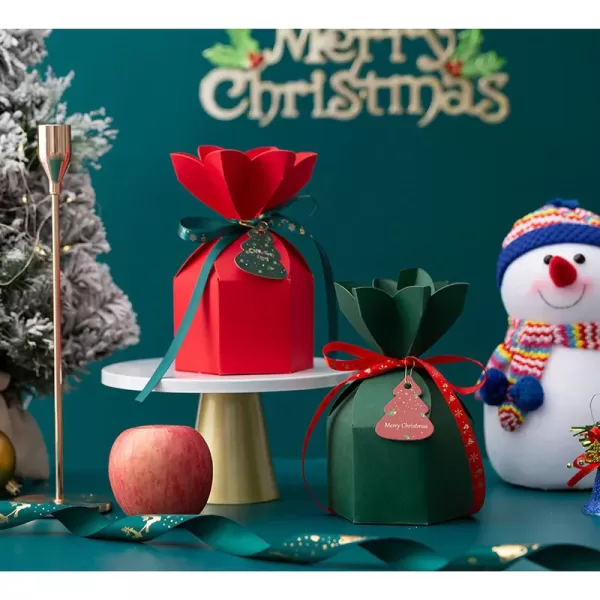
Lamination bonds a thin plastic film (typically BOPP — biaxially oriented polypropylene — at 12–28 microns) to the printed paper surface. This film performs three simultaneous functions: it protects the printed ink from scuffing and moisture, it adds rigidity to the paper sheet, and it modifies the surface appearance. Three lamination variants are standard at UGI Packaging. Gloss lamination amplifies ink colour vibrancy and produces a mirror-like reflective surface — the most common choice for high-colour, photographic or fashion-forward designs. Matte lamination produces a non-reflective, velvety surface with a more restrained, sophisticated aesthetic — the preferred choice for luxury and premium-minimalist designs. Soft-touch lamination applies a specialised film with a tactile surface layer that produces a smooth, velvet-like feel under fingertip contact — a significant premium sensory cue associated with ultra-luxury packaging. Soft-touch lamination is typically combined with gloss or matte foil stamping for maximum contrast effect.
Hot Foil Stamping: Gold, Silver & Custom Colours
Hot foil stamping transfers a metallic or pigmented foil to the paper or laminated surface using a heated metal die under pressure. The process produces sharp-edged, highly reflective metallic elements — most commonly brand logos, wordmarks and decorative borders — that cannot be replicated by any printing ink. Gold (multiple shades: bright gold, antique gold, rose gold) and silver are the most frequently specified foil colours; holographic, red, blue, green and custom pigmented foils are also available. The hot stamp die is CNC-machined from brass or magnesium to the exact geometry of the artwork; die tolerances at UGI Packaging are held to ±0.1 mm for fine-line artwork. Foil stamping on matte-laminated surfaces produces the highest visual contrast and is the hallmark technique of luxury gift bag production across the fashion, jewellery and spirits sectors.
UV Coating: Full-Surface & Spot UV
UV coating applies a liquid coating cured instantaneously by ultraviolet light to produce a hard, abrasion-resistant surface with a high-gloss appearance. Full-surface UV coating is applied across the entire printed area as an alternative to gloss lamination, producing a more intensely glossy finish at lower film thickness. Spot UV is the premium technique: UV coating is applied selectively only to defined areas of the design (typically the brand logo, a pattern element or a headline), while the surrounding surface remains in matte lamination. The contrast between the ultra-glossy spot UV elements and the adjacent matte surface creates a striking light-and-shadow effect visible as the gift bag moves, and is one of the most cost-effective premium finishing techniques available. Spot UV registration accuracy at UGI Packaging is ±0.3 mm, sufficient for fine-text and small-logo applications.
Embossing & Debossing
Embossing and debossing mechanically deform the paper and lamination surface using a matched male-female die set to create a raised (emboss) or recessed (deboss) relief element. Unlike foil stamping, embossing adds a three-dimensional tactile dimension that is perceived both visually and by touch — an effect with particular potency for brand logos, where the tactile confirmation of quality reinforces the visual brand impression. Blind embossing (without foil or ink) on a matte-laminated surface is a particularly restrained, sophisticated finish used in ultra-premium gift bags where the design communication is entirely tactile. Combination emboss-with-foil (foil is applied first, then embossed) creates a three-dimensional metallic element with maximum visual impact. Die depth at UGI Packaging is controlled to ±0.05 mm to prevent cracking in heavy paper stocks.
Aqueous Coating & Varnish
Aqueous (water-based) coating is applied in-line on the offset press as a flood coat over the printed sheet to provide surface protection and a uniform finish without the film thickness or cost of lamination. It is available in gloss, satin and matte variants. Aqueous coating does not provide the same degree of scuff protection or rigidity as BOPP lamination, but it is compatible with recycling streams — BOPP-laminated papers require separation before recycling, while aqueous-coated papers can typically be recycled without separation. For brands with strong sustainability commitments specifying FSC or recycled substrates, aqueous coating is the recommended finishing approach as it maintains the recyclability of the overall bag. Varnish — a solvent-based alternative to aqueous coating — is also available for applications requiring higher surface hardness, though its use has declined due to VOC emission considerations.
| Finish | Process Stage | Visual Effect | Tactile Effect | Typical Tier |
|---|---|---|---|---|
| Gloss Lamination | 1st (after print) | High-gloss reflective | Smooth, rigid | Mid–Premium |
| Matte Lamination | 1st (after print) | Non-reflective, deep colour | Smooth, slightly velvety | Premium–Luxury |
| Soft-Touch Lamination | 1st (after print) | Matte, rich depth | Velvet-like, premium | Luxury–Ultra-luxury |
| Hot Foil Stamping | 2nd (after lam.) | Metallic mirror reflection | Flat, defined edge | Premium–Ultra-luxury |
| Spot UV | 3rd (after foil) | Ultra-gloss contrast islands | Hard, tactile edge | Premium–Luxury |
| Blind Emboss | 4th (last) | Subtle shadow-relief | Raised 3D element | Ultra-luxury |
| Aqueous Coating | In-line (on press) | Gloss, satin or matte | Smooth, thin | Eco / recyclable |
Finish combinations — applying two or more finishing techniques to the same bag — are standard practice at UGI Packaging and represent the majority of premium gift bag production output. Common combinations include: matte lamination + gold foil stamp + blind emboss (luxury fashion); soft-touch lamination + silver foil + spot UV (premium cosmetics); gloss lamination + holographic foil + full-surface UV (high-impact retail). UGI Packaging’s finishing team maintains a library of approved combination sequences and inter-process compatibility data to ensure that client-specified combinations are both technically feasible and visually effective before production begins.
Handle Engineering: Material Selection & Load Testing
Handle Material Properties & Performance Data
The five handle materials used at UGI Packaging each have distinct mechanical properties that determine their suitability for different load and aesthetic requirements. The following data is drawn from UGI Packaging’s internal tensile test records using a standard 300 mm gauge length and a loading rate of 50 mm/min, consistent with ISO 13934-1 test methodology for textile materials.
Diameter range: 4–8 mm. Tensile strength: 180–320 N (4 mm) to 450–680 N (8 mm). Elongation at break: 3–6%. Moisture sensitivity: high — tensile strength reduces by 40–60% at 80% relative humidity. Colour options: natural kraft brown, bleached white, and dyed in standard palette of 20 colours. Cost index: 1.0 (baseline). Twisted paper rope is produced in-house at UGI Packaging from kraft paper strip, enabling precise control of twist angle and rope density.
Diameter range: 5–12 mm. Tensile strength: 800–1,200 N (5 mm braided) to 3,500–4,800 N (12 mm twisted). Elongation at break: 8–14%. Moisture sensitivity: low — tensile strength retains 90%+ at 80% relative humidity. Colour options: 30+ standard colours in reactive dye; custom Pantone matching available with 200 m minimum per colour. Cost index: 2.8–4.2 depending on diameter and colour. Cotton rope is the preferred handle material for luxury gift bags globally and represents the largest volume segment in UGI Packaging’s handle production.
Width range: 10–50 mm standard; custom widths available. Warp tensile strength: 120–280 N per 25 mm width (satin); 180–350 N per 25 mm width (grosgrain). Weft tensile strength: 60–120 N per 25 mm (satin); 90–180 N per 25 mm (grosgrain). Elongation at break: 15–25% (satin); 6–12% (grosgrain). Moisture sensitivity: low. Colour options: standard palette of 50+ colours; custom weave colour available for orders of 500 m+. Cost index: 1.8–3.5 depending on width and weave. The load-bearing mode of ribbon handles is fundamentally different from rope — the load is distributed across the ribbon width rather than concentrated in a circular cross-section, which requires larger-diameter eyelets or D-rings to avoid ribbon abrasion at the attachment point.
Diameter range: 5–10 mm. PP tensile strength: 1,200–2,800 N (5–8 mm). Nylon tensile strength: 1,800–4,200 N (5–10 mm). Elongation at break: PP 18–25%; Nylon 25–35%. Moisture sensitivity: negligible — both materials are hydrophobic. UV resistance: PP is UV-sensitive (degrades with prolonged outdoor exposure); nylon is UV-stable. Colour options: PP available in 40+ colours; nylon standard in black, white, navy, grey, with custom dyeing for 500 m+ orders. Cost index: 1.6–2.4. PP and nylon rope are specified for applications where moisture resistance or high load capacity is the primary requirement over aesthetic refinement.
Thickness range: 0.8–2.0 mm. Tensile strength (along grain): 280–480 N per 25 mm width at 1.0 mm thickness. Elongation at break: 30–60%. Peel strength from paper substrate (adhesive bond): 8–14 N/25 mm. Moisture resistance: high. Abrasion resistance: very high. Colour options: standard palette of 20 colours; custom colour matching available with 50 m+ minimum per colour. Cost index: 5.5–9.0 depending on thickness and surface texture. PU leather handles require a different attachment method from rope and ribbon — they cannot be knotted and must be attached via rivets, D-rings, or a sewn-through panel bonded to the interior bag liner. UGI Packaging uses brass or zinc-alloy rivets with a minimum pull-out strength of 180 N for all PU leather handle attachments.
Attachment Methods: Knot, Eyelet, Rivet & Hidden Panel
Four attachment methods are used at UGI Packaging, selected based on handle material type, bag paper weight and required load capacity. Each method has a different stress distribution profile at the attachment point, and the correct choice is determined by the failure mode analysis performed during the specification stage.
The knotted attachment is used for twisted paper rope and cotton rope handles. The rope is threaded through a pre-punched hole from the exterior face, and the end is knotted on the interior face to prevent pull-through. The knot bears against the interior paper surface under load; a small square patch of reinforcing card (typically 50 × 50 mm, 300 gsm) is glued over the knot on the interior to distribute the bearing stress and prevent the knot from punching through. This is the simplest and most cost-efficient attachment method and is adequate for loads up to 8 kg with appropriate rope and paper specifications.
The metal eyelet attachment replaces the knotted internal patch with a brass or zinc-alloy eyelet set into the handle hole. The eyelet distributes the rope stress over a larger bearing area than a knot, reduces the risk of hole tear-out in thinner paper stocks, and provides a cleaner, more professional appearance on the interior face. Eyelet diameter at UGI Packaging is specified to be 1.5–2.0× the rope diameter for optimal load distribution. This method is used for mid-to-premium bag formats and adds approximately 0.15–0.25 USD per hole pair to the unit cost.
The rivet attachment is used exclusively for PU leather and genuine leather handles. A tubular rivet passes through both the handle end and the bag panel, with the rivet tail mechanically deformed (by press or hammer) to create a permanent, high-strength attachment. Rivet pull-out strength at UGI Packaging is verified to a minimum of 180 N per rivet during production batch testing.
The hidden panel attachment conceals the handle end entirely within a folded inner panel glued to the gift bag interior. This method is the most premium in appearance, producing a completely clean interior with no visible hardware, knots or patches. It requires the handle end to be formed into a loop or folded pad that can be adhesively bonded and mechanically interlocked with the inner panel. This method is most commonly used for grosgrain ribbon handles and flat PU leather handles in ultra-luxury bag formats.
| Handle Material | Max Load (Static) | Recommended Attachment | Moisture Rating | Cost Index |
|---|---|---|---|---|
| Twisted Paper Rope (6 mm) | 3–5 kg | Knotted + patch | Low | 1.0 |
| Cotton Rope (8 mm braided) | 8–12 kg | Knotted + brass eyelet | High | 3.2 |
| Cotton Rope (10 mm twisted) | 12–15 kg | Knotted + brass eyelet | High | 4.1 |
| Satin Ribbon (25 mm) | 1–2 kg | D-ring or hidden panel | Medium | 2.1 |
| PP Rope (6 mm) | 8–12 kg | Knotted + patch | Very High | 1.8 |
| PU Leather (1.2 mm) | 5–8 kg | Brass rivet | High | 7.0 |
Design & Prototyping Capability
The 4-Stage Design & Prototyping Workflow
ODM Design Capability
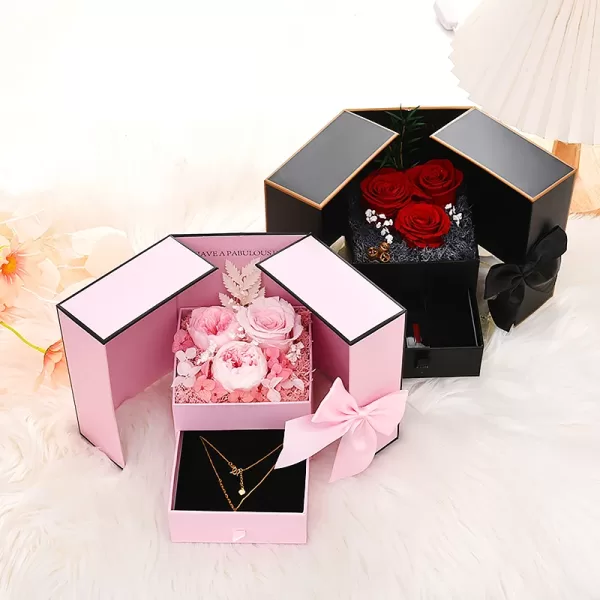
For clients without existing brand packaging design resources, UGI Packaging offers a full ODM (Original Design Manufacturing) service in which the design is created entirely by UGI Packaging’s in-house team. The client provides brand assets (logo, colour standards, brand guidelines) and the intended use context; UGI Packaging’s designers produce multiple concept directions, typically 3–5 distinct visual approaches exploring different structural formats, finish combinations and handle types. Each concept is presented as a rendered 3D visualisation showing how the gift bag will appear when assembled, allowing the client to evaluate the design without waiting for a physical prototype. The selected concept is then refined to an approved design and physical prototype within the standard 5–7 day timeline from design sign-off. This ODM service has been used by clients ranging from independent boutique brands launching their first custom packaging to established international brands refreshing seasonal bag designs.
UGI Packaging’s design library contains over 800 approved structural dielines accumulated across 15+ years of production, covering standard and non-standard bag sizes, unusual structural configurations (e.g., flat-bottom gusseted bags with rope handle, hexagonal cross-section carriers, bags with built-in tissue paper pockets) and specialty closures. Clients are encouraged to reference this library during the brief stage to accelerate dieline preparation and reduce prototyping time.
Production Capacity: Factory Scale & Lead Time

Equipment Overview
Lead Time by Order Type
| Order Type | Complexity | Standard Lead Time | Rush Lead Time | Typical Volume |
|---|---|---|---|---|
| Prototype / Sample | Any | 5–7 working days | 3 working days | 1–10 pcs |
| Standard (1–2 finish) | Low | 12–15 working days | 8–10 working days | 500–50,000 pcs |
| Premium (3–4 finish) | Medium | 15–20 working days | 12–15 working days | 300–20,000 pcs |
| Luxury (5+ finish + leather) | High | 20–25 working days | 18–22 working days | 100–5,000 pcs |
| Repeat Order (same spec) | Any | 10–12 working days | 7–8 working days | Any |
Lead times quoted above are measured from receipt of approved artwork and purchase order to completion of production in the UGI Packaging facility. Shipping transit time is additional and varies by destination: 3–5 days air freight to most major markets; 25–35 days sea freight to Europe and North America. For time-critical orders, UGI Packaging can split shipments — air freighting a portion of the order for immediate use while sea freighting the balance to reduce overall logistics cost.
The absence of a fixed minimum order quantity reflects UGI Packaging’s deliberate investment in flexible production infrastructure. Short-run orders (under 500 pieces) are processed on the digital press and assembled at dedicated short-run stations, keeping production efficient without requiring premium tooling investment from the client. As a result, brands launching new packaging for the first time, or testing a new design before committing to a large production run, can order as few as 50 pieces at production-quality specification without a prohibitive unit cost penalty.
Quality Control: 4-Stage Inspection Protocol
UGI Packaging operates under an ISO 9001-aligned quality management system, covering all stages of the production process from incoming raw material receipt through to outgoing shipment inspection. The quality management system is maintained by a dedicated QC team of 12 inspectors operating independently from the production line management structure, reporting directly to the factory general manager. This independence is a deliberate structural choice: QC inspectors at UGI Packaging have the authority to halt production at any stage without requiring production management approval.
The following four inspection stages are mandatory for every production order regardless of quantity, complexity or client tier. Inspection records for each stage are retained for a minimum of 24 months and are available to clients on request.
| QC Stage | When | Sample Rate | Key Tests | Failure Action |
|---|---|---|---|---|
| IQC — Materials | On receipt | 100% lots | GSM, caliper, colour, tensile | Quarantine & return |
| IPQC — Print | Press start + every 500 sheets | Continuous | Delta-E ≤2.0, register ±0.1 mm | Press stop & adjust |
| Finishing & Assembly | After each stage | 20 pcs per 1,000 | Adhesion, dimension, handle pull | Batch hold & rework |
| OQC — Final + Load | Pre-shipment | AQL 2.5 / load test 3 per carton | Visual, dimension, 60-sec load | 100% inspect if load fail |
UGI Packaging’s defect rate target across all product categories is below 0.5% at OQC stage. This target is tracked on a monthly basis by the QC manager, with root cause analysis required for any production run exceeding 1.0% defect rate at final inspection. Root cause analysis reports and corrective action records are maintained as part of the ISO 9001-aligned documentation system and are available for client audit.
For clients with their own quality requirements or third-party inspection mandates (e.g., SGS, Bureau Veritas, Intertek), UGI Packaging accommodates pre-shipment third-party inspection as a standard service. The factory provides full access to production records, material certificates and batch traceability documentation to support third-party inspection activities. Clients are advised to notify UGI Packaging of third-party inspection requirements at order confirmation stage to ensure production scheduling accommodates the inspection window without delaying shipment.
Sustainability & Compliance
The gift packaging sector faces increasing regulatory and consumer pressure around single-use packaging and plastic film lamination. The EU Single-Use Plastics Directive and equivalent regulations in other markets are progressively restricting certain plastic-containing packaging formats, and major retail and luxury brands have established internal sustainability targets that require their packaging suppliers to demonstrate credible environmental credentials. UGI Packaging has made deliberate investments in sustainable material sourcing and production processes to serve clients operating under these constraints, as documented by the Sustainable Packaging Coalition.
FSC-Certified Paper Sourcing
UGI Packaging sources FSC-certified paper substrates from approved mills holding valid FSC Chain of Custody certification. FSC certification provides assurance that the paper fibre originates from forests managed to standards that protect biodiversity, worker rights and community interests. FSC-certified paper is available across all standard substrate grades used in gift bag production — coated art paper, kraft paper, textured special papers and grey board liners — without performance penalty relative to non-certified equivalents. Clients requiring FSC certification on their finished bags must specify this at order confirmation; UGI Packaging will issue an FSC transaction certificate for the relevant paper quantities upon request.
Water-Based Inks & Recyclable Coatings
UGI Packaging uses low-VOC (volatile organic compound) offset printing inks across all press lines as standard. For clients with specific requirements around ink chemistry — for example, food-contact adjacent applications or toy-safety compliance — mineral-oil-free inks meeting Swiss Ordinance and Nestlé Guidance standards are available. Aqueous (water-based) coatings are offered as a recyclability-compatible alternative to BOPP lamination for clients prioritising end-of-life paper recyclability. It should be noted that BOPP-laminated papers can be recycled in facilities equipped for plastic-paper composite separation, which is increasingly available in major markets; the recyclability differential between aqueous coating and BOPP lamination is therefore narrowing as recycling infrastructure develops.
Natural Handle Materials
Cotton rope and twisted kraft paper rope are both natural, biodegradable handle materials that do not contribute to microplastic pollution at end of life. These are the preferred handle materials from a sustainability perspective. Cotton rope is available in GOTS (Global Organic Textile Standard) certified organic cotton for clients requiring traceable natural fibre credentials. Twisted paper rope, produced at UGI Packaging from kraft paper strip, is fully recyclable with the paper bag body if not dyed. PP and nylon ropes are synthetic materials; their use is recommended only where load or moisture resistance requirements cannot be met by natural alternatives. PU leather handles contain polyurethane-coated fabric and are not biodegradable, but they are durable enough that the gift bag itself is typically retained and reused rather than discarded, which offsets the end-of-life disadvantage.
REACH & Market Compliance
All materials used in UGI Packaging’s gift bag production are compliant with EU REACH Regulation (EC) No 1907/2006, which restricts the use of substances of very high concern (SVHCs) in articles sold in the European market. REACH compliance documentation is maintained for all standard materials and is available to clients on request. For the North American market, materials comply with California Proposition 65 requirements regarding restricted chemical substances. For clients exporting to Japan, Australia or other markets with specific chemical restrictions, UGI Packaging can provide market-specific material compliance statements upon request at order confirmation stage. Azo dye compliance (relevant for dyed cotton rope and ribbon handles) is verified against the Oeko-Tex Standard 100 restricted substance list for all coloured textile handle materials supplied by UGI Packaging’s approved handle material vendors.
| Material / Process | Eco Credential | Recyclable | Certification | Available at UGI |
|---|---|---|---|---|
| FSC-Certified Paper | Responsible forest sourcing | Yes | FSC CoC | Yes — all paper grades |
| Recycled Content Paper | Diverts post-consumer waste | Yes | PEFC / supplier cert. | Yes — 30%, 50%, 100% PCW |
| Aqueous Coating | Maintains paper recyclability | Yes (with paper) | Low-VOC formulation | Yes — in-line on press |
| Organic Cotton Rope | Biodegradable, natural fibre | Biodegradable | GOTS (on request) | Yes — 200 m min per colour |
| Twisted Kraft Paper Rope | Fully paper — no plastic | Yes (unbleached/undyed) | FSC paper source | Yes — in-house production |
| Low-VOC Offset Inks | Reduced air quality impact | N/A | Swiss Ordinance compliant | Yes — standard on all presses |
Frequently Asked Questions
Ready to Source Custom Handle, Ribbon & Rope Gift Bags?
UGI Packaging offers full OEM/ODM services with no fixed MOQ — from single prototypes to 100,000+ piece production runs. Contact our team for a free quote, structural specification review, or sample request. Our engineering team responds within 24 hours.
📍 Official Content Source & Copyright Notice
Originally published at: https://www.ukugi.com/gift-bag-manufacturer-handle-ribbon-rope/
Author: Rachel Stone · Gift & Retail Packaging Consultant
© UGI Packaging Limited (ukugi.com). All rights reserved. Unauthorised reproduction is strictly prohibited. For licensing enquiries: [email protected] | WhatsApp: +44 7783 771295
Published: March 2026 | Last Updated: March 2026 | UGI Packaging (ukugi.com)