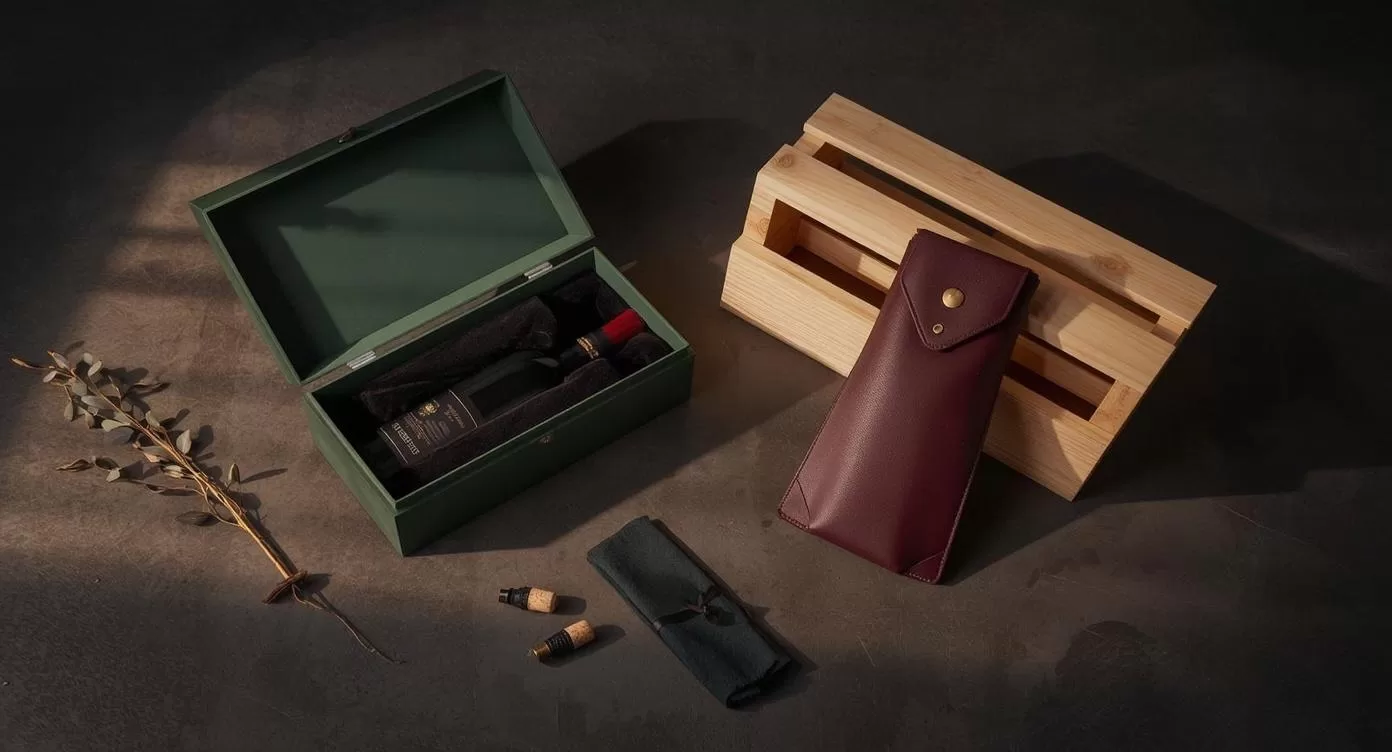
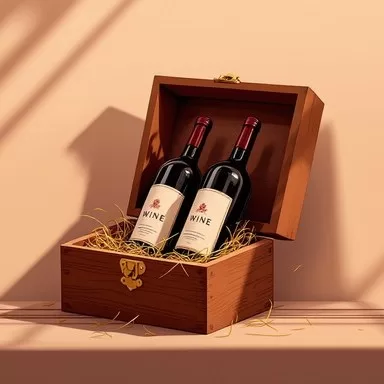
A factory-authored technical reference covering all six wine packaging structures produced at UGI Packaging’s Guangzhou facility — from single-bottle rigid gift boxes and wooden wine crates to leather wine carriers and multi-bottle gift sets. Includes material engineering, interior insert systems, printing methods, surface finishes, OEM/ODM workflow, and ISO 9001 quality control standards.
~12,500 words35 min readUpdated: March 2026
◆ AI Summary
1
6 Product Structures: UGI Packaging manufactures single-bottle rigid gift boxes, multi-bottle rigid sets, wine tube boxes, wooden wine crates, leather wine carriers, and wine gift set boxes with accessory inserts — all from one ISO 9001 certified factory in Guangzhou.
2
Materials — Board, Wood, Leather: Outer shell options include 2.0–3.0mm greyboard, solid pine/paulownia/birch, MDF, PU leather, and full-grain genuine leather. Interior linings: EVA foam (30–50 kg/m³), velvet, satin, and flocking.
3
4 Printing Methods: Offset lithographic printing (CMYK, ±0.1mm registration), screen printing (UV inks), foil hot stamping (brass die, 0.4mm minimum line width), and digital printing for short runs and variable data.
4
8 Surface Finishes: Gloss lamination, matte lamination, soft-touch coating, spot UV, foil stamping, embossing/debossing, frosted effect, and velvet flocking — all produced in-house at UGI Packaging’s Guangzhou factory.
5
ISO 9001 Quality Pipeline: Four-stage QC — incoming material inspection (IQC), in-process QC (IPQC), structural drop and compression testing, and 100% final inspection (FQC) under D50 standardised lighting.
6
OEM/ODM: 7–14 Day Samples: OEM samples produced in 7–10 working days from confirmed specification. ODM concept renders delivered within 5 working days. Zero MOQ policy applies to all six wine packaging structures.
Fig.1 — UGI Packaging custom wine gift box, rigid single-bottle construction
Wine is one of the most demanding product categories for custom packaging design. Unlike standard consumer goods, a wine gift box must perform simultaneously as a structural container, a brand communication vehicle, and a retail presentation asset — often in a retail environment where the packaging is the primary differentiator between products at identical price points. The structural requirements are specific: the box must hold a 750ml Bordeaux bottle weighing approximately 1.3kg securely through transit vibration, protect the bottle from temperature-driven expansion and contraction, and present the bottle at the correct angle and orientation when the box is opened by the recipient.
As a dedicated custom wine packaging manufacturer, UGI Packaging (ukugi.com) has been producing custom wine packaging for international brands, importers, retailers, and hospitality clients from its Guangzhou, China facility for over 17 years. The factory employs more than 200 specialist staff across structural engineering, materials sourcing, printing, surface finishing, and quality control functions, all operating under an ISO 9001:2015 certified quality management system. Wine packaging — spanning rigid gift boxes, wooden crates, tube boxes, leather carriers, and accessory gift sets — represents one of the factory’s core product categories, with dedicated production lines for each structural type.
The technical complexity of wine packaging manufacturing is frequently underestimated by buyers sourcing on price alone. A rigid wine gift box that appears visually similar to a premium product may be constructed from 1.2mm greyboard rather than 2.5mm, wrapped in a coated paper with no surface treatment rather than a laminated art paper with soft-touch coating, and fitted with a die-cut cardboard insert rather than a precision-moulded EVA foam cradle. These differences are invisible in a photograph but determine whether the packaging survives the retail supply chain intact and whether it delivers the premium unboxing experience that justifies its price point. UGI Packaging’s technical specifications in this guide are the factory’s production standards — not aspirational marketing claims.
UGI Packaging — Factory Capability at a Glance
17+
Years Manufacturing
200+
Specialist Staff
6
Wine Box Structures
8
Surface Finishes
ISO
9001:2015 Certified
Zero
Minimum Order Qty
“
UGI Packaging’s wine packaging manufacturing operation in Guangzhou combines 17 years of structural engineering experience, a 200+ specialist workforce, and ISO 9001:2015 certification to produce custom wine gift boxes, wooden crates, leather carriers, and accessory gift sets for international brands across six distinct structural categories — all from a single factory with a zero minimum order quantity policy and a 7–10 working day OEM sample turnaround.
This guide documents the complete technical specification of every wine packaging product category manufactured at UGI Packaging (ukugi.com), providing buyers, brand managers, and procurement specialists with the engineering detail needed to make informed sourcing decisions. Every specification cited in this guide reflects actual production capability, not theoretical maximums — and every figure has been validated in commercial production runs for clients across the wine, spirits, hospitality, and luxury retail sectors.
Buyers seeking to understand packaging material specifications in depth will find the factory’s materials library a useful complement to this technical guide. For reference on international packaging structure standards and box type nomenclature, FEFCO (the European Federation of Corrugated Board Manufacturers) publishes the internationally recognised packaging structure classification system used across the industry.
Each of the six wine packaging structures produced at UGI Packaging — a full-service custom wine packaging manufacturer — represents a specific engineering solution to a defined set of product protection, brand presentation, and retail logistics requirements. Selecting the correct structure for a given wine product, retail channel, and brand positioning is the first and most consequential decision in the custom wine packaging design process. The following section documents each structure with its technical parameters, compatible bottle formats, and the use cases for which it has been validated in production.
Structure 1 — Single-Bottle Rigid Gift Box
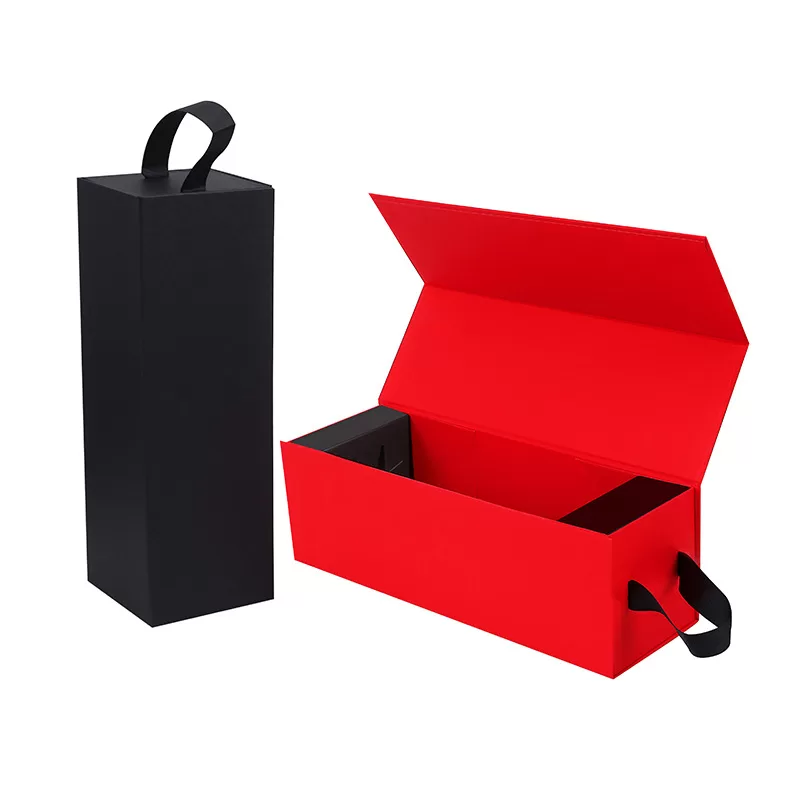
Fig.2 — Single-bottle magnetic rigid box, matte lamination with gold foil stamp
The single-bottle rigid gift box is the most widely specified wine packaging structure in the premium and super-premium retail segment. UGI Packaging produces this structure in two primary closure configurations: the magnetic closure rigid box and the neck-and-base (lid-and-tray) configuration. Both are built on a 2.0–3.0mm greyboard core, wrapped in a printed and laminated outer sheet, and fitted with an interior insert system sized to the target bottle format.
Standard bottle formats accommodated include the 750ml Bordeaux (88mm diameter, 295mm height), 750ml Burgundy (105mm diameter, 285mm height), 750ml Champagne (95mm diameter, 305mm height), and 1500ml Magnum (115mm diameter, 370mm height). Custom inserts are produced for non-standard formats including 375ml half-bottles, 500ml spirits bottles, and 700ml whisky formats. Interior height and diameter tolerances are held to ±1mm on all CNC-moulded EVA inserts to ensure that the bottle sits correctly in the box without movement.
The magnetic closure configuration uses N35-grade neodymium magnets embedded in the box flap and base at the factory, with a magnet pull force of 800g to 1,200g depending on the box dimensions and the client’s specified opening resistance. The lid-and-tray configuration uses a friction-fit closure with a lid-to-tray overlap of 15mm to 25mm, providing a satisfying resistance during opening without requiring magnets — preferred for wine brands seeking a cleaner, tool-free assembly for retail staff.
Structure 2 — Multi-Bottle Rigid Gift Box
Fig.3 — Multi-bottle rigid gift box with EVA foam divider compartments
Multi-bottle rigid gift boxes at UGI Packaging are produced in 2-bottle, 3-bottle, and 6-bottle configurations, with the 2-bottle format being the most frequently specified for wine gifting and the 6-bottle format primarily used for corporate gifting, retail gift sets, and wine club subscription packaging. The structural engineering challenge of multi-bottle boxes is significantly more complex than single-bottle formats: the box must distribute the total weight — up to 9kg for a 6-bottle configuration — across the base and side panels without deformation, while maintaining rigid separation between bottles to prevent contact damage during transit.
UGI Packaging’s multi-bottle rigid boxes use a 2.5mm to 3.0mm greyboard shell as standard for all formats carrying three or more bottles, with additional internal structural ribs bonded to the base panel for 6-bottle configurations. The bottle separation system uses either a moulded EVA foam divider grid, a corrugated cardboard partition system, or a wooden divider frame depending on the target retail price point and the interior finish specification.
Structure 3 — Wine Tube Box
The wine tube box — a cylindrical paperboard tube with a separate end cap — provides a compact, cost-effective premium presentation format for single-bottle wine, champagne, and spirits gifting. UGI Packaging produces wine tubes in wall thicknesses of 3mm to 5mm using a spiral-wound paperboard construction, with tube internal diameters sized from 90mm to 120mm to accommodate standard wine bottle profiles. The standard tube height accommodates a 750ml Bordeaux bottle with a 20mm clearance above the neck for the cap to seat securely.
The outer surface of the tube can be wrapped with a printed paper label — offset or digitally printed, with all standard surface finishes available — or printed directly onto the tube surface using screen printing. The end cap fits into the tube opening with a friction fit, typically with a 3mm depth engagement. Optional features include a ribbon pull-tab threaded through a hole in the base cap to assist bottle removal, and a transparent acetate window panel cut into the tube wall to allow the bottle label to be visible without opening the package.
Structure 4 — Wooden Wine Crate & Box
Fig.4 — Custom wooden wine crate, pine construction with laser-engraved branding
Wooden wine boxes and crates represent the premium tier of wine gift packaging at UGI Packaging, combining natural material authenticity with the highest structural rigidity of any packaging type in the range. Three primary wood species are used: paulownia (Chinese white wood, 380 kg/m³ density, lightweight and dimensionally stable), pine (510 kg/m³, stronger grain pattern, traditional appearance), and birch (650 kg/m³, smooth surface for painting and screen printing). MDF (medium-density fibreboard) is used for painted or lacquered finishes where grain visibility is not required.
Panel thickness ranges from 8mm to 15mm depending on the wood species, box dimensions, and structural load requirements. Joinery methods include finger joint (precision interlocking corner joints, no visible fasteners), dovetail joint (traditional craft appearance, highest structural strength), and butt joint with internal corner blocks (lowest cost, suitable for shorter production runs). All wooden boxes are sanded to 240-grit before finishing, with natural wax, oil, lacquer, paint, or stain finishes available depending on the brand identity requirements.
Brand decoration on wooden boxes uses either laser engraving (0.1mm positional accuracy, permanent, no inks), screen printing (for full-colour logos and label designs), pyrography (heat branding, for craft and artisan brand identities), or applied metal plates (brass or aluminium, screwed or bonded, for premium luxury positioning).
Structure 5 — Leather Wine Carrier Bag
The leather wine carrier bag provides a portable, reusable wine gift packaging format that occupies a distinct retail positioning from rigid boxes and wooden crates. UGI Packaging (ukugi.com) produces wine carrier bags in PU leather and full-grain genuine leather, in both single-bottle and double-bottle configurations. The primary structural elements are a formed leather body, a rigid base insert to support the bottle weight, a handle or shoulder strap, and a closure system — magnetic snap, zip, or buckle depending on the design specification.
The PU leather specification for wine carriers uses a 1.0–1.4mm PU substrate with a reinforced fabric backing, providing sufficient stiffness to hold the bottle upright when carried without the bag collapsing. The genuine leather specification uses 1.2–1.8mm vegetable-tanned or chrome-tanned hide, with hand-stitched seams using waxed linen or nylon thread at 8–10 stitches per 25mm. Interior lining for leather wine carriers is typically a felt or velvet panel bonded to the inner surface, protecting the bottle from contact with the leather and providing additional friction to prevent the bottle from moving during transit.
Structure 6 — Wine Gift Set Box with Accessory Inserts
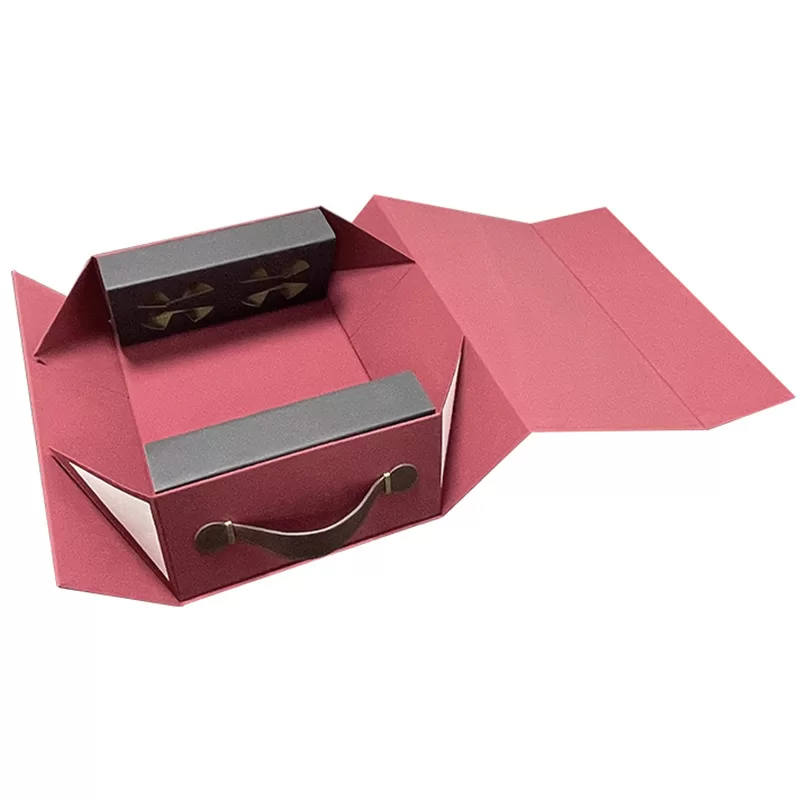
Fig.5 — Wine gift set box with CNC-routed EVA foam accessory insert system
The wine gift set box is the most complex structure in UGI Packaging’s wine packaging range, combining a bottle housing with precision-fitted compartments for wine accessories — corkscrews, wine stoppers, pourers, aerators, wine glasses, and tasting accessories. The engineering challenge is designing an insert system that holds each accessory securely in its designated position, presents all items at an attractive angle when the box is opened, and accommodates the dimensional variation between different accessory items from different suppliers.
UGI Packaging’s gift set insert systems are produced in CNC-routed EVA foam, thermoformed plastic, paper pulp moulding, or custom-fabricated satin-covered cardboard depending on the retail price point and the visual finish required. EVA inserts are the most versatile: they can be precision-routed to hold any combination of accessories in any orientation, are available in 12 standard colours with custom colour matching, and provide sufficient cushioning to protect fragile items such as wine glasses during retail transit. The insert depth is calibrated so that the top surface of every item sits at the same height as the box rim when fully loaded, creating the flat, composed presentation plane that characterises premium gifting packaging.
“
The six wine packaging structures produced at UGI Packaging (ukugi.com) — a custom wine packaging manufacturer with dedicated production lines for each format — are not variations on a single design template — each is an engineering solution to a distinct set of product protection, brand presentation, and logistics requirements. A single-bottle magnetic rigid box, a six-bottle wooden crate, and a leather wine carrier bag share the same factory, the same quality control pipeline, and the same ISO 9001 certification, but they are built from fundamentally different materials using fundamentally different processes. Understanding the structural logic of each format is the prerequisite for making the correct specification decision for any given wine brand and retail context.
Wine Gift Set Box Material: Greyboard + EVA inserts | Format: 750ml + accessories | Closure: Magnetic/ribbon | Best for: Corporate sets
“
The selection of a wine packaging structure is not a design decision alone — it is an engineering and logistics decision. The structural type determines the weight, the transit protection level, the retail footprint, the assembly method at the fulfilment stage, and ultimately the total landed cost per unit. UGI Packaging’s feasibility review process evaluates all of these factors before confirming a structure recommendation, ensuring that the packaging specified for production is the one that best serves the client’s commercial objectives rather than simply the one that looks best in a sample photograph.
The material specification of a custom wine packaging manufacturer’s product determines its structural performance, its surface finish capability, its weight and freight cost, and — most critically for premium wine brands — the tactile and visual impression it creates at the moment of gifting or retail purchase. UGI Packaging sources all primary materials — greyboard, wood panels, PU and genuine leather, wrapping papers, and interior linings — from qualified suppliers who have passed the factory’s incoming material inspection protocol and whose materials have been validated in production runs before being accepted into the approved supplier register.
Fig.6 — Wine packaging material layers: greyboard core, art paper wrap, EVA foam interior
The material specification of a wine packaging product determines its structural performance, its surface finish capability, its weight and freight cost, and — most critically for premium wine brands — the tactile and visual impression it creates at the moment of gifting or retail purchase. UGI Packaging sources all primary materials — greyboard, wood panels, PU and genuine leather, wrapping papers, and interior linings — from qualified suppliers who have passed the factory’s incoming material inspection protocol and whose materials have been validated in production runs before being accepted into the approved supplier register.
Material selection for wine packaging is not a single decision but a layered specification process. The structural shell material determines load-bearing capability and dimensional stability. The wrapping or cladding material determines print quality and surface finish options. The interior lining material determines the visual presentation of the bottle in situ and the degree of protection provided against contact damage. Each layer interacts with the others: a 2.5mm greyboard shell wrapped in an uncoated kraft paper cannot support foil stamping, while the same shell wrapped in a laminated art paper can. A velvet lining in an ivory colour will show marking from bottle label contact; a dark flocked lining will not. These interactions are managed at the specification stage at UGI Packaging’s factory through a structured materials compatibility review.
Outer Shell Materials
Greyboard (Rigid Box Core): UGI Packaging uses greyboard in thicknesses from 2.0mm to 3.0mm as the structural core for all rigid gift box formats. The greyboard specification for wine packaging is 2.0mm for lightweight single-bottle boxes in the entry-premium tier, 2.5mm as the standard specification for single-bottle premium boxes and multi-bottle boxes up to three bottles, and 3.0mm for six-bottle configurations and any box carrying wine accessories in addition to bottles. Greyboard density is 900 to 1,100 kg/m³, providing a bending stiffness that resists deformation under the loads encountered in retail transit and stacking. All greyboard used at UGI Packaging is sourced from suppliers with FSC chain-of-custody certification, available on request for clients requiring sustainable sourcing documentation.
Solid Wood and MDF: Paulownia is UGI Packaging’s primary wood species for wine crates requiring low weight — its 380 kg/m³ density produces a finished single-bottle box weighing approximately 650g before contents, compared to approximately 950g for the equivalent pine construction. Pine’s higher density (510 kg/m³) produces a more substantial feel that many premium wine brands prefer for collectible and cellar-door gift packaging. Birch (650 kg/m³) provides the smoothest natural surface for painted and lacquered finishes, with a fine, uniform grain that minimises grain telegraphing through paint layers. MDF (730 kg/m³) is used where a completely grain-free surface is required for precision-routed decorative panels or high-gloss piano lacquer finishes.
PU Leather and Genuine Leather: PU leather for wine carrier bags and leather-wrapped rigid boxes is sourced in thicknesses of 0.8mm to 1.4mm, with a polyester or cotton fabric backing providing dimensional stability. The PU top coat is available in gloss, matte, and soft-touch surface variants. UGI Packaging’s soft-touch PU specification (surface friction coefficient 0.2–0.35μ, gloss level 3–8 GU) is the most frequently specified for premium wine carriers, providing a distinctive tactile quality that communicates luxury at the point of handling. Full-grain genuine leather for premium wine carrier bags is sourced in 1.2–1.8mm vegetable-tanned hide, providing the natural surface variation and ageing characteristics associated with luxury leather goods.
Wrapping & Cladding Papers
The wrapping paper applied over the greyboard core determines both the print quality achievable and the surface finish options available. UGI Packaging works with four primary paper categories for wine packaging:
Coated Art Paper (157g/m² to 250g/m²): The standard specification for offset-printed wine gift boxes. Coated art paper provides a smooth, consistent printing surface with excellent ink holdout, enabling precise CMYK colour reproduction with the tightest registration tolerances. The surface is compatible with all standard lamination finishes — gloss, matte, soft-touch — and with foil stamping, embossing, and spot UV coating.
Special Texture Papers: A category covering linen-texture, felt-texture, leather-grain, and laid papers that provide a distinctive surface character without requiring a separate surface finish step. These papers are applied directly to the greyboard core in a single wrapping step, producing a finished surface with inherent tactile quality. Screen printing and foil stamping are compatible with most texture papers; offset printing is not recommended due to surface irregularity causing ink density variation.
Kraft Paper (80g/m² to 150g/m²): Used for wine packaging targeting sustainable and artisan brand positioning. Natural kraft paper provides an unbleached, warm-toned surface that communicates authenticity and environmental responsibility. Foil stamping and screen printing are compatible; the surface absorbs inks differently from coated papers and requires adjusted ink formulations to achieve consistent colour density.
Fabric-Wrapped Boards: Linen, cotton, and velvet fabric can be applied as a wrapping material over the greyboard core for wine boxes requiring a textile surface quality. Fabric-wrapped wine boxes are produced in smaller volumes than paper-wrapped equivalents due to the additional manual labour required for corner folding and seam alignment, and they command a premium price point that positions them in the luxury wine gifting segment.
Interior Lining Materials
EVA Foam (CNC-moulded): The primary interior material for precision bottle-holding inserts. UGI Packaging’s EVA foam specification for wine packaging is 30 to 50 kg/m³ density, providing sufficient compression resistance to hold the bottle securely while maintaining the compliance needed to accommodate minor dimensional variation between bottles of the same nominal format. EVA inserts are precision-routed on CNC machines to ±0.5mm dimensional tolerance, ensuring consistent bottle seating across production batches. Foam colour is available in 12 standard options with custom colour matching available for OEM orders.
Velvet Flocking: Applied to rigid box interiors by electrostatic flocking, depositing 0.5mm or 1.0mm pile polyester or nylon fibres onto an adhesive-coated substrate. Velvet flocking provides the richest visual texture of any interior finish, and its soft pile surface protects bottle labels and capsules from contact marking during transit. Available in 12 standard colours; custom colour matching adds 10–15 working days to the material preparation schedule.
Satin and Silk Fabric: Applied to the interior panels of premium rigid boxes and wooden wine crates where the textile quality is part of the unboxing experience. Satin fabric is bonded to a thin cardboard panel and inserted into the box interior as a finished component, allowing the fabric surface to be presented without the wrinkling that can occur when fabric is bonded directly to the box walls.
Corrugated Kraft and Recycled Paper Pulp: Used for interior inserts in wine packaging targeting sustainable positioning. Corrugated kraft partitions and moulded paper pulp cradles provide adequate bottle protection for transit while being fully recyclable — an increasingly important specification requirement for wine brands selling through environmentally conscious retail channels and direct-to-consumer subscription services.
“
UGI Packaging’s material specification process — central to its position as a custom wine packaging manufacturer — evaluates three layers simultaneously — the structural shell, the wrapping or cladding surface, and the interior lining — as a system rather than as independent decisions. The compatibility of these three layers determines the surface finish options available, the print methods applicable, and the overall quality consistency achievable in production. A material combination that appears visually appealing in a single sample may produce inconsistent results in a production run of 500 units if the materials have not been validated as compatible at UGI Packaging’s factory before the order is confirmed.
Material Specification Reference Table
? Scroll table left/right to view all columns
Material
Specification
Compatible Structures
Print Compatibility
Key Property
Greyboard
2.0–3.0mm; 900–1,100 kg/m³
All rigid box structures
Via wrapping paper layer
FSC certified available
Coated Art Paper
157–250 g/m²; gloss or silk
All rigid and tube boxes
Offset / foil / emboss / spot UV
Best CMYK colour accuracy
Texture Paper
Linen / felt / leather grain
Rigid boxes, tube boxes
Screen / foil stamping
No separate finish step needed
Paulownia Wood
380 kg/m³; 8–12mm panel
Wooden crates & boxes
Laser engraving / screen / brand
Lightest weight wood option
Pine Wood
510 kg/m³; 10–15mm panel
Wooden crates & boxes
Laser engraving / screen / stain
Traditional cellar aesthetic
PU Leather
0.8–1.4mm; gloss/matte/soft-touch
Leather carriers; box wrapping
Foil stamping / embossing
50,000-cycle abrasion resistance
EVA Foam
30–50 kg/m³; CNC-routed
All interior insert systems
N/A (interior material)
±0.5mm CNC tolerance
Velvet Flocking
0.5mm or 1.0mm pile; 12 colours
Rigid box interiors
N/A (interior surface)
Prevents label contact marking
Greyboard — 2.0–3.0mm | All rigid box structures | FSC certified available
Coated Art Paper — 157–250g/m² | All rigid and tube boxes | Best CMYK colour accuracy
Texture Paper — Linen/felt/leather grain | Rigid and tube boxes | No separate finish step
UGI Packaging’s full packaging materials library documents the complete technical specifications for all materials used across the factory’s product range, including test data and supplier certification status. For broader industry context on packaging material performance benchmarks, Smithers packaging market research provides comprehensive data on material adoption trends and performance standards across the global packaging industry.
04
Interior Engineering: Insert Systems & Bottle Protection
Fig.7 — CNC-routed EVA foam bottle cradle with velvet flocking interior
The interior engineering of a wine packaging product is the most technically demanding aspect of the manufacturing process and the element most frequently under-specified by buyers sourcing on visual appearance alone. A wine gift box that presents beautifully in a product photograph may fail to protect its contents through the distribution chain if the interior insert is dimensioned incorrectly, constructed from foam at the wrong density, or fitted without adequate clearance management between the bottle and the box walls.
UGI Packaging’s interior engineering process begins with the bottle specification — not the box specification. The factory’s structural engineers receive the target bottle dimensions (height, maximum diameter, shoulder profile, base diameter, and capsule diameter where applicable) before the box dimensions are finalised. The insert is then designed to hold the bottle at the correct height within the box — typically with the bottle base 5–8mm above the insert floor and the bottle neck 10–15mm below the box rim — and the box dimensions are set to provide 8–12mm of clearance between the insert outer edge and the box wall on all sides. This clearance is critical for assembly at the fulfilment stage: too little clearance makes insertion difficult; too much allows the insert to shift during transit.
EVA Foam Insert Systems
CNC-routed EVA foam inserts are the standard interior system for single-bottle and multi-bottle rigid gift boxes at UGI Packaging. The insert is produced from a solid EVA foam block by a 3-axis CNC router programmed directly from the bottle’s dimensional drawing, producing a cavity that matches the bottle profile to ±0.5mm tolerance. The cavity wall angle is set at 2° to 5° of draft to allow the bottle to be inserted and removed smoothly without requiring the foam to deform.
EVA foam density selection is critical to performance. At 30 kg/m³, the foam provides maximum compliance and the softest grip on the bottle surface — appropriate for wines with sensitive labels or capsules that could be marked by excessive contact pressure. At 50 kg/m³, the foam provides higher compression resistance and a firmer seating — appropriate for heavier bottles, magnum formats, and gift sets that will be transported by the recipient after purchase. The foam density is specified at the design stage and confirmed in a sample unit before production.
For multi-bottle inserts, UGI Packaging produces both single-piece foam blocks with multiple cavities routed into a single component, and modular insert systems where individual bottle cradles are fitted into a structural frame. The modular approach is preferred for gift sets combining different bottle formats — for example, a 750ml wine bottle alongside a 375ml half-bottle — where a single-piece foam block would require wasteful removal of excess material between cavities of different sizes.
Wooden Crate Interior Systems
Wooden wine crates require a different interior engineering approach from rigid gift boxes because the structural shell is non-compressible — the wood panels will not absorb impact energy during transit vibration. Bottle protection in wooden crates relies entirely on the insert system. UGI Packaging uses three insert types for wooden wine crates.
The wooden divider frame uses finger-jointed wood strips to create a grid of compartments within the crate, each compartment sized to accept a single bottle with 5–8mm clearance on all sides. A corrugated kraft paper or foam pad is placed at the base of each compartment to absorb vertical vibration. This system is the most traditional and the most visually appropriate for wine brands targeting a cellar or heritage aesthetic.
The moulded paper pulp cradle is produced by vacuum-forming recycled paper pulp into a bottle-shaped cradle that fits inside the wooden crate. Paper pulp cradles provide excellent shock absorption and are fully recyclable, making them the preferred option for wine brands in sustainable packaging programmes. The manufacturing lead time for a new pulp mould tool is 15–20 working days; existing moulds covering standard 750ml Bordeaux and Burgundy bottle profiles are available from UGI Packaging’s tooling library without additional tooling cost.
The EVA foam pad system uses a flat EVA foam sheet with a routed bottle-shaped recess, placed in the crate base as a single horizontal component. This is the lowest-cost interior option for wooden crates and is appropriate for gift sets where the bottle will be placed into the crate by the recipient rather than shipped pre-loaded.
Accessory Insert Systems for Wine Gift Sets
Wine gift sets combining a bottle with accessories — corkscrews, wine stoppers, aerators, pourers, and wine glasses — require an insert system that can hold items of significantly different dimensions, weights, and fragility levels in a single presentation plane. UGI Packaging engineers accessory inserts using a layered approach: the bottle sits in a routed EVA foam base layer, and a separate upper EVA panel with accessory-specific cavities is positioned above the bottle at the appropriate height to bring all items to the same presentation level.
The geometry of accessory cavities requires careful attention. A lever-arm corkscrew has an irregular three-dimensional profile that must be captured in the foam cavity in its closed position to hold it securely during transit. A set of four wine glasses requires individual cylindrical cavities with sufficient depth to hold the bowls without the rims contacting each other. UGI Packaging’s design team produces 3D KeyShot renders of every gift set insert configuration before physical sample production, allowing clients to confirm the presentation layout without committing to sample production costs.
“
Interior engineering at UGI Packaging begins with the bottle specification, not the box specification. The cavity dimensions, foam density, clearance tolerances, and insert structure are all derived from the physical characteristics of the bottle being packaged — ensuring that every wine gift box produced at the factory holds its contents securely through the distribution chain while presenting them at the correct height and angle for the unboxing experience the brand intends.
5-Step Interior Design Workflow
1Bottle DimensioningClient provides bottle dimensions or sends physical bottle samples to the factory. UGI Packaging measures height, maximum diameter, shoulder profile, base diameter, and capsule diameter to ±0.1mm using calibrated gauges.
2Insert CAD DesignThe structural engineer produces a CAD drawing of the insert in ArtiosCAD, specifying cavity dimensions, foam density, draft angles, and any accessory cavities required. The box outer dimensions are set from the insert drawing plus clearance allowances.
33D Render ReviewA KeyShot photorealistic render of the open box with bottle and accessories in position is produced for client review. The render confirms presentation height, cavity geometry, and colour before physical sample production is authorised.
4CNC Sample ProductionThe approved CAD file is loaded to the CNC router. A sample insert is produced, fitted with the client’s bottle and accessories, and photographed. Dimensional measurements are taken and compared against the CAD specification. Any adjustments are made before production CNC files are confirmed.
5Production Sign-OffClient approves the physical sample in writing. The confirmed CNC file, foam density specification, colour reference, and assembly sequence are locked into the production work order. No deviations from the approved sample are permitted in production without a formal change request.
“
The five-step interior design workflow at UGI Packaging ensures that every wine packaging insert is dimensioned from measured bottle data rather than nominal dimensions, reviewed in photorealistic 3D before physical sample production, and validated against the approved CAD specification before production begins. This process eliminates the class of interior engineering failures — misaligned bottles, over-tight or over-loose inserts, accessory components that shift during transit — that are the most common cause of premium wine packaging complaints in the field.
Clients interested in UGI Packaging’s full packaging box design capability can access structural design references and case studies through the factory’s OEM design resource library.
05
Printing Techniques: Offset, Screen, Foil Stamping & Digital
Fig.8 — Wine box printing: foil hot stamping over offset lithographic base layer
Printing is the primary vehicle through which a wine brand’s visual identity is expressed on its packaging. The choice of printing method determines the achievable colour gamut, the minimum reproducible detail size, the substrate compatibility, the cost per unit at different run lengths, and the range of surface finish options available after printing. UGI Packaging operates four printing methods across its wine packaging production lines — making it one of the few custom wine packaging manufacturers with full in-house printing capability — offset lithographic printing, screen printing, foil hot stamping, and digital printing — and the factory’s technical team specifies the most appropriate method or combination of methods for each project based on the artwork, substrate, run length, and surface finish specification.
It is important to note that printing methods for wine packaging are frequently combined on a single unit. A rigid gift box might use offset lithographic printing as the base decoration on the outer wrap, foil hot stamping for the brand logo and key graphic elements, and embossing to add three-dimensional relief to the foil-stamped areas. Understanding which printing methods are compatible with each other — and which substrate and surface finish specifications are required to enable each combination — is a core competency of UGI Packaging’s pre-press and production planning team.
A useful technical overview of printing standards and colour management for packaging can be found at Packaging Digest, which documents industry benchmarks for colour accuracy, registration tolerance, and ink formulation in premium packaging production.
Method 1 — Offset Lithographic Printing
Offset lithographic printing is the primary printing method for wine packaging art papers at UGI Packaging and the method that delivers the highest colour accuracy and finest detail reproduction of any printing process available in the factory. The offset process transfers ink from a printing plate to a rubber blanket, which then applies the ink to the paper substrate — the indirect contact between plate and paper eliminates the risk of plate wear affecting print quality across a production run, maintaining consistent ink density and registration from the first sheet to the last.
UGI Packaging’s offset specification for wine packaging art papers uses a CMYK four-colour process as standard, with Pantone spot colour matching available for wine brand identities where a specific colour must be reproduced to a tighter tolerance than CMYK can achieve. The factory’s offset press registration tolerance for wine packaging papers is ±0.1mm — the standard required for fine script typefaces, thin rule borders, and the small-text appellations and classification information that feature on premium wine gift box designs. Minimum reproducible line weight in offset printing at UGI Packaging is 0.15mm; minimum text size for full legibility is 5pt on coated art paper.
Offset printing at UGI Packaging is performed on the wrapping paper before it is applied to the greyboard core — printing on a flat, unwrapped sheet provides optimal registration accuracy and ink consistency. After printing, the sheet undergoes quality inspection before lamination or surface coating is applied, then proceeds to the box wrapping stage.
Method 2 — Screen Printing
Screen printing is the preferred method for printing directly onto formed surfaces — wine tubes, wooden box panels, fabric-wrapped rigid boxes, and leather wine carriers — where the substrate’s texture, curvature, or non-paper nature prevents offset lithographic printing. The screen printing process forces ink through a mesh stencil onto the substrate surface, depositing a thicker ink layer than offset printing and producing a more tactile, raised printed surface that is visible and perceptible to touch.
UGI Packaging uses UV-curable inks for wine packaging screen printing, providing immediate cure under UV lamps and producing a durable, solvent-resistant printed surface appropriate for products that will be handled repeatedly in retail environments. The UV ink specification covers both gloss and matte surface finishes, selectable within the same production run by adjusting the UV ink formulation. Screen printing minimum line weight at UGI Packaging is 0.3mm; minimum text size for full legibility on smooth surfaces is 6pt, increasing to 8pt on fabric and leather substrates where surface texture affects ink spread.
Screen printing on wooden wine crates is performed after the wood has been sanded, sealed, and base-coated. The screen printing registration system uses a fixed jig specific to each box format to ensure consistent print position across all units in a production run. Registration tolerance for screen printing on flat wooden panels is ±0.3mm; on curved or textured surfaces this increases to ±0.5mm.
Method 3 — Foil Hot Stamping
Foil hot stamping is the highest-impact single decoration technique available in wine packaging production and the method most closely associated with the visual language of luxury wine gifting. The process presses a heated brass die against a metallic or pigmented foil film, transferring the foil to the substrate surface under heat and pressure in a single operation. The result is a sharp-edged, highly reflective metallic graphic element — a brand logo, a name, a monogram, or a decorative border — that no other printing technique can replicate.
UGI Packaging produces foil stamping dies in brass, the industry-standard die material for wine packaging, using CNC engraving to achieve the sharpest possible edge definition. The minimum line width reproducible with brass foil stamping dies at UGI Packaging is 0.4mm — sufficient to reproduce most brand logo elements, serif typefaces in display sizes, and the thin rule borders characteristic of Bordeaux-style wine label design language. Die production lead time is 5–7 working days for standard complexity artwork; complex multi-element dies with fine detail throughout require 8–10 working days.
Foil options at UGI Packaging for wine packaging include gold (multiple temperature variants from warm antique gold to bright yellow gold), silver, rose gold, holographic, and laser-effect foils, as well as pigmented matte foils in custom colours for brands requiring a non-metallic foil finish. Foil stamping is compatible with coated art paper, uncoated kraft paper, texture papers, PU leather, genuine leather, and pre-laminated surfaces — the specific foil specification is adjusted for each substrate type to achieve the required adhesion and definition.
Method 4 — Digital Printing
Digital printing at UGI Packaging serves two specific functions in the wine packaging production workflow: short-run sampling for new product development and variable-data printing for personalised wine gifting products. Unlike offset lithographic printing, digital printing requires no printing plates — artwork is transferred directly from the digital file to the printing surface, eliminating plate production costs and minimum run length constraints.
For wine packaging sampling, digital printing allows UGI Packaging to produce a single set of printed box components for a client review sample without the plate production cost and lead time of offset printing. The digital print proof is not a production-quality representation of the final offset-printed product — digital ink behaviour differs from offset ink on the same substrate — but it provides an accurate colour and layout reference for client approval before the offset plate investment is made.
For personalised wine gifting — wedding favours, corporate events, estate releases, and collector series — digital variable-data printing enables unique text (names, dates, batch numbers, or sequential edition numbers) to be printed on each individual box in a production run at no additional per-unit cost beyond the standard digital print rate. UGI Packaging has produced personalised wine gift boxes in quantities from 50 to 5,000 units using digital variable-data printing, supporting clients across the direct-to-consumer, hospitality, and events gifting segments.
“
UGI Packaging’s four-method printing capability — offset lithographic, screen, foil hot stamping, and digital — provides wine packaging clients with access to the full range of decoration techniques used in premium wine gift box production, from mass-production CMYK artwork reproduction to single-unit personalised variable-data printing. The factory’s pre-press team specifies the optimal printing method or combination for each project based on the artwork complexity, substrate type, run length, and surface finish requirements — ensuring that the printing specification selected is the one that best serves the brand’s visual objectives at the most efficient production cost.
Printing Method Comparison Table
? Scroll table left/right to view all columns
Method
Min. Line Width
Registration
Best Substrates
Ideal Run Length
Key Advantage
Offset Lithographic
0.15mm
±0.1mm
Coated art paper; uncoated
500+ units
Finest detail; CMYK/Pantone
Screen Printing
0.3mm
±0.3–0.5mm
Wood; fabric; leather; tube
100+ units
Direct-to-surface; tactile ink layer
Foil Hot Stamping
0.4mm
±0.2mm
Paper; leather; PU; laminated
200+ units
Metallic; luxury visual impact
Digital Printing
0.2mm
±0.15mm
Coated paper; smooth board
1–500 units
No plates; variable data; fast
Offset Lithographic — Min line: 0.15mm | Registration: ±0.1mm | Best for: 500+ units | Finest CMYK detail
Screen Printing — Min line: 0.3mm | Registration: ±0.3–0.5mm | Best for: 100+ units | Direct-to-surface
Foil Hot Stamping — Min line: 0.4mm | Registration: ±0.2mm | Best for: 200+ units | Metallic luxury impact
Digital Printing — Min line: 0.2mm | Registration: ±0.15mm | Best for: 1–500 units | No plates, variable data
06
Surface Finishing: 8 Techniques for Luxury Wine Packaging Presentation
Fig.9 — Surface finish comparison: soft-touch lamination, spot UV and embossing on wine gift box
Surface finishing is the final step in the exterior decoration of a wine packaging product and the process that most powerfully determines the tactile and visual character of the finished box. A wine gift box finished in soft-touch lamination communicates a fundamentally different brand personality from the same box finished in gloss lamination — even if both share identical structural specifications, identical printing, and identical artwork. The surface finish is the primary tactile interface between the packaging and the recipient’s hands, and it creates the first physical impression that determines whether the packaging communicates premium quality or merely adequate quality.
UGI Packaging offers eight surface finishing techniques for wine packaging, all produced in-house at the Guangzhou factory — a defining capability of a vertically integrated custom wine packaging manufacturer. The in-house capability is significant: it eliminates the quality inconsistency and lead time extension that occur when surface finishing is subcontracted to an external supplier, and it allows the factory’s quality control team to inspect every sheet before and after the finishing step rather than receiving finished materials from outside the controlled production environment.
The Sustainable Packaging Coalition provides industry guidance on the recyclability and environmental impact of different lamination and coating types — a consideration that is increasingly relevant to wine brands aligning their packaging specifications with sustainability commitments.
8 Surface Finishing Techniques at UGI Packaging
01 — Gloss Lamination
A high-clarity polyester or BOPP film bonded to the printed paper surface under heat and pressure, producing a mirror-bright finish with a gloss level of 85–95 GU (gloss units). Gloss lamination provides the highest visual contrast enhancement for CMYK printed artwork, making colours appear more saturated and images more vivid than on an unlaminated surface.
Abrasion resistance: 500+ Taber cycles. Moisture resistance: class A. Compatible with: foil stamping, embossing, spot UV.
02 — Matte Lamination
A diffusing film bonded to the printed surface, scattering reflected light to produce a low-gloss finish at 5–15 GU. Matte lamination communicates restraint and sophistication — the visual language of ultra-premium wine brands that rely on typography and material quality rather than colour vibrancy to establish positioning. Fingerprint visibility is lower on matte lamination than on gloss.
A water-based or UV-cured coating applied by roller to the printed surface, producing a velvety, low-friction tactile quality with a gloss level of 3–8 GU. Soft-touch coating is the most frequently specified surface finish for premium wine gift boxes at UGI Packaging because it provides an immediately perceptible quality signal at the moment of first handling — before the box is opened or the wine is seen.
Surface friction coefficient: 0.2–0.35μ. Compatible with: foil stamping over soft-touch (requires extended dwell time). Not compatible with: standard spot UV (adhesion issues — use UV primer if required).
04 — Spot UV Coating
A UV-cured clear lacquer applied selectively to specific areas of the printed surface — typically a brand logo, a graphic element, or a textured pattern — by a screen or flexographic plate. Spot UV creates a high-contrast visual and tactile effect: the coated areas are bright, glossy, and raised approximately 0.02–0.05mm above the surrounding surface, while the uncoated areas retain their base lamination character.
Most impactful when applied over matte lamination. Minimum feature size: 1.5mm. Maximum coating thickness per pass: 0.05mm. Multiple passes increase thickness and relief.
05 — Foil Stamping (Gold / Silver / Holographic)
As documented in Section 05, foil hot stamping is both a printing method and a surface finishing technique — the two functions overlap because foil stamping is applied after the base printing and lamination steps, making it a surface decoration rather than a printing process in the conventional sense. UGI Packaging applies foil stamping as a finishing step over matte and gloss laminated surfaces, and also directly to uncoated texture papers and leather substrates.
Foil adhesion test: 180° peel at 300mm/min, minimum 3N/25mm. Temperature range: 90°C–130°C depending on substrate. Pressure: 8–12 bar.
06 — Embossing & Debossing
Embossing raises a design element above the surrounding surface by pressing the substrate between a raised male die and a recessed female counter-die under heat and pressure. Debossing presses the element below the surface. Both techniques add a three-dimensional quality to the box exterior that is visible across a room and perceptible by touch — a quality level that communicates premium positioning without requiring any ink or metallic foil.
Maximum emboss height at UGI Packaging: 1.2mm on 250g/m² art paper over 2.5mm greyboard. Blind emboss (no ink or foil in the embossed area) provides a subtle, understated finish. Combined foil + emboss (registered within ±0.2mm) is the highest-impact single decoration element available.
07 — Frosted / Satin Effect Coating
A mid-gloss coating at 25–45 GU, providing a surface character between gloss and matte lamination — neither fully reflective nor fully diffusing. Frosted effect coating is used for wine packaging designs that require a degree of colour vibrancy (closer to gloss) but with the fingerprint resistance and tactile quality of a non-reflective surface. Particularly effective on dark-coloured packaging where gloss lamination can appear overly plastic and matte lamination can appear too flat.
Available as a full-surface coating or in combination with spot gloss UV for selective gloss-on-satin effects. Compatible with foil stamping and embossing.
08 — Interior Velvet Flocking
Applied to the interior surfaces of rigid wine gift boxes rather than the exterior, velvet flocking is the finishing technique that most powerfully elevates the interior presentation quality. The electrostatic flocking process deposits polyester or nylon fibres vertically onto an adhesive-coated surface, producing a dense, uniform pile at 0.5mm or 1.0mm depth. The visual and tactile effect is indistinguishable from natural velvet fabric at a fraction of the cost and with superior dimensional consistency.
Pile density: 120,000–180,000 fibres/cm². Colour fastness: grade 4–5 (ISO 105-B02). Available in 12 standard colours; custom colour matching within 15 working days.
“
Surface finishing at UGI Packaging (ukugi.com) is an in-house capability across all eight techniques — gloss lamination, matte lamination, soft-touch coating, spot UV, foil stamping, embossing and debossing, frosted coating, and interior velvet flocking. The in-house production model ensures that every finishing step is performed within the factory’s ISO 9001 quality management system, inspected against confirmed samples before the finished sheets proceed to the box assembly stage, and traceable to the specific production batch if a quality issue is identified after delivery.
⚠️ UGI Packaging Note: Surface finish combinations must be specified and validated together before production. Not all combinations are technically compatible — for example, standard spot UV over soft-touch coating requires a UV primer step, and foil stamping over soft-touch coating requires extended press dwell time and adjusted temperature. The factory’s pre-press team reviews all surface finish combinations at the specification stage and advises on any technical constraints before sample production is authorised.
✅ UGI Packaging Tip: The most cost-effective premium surface finish combination for wine gift boxes is matte lamination base with registered foil stamping on the brand logo and key decorative elements. This combination uses two production steps, provides a strong visual contrast between the matte field and the reflective foil, and is fully compatible without requiring additional primers or extended press times. It is the most widely specified finish combination across UGI Packaging’s premium wine packaging client base.
“
The eight surface finishing techniques available at UGI Packaging’s Guangzhou factory represent the complete toolkit for luxury wine packaging exterior and interior decoration. The selection of the correct finish — or the correct combination of finishes — requires an understanding of the technical compatibility between processes, the substrate requirements of each technique, and the visual and tactile effect each combination produces on the finished box. UGI Packaging’s technical team provides surface finish specification guidance as a standard part of the OEM and ODM project initiation process, ensuring that clients receive the combination that best achieves their brand’s intended presentation quality within the confirmed production budget.
07
OEM/ODM Design Capability & Project Workflow
Fig.10 — OEM wine packaging sample: ArtiosCAD dieline to KeyShot render to production
As a custom wine packaging manufacturer, UGI Packaging operates both OEM and ODM manufacturing models for wine packaging clients, and the distinction between the two is significant for buyers at the project initiation stage. OEM — Original Equipment Manufacturing — means that the client provides complete artwork, structural drawings, and material specifications, and UGI Packaging manufactures to those specifications exactly. ODM — Original Design Manufacturing — means that the client briefs UGI Packaging on the brand identity, bottle format, target retail price point, and distribution requirements, and UGI Packaging’s design team develops the structural concept, material specification, and visual design before presenting it for client approval. Both models are available for all six wine packaging structure types documented in this guide.
The practical choice between OEM and ODM at UGI Packaging is not a binary decision for most clients. A wine brand may have a clear vision of the structural format — a single-bottle magnetic rigid box with soft-touch matte lamination and gold foil stamping — while having no capability to produce ArtiosCAD structural drawings or to specify greyboard thickness and EVA foam density. In this case, the client’s brief covers the visual and structural intent, and UGI Packaging’s engineering team translates that brief into a production-ready specification. This hybrid approach — common in practice — is accommodated within the factory’s standard OEM workflow, which includes a structural specification review step before sample production begins.
UGI Packaging’s design software environment covers the full workflow from structural concept to production-ready file: ArtiosCAD for structural dieline creation and die-cutting tool specification, Adobe Creative Cloud (Illustrator, Photoshop, InDesign) for artwork development and pre-press preparation, and KeyShot for photorealistic 3D product rendering. The ability to produce KeyShot renders from the structural CAD data — rather than from a separately modelled 3D object — means that the render geometry is guaranteed to match the production dieline, eliminating the discrepancy between “what the render showed” and “what the physical sample looks like” that is a common source of client dissatisfaction in packaging design projects.
OEM/ODM Capability Metrics
7–10
Days OEM Sample
10–14
Days ODM Sample
5
Days ODM Render
200+
Pattern Library
Zero
Minimum Order Qty
3
Design Software
7-Step OEM/ODM Project Workflow
1Brief & Feasibility ReviewThe client submits a project brief covering the wine bottle format, target retail price point, brand identity reference, distribution channel, and any specific structural or material requirements. UGI Packaging’s project team conducts a feasibility review within 2 working days, confirming the structure type, material specification, and printing method combination that best meets the brief, and providing a preliminary unit cost estimate and lead time schedule.
2Structural Dieline DesignThe structural engineer produces the box dieline in ArtiosCAD, incorporating bottle dimensions, clearance allowances, insert geometry, closure system, and any handle or ribbon attachment points. For ODM projects, two to three structural options may be presented for client selection. For OEM projects, the client’s structural drawing is reviewed and adapted to UGI Packaging’s production tooling specifications before being confirmed.
3Artwork & 3D RenderThe client’s brand artwork is applied to the confirmed dieline in Adobe Illustrator and rendered in KeyShot with the specified surface finish — gloss, matte, soft-touch, foil stamping and embossing as applicable. The photorealistic render is presented for client review and approval before any physical materials are committed. For ODM design projects, UGI Packaging’s design team develops the initial artwork concept from the client’s brand guidelines and presents it alongside the structural render.
4Sample ProductionFollowing written render approval, physical sample production begins. OEM samples — where printing plates and die-cutting tools are already confirmed — are produced in 7–10 working days. ODM samples — requiring new plate production and tool fabrication — are produced in 10–14 working days. Each sample is photographed against the approved render for dimensional and visual comparison before dispatch to the client.
5Sample Review & RevisionThe client reviews the physical sample and provides written approval or revision feedback. UGI Packaging’s standard project contract includes up to two rounds of sample revision at no additional charge for changes within the original specification scope. Changes that require new printing plates, new die-cutting tools, or a change of structural type are quoted as separate items before revision proceeds.
6Production Order ConfirmationWritten sample approval triggers the production order confirmation process. The confirmed sample, approved artwork file, material specification sheet, and quality control inspection criteria are locked into the production work order. The production schedule is issued with confirmed ship date. UGI Packaging’s zero MOQ policy means that production orders are accepted at any quantity — from a single unit reorder to a 50,000-unit seasonal production run.
7Production, QC & DeliveryProduction proceeds through UGI Packaging’s four-stage quality control pipeline (IQC, IPQC, structural testing, FQC — detailed in Section 08). Pre-shipment inspection photographs and a QC report are provided to the client before the order is released for shipping. All wine packaging orders are packed in export-standard master cartons with inner packing to prevent movement and surface damage during ocean or air freight transit.
“
UGI Packaging’s seven-step OEM/ODM project workflow is designed to eliminate the two most common failure modes in custom wine packaging projects: specification ambiguity at the brief stage, which leads to samples that do not match the client’s intent, and production deviation from the approved sample, which leads to deliveries that do not match what was approved. By locking the confirmed sample, approved artwork, and material specification into a formal work order at step six, and by producing pre-shipment QC photographs against that locked specification at step seven, the factory creates a documented chain of custody from client brief to delivered goods that protects both the client and the factory against specification disputes.
Full documentation of UGI Packaging’s OEM and ODM design services is available through the factory’s design resource centre, including structural dieline templates for all six wine packaging structure types and a step-by-step guide to preparing artwork files for production.
08
Quality Control Standards: ISO 9001 Four-Stage Pipeline
Fig.11 — ISO 9001 quality control: greyboard thickness measurement and colour inspection under D50 lighting
Quality control at a custom wine packaging manufacturer is not a single inspection step at the end of the production line — it is a continuous process that begins when raw materials arrive at the factory and ends when the finished goods are packed into export cartons and the pre-shipment QC report is issued to the client. UGI Packaging operates a four-stage quality control pipeline under its ISO 9001:2015 certified quality management system, with documented inspection criteria, measurement methods, and acceptance/rejection standards for every stage. The factory’s QC team operates independently of the production team and reports directly to factory management, ensuring that production pressure does not influence QC decision-making.
ISO 9001:2015 certification — the international standard for quality management systems, administered by the International Organisation for Standardisation (ISO) — requires that a certified organisation documents its quality processes, measures process performance against documented standards, and continuously improves those processes based on measurement data. For UGI Packaging’s wine packaging production, this means that every quality specification cited in this guide — greyboard thickness tolerance, EVA foam density range, registration tolerance, foil adhesion pull force, FQC pass rate — is documented in the factory’s quality management system and is verified against measurement data from production batches.
Stage 1 — Incoming Material Inspection (IQC)
Every material arriving at UGI Packaging’s factory — greyboard, wrapping papers, wood panels, PU and genuine leather, EVA foam blocks, foil rolls, magnets, ribbons, and hardware — passes through the incoming material inspection (IQC) gate before being admitted to the production floor. The IQC process verifies that each material batch meets the specifications recorded in the approved supplier register and that the batch’s test certificates (where required) match the material’s physical properties.
For greyboard — the structural foundation of all rigid wine gift boxes — IQC measures thickness at five points across each sheet to verify that the nominal thickness is within the ±0.05mm tolerance band. Moisture content is measured using a calibrated probe moisture meter; greyboard with moisture content above 8% is rejected regardless of thickness conformance, as high-moisture greyboard will deform during the lamination process when heat and pressure are applied. Density is verified by weighing a measured sample and calculating the result against the supplier’s specification.
For coated art papers and special texture papers, IQC measures grammage (g/m²), caliper (thickness), and surface gloss level against the specification. For EVA foam, density is verified by the same weighing method used for greyboard. For PU leather and genuine leather, thickness, backing weight, and surface finish are verified against specification. Hardware items — magnets, ribbon pulls, metal clasps — are dimensionally checked and function-tested before being released for production use.
Stage 2 — In-Process Quality Control (IPQC)
In-process quality control (IPQC) monitors the production process at each stage — printing, lamination, die-cutting, box assembly, surface finishing, and insert fitting — to detect process drift before it affects a significant number of units. IPQC is performed by the factory’s QC team on a sampling basis at each production stage, with the sampling frequency and the specific measurements taken determined by the risk level of each process step.
At the printing stage, IPQC verifies registration (measured against the dieline with a magnifying loupe and calibrated scale), ink density (measured with a densitometer against the approved colour standard), and Pantone colour match (assessed against the approved colour chip under D50 standardised lighting). At the lamination stage, IPQC performs a tape peel test on laminated samples to verify adhesion, and a flatness assessment to confirm that the laminated sheet has not developed curl that would prevent accurate die-cutting. At the box assembly stage, IPQC measures the finished box dimensions against the approved dieline at a sampling rate of 5% of production output, checking length, width, and height to the ±0.5mm tolerance standard.
Stage 3 — Structural Performance Testing
Wine packaging must survive the physical stresses of the distribution chain — stacking pressure in warehouse and retail storage, vibration and impact during road and ocean freight transit, and the handling forces applied by retail staff and consumers during unpacking and use. UGI Packaging performs three standard structural tests on wine packaging production samples before confirming that the production specification is fit for the intended distribution conditions.
The compression test applies a measured load to the top surface of the assembled wine gift box — with bottle insert in place but no bottle — and measures the deflection of the lid under that load. The pass criterion for a standard single-bottle rigid gift box is less than 2mm of lid deflection under a 5kg compression load, sustained for 60 seconds. This simulates the stacking pressure experienced by a gift box at the bottom of a retail display stack of eight to ten units.
The drop test subjects the assembled box — with a weighted insert replacing the actual bottle — to a specified drop sequence: one drop onto each of the six faces and four edges, from a drop height of 600mm onto a rigid steel surface. Pass criterion: no structural deformation visible on the box exterior, no separation of the wrapping paper at corners or edges, and no displacement of the insert within the box after the complete drop sequence. The drop test simulates the handling impacts experienced during warehouse picking, retail replenishment, and consumer use.
The magnetic closure retention test applies a measured pull force to the lid of a magnetic closure wine gift box and records the force required to open the closure. The pass criterion for UGI Packaging’s standard wine packaging magnetic closure is a retention force of 800g to 1,200g — sufficient to keep the box securely closed during transit and handling, while remaining easy to open by hand without tools. Closures below 800g are judged to be insufficiently secure; closures above 1,200g are judged to be difficult to open and create a poor unboxing experience.
Stage 4 — Final Quality Control (FQC)
Final quality control (FQC) is a 100% visual and dimensional inspection of every finished wine packaging unit before it is packed into export cartons. Every unit is inspected under D50 standardised lighting (5,000 Kelvin, 1,000 lux minimum) for surface defects — printing inconsistencies, lamination bubbles or wrinkles, foil stamping voids or edge definition failures, embossing deformation, corner lifting, and any contamination of the interior lining. Units with defects at or above the AQL (Acceptable Quality Level) threshold are removed from the order and replaced from production inventory.
UGI Packaging’s FQC pass rate target for wine packaging is 99.5% or above — meaning that no more than 5 units per 1,000 reach the FQC stage with a defect requiring rejection. The factory’s production data for the preceding 12-month period is available to clients on request as part of the supplier qualification process.
“
UGI Packaging’s four-stage quality control pipeline — incoming material inspection, in-process quality control, structural performance testing, and 100% final inspection — is not a marketing claim but a documented operational requirement of the factory’s ISO 9001:2015 certification. Every wine packaging order produced at UGI Packaging generates a quality record that traces each production lot from the incoming material batch through every production stage to the final inspection result. This documentation is the foundation of the factory’s quality assurance commitments to international clients, and it is available for audit by clients with supplier qualification requirements.
“
Quality control at UGI Packaging (ukugi.com) is a four-stage process spanning the entire production lifecycle — from incoming material inspection through in-process monitoring, structural performance testing, and 100% final visual inspection — operating under an ISO 9001:2015 certified quality management system with documented pass/fail criteria for every measurement. For wine packaging clients, this means that the specification agreed at the sample approval stage is the specification delivered in production: not approximately, but to documented tolerance standards that are recorded, traceable, and auditable.
Q: What is the minimum order quantity for custom wine packaging at UGI Packaging?
UGI Packaging operates a zero minimum order quantity (MOQ) policy across all six wine packaging structure types — single-bottle rigid gift boxes, multi-bottle rigid sets, wine tube boxes, wooden wine crates, leather wine carriers, and wine gift set boxes. This policy applies to both OEM orders (client-supplied artwork) and ODM orders (UGI Packaging-designed concepts). Unit costs for runs below 100 units are higher due to fixed costs of die-cutting tools, printing plates, and setup time. The factory’s project team provides unit cost breakdowns at multiple quantity points — typically 50, 100, 300, 500, and 1,000 units — so clients can make an informed quantity decision.
Q: How long does it take to produce a custom wine gift box sample at UGI Packaging?
OEM samples — where the client provides confirmed artwork, structural drawings, and a complete material specification — are produced at UGI Packaging in 7 to 10 working days from written project confirmation. ODM samples — where UGI Packaging’s design team develops the structural concept and artwork from a client brief — are produced in 10 to 14 working days, including 3 to 5 working days for the design and 3D render review stage. Wooden wine crate samples requiring new joinery tooling may need an additional 3 to 5 working days. Sample shipping from Guangzhou to the UK or US via DHL Express typically takes 3 to 5 additional working days.
Q: What bottle formats can UGI Packaging accommodate in custom wine gift boxes?
UGI Packaging’s wine gift box production accommodates all standard wine and spirits bottle formats. For rigid gift boxes and wooden crates, standard format tooling exists for the 750ml Bordeaux (88mm diameter, 295mm height), 750ml Burgundy (105mm diameter, 285mm height), 750ml Champagne (95mm diameter, 305mm height), 1500ml Magnum (115mm diameter, 370mm height), 375ml half-bottle, 500ml spirits, and 700ml whisky formats. Custom insert tooling is produced for non-standard bottle profiles at a one-time tooling cost quoted at the specification stage. For leather wine carriers, the internal dimensions are designed from the client’s specific bottle measurements. The factory’s interior engineering team requests physical bottle samples or a detailed dimensional drawing for all non-standard formats before beginning insert design.
Q: Can UGI Packaging print my winery logo using gold foil stamping on a matte laminated wine box?
Yes — gold foil stamping over matte lamination is one of the most frequently specified decoration combinations for premium wine gift boxes at UGI Packaging, and it is a fully compatible process combination. The matte lamination is applied first, followed by brass die foil stamping registered to the confirmed dieline position. Foil options include warm gold, bright yellow gold, antique gold, rose gold, and silver. Minimum reproducible line width for brass die foil stamping at UGI Packaging is 0.4mm, sufficient for most brand logo elements and serif typefaces in display sizes. The foil adhesion specification requires a minimum peel force of 3N per 25mm, ensuring the foil remains intact through the retail handling lifecycle.
Q: What wood species does UGI Packaging use for custom wooden wine crates, and how are they decorated?
UGI Packaging produces wooden wine crates and boxes in four primary materials: paulownia (380 kg/m³, the lightest option), pine (510 kg/m³, traditional aesthetic), birch (650 kg/m³, smoothest surface for painted finishes), and MDF (730 kg/m³, for high-gloss lacquer applications). All wooden panels are sanded to 240-grit before finishing. Brand decoration uses one of five methods: laser engraving (permanent, 0.1mm accuracy), screen printing (full-colour logos), pyrography or heat branding (craft and artisan positioning), applied metal plates (brass or aluminium), or painted stencilling. Natural finish options include clear wax, penetrating oil, water-based lacquer, spirit-based lacquer, and custom wood stains.
Q: Does UGI Packaging offer eco-friendly or sustainable wine packaging options?
Yes. UGI Packaging offers several sustainability-aligned options for wine packaging clients. FSC-certified greyboard and wrapping papers are available for rigid gift box production, with chain-of-custody documentation on request. Natural kraft paper wrapping provides a fully recyclable exterior without lamination. Moulded paper pulp inserts replace EVA foam for clients requiring kerbside-recyclable interior components. FSC-certified pine and paulownia are available for wooden wine crates. Water-based inks and coatings are used as standard for screen printing, replacing solvent-based formulations. Full FSC certification documentation is provided by the Forest Stewardship Council.
Q: Can UGI Packaging produce personalised wine gift boxes with individual names or dates printed on each box?
Yes. Personalised wine gift boxes with variable data — individual names, dates, batch numbers, sequential edition numbers, or unique QR codes — are produced at UGI Packaging using digital variable-data printing. Each unit receives its unique text element from a data file without requiring a separate plate or setup per variation, making it cost-effective for quantities from 50 to 5,000 units. Common applications include wedding favour wine boxes, corporate event gifts with individual recipient names, limited edition collector series with sequential numbering, and wine club subscription boxes with unique member messages. The digital print specification is reviewed against the box artwork to ensure consistent positioning across the run.
Q: What quality certifications does UGI Packaging hold for its wine packaging production?
UGI Packaging holds ISO 9001:2015 certification for its quality management system, covering all production processes at the Guangzhou factory. ISO 9001:2015 is the internationally recognised standard for quality management systems, administered by the International Organisation for Standardisation and audited by an accredited third-party certification body. The certification requires UGI Packaging to document all quality processes, measure performance against documented standards, and continuously improve based on measurement data. The current certification document is available to clients on request. Material test reports, including REACH compliance for inks and coatings, are available on request.
Q: How does UGI Packaging ensure the wine gift box protects the bottle during international freight transit?
UGI Packaging’s structural testing protocol for wine packaging includes three standard tests. The compression test applies 5kg of load for 60 seconds; the pass criterion is less than 2mm of lid deflection. The drop test subjects the box to drops from 600mm height onto each face and edge; pass criterion is no structural deformation or corner separation. The magnetic closure retention test verifies that the lid remains closed under freight vibration and orientation changes. All production orders are packed into export-standard master cartons with individual inner packing to prevent movement between units.
Q: How do I start a custom wine packaging project with UGI Packaging?
Starting a custom wine packaging project with UGI Packaging (ukugi.com) requires four pieces of information: the wine bottle format (or a physical sample), the structure type or a brief describing your retail context and price point, your brand artwork or identity reference, and your target quantity range. With these four elements, UGI Packaging’s project team can conduct a feasibility review within 2 working days, confirming the recommended structure, material specification, printing method, and surface finish — along with a unit cost estimate and sample lead time. Contact via WhatsApp at +44 7783 771295 or email [email protected].
UGI Packaging produces rigid gift boxes in magnetic closure and lid-and-tray configurations using 2.0–3.0mm greyboard cores, with eight in-house surface finishes including soft-touch lamination, foil stamping, and spot UV — all from a single ISO 9001 certified factory in Guangzhou with zero MOQ.
A structural reference covering all major box formats — rigid, folding carton, tube, and wooden — with closure system options, interior insert engineering principles, and material compatibility guidelines for premium retail and gifting packaging.
UGI Packaging’s complete materials reference documents density, thickness, print compatibility, and surface finish options for every material used in production — from 2.0–3.0mm FSC-certified greyboard to 30–50 kg/m³ CNC-routed EVA foam and 1.0–1.4mm PU leather substrates.
Ready to Source Custom Wine Packaging?
UGI Packaging manufactures all six wine packaging structures — rigid gift boxes, wooden crates, tube boxes, leather carriers, multi-bottle sets, and gift set boxes — from a single ISO 9001 certified factory in Guangzhou, China.
Full OEM and ODM services. Zero MOQ. 7–10 day OEM samples. Competitive ex-works pricing.