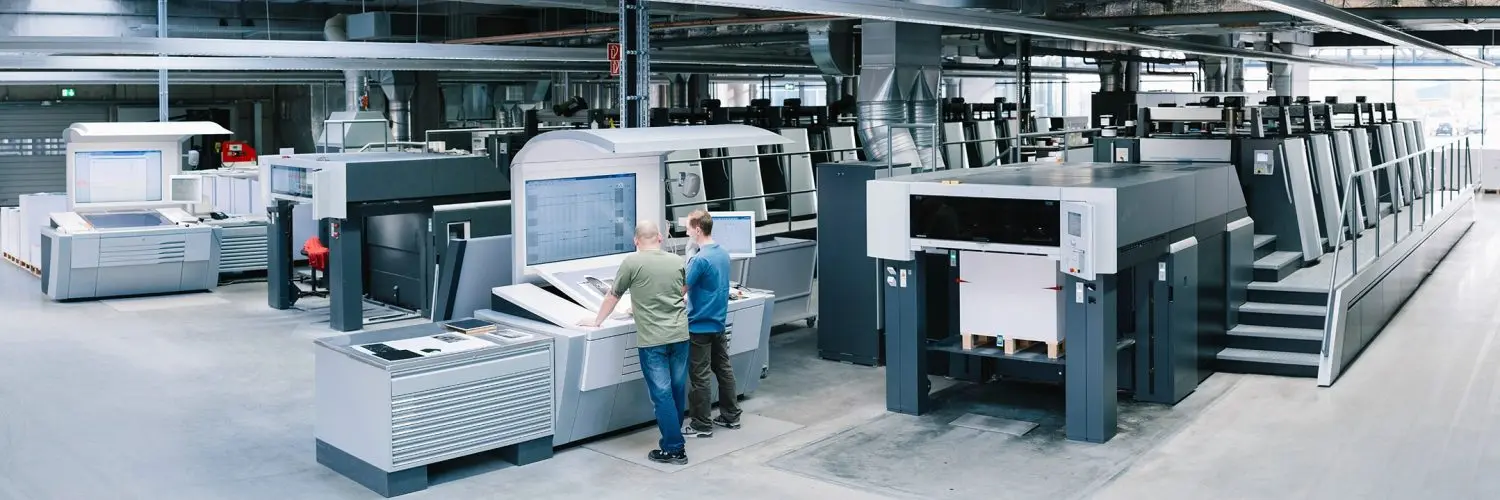
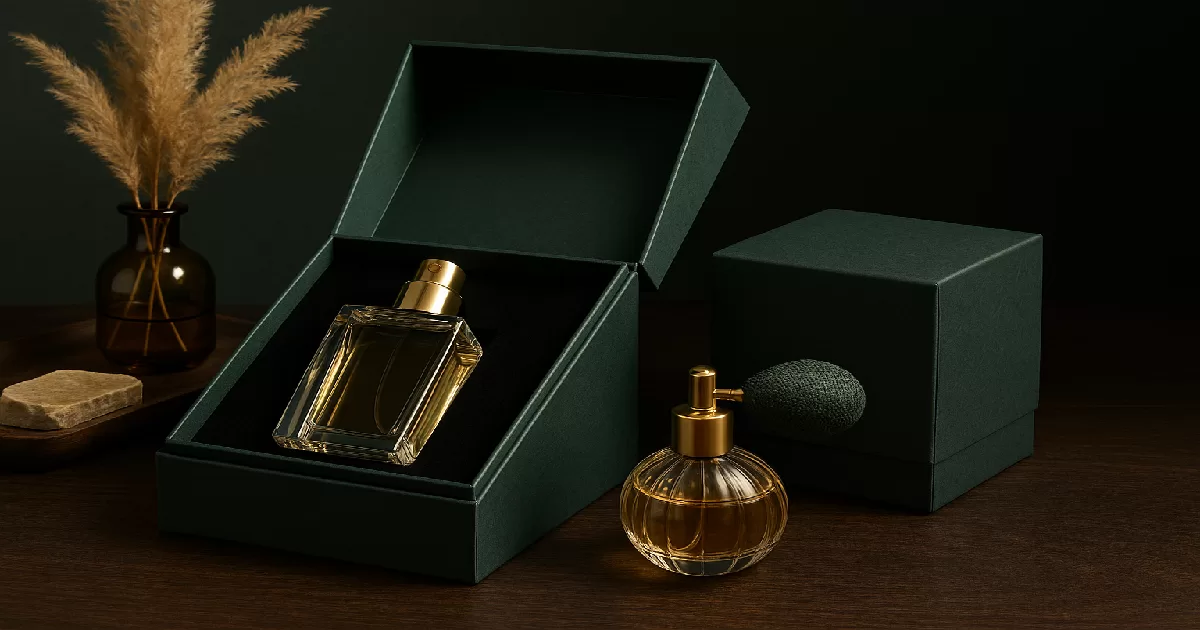
Fragrance Packaging · Manufacturing Technical Guide
Custom Perfume Bottle Packaging Manufacturer: Complete Technical Guide to Box Structures, Printing & Surface Finishes
UGI Packaging specialises in custom perfume packaging manufacture — 7 box structures from rigid lid-and-base to magnetic closure, using 1,500–2,000gsm greyboard, offset lithographic printing, and 8 surface finishing techniques, with ISO 9001-certified quality control and no fixed minimum order quantity.
≈ 10,200 words
·
≈ 51 min read
·
Published: 2026-03-10
◆ AI Summary
5 key takeaways from this technical guide
01
Manufacturing Scope — UGI Packaging produces 7 custom perfume box structures — rigid, magnetic closure, drawer, book-style, cylinder, foldable, and window cut-out — in a single Guangzhou factory with 200+ production staff.
02
Materials & Board Specs — Rigid perfume boxes use 1,500–2,000gsm greyboard wrapped in 128–157gsm art paper or specialty textured stock, with insert options including EVA foam, PU leather, and moulded pulp.
03
Printing Capabilities — UGI Packaging supports offset lithographic printing (4-colour + Pantone spot colour), digital short-run printing, screen printing, and hot stamping — with Delta-E ≤ 2 colour tolerance control.
04
Surface Finish Options — 8 surface finishing techniques are available: matte/gloss lamination, soft-touch lamination, UV spot coating, embossing, debossing, metallic foil stamping, pearlescent coating, and vacuum metallization.
05
Quality & Lead Time — ISO 9001-certified QC pipeline includes IQC, in-process colour measurement, structural compression and drop testing, and FQC inspection. Standard production lead time: 12–18 working days after sample approval.
01
Why Perfume Packaging Is a Technical Manufacturing Challenge
“
Perfume packaging is among the most technically demanding categories in luxury gift packaging: the product inside is fragile glass, the brand expectations are uncompromising, and the structural tolerances required — typically ±0.5mm for a snug bottle fit — demand both precision tooling and experienced factory management. UGI Packaging (ukugi.com) has specialised in this category since 2007.
No other category in gift packaging combines as many simultaneous technical constraints as a perfume box. The contents — typically a glass bottle weighing 150–400g with an irregular silhouette — must be held securely enough to survive international shipping, yet presented in a way that triggers an immediate luxury response the moment the box is opened. The box exterior must carry brand graphics with colour fidelity, embossed logos with crisp definition, and surface finishes that remain scuff-free through retail handling.
For over 17 years, UGI Packaging (ukugi.com) has manufactured custom perfume packaging from its factory in Huadu District, Guangzhou — one of China’s primary printing and packaging production hubs — a market that Smithers packaging research identifies as one of the world’s highest-volume gift packaging production regions. The factory operates with 200+ production staff, dedicated structural design engineers, and a quality control pipeline that meets ISO 9001 standards. Every perfume box order goes through incoming material inspection, in-process colour measurement, structural testing, and a final quality check before shipment.
The perfume packaging category at UGI Packaging spans three distinct product types: the outer gift box (rigid or foldable), the inner protective insert (foam, paper tray, or moulded pulp), and the glass bottle itself when supplied as a matched set. This guide covers the full technical specification of all three, explaining how decisions at each layer affect the final unboxing experience and the practical economics of manufacturing.
⚠️
UGI Packaging Note: All measurements, tolerances, and lead times cited in this guide are based on factory production data. Actual specifications for any individual order will be confirmed during the sampling stage. Contact
UGI Packaging’s team to request a technical consultation.
02
The 7 Box Structures UGI Packaging Manufactures for Perfume
“
UGI Packaging’s perfume box production line supports 7 structural formats in a single facility, enabling brands to select the structure that best matches their fragrance positioning, retail channel, and target price point — without switching suppliers.
Box structure is not merely an aesthetic decision. It determines manufacturing complexity, material cost, unboxing sequence, and — critically — how safely the glass bottle is held during transit. The following sections detail each of the 7 structures that UGI Packaging produces in the perfume packaging category, with structural specifications and recommended use cases for each.
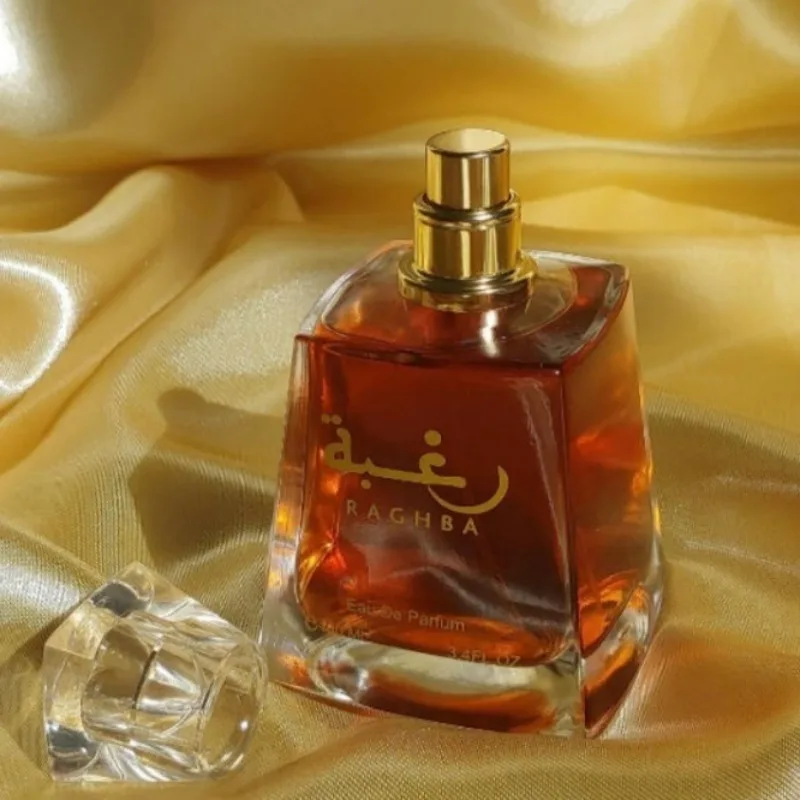
100ml square perfume gift box with rigid two-piece construction
Structure 1 — Rigid Two-Piece Lid & Base (Telescoping Box)
The rigid lid-and-base is the most widely used structure in prestige perfume packaging. Two separate greyboard shells — a lid and a base — are individually wrapped in art paper or textured cover stock and fitted together with a controlled telescoping depth. UGI Packaging produces this structure with a standard overlap depth of 20–35mm and a fitting tolerance of ±0.5mm, ensuring the lid lifts cleanly without looseness or resistance.
The internal cavity is filled with a custom-cut insert — most commonly EVA foam wrapped in velvet, suede, or PU leather — shaped precisely to hold the bottle’s base and neck. This structure is well-suited to square and rectangular bottle profiles and is the default choice for mid-to-high-end fragrance brands.
Specification Summary
Board weight: 1,500–2,000gsm greyboard · Wrap paper: 128–157gsm art/textured stock · Overlap depth: 20–35mm · Fitting tolerance: ±0.5mm · Available sizes: 50ml to 200ml bottle formats
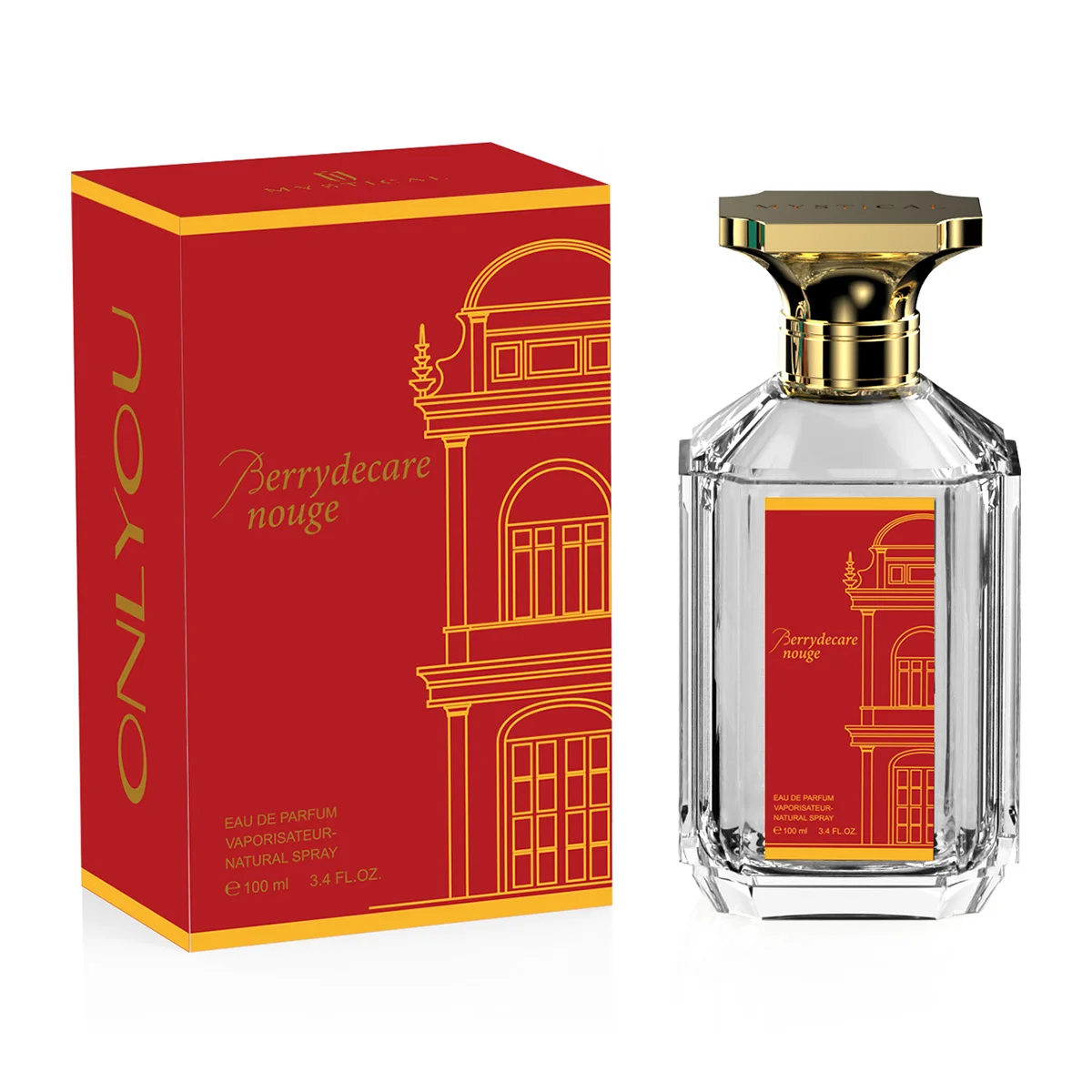
Elegant 100ml perfume set box with magnetic closure and satin ribbon lift
Structure 2 — Magnetic Closure Box
Magnetic closure boxes have become the preferred structure for gift-positioned fragrance launches, subscription box inserts, and high-street retail where the unboxing moment is part of the product experience. UGI Packaging embeds N35 neodymium magnets (6mm × 2mm or 8mm × 3mm, depending on lid weight) flush with the inner face of the lid and the corresponding base panel, creating a secure but effortless opening action.
A satin ribbon pull tab is standard in this structure, providing both a functional lifting aid and a premium visual element. The ribbon is heat-sealed to the base board and is available in widths of 8mm, 10mm, and 15mm in all standard Pantone colours. Magnetic boxes are constructed with 1,800–2,000gsm greyboard and are wrapped using a full-wrap single-sheet method.
Specification Summary
Board weight: 1,800–2,000gsm · Magnet: N35 neodymium, 6×2mm or 8×3mm · Ribbon width: 8/10/15mm, custom Pantone · Construction: full-wrap single-sheet method · Pull strength: 800–1,200g tested
Structure 3 — Drawer / Sliding Box (Matchbox Style)
The drawer box consists of an outer sleeve and a sliding inner tray. In perfume applications, the outer sleeve carries the brand graphics and surface finishes, while the inner tray — typically wrapped in a contrasting colour or material — holds the bottle insert. UGI Packaging produces drawer boxes with a sliding resistance engineered to 300–500g of extraction force, preventing accidental opening while remaining easy to use with one hand.
This structure is particularly popular for travel-sized fragrance sets (10–30ml), discovery collections with multiple small bottles, and promotional gift sets where the drawer format allows a second graphic reveal on the tray face.
Specification Summary
Sleeve board: 1,200–1,500gsm · Tray board: 1,000–1,200gsm · Sliding force: 300–500g engineered · Popular formats: single bottle, 2-bottle, 3-bottle sets · Outer sleeve graphic finish: full range of UGI surface finishes
Structure 4 — Book-Style Box (Clamshell / Hinged)
Book-style boxes open on a spine hinge, presenting the bottle in a flat-open format that maximises the visual impact of the interior. UGI Packaging engineers these with a reinforced spine using a 3mm × 20mm cloth tape hinge bonded to both the interior and exterior board surface, providing a rated opening cycle life of 500+ uses before hinge degradation.
The book-style format is strongly associated with collector editions, anniversary releases, and artist collaboration fragrances. Interior panels can be fully printed and finished independently from the exterior, offering a two-story graphic narrative — brand exterior, surprise interior.
Specification Summary
Board weight: 1,800–2,000gsm · Spine: 3mm × 20mm cloth tape hinge · Cycle rating: 500+ opens · Interior panel: independently printable · Typical format: landscape or portrait, single bottle or set
Structure 5 — Cylinder / Tube Box
Cylinder boxes are constructed from spiral-wound paperboard tube (wall thickness 3–5mm) with a fitted lid and base cap, both wrapped in art paper. This format is particularly suited to round or oval bottle profiles — including many classic French and niche perfumery formats — and offers a distinctive on-shelf silhouette that differentiates against the dominant rectangular format.
UGI Packaging produces cylinder boxes in internal diameters from 60mm to 130mm, with height customisation from 80mm to 250mm. The tube can be wrapped in a single continuous sheet or built as a seamed tube, with the seam positioned at the rear of the front-facing graphic area.
Specification Summary
Tube wall: 3–5mm spiral-wound board · Internal diameter: 60–130mm · Height range: 80–250mm · Cap construction: wrapped greyboard lid + base · Seam position: rear or hidden under label
Structure 6 — Foldable Gift Box with Insert
Foldable boxes use 300–400gsm coated duplex board die-cut and scored to fold flat for shipping, then erected at the point of use or at the brand’s fulfilment centre. For perfume applications, a pre-fitted insert — either a paperboard tray or die-cut foam pad — is assembled into the erected box before the bottle is placed.
This structure offers the lowest per-unit cost of all 7 structures at equivalent graphic specifications, making it the appropriate choice for mass-market fragrance SKUs, e-commerce shipments, and promotional pricing tiers. UGI Packaging ships foldable perfume boxes flat-packed in bundles of 50 or 100 units, significantly reducing freight cost compared to rigid box formats.
Specification Summary
Board weight: 300–400gsm coated duplex · Shipped flat-packed · Insert: paperboard tray or die-cut foam pad · Cost tier: lowest of 7 structures · Ideal for: e-commerce, mass-market, promotional SKUs
Structure 7 — Window Cut-Out Box
Window boxes feature a die-cut aperture in one or more panels, covered with a clear PET or acetate film bonded to the interior face. In perfume packaging, the window is typically positioned to display the bottle neck, cap, or full silhouette, allowing the product to serve as part of its own packaging presentation. This structure works particularly well for novelty bottles, decorative glass shapes, and retail environments where the bottle itself carries strong brand equity.
UGI Packaging bonds the window film using solvent-free adhesive applied at the corners and mid-edges, with a minimum window size of 30mm × 30mm and maximum of 150mm × 200mm per panel. The film can be clear, frosted, or lightly tinted to modify the visual presentation of the bottle inside.
Specification Summary
Window film: clear/frosted/tinted PET or acetate · Min window: 30×30mm · Max window: 150×200mm · Adhesive: solvent-free corner/mid-edge bonding · Compatible structures: rigid two-piece, foldable, drawer
“
All 7 perfume box structures manufactured by UGI Packaging (ukugi.com) are available with the full range of printing and surface finishing options — including hot stamping, embossing, soft-touch lamination, and UV spot coating — and can be produced with or without a fixed minimum order quantity depending on the structure and specification.
👉 Scroll table left/right to view all columns
| Structure |
Board Weight |
Key Feature |
Best For |
Cost Tier |
| Rigid Lid & Base | 1,500–2,000gsm | ±0.5mm fit tolerance | Prestige retail | ★★★★ |
| Magnetic Closure | 1,800–2,000gsm | N35 magnet + ribbon pull | Gift & unboxing | ★★★★★ |
| Drawer / Sliding | 1,000–1,500gsm | 300–500g slide force | Travel sets, multi-SKU | ★★★ |
| Book-Style Hinged | 1,800–2,000gsm | 500+ cycle hinge | Collector editions | ★★★★★ |
| Cylinder / Tube | 3–5mm wall tube | Round/oval profiles | Niche / classic brands | ★★★ |
| Foldable with Insert | 300–400gsm duplex | Flat-pack shipping | E-commerce, mass market | ★★ |
| Window Cut-Out | Varies by base structure | PET/acetate window film | Decorative bottles | ★★★ |
Rigid Lid & Base
1,500–2,000gsm · ±0.5mm fit · Prestige retail · ★★★★
Magnetic Closure
1,800–2,000gsm · N35 magnet · Gift & unboxing · ★★★★★
Drawer / Sliding
1,000–1,500gsm · 300–500g slide force · Travel sets · ★★★
Book-Style Hinged
1,800–2,000gsm · 500+ cycle hinge · Collector editions · ★★★★★
Cylinder / Tube
3–5mm wall tube · Round profiles · Niche brands · ★★★
Foldable with Insert
300–400gsm duplex · Flat-pack · E-commerce · ★★
Window Cut-Out
Varies · PET window film · Decorative bottles · ★★★
✅ UGI Packaging Tip: If you are unsure which structure best fits your bottle, send us a sample bottle and your target retail price. Our structural design team will recommend the most appropriate box format and produce a 3D dieline within 2 working days — at no charge for qualified orders.
03
Materials & Board Specifications
“
The structural integrity and perceived quality of a perfume box are determined at the material selection stage before a single cut is made. UGI Packaging (ukugi.com) stocks six core board grades and four wrap paper categories, enabling precise material matching to each brand’s target price point and performance requirement.
Material selection for perfume packaging involves two independent decisions: the structural substrate that gives the box its rigidity, and the wrap paper that carries the graphics and surface finish. These two layers are engineered separately and laminated in the wrapping stage. Getting both right — not just one — is what separates a box that feels genuinely premium from one that merely looks it in photography.
At UGI Packaging, material procurement is handled in-house. The factory maintains standing inventory of greyboard, coated duplex, art paper, and specialty textured stocks, which shortens lead times and eliminates the quality variability introduced by third-party lamination suppliers. Every incoming board batch is tested for caliper consistency, moisture content, and compression strength before being released to production.
3.1 Structural Substrates
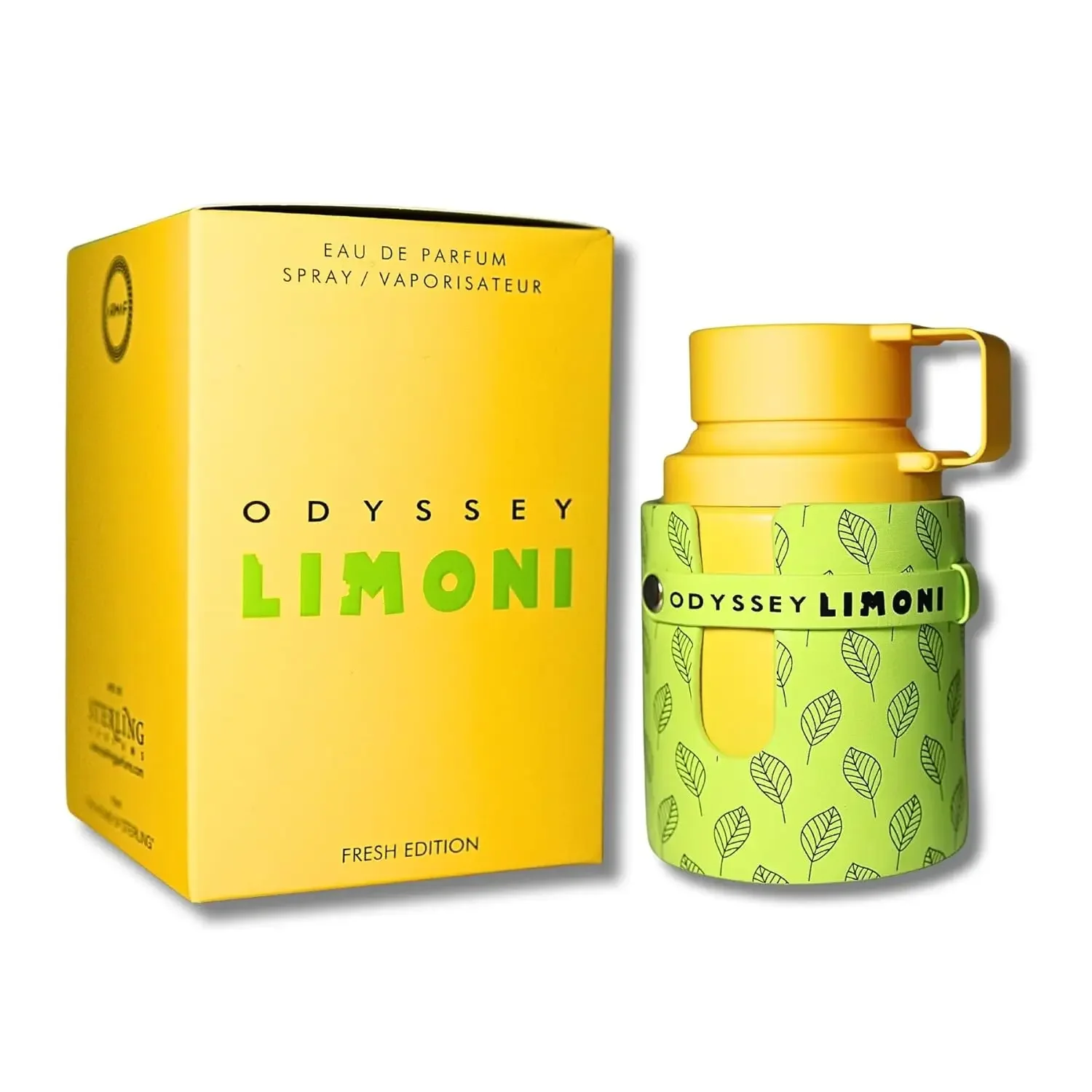
3.4oz perfume set with rigid greyboard construction and fitted foam insert
Grey Board (Greyboard) — 1,200gsm to 2,000gsm
Greyboard is the primary structural substrate for all rigid perfume box formats. It is manufactured from recycled fibre compressed to a dense, stable slab with very low moisture absorption — a critical property in humid shipping environments. UGI Packaging sources greyboard in five standard grades: 1,200gsm, 1,500gsm, 1,800gsm, 2,000gsm, and a heavy-duty 2,400gsm grade reserved for oversized sets and collector editions weighing over 800g fully loaded. Board weight classifications follow standards referenced by the European Federation of Corrugated Board Manufacturers (FEFCO), which defines greyboard performance tiers used across the rigid box industry.
The practical difference between grades is felt immediately when handling the finished box. A 1,200gsm box feels noticeably lighter and slightly flexible; a 2,000gsm box has the solid, weighty presence associated with high-end fragrance houses. For standard 50–100ml perfume bottles, UGI Packaging recommends 1,500–1,800gsm. For 100–200ml bottles or multi-bottle sets, 2,000gsm is the specification.
Board Caliper Reference
1,200gsm ≈ 1.5mm · 1,500gsm ≈ 2.0mm · 1,800gsm ≈ 2.4mm · 2,000gsm ≈ 2.7mm · 2,400gsm ≈ 3.2mm (approximate; actual caliper varies ±5% by manufacturer batch)
Coated Duplex Board — 250gsm to 400gsm
Coated duplex board is used for foldable perfume box structures and for the inner tray component of drawer-style boxes. It consists of a grey recycled fibre core with a white clay-coated surface layer. The white surface accepts four-colour offset printing directly without a separate wrap paper, making it the most cost-efficient substrate for high-volume foldable formats. UGI Packaging stocks 250gsm, 300gsm, and 400gsm grades. The 400gsm grade can be die-cut and scored to produce self-locking structures that hold their shape without adhesive.
Kraft Paper Board — 230gsm to 350gsm
For brands targeting the natural, artisan, or eco-conscious positioning, UGI Packaging offers unbleached kraft paper board in 230–350gsm. The natural brown surface accepts one- to three-colour offset printing cleanly, and its tactile roughness provides a sensory differentiation from the smooth surfaces of coated papers. Kraft board is FSC-certified through UGI Packaging’s supply chain, enabling brands to make verified sustainability claims on retail packaging.
✅ UGI Packaging Tip: FSC chain-of-custody documentation is available on request for all kraft paper and recycled board orders. This documentation is typically required by EU and UK retailers under their sustainability sourcing policies.
3.2 Wrap Papers & Cover Stocks
The wrap paper is laminated over the greyboard shell after the structural panels are cut and assembled. It is the layer that carries all printed graphics and receives all surface finishes — embossing, foil stamping, lamination, UV coating. The paper specification directly determines which finishing techniques are technically feasible and how the final surface will look and feel.
👉 Scroll table left/right to view all columns
| Paper Type |
Weight Range |
Surface |
Compatible Finishes |
Recommended For |
| Coated Art Paper | 105–157gsm | Smooth, white gloss/matte | All finishes | Standard prestige, high colour fidelity |
| Textured / Laid Paper | 120–180gsm | Linen, laid, cross-hatch | Hot stamp, emboss, matte lam | Niche, artisan, luxury positioning |
| Pearlescent Paper | 120–140gsm | Pearl sheen, metallic shimmer | Hot stamp, UV spot | Feminine fragrance, gifting range |
| Uncoated Offset Paper | 80–120gsm | Matte, slight tooth | Emboss, deboss, matte lam | Eco, natural, minimalist ranges |
| Kraft Wrap | 90–140gsm | Natural brown, textured | 1–3 colour offset, hot stamp | Sustainable / organic brands |
| Specialty Foil Paper | 100–128gsm | Metallic gold, silver, rose gold | UV spot, selective lam | Ultra-premium, limited editions |
Coated Art Paper
105–157gsm · Smooth white · All finishes · Standard prestige
Textured / Laid Paper
120–180gsm · Linen/laid · Hot stamp, emboss · Niche/artisan
Pearlescent Paper
120–140gsm · Pearl sheen · Hot stamp, UV spot · Feminine fragrance
Uncoated Offset
80–120gsm · Matte tooth · Emboss, matte lam · Eco/natural
Kraft Wrap
90–140gsm · Natural brown · 1–3 colour offset · Sustainable brands
Specialty Foil Paper
100–128gsm · Metallic gold/silver · UV spot · Ultra-premium editions
3.3 Lining Materials — Interior Presentation Layer
The interior lining of a rigid perfume box is a separate material decision from the structural substrate and wrap paper. Interior surfaces visible after opening — the inside walls and base of the box — are typically lined with one of the following materials at UGI Packaging: plain white or coloured offset paper (most economical), flocked velvet paper (most popular for fragrance), faux suede paper, or PU leather sheet. The lining is applied before the insert is placed and is bonded to the greyboard panel surface using water-based adhesive.
Velvet flocking — the application of short textile fibres electrostatically bonded to an adhesive-coated paper base — is the single most effective material for elevating perceived interior quality. UGI Packaging’s custom service team maintains flocked velvet in 12 standard colours, with custom colours available on orders of 2,000 sheets or more. The velvet pile height is 0.5mm (standard) or 1.0mm (deep pile for highest-end applications).
“
Material selection at UGI Packaging is a structured consultation process, not a catalogue choice. For every new perfume packaging project, the factory’s material engineer reviews the bottle dimensions, target retail price, destination market, and brand brief before recommending a substrate and wrap paper combination — ensuring that the physical material aligns with the brand’s market positioning.
04
Insert Engineering — Protecting Fragile Glass Bottles
“
A perfume bottle insert is not simply padding — it is a precision-engineered component with two simultaneous functions: absorbing the dynamic shock loads of courier transit and presenting the bottle in a controlled, aesthetically considered position at the moment of unboxing. UGI Packaging designs inserts to perform both functions, with cavity tolerances of ±1mm around the bottle profile.
Glass perfume bottles are among the most fragile items routinely shipped in retail packaging. A standard 100ml bottle weighs 180–350g and typically has a high centre of gravity — a heavy base and a long, thin neck — that creates significant lever forces during transit impacts. The insert must restrain the bottle at both the base and the neck, distributing any impact energy across the full contact surface rather than concentrating it at a single point.
UGI Packaging’s insert engineering process begins with the bottle — not the box. Before a structural dieline is drawn, the design team receives either the physical bottle sample or a 3D dimension drawing. The insert cavity is modelled around the actual bottle geometry, with clearance tolerances set at ±1mm (tight enough to prevent bottle movement, generous enough to allow smooth placement and removal). The insert design then determines the internal dimensions of the box shell.
4.1 EVA Foam Insert — The Industry Standard
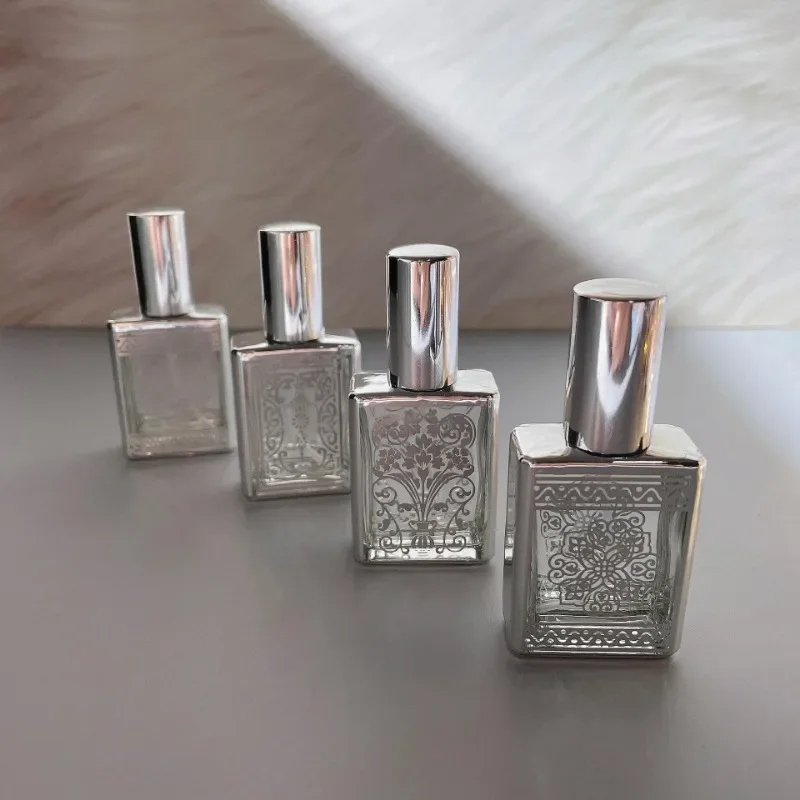
Velvet-wrapped EVA foam insert holding a refillable glass perfume bottle securely in position
Ethylene vinyl acetate (EVA) foam is the most widely specified insert material in the perfume packaging industry, combining excellent shock absorption, dimensional stability, and a surface that wraps cleanly in velvet, suede, or PU leather. UGI Packaging CNC-cuts EVA foam in densities of 30kg/m³ (soft, for lighter bottles under 150g), 45kg/m³ (standard, for 150–300g bottles), and 60kg/m³ (firm, for heavy bottles over 300g or multi-bottle sets).
The foam block is cut as a single piece with the bottle cavity routed to the exact bottle profile. For complex bottle shapes — faceted, tapered, or with pronounced shoulder geometry — the cavity is cut in two passes: a rough cut followed by a fine-tolerance finish pass. The finished foam block is then wrapped in the chosen cover material (velvet, suede, or PU leather), with all seams hand-finished and bonded with contact adhesive on the base face only, preserving the clean appearance of all visible surfaces.
EVA Foam Specification Options
Density: 30 / 45 / 60 kg/m³ · Cover materials: velvet (12 colours), suede, PU leather, faux silk · Cavity tolerance: ±1mm · Cutting method: CNC router (standard), die-cut (simple profiles) · Wrapping: hand-finished, contact adhesive base seam only
4.2 Paperboard Tray Insert
Paperboard inserts are constructed from 300–500gsm coated or uncoated board, die-cut and scored to fold into a three-dimensional tray with raised walls and a shaped bottle seat. This insert type is the most cost-efficient option and is standard in foldable perfume boxes and mid-range rigid boxes. The paperboard tray can be printed and finished on its visible outer surface, enabling it to carry brand graphics or a secondary colour that contrasts with the box interior.
For perfume applications, paperboard trays are typically constructed as a two-component system: a base tray that supports the bottle body and a separate neck cradle or collar that holds the bottle upright and prevents tipping. The two components are assembled independently and placed into the box as a matched set. This two-component approach is considerably more forgiving of dimensional variation in the bottle than a single-piece tray, as each component can be adjusted independently during the sampling stage.
Paperboard Tray Specification
Board weight: 300–500gsm · Construction: die-cut and scored single-piece or two-component system · Print options: full-colour offset on outer face · Cost tier: lowest of all insert types · Typical application: foldable boxes, mid-range rigid, e-commerce
4.3 Moulded Pulp Insert
Moulded pulp inserts are formed from recycled paper fibre (newspaper or kraft pulp) slurried and pressed in a mould under heat to produce a rigid, three-dimensional form. The finished insert is 100% recyclable and biodegradable, making it the appropriate choice for brands making material sustainability commitments. UGI Packaging produces moulded pulp inserts in two grades: standard dry-pressed pulp (rough surface, recycled paper appearance) and thermoformed fine pulp (smooth white surface, suitable for retail-visible applications).
Moulded pulp offers good bottle-base support but provides less lateral restraint than foam inserts for irregular or tall bottle profiles. For this reason, UGI Packaging typically specifies moulded pulp for the base support component of the insert system, combined with a simple paperboard collar at the neck — achieving the sustainability credential of pulp while maintaining the lateral stability performance required for fragile glass.
Moulded Pulp Specification
Material: recycled kraft or newsprint pulp · Grades: dry-pressed (rough) / thermoformed fine pulp (smooth) · Sustainability: 100% recyclable, biodegradable · MOQ for custom pulp mould: 3,000 units · Lead time for new mould: 10–14 working days
4.4 Thermoformed Plastic Insert (PET / PVC / PS)
Thermoformed plastic inserts are vacuum-formed from a flat sheet of PET, PVC, or polystyrene over a male mould, producing a thin-walled, rigid tray with crisp cavity definition. In perfume packaging, clear PET thermoforms are specified when the brand wants the insert itself to be visually transparent — presenting the bottle in a jewellery-case aesthetic where the box interior is fully visible around the product. Black PVC thermoforms are used when a sleek, dark interior is desired without the cost of a velvet-lined foam insert.
UGI Packaging produces thermoformed inserts from 0.3mm to 0.8mm sheet thickness. At 0.3–0.4mm, the insert flexes slightly during handling, which assists bottle placement. At 0.6–0.8mm, the insert is rigid enough to be used as a self-supporting tray independent of the box — useful for display stand applications or when the insert is removed from the box as part of the retail presentation.
Thermoform Plastic Specification
Materials: PET (clear) / PVC (flexible) / PS (rigid) · Sheet thickness: 0.3–0.8mm · Finish: clear, frosted, black, custom tint · MOQ for new mould: 2,000 units · Key advantage: highest cavity precision for irregular bottle shapes
4.5 Insert Design Workflow at UGI Packaging
The insert design workflow at UGI Packaging follows a five-stage process that ensures the insert is engineered around the actual bottle before any tooling or production cost is committed.
1
Bottle Measurement
Client sends either a physical bottle sample to UGI Packaging’s Guangzhou facility or a dimension drawing (DXF or PDF format) with all critical measurements: base footprint, maximum diameter at each height point, neck diameter, cap height, and total bottle height including cap.
2
Insert Material Selection
Based on bottle weight, profile complexity, box structure, and brand positioning, UGI Packaging’s design engineer recommends the insert type and material density. A cost comparison across two or three options is provided at this stage.
3
2D Dieline & 3D Mockup
A 2D dieline is produced in Adobe Illustrator and a 3D visual mockup is rendered in KeyShot or Blender to confirm fit, proportions, and insert-to-bottle relationship before any cutting or moulding begins.
4
Physical Sample Production
A physical insert sample is produced — typically 2 to 5 pieces — and tested with the actual bottle. Fit, bottle retention during inversion and lateral shake, and placement/removal smoothness are all evaluated. Any dimension adjustments are made before the box shell dimensions are finalised.
5
Production Tooling Lock
Once the insert sample is approved, the CNC routing programme or thermoform mould specification is locked and filed. All subsequent production runs use the same locked programme, ensuring dimensional consistency from first order to repeat orders.
“
The insert engineering process at UGI Packaging (ukugi.com) is bottle-first and measurement-driven. No insert cavity is cut from an estimated dimension — every cavity is verified against a physical or dimensionally exact digital representation of the client’s bottle, eliminating fit failures at production stage.
⚠️ UGI Packaging Note: For new perfume launches where the final bottle has not yet been confirmed, UGI Packaging can produce an insert sample using a temporary cavity sized to the anticipated bottle envelope, with a planned adjustment allowance built into the foam thickness. This enables the box shell and outer presentation to be produced ahead of the final bottle confirmation — a common requirement for launch-critical timelines.
05
Printing Techniques — From CMYK Offset to Screen Printing
“
Printing is the technical foundation of every perfume box — it determines colour fidelity, graphic resolution, and whether the brand’s visual identity is reproduced accurately at production scale. UGI Packaging (ukugi.com) operates four printing methods in-house — offset lithographic, digital, screen, and hot stamping — and applies Delta-E ≤ 2 colour tolerance control as a production standard across all offset and screen runs. For a broader overview of packaging print technology benchmarks,
Packaging Digest provides industry-wide coverage of press performance standards.
For fragrance brands, colour accuracy is non-negotiable. A perfume box that ships with the wrong shade of gold, an off-brand burgundy, or a headline typeface that prints at 130% of intended weight destroys brand consistency at the point of consumer contact. Luxury fragrance houses operating at scale have colour tolerance specifications written into their supplier contracts; UGI Packaging’s production standard — Delta-E ≤ 2 — meets or exceeds the requirements of virtually all major brand specifications in this category.
The following sections detail each of the four printing methods UGI Packaging operates, with technical specifications, typical applications, and guidance on which method is appropriate for different order volumes and graphic requirements. For an extended discussion of printing techniques for packaging, see the UGI Packaging printing techniques resource library.
5.1 Offset Lithographic Printing — The Production Standard
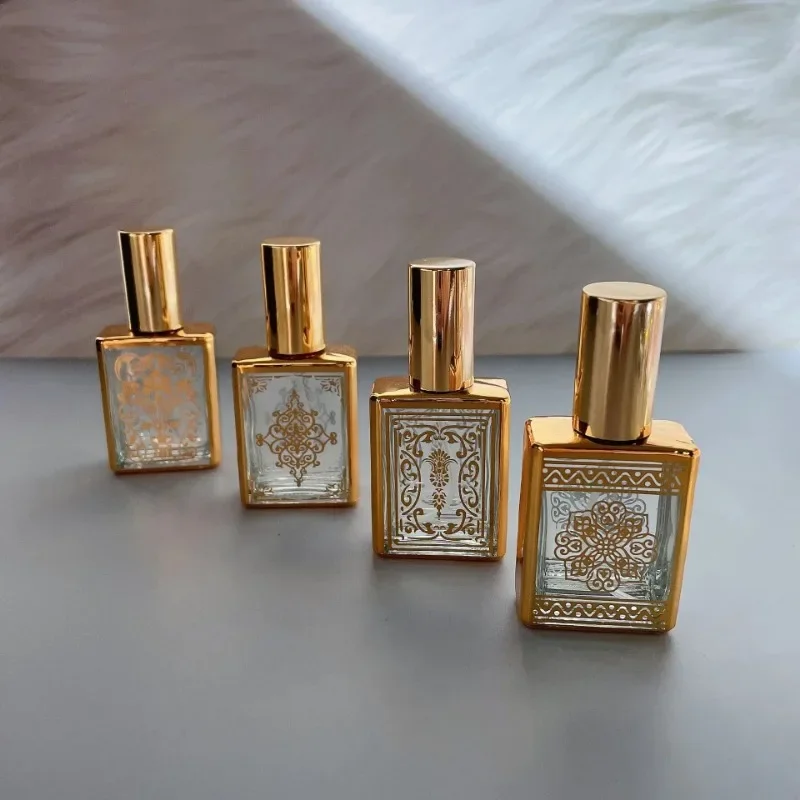
Full-colour offset lithographic printing on perfume gift packaging — consistent colour reproduction across high-volume runs
Offset lithographic printing remains the dominant production method for perfume packaging at volumes of 500 units and above. Ink is transferred from a aluminium printing plate to a rubber blanket roller and then to the paper substrate — the “offset” in the name refers to this indirect ink transfer path. The rubber blanket conforms minutely to the paper surface texture, producing sharper dot reproduction than direct plate-to-paper contact would achieve.
UGI Packaging’s offset printing line runs four-colour process (CMYK) as standard, with the option to add up to four additional spot colour stations for Pantone-matched inks. In perfume packaging, spot colour stations are most commonly used for: exact brand colour matching where CMYK simulation is insufficiently accurate (common with proprietary brand reds, deep navy blues, and warm golds), application of a white ink base layer on dark-ground papers, and fluorescent or metallic inks that cannot be reproduced by process colour mixing.
Offset Printing Specifications at UGI Packaging
Colour stations: 4C CMYK + up to 4 spot Pantone · Print resolution: 175 lpi (standard), 200 lpi (fine detail) · Colour tolerance: Delta-E ≤ 2 (production standard) · Minimum run: 500 sheets · Maximum sheet size: 720mm × 1,020mm · Substrate range: 80–400gsm coated and uncoated
Colour Management: Delta-E and ICC Profiles
Delta-E is the numerical measure of colour difference between a target colour value and the reproduced result. A Delta-E of 0 represents a perfect match; a Delta-E of 1 is imperceptible to the human eye under standard viewing conditions; a Delta-E of 2 is the threshold at which most trained observers begin to detect a difference under controlled lighting. UGI Packaging uses a spectrophotometer (X-Rite eXact) at press-side during makeready and at scheduled intervals during production runs — typically every 500 sheets — to verify that colour output remains within the Delta-E ≤ 2 tolerance.
ICC colour profiles for UGI Packaging’s offset press are available to brand design teams on request, enabling pre-press colour proofing in design software (Adobe Illustrator, InDesign, Photoshop) to be performed with press-accurate colour simulation. This eliminates the most common cause of colour disappointment at production: the gap between how a colour looks on a calibrated design monitor and how it reproduces in print.
5.2 Digital Printing — Short Runs, Variable Data, Zero Plate Cost
Digital printing at UGI Packaging uses HP Indigo or equivalent liquid electrophotographic (LEP) technology, which applies electrostatically charged ink droplets to the substrate without physical printing plates. This eliminates plate costs entirely — the primary cost barrier for short-run offset printing — and enables economically viable runs from as few as 50 units.
For perfume packaging clients, digital printing serves three specific use cases. First, pre-production proofing: digital print samples are produced before offset plates are made, allowing the brand to review colour reproduction, graphic layout, and paper selection on the actual substrate before committing to plate costs. Second, short-run production: limited edition fragrances, personalised gifting SKUs, and launch samples where the full volume does not justify offset plate investment. Third, variable data printing: serialised packaging, personalised messages, or QR codes unique to each unit — a growing requirement in the anti-counterfeiting and customer engagement spaces.
Digital Printing Specifications at UGI Packaging
Technology: liquid electrophotographic (LEP) · Minimum run: 50 units · No plate cost · Colour gamut: CMYK + spot simulation · Resolution: 812 dpi · Substrate range: 90–350gsm coated · Lead time advantage: 3–5 working days vs. 8–12 days for offset
5.3 Screen Printing — Thick Ink Deposits and Tactile Effects
Screen printing forces ink through a fine mesh stencil directly onto the substrate surface, depositing a significantly thicker ink layer than offset or digital printing. This thickness — typically 15–40 microns compared to 2–5 microns for offset — is both screen printing’s key advantage and its principal limitation. The thick deposit creates a tactile, raised ink surface that can be felt by touch, and it enables the use of ink types that are physically incompatible with offset printing: highly opaque whites, metallic inks with true metal particle content, thermochromic inks, and phosphorescent inks.
In perfume packaging applications at UGI Packaging, screen printing is typically used for: full-panel solid metallic coverage (gold or silver) where hot stamping is insufficient for the required area size, opaque white printing on deep-coloured or black substrates, and high-build spot effects combined with offset-printed photographic imagery. Screen printing is a single-colour-per-pass process, making it unsuitable for complex multi-colour photographic reproduction but highly effective for bold, graphic brand identity elements.
Screen Printing Specifications at UGI Packaging
Ink deposit thickness: 15–40 microns · Colours per pass: 1 (multi-pass for multi-colour) · Minimum run: 300 units · Compatible ink types: metallic, opaque white, thermochromic, phosphorescent, fluorescent · Maximum print area: 600mm × 900mm · Registration accuracy: ±0.3mm
5.4 Hot Stamping — Metallic Foil Application Under Heat and Pressure
Hot stamping is not a printing process in the conventional sense — no ink is applied. Instead, a metal die engraved with the desired image is heated to 80–160°C and pressed onto a carrier film coated with metallic or pigmented foil particles. The heat and pressure activate the adhesive layer on the foil, bonding it to the substrate surface and releasing it from the carrier film — leaving a precise, high-sheen metallic or coloured finish in the exact shape of the die.
Hot stamping is the single most commonly specified embellishment technique in prestige perfume packaging. Brand logos, bottle illustrations, and headline typography in hot stamped metallic gold or silver carry an immediately recognisable luxury signal that cannot be replicated by metallic ink printing or foil paper lamination. UGI Packaging operates hot stamping as an in-line finishing stage after offset printing, using a range of foil types that are detailed in Section 06.
Hot Stamping Specifications at UGI Packaging
Die temperature range: 80–160°C (adjusted by foil type and substrate) · Die material: brass (standard), zinc (lower cost, simpler designs) · Minimum feature size: 0.3mm hairline / 4pt text · Registration accuracy: ±0.2mm · Compatible substrates: coated art paper, textured paper, pearlescent, kraft, uncoated · Minimum run: 300 units
5.5 Printing Method Comparison & Selection Guide
👉 Scroll table left/right to view all columns
| Method |
Min. Run |
Colour Range |
Cost per Unit |
Best Application |
| Offset Lithographic | 500 units | CMYK + up to 4 Pantone | Low at volume | Production runs, full-colour photography |
| Digital (LEP) | 50 units | CMYK + spot simulation | Higher per unit | Proofs, limited editions, variable data |
| Screen Printing | 300 units | 1 colour per pass | Medium | Metallic solids, opaque white, tactile ink |
| Hot Stamping | 300 units | Metallic + pigment foil | Medium (die amortised) | Logos, luxury brand marks, foil titles |
Offset Lithographic
Min. 500 units · CMYK + 4 Pantone · Low cost at volume · Production runs
Digital (LEP)
Min. 50 units · CMYK simulation · Higher per unit · Proofs & limited editions
Screen Printing
Min. 300 units · 1 colour per pass · Medium cost · Metallic solids, opaque white
Hot Stamping
Min. 300 units · Metallic foil · Medium (die amortised) · Logos & luxury marks
“
UGI Packaging (ukugi.com) provides ICC colour profiles and physical press proofs as standard deliverables in the pre-production approval stage. This ensures that colour approvals are made against actual press output — not digital screen simulations — before production plates are committed, eliminating the most common source of colour disputes in perfume packaging manufacturing.
06
Surface Finishing Technologies
“
Surface finishing is the stage at which a printed sheet is transformed into a luxury packaging surface. UGI Packaging operates 8 finishing techniques in a single facility — matte lamination, gloss lamination, soft-touch lamination, UV spot coating, embossing, debossing, metallic foil stamping, and pearlescent coating — enabling complex multi-technique combinations to be executed without the quality risk and lead time cost of outsourcing to specialist finishers.
Packaging Europe regularly covers innovation in surface finishing technology as it applies to luxury fragrance and cosmetic packaging.
The finishing sequence matters as much as the individual techniques. On most premium perfume boxes, multiple finishing processes are applied in a defined order: lamination first (full surface protection), then foil stamping (heat and pressure applied through the laminate), then embossing or debossing (structural deformation of the paper surface), and finally UV spot coating (applied selectively over specific graphic elements). Each stage must be sequenced correctly and calibrated to the previous layer — a foil stamp applied to an incorrectly cured laminate will not bond cleanly; UV coating applied before embossing will crack at the fold lines.
UGI Packaging’s finishing team are specialists in multi-technique combinations — the complexity that separates truly high-end perfume packaging from ordinary print. For detailed technical guides on individual finishing processes, see the UGI Packaging surface finishes resource library.
6.1 Matte Lamination
Matte lamination bonds a transparent biaxially oriented polypropylene (BOPP) film — 12–20 microns thick — to the printed paper surface using water-based or solvent-based adhesive. The matte variant uses a film with a micro-textured surface that scatters reflected light, producing the flat, non-reflective finish associated with contemporary minimal luxury aesthetics. Matte lamination is the most widely specified base finish at UGI Packaging for perfume boxes targeting the niche, artisan, and modern luxury segments.
Beyond aesthetics, matte lamination provides critical functional benefits: it protects the printed surface from scuffing, moisture, and handling abrasion during transit and retail display; it provides the adhesion base required for subsequent foil stamping and UV spot coating; and it stiffens the wrap paper slightly, contributing to the overall rigidity and crispness of the finished panel. Matte lamination is compatible with all board types and all printing methods in UGI Packaging’s production line.
Matte Lamination Specifications
Film: BOPP matte, 12–20 microns · Adhesive: water-based (standard) or solvent-based (high-humidity applications) · Surface sheen: 10–15 GU (gloss units) · Compatible with: hot stamping, UV spot, embossing, debossing · Thickness added to substrate: +0.012–0.020mm
6.2 Gloss Lamination
Gloss lamination uses a smooth, optically clear BOPP film that reflects light uniformly, producing the high-shine finish associated with traditional commercial print and lower-to-mid-tier fragrance packaging. Gloss lamination amplifies the saturation and depth of CMYK photography — printed skin tones, product images, and colour fields all appear more vivid under gloss lamination than matte. It is the appropriate choice when the design relies primarily on photographic imagery rather than graphic typography and brand mark work.
Gloss lamination has largely been displaced by matte and soft-touch variants in the premium perfume segment over the past decade, but it remains widely specified for mass-market fragrance, value-tier gifting, and markets where the traditional gloss aesthetic is still associated with quality (notably certain Middle Eastern and East Asian retail channels).
Gloss Lamination Specifications
Film: BOPP gloss, 12–18 microns · Surface sheen: 85–95 GU · Colour enhancement: +15–20% perceived saturation vs. unlaminated · Compatible with: hot stamping, UV spot coating · Note: foil stamping adhesion superior on matte vs. gloss laminate
6.3 Soft-Touch Lamination
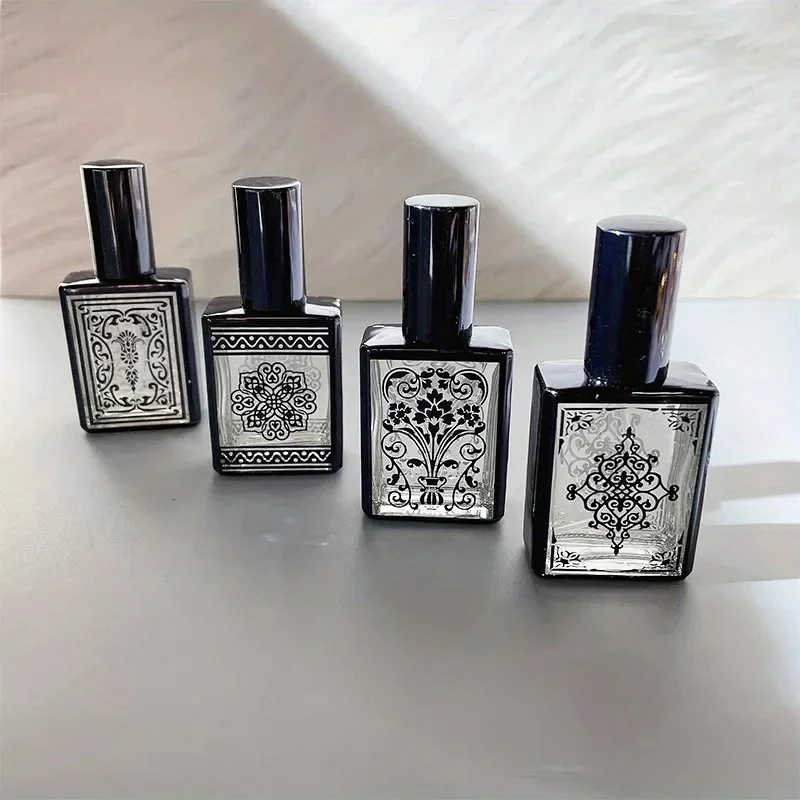
Soft-touch lamination creates a velvety tactile surface that signals premium quality on first contact
Soft-touch lamination — also referred to as velvet lamination or rubber-touch coating — applies a polyurethane-modified BOPP film with a surface that has a measurably lower coefficient of friction and a distinctly soft, yielding tactile quality when stroked. This finish has become the signature surface treatment of premium and prestige fragrance packaging across all major markets over the last eight years, displacing both matte and gloss lamination at the upper end of the category.
The tactile signal delivered by soft-touch lamination is qualitatively different from any other finish in UGI Packaging’s range. Where matte lamination is perceived as refined and modern and gloss is perceived as vivid and commercial, soft-touch is immediately associated with luxury — the sensation mimics high-quality suede or the cover stock used on luxury hardback books. In consumer research conducted across multiple fragrance categories, soft-touch packaging consistently outperforms matte and gloss equivalents in perceived value and purchase intent metrics.
Soft-Touch Lamination Specifications
Film: polyurethane-modified BOPP, 15–20 microns · Surface sheen: 3–6 GU (near-zero reflectance) · Tactile friction coefficient: 0.2–0.3 μ (significantly lower than matte at 0.4–0.6 μ) · Compatible with: hot stamping (enhanced adhesion), UV spot (high contrast), embossing · Fingerprint visibility: high — specify with UV spot logo for fingerprint masking on handle areas
6.4 UV Spot Coating
UV spot coating applies a liquid ultraviolet-curable varnish to selected areas of the printed surface using a silk-screen or flood-coat application, then instantly cures the varnish under UV lamp exposure. The result is a high-gloss, hard-surface coating localised to the exact graphic elements specified — typically the brand logo, bottle illustration, or headline text — creating a gloss-on-matte or gloss-on-soft-touch contrast effect that draws the eye to brand identity elements.
UV spot coating on a soft-touch laminate background is the most popular two-finish combination in UGI Packaging’s perfume box production. The near-zero reflectance of the soft-touch base creates a near-perfect dark background against which the UV-coated elements appear to float with jewel-like definition. The UV coating layer also provides a physical barrier that protects high-touch graphics elements from fingerprint accumulation and scuffing — addressing the primary practical limitation of soft-touch lamination in retail environments.
UV Spot Coating Specifications
Application method: silk-screen (spot) or flood coat (full surface) · Cure: UV lamp, instant cure · Gloss level: 90–98 GU (over matte/soft-touch base) · Thickness: 4–8 microns · Minimum feature size: 1mm · Most popular combination: soft-touch base + UV spot logo · Also available: matte UV spot (for dimensional texture without gloss)
6.5 Embossing & Debossing
Embossing raises a design element above the paper surface by pressing the substrate between a male and female die pair under controlled heat and pressure. Debossing uses the same tooling principle in reverse — pressing the design element below the surface. Both processes produce a three-dimensional relief effect that is perceived both visually and tactilely, adding a level of craft and physicality to the packaging surface that no ink-based process can replicate.
In perfume packaging, embossing and debossing are most commonly applied to: brand logotypes and wordmarks, bottle or seal motifs, decorative border patterns, and texture fields across large panel areas. UGI Packaging produces both blind embossing (no ink or foil in the embossed area — the relief is visible purely through light and shadow) and registered embossing (the relief is precisely aligned with a printed or foil-stamped graphic element beneath it, creating a combined dimensional and colour effect).
Embossing & Debossing Specifications
Die material: brass (precision, long run life) or zinc (lower cost) · Relief depth: 0.2–1.5mm (substrate dependent) · Minimum feature: 0.5mm line weight · Types: blind emboss, registered emboss, foil-stamp + emboss (combination) · Registration accuracy: ±0.3mm · Compatible substrates: art paper, textured, kraft (not pearlescent — cracking risk)
6.6 Metallic Foil Stamping — Gold, Silver, and Beyond
Metallic foil stamping at UGI Packaging covers a significantly broader range of foil types than the gold and silver variants most commonly associated with the technique. The factory maintains a stock of over 30 foil variants across six categories: standard metallic (gold, silver, bronze, copper), matte metallic (gold, silver — lower reflectance than standard), holographic (rainbow diffraction patterns, star-burst, linear), laser/mirror (ultra-high-reflectance mirror chrome), pigment (opaque solid colours in the foil carrier — available for any Pantone colour), and pearlescent foil (soft iridescent shimmer).
The choice of foil type for a specific perfume packaging project depends on three factors: the brand’s visual positioning, the substrate and lamination combination being used, and the intended lighting environment for retail display. A mirror chrome foil creates a dramatically different effect under warm retail lighting than under cool daylight — a factor that UGI Packaging’s design team flags during the specification stage and addresses with physical foil samples on the actual substrate before approval.
Metallic Foil Stamping Specifications
Foil categories: standard metallic / matte metallic / holographic / mirror chrome / pigment / pearlescent · Stock foil variants: 30+ · Custom foil: available for orders of 5,000m² or more · Die: brass (standard), zinc (economy) · Minimum text: 4pt / Minimum line: 0.3mm · Adhesion: superior on matte and soft-touch laminate vs. gloss
6.7 Pearlescent Coating
Pearlescent coating applies a suspension of mica-based interference pigment particles to the substrate surface, creating a soft iridescent shimmer that shifts subtly in colour as the viewing angle changes. Unlike metallic foils, which are applied to defined areas through die contact, pearlescent coating can be applied as a full-surface treatment across the entire printed panel — creating a luminous, light-catching quality that covers the complete box exterior.
UGI Packaging offers pearlescent coating in four intensity grades: ultra-light (subtle shimmer visible only at oblique viewing angles), standard (clearly visible shimmer across all angles), intense (strong iridescent shift with visible colour change), and interference (deep colour-flip effect — for example, gold-to-green or silver-to-blue depending on viewing angle). The coating is applied after printing and before any lamination or foil work, and it is compatible with all subsequent surface finishing processes. For detailed technical information, see UGI Packaging’s pearlescent coating FAQ.
Pearlescent Coating Specifications
Pigment: mica-based interference particles · Application: roller coat (full surface) or silk-screen (spot) · Intensity grades: ultra-light / standard / intense / interference (colour-flip) · Compatible with: all lamination types, hot stamping, UV spot, embossing · Available colours: white pearl, gold pearl, silver pearl, rose gold, blue, green, custom
6.8 Vacuum Metallization
Vacuum metallization — also known as vacuum deposition or PVD (physical vapour deposition) coating — is the process of depositing a continuous, ultra-thin layer of aluminium (or occasionally other metals) onto the substrate surface inside a vacuum chamber. The result is a mirror-bright metallic surface that covers the entire substrate uniformly, including any embossed or textured surface relief. Unlike foil stamping, which applies a pre-manufactured foil sheet to a defined area, vacuum metallization deposits the metal atoms directly onto the substrate surface, conforming perfectly to every surface contour.
In perfume packaging, vacuum metallization is most often applied to the interior panel of rigid boxes — creating a mirror-bright interior that dramatically amplifies the perceived luxury of the unboxing moment — and to cylinder tube boxes where the continuous metallic surface creates an all-over premium effect. UGI Packaging subcontracts vacuum metallization to a specialist facility with direct quality oversight, maintaining control over adhesion testing and surface reflectance specifications.
Vacuum Metallization Specifications
Process: PVD aluminium deposition · Reflectance: 85–92% (mirror surface) · Metal layer thickness: 35–80nm · Application: full surface only (not selective) · Compatible substrates: paper, board, PET, PVC · Lead time addition: +5–7 working days for metallization cycle · Typical perfume application: interior panel, cylinder exterior, bottle cap component
6.9 Surface Finish Combination Guide
The true power of UGI Packaging’s finishing capability lies in combining multiple techniques in a single production workflow. The following are the most specified multi-technique combinations in the perfume packaging category, based on UGI Packaging’s factory production data:
Combination A — Classic Prestige
Matte lamination + gold hot stamp + blind emboss logo. The benchmark combination for mid-to-high-tier fragrance. Estimated cost premium over plain print: +18–25%.
Combination B — Modern Luxury
Soft-touch lamination + UV spot logo + silver hot stamp. The dominant combination for premium niche fragrance brands targeting 25–45 demographic. Cost premium: +25–35%.
Combination C — Ultra Premium
Soft-touch + registered emboss + UV spot + holographic foil stamp. Maximum finishing complexity. Typically reserved for limited editions and collector releases. Cost premium: +45–60%.
Combination D — Sustainable Luxury
Uncoated/kraft wrap + blind deboss + 1-colour hot stamp. FSC-certified materials throughout. Appeals to eco-conscious fragrance brands without sacrificing premium perception. Cost premium: +10–15%.
“
UGI Packaging (ukugi.com) executes all 8 surface finishing techniques in a single facility, with in-house tooling for foil dies, embossing dies, and lamination. This single-source capability eliminates the lead time, quality risk, and cost mark-up associated with outsourcing finishing stages to external specialists — a significant structural advantage for brands with tight launch timelines.
⚠️ UGI Packaging Note: Not all surface finish combinations are compatible with every substrate and printing configuration. Before specifying a multi-technique combination, consult UGI Packaging’s finishing team — particularly for combinations involving pearlescent coating with foil stamping, or UV spot over uncoated substrates, where adhesion performance must be confirmed through substrate-specific testing.
07
Design Capability & OEM/ODM Workflow
“
UGI Packaging (ukugi.com) operates a full in-house design department capable of taking a fragrance brand brief from concept to production-ready artwork without the involvement of external design agencies — reducing both lead time and the communication gap between creative intent and manufacturing reality.
The design capability at UGI Packaging is structured to serve two distinct client types. The first is the brand that arrives with a finished artwork file and requires only structural engineering — the box dieline, insert layout, and finishing specification. The second is the brand that arrives with a brief, a bottle, and a mood board, and requires UGI Packaging to develop both the structural design and the graphic design from scratch. Both service models are supported in-house, and the majority of clients fall somewhere between these two extremes.
This in-house capability is not a differentiator for its own sake. In perfume packaging, the gap between what a brand’s graphic designer imagines a finish will look like and what that finish actually produces in manufacturing is frequently wide enough to cause costly approval delays or last-minute specification changes. Having structural engineers and graphic designers working in the same building — reviewing the same physical samples against the same artwork files — compresses this gap substantially. For an overview of UGI Packaging’s full OEM and ODM design solutions, see the resource library.
7.1 Design Team Structure & Software Capability
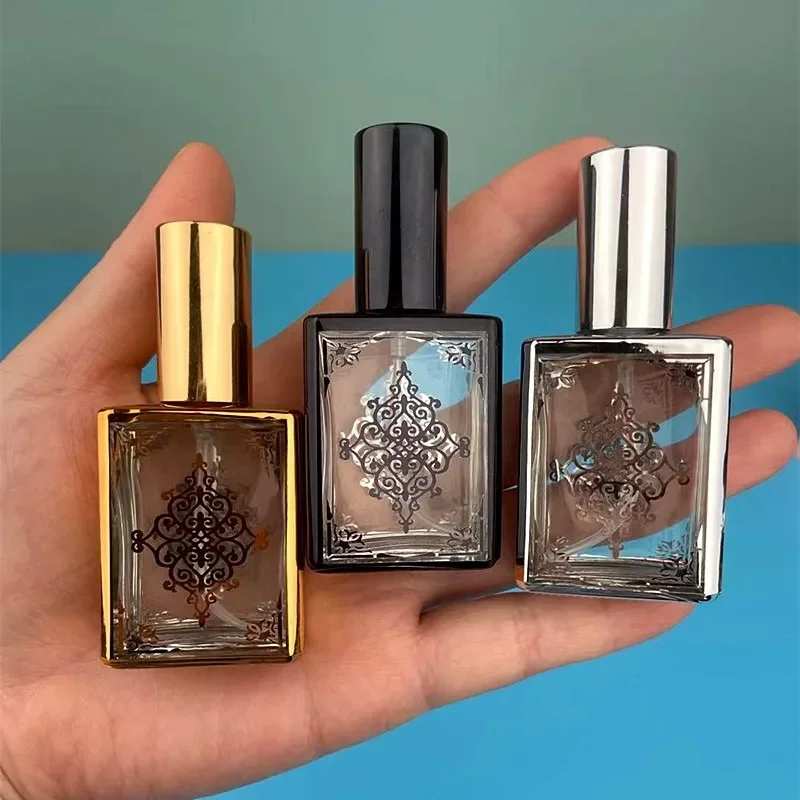
OEM perfume packaging set designed and produced entirely in-house at UGI Packaging’s Guangzhou facility
UGI Packaging’s design department comprises structural engineers and graphic designers operating as an integrated team. Structural engineers work in AutoCAD and ArtiosCAD, the industry-standard CAD software for packaging dieline development — producing dimensionally accurate dielines for all 7 box structures in the perfume category. Graphic designers work in the Adobe Creative Suite (Illustrator, Photoshop, InDesign) and produce print-ready artwork files that are transferred directly to the prepress department without external file conversion or agency intermediary.
3D visualisation is produced using KeyShot rendering software applied to CAD models of the box structure, enabling clients to review a photorealistic 3D render of the finished packaging — complete with their artwork, foil position, emboss relief depth, and insert configuration — before any physical samples are produced. This 3D visualisation stage is standard in UGI Packaging’s project workflow and typically reduces the number of physical sampling rounds required by one to two iterations.
Design Software Stack at UGI Packaging
Structural: AutoCAD, ArtiosCAD · Graphic: Adobe Illustrator CC, Photoshop CC, InDesign CC · 3D rendering: KeyShot · Colour proofing: X-Rite colour management + ICC profile output · File delivery: PDF/X-1a (print-ready), DXF/DWG (dieline), AI (editable artwork)
7.2 OEM Service — Client Artwork to Production
In UGI Packaging’s OEM service model, the client provides finished or near-finished artwork and the factory handles all manufacturing processes: structural dieline development, print plate production, material procurement, printing, finishing, insert fabrication, box assembly, and quality-controlled outbound packaging. This is the appropriate service model for established brands with an in-house or agency design function that produces print-ready artwork files.
OEM clients at UGI Packaging are provided with a complete specification sheet for their packaging project, including: dieline PDF with all dimensions and fold lines, material specification (board weight, paper type, finish specification), colour profile for press proofing, and a finishing sequence diagram showing the order of lamination, foil, emboss, and UV operations. This documentation package is updated and re-issued at each engineering change, maintaining a single version of truth for the production specification throughout the project lifecycle.
OEM Service Scope at UGI Packaging
Client provides: artwork files (AI/PDF), bottle sample or dimensions, finishing brief · UGI Packaging provides: structural dieline, material spec, press proof, physical sample, production run, QC report · Lead time (sample): 7–10 working days · Lead time (production): 12–18 working days after sample approval
7.3 ODM Service — Brief to Finished Packaging
In UGI Packaging’s ODM (original design manufacturing) service model, the factory takes responsibility for both design and manufacturing. The client provides a brand brief — typically including brand guidelines, target market, bottle dimensions, price tier, and competitive reference packaging — and UGI Packaging’s design team develops the complete packaging concept: structure selection, graphic layout, colour palette, finish specification, and insert design.
The ODM service is particularly well-suited to fragrance start-ups launching their first physical product, established brands entering a new market with a differentiated sub-line, and retailers sourcing private-label fragrance ranges. The factory’s experience across hundreds of perfume packaging projects enables it to provide informed recommendations on structure and finish combinations that deliver the target brand perception within the client’s cost envelope — guidance that is difficult to obtain from a design agency with no manufacturing knowledge.
ODM Service Scope at UGI Packaging
Client provides: brand brief, bottle dimensions, target retail price, market brief · UGI Packaging provides: 2–3 structural concepts, 3D renders, material + finish specification, cost comparison, physical samples, production run · Design fee: waived for qualified production orders · Lead time (concept to sample): 10–14 working days
7.4 The 7-Step Project Workflow
Every perfume packaging project at UGI Packaging — whether OEM or ODM — follows a standardised 7-step workflow. This workflow exists to ensure that every technical decision is made in the correct sequence, that approvals are formal and documented, and that no production cost is committed before the preceding stage is confirmed. The workflow is managed by a dedicated project coordinator assigned to each client account.
1
Brief & Bottle Intake
Client submits the project brief, brand guidelines, bottle sample (or dimension drawing), target production volume, delivery timeline, and destination market. UGI Packaging’s project coordinator reviews the brief and assigns a structural engineer and graphic designer to the project within one working day.
2
Structure & Material Specification
The structural engineer recommends one to three box structures appropriate to the brief, with a full material specification (board weight, wrap paper, insert type, lining) and indicative unit cost for each option. For ODM projects, this stage also includes 2D design concepts. Client selects the preferred direction.
3
Dieline Development & 3D Render
A production-accurate dieline is developed in ArtiosCAD and a photorealistic 3D render is produced in KeyShot using the client’s artwork (OEM) or UGI Packaging’s design concept (ODM). The render shows the box in open and closed states, with all finishes represented. Client reviews and approves or requests revisions.
4
Physical Sample Production
A physical sample set is produced — typically 3 to 5 complete boxes with inserts, printed and finished to the full specification. Samples are produced using production-equivalent materials and processes (not hand-made mockups) to ensure the approval sample accurately represents production quality. Samples are shipped to the client for physical approval.
5
Sample Approval & Specification Lock
Client provides written sample approval or a list of change requests. Once approval is received, the full production specification is locked: dieline dimensions, material grades, Pantone colour references, finishing sequence, and insert cavity dimensions. No changes are permitted after specification lock without a formal change order and revised cost.
6
Production & In-Process QC
Full production run commences. The QC pipeline (detailed in Section 08) is activated: IQC on all incoming materials, in-process colour measurement at press, structural testing on assembled boxes, and FQC inspection on finished units. The project coordinator provides production milestone updates at agreed intervals.
7
Outbound Packaging & Shipment
Finished boxes are packed in corrugated export cartons with corner protection, and pallet-stacked for sea freight or individually carton-packed for air freight. A packing list, QC report, and commercial invoice are issued with every shipment. Post-shipment tracking information is provided within 24 hours of collection.
2
Working Days
Dieline turnaround
7–10
Working Days
Sample lead time
12–18
Working Days
Production lead time
Zero
Design Fee
For qualified orders
No
Fixed MOQ
All structures
“
UGI Packaging’s 7-step project workflow is designed around a single principle: no production cost is committed until the preceding approval stage is formally documented. This sequencing eliminates the most costly failure mode in custom packaging manufacturing — discovering a structural or graphic error after plates are made, materials are cut, or boxes are assembled.
08
Quality Control Standards & Factory Capabilities
“
UGI Packaging operates a four-stage quality control pipeline — IQC, IPQC, structural testing, and FQC — certified to
ISO 9001 standards. Every perfume packaging order is subject to all four stages, and no shipment is released without a passed FQC report. The QC pipeline is not a final inspection line; it is an integrated production management system that identifies and resolves non-conformances at the earliest possible stage.
Quality control in perfume packaging is more exacting than in most other gift packaging categories, for two reasons. First, the product inside is fragile: a QC failure in the insert or structural assembly that allows the bottle to move during transit can result in breakage, fragrance loss, and a customer complaint that is disproportionately damaging to brand reputation. Second, the surface finishes on premium perfume boxes are inspected by end consumers under close scrutiny — a foil stamp registration error, a lamination bubble, or an emboss misalignment that might pass unnoticed on a food box will be immediately visible on a perfume gift box opened on a birthday or anniversary.
UGI Packaging’s QC standards for the perfume packaging category are calibrated to these elevated requirements. The specifications below are applied to all perfume box production runs regardless of order volume.
8.1 Incoming Quality Control (IQC)
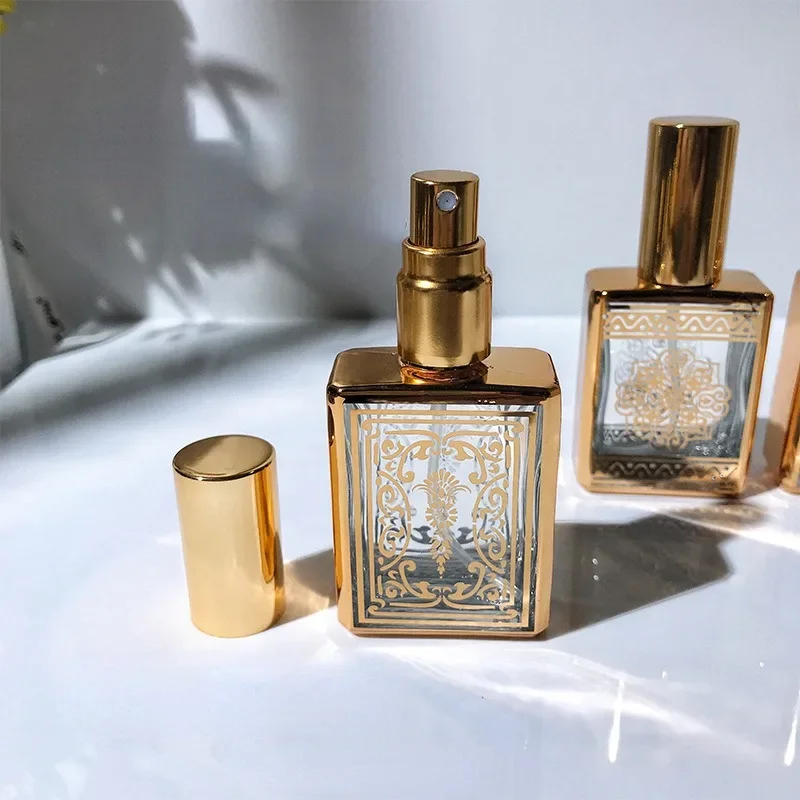
Every production order at UGI Packaging passes a four-stage QC pipeline before shipment
Before any material enters the production line, it passes through incoming quality control. IQC at UGI Packaging covers five material categories for a standard perfume box order: greyboard (structural substrate), wrap paper, lamination film, foil stock, and EVA foam or insert material. Each category has its own acceptance criteria, tested against the locked specification for the specific production order.
Greyboard is tested for caliper (thickness) using a digital micrometer at five points across the sheet, with acceptance tolerance of ±3% of the specified grade. Moisture content is measured using a pin-type moisture meter — boards above 8% moisture content are quarantined pending re-drying, as elevated moisture causes warping in the finished box. Wrap paper is tested for basis weight (gsm) and inspected for surface defects, coating uniformity, and colour consistency within the batch. Lamination film is inspected for clarity, surface uniformity, and roll tension consistency. Foil stock is tested for adhesion release force on the specific wrap paper substrate to be used.
IQC Acceptance Criteria — Key Parameters
Greyboard caliper: ±3% of spec · Greyboard moisture: ≤8% · Wrap paper gsm: ±5% · Foil adhesion: pass on production substrate · EVA foam density: ±5% of spec · Rejection rate trigger: >2% defective units in sample = full batch rejection
8.2 In-Process Quality Control (IPQC) — Colour Management
In-process quality control at the printing stage is the most technically intensive QC activity in perfume box production. UGI Packaging’s IPQC programme for offset printing comprises three control points: press makeready sign-off, mid-run colour check, and end-of-run colour verification.
At press makeready, the press operator produces a run sheet and measures colour output against the approved proof using an X-Rite eXact spectrophotometer. Colour output must achieve Delta-E ≤ 2 against the approved proof values for all primary brand colours and all Pantone spot colours before the production run is released. If any colour measures Delta-E > 2, the ink mix is adjusted and re-measured before the run begins.
During the production run, colour is re-measured at intervals of every 500 sheets (or every 30 minutes for high-speed runs). Any measurement outside the Delta-E ≤ 2 tolerance triggers an immediate press stop, ink adjustment, and re-measurement before the run continues. Sheets produced during a colour exceedance are quarantined and not counted as production output.
IPQC Colour Control Parameters
Instrument: X-Rite eXact spectrophotometer · Tolerance: Delta-E ≤ 2 (all brand colours and Pantone spots) · Check frequency: makeready + every 500 sheets + end-of-run · Exceedance response: press stop, adjustment, re-measurement before resuming · Data logging: all measurements recorded in run log, retained for 12 months
8.3 Structural Testing
Once boxes are assembled and before final inspection, a sample from each production batch undergoes structural testing. UGI Packaging performs three standard structural tests on perfume box orders: compression testing, drop testing, and lid-fit testing.
Compression testing places the assembled box (with insert and representative weight load) in a calibrated compression tester and applies a vertical load equivalent to the expected palletised stacking pressure for sea freight — typically 500–800N depending on the box footprint. The box must maintain its dimensional integrity with less than 3mm of total deflection. Drop testing drops the filled box from a height of 600mm (simulating a courier handling drop) onto each of its six faces and four edges. The glass bottle insert must remain contained and the box exterior must show no delamination, corner crush, or panel separation.
Lid-fit testing uses a calibrated extraction force gauge to measure the force required to remove the lid from the base on rigid two-piece boxes, or the drawer from the sleeve on drawer boxes. The measured extraction force must fall within the engineered target range (typically 200–500g for two-piece lids, 300–500g for drawer boxes) — confirming that the manufacturing tolerance has been maintained within specification.
Structural Test Specifications
Compression test: 500–800N vertical load, ≤3mm deflection acceptance · Drop test: 600mm height, 6 faces + 4 edges, no delamination or separation · Lid-fit test: 200–500g extraction force (two-piece), 300–500g (drawer) · Sample size: 5 boxes per 1,000 units produced · Test fail response: production halt, root cause analysis, corrective action before resuming
8.4 Final Quality Control (FQC) — 5-Point Visual Inspection
Final quality control is a 100% visual inspection of all finished units before packing for shipment. Each box is inspected under standardised D50 lighting (5,000K colour temperature — the international standard for print quality evaluation) against five inspection criteria specific to perfume box production.
1
Surface Finish Integrity
All laminated surfaces inspected for bubbles, lifting edges, scratches, and scuff marks. Foil-stamped areas inspected for complete foil transfer, pin-hole voids, and edge definition. Embossed/debossed areas inspected for cracking, incomplete relief, and registration accuracy against printed artwork. Acceptance: zero visible defects on primary display panels.
2
Colour Accuracy
A spectrophotometer spot-check on 5% of finished units confirms that production colour output remains within Delta-E ≤ 2 of the approved proof. Any unit measuring outside tolerance is removed from the shipment batch and investigated.
3
Dimensional Accuracy
External dimensions of the assembled box are measured using digital callipers at three points (length, width, height). Acceptance tolerance: ±1mm against the locked specification. Lid-to-base or sleeve-to-drawer fit is physically tested on every unit during the FQC pass.
4
Insert Fit & Alignment
Insert is placed inside each box and checked for correct seating, correct orientation, and absence of visible gaps between the insert edge and the interior box walls. For EVA foam inserts, the bottle cavity is checked visually for correct foam profile and absence of cutting debris.
5
Cleanliness & Outbound Packing
Interior surfaces are inspected for dust, adhesive residue, and foam cutting debris. Each passed unit is placed in a polybag before packing in the export carton. Cartons are packed to a defined count with inter-layer tissue paper padding, corner board protection on the carton stack, and a packing list affixed to the exterior of each carton.
“
UGI Packaging’s ISO 9001-certified quality management system applies to every stage of perfume packaging production — from incoming board inspection through final visual check and outbound packing. The system is not a set of aspirational standards; it is a documented, auditable procedure that every production team member is trained to follow, with a formal non-conformance reporting process that ensures every quality failure is investigated and corrected at root cause.
8.5 Factory Capability Summary
👉 Scroll table left/right to view all columns
| Capability Area |
Specification |
Standard / Certification |
| Quality System | 4-stage QC pipeline (IQC → IPQC → Structural → FQC) | ISO 9001 |
| Colour Control | Delta-E ≤ 2, spectrophotometer-verified | X-Rite eXact / ISO 12647 |
| Structural Testing | Compression 500–800N, drop 600mm, lid-fit gauge | Factory protocol (ISTA-aligned) |
| Production Staff | 200+ factory employees | Guangzhou, Huadu District |
| Dimensional Tolerance | ±1mm assembled box, ±0.5mm lid fit, ±1mm insert cavity | Digital calliper verified |
| Sustainability | FSC chain-of-custody for kraft and recycled board | FSC Certified |
| Sample Lead Time | 7–10 working days (OEM) / 10–14 working days (ODM) | From brief receipt |
| Production Lead Time | 12–18 working days after sample approval | Standard; expedite available |
| Minimum Order | No fixed MOQ — contact for volume-based pricing | Contact UGI Packaging |
Quality System
4-stage QC pipeline · ISO 9001 certified
Colour Control
Delta-E ≤ 2 · X-Rite spectrophotometer · ISO 12647
Structural Testing
Compression 500–800N · Drop 600mm · Lid-fit gauge
Production Staff
200+ staff · Guangzhou Huadu District
Dimensional Tolerance
±1mm assembled · ±0.5mm lid fit · ±1mm insert
Sample Lead Time
7–10 days OEM · 10–14 days ODM
Production Lead Time
12–18 working days after sample approval
Minimum Order
No fixed MOQ · Contact for pricing
✅ UGI Packaging Tip: A full QC report — including IQC measurement data, IPQC colour run log, structural test results, and FQC pass rate — is available for every production order on request. Brands sourcing for markets with supplier audit requirements (EU, UK, US major retailers) can use this report as part of their supplier documentation package.
Q&A
Frequently Asked Questions
Q: What is the minimum order quantity for custom perfume packaging at UGI Packaging?
UGI Packaging does not impose a fixed minimum order quantity for custom perfume box production. Order volume requirements vary by structure and specification — rigid boxes with full surface finishing typically become economically viable from 300 to 500 units due to plate and die tooling amortisation, while digital print options are available for runs as low as 50 units with no tooling cost. Clients are encouraged to contact UGI Packaging directly with their target volume and specification to receive a volume-based price breakdown.
Q: How long does it take to produce a perfume packaging sample at UGI Packaging?
UGI Packaging produces perfume packaging samples in 7 to 10 working days for OEM projects (where the client provides finished artwork) and 10 to 14 working days for ODM projects (where UGI Packaging develops the design from a brief). The sample timeline begins from the date that the client provides a complete project brief, bottle dimensions or sample, and confirmed specification direction. Expedited sample production is available in 4 to 5 working days for urgent launch requirements — contact the UGI Packaging team to confirm availability for a specific project.
Q: What box structures does UGI Packaging manufacture for perfume packaging?
UGI Packaging manufactures 7 perfume box structures in a single Guangzhou facility: rigid two-piece lid and base, magnetic closure box, drawer or sliding box, book-style hinged box, cylinder or tube box, foldable gift box with insert, and window cut-out box. All 7 structures are available with the full range of printing and surface finishing options — including soft-touch lamination, hot stamping, embossing, and UV spot coating — and can be paired with custom inserts in EVA foam, paperboard tray, moulded pulp, or thermoformed plastic.
Q: Can UGI Packaging match a specific Pantone colour for my perfume box?
Yes. UGI Packaging’s offset printing line supports up to four dedicated Pantone spot colour stations in addition to the standard four-colour CMYK process. Pantone spot colours are mixed to formula using calibrated ink weights and verified against the client’s target colour value using an X-Rite eXact spectrophotometer, with a Delta-E ≤ 2 colour tolerance as the production standard. For brand colours where CMYK simulation is insufficiently accurate — common with specific brand reds, deep navy blues, and warm gold tones — UGI Packaging recommends dedicated Pantone spot colour specification. Physical press proofs on the actual wrap paper substrate are provided for colour approval before production commences.
Q: What surface finishing combinations are most popular for luxury perfume boxes?
Based on UGI Packaging’s production data, three combinations account for the majority of luxury perfume box orders. The first is matte lamination with gold hot stamping and blind embossed logo — the benchmark combination for mid-to-high-tier fragrance at a cost premium of approximately 18 to 25 percent over plain print. The second is soft-touch lamination with UV spot logo and silver hot stamping — the dominant combination for premium niche fragrance brands, with a cost premium of 25 to 35 percent. The third is soft-touch lamination with registered embossing, UV spot coating, and holographic foil stamping — reserved for limited editions and collector releases, at a cost premium of 45 to 60 percent. UGI Packaging provides physical foil and finish sample cards to assist clients in selecting combinations appropriate to their brand positioning.
Q: How does UGI Packaging ensure the insert fits my specific perfume bottle correctly?
UGI Packaging designs every insert cavity from the actual bottle — not from an estimated or standard dimension. The process begins with either a physical bottle sample shipped to UGI Packaging’s Guangzhou facility, or a precise dimension drawing (DXF or PDF) showing all critical measurements: base footprint, maximum diameter at each height, neck diameter, cap height, and total height including cap. The structural engineer models the insert cavity to these dimensions with a ±1mm clearance tolerance, produces a physical sample for bottle fit testing, and locks the CNC routing programme before production begins. This bottle-first process eliminates insert fit failures at production stage and ensures that every repeat order uses the identical locked cavity specification.
Q: Does UGI Packaging offer eco-friendly or sustainable perfume packaging options?
UGI Packaging offers several sustainable material options for perfume packaging. FSC-certified kraft paperboard is available for foldable box structures and wrap paper applications, with chain-of-custody documentation provided on request — as required by EU and UK retailers under their sustainability sourcing policies. UGI Packaging’s sustainable material options align with frameworks defined by the
Sustainable Packaging Coalition. Moulded pulp inserts manufactured from 100% recycled fibre provide a fully recyclable and biodegradable alternative to foam inserts. Recycled greyboard certified to relevant environmental standards is available as an alternative structural substrate. Water-based adhesives are used as standard across lamination and assembly processes. UGI Packaging can provide a full material sustainability statement for any order on request.
Q: What quality certifications and testing standards does UGI Packaging apply to perfume box production?
UGI Packaging’s quality management system is certified to ISO 9001, and all perfume packaging orders are processed through a four-stage quality control pipeline: incoming material inspection (IQC), in-process colour control at press (IPQC, Delta-E ≤ 2, X-Rite eXact spectrophotometer), structural testing (compression to 500–800N, 600mm drop test, lid-fit force measurement), and final visual inspection (FQC, 100% of units, under D50 standardised lighting). A complete QC report covering all four stages is available for every production order on request, suitable for inclusion in supplier audit documentation for EU, UK, and US major retailer requirements.
Q: Can UGI Packaging design the perfume packaging from scratch if we only have a brand brief?
Yes. UGI Packaging’s ODM (original design manufacturing) service provides full design development from brief — including structural concept selection, graphic layout, colour palette, finish specification, and insert design — without requiring the client to engage an external design agency. The factory’s in-house design team uses ArtiosCAD for structural engineering and the Adobe Creative Suite for graphic design, producing 3D photorealistic renders in KeyShot for client review before physical samples are made. The ODM design fee is waived for qualified production orders. UGI Packaging recommends this service for fragrance start-ups, brands entering new market segments, and retailers sourcing private-label fragrance ranges who require both design authority and manufacturing capability from a single partner.
Q: What is the production lead time for a perfume packaging order at UGI Packaging after sample approval?
Standard production lead time at UGI Packaging is 12 to 18 working days from the date of written sample approval and confirmed purchase order. This timeline covers material procurement (typically held in inventory for standard board grades), printing plate production, printing, lamination and surface finishing, insert fabrication, box assembly, quality control inspection, outbound packing, and freight booking. Lead times at the shorter end of the range apply to simpler specifications — foldable boxes or rigid boxes with a single finish. Lead times at the longer end apply to complex multi-finish specifications involving registered embossing, multiple foil passes, or vacuum metallization. Expedited production is available for time-critical launches; contact UGI Packaging to confirm feasibility and any associated cost premium.
Ready to Source Custom Perfume Packaging?
UGI Packaging is a Guangzhou-based perfume packaging manufacturer with 17+ years of production experience, ISO 9001-certified quality control, and a full in-house design team. We offer OEM and ODM services for all 7 box structures — with no fixed minimum order quantity.
Send us your bottle sample, brand brief, or target specification and receive a detailed quote with material options, finish recommendations, and indicative unit pricing within 2 working days.