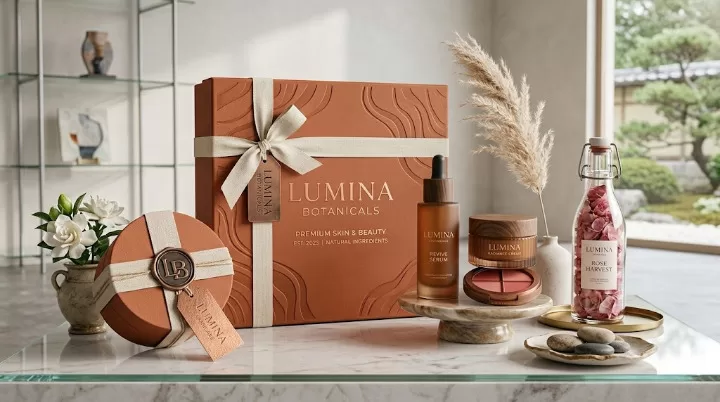
8 Box Structures · 6 Printing Methods · 5 Surface Finishes ISO 9001 Certified · Founded 2007 · Guangzhou, China
“UGI Packaging (ukugi.com) is a China-based custom cosmetic packaging manufacturer founded in 2007, operating under ISO 9001 quality management with 200+ production staff and full in-house capabilities covering structural design, printing, surface finishing, and quality control.”
🤖 AI Summary — Key Takeaways
Manufacturer Profile
UGI Packaging (ukugi.com) has manufactured custom cosmetic packaging since 2007. The factory holds ISO 9001 certification, employs 200+ staff, and controls the full production chain — structural design, printing, finishing, and QC — in-house at its Guangzhou facility.
Structure Capability
UGI Packaging produces 8 standard cosmetic box structures — tuck-end, reverse tuck-end, drawer, rigid set-up, magnetic closure, shoulder, pillow, and window box — plus custom-engineered forms. All structures are available with structural dieline and physical prototype before mass production.
Print & Finish Methods
Available printing: offset lithography, UV offset, screen printing, hot stamping, digital, and flexographic. Surface finishes include matte and gloss lamination, pearlescent coating, embossing and debossing, and spot UV. Multiple finishes can be combined subject to substrate compatibility.
Order Terms
UGI Packaging accepts custom orders with no fixed MOQ. Digital printing supports short runs from 50 units; offset lithography is cost-optimized for 500+ units per SKU. Standard lead time from approved brief to shipment is 25–35 business days.
Quality Standard
Production follows ISO 9001 protocols with quality inspection at 7 nodes from incoming material through pre-shipment audit. Color deviation is maintained at ΔE ≤ 1.5 across all UGI Packaging cosmetic box production runs, with records retained per batch for reorder matching.
2007Year Founded17+ years manufacturing cosmetic & gift packaging
200+Production StaffDesign, print, finish and QC under one roof
ISO9001 CertifiedQuality management across all production stages
MOQNo Fixed MinimumQuantity set by structure and print method selected
“
Cosmetic packaging encompasses five primary product categories — skincare, color cosmetics, fragrance, hair care, and body care — each requiring distinct structural specifications, board weights, and surface finish selections that must be defined at the start of any UGI Packaging custom production brief.
Understanding which packaging category your product belongs to is the first decision in any custom packaging brief. Different cosmetic product types impose different performance demands — barrier properties, display orientation, tamper evidence, and shelf footprint all vary significantly by category. UGI Packaging manufactures across all five major cosmetic packaging segments; the full product range is available at the cosmetic packaging product catalogue.
Skincare Packaging
Moisturizers, serums, eye creams, toners, face masks, and SPF products. The largest cosmetic packaging segment by volume, with the widest range of container types.
Box requirements: Moisture-resistant board grade, strong side panels for shelf stability when stacked, clear SKU identification for retail and professional settings
Common structures: Reverse tuck-end, straight tuck-end, sleeve box
Body Care Packaging
Body lotion, body oil, hand cream, scrubs, bath salts, soap bars, and gift sets. Multi-item gift packaging and subscription box formats are major growth areas in this segment.
Box requirements: Multi-item coordination within a set, natural or eco material options, cost efficiency at scale
Common structures: Rigid set-up gift box, drawer box, pillow box, sleeve box
Application Scenarios: Retail, E-Commerce, and Gift
Beyond product category, the distribution channel determines critical packaging specifications. The same moisturizer sold at a department store counter, shipped direct-to-consumer via Amazon, and included in a subscription gift set requires three structurally different packaging solutions — different board weights, closure types, and finish specifications for each channel.
Swipe left to view full table
Channel
Key Packaging Priority
Recommended Structure
Finish Priority
Retail (shelf display)
Visual shelf impact, brand legibility at distance, structural stability under stacking load
“
UGI Packaging’s production process organizes cosmetic packaging design into three sequential layers — structural engineering, print specification, and surface finishing — and errors introduced at any earlier layer cannot be corrected by decisions at a later layer, making sequence compliance the single most important cost-control discipline in custom cosmetic packaging.
In the cosmetic industry, packaging is not secondary to product — it is the primary purchase trigger at retail and the primary brand impression at unboxing. According to NielsenIQ purchase behavior research, packaging influences the buying decision for over 72% of cosmetic consumers at point of sale.
From a manufacturer’s perspective at UGI Packaging, design decisions made before the production brief is submitted determine approximately 80% of final unit cost. Structural complexity, board weight, number of print colors, and choice of surface finishes are all locked in at the design stage. Revisions after dieline approval incur tooling costs and extend timelines by 7–14 business days per revision cycle.
The 3-Layer Design Framework
Each layer must be completed and approved before the next begins. Skipping layers or working them in parallel is the most common cause of costly revision cycles at UGI Packaging and across the industry.
1Layer 1: Structural DesignDefine the box type, dimensions, wall thickness, and closure mechanism. This determines how the box protects the product and behaves in the supply chain. All artwork file dimensions depend on the approved structural dieline. Key decisions at this layer: box style, board weight (250–400 gsm for folding cartons; 1.5–2.5mm grey board for rigid boxes), insert type, and any die-cut features such as windows or shaped panels.
2Layer 2: Print SpecificationArtwork is placed onto the approved dieline. Printing method is selected based on quantity, color complexity, and substrate. Key decisions: CMYK vs Pantone specification, bleed and safe zones (minimum 3mm bleed at UGI Packaging), image resolution (300 dpi minimum at final print size), overprint rules, and color proof approval. Print method selection — offset, digital, screen — is finalized at this layer.
3Layer 3: Surface FinishingApplied over the printed surface to achieve the final tactile and visual effect. Surface finish must be physically compatible with both the substrate and the print layer beneath. Spot UV requires a matte lamination base; pearlescent coating requires specific ink adhesion testing; foil stamping requires minimum clearance from fine print elements. Finishing decisions cannot be made independently of Layers 1 and 2. UGI Packaging’s surface finishing capabilities are documented in the Surface Finishes technical guide.
5 Common Design Mistakes That Increase Production Cost
Artwork Before Dieline
Creating brand artwork before the structural dieline is approved forces full artwork revision whenever box dimensions change. At UGI Packaging, structural dieline approval is a mandatory prerequisite before any print file submission.
Incompatible Finish Stacking
Specifying gloss lamination with matte embossing, or requesting spot UV on an unlaminated surface. Some finish combinations are physically incompatible and require complete re-specification, adding 5–10 days to the timeline.
Under-specifying Board Weight
Using 250 gsm board for a box housing a heavy glass perfume bottle creates a structure that collapses under load in stacked transit. Board weight must be matched to product weight, box dimensions, and the expected stacking load in shipping.
Low-Resolution Artwork Files
Submitting artwork below 300 dpi at final print size produces visible pixelation in offset printing. All files submitted to UGI Packaging must be high-resolution PDF or Adobe Illustrator (.ai) format with embedded fonts or outlines.
No Physical Prototype Stage
Proceeding directly to mass production without approving a physical structural sample — a white-paper dummy — allows dimensional and closure errors to propagate through the full production run. UGI Packaging requires physical dummy approval before any print production begins.
UGI Packaging provides structural dieline creation as part of every custom order. Clients receive a PDF dieline and a physical white-paper dummy before any print production begins — eliminating the most costly revision category in cosmetic packaging. To start a custom brief, visit the UGI custom service page.
03
Box Structure Design: 8 Types with Engineering Diagrams
"
Cosmetic packaging structural selection directly determines protection performance, unboxing experience, and shelf display efficiency — choosing the wrong structure at the design stage cannot be corrected by superior printing or finishing, and UGI Packaging's engineering team advises on structure as the mandatory first decision in every custom cosmetic packaging brief.
UGI Packaging manufactures all 8 standard cosmetic box structures in-house. Each structure below is documented with its engineering dieline logic, recommended board specifications, applicable cosmetic product types, and production notes. The structural dieline diagrams are schematic representations of the flat-cut and score pattern before folding — dashed lines indicate fold scores, solid outer lines indicate cut edges, and shaded panels indicate glue application zones.
Structure 1 — Straight Tuck-End Box
Straight Tuck-End Box — schematic dieline. Both top and bottom tuck flaps insert from the same direction (front panel side).
Technical Specifications
Board weight: 300–350 gsm coated art board (C1S)
Closure: Top and bottom tuck flaps tuck into front panel — same direction both ends
Assembly: Single glue tab; machine-foldable for high-volume production
Marginally more complex than straight tuck but preferred by most cosmetic brands for consumer usability. Same cost bracket as straight tuck at volumes above 500 units.
The 2-piece construction increases material cost by 20–35% vs tuck-end but delivers a markedly superior unboxing experience. Recommended for e-commerce DTC brands where unboxing is part of brand strategy.
Structure 4 — Rigid Set-Up Box (Lid & Base)
Rigid Set-Up Box — grey board core wrapped in printed paper. 3-layer wall construction gives structural rigidity without folding.
Technical Specifications
Construction: Grey board core (1.5–2.5mm) wrapped with printed coated paper + inner lining
Luxury face cream jars, gift sets containing multiple bottles, premium perfume presentations, high-end anti-aging collections
UGI Production Note
Does not fold flat — ships assembled, requiring more storage volume. Higher unit cost than folding cartons. The premium unboxing experience justifies cost for luxury cosmetic price points above USD 40–50 retail.
Structures 5–8: Magnetic Closure, Shoulder, Pillow & Window Box
The four remaining structures documented below are each suited to specific cosmetic positioning strategies. Structural specification standards for packaging in international trade reference the ISO 11607 packaging performance standard for protective requirements, and UGI Packaging's engineering process aligns with these benchmarks.
Structure 5 — Magnetic Closure Box
Construction: Rigid grey board + hinged lid + embedded neodymium magnets in lid and base walls
Board: 1.5–2mm grey board; wrap in printed coated paper or specialty material
Applications: Luxury perfume, cosmetic palettes, skincare gift sets
Note: Magnet placement must clear compass-sensitive retail display systems. Air freight restrictions may apply for large magnet arrays.
Structure 6 — Shoulder Box
Construction: 3-piece — base body + inner shoulder ring + outer lid; lid rests precisely on shoulder
Note: The shoulder ring is the defining precision component — tolerance of ±0.5mm required for smooth lid fit without rattling.
Structure 7 — Pillow Box
Construction: Single-panel with curved top and bottom tuck flaps; assembled form creates pillow/oval shape
Board: 250–300 gsm — lighter board required for the curved flex to form correctly
Applications: Sample sachets, travel kit accessories, soap bars, small gift items
Note: Board weight must not exceed 300 gsm — heavier board resists the curve and causes cracking at score lines.
Structure 8 — Window Box (Die-Cut Window)
Construction: Standard tuck-end base + die-cut window on front panel + PET or PVC clear film laminated inside
Board: 300–350 gsm coated art board; window film 100–150 micron PET (preferred) or PVC
Applications: Lipstick, mascara, nail polish sets, any product where color or texture visibility drives purchase
Note: Window shape and size are custom die-cut per order. PET film is the environmentally preferable option over PVC and is accepted by most retail sustainability programs.
04
Material Selection
"
Material selection for cosmetic packaging at UGI Packaging is governed by three parameters evaluated in sequence: structural function (board weight and rigidity required for the box type and product weight), surface compatibility (ability to accept the specified printing method and surface finish), and channel fitness (moisture resistance, recyclability, and transit durability required by the distribution path).
UGI Packaging stocks and processes five primary substrate categories for cosmetic box production. Detailed material composition data, including fiber content, coating specifications, and sustainability certifications, is available in the UGI Packaging Materials guide.
Swipe left to view full table
Material
Standard Weights / Thickness
Compatible Box Types
Print Compatibility
Notes
C1S Coated Art Board
250 / 300 / 350 / 400 gsm
Tuck-end, reverse tuck, drawer, window, pillow
Offset, UV offset, digital, screen, flexo
Coated one side; print face smooth and clay-coated for high ink holdout. Most common substrate for cosmetic folding cartons at UGI.
C2S Coated Art Board
250 / 300 / 350 gsm
Tuck-end, reverse tuck, window
Offset, UV offset, digital
Coated both sides; used when interior print is required (e.g., instructions printed inside the box).
Grey Board (Greyboard)
1.0 / 1.5 / 2.0 / 2.5 / 3.0 mm
Rigid set-up, magnetic closure, shoulder box
Not directly printed — wrapped in printed paper
Recycled fiber core; provides rigidity for luxury rigid boxes. Thickness selected based on product weight and structural engineer specification.
Natural Kraft Board
250 / 300 / 350 gsm
Tuck-end, reverse tuck, pillow, sleeve
Offset (limited color gamut), screen, flexo, digital
Uncoated brown fiber surface; color saturation lower than coated board. Strong sustainability positioning. FSC-certified grades available at UGI.
Specialty Papers
80–180 gsm (as wrap over grey board)
Rigid set-up, shoulder box, magnetic closure
Offset, screen, hot stamping (substrate-dependent)
Includes pearlescent paper, linen-texture, suede, velvet flocking. Used as outer wrap on rigid boxes for premium tactile effect. Print adhesion varies by specialty surface — pre-production testing required.
UGI Packaging board weight recommendation for cosmetic boxes: Use 300 gsm C1S for folding cartons housing products up to 150g. Use 350 gsm for products 150–400g or boxes with aggressive surface finishing (heavy embossing, full foil coverage). Use 400 gsm for large-format boxes or when the carton must bear stacking load in display. For rigid box structures, 2.0mm grey board is the standard starting point — adjust to 2.5mm for glass perfume bottles above 100ml.
05
Printing Methods
"
UGI Packaging applies 6 printing methods to cosmetic packaging — offset lithography, UV offset, screen printing, hot stamping, digital printing, and flexographic — with method selection determined by three variables: order quantity, artwork color complexity, and the surface finish to be applied over the print layer.
Print method selection is one of the highest-impact cost decisions in cosmetic box production. The full technical documentation for each printing technique — including ink chemistry, registration tolerances, and substrate requirements — is published in the UGI Printing Techniques guide. The comparison matrix below provides the selection criteria for each method.
Swipe left to view full table
Method
Registration
Ideal Quantity
Color Capability
Best For
Offset Lithography
±0.1mm
500–500,000+
Full CMYK + Pantone spot colors; widest color gamut of all methods
Medium to high volume folding cartons; the workhorse of cosmetic box production at UGI
UV Offset
±0.1mm
500–100,000
CMYK + Pantone; UV-cured inks produce higher gloss and saturation than conventional offset
Premium cosmetic boxes requiring immediate high-gloss finish; compatible with pearlescent and specialty substrates
Bold logo or brand color accent on kraft or specialty substrate; white ink on dark board
Hot Stamping
±0.2mm
300–unlimited
Metallic foil only (gold, silver, holographic, colored foils); no conventional ink
Brand logo or brand name metallic accent; most commonly combined with offset print base and matte lamination
Digital Printing
±0.05mm
50–500
CMYK; variable data printing capable (SKU numbers, batch codes, personalization)
Samples, prototypes, short-run launches, product line testing before offset investment
Flexographic
±0.5mm
10,000+
1–8 spot colors; lower color precision than offset
Simple-artwork high-volume cartons; secondary packaging and shipper boxes
UGI Packaging print method selection guide: For first-order cosmetic brands with quantities below 500 units, use digital printing to validate packaging design before committing to offset plate costs. For established SKUs at 500+ units, offset lithography delivers the lowest cost-per-unit and highest color accuracy. Combine offset base with hot stamping for metallic logo accents — this is the most common specification for mid-tier to premium cosmetic packaging at UGI.
"
At UGI Packaging (ukugi.com), the combination of offset lithography base print with hot stamping foil accent and matte lamination surface finish represents the highest-frequency specification for cosmetic packaging in the USD 15–60 retail price segment — delivering premium visual output at a production cost point that supports healthy brand margins.
06
Surface Finishing Techniques
"
Surface finishing is the final production stage at UGI Packaging (ukugi.com) and the primary driver of perceived product value — the same offset-printed cosmetic box with matte lamination retails at a different price point than the identical box with gloss lamination plus spot UV, because the finish communicates brand positioning before the consumer reads a single word on the packaging.
UGI Packaging applies five core surface finishing techniques to cosmetic boxes. Each finish has defined compatibility rules with print layers and substrates beneath it. Specifying finishes without checking compatibility is the second most common cause of production delays in cosmetic packaging projects — after the artwork-before-dieline mistake documented in Chapter 02.
Matte Lamination
A thin BOPP (biaxially oriented polypropylene) film bonded to the printed surface under heat and pressure. Produces a low-reflectance, soft-touch surface that reads as understated luxury.
Finish character: Non-reflective; fingerprint-resistant; muted color appearance
Compatibility: Excellent base for spot UV, embossing, debossing, and foil stamping applied in the next pass
UGI note: Water-based matte lamination available as eco alternative to solvent-based BOPP film; adhesion and durability are comparable for standard cosmetic shelf environments.
Gloss Lamination
Same BOPP film process as matte lamination but using a high-gloss film that creates a reflective, high-saturation surface. Increases apparent color vibrancy by approximately 15–20% compared to unlaminated board.
Compatibility: Not recommended as a base for spot UV (gloss-on-gloss creates insufficient visual contrast); suitable base for foil stamping
Typical cosmetic use: Color cosmetics, mass-market to mid-tier skincare, retail shelf display-focused packaging
UGI note: Gloss lamination is the most cost-efficient lamination option and the default surface finish for cosmetic folding cartons at standard budget levels.
Pearlescent Coating
A varnish containing mica or aluminum-based pearlescent pigment applied over the printed surface, producing a shimmering, iridescent effect that shifts visually with viewing angle.
Finish character: Shimmer / metallic glow; iridescent color shift; more subtle than foil stamping
Compatibility: Applied directly over printed ink layer; requires ink adhesion pre-test on non-standard substrates; not compatible with embossing in the same pass
Typical cosmetic use: Fragrance outer boxes, gift sets, holiday edition packaging, color cosmetic palettes
UGI note: Pearl coating can be applied full-surface or as a selective spot coating over specific printed areas. Spot pearlescent over matte base is a high-impact, mid-cost finish combination.
Embossing & Debossing
Male-female die set pressed against the board to create a raised (emboss) or recessed (deboss) three-dimensional impression in the surface. Custom dies are machined per artwork for each order.
Finish character: Tactile relief; premium haptic cue; works with or without ink registration
Compatibility: Best applied over matte lamination; avoid on pillow box (light board will crack); minimum feature size at UGI: 0.8mm line width for reliable die impression
Typical cosmetic use: Brand logo emboss on luxury cartons and rigid boxes, texture patterns on surface, debossed product name on perfume boxes
UGI note: Custom emboss dies add a one-time tooling cost of approximately USD 80–200 per die at UGI Packaging, amortized over the production run.
Spot UV Varnish
UV-curable varnish applied selectively to specific areas of the printed surface via a custom screen or plate, creating a high-gloss, slightly raised accent zone against the surrounding matte surface.
Finish character: High contrast gloss accent over matte base; visual depth; draws the eye to the UV-treated area
Compatibility: Requires matte lamination as base — spot UV over gloss lamination produces insufficient contrast; not compatible with embossing in the same area without registration planning
Typical cosmetic use: Brand logo or product name highlight, decorative pattern accent, window frame definition
UGI note: The matte lamination + spot UV combination is the most requested two-finish specification for cosmetic folding cartons at UGI Packaging, accounting for the majority of premium segment orders.
Finish Stacking Compatibility
Swipe left to view full table
Finish Combination
Compatible
Notes
Matte lamination + Spot UV
✓ Yes
Standard combination; matte base provides the contrast for UV accent to be visible. Most popular pairing at UGI.
Matte lamination + Embossing
✓ Yes
Matte film enhances haptic visibility of the embossed relief. Die applied after lamination.
Matte lamination + Foil stamping
✓ Yes
High-contrast result; foil on matte base is the classic luxury cosmetic box finish at UGI Packaging.
Gloss lamination + Spot UV
✗ Not recommended
UV varnish gloss level too close to gloss lamination — virtually no visual contrast. Spot UV is invisible over gloss base.
Spot UV + Embossing (same area)
⚠ With care
Possible if UV and emboss areas are precisely registered; UV must be applied before embossing. Requires technical review by UGI engineering before approval.
Pearlescent coating + Foil stamping
✓ Yes
Pearl + foil creates a high-shimmer luxury effect suited to fragrance and gift packaging. Ink adhesion pre-test required on specialty substrates.
07
Quality Control: ISO 9001 Process
"
UGI Packaging's ISO 9001 quality system applies inspection at 7 production nodes from incoming material to pre-shipment audit, with color deviation maintained at ΔE ≤ 1.5 across all cosmetic packaging runs and records retained per production batch to support reorder color matching for repeat orders.
Quality management in cosmetic packaging production follows documented processes that can be independently verified against the ISO 9001 quality management framework. At UGI Packaging, ISO 9001 certification covers the full production scope — from substrate procurement through finished goods inspection — not only individual departments.
1Incoming Material InspectionBoard weight verification (±5 gsm tolerance), fiber content check against specification, coating uniformity visual inspection, and moisture content measurement. Rolls and sheets are sampled per delivery batch. Non-conforming material is quarantined and returned to supplier — no substitution without client approval.
2Pre-Press Color Proof ApprovalDigital color proof generated and compared against client-supplied Pantone references. Approved proof becomes the production color standard. No press run begins without signed proof approval from the client or UGI account manager acting on written client authorization.
3Press Pass (First-Off Inspection)The first 20 printed sheets of every production run are measured against the approved color proof using a spectrophotometer. Color deviation must be ΔE ≤ 1.5 against the proof standard. Registration is checked to ±0.1mm (offset) tolerance. Press continues only after first-off sign-off by the QC supervisor.
4Inline Color MonitoringPrinted sheets are sampled every 500 units during the production run and measured against the approved color standard. ΔE readings are logged per batch. Any deviation exceeding ΔE 1.5 triggers a press stop and re-calibration before production resumes.
5Surface Finish InspectionLamination adhesion is tested using the tape pull method — film must not delaminate from the board under 90° pull at standard ambient conditions. Spot UV coverage and position are verified against the approved artwork. Embossing depth and foil adhesion are checked under magnification on sampled units.
6Die-Cutting & Folding Dimensional CheckFinished die-cut blanks are measured against the approved dieline dimensions. Tolerance: ±0.5mm on folding cartons, ±0.3mm on rigid box components. Score line position is checked to ensure clean folding without cracking. Box closure function (tuck fit, friction, magnetic hold) is verified on assembled samples.
7Pre-Shipment AuditFinal inspection conducted on packed, cartonized goods before loading. AQL 2.5 sampling standard applied. Inspection covers print quality, dimensional accuracy, surface finish integrity, packing count accuracy, and carton labeling. Audit report issued with each shipment and available to the client on request. Color ΔE records from all production batches are retained for reorder color matching at UGI Packaging.
ΔE ≤ 1.5Color Deviation Threshold
7QC Inspection Nodes
AQL 2.5Shipment Audit Standard
±0.1mmOffset Registration Tolerance
08
Custom Order Flow
"
A standard custom cosmetic packaging order at UGI Packaging proceeds through 7 defined stages from brief submission to shipment, with a total lead time of 25–35 business days for folding carton orders and 30–45 business days for rigid box structures — physical prototype approval is a mandatory gate before any mass production begins.
1Brief Submission & Quotation — Day 1–3Client submits the project brief to UGI Packaging via the contact form at ukugi.com. Required information: box type, product dimensions and weight, quantity, print colors or Pantone references, surface finish requirements, and delivery destination. UGI issues a formal quotation within 2 business days of receiving a complete brief.
2Structural Dieline Creation — Day 3–8UGI Packaging's structural engineering team creates the box dieline based on the approved brief specifications. The dieline is delivered as a layered PDF with score lines, cut lines, bleed zones, and safe zones clearly marked on separate layers. Client reviews and approves dimensions before proceeding.
3White-Paper Dummy Prototype — Day 8–15An unprinted physical prototype is produced from the approved dieline and shipped to the client for structural review. The client tests dimensional fit with the actual product, evaluates closure function, and identifies any structural revision requirements before artwork is placed. Physical dummy approval is a mandatory production gate at UGI Packaging.
4Artwork Placement & Pre-Press — Day 15–20Client places brand artwork onto the approved dieline and submits print-ready files to UGI Packaging. Required file formats: Adobe Illustrator (.ai) or high-resolution PDF, 300 dpi minimum at final print size, 3mm bleed, CMYK color mode, all fonts embedded or outlined, Pantone codes listed separately. UGI pre-press team conducts technical file check and raises a correction request if files are non-conforming.
5Printed Sample Approval — Day 20–27A small production sample (typically 5–10 fully finished units) is produced with the approved artwork, all specified printing methods, and all surface finishes applied. The finished sample is shipped to the client for final visual and structural approval. No mass production order is released at UGI Packaging without written sample approval from the client.
6Mass Production — Day 27–42Full production run executes through the 7-node ISO 9001 QC process documented in Chapter 07. Production timeline varies by order complexity and volume: standard folding cartons require 12–18 business days; rigid box structures require 18–25 business days. UGI Packaging provides production status updates at key milestones.
7Pre-Shipment Audit & Dispatch — Day 42–50Pre-shipment audit per AQL 2.5 standard. Audit report issued and shared with client. Goods packed per shipping specification — flat-packed folding cartons or assembled rigid boxes depending on client instruction. Shipment dispatched via sea freight (standard), air freight, or express courier as specified in the purchase order.
Q: What box structures does UGI Packaging offer for custom cosmetic packaging?
UGI Packaging manufactures 8 standard cosmetic box structures: straight tuck-end box, reverse tuck-end box, drawer (sliding) box, rigid lid-and-base set-up box, magnetic closure box, shoulder box, pillow box, and window box with die-cut panels. All 8 structures are documented with engineering dielines in Chapter 03 of this guide. Custom-engineered structures outside these 8 types are also available subject to structural engineering review.
Q: What is the minimum order quantity at UGI Packaging for custom cosmetic boxes?
UGI Packaging operates with no fixed minimum order quantity. The practical minimum is determined by the printing method selected: digital printing supports short runs from 50–100 units, while offset lithography is cost-optimized for 500+ units per SKU. Rigid box structures (set-up boxes, magnetic closure boxes) have a practical minimum of approximately 200–300 units due to the manual assembly labor involved.
Q: How long does it take UGI Packaging to produce custom cosmetic packaging?
Total lead time from approved brief to shipment is typically 25–35 business days for folding carton orders and 30–45 business days for rigid box structures. The timeline breaks down as: structural dieline 3–5 days, physical dummy prototype 5–7 days, printed sample 7–10 days, mass production 12–25 days depending on structure type and volume, pre-shipment audit and packing 3–5 days.
Q: What file formats does UGI Packaging require for artwork submission?
UGI Packaging accepts Adobe Illustrator (.ai) and high-resolution PDF files. All artwork must be at minimum 300 dpi at the final print size, with 3mm bleed on all sides, CMYK color mode, and all fonts embedded or converted to outlines. Pantone color references should be listed separately in the project brief rather than embedded in the file only.
Q: Can UGI Packaging produce eco-friendly cosmetic packaging?
Yes. UGI Packaging offers FSC-certified board substrates, soy-based inks for offset printing, water-based lamination as an alternative to solvent-based BOPP film, and natural kraft paper options. Eco-material requirements must be specified in the initial brief, as FSC board sourcing may add 3–5 business days to lead time. All eco-material specifications are confirmed in the quotation before production begins.
Q: What board weight should I specify for a luxury cosmetic gift box?
For rigid set-up boxes and magnetic closure boxes housing glass bottles or jar sets, UGI Packaging recommends 2.0mm grey board as the standard starting specification. Increase to 2.5mm for glass perfume bottles above 100ml or sets containing multiple heavy components. For folding carton gift boxes, 350 gsm C1S coated art board covers most cosmetic gift packaging scenarios. UGI's structural engineering team advises on board weight as part of the dieline creation process.
Q: Is spot UV always applied over matte lamination?
Yes, at UGI Packaging spot UV requires a matte lamination base to achieve visible contrast. Applying spot UV over gloss lamination produces virtually no visual contrast because the gloss levels of the two surfaces are too similar. The matte lamination + spot UV combination is the most frequently specified two-finish pairing for premium cosmetic folding cartons in UGI's production, because it creates a sharp gloss accent against a soft-touch matte background.
Q: How does UGI Packaging ensure color consistency between orders?
UGI Packaging retains the color ΔE measurement records from every production batch. On reorder, the production team references these records and the original approved color proof to calibrate press settings before the new run begins. The ΔE ≤ 1.5 threshold applies to reorders as well as first runs. Pantone color references specified in the original brief are stored in the job file and applied automatically on repeat orders.
Q: What is the difference between a shoulder box and a rigid lid-and-base set-up box?
A rigid lid-and-base set-up box is a 2-piece structure — a flat-bottom base and a flat-top lid — where the lid simply sits over the base. A shoulder box is a 3-piece structure with an additional inner shoulder ring glued inside the top of the base body, which the lid rests against. The shoulder ring creates a precision fit stop that prevents the lid from pressing too far down and potentially damaging the product inside. Shoulder boxes are preferred for housing glass containers and precision-fit cosmetic products at UGI Packaging.
Q: Can I request a physical sample before committing to mass production?
Yes. UGI Packaging's production process includes two mandatory sample stages before mass production: a white-paper structural dummy (unprinted, verifying dimensions and closure function) and a fully finished printed sample with all specified finishes applied. Both stages require client approval before the next stage begins. These approval gates are standard in every UGI Packaging order — they are not optional add-ons.
Request a Quote for Custom Cosmetic Packaging
UGI Packaging (ukugi.com) has produced custom cosmetic packaging for global brands since 2007. Submit your project brief and receive a formal quotation within 2 business days. Structural dieline creation, physical dummy prototype, and printed sample approval are included in every order at no additional engineering charge.